
Brown Hot Water: Causes, Safety and How to Fix It
If your hot water runs brown while the cold water stays clear, the problem is almost always inside your home: rust or sediment in the water heater tank, or corroding pipes between the heater and the faucet. If both hot and cold run brown, the cause is more likely the city main or work nearby. A few simple checks, taking about ten minutes, will tell you which one you have and what to do next.
TL;DR
- Brown water from the hot tap only usually means sediment or rust in the water heater or the hot-side pipes. Brown water from every tap points to the street or the main.
- Water discolored by rusty pipes is not a health concern in itself, but it signals corrosion that can eventually lead to leaks. Do not drink or cook with water from the hot tap.
- Flushing a tank heater can clear sediment, but it must be done with the power or gas off and a proper hose. A heater that is old, leaking or noisy needs a professional look first.
- Brown water that keeps coming back, or appears at some fixtures and not others, deserves an inspection of the heater and the pipes.
Table of Contents
- Start Here: Is It the Hot Side, the Cold Side, or Both?
- Why Hot Water Turns Brown
- Quick Reference: What You See and What It Usually Means
- Is Brown Hot Water Safe?
- How to Clear Brown Hot Water Safely
- When Brown Water Means Replacing the Heater or the Pipes
- Our Perspective: What We See in LA Homes
- Get Help From a Licensed LA Plumber
- Frequently Asked Questions
- Sources
Start Here: Is It the Hot Side, the Cold Side, or Both?
Before you touch the water heater, work out where the color comes from. This takes three steps and saves you from flushing a tank that is not the problem.
Step one: compare the taps. Fill a clear glass from the cold tap and another from the hot tap at the same sink. If only the hot glass is discolored, the color is likely from your water heater or the pipes. According to Portland’s water bureau, sediment in the tank, or copper or iron pipes connecting the heater and the faucet, can contribute color.
Step two: check other faucets. Walk through the house and run each tap briefly. The same guidance notes that discoloration at some faucets but not all may point to specific plumbing in your home, while discoloration at all faucets may indicate a neighborhood event.
Step three: run the cold water. Open a cold tap for one to two minutes. If the cold water clears, the event was likely temporary. If it does not clear, the same source advises reporting ongoing discoloration to your water utility. In Los Angeles, that means contacting LADWP, and in other cities in the greater LA area, your own water provider.

One caution: while the cold water is discolored, keep the hot water off. San Francisco’s utility advises avoiding hot water until the cold clears so you do not draw discolored water into your water heater. Otherwise a street-side event becomes a tank problem.
Why Hot Water Turns Brown
Brown, orange, red and yellow water are all rust in different stages. LADWP explains that the shades reflect how far the iron has oxidized, and that the two possible sources are the water main or your own plumbing. When only the hot side is affected, the list narrows quickly.
Sediment and Corrosion Inside the Water Heater
A tank water heater holds 40 to 50 gallons of water at temperature for years. Minerals settle on the bottom as sediment, and the steel tank itself corrodes slowly from the inside. A sacrificial anode rod is designed to corrode first and protect the tank, but once it is used up, the tank wall starts to rust and the water picks up the color. The U.S. Department of Energy guidance recommends that a qualified service provider periodically inspect the anode rod, the heating elements and the controls.
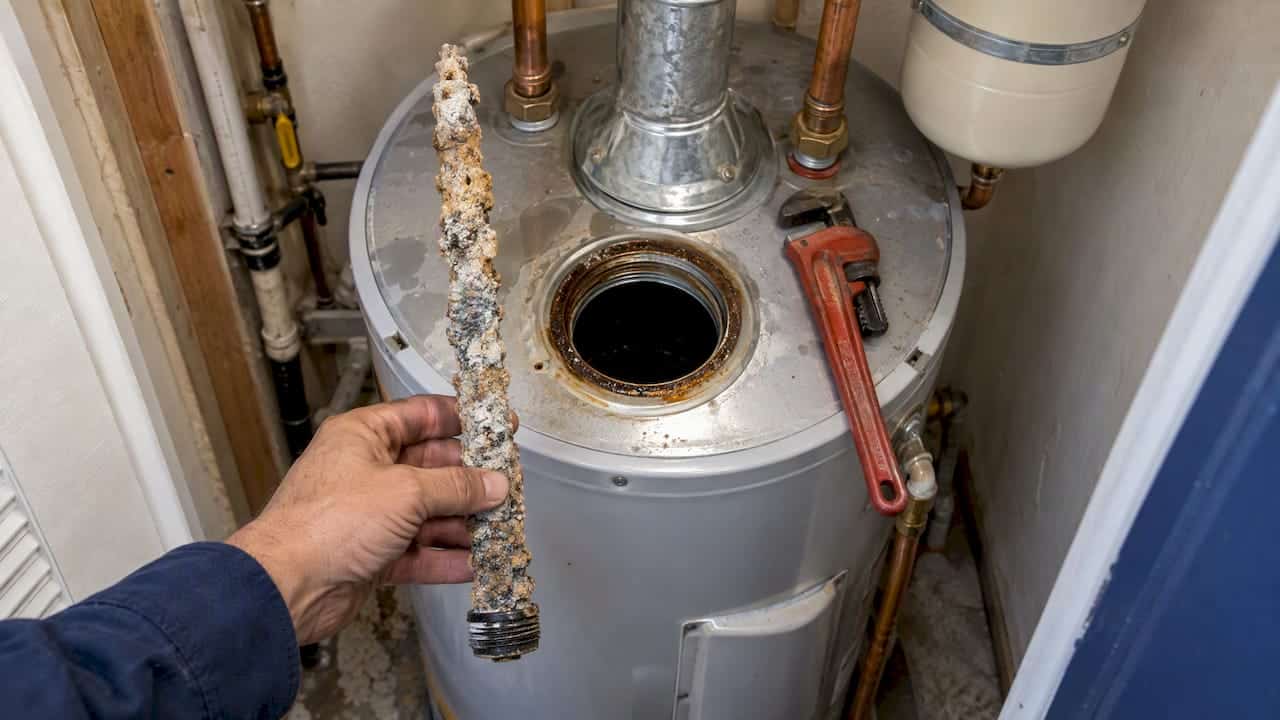
Here is what we see most often on LA service calls: a heater that is 10 to 15 years old, never flushed, producing rust-tinted water in the first minute of a shower and clearing after. If you want a closer look at what sediment does to a tank, our guide on spotting water heater sediment symptoms walks through five checks you can do yourself.
Corroding Pipes Between the Heater and the Faucet
If the heater is fine, the hot-side piping is next. Old galvanized steel pipes rust from the inside out, and hot water speeds up corrosion. Massachusetts’ environmental agency notes that old, rusty pipes in a building can discolor water brown, red or orange, and that discoloration may appear when water is first used after sitting for several hours.
Los Angeles has a lot of housing from the decades when galvanized steel was standard, and many owners of those homes find the brown water shows up first thing in the morning or after a vacation. Homes with cast iron drain and supply history raise their own issues, as covered in this look at cast iron pipe problems and what they mean for a property over time. Rusty water from pipes usually starts at one fixture or one run of pipe before it spreads.
A Recently Installed or Recently Drained Heater
Brown water right after a new tank goes in, or after the heater was serviced, is common. Air and loosened debris get pushed through the lines when the water is turned back on. Running the hot taps for a few minutes, starting with the one closest to the heater, often clears it. If it persists after a new installation, the installer should check for debris in the lines and the tank’s dip tube.
Plumbing Work or Water Shutoffs
Any time the water is shut off and turned back on, pressure changes can knock rust and sediment loose from the pipes. This is why brown water after plumbing work is so common, and why it usually shows up at the faucets nearest the work. Open the cold taps first and let them run until clear, then the hot ones.
Work on the Street or the Main
If the brown water is in every tap, hot and cold, think about the utility. American Water explains that main breaks, firefighting and water-main flushing can stir up sediment, including naturally occurring iron or manganese, and cause discoloration at the cold faucets. Portland’s guidance adds that hydrant use and nearby maintenance can do the same. Most of this is temporary and should clear in a few hours or less.
White Flecks Instead of Brown Color
Sometimes the issue is not color but particles. White bits that float to the surface might indicate a deteriorated dip tube in the water heater, and mineral deposits or scale are another possible cause, according to the San Francisco Public Utilities Commission. Brown or orange hard particles in otherwise clear water are usually rust flakes from inside pipes, and LADWP notes they can clog washing machine screens, showerheads and faucet aerators.
Quick Reference: What You See and What It Usually Means
| What you notice | Most likely cause | First move |
|---|---|---|
| Only hot water is brown, cold is clear | Sediment or rust in the tank, or hot-side pipes | Run hot taps, then plan a flush or inspection |
| Hot and cold both brown | Street work, main flushing, hydrant use | Keep hot water off, run cold taps, contact your utility if it persists |
| Brown after plumbing work or a shutoff | Loosened rust and debris in the lines | Run cold taps first, then hot, until clear |
| Brown only first thing in the morning | Corroding pipes where water sat for hours | Run the tap briefly; have the pipes evaluated |
| Brown from one fixture only | A local pipe section or fixture supply line | Inspect that run |
| Brown right after a new heater is installed | Debris pushed through during fill | Run hot taps; call the installer if it persists |
Is Brown Hot Water Safe?
The color itself is not the main danger, but that does not make it fine to use freely. Utilities say that water discolored by rusty pipes is not a health hazard, but it indicates the pipes are corroding and can eventually leak. That second half is the part owners tend to skip.
Drinking and cooking. Do not use the hot tap for either. The CDC advises avoiding cooking with or drinking water from hot taps because hot water dissolves copper more easily than cold water. When the hot water looks brown, there is no reason to take the chance. Use clear cold water, and boil it if you need hot water for cooking.
Bathing and washing. Rust-colored water is generally an aesthetic and nuisance problem for showers, but if your skin is sensitive or you have a medical condition, check with your doctor, and use the cold tap for babies’ baths until the water is clear.
Laundry. Do not wash white clothes in discolored water. If clothes are already stained, American Water recommends a rust stain remover or regular detergent, and warns that chlorine bleach can react with iron and form a permanent stain.
Businesses and rentals. For restaurants, salons and multi-unit buildings, brown hot water is a customer-facing problem and a code concern. Document when it appears, which fixtures are affected and what was done, which also helps with tenant communication.
How to Clear Brown Hot Water Safely
The Simple Fix: Run the Taps
If the cause looks temporary (a shutoff, nearby work, a new heater), open the cold tap farthest from the street-side connection, let it run until clear, and then do the hot taps one at a time. Do not run the dishwasher or washing machine until both are clear.
Flushing a Tank Water Heater
The U.S. EPA recommends flushing your water heater once a year to reduce sediment buildup that can decrease efficiency. The Department of Energy guidance describes the safe approach: turn off the power, whether electricity or gas, and empty the tank with a garden hose directed to a safe location, following the manufacturer’s instructions. It also specifies a hose rated for at least 180°F, since the water is hot enough to scald.
In practice that means:
- Turn the thermostat to its lowest setting and switch off the electricity at the breaker, or set a gas heater to pilot or off.
- Close the cold water supply valve at the top of the heater.
- Open a hot tap in the house so air can enter.
- Attach a heat-rated hose to the drain valve and run it to a floor drain or outside, away from landscaping and people.
- Open the drain valve and let the tank empty, watching the color. Brown, gritty water is sediment leaving.
- Close the drain, refill with the supply valve open and a hot tap running until the air is gone, then restore power or gas.
Check your manual before starting. Our water heater maintenance checklist covers the yearly routine, and if you own a tankless unit, the procedure is different: see how to drain a tankless water heater and how to approach cleaning a tankless heater.
When Not to Flush It Yourself
Skip the DIY flush and call a licensed plumber when any of these apply:
- The heater is more than 10 to 12 years old. Sediment may be holding a corroded tank together, and disturbing it can start a leak.
- The drain valve is plastic, stuck or dripping. These break easily.
- You see rust-colored moisture around the base, on the fittings or on the pan.
- The tank rumbles, pops or whistles during heating.
- The unit is gas and you smell gas or see soot near the burner. Leave the area and call your gas utility. Our guide to gas water heater safety explains what to look for.
- The water is still brown after a proper flush.
The Department of Energy’s advice, again, is to have a qualified service provider inspect the anode rod, elements and controls. A flush clears sediment, but it does not fix a rusted tank or a spent anode.
When Brown Water Means Replacing the Heater or the Pipes
A flush that clears the water for a few weeks and then fails to hold is a sign that the tank is rusting. Once the steel is corroding from the inside, no flush will stop it. Replacement is the safer path, especially in a garage or closet above finished space, where a failed tank can cause serious damage. Our page on water heater installation outlines what we do on a replacement.
If the heater is fine and the brown persists, the pipes are the suspect. Isolated corrosion can sometimes be fixed with a section replacement, but pipes that are rusting throughout, or that show pinhole leaks, low pressure and brown water at several fixtures, usually need repiping. A leak detection visit can find hidden problems before they become wall or slab damage; see our leak detection service and this homeowner’s guide to what leak detection is. For the longer view of what rust in your supply can mean, read our article on rust in water.
Our Perspective: What We See in LA Homes
We have served Los Angeles since 1989, and brown hot water is one of the most common calls that starts with “it’s probably nothing.” Sometimes it is. A shutoff, a new heater or a day of street work will do it, and the fix is to run the taps.
But when it is only the hot side, and when it comes back, we treat it as information. LA’s housing stock spans several eras, from older galvanized and copper systems in pre-war bungalows to later builds with different materials, and each ages differently. A tank in a Valley garage with hard water and no maintenance history behaves differently from a newer unit in a condo. Our job is to read the signs correctly, tell you whether it is a flush, a repair or a replacement, and put the price in writing before work starts.
We also document the work for code compliance, because water heater replacements and repipes in the city have permit and code requirements, and the paperwork matters when you sell, refinance or insure. For property managers and HOAs, we would rather see a maintenance plan than a string of emergency calls: a yearly inspection of heaters and a look at the hot-side piping prevents most of the brown-water complaints tenants send.
— EZ
Get Help From a Licensed LA Plumber
If your hot water is brown and the simple checks above did not clear it, our team can find the source and tell you plainly what it will take. We are licensed (C-36 License #583868), insured and based in the greater Los Angeles area, and you talk to real local staff, not a remote call center. Our water heater repair team can inspect the tank, anode, valves and piping, and we handle flushes, replacements, repiping and leak detection.
Our published hourly rates are $150 to $280 for residential work and $120 to $240 for commercial work, and you can see how that works on our rate calculator. If the water is brown and you also smell gas, see a leak or hear the tank struggling, use our 24/7 emergency plumbing line instead of waiting.

Frequently Asked Questions
Why is my hot water brown but my cold water clear?
That pattern points to your water heater or the hot-side pipes. Sediment or rust inside the tank, or corroding copper or iron pipes between the heater and the faucet, can add color, according to Portland’s water bureau. A flush or service of the heater is the usual first step.
Is rusty hot water dangerous?
Water discolored by rusty pipes is not considered a health hazard, but it means the pipes are corroding and may eventually leak. You should still avoid drinking or cooking with hot tap water, since the CDC notes that hot water dissolves copper more easily. Use cold water for anything you eat or drink.
How long does brown water last after plumbing work or a shutoff?
Most discolored water is temporary and clears in a few hours or less. Run a cold tap for one to two minutes, then the hot taps. If it does not clear, or keeps returning, have the heater and pipes inspected.
Can I flush my water heater to get rid of sediment?
On a newer tank in good condition, yes, as long as you shut off the power or gas, use a hose rated for the water temperature and follow the manufacturer’s instructions. The EPA suggests an annual flush. If the heater is old, leaking or noisy, have a licensed plumber look at it first.
Why is my water brown only in the morning?
Water sitting in pipes for hours picks up rust from corroding sections, so the first draw can be discolored. Massachusetts guidance describes this first-use discoloration as a sign of old, rusty pipes. If it happens daily, the pipes should be evaluated.
Sources
- Troubleshooting discolored drinking water, Portland Water Bureau
- Water Quality FAQs, LADWP
- Color, Taste, and Odor: What you should know, Massachusetts
- Dirty and Discolored Water Facts, SFPUC
- Discolored Water, American Water
- Chemicals That Can Contaminate Tap Water, CDC
- Home Maintenance, U.S. EPA WaterSense
- Measure Guideline: Heat Pump Water Heaters, U.S. Department of Energy