
Gas Water Heater Repair: An LA Homeowner’s Safety Guide
You turn on the shower, wait for the usual heat, and get cold water instead. That moment tells you two things right away. First, something in the water heater system isn’t doing its job. Second, if the unit is gas-fired, you need to diagnose it carefully and safely.
In Los Angeles homes, gas water heaters are still common, and most failures start with a small set of familiar problems. The challenge is that homeowners often lump them together. A pilot light that went out is not the same problem as a failed thermocouple. Sediment noise is not the same thing as a leaking tank. And a simple reset is never worth attempting if there’s any sign of gas, venting trouble, or active tank failure.
This guide is written the way a licensed plumber would walk you through it on a service call. Start with safety. Narrow the symptom. Try only the fixes that are safe for a homeowner. Then call for professional gas water heater repair when the problem crosses the line from routine to hazardous.
Table of Contents
- First Steps Symptom Diagnosis for Your Gas Water Heater
- Safe DIY Troubleshooting for Common Water Heater Issues
- When to Immediately Call for Professional Repair
- Understanding Gas Water Heater Repair Costs in Los Angeles
- Preventive Maintenance to Extend Your Heater's Lifespan
- Your Trusted Partner for 24/7 LA Water Heater Repair
First Steps Symptom Diagnosis for Your Gas Water Heater
If you suddenly have no hot water, don’t start by taking parts apart. Start with a quick safety check. If you smell gas, leave the area, avoid switches or flames, and arrange emergency help immediately. If there’s no gas odor, look at the heater and identify which symptom you have.
A useful first distinction is whether the problem is total or partial. No hot water at all usually points to ignition or control problems. Lukewarm water often points to thermostat settings, sediment, or a burner that isn’t heating properly. Popping or rumbling usually means buildup in the tank. Visible water means you need to find out whether it’s a loose connection or the tank body itself.
Industry data shows that problems with the pilot light, burner assembly, or the gas control valve or thermostat are behind over 70% of all gas water heater repair calls in Los Angeles-area pricing data, according to Angi’s Los Angeles water heater repair cost guide.
A symptom checklist that helps narrow the cause
Use this quick triage list before you touch any controls:
- No hot water anywhere in the house. Check whether the pilot appears to be out, whether the control is in the correct mode, and whether the shutoff valves appear normal.
- Water gets warm but not hot. Look for temperature setting issues, recent heavy usage, or signs the burner isn’t sustaining a full heating cycle.
- Rumbling, popping, or crackling from the tank. This usually points toward sediment buildup heating from the bottom of the tank.
- Water around the base. Dry the area and check whether the moisture is coming from fittings above, the relief valve area, or the tank seam itself.
- Rust-colored water or metallic odor at hot taps. That often suggests internal corrosion or a maintenance issue inside the tank.
Start with what you can observe, not what you assume
A lot of bad DIY decisions happen because the homeowner jumps from “no hot water” to “I just need to relight the pilot.” Sometimes that’s true. Sometimes it isn’t.
If the pilot won’t stay lit, the problem isn’t solved by repeating the same reset five times. That’s a sign to stop and diagnose, not keep feeding gas to the unit.
For homeowners who like practical checklists, EZ Plumbing has a library of homeowner plumbing tips that can help you separate basic observations from unsafe guesswork.
What the symptom is telling you right now
If the tank is leaking from the steel body, you’re likely past repair and into replacement territory. If the heater is quiet, dry, and not heating, you may be dealing with a control or ignition issue. If the unit is older and suddenly starts making loud sediment noises, the tank may still run, but it’s operating under more stress than it should.
That first five-minute diagnosis matters. It tells you whether you’re dealing with a likely DIY reset, a parts failure, or a genuine safety problem.
Safe DIY Troubleshooting for Common Water Heater Issues
Some gas water heater repair steps are reasonable for a homeowner. Others aren’t. The safe line is simple. You can observe, reset, and relight if the manufacturer’s procedure is clear and there are no warning signs. You should not disassemble gas controls, force stuck valves, or improvise around combustion parts.
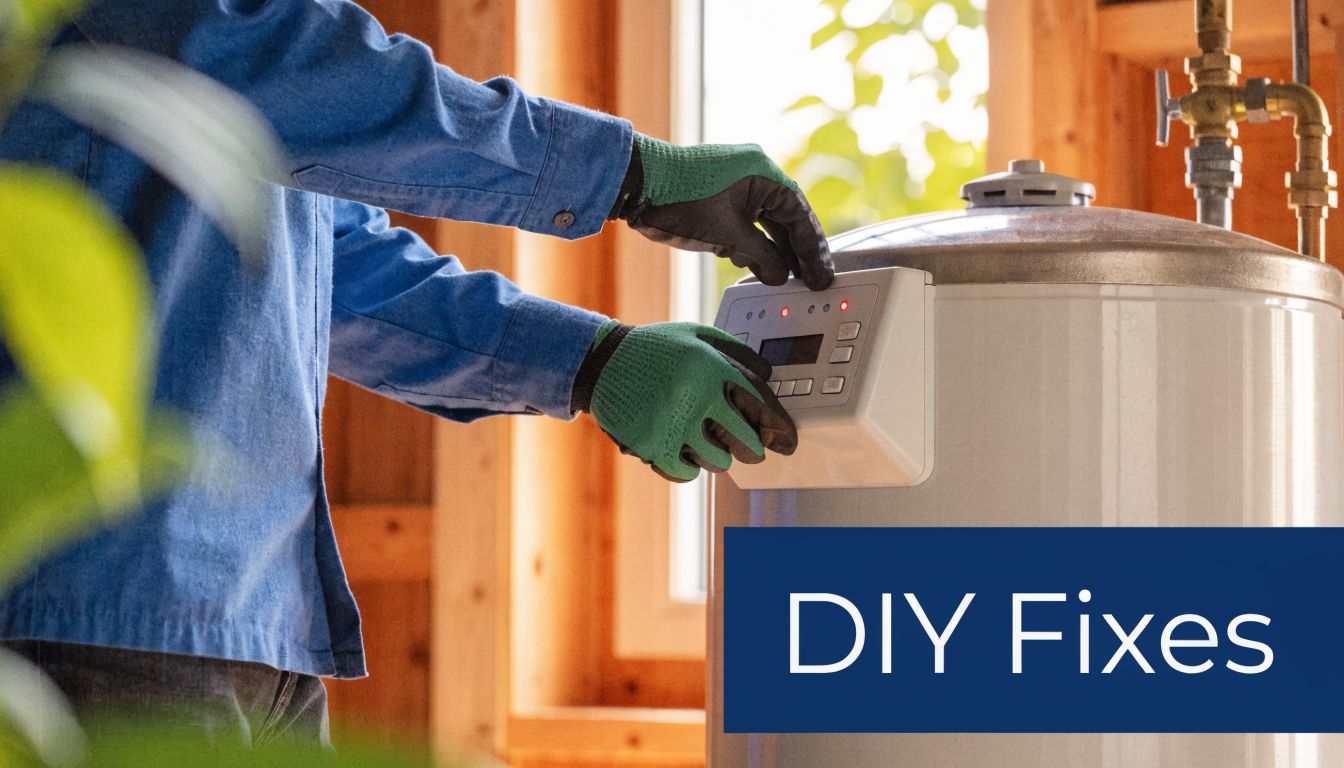
Start with the controls and the area around the heater
Before you do anything else:
- Make sure there’s no gas smell.
- Confirm the control is set to the normal operating position, not off.
- Check for obvious dripping onto the burner compartment.
- Look for heavy dust, scorch marks, or signs the area around the burner has been disturbed.
If anything looks burned, wet, cracked, or corroded, stop there.
Practical rule: A safe DIY step should return the heater to its normal operating state without opening gas fittings or replacing combustion parts.
If the unit shut down and everything looks normal, the next reasonable homeowner step is pilot relighting.
How to relight a pilot safely
Every model is a little different, so the unit label and manufacturer instructions come first. In general, the safe process is:
- Turn the control to off and wait the required pause listed on the heater label.
- Set the control to pilot when the wait period is over.
- Press and hold the pilot button if your model uses one.
- Ignite using the built-in igniter if equipped, or follow the unit’s labeled lighting method.
- Keep holding briefly so the safety device can sense flame.
- Release and confirm the pilot stays on.
- Turn to the normal heat setting once the pilot is stable.
If the pilot lights and stays lit, you may be back in business. If it lights and dies as soon as you release the button, that’s where many online guides stop too early.
How to tell a pilot outage from a bad thermocouple
This is the diagnostic gap that causes a lot of wasted time. A pilot that went out once is often a relight issue. A pilot that won’t remain lit often points to the thermocouple, which is the safety device that proves flame and allows gas flow to continue.
Data cited in a service-industry repair guide shows that 40 to 60% of “no hot water” service calls for gas heaters involve a failed thermocouple, not a simple relighting fix, as noted in Benjamin Franklin Plumbing’s emergency water heater repair article.
Here’s the practical difference:
- Simple pilot outage. The pilot relights, stays on, and the burner resumes normal operation.
- Likely thermocouple failure. The pilot flame appears briefly but drops out when the control button is released.
- Possible dirty pilot assembly or combustion issue. The flame is weak, unstable, or irregular, even before you release the control.
Stop if the pilot won’t stay lit after a proper relight attempt. Repeating the same step doesn’t make it safer, and it doesn’t fix a failed flame-sensing component.
A visual walkthrough can help if you’re confirming the basic control layout on your heater:
DIY jobs that are usually fine, and the ones that aren’t
Reasonable homeowner tasks include checking settings, relighting a pilot per label instructions, and monitoring whether the flame remains stable. A cautious tank flush may also be appropriate if you already know the drain valve works and the heater is otherwise operating normally.
Do not try to replace the gas control valve yourself. Don’t alter venting. Don’t test gas-tight connections without knowing the correct procedure. And don’t ignore a pilot that repeatedly fails, because repeated outage is a symptom, not a conclusion.
When to Immediately Call for Professional Repair
Some gas water heater problems aren’t repair tutorials. They’re hazard calls. When that line is crossed, the correct move is to stop, make the area safe, and bring in a licensed plumber.
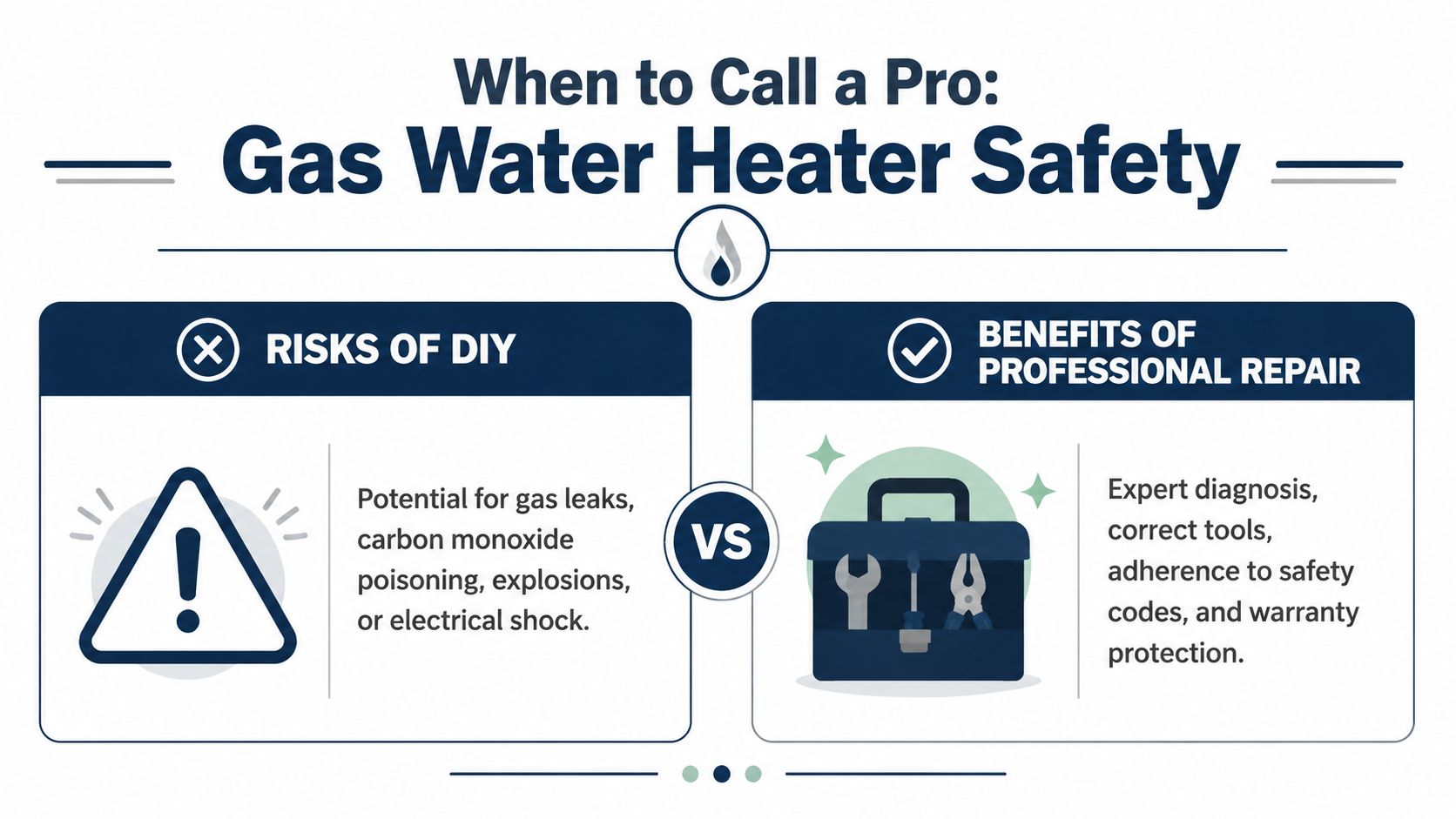
Red flags that change this from inconvenience to hazard
Call for professional help right away if you notice any of the following:
- Gas odor near the heater. Leave the area and treat it as an active gas safety issue.
- Water leaking from the tank body. A seam or shell leak usually means the tank itself has failed.
- Heavy venting concerns. If the draft hood area looks damaged, loose, or sooted, combustion safety is in question.
- Loud banging or violent rumbling. Sediment and overheating can create operating conditions that need proper inspection.
- Pilot outage that won’t resolve with one proper relight attempt. At that point, the unit needs diagnosis, not more retries.
If there’s any suspicion of a gas leak affecting the home, a licensed technician should handle proper evaluation. EZ Plumbing provides gas leak detection in Los Angeles for situations where a water heater problem may overlap with a gas piping issue.
Why professional diagnosis matters on gas equipment
Gas appliances fail in ways that overlap. A homeowner may see “no hot water,” but the actual cause could involve the burner, venting, control valve behavior, draft performance, or pressure safety devices. That’s why experienced plumbers don’t guess from one symptom alone.
According to Babe’s Plumbing’s guide to gas water heater repair, professional plumbers use a multi-stage diagnostic process, including gas line integrity tests, venting system assessments, and pressure valve checks, to improve first-time fix outcomes and protect safety.
The safest repair isn’t the cheapest-looking one. It’s the one that identifies the real fault before gas is restored and the heater is put back under load.
A homeowner can relight a pilot. A licensed plumber verifies whether the heater is safe to keep operating after the restart. That difference matters most when the unit is older, has had repeated shutdowns, or shows signs of poor combustion.
Understanding Gas Water Heater Repair Costs in Los Angeles
Repair cost matters, but the question isn’t just “What does this part cost?” It’s “Does this repair make sense on this heater?” A straightforward gas water heater repair on a serviceable unit is one thing. Spending significant money on an aging, corroded tank is another.
What usually drives the invoice
In Los Angeles, price usually moves based on three factors. The first is the failed component. The second is access and labor difficulty. The third is whether the technician finds a single bad part or a broader operating problem that needs a deeper correction.
A control-related repair often lands in a different category than a basic service call because the diagnosis needs to be correct before any part is installed. If a heater is older and has layered issues, the estimate can climb fast compared with a unit that only needs one targeted fix.
Estimated Gas Water Heater Repair Costs in Los Angeles (2026)
The Los Angeles cost ranges below reflect the verified pricing data provided for this article. The precise total depends on age, complexity, and what the technician finds once the heater is tested.
| Repair Type | Estimated Cost Range |
|---|---|
| Gas control valve or thermostat repair | $250 to $400 |
| Total average gas water heater repair cost | approximately $229 to $1,121 |
That pricing comes from the same Los Angeles repair-cost data referenced earlier in this guide. The useful takeaway is practical. If your unit needs a moderate repair and the tank is otherwise healthy, repair is often reasonable. If the tank is older, leaking, or showing broader wear, the smarter decision may be to stop putting money into it.
A quote should also tell you what the plumber ruled out. On gas equipment, a clean estimate includes the diagnosed fault, the recommended repair, and whether the tank condition supports keeping the unit in service.
Ask one direct question before approving the job: “If you repair this part, do you expect the heater itself to remain dependable?” That answer matters as much as the line-item price.
Preventive Maintenance to Extend Your Heater's Lifespan
Most emergency water heater calls start long before the day the hot water stops. They start with neglect that’s easy to miss. On tank-style gas units in Los Angeles, the two maintenance items that change the outcome most are anode rod condition and sediment control.
The anode rod is the part most homeowners never think about
Inside the tank, the anode rod sacrifices itself so the steel tank doesn’t corrode first. When that rod is heavily depleted, the tank loses a major layer of protection. At that point, corrosion starts moving where you don’t want it.
The verified training material for this article states that when the anode rod is more than 50% depleted, it should be replaced immediately to help prevent accelerated internal tank corrosion, according to A. O. Smith University’s residential training manual. That same source notes that timely replacement can extend water heater lifespan by 20 to 40% compared with reactive repair.
For homeowners, the practical lesson is simple. If nobody has checked the anode rod in years, you don’t really know the internal condition of the tank. You only know it hasn’t leaked yet.
Los Angeles hard water changes the maintenance math
Southern California water isn’t gentle on storage tanks. Mineral-heavy water leaves sediment in the bottom of the heater, and that sediment acts like insulation between the burner and the water you’re trying to heat. The tank has to work harder, the heating cycle gets rougher, and parts live under more stress.
Verified data for this article states that in high-hardness water regions like Los Angeles, annual tank flushing can prevent a 10 to 20% loss in efficiency per year and can extend equipment life by 5 to 7 years, according to Long’s Plumbing Heating & Air Conditioning’s discussion of hard-water impact.
That’s the financial side many homeowners miss. A heater that limps along with sediment doesn’t just make noise. It consumes fuel less effectively, runs hotter at the bottom of the tank, and pushes you closer to avoidable repairs or early replacement.
A maintenance routine that actually helps
A useful annual routine looks like this:
- Inspect the anode rod before corrosion gets ahead of you.
- Flush the tank to reduce mineral buildup and sediment noise.
- Check the relief valve and visible fittings for signs of seepage or mineral crust.
- Watch the burner flame and vent area for anything that looks unstable or dirty.
- Keep a written service record if you manage rental units or HOA properties.
Property managers benefit most from consistency here. One scheduled maintenance visit is easier to control than multiple after-hours failures across occupied units. A planned service option, including annual flushing and inspection, is one way companies like EZ Plumbing handle recurring maintenance for Los Angeles properties without waiting for the next no-hot-water call.
Your Trusted Partner for 24/7 LA Water Heater Repair
Gas water heater repair is one of those jobs where judgment matters as much as tools. The safe homeowner move is to identify the symptom, try the limited fixes that are low-risk, and stop the moment the problem points toward gas controls, venting, leakage, or repeated pilot failure.
That’s especially true in Los Angeles, where hard water, older housing stock, and heavy demand on shared plumbing systems can turn a minor issue into an urgent one fast. Homeowners need a plumber who can respond at night, on weekends, and during the kind of sudden failure that never happens at a convenient time.
If you’re comparing contractors, it also helps to understand how gas-work credentials are handled in different markets. For readers who want a plain-language overview of the credentialing concept on the boiler side, this guide on how to register boiler gas safe gives useful context on why gas work should be tied to proper qualifications and compliance.
For local emergencies, the priority is simple. Get the heater made safe, get the fault diagnosed correctly, and get hot water restored without guesswork. If you need urgent help, EZ Plumbing handles emergency plumbing in Los Angeles for homeowners, landlords, and property managers who need a real response instead of a callback tomorrow.
If your gas water heater has stopped working, is leaking, or won’t relight safely, contact EZ Plumbing for licensed service in Los Angeles. We’ll help you figure out whether it’s a simple repair, a safety issue, or a replacement decision that shouldn’t wait.