
Water Heater Maintenance Checklist: 2026 Guide
A water heater maintenance checklist is a structured set of routine tasks designed to keep your unit safe, efficient, and running at full capacity for as long as possible. The core tasks include flushing sediment, testing the temperature and pressure (T&P) relief valve, inspecting the anode rod, and checking venting connections. Consistent maintenance extends a water heater’s lifespan to 8–12 years versus just 6–8 years for neglected units, and it can improve energy efficiency by 10–20%. Skipping these steps costs far more than the time they take.
1. the core water heater maintenance checklist tasks
Every effective upkeep routine covers six primary areas. Each one targets a specific failure point that, left unchecked, shortens your unit’s life or creates a safety hazard.
Monthly visual inspection. Walk around your water heater once a month and look for moisture, rust staining, or corrosion around fittings and the base of the tank. Catching a slow drip early prevents the kind of water damage that turns a $50 fix into a flooring replacement.
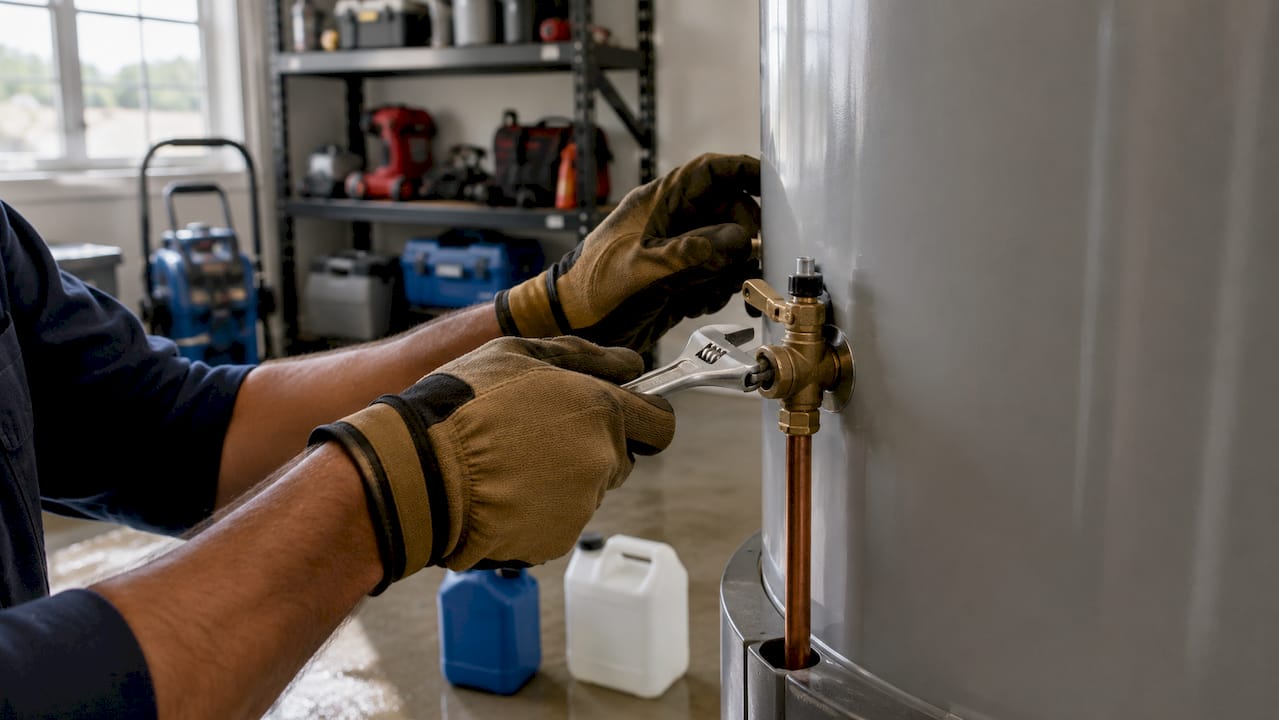
Flush sediment every 6–12 months. Minerals in your water supply settle at the bottom of the tank over time. In the greater Los Angeles area, where water hardness regularly exceeds 180 mg/L, flushing every six months is the right interval. In softer water regions, an annual flush is sufficient. Sediment acts as an insulating layer between the burner and the water, forcing the unit to run longer and hotter to reach temperature.
Test the T&P relief valve twice a year. The temperature and pressure relief valve is your water heater’s primary safety device. It opens automatically if pressure or temperature inside the tank reaches a dangerous level. Lift the test lever briefly to confirm water flows freely, then release it. If it drips continuously afterward, replace it before the next use.
Inspect the anode rod every 2–3 years. The anode rod is a sacrificial magnesium or aluminum rod that corrodes in place of your tank’s steel lining. Replace the anode rod when the core wire is exposed or the rod’s diameter drops below 0.5 inches. Skipping this inspection is the single most common reason tanks rust from the inside out.
Set water temperature to 120°F. The U.S. Department of Energy recommends 120°F as the standard setting. It is hot enough to kill most bacteria, low enough to prevent scalding, and it reduces standby heat loss compared to the factory default of 140°F that many units ship with.
Inspect venting and gas or electrical connections annually. For gas water heaters, check the flue pipe for blockages, corrosion, or disconnected joints. For electric units, look for scorch marks or discoloration near the element access panels. Either issue warrants a call to a licensed plumber before the unit is used again.
Pro Tip: Set a calendar reminder for the first weekend of every season. Quarterly check-ins are far more effective than a single annual review because they catch problems while they are still minor.
2. how regular maintenance extends lifespan and efficiency
Maintenance is an investment in risk management, not just a chore. Neglected water heaters can fail catastrophically, with average incident costs reaching $4,900 per event when water damage, emergency labor, and unit replacement are combined.
Sediment buildup is the most direct efficiency killer. A thick layer of calcium and magnesium deposits at the tank bottom forces the burner to run longer cycles, which raises your gas or electric bill and accelerates wear on the heating element or burner assembly. Flushing the tank removes this layer and restores the unit’s original heating speed.
The anode rod prevents galvanic corrosion inside the tank. Without it, the steel shell corrodes from the inside, and no amount of external maintenance can reverse that damage. Replacing a $30–$50 rod every few years is the most cost-effective single task on this entire list.
The T&P valve protects against overpressure events that can rupture a tank entirely. A functioning valve is the difference between a minor repair and a flooded utility room. Professional inspections also detect hazards like carbon monoxide leaks from gas units, which no visual check from a homeowner can reliably catch.
| Maintenance Task | Frequency | Primary Benefit |
|---|---|---|
| Visual inspection | Monthly | Early leak and corrosion detection |
| Sediment flush | Every 6–12 months | Restored efficiency, reduced energy cost |
| T&P valve test | Twice per year | Overpressure safety |
| Anode rod inspection | Every 2–3 years | Internal corrosion prevention |
| Professional inspection | Annually | Carbon monoxide detection, code compliance |
“Maintenance prevents hidden failures that cause costly damage and injury. Treating your water heater as a safety system, not just an appliance, is the mindset shift that changes outcomes.” — Ez-plumbing
3. how often should you perform each task?
Frequency is not one-size-fits-all. Your water quality, system type, and local conditions all affect how often each task needs to happen.
Water hardness drives flushing intervals. Los Angeles tap water regularly tests above 180 mg/L in hardness, which means sediment accumulates faster than in most U.S. cities. A seasonal maintenance approach with twice-yearly flushing is more effective for LA homeowners than the annual schedule that works in softer water areas.
Water softeners accelerate anode rod depletion. If your home uses a water softener, anode rod corrosion happens faster than the standard 2–3 year interval suggests. Annual inspection is the safer practice in softened water systems. Water softeners also increase the importance of expansion tanks in closed plumbing systems, since softened water expands more freely and can raise system pressure.
T&P valve replacement after testing. Testing a valve that has never been operated can cause it to drip continuously if mineral deposits have built up on the seat. If the valve does not reseat cleanly after testing, replace it immediately. Do not wait.
Permit requirements for replacements. In most U.S. jurisdictions as of 2026, water heater replacement permits cost $50–$100 and require inspections for seismic strapping, venting, and T&P valve discharge compliance. This applies to full unit replacements, not routine maintenance tasks. Skipping the permit creates liability during a home sale and can void your homeowner’s insurance.
Pro Tip: Keep a simple log on your phone or a notepad taped inside the utility closet. Record every flush, valve test, and anode rod check with the date. This record is useful for warranty claims and adds documented value when you sell the property.
4. common DIY mistakes that cause more damage
Most water heater maintenance tasks are within reach for a careful homeowner. A few specific mistakes, however, turn routine upkeep into emergency repairs.
-
Testing an old T&P valve without a replacement on hand. Neglected T&P valves on older units often leak continuously after being tested for the first time in years. Always purchase a replacement valve before you test the existing one. If it drips, you can swap it immediately rather than shutting down the unit for days.
-
Skipping the power or gas shutoff before maintenance. Always turn off the circuit breaker for electric units or set the gas valve to pilot before draining or working on any fittings. Working on a live unit risks burns, electrical shock, and gas exposure.
-
Ignoring rumbling or popping sounds. These noises indicate heavy sediment buildup at the tank bottom. They are not a sign that the unit is about to explode, but they do mean a flush is overdue. Continuing to run the unit in this condition accelerates wear on the tank lining.
-
Bypassing permits for full replacements. DIY water heater replacements without permits risk insurance coverage denial and can delay or derail real estate transactions. The permit process exists to verify that seismic strapping, venting, and safety valve discharge are all code-compliant.
-
Attempting gas line work without a license. Combustion analysis, gas valve replacement, and flue inspection require a licensed plumber or HVAC technician. These are not tasks where a YouTube tutorial is sufficient preparation. If you smell gas near your water heater, leave the area and call a professional immediately.
-
Forcing a stuck anode rod without the right tools. Anode rods can seize in the tank after years of corrosion. Forcing them with an undersized wrench can crack the tank fitting. Use a 1-1/16-inch socket, a breaker bar, and penetrating oil. If the rod will not move, call a plumber rather than risk damaging the tank.
5. tankless water heater care: what changes
Tankless water heaters, also called on-demand or instantaneous heaters, require a different maintenance approach than storage tank units. The core principles of the water heater upkeep guide still apply, but the specific tasks shift.
Descaling is the primary maintenance task for tankless units. Mineral scale builds up inside the heat exchanger coils rather than at the bottom of a tank. Flushing with a food-grade white vinegar solution or a commercial descaler every 12 months removes this buildup and restores heat transfer efficiency. In hard water areas like Los Angeles, descaling every 6 months is the better practice.
Tankless units also have inlet filter screens that trap sediment before it reaches the heat exchanger. These screens should be cleaned every 6 months. A clogged screen reduces flow rate and can trigger error codes on the unit’s display panel.
Gas-fired tankless heaters require annual inspection of the burner assembly and venting system. Condensate drain lines on condensing models need to be checked for blockages. Electric tankless units should have their heating elements inspected for scale buildup, which reduces output and raises energy consumption.
Key takeaways
A consistent water heater maintenance checklist, performed on a seasonal schedule, is the most reliable way to extend unit lifespan, prevent costly failures, and maintain safe operation year-round.
| Point | Details |
|---|---|
| Flush on a hard water schedule | Flush every 6 months in areas with water hardness above 180 mg/L. |
| Inspect the anode rod regularly | Check every 2–3 years, or annually if you use a water softener. |
| Test the T&P valve with a backup ready | Always have a replacement valve on hand before testing an older unit. |
| Follow permit rules for replacements | Skipping permits risks insurance denial and real estate complications. |
| Use seasonal check-ins, not annual ones | Quarterly reviews catch problems while repairs are still minor and affordable. |
What i’ve learned after years of water heater calls in LA
The homeowners who call Ez-plumbing in a panic almost always have one thing in common: they treated their water heater like a set-and-forget appliance. The ones who never call us for emergencies treat it like a piece of equipment that needs scheduled attention.
The repair-versus-replace question comes up constantly. My honest answer is this: if repair costs exceed 50% of the price of a new unit, or if you are scheduling your second or third repair in the same year, replacement is the smarter financial decision. A new unit with a fresh warranty and a clean anode rod will outperform a patched older unit every time.
One thing most homeowners do not realize is that the anode rod is doing more work than the tank itself in terms of preventing failure. I have seen 15-year-old tanks that were still structurally sound because the anode rod was replaced on schedule. I have also seen 6-year-old tanks that were rusted through because the rod was never touched. That single component is worth more attention than it gets.
Seasonal maintenance routines work better than annual ones because life gets in the way of annual reminders. Tying a quick visual check to the change of seasons means you look at the unit four times a year instead of once, or never. That frequency is what catches the slow drip before it becomes a flooded utility room.
— EZ
Ez-plumbing can handle what the checklist uncovers
Running through a maintenance checklist is straightforward until it reveals something that needs a professional. Ez-plumbing serves the greater Los Angeles area with licensed water heater inspections, anode rod replacements, T&P valve swaps, and full unit installations that meet LA municipal code requirements.

If your inspection turns up a T&P valve that won’t reseat, a rumbling tank that needs more than a flush, or a gas connection that looks questionable, our water heater repair guide walks you through what you can handle yourself and what needs a licensed hand. For gas units specifically, our gas water heater repair service covers combustion analysis, venting inspection, and code-compliant repairs across Los Angeles. Call Ez-plumbing to schedule your annual professional inspection and keep your unit running safely through 2026 and beyond.
FAQ
How often should i flush my water heater?
Flush every 6 months if your water hardness exceeds 180 mg/L, or annually in average water conditions. Los Angeles homeowners generally need the more frequent schedule.
What does the anode rod actually do?
The anode rod is a sacrificial metal rod that corrodes in place of the tank’s steel lining, preventing internal rust. Replace it when the core wire is exposed or the diameter drops below 0.5 inches.
Can i test the t&p valve myself?
Yes, but always have a replacement valve ready before you test an older unit. Neglected T&P valves can leak continuously after the first test if mineral deposits have built up on the valve seat.
Do i need a permit to replace my water heater?
In most U.S. jurisdictions, yes. Permits typically cost $50–$100 and require inspections for seismic strapping, venting, and T&P valve discharge compliance. Skipping the permit can void your homeowner’s insurance.
Is tankless water heater maintenance different?
Tankless units require descaling of the heat exchanger rather than sediment flushing, plus cleaning of inlet filter screens every 6 months. In hard water areas, descaling should happen twice a year rather than annually.