
Rust in Water: What Causes It and How to Fix It
At 6:30 in the morning, a Los Angeles homeowner turns on the shower and gets a brown plume instead of clear water. It clears before the shampoo comes out, so the temptation is to shrug and blame the city. That can be right, but it can also be the first visible warning from a corroding water heater, galvanized supply line, service lateral, or building distribution system.
I've cleared enough discolored-water complaints to know that rust in water is a plumbing-system diagnostic, not just an ugly color problem. The useful questions are simple: When does it happen? Where does it happen? How long does it last? What changed recently? Those answers usually tell you whether you're looking at settled pipe debris, a water-heater problem, municipal work, or deterioration throughout the property.
Table of Contents
- When the Tap Runs Brown
- How Iron Becomes Rust
- Common Sources of Rusty Water at Home
- Is Rust in Water Safe to Drink and Use
- Quick DIY Tests and Short-Term Fixes
- Signs the Problem Goes Deeper Than a Flush
- What a Plumber Does to Stop It for Good
- Your Next Step and a Simple Action Checklist
When the Tap Runs Brown
The first test is observation, not a bottle of chemical cleaner. Let the water run and watch what happens at the same fixture. Does the color appear only on the first draw after the house has been quiet, or does it keep returning throughout the day? Does it affect hot water, cold water, or both? Does one bathroom show it while the kitchen stays clear?
A short burst after overnight stagnation often points to material sitting inside a local branch line or fixture. Water that stays brown after flushing deserves more attention. If every cold tap changes color at the same time, the issue may be upstream of the individual fixtures. If only the shower or one bathroom is affected, the problem may be closer to that outlet.
Practical rule: Don't decide what failed until you've compared at least one hot tap, one cold tap, and more than one fixture.
Los Angeles homes offer plenty of different plumbing histories. A bungalow may have original galvanized steel, a newer replacement section, a tank water heater with accumulated sediment, and a service line that behaves differently from the neighborhood main. The same orange color can come from different points in that system.
For general water-treatment background, the Water Filter Advisor water treatment guidance can help you understand the difference between treating water at one fixture and treating the entire supply. A filter may improve what you see at the tap, but it won't repair a pipe that keeps shedding corrosion.
Keep a brief record before you call anyone. Write down the fixture, whether the water was hot or cold, how long the discoloration lasted, and whether there had been construction, hydrant use, a pressure change, or a long vacancy. That small record often saves a plumber from replacing the wrong component.
How Iron Becomes Rust
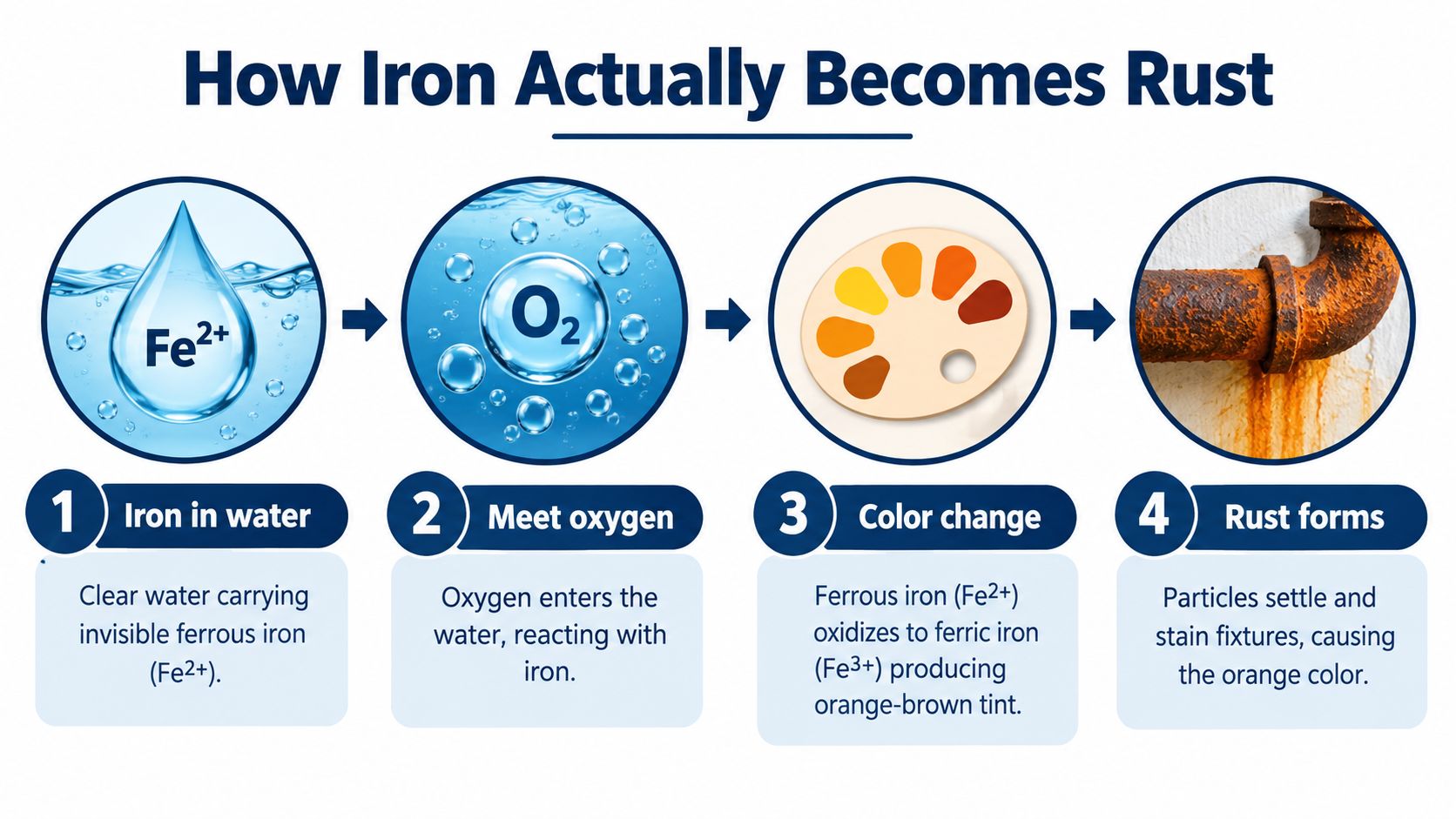
Brown water is a reaction record, not just a color problem. Dissolved ferrous iron, Fe2+, can leave a tap as clear water, then react with oxygen in a glass, basin, faucet aerator, or pipe outlet. Oxidation converts it into ferric compounds, including ferric hydroxide particles, which produce the orange-brown appearance associated with rust. Health Canada identifies particulate iron as a common form of rust in tap water and describes dissolved oxygen reduction as the key cathodic reaction in iron oxidation within drinking-water conditions ranging from 7.0 to 10.5 (Health Canada's technical guidance on iron).
A bicycle left outdoors shows the same progression. Moisture reaches the steel, oxygen takes part in the reaction, and corrosion products build until the surface flakes. Inside a plumbing system, that scale can remain hidden for years. A pressure change, flow surge, or nearby repair can then break loose deposits and send them to the fixture.
The water conditions matter
Rust formation requires water, dissolved oxygen, and an electrolyte. Oxygen entering the system, higher dissolved solids, stray electrical currents, and unfavorable pH can accelerate corrosion. Low-oxygen water tends to slow the reaction, while stagnant water gives dissolved materials more time to interact with pipe surfaces, as explained in this corrosion overview from the University of Wisconsin's water course.
Two visual patterns help separate the likely causes. Clear-water iron remains dissolved and may turn orange only after air exposure. Ferric iron is already particulate, so it can arrive visibly orange or brown. Clear water that changes color in a glass points to a different plumbing path than water that comes out brown immediately. That distinction helps determine whether to inspect the fixture, the branch piping, or the wider supply system.
Common Sources of Rusty Water at Home
The source usually leaves a recognizable fingerprint. Start with the hot-versus-cold comparison, then check whether the same pattern appears across the house.
| Source | Hot, cold, or both | Timing pattern | Duration |
|---|---|---|---|
| Galvanized steel pipes | Often both | First draw, after stagnation, or after flow changes | May clear temporarily and return |
| Water heater sediment or corrosion | Usually hot only | Commonly first use or after the tank sits | Often clears after flushing, then may recur |
| Municipal main work or hydrant use | Commonly cold, potentially whole property | Begins after neighborhood work or a pressure disturbance | May last until disturbed water clears |
| Private well or old service line | Cold, intermittent, or whole system | Sporadic and sometimes tied to source conditions | Variable and recurring |
Hot-only discoloration moves the water heater to the top of the list. A deteriorated anode rod or rusting tank can release material into the hot supply while cold water remains clear. If the hot side produces brown water at every fixture, don't waste time cleaning one faucet aerator and assuming the problem is solved. The symptoms of water-heater sediment can overlap with other failures, so the pattern matters more than one symptom.
Cold-only discoloration points more toward the service line, municipal main, well equipment, or cold-water distribution piping. Both hot and cold suggest shared interior piping, a building supply issue, or a source problem that reaches the water heater and cold fixtures alike.
Older Los Angeles housing stock deserves extra suspicion. Pre-1980s galvanized laterals remain a practical concern in areas such as Mid-City and Echo Park, particularly where original plumbing has been patched rather than replaced. Galvanized pipe corrosion can narrow the passage as well as release particles, which is why brown water paired with weak pressure is more serious than color alone. A detailed explanation of galvanized pipe corrosion is useful when you're deciding whether a local repair is realistic or whether the system has reached the repiping stage.
Is Rust in Water Safe to Drink and Use
A glass turns brown after the water has sat overnight. The color is usually caused by iron oxide particles, metallic taste, reddish staining, and sediment, rather than an acute poisoning event. Iron can become noticeable at relatively low levels because it affects flavor, appearance, and fixtures. The Health Canada's drinking-water iron guidance treats that concern as aesthetic rather than a health-based limit.

Rust color alone does not prove contamination, but it is useful diagnostic evidence. A brief episode after utility work may clear when the lines are flushed. Persistent discoloration, a sewage odor, an oily or slick film, recent flooding, or illness associated with water use requires caution and professional evaluation. Those signs point beyond a simple nuisance deposit and warrant testing or a plumbing inspection.
For drinking and cooking, run the cold tap until the water is clear, then use that cold water rather than hot tap water. Hot water can carry material from the heater. Boiling does not remove iron particles or repair corroded piping. A filter pitcher may improve taste and capture some visible sediment, but its capacity is limited. It also cannot protect every fixture or correct a rusting line inside a wall.
Bathing is generally less concerning when particulate iron is the only issue, although it can stain tubs, towels, and light clothing. Wait to wash white laundry until the water clears, and avoid running a dishwasher through visibly discolored water if deposits are a concern. Pets and aquariums need extra care because fish and other aquatic animals can respond to changes in water chemistry.
If the color keeps returning, treat it as a plumbing-system clue. Test the water, compare affected fixtures, and identify whether the source is local or shared instead of repeatedly flushing and hoping the problem disappears.
Quick DIY Tests and Short-Term Fixes
You can narrow the source before scheduling a service call. Keep a clean glass, a flashlight, and a notepad nearby, then work through the fixtures without changing several variables at once.
Run multiple fixtures. Check the kitchen, a bathroom sink, the shower, and an outside hose bib if accessible. Note which outlets change color and whether the pattern is local or whole-house.
Separate hot from cold. Run cold water by itself, then hot water by itself. Hot-only rust points toward the water heater. Cold-only rust shifts attention toward the service line, main, well, or cold-water piping.
Compare first draw with extended flow. Collect water immediately after the system has been idle, then collect another sample after several minutes of running. If the first sample is brown and the later sample clears, deposits are likely being released from a nearby section.
Inspect a toilet tank. Lift the lid and look for orange sediment, scale, or dark debris. The tank isn't a laboratory sample, but it can show whether particulate material is reaching the cold-water system.
Remove and rinse aerators. Faucet screens trap rust particles and can make one outlet appear worse than the rest. Cleaning them restores flow, but it doesn't cure the source.

Flush carefully, then interpret the result
Flush cold lines with a full-flow fixture and watch whether the color clears. Don't leave a tap running unattended for days. That wastes water, can conceal a recurring release, and tells you little about where the corrosion is occurring. A partial water-heater drain may remove loose sediment, but tank work can stir debris or expose a failing valve, so stop if the drain won't close or the discharge contains substantial material.
Vinegar can clean a faucet aerator or removable fixture part. It won't dissolve corrosion throughout concealed pipes, restore wall thickness, or repair a leaking water heater. If you're checking whether a discoloration event also involves broader microbial concerns, use a methodical guide to checking microbial water risks rather than treating rust color as proof of safety or danger.
Signs the Problem Goes Deeper Than a Flush
A flush is useful when it removes a one-time disturbance. It's not a repair when the same material returns soon afterward. The most important warning sign is recurrence. Brown water that comes back within hours, appears at several fixtures, or worsens after normal use suggests an active source rather than a settled pocket that has finally cleared.
Compare the symptom with the response
| Symptom | Likely cause | Action |
|---|---|---|
| One fixture is briefly brown after utility work | Local disturbance or main activity | Flush, document, and monitor |
| Hot water is brown throughout the home | Water-heater corrosion or sediment | Arrange a water-heater inspection |
| Cold water is brown at multiple fixtures | Galvanized piping, service line, main, or well issue | Test the water and inspect the supply path |
| Brown water comes with weak pressure | Internal buildup, restricted pipe, or broader corrosion | Schedule a plumbing assessment |
| Rust appears with damp slab areas or a rising bill | Concealed leak or failing connection | Seek prompt leak detection |
| Discoloration keeps returning after flushing | Active corrosion or unstable deposits | Stop treating it as a one-off |
Homes built before 1980 with original galvanized plumbing deserve a lower threshold for inspection. Corrosion can reduce the internal opening long before a pipe fails visibly, and a pressure drop may be the first practical clue. Visible pinhole leaks, staining around valves, wet baseboards, or unexplained moisture near a slab are stronger signals because they point beyond water quality and toward property damage.
A hot-side event in a water heater that has been operating for many years is also worth addressing promptly. The age of the tank, condition of the anode rod, leak history, and quality of the discharge matter more than a generic replacement rule. A plumber should inspect those components instead of promising that another flush will solve everything.
What a Plumber Does to Stop It for Good
A professional diagnosis starts by reproducing the complaint. The plumber compares hot and cold samples, checks multiple fixtures, examines pressure and flow, looks at accessible galvanized sections, and asks whether utility work, vacancy, remodeling, or a source change preceded the event. That process prevents a common mistake, replacing a fixture when the water is brown everywhere.
Match the remedy to the source
A water-heater flush is appropriate when the evidence stays on the hot side and the tank can be serviced safely. The plumber drains sediment through the service valve, checks the discharge, evaluates the anode rod and controls, and confirms whether the tank continues producing discolored water. Flushing can remove loose deposits, but it can't rebuild a tank that has corroded through.
Repiping is different. If galvanized supply lines are shedding rust, restricting flow, or developing leaks in several areas, replacing the affected runs with PEX or copper may be more dependable than repeated spot repairs. A partial repipe makes sense when the problem is isolated and the remaining piping is sound. A full repipe becomes more practical when corrosion is widespread, pressure is poor throughout the property, or multiple repairs have already accumulated. The EZ Plumbing repiping service information explains the basic scope of that type of replacement.
Point-of-use filtration can be a reasonable middle ground. A sediment cartridge at a selected fixture may improve visible particles, while under-sink reverse osmosis can address drinking water at one location, especially when a private well has iron-related quality problems. Neither option repairs the distribution system, and filters require correct sizing, replacement, and disposal.
Whole-house treatment belongs after testing. Oxidizing filters, sediment filtration, and water softeners serve different purposes. A softener alone rarely fixes true rust from corroded plumbing, although it may help with certain dissolved iron and staining conditions when properly selected. An experienced plumber may also find that the suspected pipework isn't the source at all. A failing pressure tank, disturbed municipal main, or poorly maintained well system can produce a complaint that looks like an interior-pipe failure.
| Remedy | Typical LA cost | Disruption | Best when |
|---|---|---|---|
| Water-heater flush and inspection | Varies by tank condition and service scope | Limited, usually localized | Rust is hot-only and the tank is serviceable |
| Partial repipe | Varies by access and pipe length | Moderate, focused on affected runs | Corrosion is localized |
| Full repipe | Varies substantially by home layout and materials | Significant, with access and restoration work | Galvanized corrosion is widespread |
| Point-of-use filtration | Varies by equipment and installation | Low | Drinking water or one fixture needs treatment |
| Whole-house filtration or conditioning | Varies by test results and equipment | Moderate, with maintenance afterward | Source water or system-wide particles require treatment |
Plumbing companies also need disciplined intake and follow-up when they handle recurring water-quality complaints. For that business-side perspective, these plumbing lead generation tips are separate from the repair itself, but they reflect why clear diagnosis and communication matter to homeowners comparing service providers.
Your Next Step and a Simple Action Checklist
Use a three-branch decision. Call a plumber now if rusty water returns within 24 hours of running the system clear, if it affects the whole property, or if it comes with leaks, pressure loss, flooding, odor, or unexplained moisture. Monitor for a week when the discoloration appeared once after known street work and every fixture clears afterward. Handle the first check yourself when a short hot-only flush produces clear water and no other plumbing symptom is present.
Run the following sequence and record what you see:
- Run cold water for two minutes. Test more than one fixture and note whether the color fades.
- Run hot water for two minutes. Compare the result with the cold sample rather than relying on memory.
- Check the first draw. Collect water after the house has been idle and compare it with water after sustained flow.
- Inspect the water heater area. Look for rust around fittings, discharge, the pan, or the pressure-relief components. Don't remove parts you can't safely reinstall.
- Look at the main shutoff valve and nearby piping. Orange scale, dampness, or heavy corrosion supports an inspection rather than repeated flushing.
- Ask neighbors or property management. A simultaneous neighborhood complaint points away from one isolated faucet.
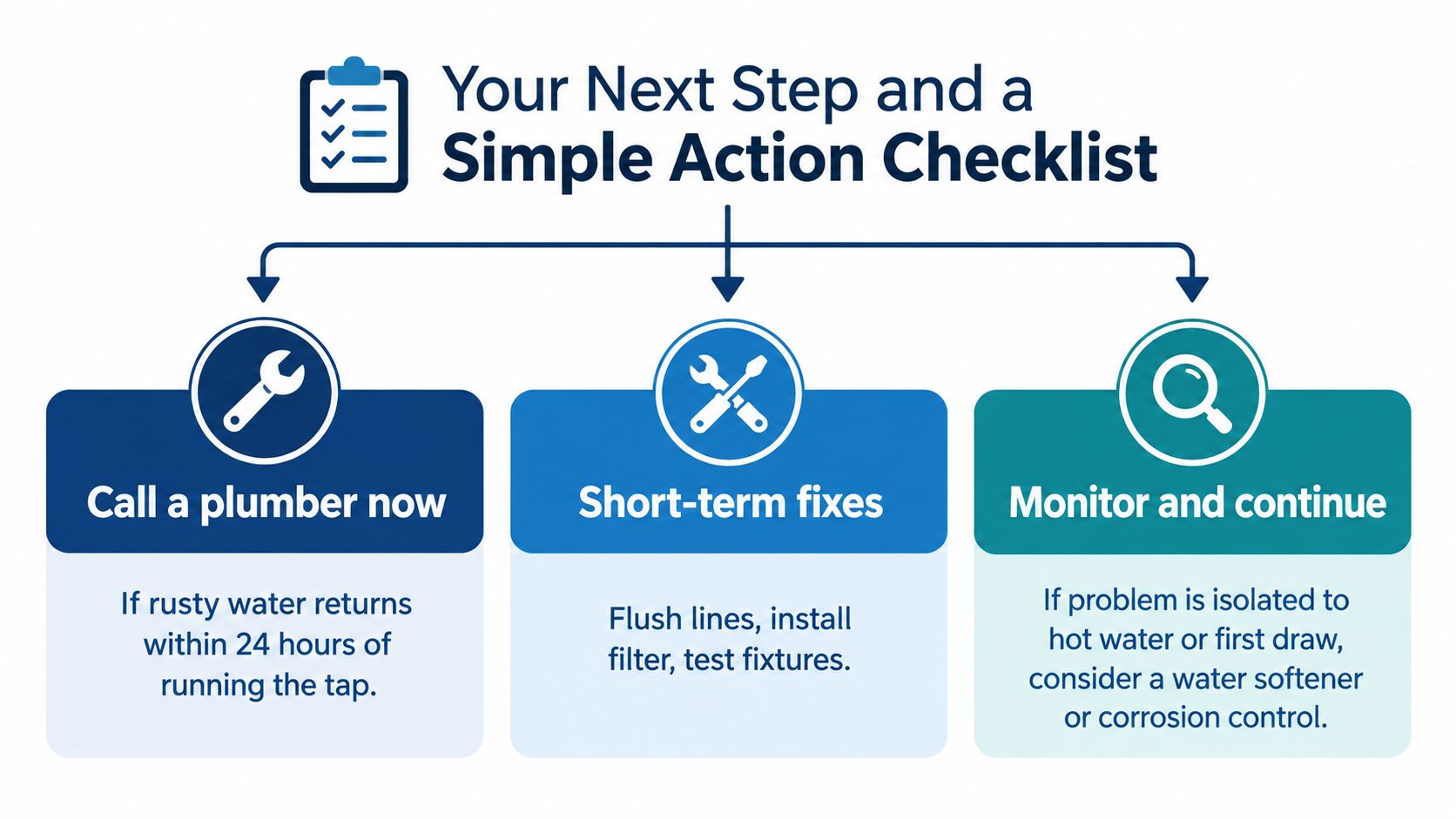
The rule of thumb is straightforward: if the same faucet that was rusty yesterday is rusty today, suspect the plumbing inside the property; if every fixture clears and stays clear, the disturbance was more likely upstream. Don't spend weeks buying filters when the pattern is telling you that a pipe or water heater is deteriorating.
If rusty water keeps returning, EZ Plumbing can inspect the water heater, galvanized piping, fixtures, and accessible supply lines to identify whether you need a flush, targeted repair, filtration, or repiping. Los Angeles homeowners, HOAs, property managers, and commercial operators can request same-day scheduling or emergency service and get a clear recommendation based on the actual pattern in the water.