
What Is Plumber’s Putty? A Homeowner’s Guide
Plumber’s putty is defined as a soft, oil-based, non-adhesive sealing compound used to create watertight compression seals around plumbing fixtures. It works by filling the gap between a fixture and a surface under pressure, not by bonding the two together. This distinction matters more than most homeowners realize. The compound requires zero cure time and stays pliable after installation, which makes it ideal for sink drain flanges, faucet bases, and strainer baskets. Knowing when to use it and when to reach for silicone instead will save you from leaks, stains, and failed repairs.
What is plumber’s putty made of and how does it work?
Plumber’s putty is an oil-based, clay-like compound. Most formulas combine mineral or vegetable oils with inert fillers like limestone or talc to create a soft, workable material that holds its shape without hardening. The oils keep the putty pliable over time, which is exactly what you need for a compression seal.
The sealing mechanism is compression, not adhesion. When you press a sink flange down onto a rope of putty, the putty fills every gap and irregularity in the surface. The fixture’s weight and the tightening of the drain nut hold everything in place. The putty does not glue the flange to the sink. That distinction is the most important thing to understand about this material.
Because the putty never fully cures, you can remove and reposition a fixture without damaging the surface underneath. This is a genuine advantage over silicone, which bonds permanently and requires cutting tools to remove cleanly. The tradeoff is that putty provides no adhesive strength and cannot bridge large gaps.
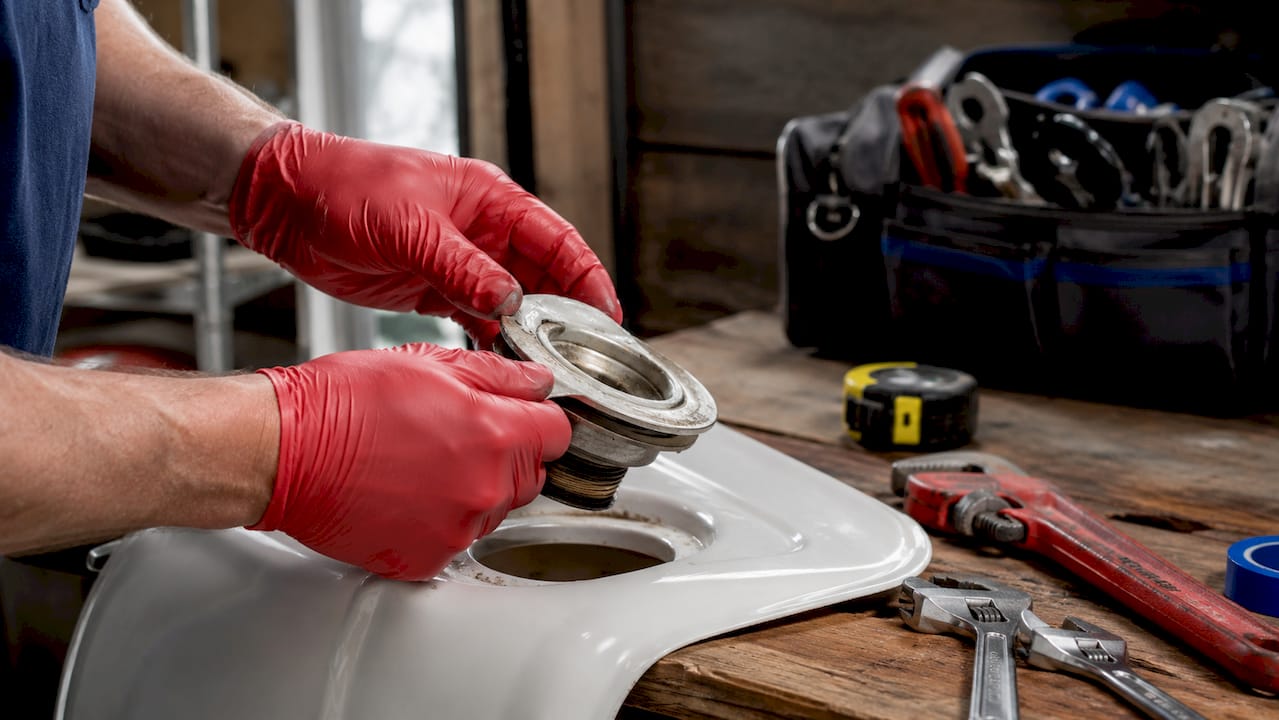
Storage matters with this product. Proper airtight storage extends shelf life to approximately 24 months from manufacture. Once the container is opened and exposed to air, the oils begin to evaporate and the putty dries out, losing its malleability and sealing ability.
Key properties of plumber’s putty at a glance:
- Non-adhesive: Creates a compression seal only. Does not bond surfaces.
- No cure time: Ready to use the moment installation is complete.
- Pliable: Stays soft for years in indoor, non-UV environments.
- Oil-based: Mineral or vegetable oils maintain workability.
- Limited shelf life: Approximately 24 months when stored airtight.
Pro Tip: If your putty feels stiff or crumbly when you roll it, it has dried out. Discard it and buy a fresh container. Dried putty will not form a proper seal and will crack under fixture pressure.
When should you use plumber’s putty vs silicone sealant?
The choice between plumber’s putty and silicone comes down to surface type, fixture material, and whether the joint is static or subject to movement. Putty excels at metal-to-metal or metal-to-ceramic connections in non-pressurized, indoor settings. Silicone is the right call everywhere else.

Plumber’s putty is the correct choice for sink drain flanges, faucet bases, strainer baskets, and pop-up drain assemblies. These are all static, non-pressurized connections where you may need to remove and reinstall the fixture someday. Putty handles all of these well and leaves no residue on metal or ceramic surfaces.
Silicone wins in four specific situations. First, porous natural stone like marble and granite will absorb the oils in standard putty, causing permanent dark staining. Second, ABS plastic fixtures react chemically with putty’s oils, leading to brittleness and cracks over time. Third, outdoor or exposed plumbing requires silicone because putty degrades quickly in UV light and weather. Fourth, continuously wet environments like shower surrounds need silicone’s waterproof, adhesive bond.
| Task | Best choice | Reason |
|---|---|---|
| Sink drain flange | Plumber’s putty | Static, non-pressurized, easy removal |
| Faucet base on ceramic | Plumber’s putty | No adhesion needed, no staining risk |
| Drain on marble countertop | Silicone (stain-free) | Putty oils stain porous stone |
| ABS plastic drain body | Silicone | Putty oils cause plastic brittleness |
| Outdoor faucet base | Silicone | Putty fails in UV and weather exposure |
| Shower surround seam | Silicone | Continuous wet area needs waterproof bond |
Pro Tip: Some manufacturers produce stain-free putty formulas designed for use near stone surfaces. Even so, the safest choice on marble or granite is a silicone product rated for natural stone. The risk of permanent staining is not worth the convenience.
For more guidance on common fixture sealing mistakes, the kitchen plumbing tips from Ez-plumbing cover several scenarios where homeowners choose the wrong sealant for the job.
What mistakes do homeowners make when using plumber’s putty?
The most common errors with plumber’s putty come from misunderstanding what the material actually does. Treating it like a glue or a gap-filler for large voids leads to failed seals and callbacks.
-
Treating putty as an adhesive. Putty works by compression, not bonding. Homeowners who press a flange down and expect the putty to hold it in place will find the fixture shifts or lifts. The drain nut or mounting hardware provides the clamping force. Putty just fills the gap.
-
Flattening the rope instead of rolling it. A flat strip of putty does not distribute evenly under a fixture. You need a round, continuous rope of consistent diameter. Flattening it creates thin spots that allow water to pass through.
-
Using putty on porous stone or plastic. The oils in standard putty leach into marble, granite, and limestone, leaving permanent dark marks. On ABS plastic, the same oils cause chemical brittleness and cracking over months of contact.
-
Applying too little putty. If no excess putty squeezes out around the fixture rim after tightening, you did not use enough. A proper seal always shows some overflow. Wiping that excess away is normal and expected.
-
Using putty outdoors or in direct sunlight. UV exposure dries out the oils rapidly. A putty seal on an outdoor spigot base or a sun-exposed fixture will crack and fail within months. Use 100% silicone for any outdoor plumbing application.
Understanding these pitfalls also connects to broader DIY plumbing risks that LA homeowners face when working without professional guidance.
How to apply plumber’s putty correctly, step by step
Correct application takes about five minutes and requires no special tools. The technique is straightforward, but the details matter.
-
Step 1: Clean the surface. Remove any old putty, silicone, or debris from the fixture seat and the sink surface. Residue under fresh putty creates uneven compression and gaps.
-
Step 2: Roll the rope. Take a golf-ball-sized piece of putty and roll it between your palms into a continuous, uniform rope approximately 1/2 inch in diameter. Do not patch two pieces together. A single unbroken rope prevents weak spots.
-
Step 3: Apply the rope. Press the rope around the underside of the drain flange or faucet base in a complete circle. Join the two ends by pressing them together firmly. The rope should sit in the channel or along the outer edge of the fixture.
-
Step 4: Set the fixture. Press the fixture firmly into position. Insert it through the drain hole and hand-tighten the mounting nut from below. As you tighten, the putty compresses and spreads.
-
Step 5: Check for squeeze-out. Look around the fixture rim. Excess putty squeezing out is a sign of a good seal. If you see no overflow at all, the rope was too thin.
-
Step 6: Clean the excess. Use a plastic scraper or your finger to remove the overflow. Wipe the area clean with a damp cloth. The fixture is ready to use immediately.
Pro Tip: If you need to remove a fixture sealed with putty, simply unscrew the mounting hardware and lift. The putty peels away cleanly from most metal and ceramic surfaces. No cutting tools needed.
For related guidance on sealing leaky pipes in your home, Ez-plumbing’s repair guide covers emergency and permanent sealing options beyond putty. You can also learn more about pipe patching methods for situations where putty alone is not the right solution.
Key Takeaways
Plumber’s putty creates a compression seal, not an adhesive bond, making surface compatibility and correct application technique the two factors that determine whether the repair holds or fails.
| Point | Details |
|---|---|
| Compression, not adhesion | Putty fills gaps under pressure but does not bond surfaces; mounting hardware provides the clamping force. |
| No cure time needed | The seal is active immediately after installation, with no waiting period required. |
| Surface compatibility is critical | Avoid putty on natural stone, ABS plastic, and any outdoor or UV-exposed fixture. |
| Roll a continuous rope | A uniform 1/2-inch rope without breaks or patches prevents weak spots and leaks. |
| Excess putty confirms a good seal | Visible overflow around the fixture rim means you applied enough material. |
What I’ve learned after years of fixture calls
After handling hundreds of fixture installations and leak calls across Los Angeles, one pattern stands out clearly. The majority of putty-related failures come not from the product itself but from using it in the wrong place or the wrong way.
Homeowners often assume that more sealant means a better seal. With putty, that logic partially holds. You do need enough material to see overflow. But the real variable is surface compatibility. I have seen beautiful marble kitchen countertops permanently stained because a homeowner used standard putty on a drain flange. That stain does not come out. The fix requires stone refinishing or countertop replacement.
The other mistake I see regularly is using putty where silicone is required and then wondering why the fixture leaks within a year. Putty is not waterproof in the way silicone is. It resists water under compression, but it will not seal a joint that moves, flexes, or sits in a continuously wet environment. Knowing the difference between a static compression joint and a dynamic or wet joint is the single most useful thing a homeowner can take from this article.
When a repair involves natural stone, plastic components, or any outdoor fixture, call a licensed plumber. The material cost of getting it wrong far exceeds the cost of professional installation.
— EZ
When Ez-plumbing can help with your plumbing repairs
Plumber’s putty handles a specific set of jobs well. When the repair goes beyond a drain flange or faucet base, the right sealant choice becomes one part of a larger diagnosis.
Ez-plumbing is a licensed plumbing company (C-36 License #583868) serving the greater Los Angeles area. The team handles fixture installation, leak detection, drain cleaning, and full system repairs for both residential and commercial properties. If you are dealing with a persistent leak around a fixture, a drain that keeps backing up, or a water heater that needs replacement, Ez-plumbing’s water heater installation services and drain cleaning solutions cover the full scope of home plumbing needs. Call or contact Ez-plumbing online to schedule a service visit.
FAQ
What is plumber’s putty used for?
Plumber’s putty creates watertight compression seals around sink drain flanges, faucet bases, and strainer baskets. It is designed for static, non-pressurized connections in indoor plumbing.
Is plumber’s putty waterproof?
Plumber’s putty resists water under compression but is not fully waterproof in the way silicone is. It should not be used in continuously wet environments or on joints that require a permanent waterproof bond.
How long does plumber’s putty last?
Stored airtight, plumber’s putty has a shelf life of approximately 24 months. Once installed indoors and away from UV light, a properly applied seal can last for many years without drying out or cracking.
Can you use plumber’s putty on granite or marble?
Standard plumber’s putty contains oils that leach into porous stone and cause permanent staining. Use a silicone sealant rated for natural stone instead, or choose a stain-free putty formula if putty is required.
What is the difference between plumber’s putty and silicone?
Plumber’s putty creates a removable compression seal with no cure time, while silicone forms a permanent, adhesive, waterproof bond. Silicone is required for porous stone, ABS plastic, outdoor applications, and continuously wet surfaces.