
Types of Plumbing Pipes: A Homeowner’s Practical Guide
Types of plumbing pipes are specialized materials engineered for specific roles in home water supply and drainage systems, and choosing the wrong one causes leaks, code violations, and costly repairs. In any residential plumbing system, you will encounter copper, PEX, PVC, CPVC, ABS, galvanized steel, and cast iron, each with distinct strengths and limitations. Understanding these plumbing pipe materials before you start a project is the difference between a repair that lasts decades and one that fails inspection. This guide covers every major pipe type, compares the top contenders, and gives you a clear framework for making the right call on your next project.
1. What are the most common types of plumbing pipes used in homes?
Copper and PEX dominate water supply lines in residential construction, while PVC and ABS handle drain, waste, and vent systems. Each material occupies a defined role, and mixing them incorrectly is one of the most common causes of plumbing failures in older homes. Here is a structured overview of the seven pipe types you are most likely to encounter.
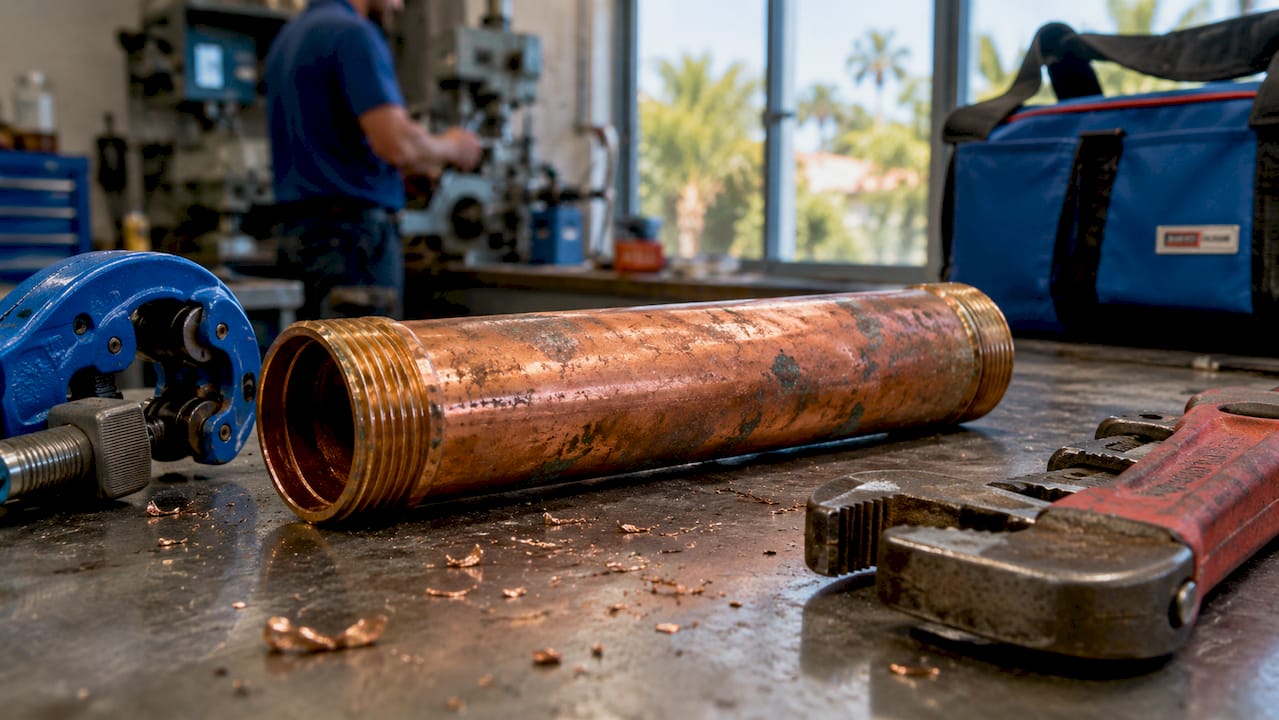
Copper is the long-standing standard for water supply lines. It does not leach harmful chemicals, tolerates high pressure, and carries a decades-long track record in residential plumbing. The trade-off is cost: copper runs significantly more expensive than plastic alternatives, and installation requires soldering skills.
PEX (cross-linked polyethylene) has become the go-to choice for new residential construction and repiping projects. It is flexible, freeze-resistant, and faster to install than copper. PEX works for both hot and cold supply lines and connects with crimp, clamp, or expansion fittings.
PVC (polyvinyl chloride) is the standard for drain, waste, and vent lines. It is lightweight, inexpensive, and resistant to corrosion. PVC cannot handle hot water and is not rated for supply lines in most jurisdictions.
CPVC (chlorinated polyvinyl chloride) looks similar to PVC but tolerates higher temperatures, making it suitable for hot water supply lines inside homes. It costs less than copper and installs with solvent cement rather than solder.
ABS (acrylonitrile butadiene styrene) is a black plastic pipe used primarily for drain and vent lines. It is slightly more rigid than PVC and performs well in cold climates, though some local codes restrict its use indoors.
Galvanized steel was the residential standard before copper took over. It is threaded rather than soldered, corrosion-resistant on the exterior, but prone to internal rust buildup over time. You will find it in homes built before the 1970s.
Cast iron is heavy, expensive, and extremely durable. It remains in use for main sewer lines and drain stacks in older construction, valued for its noise-dampening properties compared to plastic pipe.
2. How copper and PEX pipes compare for water supply lines
Copper and PEX are the two dominant choices for residential water supply, and the decision between them comes down to budget, installation method, and local code requirements.
Copper pipe types are classified under ASTM B88 as Type K, Type L, and Type M, each with a different wall thickness. Type K is the heaviest and used for underground or high-pressure applications. Type L is the residential standard for interior supply lines, balancing durability and cost. Type M is the thinnest and least expensive, suitable for low-pressure indoor use where code permits. Copper with lead-free joints is the safest option for drinking water, as it does not leach harmful chemicals, a quality that health organizations have consistently recognized.
PEX comes in three variants with meaningful differences. PEX-A is the most flexible and the most resistant to chlorine degradation, making it the premium choice for whole-house repiping. PEX-B is the most widely available and the most budget-friendly, covering the majority of residential installations. PEX-C is less common and used in specific applications. Joining methods include expansion fittings for PEX-A, and crimp or clamp fittings for PEX-B and PEX-C. These connection methods must match the pipe type and manufacturer listing to pass inspection.
| Feature | Copper | PEX |
|---|---|---|
| Cost | Higher material cost | Lower material cost |
| Installation | Requires soldering | Tool-based fittings, no flame |
| Flexibility | Rigid | Highly flexible |
| Freeze resistance | Prone to cracking | Expands and recovers |
| Lifespan | 50+ years | 25-50 years |
| Code status | Universally accepted | Accepted with ASTM/NSF marks |
Pro Tip: PEX must carry visible ASTM F876/877 and NSF/ANSI 61 certification marks to pass inspection under IRC 2024. Buy pipe from a reputable supplier and check the markings on the pipe itself before installation.
3. What makes PVC, CPVC, and ABS pipes right for drain and vent systems
Plastic piping covers the majority of drain, waste, and vent work in modern homes, but the three main types serve different functions and are not interchangeable.
PVC handles cold water and drain lines effectively, but it melts above 140°F, which rules it out for hot water supply. For drain, waste, and vent systems, PVC is the default choice in most of the country. It connects with solvent cement, which chemically fuses the pipe and fitting into a single piece. The result is a joint that is often stronger than the pipe itself when done correctly.
CPVC tolerates both hot and cold water, making it the plastic alternative to copper for interior supply lines. It installs the same way as PVC using solvent cement, but the cement formulations are different and not cross-compatible. CPVC costs less than copper and does not require a torch, which makes it a practical choice for DIY supply line work in areas where PEX is not preferred.
ABS is the black pipe you see in older drain and vent systems, particularly in homes built in the western United States. It is slightly more impact-resistant than PVC in cold temperatures and installs with a one-step ABS cement rather than the primer-plus-cement process required for PVC. Some jurisdictions, including parts of Los Angeles, have specific code requirements about where ABS can be used, so checking local regulations before purchasing is worth your time.
Key points to keep in mind when working with plastic drain pipe:
- PVC requires primer before solvent cement for a code-compliant joint
- ABS uses a single-step cement but cannot be joined to PVC with standard fittings without a transition coupling
- CPVC and PVC look nearly identical but are not interchangeable; CPVC is typically cream or light yellow, PVC is white or gray
- None of these plastics should be used underground without verifying the pressure and temperature rating for the application
4. When galvanized steel and cast iron pipes still show up in homes
Galvanized steel and cast iron are rarely installed in new construction, but they remain in millions of older homes across Los Angeles and the rest of the country. Knowing what you are dealing with changes how you approach a repair or upgrade.
Galvanized steel pipe is threaded at the joints and coated with zinc to resist exterior corrosion. The problem is internal: over decades, mineral deposits and rust accumulate inside the pipe, reducing water flow and eventually causing pinhole leaks. Homes in the greater Los Angeles area built before 1970 frequently still have galvanized supply lines, and reduced water pressure at fixtures is often the first sign of internal buildup. Cutting into galvanized pipe requires a pipe wrench and threading tools that most DIYers do not own, which makes this a job where professional help pays for itself.
Cast iron drain pipe is a different story. It is heavy, expensive to install, and genuinely durable, with a lifespan that can exceed 100 years when maintained. It also absorbs sound far better than PVC, which is why it remains the preferred material for drain stacks in multi-story buildings and high-end residential construction. Repairing cast iron typically involves no-hub couplings, which are rubber-gasketed stainless steel clamps that connect cast iron sections or transition to PVC without cutting threads.
Pro Tip: If you find galvanized pipe in your home, do not just replace the section that is leaking. Spot repairs on galvanized lines are temporary fixes. A full repiping assessment will tell you whether a complete replacement to copper or PEX makes more financial sense over a five-year horizon.
5. How to choose the right plumbing pipe for your home project
Selecting the right pipe comes down to four criteria: the role the pipe will play, the temperature and pressure it will carry, local code requirements, and your installation skill level.
Start by identifying whether the pipe is for supply or drainage. Using pipe materials designed for their specific role prevents the most common plumbing failures. PVC in a hot water supply line will deform. Copper in a drain application is technically possible but wasteful and unnecessary. Match the material to the function first, then evaluate cost and installation method.
Check certification marks before purchasing any pipe. IRC 2024 requires visible ASTM and NSF certification on PEX pipes for potable water applications. The same principle applies to other materials: look for NSF-61 on any pipe that will carry drinking water, and verify that the pipe meets ASTM standards for its intended use. Pipe sold at big-box retailers is generally code-compliant, but always check the markings on the pipe itself rather than relying on packaging claims.
When you are connecting different pipe materials, use the correct transition fittings. Copper to PEX requires a push-fit or crimp fitting designed for that transition. PVC to cast iron requires a no-hub coupling. Dielectric unions are required where copper connects to galvanized steel to prevent galvanic corrosion. Skipping the right fitting to save a few dollars creates a failure point that can cause water damage months or years later.
For code compliance in California, the California Plumbing Code governs material selection and installation methods. Los Angeles adds its own amendments, so what is acceptable under the IRC may require a local variance. When in doubt, a licensed plumber can confirm what materials and methods will pass inspection in your specific jurisdiction.
Key takeaways
The best plumbing pipe for any home project is the one matched to its specific role, rated for the correct temperature and pressure, certified to NSF and ASTM standards, and installed with the right fittings for code compliance.
| Point | Details |
|---|---|
| Match pipe to function | Use copper or PEX for supply lines; use PVC, CPVC, or ABS for drain and vent systems. |
| Verify certifications | PEX must show ASTM F876/877 and NSF/ANSI 61 marks to pass inspection under IRC 2024. |
| Know your legacy pipes | Galvanized steel and cast iron in older homes often need full replacement, not spot repairs. |
| Use correct transition fittings | Dielectric unions, no-hub couplings, and push-fit adapters prevent failures at material transitions. |
| Check local code | California and Los Angeles amendments to the IRC affect which materials and methods are approved. |
What Ez-plumbing has learned from years of pipe work in LA
The most expensive plumbing mistakes we see at Ez-plumbing are not from homeowners who chose the wrong pipe. They are from homeowners who chose the right pipe but installed it without checking the local code first.
Los Angeles has specific amendments to the California Plumbing Code that affect material approvals, and those amendments change. A pipe type that passed inspection five years ago may now require a variance or a different fitting method. PEX installation guidelines are updated periodically, and DIYers who rely on a YouTube video from 2019 are often working from outdated information.
The second pattern we see consistently is homeowners underestimating the PEX bend radius requirement. Ignoring the minimum bend radius creates invisible damage inside the pipe wall that restricts flow and eventually causes failure. For half-inch PEX, the minimum bend radius is approximately 3.75 inches. That sounds generous until you are routing pipe through a tight cabinet corner.
My honest recommendation: for supply line replacements and anything that touches potable water, get a licensed plumber to at least review the plan before you start. The material cost difference between copper and PEX is real, but the cost of a failed inspection or a water damage claim is far larger. Use this guide to understand your options, then make the call with full information.
— EZ
Ready to upgrade your home’s plumbing?
Whether you are replacing galvanized supply lines, installing a new water heater, or planning a full repipe, Ez-plumbing brings licensed expertise to every project in the greater Los Angeles area.
Our team handles everything from material selection and code compliance to final inspection, so you do not have to navigate LA’s plumbing amendments on your own. If your project involves a new water heater, our water heater installation guide walks you through what to expect before you call. For drain issues tied to aging pipe, our drain cleaning service addresses buildup and blockages that older galvanized or cast iron lines commonly develop. Contact Ez-plumbing to schedule a consultation with a C-36 licensed plumber who knows Los Angeles code requirements inside and out.
FAQ
What type of pipe is best for home water supply?
Copper and PEX are the best choices for residential water supply lines. Copper offers a 50-plus-year lifespan and is universally code-accepted; PEX costs less, installs faster, and handles freezing better.
Can PVC pipe be used for hot water lines?
PVC cannot be used for hot water supply lines because it deforms above 140°F. CPVC is the correct plastic alternative for hot water, as it tolerates both hot and cold water inside homes.
How do I know if my home has galvanized pipes?
Galvanized pipes are gray or silver in color, threaded at the joints, and magnetic. Reduced water pressure and rust-colored water at fixtures are common signs of internal corrosion in aging galvanized lines.
Does PEX pipe require special certification to pass inspection?
Yes. Under IRC 2024, PEX pipe must carry visible ASTM F876/877 and NSF/ANSI 61 marks on the pipe itself to be approved for potable water use.
What is the difference between PVC and ABS drain pipe?
PVC is white or gray and requires primer before solvent cement; ABS is black and uses a single-step cement. Both serve drain and vent systems, but local codes in areas like Los Angeles may specify which one is permitted for a given application.