
What Is Smart Plumbing? A Homeowner’s Guide
Smart plumbing is defined as a network of connected sensors, automated valves, and IoT-enabled devices that monitor your home’s water system in real time, detect leaks, and respond automatically to prevent damage. The industry often refers to this category as “connected water management” or “smart water systems,” though smart plumbing has become the widely used shorthand. Systems like the Moen FLO and AI-powered platforms like Wint represent the current standard, giving homeowners and property managers live visibility into every drop of water moving through their pipes.
What is smart plumbing technology and how does it work?
Smart plumbing technology works by placing sensors throughout your water system to measure flow rate, pressure, moisture levels, and temperature continuously. Those readings feed into a central hub or cloud platform that uses AI to learn what normal water use looks like in your specific home. When something deviates from that pattern, the system flags it immediately.
Wint’s AI technology learns each building’s normal water flow patterns, enabling detection of anomalies like leaks and burst pipes in real time. That continuous learning is what separates smart plumbing from a basic water alarm. A standard sensor tells you water is present on the floor. An AI-enabled system tells you a pipe behind your bathroom wall has been losing pressure for six hours.
The automated response is where smart plumbing earns its value. When the system detects a confirmed leak or pressure anomaly, it triggers an automatic shutoff valve to stop water flow before damage spreads. You also receive a real-time alert on your smartphone, so you know exactly what happened and where, even if you are traveling or managing a property remotely.
High-quality smart systems incorporate redundant communication channels including cellular, Wi-Fi, and Ethernet, plus onboard AI computation for autonomous operation even when your internet goes down. That redundancy matters because a system that fails during a power outage provides no protection at the moment you need it most.
Pro Tip: When evaluating any smart plumbing system, ask the vendor specifically how the device behaves during a Wi-Fi or power outage. A system that requires constant internet connectivity to trigger its shutoff valve is a liability, not an asset.
The core components of a complete smart plumbing system include:
- Flow meters installed at the main water line or at individual fixtures
- Moisture and leak sensors placed near water heaters, under sinks, and behind appliances
- Pressure sensors that detect sudden drops indicating a burst pipe
- Automated shutoff valves that close within seconds of a confirmed leak
- A smartphone app or dashboard for remote monitoring and manual control
What are the benefits of smart plumbing for homeowners?
The benefits of smart plumbing are best understood through the lens of risk reduction, not just convenience. Continuous monitoring and real-time alerts uncover slow, silent leaks behind walls before visible damage occurs, shifting the return on investment conversation from efficiency gains to early problem detection. That shift matters because water damage repairs routinely cost tens of thousands of dollars, while the devices that prevent them cost a fraction of that.
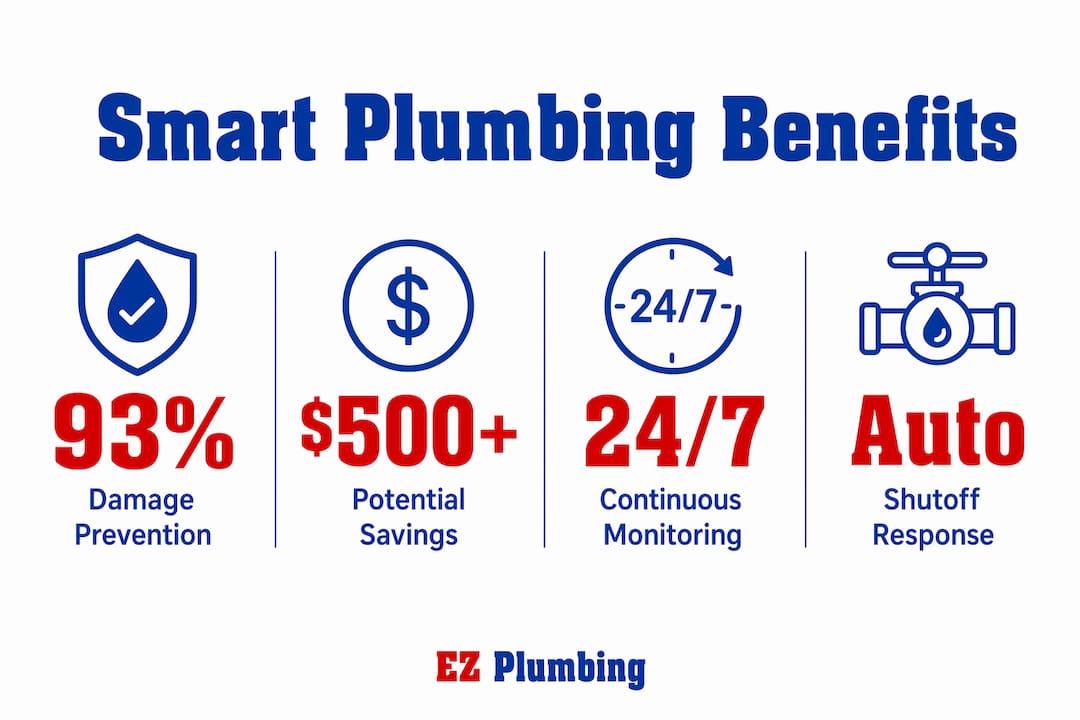
The numbers make the case clearly. Up to 93% of water leaks could be lessened or prevented by automatic water leak detection and shutoff systems. That statistic means the vast majority of water damage events homeowners experience are preventable with technology that already exists and is widely available.
The concrete advantages for homeowners and property managers include:
- Early leak detection catches hidden or slow leaks inside walls, under slabs, and behind appliances before mold growth or structural damage begins.
- Automatic water shutoff limits property damage when a pipe bursts or a fixture fails, even when no one is home.
- Usage transparency shows exactly how much water each fixture or zone consumes, revealing inefficiencies that translate directly to lower utility bills.
- Mold and structural damage prevention reduces the risk of long-term repair costs that standard homeowner’s insurance may not fully cover.
- Remote control and monitoring gives property managers oversight of multiple units or buildings from a single app.
- Property value can increase when advanced water management systems are documented as part of a home’s infrastructure.
“Smart plumbing ROI is increasingly defined by risk reduction, early detection, and prevention rather than just improving efficiency or reducing energy consumption.” — Plumbing & Mechanical
For property managers in particular, the ability to prevent plumbing emergencies before they become tenant complaints or insurance claims is the defining advantage. A single avoided water damage event in a multi-unit building can recover the cost of an entire smart plumbing installation.
How does smart plumbing compare to traditional plumbing?
Traditional plumbing is reactive by design. You discover a problem when water appears on the ceiling, when a utility bill spikes unexpectedly, or when a tenant calls about low water pressure. By that point, the damage is already done and the repair bill is already accumulating.
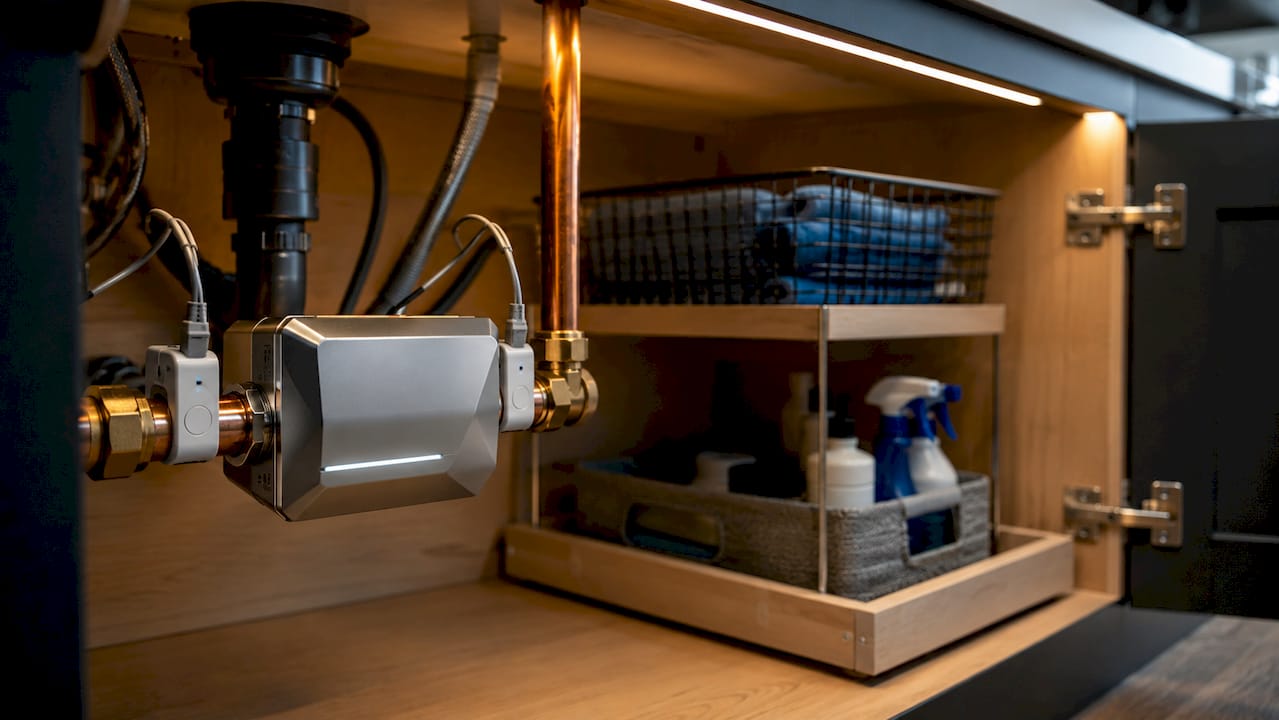
Smart plumbing systems operate proactively. The Moen FLO system detects leaks as small as a drop per minute and automatically shuts off water to prevent damage, running daily microleak tests and alerting homeowners via app with no subscription fees. A traditional pressure-reducing valve does none of that. It simply regulates pressure and waits for something to fail.
| Feature | Traditional plumbing | Smart plumbing |
|---|---|---|
| Leak detection | Manual inspection or visible damage | Continuous automated monitoring |
| Response to leaks | Homeowner calls a plumber | Automatic shutoff within seconds |
| Water usage data | Monthly utility bill only | Real-time fixture-level data |
| Remote control | None | Full smartphone control |
| Upfront cost | Low | $50 for sensors to $5,500 for whole-house systems |
Smart plumbing device costs range from about $50 for spot sensors to over $5,000 for complex whole-house systems including installation. That range means you can start with targeted protection at a water heater or under a sink, then expand the system over time as budget allows.
Pro Tip: If a full whole-house system is outside your budget right now, start with a single smart shutoff valve at your main water line and spot sensors near your water heater and washing machine. Those three locations account for the majority of residential water damage events.
The long-term math favors smart plumbing decisively. A $500 sensor-and-shutoff setup that prevents one water damage event saves you far more than its cost. Traditional plumbing offers no equivalent protection.
What smart plumbing devices and systems are available today?
The smart home plumbing market has matured significantly, and you now have well-defined product categories to choose from based on your specific needs and budget.
Smart leak and moisture detectors are the entry point. Devices from brands like Govee, Honeywell Home, and Moen place small sensors near appliances, under sinks, and around water heaters. They alert you via app the moment moisture is detected, giving you time to act before damage spreads.
Whole-house water monitors with automatic shutoff represent the most protective option. The Moen FLO installs on your main water line and monitors every fixture in the house simultaneously. It learns your household’s usage patterns and flags anything unusual, from a running toilet to a slow pipe leak.
Connected water heaters add a layer of smart functionality to one of your home’s most water-intensive appliances. Connected water heaters provide remote temperature control, energy use visibility, and leak detection features, giving homeowners both protection and energy management from a single device. Tankless water heaters with smart connectivity are a particularly strong upgrade, combining on-demand efficiency with remote diagnostics.
Smart faucets and shower systems from brands like Kohler and Moen allow precise flow control, temperature presets, and usage tracking. These are more convenience-focused but contribute to overall water conservation.
Smart irrigation controllers like Rachio and RainBird adjust outdoor watering schedules based on local weather data, soil conditions, and seasonal patterns. For Los Angeles homeowners managing drought restrictions, these devices pay for themselves quickly.
The integration layer matters as much as the individual devices. Most current smart plumbing solutions connect to Amazon Alexa, Google Home, or Apple HomeKit, allowing you to manage your entire water system alongside your other smart home devices from one interface.
| Device category | Example products | Primary benefit |
|---|---|---|
| Spot leak sensors | Govee, Honeywell Home | Low-cost targeted protection |
| Whole-house shutoff | Moen FLO | Full-property leak prevention |
| Connected water heaters | Rheem EcoNet, A.O. Smith iCOMM | Energy visibility and remote control |
| Smart faucets | Kohler Sensate, Moen Arbor | Water conservation and convenience |
| Irrigation controllers | Rachio, RainBird | Weather-adjusted outdoor watering |
What to consider before installing smart plumbing systems
Before committing to any smart plumbing solution, assess your actual exposure. A single-family home with a finished basement has different risk priorities than a four-unit rental property with aging galvanized pipes. Matching the system to the risk profile determines whether the investment makes sense.
Key factors to evaluate before installation:
- Spot sensors vs. whole-house systems: Spot sensors protect specific high-risk locations and cost under $100 each. Whole-house systems provide complete coverage but require professional installation and a higher upfront investment.
- Internet dependency: Any system that relies solely on Wi-Fi for shutoff commands is vulnerable during outages. Prioritize systems with backup power and redundant communication channels.
- AI learning period: AI-based flow pattern systems require a period of normal usage data collection before they accurately distinguish between normal and abnormal patterns. Expect more alerts in the first few weeks.
- Compatibility with existing plumbing: Older homes with galvanized or clay pipes may need repiping before smart sensors provide accurate readings.
- Vendor ecosystem: Choose products that integrate with your existing smart home platform and have a track record of software support.
Pro Tip: Always have a licensed plumber assess your existing pipe condition before installing a whole-house smart water monitor. Sensors installed on corroded or undersized pipes will generate inaccurate data and may miss the actual source of a leak.
Professional installation by a licensed plumber also protects your warranty coverage on most whole-house systems and confirms the device is calibrated correctly for your home’s specific water pressure and flow characteristics.
Key takeaways
Smart plumbing systems deliver their greatest value through proactive leak detection and automatic shutoff, preventing the water damage events that reactive traditional plumbing cannot stop.
| Point | Details |
|---|---|
| Core definition | Smart plumbing connects sensors, AI, and automated valves to monitor and protect your water system in real time. |
| Primary ROI driver | Risk reduction and early leak detection deliver more financial value than energy savings alone. |
| Cost range | Systems range from $50 spot sensors to $5,500 whole-house installations, allowing phased adoption. |
| Critical reliability factor | Choose systems with backup power and redundant communication channels for protection during outages. |
| Best starting point | Install a whole-house shutoff valve plus spot sensors at your water heater and washing machine for maximum early impact. |
My honest assessment of smart plumbing after years in the field
After years of responding to water damage calls across Los Angeles, I can tell you that the most expensive plumbing jobs we handle are almost always preventable. A slow leak behind a kitchen wall that ran undetected for three months. A water heater connection that failed overnight and flooded a finished basement. These are not freak accidents. They are the predictable outcome of plumbing systems that have no way to communicate a problem until the damage is already visible.
What I find genuinely compelling about smart plumbing technology is the shift in mindset it requires. You stop thinking about plumbing as infrastructure you only notice when it fails, and start treating it as a monitored system you actively manage. That shift alone changes outcomes. Homeowners who know their daily water usage baseline notice a 15% spike immediately. Property managers who receive a 3 a.m. shutoff alert call us in the morning for a repair, not after a weekend of water damage.
The affordability curve has also changed the conversation. Three years ago, a whole-house smart water system was a premium upgrade for high-end new construction. Today, a Moen FLO installation is accessible to most homeowners, and spot sensors cost less than a dinner out. The barrier is no longer cost. It is awareness.
My advice for cautious homeowners: start with a single smart shutoff valve at your main line and two spot sensors. You will have meaningful protection within an afternoon. From there, you can evaluate whether a full connected water management system makes sense for your property. The technology has matured enough that early adoption no longer means accepting rough edges. It means getting ahead of a problem before it finds you.
— EZ
Upgrade your home with smart plumbing from Ez-plumbing
Ez-plumbing installs and services smart plumbing systems throughout the greater Los Angeles area, from whole-house water monitors to connected water heaters and professional leak detection services that complement your smart devices with expert diagnostics.
Whether you are upgrading a single-family home or managing a multi-unit property, our licensed team (C-36 License #583868) can assess your current plumbing, recommend the right smart solutions for your risk profile, and handle installation to code. We also specialize in tankless water heater installation with smart connectivity options that give you remote control and energy visibility from day one. Contact Ez-plumbing to schedule a consultation and find out which smart plumbing upgrades make the most sense for your property.
FAQ
What is smart plumbing in simple terms?
Smart plumbing is a system of connected sensors and automated valves that monitors your home’s water use in real time and shuts off water automatically when a leak is detected. It combines IoT sensors, AI pattern recognition, and smartphone alerts to protect your property continuously.
How much does a smart plumbing system cost?
Smart plumbing device costs range from about $50 for individual spot sensors to over $5,000 for whole-house systems including professional installation. Most homeowners start with a mid-range whole-house monitor like the Moen FLO, which typically costs between $400 and $600 before installation.
Can smart plumbing work without internet?
The most reliable smart plumbing systems are designed to operate during internet or power outages using backup power and redundant communication channels like cellular and onboard AI computation. Systems that depend entirely on Wi-Fi for shutoff commands should be avoided for whole-house protection.
Does smart plumbing actually save money?
Smart plumbing saves money primarily through damage prevention rather than utility bill reductions alone. Up to 93% of water leaks could be lessened or prevented by automatic detection and shutoff systems, meaning one avoided water damage event typically recovers the full cost of installation.
Do I need a plumber to install smart plumbing devices?
Spot sensors and simple monitors can be self-installed, but whole-house shutoff systems require a licensed plumber for proper calibration and code compliance. Professional installation also protects your device warranty and confirms accurate pressure and flow readings for your specific plumbing configuration.