
What Causes Drain Blockage: A Homeowner’s Guide
Drain blockage is defined as the partial or complete obstruction of a pipe caused by accumulated waste, debris, or structural damage. 83.1% of domestic blockages are user-caused, primarily through grease buildup and inappropriate flushing. The remaining 15.3% trace back to structural defects like root intrusion or pipe damage. Understanding what causes drain blockage gives you a clear path to preventing it, and in most cases, fixing it yourself before a plumber becomes necessary.
What causes drain blockage in household plumbing?
The most common drain blockage causes are grease, fat, and oil (collectively called FOG) in kitchen drains, and hair combined with soap scum in bathroom drains. These materials do not flush cleanly through pipes. Instead, they coat the interior pipe walls and create a sticky surface that catches everything else passing through.
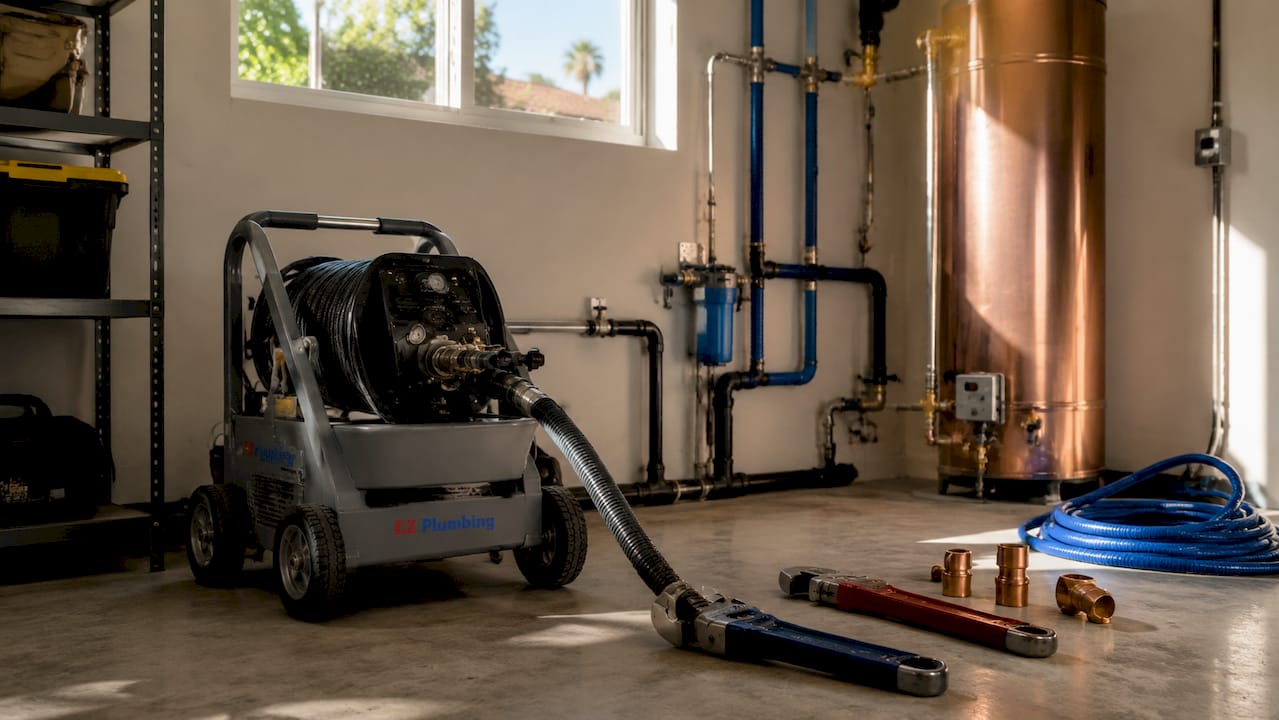
Blockages form gradually as grease or soap residue narrows the pipe bore over time, much like plaque narrowing an artery. Flow slows first, then debris sticks to the coating, and eventually the pipe closes off entirely. This is why a drain that seemed fine last month suddenly backs up completely.
Hair is protein-based and does not dissolve in water, which means it accumulates into dense mats that trap soap scum and other debris. In multi-person households, bathroom drains can develop significant clogs within 30–60 days of no maintenance.
The following household items are the most frequent causes of blocked drains:
- Cooking grease, fat, and oil poured down kitchen sinks
- Hair shed during showering or grooming
- Soap scum and shampoo residue
- “Flushable” wipes (these do not break down in pipes)
- Sanitary products and cotton swabs
- Food scraps, coffee grounds, and eggshells
- Dental floss, which tangles and binds other debris
- Children’s toys and small foreign objects
Pro Tip: Never pour hot grease directly down a drain. Pour it into a heat-safe container, let it solidify, and throw it in the trash. This single habit eliminates the leading cause of kitchen drain blockage.
How do structural issues cause drain blockage?
Structural problems account for 15.3% of drain blockages and are the type most likely to recur without professional repair. Tree root intrusion is the most destructive structural cause. Roots follow moisture and naturally grow toward pipe joints and hairline cracks in underground lines. Once inside, they expand and eventually block the pipe entirely.
Pipe misalignment, collapse, and mineral scaling also restrict flow. In older Los Angeles properties, clay sewer laterals and galvanized steel pipes are particularly vulnerable. Ground shifting, which is common in Southern California due to seismic activity and soil movement, can alter pipe gradients. A pipe that no longer slopes correctly allows sediment and debris to settle rather than flush through.
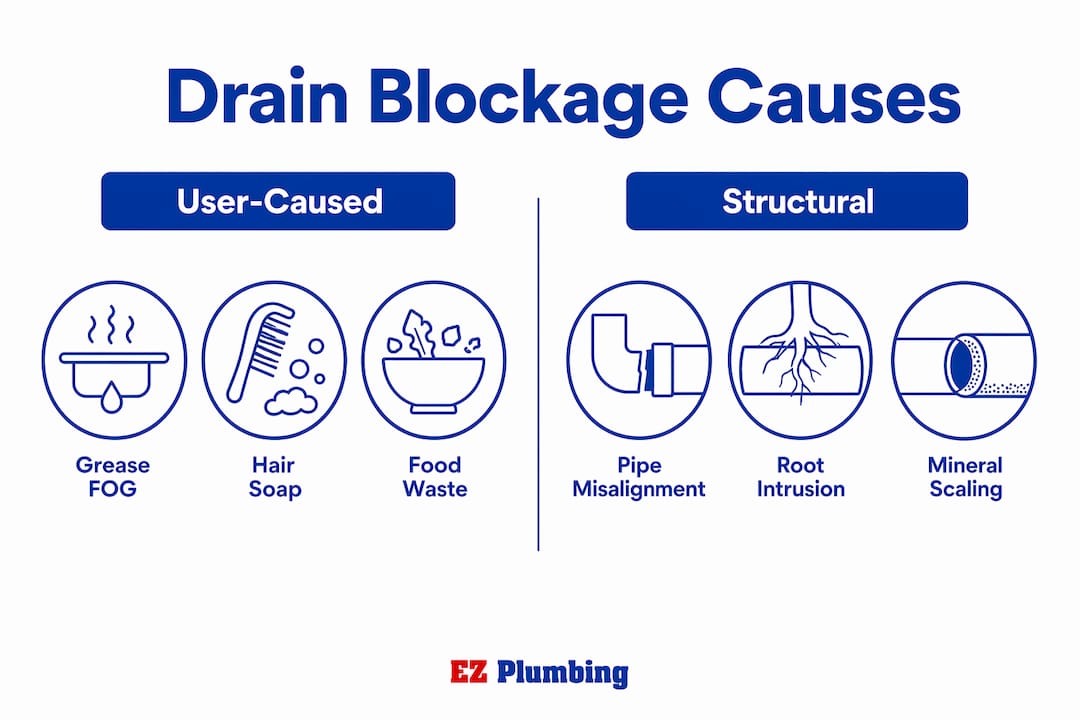
Recurring blockages are the clearest signal that an underground structural problem exists. Root intrusion often regrows within 6–18 months after cutting, meaning repeated clearing without a permanent fix is just temporary relief. A camera inspection identifies the exact location and nature of the problem before any repair work begins.
| Cause type | Example | Typical location |
|---|---|---|
| User-caused | Grease and FOG buildup | Kitchen drain, P-trap |
| User-caused | Hair and soap scum | Bathroom sink, shower drain |
| User-caused | Inappropriate flushing | Toilet trapway |
| Structural | Tree root intrusion | Underground sewer lateral |
| Structural | Pipe misalignment or collapse | Main sewer line |
| Structural | Mineral scaling | Galvanized or older iron pipes |
Pro Tip: If you clear a blockage and it returns within a few weeks, stop using chemical cleaners and call for a camera inspection. You are dealing with a structural issue, not a maintenance problem.
Which drain locations are most vulnerable to blockages?
Certain points in your home plumbing system collect debris far more than others. Knowing these locations helps you target your maintenance where it matters most.
The P-trap is the curved pipe section directly beneath every sink. Its shape is designed to hold water and block sewer gases, but that same curve is where grease, hair, and soap scum settle first. Cleaning a P-trap takes about five minutes with basic tools and prevents the majority of common sink clogs.
Pop-up stoppers in bathroom sinks are another primary clog site. The rod mechanism that raises and lowers the stopper sits directly in the drain path and catches hair on every use. Most homeowners never remove and clean this component, which is why bathroom sinks slow down so predictably over time.
Toilet trapways differ from sink drains because they are designed to handle solid waste, but their curved internal passage is narrow enough to catch non-dissolvable items. Wipes, sanitary products, and paper towels are the leading causes of toilet blockages because they do not break apart in water the way toilet paper does.
Bathtub overflow tubes also contribute to slow drainage. The tube connects the overflow plate near the top of the tub to the drain line below. Debris and soap scum build up inside this tube and restrict flow even when the main drain appears clear.
Vent pipes on your roof regulate air pressure inside the drain system. A blocked vent, often caused by leaves, bird nests, or debris, creates negative pressure that slows drainage and produces gurgling sounds at fixtures throughout the house. If multiple drains in your home are slow simultaneously, a blocked vent pipe is a likely cause alongside a main line obstruction.
The most vulnerable drain locations in a typical home are:
- Bathroom sink P-trap and pop-up stopper
- Shower drain hair catcher and trap
- Kitchen sink P-trap and garbage disposal connection
- Toilet trapway
- Bathtub overflow tube
- Roof vent pipe
What maintenance practices prevent drain blockages?
Preventing drain clogs costs almost nothing and takes very little time. The habits that matter most are consistent and simple.
Monthly cleaning of pop-up sink stoppers takes 90 seconds and prevents approximately 80% of common bathroom sink clogs caused by hair and soap residue. Pull the stopper out, remove the hair and debris, rinse it, and replace it. That single task done monthly keeps most bathroom sinks clear year-round.
For kitchen drains, scraping plates before rinsing them reduces the organic waste entering your pipes. Less food material means less bacterial biofilm, which is the sticky layer that helps grease and debris adhere to pipe walls. Run cold water when using a garbage disposal, not hot. Cold water keeps fats solid so the disposal can chop and flush them. Hot water melts grease temporarily, but it re-solidifies further down the pipe where you cannot reach it.
Boiling water damages PVC pipes and rubber seals, so avoid pouring it directly down drains. Hot tap water is safe and effective for flushing residue. For clearing an existing clog, a plunger or a drain snake is the right first tool. 90% of household clogs clear with a plunger or drain snake within 10–20 minutes at a cost of $0–$30. That is a far better outcome than chemical cleaners, which often fail and create additional problems.
Chemical drain cleaners damage PVC joints and rubber seals, and they frequently fail against protein-based hair clogs. Physical removal is what professionals prioritize. For guidance on effective drain clearing methods that protect your pipes, physical tools are always the safer starting point.
A practical maintenance routine for homeowners:
- Monthly: Remove and clean bathroom sink pop-up stoppers and shower drain hair catchers.
- Monthly: Pour hot tap water down kitchen drains to flush grease residue.
- Quarterly: Remove and inspect P-traps under bathroom and kitchen sinks.
- Quarterly: Check that no slow-draining fixtures have developed in the past few months.
- Annually: Have a licensed plumber inspect older or frequently blocked drain lines.
Pro Tip: Install a mesh drain screen in every shower and tub. A $3 screen catches hair before it reaches the trap and reduces bathroom drain maintenance to a 10-second weekly task.
For more detailed guidance on preventing drain clogs at home, a structured maintenance plan makes the difference between a clear drain and an emergency call.
Key Takeaways
Drain blockage is caused primarily by FOG buildup and hair accumulation, and most clogs are preventable through consistent monthly maintenance costing almost nothing.
| Point | Details |
|---|---|
| User habits cause most blockages | 83.1% of drain blockages trace back to grease, hair, and inappropriate flushing. |
| Blockages build gradually | Grease coats pipe walls first, then debris sticks and narrows the pipe over time. |
| P-traps are the first clog point | Cleaning P-traps and pop-up stoppers monthly prevents the majority of common clogs. |
| Physical tools outperform chemicals | A plunger or drain snake clears 90% of clogs without damaging pipes or seals. |
| Recurring clogs signal structural damage | Root intrusion and pipe misalignment require camera inspection, not repeated clearing. |
What I’ve learned after years of clearing Los Angeles drains
The call we get most often is not for a sudden blockage. It is for a drain that has been “a little slow” for three months. Homeowners wait, hoping it resolves on its own, and by the time they call, the clog is dense and sometimes structural.
The most common misconception I see is that hot water flushes grease safely. It does not. Hot water moves grease past the sink trap, but the grease cools and re-solidifies in the main line where a plunger cannot reach it. Cold water with a running disposal is the correct approach for kitchen drains, and it is counterintuitive enough that most people never learn it until they have a problem.
Chemical cleaners are the other mistake I see repeatedly. Homeowners try one product, it fails, they try a second product immediately, and now they have a pipe full of mixed chemicals that can produce toxic gases. Mixing chemical cleaners creates dangerous chlorine and chloramine gases. Wait at least 24 hours and flush thoroughly with water before trying any second product. Better yet, use a drain snake first and skip the chemicals entirely.
The properties I see with the fewest plumbing issues are the ones where someone does five minutes of drain maintenance each month. No special products, no expensive treatments. Just pulling out the pop-up stopper, clearing the hair, and running hot tap water. That routine, done consistently, keeps most drains clear for years. For context on commercial drain failures and how the same neglect patterns appear at scale, the causes are identical to what happens in residential plumbing.
— EZ
When it’s time to call Ez-plumbing

Ez-plumbing has served the greater Los Angeles area since 1989 with a C-36 License (#583868), handling everything from routine drain cleaning to full sewer line repair. When a clog does not clear with a plunger or drain snake, or when the same drain blocks repeatedly within weeks, that is the point where professional tools like hydro-jetting and camera inspection make the difference. Ez-plumbing’s drain cleaning services cover residential and commercial properties across Los Angeles, with same-day availability for urgent blockages. Contact Ez-plumbing directly for a diagnosis before a slow drain becomes a damaged pipe.
FAQ
What is the most common cause of drain blockage?
Grease, fat, and oil buildup combined with hair and soap scum account for the majority of household drain blockages. 83.1% of blockages are user-caused through these materials and inappropriate flushing.
Why is my drain blocked even after I cleared it?
A blockage that returns within weeks usually signals a structural problem such as tree root intrusion or pipe misalignment. Root intrusion regrows within 6–18 months after cutting, so a camera inspection is the correct next step.
Are chemical drain cleaners safe to use?
Chemical cleaners frequently fail against hair clogs and damage PVC joints and rubber seals. Physical methods like a plunger or drain snake are safer and more effective for most household blockages.
How often should I clean my drains to prevent blockages?
Monthly cleaning of pop-up stoppers and shower hair catchers, combined with quarterly P-trap inspections, prevents the majority of common clogs. This routine takes under five minutes per drain.
What are the signs of a drain blockage?
Slow drainage, gurgling sounds from fixtures, water backing up into sinks or tubs, and foul odors from drains are the primary signs of a blockage. Multiple slow drains occurring at the same time often indicate a main line or vent pipe obstruction.