
Clogged Sewer Drain in LA? a 2026 Homeowner’s Guide
You hear the toilet burble after someone uses the sink. The shower starts draining slower than usual. Then a faint sewer smell shows up in the bathroom and doesn't leave. In Los Angeles homes, that combination usually means more than a nuisance clog. It can point to a clogged sewer drain in the main line that carries wastewater out of the house.
That matters because a sink clog is annoying. A sewer backup can damage floors, contaminate living space, and turn a regular evening into an emergency call. In older LA neighborhoods, mature trees, aging sewer laterals, grease buildup, and heavy day-to-day use all make main line problems more common than many homeowners realize.
If you're dealing with odd sounds, slow drains, or sewage odor, this guide will help you sort out what you're seeing, what you can safely check yourself, and when professional service stops being optional. If that odor is strongest in the bathroom, it's also worth reading this guide on what causes sewage smell in a bathroom because sewer line trouble is only one of a few possible causes.
Table of Contents
- That Gurgling Sound Is a Warning
- Sink Clog vs Sewer Clog What Is the Difference
- Common Causes of Sewer Line Blockages in LA
- Clear Warning Signs of a Main Sewer Clog
- Safe DIY Checks Before You Call a Plumber
- Professional Sewer Solutions and Repair Costs
- Your Los Angeles Partner for Sewer Emergencies
- Frequently Asked Questions About Sewer Drains
That Gurgling Sound Is a Warning
A lot of main sewer problems often start subtly. A toilet gurgles once, then acts normal. The tub drains a little slower, but only in the morning. Someone blames hair in the shower or too much toilet paper and moves on. Then the washing machine runs and dirty water shows up where it shouldn't.
In Los Angeles, that pattern is familiar. A home may look fine above ground while the trouble sits in the sewer lateral below the slab, yard, or driveway. One fixture acts up first. Then another. By the time several drains are involved, the line often isn't partially inconvenienced. It's struggling to move waste out at all.
Practical rule: If sounds, smells, and slow drainage start happening together, treat it like a system problem until proven otherwise.
The gurgling happens because air and wastewater are competing for space inside a restricted pipe. That doesn't always mean a full backup is minutes away, but it does mean the plumbing system is telling you something has changed. With a simple branch drain clog, the symptoms usually stay in one place. With a main sewer issue, the whole house starts sending signals.
Homeowners often wait because the problem seems intermittent. That's exactly what makes sewer clogs deceptive. A line can still pass some water for a while, especially when no one is showering, running the dishwasher, or doing laundry. Then one heavier-use moment pushes it past the limit.
Sink Clog vs Sewer Clog What Is the Difference
Think of a sink clog like a stalled car on a side street. Traffic is disrupted in one small area, but the rest of the city keeps moving. A sewer clog is closer to a freeway blockage. Once the main route is restricted, everything feeding into it starts backing up.
A sink clog is local. It usually affects one fixture or one small group of fixtures. Hair, soap scum, food scraps, or buildup inside a trap or short branch line are common causes. The bathroom sink drains slowly, but the toilet flushes fine. The kitchen sink backs up, but the shower still works normally.
A clogged sewer drain affects the main path that carries wastewater away from the house. That means toilets, tubs, showers, sinks, laundry drains, and sometimes floor drains can all start reacting to the same blockage. The issue isn't just inconvenience anymore. It becomes a contamination risk.
How the system is laid out
Inside the house, each fixture has its own drain line. Those smaller lines tie into larger branch lines. Eventually they all feed into the main sewer lateral, which exits your property and connects toward the public sewer system.
When that main line clogs, wastewater has nowhere to go. It looks for the lowest available opening. In many LA homes, that's a tub, shower, floor drain, or ground-floor toilet.
A quick way to tell the difference
Use this simple comparison:
| Situation | More likely a local drain clog | More likely a main sewer clog |
|---|---|---|
| One sink drains slowly | Yes | Less likely |
| Toilet bubbles when sink or washer runs | Less likely | Yes |
| Water backs up in a shower after flushing | Less likely | Yes |
| Problem stays in one room | Yes | Less likely |
| Several fixtures act up together | Less likely | Yes |
If one drain is slow, check that fixture first. If multiple drains react to each other, stop thinking “clogged sink” and start thinking “main line.”
That distinction matters because the wrong fix wastes time. A bottle of store-bought cleaner or a hand snake may help a bathroom sink trap. It won't solve a root mass or grease blockage deep in the sewer lateral. In some cases, it makes the next step harder and less safe.
Common Causes of Sewer Line Blockages in LA
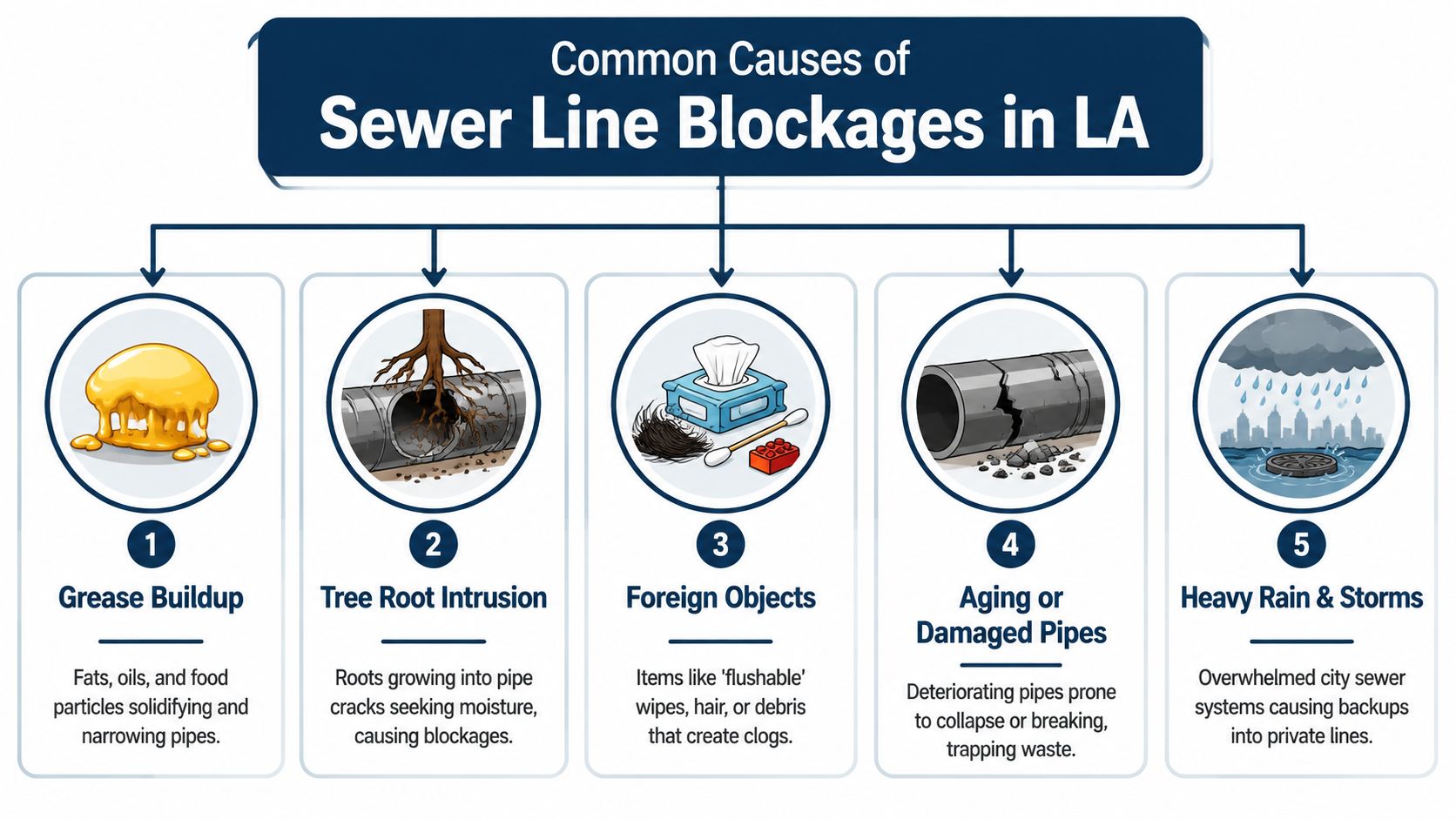
In Los Angeles, sewer line blockages usually build from ordinary use plus local conditions. Older homes in neighborhoods with mature trees, original clay lines, or long laterals to the street tend to see the same trouble patterns again and again. The blockage often starts small, then turns into a backup after enough grease, roots, wipes, or pipe defects reduce the line's carrying capacity.
Grease and food waste
Grease is one of the most common causes because it enters the drain hot and leaves the kitchen looking harmless. After it cools, it coats the pipe wall and starts catching food particles, soap residue, and other debris. In homes that use the kitchen heavily, that layer can build faster than owners expect.
Trusteyman's explanation of what causes the main sewer line to clog describes how fat, oil, and grease can harden into a soap-like sludge inside the line. Once the inside of the pipe turns rough, solids hang up more easily and the opening gets smaller over time.
Garbage disposals add to the problem. They reduce food scraps into smaller pieces, but those scraps still have to travel through the sewer line.
Tree roots in older neighborhoods
Root intrusion is a classic LA sewer problem. In areas with older landscaping and aging sewer laterals, roots search for moisture and enter through small cracks, separated joints, or worn connections. That is common with older clay pipe and with lines that have shifted over the years.
Once roots get in, they keep growing. They catch paper and waste, slow the flow, and can turn a partial obstruction into a full blockage. I see this often in older parts of Los Angeles where a line works "well enough" for months, then backs up during a busy weekend or after guests stay over.
Wipes and other non-flushables
Wipes cause trouble even when the package says flushable. They do not break apart like toilet paper, and they tend to twist together inside the line. If the pipe already has roots, scale, or a rough joint, wipes latch on and start collecting everything behind them.
Other items that commonly contribute to sewer clogs include:
- Paper towels: Built to stay strong when wet.
- Feminine products: They swell and do not dissolve.
- Grease-coated food scraps: They stick inside the pipe and feed larger buildup.
- Cotton items and personal care products: They snag easily and create a base for a larger blockage.
Aging or damaged pipes
Pipe condition matters as much as what goes down the drain. Many LA properties still have older sewer materials or repairs from different eras tied together in one line. Over time, joints separate, sections settle, and the pipe interior gets rough enough to hold debris instead of shedding it downstream.
A low spot in the line can make recurring backups hard to solve with simple cleaning alone. Snaking may restore flow for now, but if the line has a belly, offset joint, or cracked section, the clog often comes back. That is usually the point where a camera inspection is worth it, because the fix depends on whether the problem is buildup, roots, or a structural defect.
Repeated sewer backups usually point to a line condition problem, not just bad luck at one fixture.
Heavy rain can expose weak sewer lines, especially on properties with drainage issues, but most residential main line clogs in Los Angeles still trace back to four categories. Grease, roots, non-flushables, and aging pipe.
Clear Warning Signs of a Main Sewer Clog
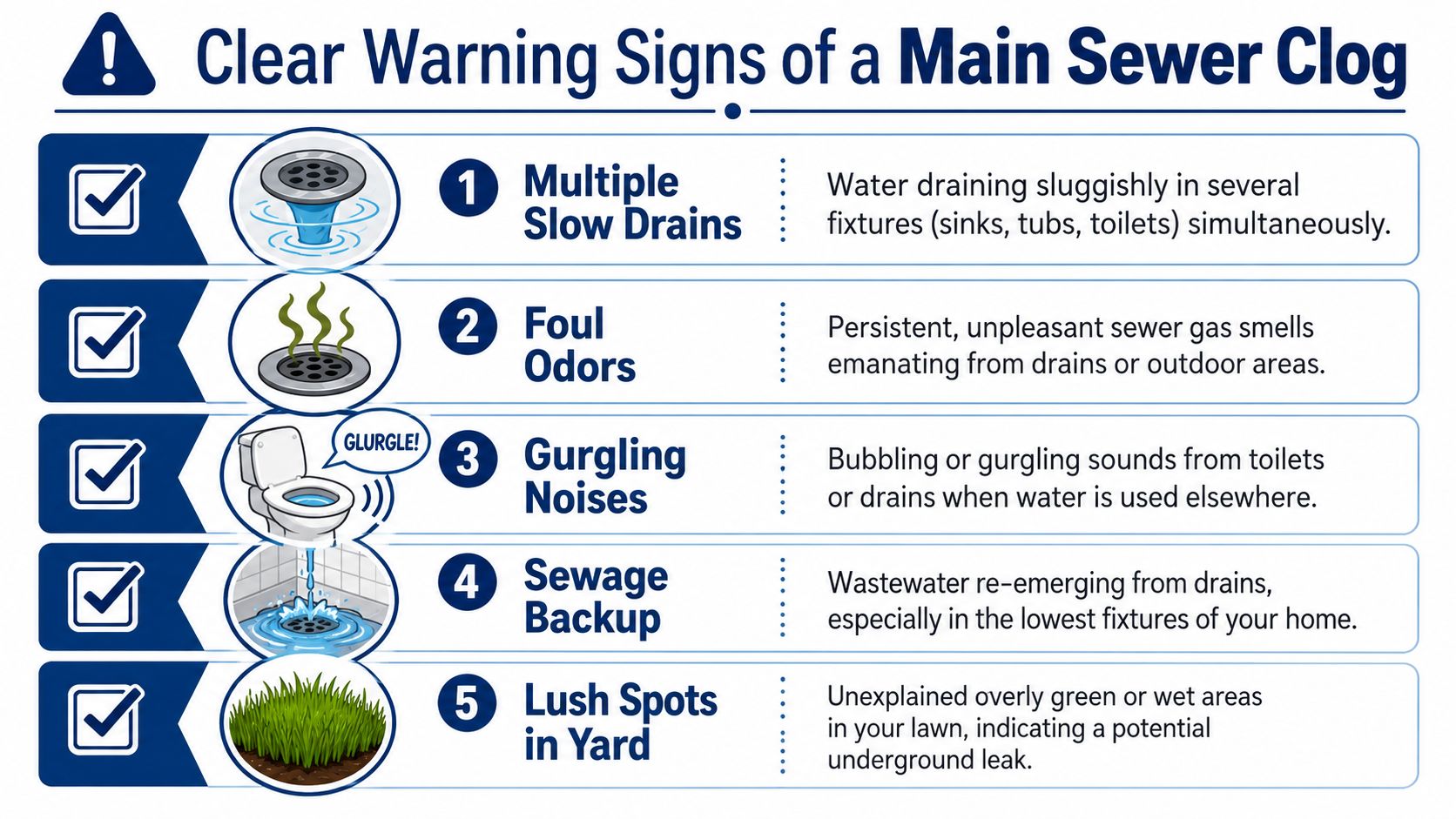
Main line clogs usually announce themselves through patterns, not one isolated symptom. The strongest clue is that several fixtures start interacting in ways they shouldn't.
The signs that should get your attention
- Multiple drains are slow at once: A slow bathroom sink alone may be local. A slow sink, tub, and toilet together usually aren't.
- Water shows up in the tub or shower when you flush: That's one of the clearest signs wastewater is meeting resistance in the main line and rising to the lowest opening.
- Toilets or drains gurgle when other fixtures run: Air gets displaced strangely when the line can't move water normally.
- Sewage odor lingers indoors or near the yard: Persistent foul smell points to waste or sewer gas where it shouldn't be.
- Wet or unusually green patches appear outside: If the sewer line is leaking or backing up below the yard, the surface sometimes tells on it first.
Why these signs point to the main line
A local clog stays local because the blockage sits close to one fixture. A main line problem creates pressure and drainage issues across the whole system. That's why the symptoms seem to “travel” from room to room.
If the washing machine drains and a downstairs shower starts bubbling, the fixtures are sharing the same bottleneck. If a toilet flush causes movement in a nearby tub, the system isn't venting and draining normally through its intended path.
The lowest fixture in the house often shows the first visible backup. That's where wastewater can reappear before it reaches higher drains.
What deserves same-day attention
Call for help the same day if any of these are happening:
| Warning sign | What it usually means |
|---|---|
| Backup in shower or tub | Wastewater is already reversing direction |
| More than one fixture affected | The blockage is beyond a single drain |
| Sewer smell inside the home | Waste or sewer gas is escaping |
| Yard is wet without irrigation cause | The underground line may be leaking or overflowing |
If sewage is actively coming up, stop using all water immediately. Every flush, shower, and laundry cycle adds volume to a system that already can't discharge properly.
Safe DIY Checks Before You Call a Plumber
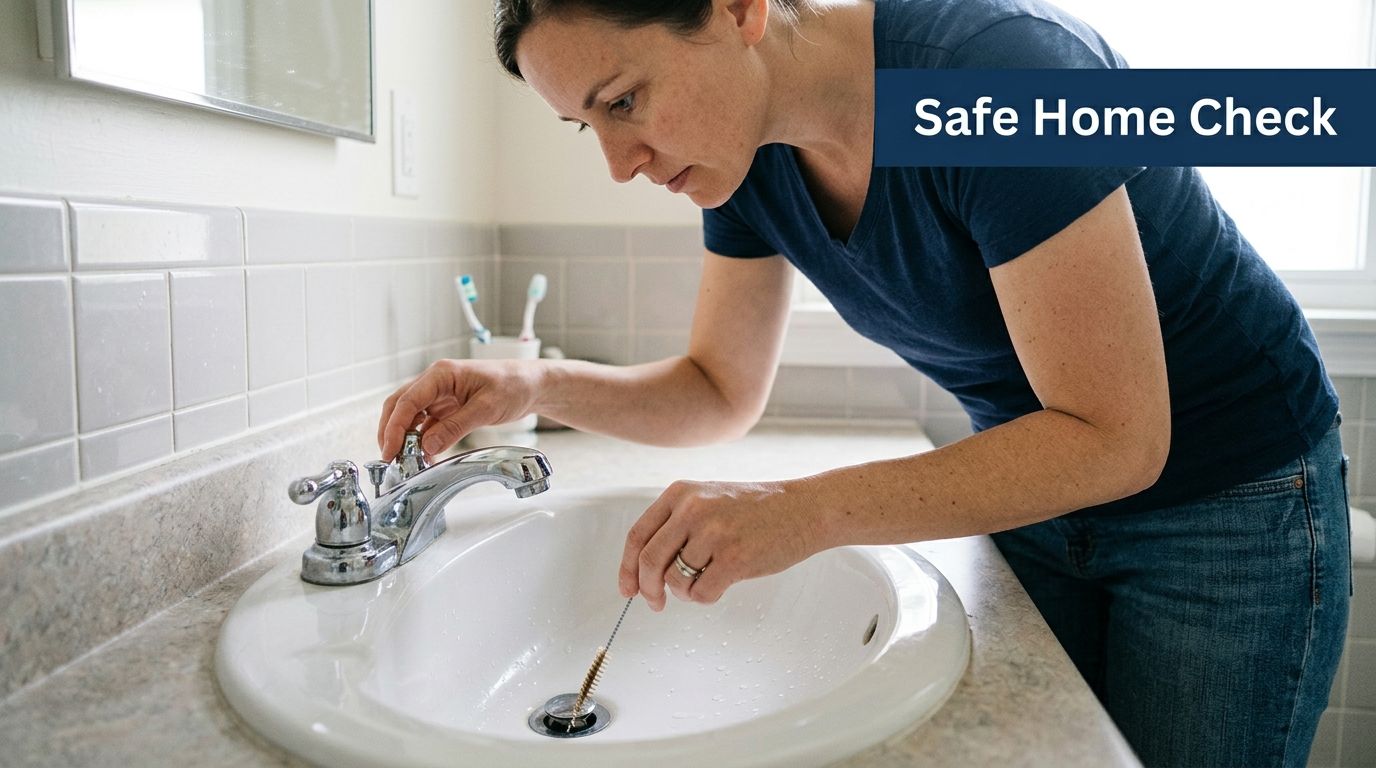
You can do a few useful checks without making the problem worse. The key is to diagnose safely, not to “attack” the line with random products and tools.
What to do first
Start by reducing the load on the system.
- Stop all water use: Don't flush toilets, run the dishwasher, or start laundry.
- Check whether the issue is isolated or widespread: Test carefully. One quick observation is enough. Don't keep sending water into a suspect line.
- Look for the lowest fixture: Ground-floor showers, tubs, and floor drains often reveal the earliest backup.
- Find the sewer cleanout if your home has one: Many LA homes have an exterior cleanout in the yard or near the foundation. If you aren't sure what you're looking at, this guide on sewer cleanouts in LA homes will help you identify it.
If you open a cleanout, do it cautiously and only if you're comfortable. A backed-up line can release water and waste under pressure. Gloves, eye protection, and distance matter.
What homeowners should not do
The most common DIY mistake is pouring chemical drain cleaner into a main line problem. That's usually wasted money, and it can create a more dangerous work area later.
The reason is simple. A main sewer blockage is often deep in the line, and grease behaves differently than people expect. As noted earlier, fat, oil, and grease can harden into a rigid buildup rather than stay pourable or soft. Small bottles of cleaner don't reliably solve that kind of obstruction.
Don't do these:
- Don't use harsh chemical cleaners: They often sit in the pipe instead of clearing the obstruction.
- Don't force a small hand snake into the main line: Those tools are made for traps and short branch drains, not long sewer laterals.
- Don't keep testing with repeated flushes: If the line is blocked, repeated testing becomes repeated flooding.
- Don't ignore sewage contact: If wastewater reached flooring or personal items, cleanup needs to be handled carefully.
A quick visual overview can help if you're trying to understand what a main line issue looks like before service arrives.
Stop trying products once you've confirmed it's affecting multiple fixtures. At that point, the safer move is preserving the home, not experimenting.
Here's a practical comparison of what you can handle and what needs a technician:
| Symptom / Situation | Safe DIY Action | Call a Professional Plumber Immediately |
|---|---|---|
| One sink is slow, all else normal | Clean stopper, trap, and visible debris | If the problem persists after local cleaning |
| Toilet gurgles when sink or washer runs | Stop water use and monitor other fixtures | Yes |
| Shower backs up after flushing | Stop using all fixtures | Yes |
| Sewer odor near cleanout or yard | Check for obvious standing water only | Yes |
| Suspected grease or root blockage in main line | Do not use chemicals | Yes |
Professional Sewer Solutions and Repair Costs
Once a main line clog is likely, the question is no longer “Can something get through?” It's “What is in the line, where is it, and did the pipe itself fail?” That requires proper equipment.
How a plumber diagnoses the problem
The first step is usually a sewer camera inspection or a direct access inspection through the cleanout. A camera helps identify whether the blockage is grease, roots, wipes, a collapsed section, a sagging line, or a combination. That matters because the right solution depends on the material causing the restriction and the condition of the pipe wall.
For example, a soft obstruction near the cleanout may respond to a cable machine. A line coated with grease, loaded with debris, or infiltrated by roots often needs more than a basic pass with a blade.
What actually clears a main line
Two common methods do most of the work in residential sewer cleaning.
Snaking or augering breaks through or retrieves a blockage. It can be effective for certain stoppages, especially when the goal is to reopen flow quickly. But a snake often creates a hole through the clog rather than cleaning the full pipe wall.
Hydro-jetting uses pressurized water to scour the interior of the sewer line. It is especially useful when grease, sludge, scale, and debris coat the pipe. On lines with suitable condition and access, it does a much more complete cleaning than a basic cable pass.
If the camera shows a broken pipe, separated joints, severe root intrusion, or repeated trouble from a damaged section, cleaning may not be enough. At that point, repair options can include localized excavation, trenchless restoration, or full replacement. If you want the repair side explained in plain language, this overview of trenchless sewer repair is a helpful starting point. In Los Angeles, companies such as EZ Plumbing also provide camera diagnostics, hydro jetting, and sewer repair when the line can't be restored by cleaning alone.
What sewer work can cost
Pricing varies with access, severity, and whether the job is just clearing a clog or addressing damaged pipe. According to Angi's breakdown of main sewer line clog costs, the average cost to repair a clogged main sewer line in the United States is approximately $378, with costs ranging from $99 for snaking a minor drain clog to $1,600 for extensive services such as video inspection and hydro-jetting for a major blockage.
That same cost guide notes these ranges:
- Snaking a main line: $100 to $250
- Hydro-jetting: $350 to $600
- Trenchless pipe repair: $60 to $250 per linear foot
- Full pipe replacement: $3,000 to $25,000
The article also notes that delaying repairs can push costs higher, including situations where digging and clearing alone can exceed $1,000. That's why diagnosis matters so much. Spending a little on the correct method is usually cheaper than paying twice for the wrong one.
If you're comparing quotes during a stressful after-hours situation, this guide on avoid overpaying for urgent repairs is worth reviewing before you authorize major work. It won't replace a sewer inspection, but it can help you ask better questions about scope, urgency, and pricing.
Your Los Angeles Partner for Sewer Emergencies
A main sewer problem gets expensive fast in Los Angeles. In many homes, the first bad decision is a "quick check" flush after the tub starts backing up. That is often the moment wastewater ends up on the floor instead of staying in the pipe.
When speed matters
Local experience makes a real difference here. LA sewer problems vary by neighborhood and property type. Older homes in places like Pasadena, Glendale, and parts of the Valley often deal with clay pipe and root intrusion. Hillside properties can have access challenges and longer private laterals. Multifamily buildings add another layer because one blocked line can affect several units at once.
The right plumber should be able to identify what matters on your property before recommending a fix. That includes where the cleanout is, whether roots are likely, how the line is laid out, and whether the blockage appears to be in the home's sewer lateral or farther out in the system. Quick answers are helpful, but a rushed guess can lead to the wrong service call and a higher bill.
EZ Plumbing is a local company that has served Los Angeles since 1989. They handle emergency plumbing, drain cleaning, hydro jetting, sewer diagnostics, and repair for homeowners, HOAs, property managers, and commercial properties across Santa Monica, Beverly Hills, West Hollywood, Pasadena, Glendale, Burbank, and the San Fernando Valley.
If sewage is backing up now, call (818) 908-2710 and stop using water in the home until the line is checked. If the problem is not active but needs prompt scheduling, use EZ Plumbing's online scheduling page.
Frequently Asked Questions About Sewer Drains
Is a sewer backup usually covered by homeowners insurance
Sometimes. Coverage usually depends on the cause of the backup, the damage involved, and whether your policy includes a sewer or water backup endorsement.
In practice, insurers often separate sudden damage from preventable maintenance problems. A backup tied to root intrusion, an old broken lateral, or long-term pipe deterioration may be treated differently than an accidental overflow. LA homeowners should check the exact policy language and call their carrier before cleanup starts if possible. Photos, plumber findings, and a sewer camera report can help support the claim.
Who handles a sewer clog in a rental
Responsibility depends on where the clog is and what caused it.
A blockage from wipes, paper towels, grease, or other improper use inside the unit may fall on the tenant under the lease. A problem in the building drain, the main sewer line, or an aging underground pipe usually falls on the landlord or property owner. In older Los Angeles duplexes and small apartment buildings, that distinction matters because one clogged main line can affect several fixtures or units at once.
Property managers should document which fixtures are backing up, tell occupants to stop using water, and get the line diagnosed before assigning responsibility.
How often should older LA homes get checked
Older Los Angeles homes with clay sewer lines, large trees, or a past root problem should be inspected on a regular schedule. Every couple of years is a practical starting point for many properties. Homes with repeated stoppages, heavy root growth, or a known offset in the line may need more frequent camera inspections.
The goal is simple. Catch roots, scale buildup, or a sagging section before sewage backs up into the house.
A few habits help reduce the odds of a main line clog:
- Keep grease out of drains: Let it cool, then throw it in the trash.
- Throw wipes away: "Flushable" wipes still cause trouble in real sewer lines.
- Watch for patterns: Gurgling, sewer odor, and slow drains in more than one fixture point to a bigger problem.
- Schedule an inspection before the rainy season or before buying an older home: That timing makes sense in many LA neighborhoods with mature landscaping and older buried piping.
If sewage is backing up into tubs, showers, or toilets, stop using water and call EZ Plumbing at (818) 908-2710 for emergency service. If the issue is not active but needs prompt attention, schedule an inspection and get clear next steps.