
Effective drain cleaning methods for your home
A single clogged drain can bring your household to a standstill, from a kitchen sink that won’t empty after dinner to a bathroom backing up on a busy weekday morning. For homeowners and property managers in Los Angeles, drain problems are especially common given the region’s aging infrastructure, hard water mineral buildup, and the root-hungry trees found throughout neighborhoods like Silver Lake, Pasadena, and the San Fernando Valley. Choosing the right drain cleaning method is not always obvious, and picking the wrong one can worsen the problem or damage your pipes. This guide walks through your most practical options and helps you decide which approach suits your specific situation.
Table of Contents
- How to choose the right drain cleaning method
- Plunging: The classic first defense
- Snaking and augering for tougher clogs
- Chemical drain cleaners: Quick fix or hidden danger?
- Comparison of common drain cleaning methods
- When to call a professional plumber
- Why prevention beats even the best cleaning method
- Get expert drain cleaning help in Los Angeles
- Frequently asked questions
Key Takeaways
| Point | Details |
|---|---|
| Choose method carefully | Select a drain cleaning approach based on clog location, pipe material, and severity. |
| Plungers work for simple clogs | Plunging is effective for soft, single-drain blockages but not for deep or tough clogs. |
| Snakes tackle tough blockages | Snaking is better for deeper clogs but may require follow-up or professional help. |
| Chemicals have risks | Chemical cleaners can harm pipes and health and are not recommended for all situations. |
| Prevention is best | Regular maintenance and good drain habits keep your plumbing working and reduce emergencies. |
How to choose the right drain cleaning method
Before you reach for any tool or product, take a moment to assess what you’re actually dealing with. The location and severity of a clog matters more than most people realize. A slow-draining bathroom sink and a completely backed-up main sewer line are very different problems that require very different solutions. Using the wrong method wastes your time at best and cracks your pipes at worst.
Start by asking a few key questions. Is the clog affecting one fixture or multiple drains throughout the home? A single slow sink usually points to a localized blockage, while backups across several fixtures suggest a main line issue. What type of fixture is involved? Kitchen drains tend to collect grease and food debris, while bathroom drains trap hair and soap scum. Toilet clogs are their own category, requiring specific tools and careful handling.
Budget, speed, and safety are also real factors. A plunger costs less than ten dollars and works immediately, while professional hydro-jetting or camera inspection carries a higher upfront cost but delivers a thorough result. Our drain cleaning guide gives a deeper look at how Los Angeles-specific conditions affect your options. You can also review drain maintenance tips to understand how routine upkeep fits into the bigger picture.
A word of caution: never use chemical drain cleaners on pipes you suspect are already weakened or cracked. And if your home has older galvanized steel or clay sewer laterals, aggressive mechanical tools can cause more harm than good. Some basic drain cleaning tips reinforce what we’ve found in the field as well.
Pro Tip: When in doubt, always start with the gentlest method available. If a plunger solves the problem, you’ve saved yourself time, money, and potential pipe damage.
Plunging: The classic first defense
With your selection criteria in mind, let’s start with the tried-and-true method most households have on hand. Plunging is often the right first move because it’s immediate, inexpensive, and requires no chemicals or complex tools. The basic mechanic is simple: you create a sealed air chamber over the drain opening and use alternating push-and-pull pressure to loosen the blockage.
What many people get wrong is using the same plunger for every fixture. There are two main types. A cup plunger, the standard red rubber one, works well on flat surfaces like sinks and tubs. A flange plunger, which has an extended rubber lip that fits into the toilet drain opening, is built specifically for toilets. Using a cup plunger on a toilet usually creates a poor seal and reduces effectiveness significantly.
As the research confirms, plunging uses suction and pressure to dislodge clogs in sinks, tubs, and toilets, and it works best on single-fixture soft blockages when the seal is proper. The key phrase there is “single-fixture soft blockage.” Hair, paper, and light debris respond well to plunging. Hardened grease, tree roots, or sediment buildup will not budge no matter how hard you push.
“Effective when seal is proper on single-fixture soft blockages” — plunging is a first-response tool, not a catch-all solution.
Check out homeowners’ plumbing tips for more guidance on recognizing what kind of clog you’re facing before reaching for any tool.
When should you skip plunging entirely? Avoid it if you’ve already added chemical drain cleaner to the drain, since splashing caustic liquid creates a real safety risk. Also avoid it when the clog is clearly in the main line or when multiple fixtures are affected simultaneously.
Snaking and augering for tougher clogs
When plunging isn’t enough, it’s time to consider mechanical solutions. A drain snake, also called a drain auger, is a flexible metal cable that you feed into the drain opening and rotate to either break apart or hook and retrieve a blockage. It reaches deeper than a plunger can and is far more effective against clogs caused by hair mats, accumulated soap scum, or light grease deposits.
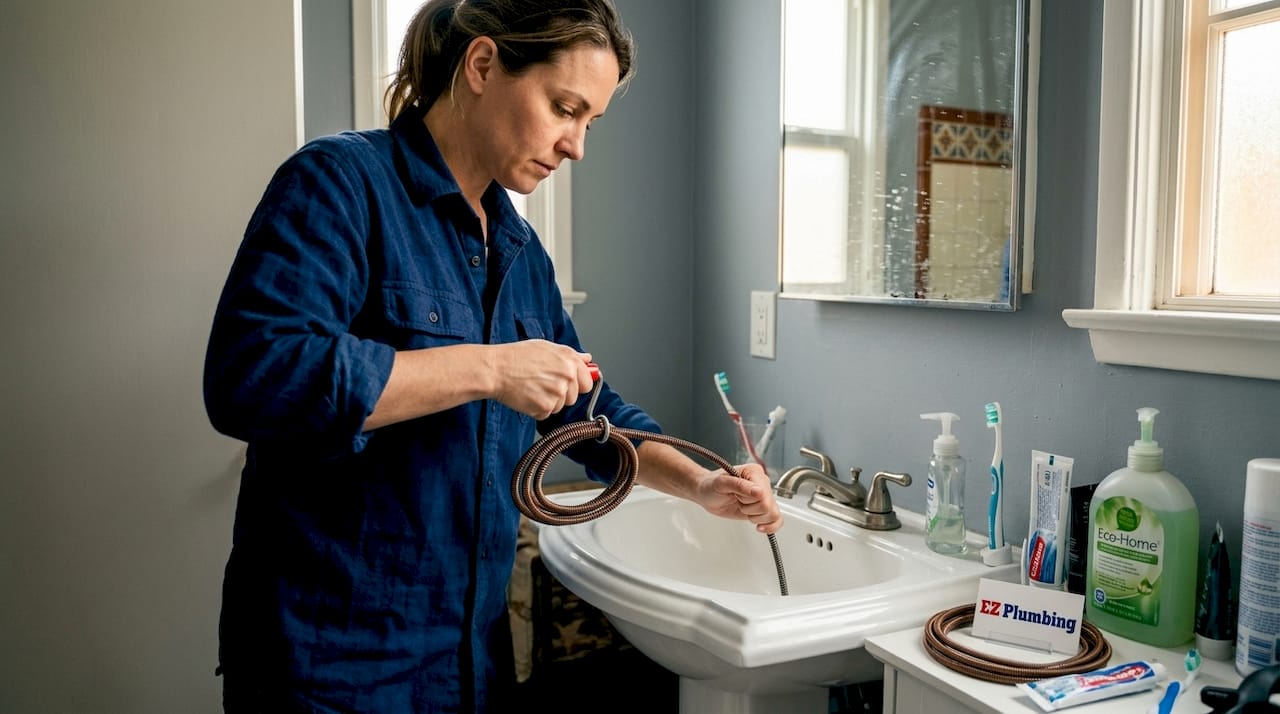
There are three main types of snakes worth knowing. A hand-crank snake is the most basic, typically 15 to 25 feet long, and works for most household sink and tub clogs. A drum auger is a coiled snake inside a canister that gives you more control and reach, often up to 50 feet. A power auger is a motorized version used for main line blockages and is typically what a professional plumber carries.
Here is a straightforward approach for basic DIY snaking:
- Remove the drain cover or stopper and set it aside.
- Feed the snake cable into the drain opening until you feel resistance from the clog.
- Tighten the thumbscrew to lock the cable in place.
- Rotate the handle clockwise to work through or break up the blockage.
- Pull back slowly, and if the clog hooks onto the cable, extract it completely.
- Flush the drain with hot water for two to three minutes to clear debris.
- Reassemble the drain cover and confirm the water flows freely.
Research confirms that drain snaking uses a flexible cable to break or retrieve clogs like hair or hardened grease, creating a path through the blockage but leaving wall buildup intact, with results lasting weeks to months. That last part is important. Snaking opens a passage but doesn’t scrub the pipe walls clean. Grease coating, mineral scale, and biofilm can still line the interior of the pipe, meaning the clog may return within a few months.
Pro Tip: Always wear protective gloves when snaking a drain. The cable picks up bacteria and debris, and moving it quickly through the pipe can cause it to spring unexpectedly. Go slow, especially near bends.
Learn more about snaking a kitchen sink if your kitchen drain is the recurring trouble spot in your home.
Chemical drain cleaners: Quick fix or hidden danger?
Mechanical means don’t always resolve deep or sticky blockages, so some reach for chemical solutions. Walk into any hardware store in Los Angeles and you’ll find rows of drain cleaning products promising fast results. The reality is more complicated.
Chemical drain cleaners fall into two main categories. Alkaline cleaners, which contain sodium hydroxide or lye, are designed to dissolve grease, hair, and organic matter. Acidic cleaners, which typically contain sulfuric acid, target mineral scale and are considerably more aggressive. Both types work by generating heat through a chemical reaction, which softens or dissolves the material causing the blockage.
The problem is that the same heat and chemical reaction that breaks down organic material also attacks your pipes. Studies confirm that chemical cleaners corrode PVC and metal pipes, pose health risks including burns and toxic fumes, are ineffective on deep blockages, and should never be used in toilets or septic systems. For homes in older parts of Los Angeles with galvanized steel or original clay sewer laterals, repeated use of chemical cleaners accelerates pipe deterioration and can shorten the overall lifespan of your plumbing system by years.
Chemical cleaners also carry health risks that are easy to underestimate. Fumes in a poorly ventilated bathroom or under a kitchen sink can irritate the eyes, lungs, and skin. Mixing products, even accidentally, can create dangerous reactions. And if a cleaner sits in a standing water situation and you need to call a plumber afterward, you’ve now created a hazardous work environment for the technician.
For recurring clogs, safer alternatives include enzyme-based drain treatments, which use natural bacteria to break down organic buildup slowly over time without damaging pipes. These are especially useful in kitchen drains that accumulate grease regularly and for homeowners on septic systems.
Comparison of common drain cleaning methods
To help you weigh the pros and cons at a glance, see the side-by-side table below.
| Method | Effectiveness | Cost | DIY Friendly | Safety | Best Used When |
|---|---|---|---|---|---|
| Plunging | Moderate | Very low (under $15) | Yes, easy | High | Soft, single-fixture clogs |
| Snaking/Augering | Moderate to high | Low to moderate ($20-$80 for DIY) | Moderate | High with care | Deeper clogs, hair or grease |
| Chemical cleaners | Low to moderate | Low ($8-$25) | Yes, but risky | Low | Use with caution only |
| Professional hydro-jetting | Very high | Higher (professional service) | No | Very high | Severe, recurring, or main line clogs |
As noted earlier, drain snaking creates a path through the blockage but leaves wall buildup, and chemical cleaners can corrode pipes while posing health risks, especially in older systems. Understanding blockage prevention benefits will also show you why proactive care is consistently cheaper than reactive repairs.
The table makes one thing clear: no single method is best in every situation. The most cost-effective path is matching the method to the problem, and recognizing when the problem exceeds what DIY tools can safely address.
When to call a professional plumber
Even with the best DIY approach, some clogs are best left to the pros. Knowing when to make that call is just as important as knowing how to plunge or snake.
Watch for these warning signs that indicate a professional is needed:
- Multiple fixtures backing up at the same time, which signals a main line obstruction rather than a localized clog.
- Foul, sewage-like odors coming from drains even when water is flowing normally, which can indicate a blockage deep in the system or a venting issue.
- Gurgling sounds from drains or toilets when you run water elsewhere in the home.
- Recurring clogs in the same drain within a short period, suggesting the root cause has not been addressed.
- Visible water damage, wet spots, or staining near walls or under cabinets adjacent to plumbing.
- Any suspected tree root intrusion, which is common near large ficus, palm, or eucalyptus trees throughout the LA basin.
The research reinforces that plunging is effective for single-fixture soft blockages but is not designed to address main line issues or structural pipe problems. For anything beyond that, professional-grade tools like video camera inspection, hydro-jetting, or motorized augers are the appropriate response. Our professional drain cleaning service covers the full range of these situations for LA homeowners and property managers.
For property managers overseeing multi-unit buildings in particular, routine professional drain checks can prevent the kind of cascading damage that affects multiple tenants and triggers expensive emergency repairs. Reviewing DIY mistakes to avoid is also worthwhile before attempting any hands-on work in older buildings.
Why prevention beats even the best cleaning method
Here’s a perspective that often gets overlooked: every method covered in this guide is a response to a problem that, in many cases, could have been avoided. We’ve worked on hundreds of drain jobs across Los Angeles, and a significant portion of them trace back to habits rather than infrastructure failures. Pouring cooking grease down the kitchen drain, skipping a drain strainer, or letting a slow drain go weeks without attention are the real culprits behind most service calls.
The uncomfortable truth is that homeowners tend to think about their drains only when something goes wrong. By then, the grease has hardened into a dense mass, or the hair mat has compacted to the point where snaking only partially removes it. At that stage, even professional cleaning is more difficult and costly than it needed to be.
Simple preventive habits dramatically reduce the frequency of clogs. A mesh strainer over every drain costs a few dollars and catches the vast majority of debris before it enters your pipes. Flushing your kitchen drain with very hot water for 60 seconds after doing dishes helps keep grease mobile rather than letting it solidify on pipe walls. Monthly enzyme treatments keep organic buildup from accumulating in bathroom and kitchen drains. These are not complicated routines, but they require consistency.
Our drain maintenance overview outlines a practical schedule you can follow throughout the year. Annual professional inspections are also a worthwhile investment, particularly for homes over 20 years old or properties with mature trees nearby. Catching a small root intrusion or a section of scale buildup before it becomes a full blockage is always less expensive than emergency repair.
Pro Tip: Budget for an annual plumbing inspection the same way you budget for an HVAC service or roof check. It’s not a luxury; it’s routine maintenance that protects a major investment.
Get expert drain cleaning help in Los Angeles
If you’ve worked through your options and the problem persists, or if you simply want the job done right the first time, professional drain cleaning is the most reliable solution available. Persistent clogs, slow drains that return within weeks, or any sign of main line trouble should not wait.
EZ Plumbing provides drain cleaning services for homeowners and property managers throughout the greater Los Angeles area. Our licensed technicians (C-36 License #583868) use camera inspections and hydro-jetting to clear blockages thoroughly rather than just poking a hole through them. We understand the specific challenges that LA plumbing systems face, from hard water mineral buildup to aging clay sewer laterals in historic neighborhoods. For more on protecting your pipes long term, browse our more drain maintenance tips and see how a proactive approach saves you money year over year. Scheduling is easy, and our team is ready to help.
Frequently asked questions
Can I use chemical drain cleaners on any type of pipe?
No. Chemical cleaners corrode PVC and metal pipes and are unsafe for toilets or septic systems, making them a poor choice for most households with mixed or aging plumbing.
How often should I clean my drains to prevent clogs?
Monthly flushing with hot water combined with annual professional inspections is the most effective routine for preventing buildup and avoiding serious blockages.
Is snaking or plunging better for slow drains?
Plunging works well for soft, localized clogs, while snaking reaches deeper and handles more stubborn blockages. As the research confirms, plunging addresses single-fixture soft clogs best, making snaking the next logical step when plunging falls short.
When should I call a plumber for a drain problem?
Call a plumber when you notice repeated clogs in the same drain, foul odors that persist, or backup affecting more than one fixture at a time.
Are DIY methods safe for old plumbing?
Mechanical methods like plunging and careful hand snaking are generally safer than chemical cleaners for older pipes, but chemical cleaners risk corrosion in both PVC and aging metal systems, so consulting a licensed plumber is the safest move for any home with original or unknown pipe materials.
Recommended
- Drain cleaning guide for LA homeowners: protect your pipes
- Drain Cleaning Services | Clog & Sewer Service | EZ Plumbing
- Drain maintenance guide: prevent costly plumbing issues at home
- Why Clearing Blocked Drains Prevents Costly Damage
- Essential HVAC Drain Line Maintenance for Homeowners – HVAC Service and Repair | Louisville, KY | Project Heating & Cooling