
Drain maintenance guide: prevent costly plumbing issues at home
If your drains need professional attention now, our Los Angeles drain cleaning service is available same-day.
A blocked drain rarely announces itself in advance. One morning you notice the kitchen sink draining slowly, and within days you are dealing with a full backup, water pooling across your floor, and an emergency plumbing call that costs far more than any routine maintenance would have. For Los Angeles homeowners, the stakes are even higher because private lateral lines from your house to the property line are entirely your responsibility to maintain. This guide gives you the tools, steps, and local knowledge to stay ahead of drain problems before they become expensive emergencies.
Table of Contents
- Understanding your responsibilities as a homeowner
- What you need: Tools and materials for drain maintenance
- Step-by-step: Routine drain maintenance for Los Angeles homes
- Troubleshooting and when to call for help
- Our perspective: What most guides miss about LA drain maintenance
- Next steps: Connect with Los Angeles plumbing experts
- Frequently asked questions
Key Takeaways
| Point | Details |
|---|---|
| Know your responsibilities | You maintain lateral drain lines while the city handles mainlines beyond your property. |
| Use the right tools | Plungers, snakes, and bio-based cleaners help keep drains clear without damage. |
| Perform regular maintenance | Follow a monthly or quarterly cleaning routine to avoid costly issues. |
| Recognize warning signs | Act quickly if you notice slow drains, odors, or multiple clogs. |
| Call for help when needed | Professionals can resolve major blockages and prevent recurring problems. |
Understanding your responsibilities as a homeowner
Knowing exactly which pipes belong to you is the first step toward smart drain maintenance. Many homeowners assume the city handles everything underground, but that is not how it works in Los Angeles County.
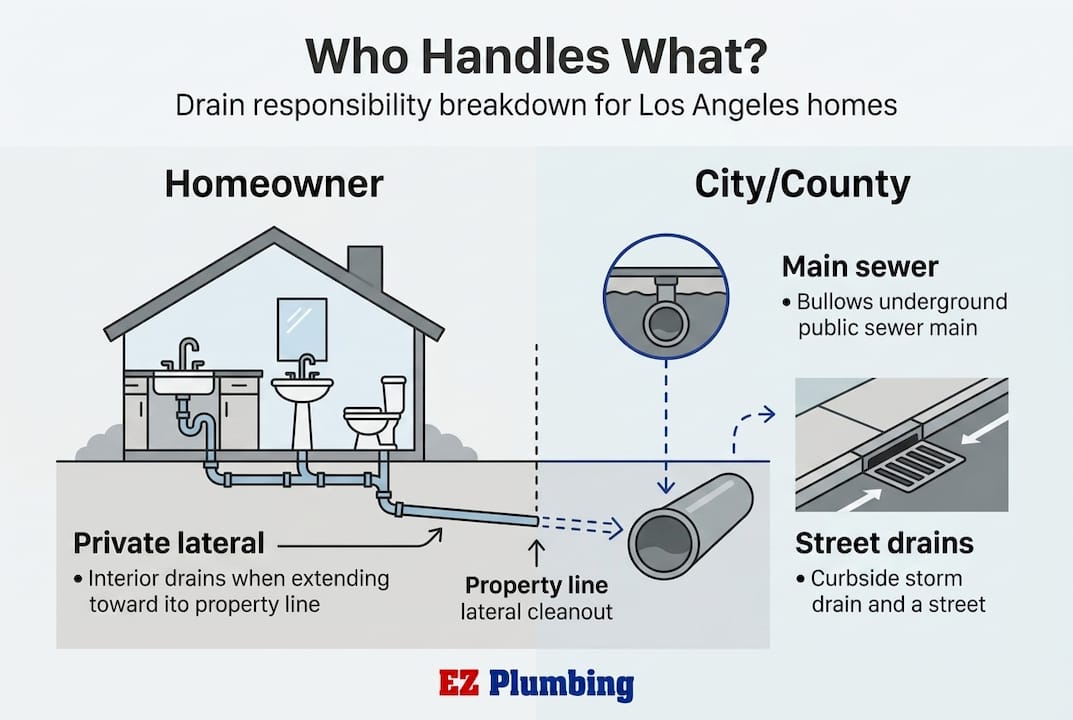
LA County Public Works manages the public sewer mainlines that run beneath streets and public rights of way, including routine cleaning and closed-circuit television (CCTV) inspections of those lines. Your responsibility begins at your home’s plumbing fixtures and extends through your private lateral drain line all the way to the property line. Everything from that point inward is yours to maintain and repair.
The table below clarifies who handles what so you can make the right call when something goes wrong.
| Drain component | Who is responsible | What they do |
|---|---|---|
| Public sewer mainlines | LA County Public Works | Routine cleaning, CCTV inspection, overflow response |
| Private lateral drain line | Homeowner | Cleaning, repair, replacement from house to property line |
| Interior drain pipes and traps | Homeowner | Clearing clogs, fixing leaks, replacing fixtures |
| Street-level catch basins | LA County | Storm drain maintenance and debris removal |
When a backup occurs, the location of the problem determines who you call. If multiple homes on your street are affected simultaneously, that points to the public mainline and you should report overflows directly to LA County Public Works. If the issue is isolated to your home, contact a licensed plumber.
Certain warning signs tell you that your private lateral or interior drains need attention before a full blockage develops. Slow-draining sinks or tubs are the most common early indicator. Gurgling sounds from drains after you flush a toilet suggest air trapped by a partial blockage. Persistent sewer odors inside the home often point to a dry or broken trap. Water backing up into a tub when you run the washing machine signals a clog further down the lateral line. Any one of these symptoms deserves prompt action, and our drain repair responsibilities page explains what that action typically involves.
Pro Tip: Create a simple yearly maintenance checklist and attach it to your water heater or utility panel. Include quarterly drain flushing dates, annual trap inspections, and a note to check for root intrusion if you have mature trees on your property. Consistent scheduling prevents the “out of sight, out of mind” trap that leads to expensive surprises. You can find additional maintenance tips to build out that checklist further.
What you need: Tools and materials for drain maintenance
Understanding your duties sets the stage. Here is what you need to maintain your drains like a pro, without relying on products that can damage your pipes or the environment.
The right tools make a significant difference between a quick fix and a worsening problem. As LA County Public Works notes, homeowners are responsible for keeping private lateral lines clear, which means having the right equipment on hand is not optional. The table below covers the essentials.
| Tool or material | Purpose | Safety note |
|---|---|---|
| Cup plunger | Clears minor sink and tub clogs | Use steady, even pressure; avoid splashing |
| Flange plunger | Clears toilet clogs | Designed specifically for toilet bowl shape |
| Hand-crank drain snake (25 ft) | Breaks up and retrieves deeper clogs | Wear gloves; avoid forcing around sharp bends |
| Pipe brush set | Scrubs interior of drain traps and P-traps | Use with warm water, not harsh chemicals |
| Enzyme-based drain cleaner | Digests organic buildup monthly | Follow label directions; safe for all pipe types |
| Drain strainers (mesh) | Catches hair, food, and debris before it enters the drain | Clean weekly to maintain effectiveness |
| Rubber gloves and eye protection | Personal protection during any drain work | Required whenever using any cleaning agent |
There are also several products and methods you should avoid entirely. Harsh chemical drain openers, such as those containing sulfuric acid or lye, can corrode older galvanized or clay pipes that are common in many Los Angeles neighborhoods. Metal wire hangers bent into hooks may scratch pipe interiors and push debris further down rather than removing it. Boiling water poured into PVC pipes can soften joints and cause leaks over time. Grease poured down any drain, even with hot water, will cool and solidify further along the line, creating stubborn blockages that are difficult to clear without professional drain cleaning advice.
Pro Tip: The best time to check and clean your drains is just before the rainy season in late fall and again in early spring. Los Angeles receives most of its rainfall between November and March, and increased groundwater pressure during that period can push debris into partially blocked lines and accelerate root intrusion into older clay laterals.
Step-by-step: Routine drain maintenance for Los Angeles homes
Now that your toolkit is ready, follow these proven steps to keep drains flowing all year. A structured routine is far more effective than reacting to problems after they appear.
Monthly tasks
Start by pouring a measured dose of enzyme-based drain cleaner down every kitchen and bathroom drain. Enzyme cleaners (bio-based products that use natural bacteria to digest grease, soap scum, and organic matter) work gradually and are safe for all pipe materials, including the clay sewer laterals found in many older LA homes in areas like Silver Lake, Echo Park, and Highland Park. Run warm water for two minutes after application to distribute the cleaner through the trap and into the lateral. Clean all drain strainers and remove any accumulated hair or debris. This step alone prevents a large percentage of bathroom clogs.
Quarterly tasks
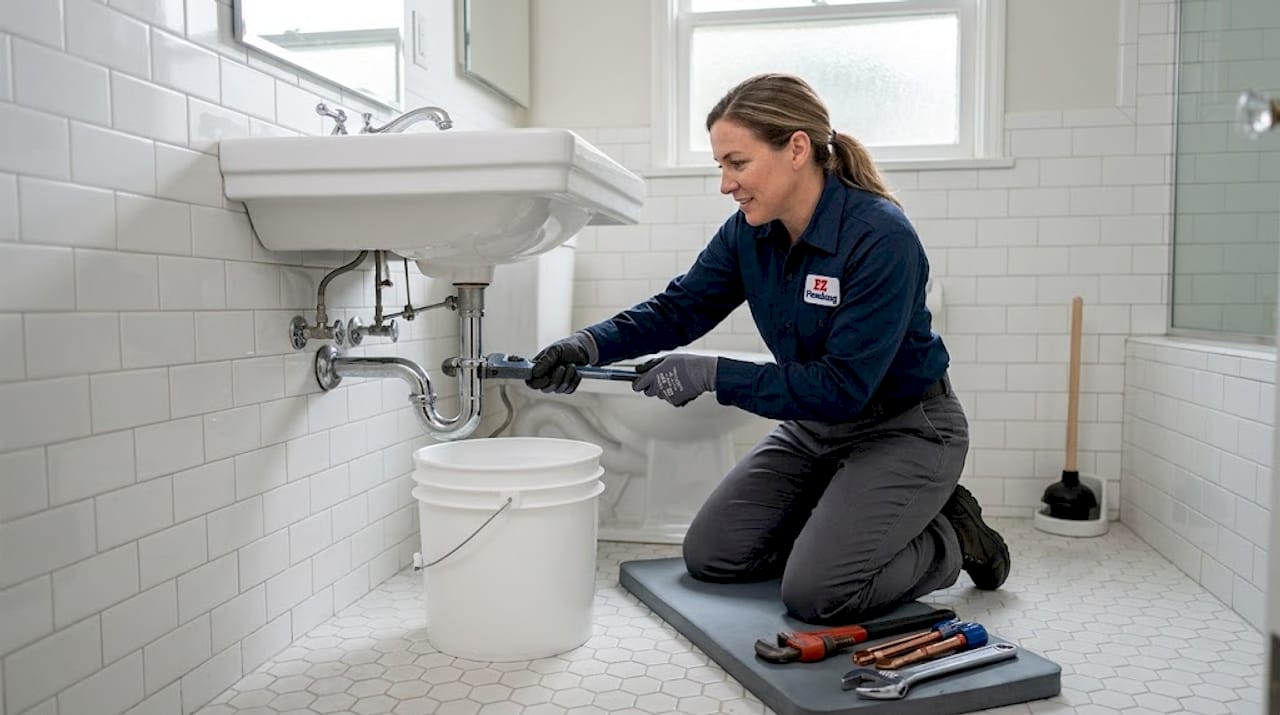
Remove and clean the P-trap (the curved pipe section under sinks) every three months. Place a bucket beneath the trap, unscrew the slip-joint nuts by hand or with pliers, and rinse the trap thoroughly with warm water and a pipe brush. Inspect the interior for buildup or early corrosion. While the trap is off, shine a flashlight into the drain pipe to check for visible debris. Flush each toilet with a full bucket of water poured quickly into the bowl to create a strong surge that clears the trap and the first section of the drain line.
Annual tasks
Once a year, run a 25-foot hand-crank drain snake through your slowest-draining fixture to check for buildup or partial blockages deeper in the line. If you have trees within 20 feet of your sewer lateral, consider scheduling a professional camera inspection. Tree roots, particularly from ficus, willow, and eucalyptus trees that are common throughout Los Angeles, can infiltrate clay pipe joints and grow into significant obstructions within a single season. LA County Public Works recommends regular cleaning to avoid blockages and backups, and annual professional attention is a sound investment for homes with mature landscaping. Routine maintenance can cut costly repairs by up to 50%, which means the modest cost of yearly upkeep pays for itself quickly. You can find a broader set of plumbing help topics to support your annual review.
Pro Tip: Use enzyme-based cleaners monthly for kitchen and bathroom drains, and mark the date on a calendar or set a phone reminder. Consistency matters more than the specific product you choose.
Troubleshooting and when to call for help
Even with the best routines, things can sometimes go wrong. Here is how to tackle tricky situations and recognize when a professional needs to step in.
A single slow drain usually responds to a plunger or a hand snake. When multiple fixtures slow down at the same time, or when water backs up into the tub while you run the dishwasher, the problem is almost certainly further down the lateral line and beyond the reach of standard home tools. Strong, persistent sewer odors that return shortly after you clean the traps often indicate a cracked pipe or a root intrusion that is trapping debris and gases. These situations require professional diagnosis.
The following conditions call for a licensed plumber rather than a DIY approach.
Water backing up into multiple fixtures simultaneously signals a blockage in the main lateral or a collapsed pipe section. Recurring clogs in the same drain within a few weeks of clearing indicate a structural problem, not just debris. Visible sewage or gray water pooling in your yard near the sewer cleanout is a sign of a broken or fully blocked lateral. Foul odors that persist after thorough trap cleaning suggest a crack or root intrusion in the line. Any drain problem that follows heavy rain and affects your entire home should be evaluated professionally to rule out hydrostatic pressure damage to older pipes.
When it comes to public infrastructure, the guidance from LA County is clear:
“Report overflows or problems to the county if they relate to the mainline system.”
Licensed plumbers use two primary tools to diagnose and resolve serious drain problems. A camera inspection involves feeding a waterproof camera through the drain line to identify the exact location and nature of the blockage, whether it is root intrusion, a collapsed section, or heavy grease accumulation. Hydro-jetting uses high-pressure water delivered at up to 4,000 PSI to scour the interior walls of the pipe clean, removing years of buildup in a single pass. Both methods are far more effective than chemical cleaners for serious issues. If your lateral needs structural attention, our sewer line repair tips and sewer inspection advice pages explain what to expect from each service.
During a drain emergency, shut off the water supply to the affected fixtures immediately to prevent overflow damage. Avoid using any drain in the home until the problem is diagnosed, because additional water will worsen the backup. Call a licensed plumber, and if you suspect the issue extends to the public mainline, report it to LA County Public Works at the same time.
Our perspective: What most guides miss about LA drain maintenance
Generic drain maintenance guides treat every home the same, and that approach fails Los Angeles homeowners consistently. The local conditions here are genuinely different from most other cities, and following national advice without accounting for them is a mistake we see the consequences of regularly.
Los Angeles has a large stock of homes built before 1960, many of which still have clay sewer laterals and galvanized interior pipes. Clay joints are vulnerable to root intrusion in ways that modern PVC pipes are not, and the mature ficus trees lining streets throughout West Hollywood, Hancock Park, and Pasadena are aggressive enough to infiltrate a clay joint within a single growing season. An annual schedule may not be frequent enough for a home surrounded by large trees.
The region’s dry climate also creates a false sense of security. Drains that seem fine during nine months of dry weather can fail quickly when the rainy season arrives and groundwater pressure rises around aging pipe joints. We recommend that homeowners pay attention to individual clues, such as a drain that slows slightly after the first rains, rather than waiting for a fixed calendar date.
Proactive camera inspections every two to three years give you real information about your specific pipes rather than a generic assumption. That homeowner plumbing insights approach saves more money over time than any routine cleaning schedule alone.
Next steps: Connect with Los Angeles plumbing experts
If you want even more confidence in your home’s plumbing, here is how to get help from local experts.
Stubborn or recurring drain problems are a clear signal that routine DIY maintenance has reached its limit. At EZ Plumbing, we hold a C-36 License (#583868) and serve homeowners across the greater Los Angeles area with services built specifically for local plumbing conditions.
Our drain cleaning services use professional-grade hydro-jetting equipment to clear even the most compacted blockages. If your lateral line needs structural work, our drain repair solutions cover everything from spot repairs to full lateral replacement. For homes with aging infrastructure, our drain replacement options provide modern, code-compliant upgrades that eliminate recurring problems. Contact us to schedule an inspection and get a clear picture of where your drains stand.
Frequently asked questions
Who is responsible if there’s a backup in my street or sidewalk drain in Los Angeles?
The city or county handles public sewer mainlines, including backups beyond your property line. You can report mainline problems directly to LA County Public Works, and they will dispatch a crew to investigate.
How often should I clean my home’s drains to prevent clogs?
Routine cleaning every few months, combined with immediate attention whenever drains slow down, is the most effective approach. LA County Public Works recommends regular cleaning to avoid blockages and backups, and monthly enzyme treatments support that goal between deeper cleanings.
Can I use chemical drain cleaners for regular maintenance?
It is best to avoid harsh chemical cleaners, particularly in homes with clay or galvanized pipes, because they can accelerate corrosion and damage pipe joints. Enzyme or bio-based cleaners combined with mechanical tools like a plunger or hand snake are safer and more effective for regular upkeep.
What should I do during a drain emergency in my home?
Shut off the water supply to the affected area, stop using all drains in the home, and call a licensed plumber immediately. If you believe the problem involves the public mainline, report it to the county at the same time so both issues are addressed without delay.
Does homeowners insurance cover drain backups?
Most standard homeowners insurance policies do not include drain or sewer backup coverage by default. Contact your insurance provider to ask about adding a specific sewer backup endorsement, as the cost is typically modest compared to the expense of a major backup event.