
Los Angeles Homeowners: Express Water Heater Permit in 1–3 Days
Yes, you need a permit to install or replace a water heater in Los Angeles. Most same-location residential replacements qualify for an Express Plumbing Permit you can self-issue online, but relocations, tank-to-tankless conversions, and jobs that touch gas or electrical systems usually require a standard plumbing permit and plan check. When you’re not sure which category your project falls into, check with LADBS or EPIC-LA, or call your local building office, before any work begins.
TL;DR:
- Most straightforward same-location water heater replacements qualify for a self-issue express permit, but conversions, relocations, or major upgrades require a full plan check permit.
- Licensed contractors typically pull permits to ensure inspection approval, with permit fees varying from low tens to hundreds of dollars depending on scope and equipment.
- Failing to obtain proper permits can lead to fines, inspection issues, insurance denial, and complications during property sale or renovations.
- Inspections focus on safety features like seismic straps, venting, gas connections, and discharge piping, which are easiest to correct during initial installation.
- Complex projects such as tankless conversions, heat pump units, or relocating heaters almost always demand multiple permits and should be coordinated before work begins.
Table of Contents
- Which Permit Pathway Applies: Express vs. Plan Check
- Who Can Pull the Permit: Contractor vs. Homeowner
- How to Apply for a Water Heater Permit on EPIC-LA or LADBS
- Inspections and the LA Code Checklist for Water Heaters
- Special Cases: Tankless, Heat Pump, and Relocated Water Heaters
- How Long Permits Take and What They Typically Cost
- What Happens If You Skip the Permit
- Why Hiring a Licensed Local Plumber Simplifies the Permit Process
- Get Your Water Heater Permit Handled by a Licensed Contractor
- Official Permit Resources for Los Angeles Homeowners
- Sources
- FAQ
Which Permit Pathway Applies: Express vs. Plan Check
The Express Plumbing Permit exists for exactly the kind of job most homeowners are dealing with: swapping out a failed tank for a new one in the same spot, same fuel type, same venting configuration. LA County’s EPIC-LA portal issues these permits online, without a plan reviewer looking at drawings first, because the scope is narrow enough that a licensed contractor or qualified owner can self-certify compliance.
That narrow scope is the catch. The moment your project adds complexity, you fall out of Express territory and into a standard plumbing permit with plan check. LADBS is direct about this: many plumbing projects require permits, and certain scopes trigger plan check filings before any permit gets issued at all.
Here’s a quick self-check to figure out which lane you’re in:
-
Same location, same fuel type, same capacity? You likely qualify for Express.
-
Moving the water heater to a new spot in the house? Plan check is probably required.
-
Converting from a tank to a tankless unit? Expect plan check, since venting and gas line sizing usually change.
-
Adding capacity or switching from electric to gas (or vice versa)? Plan check applies.
-
Installing a reclaimed water or specialty system tie-in? This needs full plan review, not Express.
If your project checks any box beyond the first one, don’t try to force it through the Express portal. A rejected or flagged application costs more time than starting on the correct track. When you’re genuinely unsure which office has jurisdiction over your address, figuring out which agency issues your permit is worth five minutes before you touch the online form.
Who Can Pull the Permit: Contractor vs. Homeowner
Both licensed contractors and, in limited cases, property owners can apply for permits through EPIC-LA and LADBS. The portal accepts applications from a licensed contractor, the property owner acting as their own contractor, or an authorized agent filing on the owner’s behalf.
In practice, most residential water heater permits get pulled by a licensed C-36 plumbing contractor, and there’s a good reason for that beyond convenience. A contractor who pulls the permit is also the one accountable for passing inspection, which means they have a direct incentive to install seismic strapping, venting, and gas connections correctly the first time. Homeowners who self-permit take on that inspection risk themselves.
Whoever applies, the permit application needs specific information on file:
- Contractor’s license number and classification (C-36 for plumbing, C-20 for HVAC-related work)
- Proof of active insurance and bonding
- Property address and scope of work description
- Equipment specifications for the new unit
Pro Tip: Before hiring anyone to pull a permit on your behalf, ask for their contractor license number and look it up yourself on the California Contractors State License Board site. A legitimate C-36 plumber will hand this over without hesitation.
How to Apply for a Water Heater Permit on EPIC-LA or LADBS
Applying online follows a fairly predictable sequence, whether your contractor is filing or you’re doing it yourself as the owner.
- Create or log into your EPIC-LA or LADBS account, depending on whether your property sits in an incorporated city or unincorporated LA County territory.
- Select the Express Plumbing Permit option if your project qualifies under the same-for-same criteria covered above.
- Enter equipment details, including the make, model, capacity, and BTU or kW rating for both the existing unit (if replacing) and the new one. EPIC-LA’s help documentation walks through each required field.
- Specify installation location and fuel/venting type, and flag clearly if the unit is relocating, since a mismatched answer here is one of the most common reasons applications bounce back.
- Provide contractor license information or owner-applicant details, matching exactly what’s on file with the state licensing board.
- Review the fee estimate and pay online. The plumbing permit application form lists water heater work as its own line item, which is how the portal calculates your fee based on project scope and value.
- Print or save your permit card and post it at the job site before work starts, as required.
- Schedule your inspection online once installation is complete, choosing a date through the same portal you used to apply.
The errors that slow this process down are almost always avoidable: leaving out a model number, selecting the wrong fuel type, or failing to disclose that the unit is moving locations. Any one of those can bounce your application back for correction, adding days you didn’t budget for.
Inspections and the LA Code Checklist for Water Heaters
Inspectors work from a fairly consistent checklist when they show up for a water heater inspection, and knowing it in advance is the single best way to avoid a failed first attempt.
- T&P relief valve and discharge piping, routed correctly to a safe termination point
- Proper venting and combustion air, sized for the unit’s BTU output
- Gas connections and sediment traps, installed per code, not improvised
- Seismic straps, two of them, positioned in the upper and lower third of the tank
- Drain pans, required for units installed in attics or other interior spaces where a leak could cause damage
- Expansion tanks, required on closed plumbing systems
- Dielectric unions, preventing corrosion where dissimilar metals connect
Building departments generally frame permits and their inspection checklists around one core purpose: catching the exact failure points, gas leaks, carbon monoxide risk, and seismic hazard, that turn a water heater from an appliance into a safety issue.
A rough-in inspection happens before walls or finishes close up around new piping or gas lines, typically only relevant when a project involves relocation or new construction. A final inspection covers the completed installation. The most frequent failure points, based on repeated patterns across code checklists, are missing seismic straps and improperly routed T&P discharge lines, both of which are cheap to fix during installation and expensive to fix after an inspector flags them.
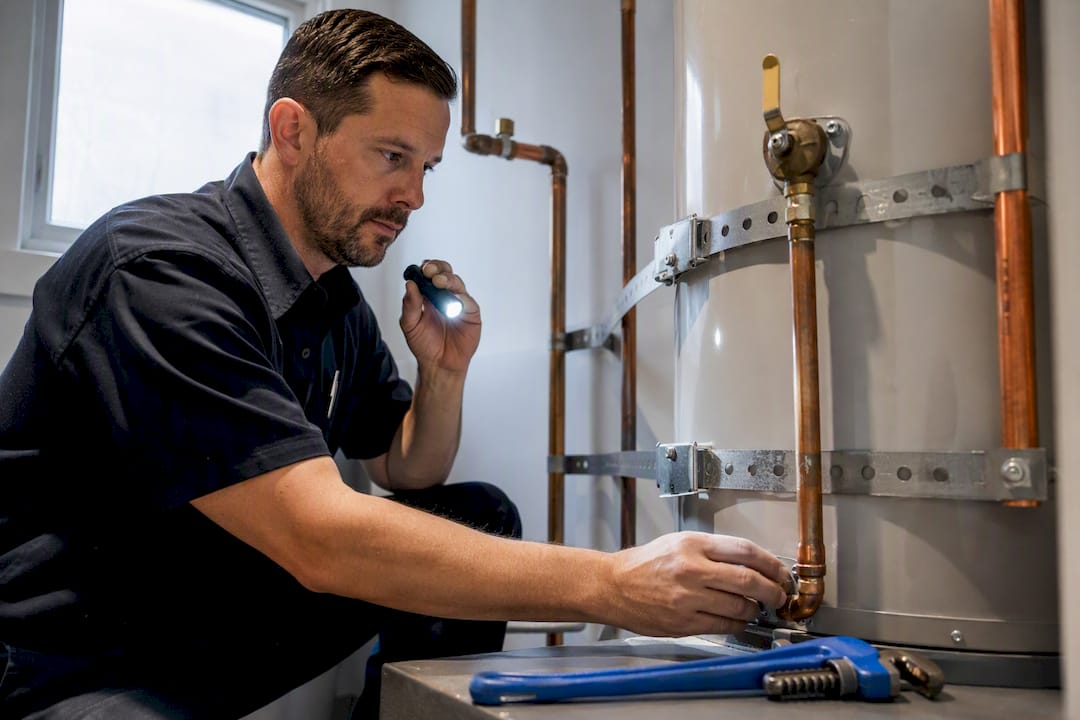
Keep your permit card, inspection sign-off, and installation invoice together in one file. That paperwork becomes valuable the day you sell the property or file an insurance claim.
Special Cases: Tankless, Heat Pump, and Relocated Water Heaters
Not every water heater project fits the simple replacement mold, and each variation below tends to add its own permit requirements.
- Tankless gas conversions usually require both a plumbing permit and a gas permit, since switching from tank to tankless often means upsizing the gas line and installing new venting. This combination typically pushes the project into plan check rather than Express.
- Heat pump water heaters need plumbing and electrical permits together, because these units run on a dedicated electrical circuit. Check the manufacturer’s clearance requirements and condensate drainage specs before finalizing the installation location.
- Relocating a water heater to a new spot in the house, garage, or attic almost always triggers a rough-in inspection in addition to the final, along with permits covering whatever trade touched the new location.
- Any project needing an electrician or HVAC technician alongside the plumber means multiple permit filings, and coordinating those filings before work starts prevents scheduling conflicts between trades.
If you’re weighing tankless against a standard tank replacement, it’s worth reading through what a tankless water heater installation actually involves before committing, since the permit complexity is directly tied to the equipment choice.
How Long Permits Take and What They Typically Cost
Express permits move fast by design. Most applications process the same day to within about three business days when the paperwork is complete and the project qualifies for that pathway. Standard plumbing permits with plan check take considerably longer, since a reviewer has to evaluate drawings and scope before issuing anything.
Fees follow project value, not a flat rate, which means every number below is a planning estimate rather than a quote.
- Same-for-same tank replacement: Express permit fees tend to run in the low tens to low hundreds of dollars, based on commonly reported ranges for straightforward residential scope.
- Tankless conversion: Fees climb with plan check involvement and additional gas permit line items.
- Heat pump installation: Expect both plumbing and electrical permit fees stacked together.
On top of permit costs, budget for the installed project itself, unit plus licensed labor, which varies widely depending on whether you’re doing a same-for-same swap or adding scope like relocation or a gas line upgrade. Every added trade or structural change to the installation adds both labor hours and a separate permit line.
What Happens If You Skip the Permit
Unpermitted water heater work carries real consequences, not just theoretical ones. A code violation discovered during a later inspection can trigger fines, a stop-work order, or a requirement to tear out and redo the installation to bring it up to code. Insurance companies routinely deny claims tied to damage from unpermitted work, and buyers’ agents flag unpermitted installations during escrow, sometimes holding back funds until the issue is resolved.
If you suspect a previous owner or contractor skipped the permit on your water heater, you can check permit history for your address through LADBS or EPIC-LA records before assuming the worst.
- Pull the property’s permit history online to confirm what was and wasn’t filed.
- Have a licensed contractor assess whether the existing installation meets current code.
- Apply for a retroactive permit if the work is otherwise sound and simply undocumented.
- Keep every permit card, inspection report, and invoice going forward, since this paperwork protects you at resale.
Why Hiring a Licensed Local Plumber Simplifies the Permit Process
Contractor-led permitting cuts down on rework because the person pulling the permit is also the one who has to pass inspection. That accountability shows up in the details: correctly placed seismic straps, a T&P valve routed to code, proper venting sized to the unit, and a drain pan installed wherever the code calls for one.
A contractor who’s handled dozens of these permits knows which inspector preferences and code nuances tend to cause holdups, and builds around them from the start. When you’re vetting anyone to handle this work, ask for their license number, confirm active insurance, and ask for examples of permits they’ve pulled and closed out successfully. That combination tells you more about reliability than a sales pitch ever will.
— EZ
Get Your Water Heater Permit Handled by a Licensed Contractor
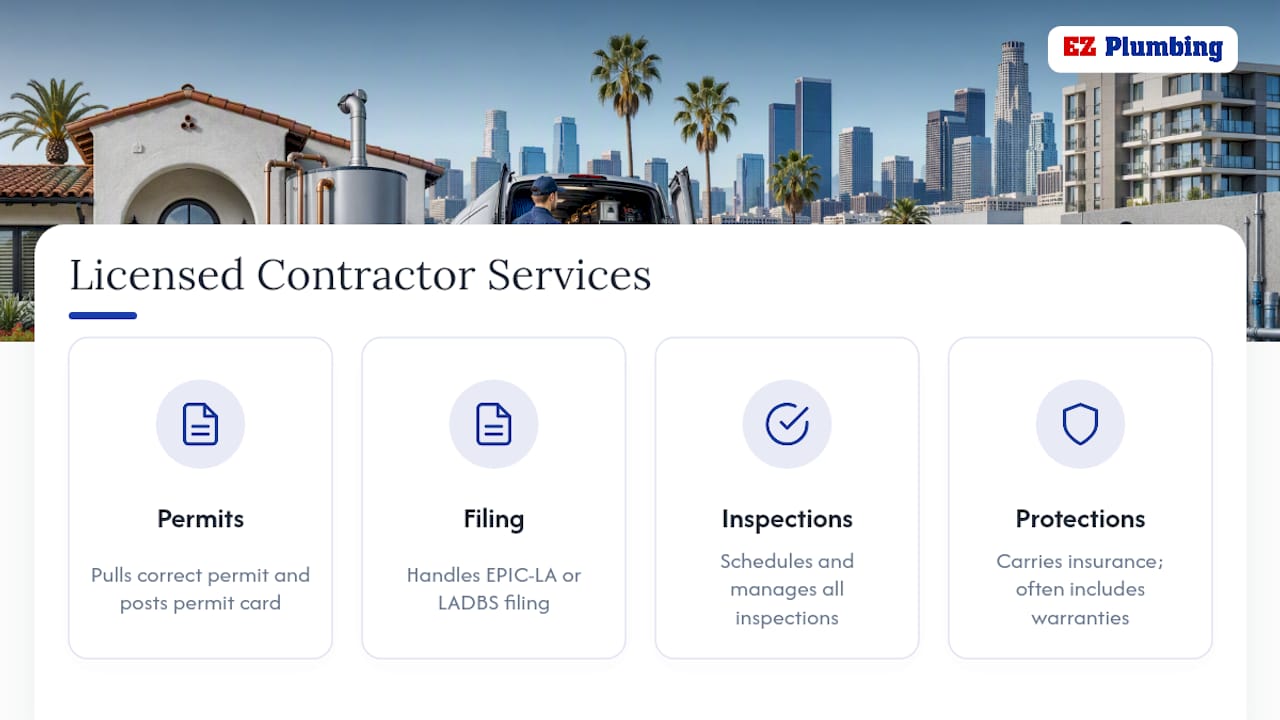
Skipping the DIY permit process entirely is the fastest way to avoid rework, failed inspections, and the paperwork headaches described above. A licensed plumbing contractor can pull the permit, handle EPIC-LA or LADBS filing, and manage every inspection step to simplify the process and ensure compliance.
In practice, a licensed contractor pulls the correct permit for your project’s actual scope, posts the permit card at your property, schedules inspections, and carries insurance coverage. Professional services often include warranties on the work performed. If your project also involves gas line work, our natural gas water heater installation guide covers what that scope typically requires. For coordination with other trades on a relocation job, we sometimes work alongside local partners like One Day Doors & Closets when a project touches adjacent home systems.
Ready to get a compliant installation without the paperwork guesswork? Get a quote for water heater installation and we’ll walk you through exactly what your specific project needs.
Official Permit Resources for Los Angeles Homeowners
Which office handles your permit depends entirely on where your property sits. City of Los Angeles properties go through LADBS, while unincorporated LA County properties go through LA County Public Works.
- Express Permits portal for self-issued residential water heater replacements
- LADBS plumbing permits page for City of Los Angeles jurisdiction and plan check details
- EPIC-LA application help documentation for step-by-step filing guidance
- Plumbing permit application form for the exact fields and line items used in fee calculation
Sources
- Express Permits – Los Angeles
- Plumbing Permits | LADBS – City of Los Angeles
- HOW TO APPLY FOR RESIDENTIAL EXPRESS PERMITS ON EPIC-LA
- APPLICATION FOR PLUMBING PERMIT / PLAN CHECK (Plumbing Application Form)
- Building and Safety – LA County Public Works Permits
FAQ
Do I Need a Permit to Install a Water Heater in California?
Yes, California building code requires a permit for water heater installation or replacement in nearly every jurisdiction, including all of Los Angeles County and the City of Los Angeles.
How Much Is a Permit to Install a Water Heater?
Express permit fees for a straightforward same-location replacement typically run in the low tens to low hundreds of dollars, though exact fees depend on project valuation and scope, so get a specific estimate through the EPIC-LA or LADBS portal for your project.
What Are the Current Rules for Water Heaters in California?
Current code requires seismic strapping, a properly routed T&P relief valve, correct venting and combustion air, and drain pans for units installed in attics or other interior spaces, with additional electrical and plumbing permits required for heat pump or tankless conversions.
Can I Install My Own Water Heater in California?
Property owners can apply for permits and perform work themselves in limited cases, but most homeowners hire a licensed C-36 plumber since the contractor pulling the permit is also accountable for passing inspection.
Recommended
- Water Heater Installation Los Angeles
- Broken Water Heater? an LA Homeowner’s Emergency Guide
- Water Heater Service Explained for Los Angeles Homes
- Tankless Water Heater Pros and Cons: An LA Homeowner’s Guide
Recent EZ Plumbing Jobs in Los Angeles
Real, recent work from our crews — updated automatically as jobs complete.