
8 Questions to Ask a Plumber Before Hiring
A leak under the kitchen sink at midnight. A sewer backup in a duplex just before tenants get home. A water heater that fails the morning guests arrive at a short-term rental. In Los Angeles, plumbing problems rarely show up at a convenient time, and the pressure to hire the first available contractor is real.
That's exactly when the right questions matter most. The best questions to ask a plumber before hiring reveal whether the company is properly licensed, carries current insurance, has experience with your exact problem, explains costs clearly, can respond when needed, and will still answer the phone if something goes wrong after the job is done. They also apply differently depending on who you are. A homeowner may care most about damage control and price clarity. A landlord or property manager may need written approvals, tenant coordination, and clean records. An HOA board may need permit tracking, scope control, and post-job documentation.
Write down every answer before authorizing work. Use text or email when possible, save the estimate, and keep screenshots of license and insurance verification with the job file. If you're also thinking about how contractors get found online, local SEO for contractors matters on the business side, but your side of the decision still comes down to verification.
The cheapest quote often lowers the upfront number, not the overall risk.
Opening. Question 1. Question 2. Question 3. Question 4. Question 5. Question 6. Question 7. Question 8. Verification checklist. Closing decision framework.
Table of Contents
- 1. Are You Licensed, Insured, and Bonded?
- 2. What Is Your Experience With My Specific Plumbing Issue?
- 3. Can You Provide References and Examples of Previous Work?
- 4. Do You Offer Emergency Same-Day Service and What Are Your Response Times?
- 5. How Do You Price Your Work and Will You Provide a Detailed Written Estimate and Scope of Work?
- 6. What Warranty or Guarantee Do You Provide on Work?
- 7. Are You Familiar With Local Codes and Do You Handle Permits?
- 8. How Do You Communicate Progress and Handle Unexpected Issues?
- 8-Point Comparison: Questions to Ask a Plumber
- Turn the Answers Into a Safer Hiring Decision
1. Are You Licensed, Insured, and Bonded?
Start here, even if water is actively leaking. Licensing and insurance are the first filter because they decide whether the contractor is legally operating and whether there's financial protection if something goes wrong on your property.

Government and state consumer guidance repeatedly tells homeowners to verify a contractor's license, confirm workers' compensation and general liability coverage, and avoid paying the full amount up front. Tennessee's consumer guidance says a contractor's license is required before bidding or price negotiations on projects of $25,000 or more, and it specifically advises customers to request current insurance certificates and verify them directly. Minnesota also tells homeowners to check the contractor's license number, disciplinary history, references, and business address before signing, as summarized in this licensed and insured plumber verification guide.
In Los Angeles, this matters for more than legal compliance. Older housing stock, slab leaks, gas work, sewer repairs, and multi-unit buildings create exposure quickly. If a worker gets hurt, if a line is installed incorrectly, or if water damage spreads into another unit, the paperwork behind the contractor matters just as much as the wrench in their hand.
What to verify immediately
Use this question as a document request, not a conversation starter.
- Ask for the license number: Look it up immediately on the state licensing portal before the crew starts.
- Request a current certificate of insurance: Check that general liability and workers' compensation are active on the date of service.
- Confirm who is doing the work: Ask whether the company uses its own employees or subs. That affects supervision and accountability.
- Check the bond details: Bonding isn't a substitute for insurance, but it is still part of your risk screen, especially for HOA and management work.
If you want to see how a local company presents its licensing credentials, EZ Plumbing's licensed plumbing contractor in Los Angeles page is one example of the kind of information homeowners should expect to review before booking.
Practical rule: If a plumber hesitates to provide license or insurance documentation, stop the hiring process there.
For readers comparing how liability coverage is discussed in other markets, this overview of plumber liability insurance in the UK is useful context, but your actual verification needs to match California requirements and your property type.
2. What Is Your Experience With My Specific Plumbing Issue?
A backed-up main line in a Los Angeles duplex, a slab leak under an older foundation, and a failed tankless water heater can all be called "a plumbing problem." They do not carry the same risk, equipment needs, or repair path. Hiring the right plumber starts with matching the contractor to the failure, not just the trade.

Los Angeles properties make that distinction matter. Aging cast iron, mixed repairs from different remodel eras, narrow crawlspaces, hillside access issues, hard-water wear, and tenant-occupied buildings all change how a job should be diagnosed and priced. A plumber who is solid on routine fixture swaps may still be the wrong choice for recurring branch-line stoppages in a fourplex or a gas-related water heater replacement that could trigger code and venting corrections.
Use this question to test judgment.
Ask the plumber to describe the last few jobs they handled that closely match your issue, your building type, and your level of urgency. Then listen for specifics. A contractor with relevant experience should be able to explain what usually causes the problem, what they need to confirm on site, what tools they expect to use, and what findings tend to expand the scope after inspection.
Good answers sound concrete:
- For a sewer problem, they should discuss camera inspection, line locating, root intrusion, offsets, access points, and whether hydro jetting, spot repair, lining, or replacement might make sense.
- For a water heater problem, they should talk about fuel type, venting, capacity, recirculation, combustion safety, and whether the existing installation will pass current code if replaced.
- For leak detection, they should explain how they separate fixture leaks, supply leaks, slab leaks, irrigation leaks, and pressure-related failures before opening walls or flooring.
- For multi-unit or HOA work, they should address access, shutoff planning, tenant communication, and how they limit damage if the diagnosis changes once the system is opened.
One answer should also raise your guard. "We do everything" is too broad to help you approve work. Experience is easier to trust when the plumber can explain the decision tree. What they test first, what they rule out, and what would make them stop and update the estimate before proceeding.
For homeowners, this avoids paying expert rates for a crew that is still figuring out the basics on site. For landlords, property managers, and HOAs, it protects against a more expensive failure. Misdiagnosis can mean repeat visits, tenant disruption, missed permit triggers, unnecessary wall cuts, or a repair that solves the symptom but not the source.
A useful comparison point is EZ Plumbing's reliable local plumbing service for Los Angeles area repairs, which shows the kind of issue-specific service range customers should compare when screening contractors.
Longer-term fit matters too. The plumber should be able to explain whether the proposed repair works with the building you have now and the upgrades you may face later, such as tankless replacements, heat-pump water heater conversions, trenchless sewer options, or PEX tie-ins, as discussed in this modern plumber hiring guidance.
Before approving major work, it also helps to hear how technicians explain diagnosis in real time:
3. Can You Provide References and Examples of Previous Work?
A clean invoice and a high star rating do not show how a plumber performs once the job gets messy. In Los Angeles, the bigger risk is what happens after the wall is opened, the line is exposed, or a tenant starts calling about access, noise, and water shutoffs. References help verify whether the contractor finishes work in a way that protects the property, controls scope, and follows through when the first fix is not the last step.
Use this question as a match test, not a popularity test. A plumber who does strong work in single-family homes may still be a poor fit for an HOA recirculation issue, a tenant-occupied drain backup, or a mid-century building with aging galvanized lines. Ask for two or three recent examples that line up with your actual risk. Same property type, similar access limits, similar system, similar consequences if the repair goes wrong.
The reference check itself should be short and specific. A five-minute call usually tells you more than another twenty online reviews.
Ask the past customer or manager what changed during the job, who approved it, and how the change was documented. Ask whether the crew protected floors, walls, cabinets, and common areas. Ask whether callbacks were handled quickly or treated like a new billing opportunity. For landlords, property managers, and HOAs, ask one more question: did the plumber communicate well enough to keep residents, boards, or tenants informed without creating confusion?
Photos matter too, but only when they are tied to a real scope. Before-and-after images of a water heater platform, access panel, drain reroute, sewer cleanout, or repipe tie-in show whether the company works neatly and documents decisions. This is also a good place to review examples of plumbing upgrades for homes and properties and compare them to the kind of work your building may need.
A useful answer sounds concrete. It names the address type, the issue, the repair method, what changed on site, and how the customer was updated. Vague answers usually mean the company expects you to trust the sales process more than the job record.
Good references confirm more than basic competence. They show whether the plumber can work inside the constraints that drive cost and risk in Los Angeles properties.
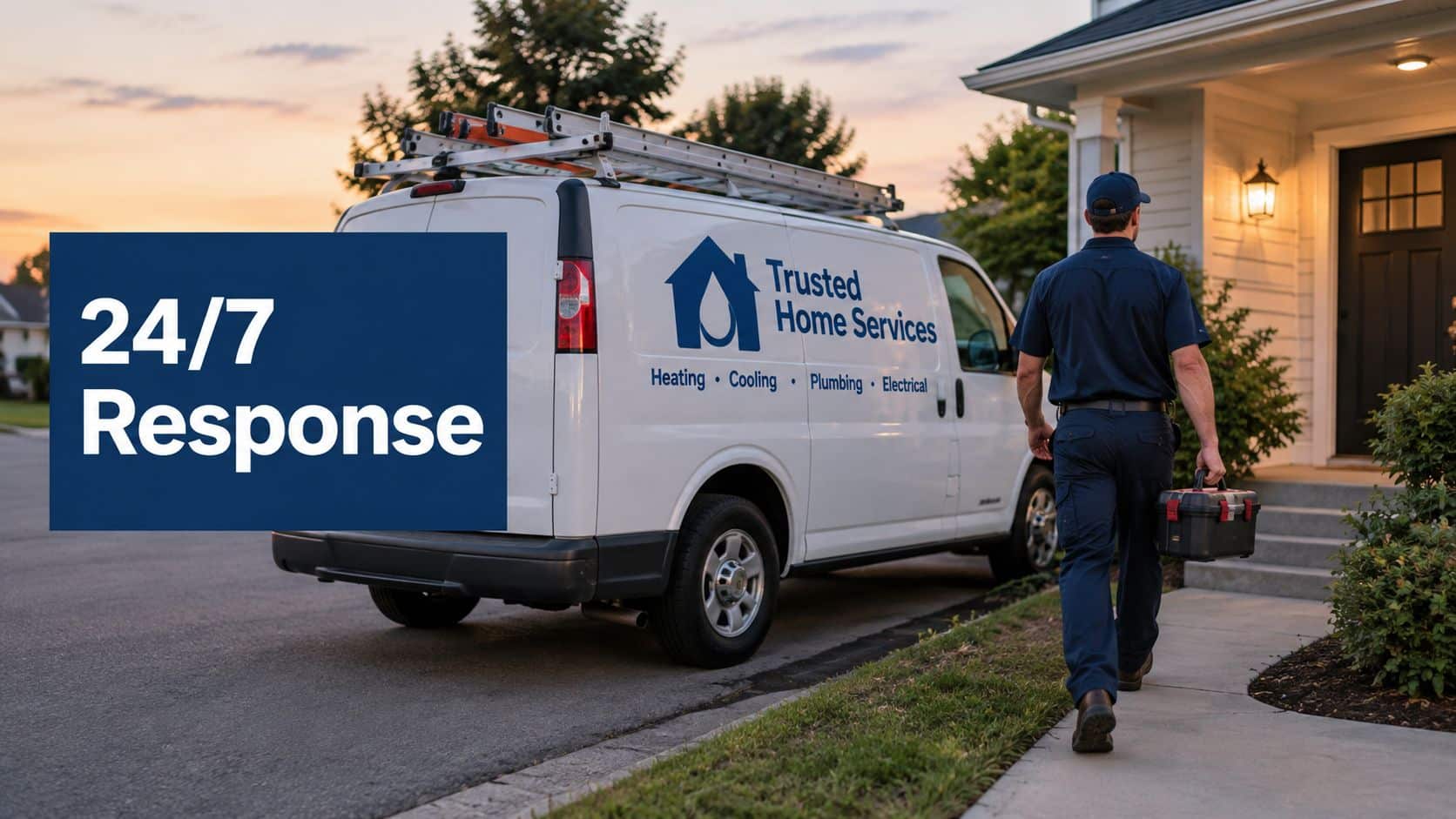
4. Do You Offer Emergency Same-Day Service and What Are Your Response Times?
A pipe break at 9 p.m. is not the time to learn that “24/7 service” means a voicemail box and a scheduler who calls back in the morning.
Emergency availability is a risk-control question. In Los Angeles, a delayed response can turn a small leak into cabinet damage, hallway flooding, elevator shutdowns, tenant complaints, mold exposure, or a larger insurance claim. In a condo or apartment building, the cost of waiting often spreads beyond the unit where the problem started.
Ask for the company's actual emergency process, not the marketing version. Start with the dispatcher, then confirm the same points with the technician if they are sent out. The answers should match.
A useful screening call sounds like this:
- Are you sending an on-call plumber tonight, or booking me for the next open slot?
- What arrival window can you commit to for my address?
- What problems do you classify as emergencies?
- Will the first visit include diagnosis only, temporary shutoff and stabilization, or repair if parts are on the truck?
- Who approves additional work after hours if the problem is larger than expected?
- What extra charges apply at night, on weekends, or on holidays?
- Does the trip fee apply to the repair total, or is it separate?
The trade-off is simple. A company that can arrive fast may charge more after hours. That can still be the cheaper decision if the visit stops active water damage or contains a sewer backup before it affects other units. A low service-call price means little if nobody is available, or if the crew can only diagnose and leave the property exposed until the next day.
For landlords, property managers, and HOAs, one answer matters more than people expect. Ask who has authority to approve emergency work when a tenant, resident manager, board member, or maintenance lead is the person on site. If that chain is unclear, delays happen while water keeps running.
Watch for vague language. “We'll try to get someone out” is not a response time. “We have a plumber on call, arrival is usually within this window, and the after-hours diagnostic is this amount” is a usable answer. If the company cannot explain how it triages burst pipes, sewer backups, gas concerns, and no-water conditions, it does not have a dependable emergency system. General guidance in this emergency plumber question guide points in the same direction.
Get the after-hours terms in writing before authorizing dispatch if possible. Save the text or email that shows the arrival window, service fee, and whether any amount is credited toward repair.
5. How Do You Price Your Work and Will You Provide a Detailed Written Estimate and Scope of Work?
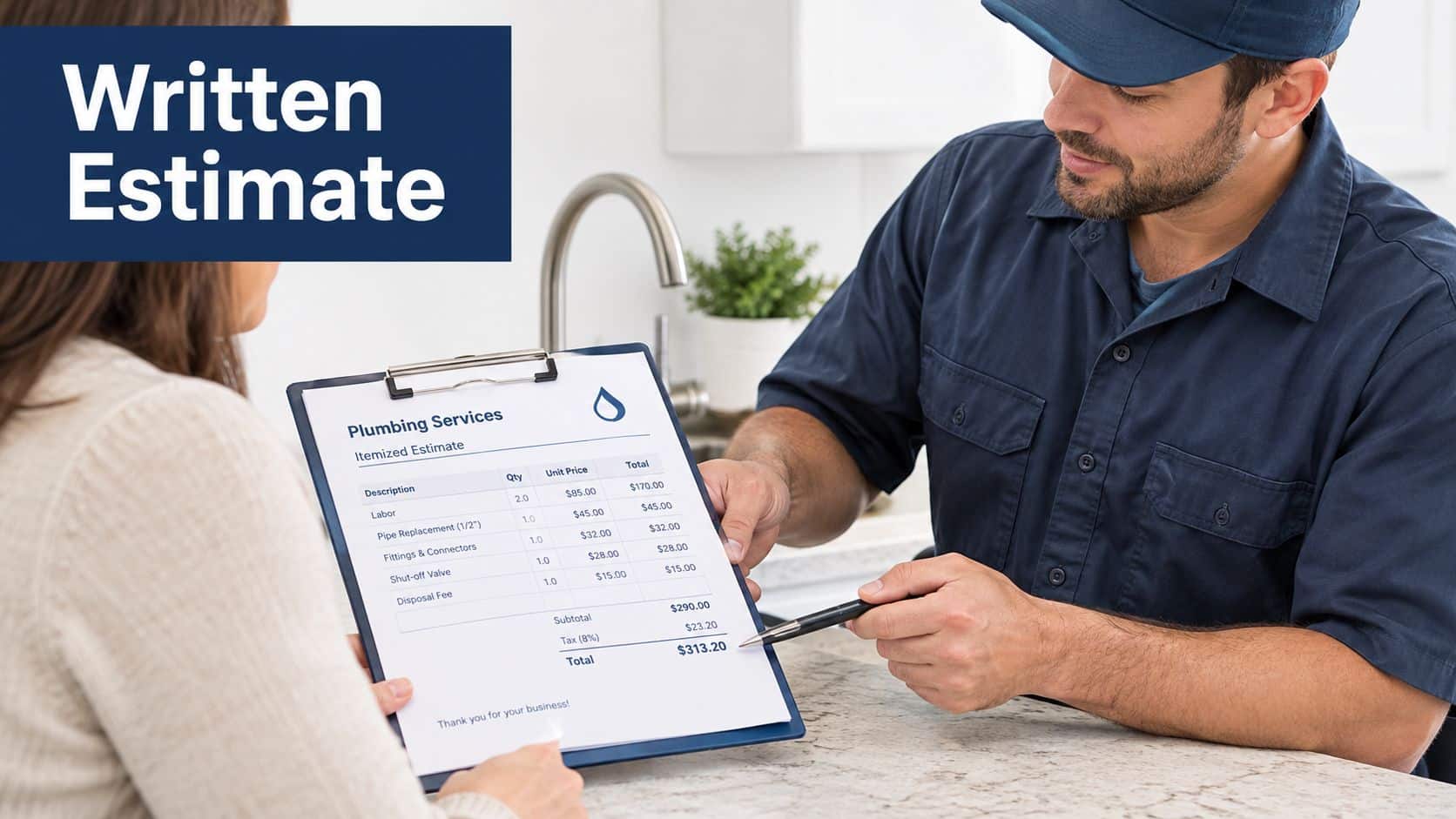
A tenant reports water under a kitchen sink. The plumber arrives, writes “repair leak,” collects approval, then opens the wall and adds time, materials, patching, and another visit. That is how a small authorization turns into a billing dispute.
Price matters, but authorization language matters more. In Los Angeles, where access can involve stacked units, slab lines, finished walls, tenant coordination, and permit questions, the risk is approving work that was never defined clearly enough to control.
Use the estimate as a verification document, not a courtesy summary. It should identify the problem location, the repair method, the materials to be installed, what labor is included, how the repair will be tested, and what cleanup or restoration is excluded. If the document only says “clear drain” or “fix leak,” ask for a rewrite before anyone starts.
A 2025 homeowner survey on contractor selection found that clear pricing, strong communication, and trust signals strongly affect hiring decisions. That lines up with field reality. Homeowners want to avoid surprise charges. Landlords, property managers, and HOAs also need a paper trail that shows exactly what was approved and when scope changed.
Here is the practical check. Two estimates with the same dollar amount can carry very different risk.
One may include diagnosis, repair, pressure testing, haul-away, and drywall access notes. The other may only cover the first repair attempt, with camera work, fixture removal, patching, and return visits billed later. The lower-risk estimate is usually the one that says more.
Before authorizing, verify these points in writing:
- Pricing method: Is this flat-rate, hourly, or a diagnostic fee followed by a quoted repair?
- Exact scope: What fixture, line, valve, branch, or cleanout is being worked on?
- Included items: Are labor, parts, testing, disposal, and basic cleanup included?
- Access and repair limits: Does the price include opening walls, pulling toilets, removing cabinets, or working through concrete if needed?
- Exclusions: What will be billed separately, such as camera inspection, restoration, permits, or additional materials?
- Change approval: Who must approve added work, and at what dollar threshold?
- Completion standard: How will both sides know the job is done? Flow restored, leak stopped, pressure test passed, drain verified, fixture reset?
There is also a trade-off in billing style. Hourly pricing can be fair during early diagnosis, especially on intermittent leaks, sewer line problems, and older buildings where the first symptom is not the failure. Fixed pricing is usually safer once the scope is known because it caps ambiguity. Trouble starts when a plumber shifts from one model to the other without a written change in terms.
For rental properties and HOA work, require two signatures if needed. One for diagnosis. One for repair. That extra step slows things down by a few minutes and can save a long argument over who approved wall opening, fixture replacement, or expanded drain work.
6. What Warranty or Guarantee Do You Provide on Work?
A plumbing job is not finished when the water turns back on. It is finished when the repair holds, the paperwork is clear, and a callback does not turn into a second invoice for the same failure.
That is why warranty terms belong in the hiring decision, not at the end of the job. In Los Angeles, this question carries more weight on concealed repairs, water heater replacement, gas work, slab leaks, drain repairs, and any job that affects a tenant, neighboring unit, or common area. If the work fails later, the cost is rarely limited to the original repair. It can mean access damage, resident complaints, schedule disruption, and arguments over who pays for return visits.
Use the answer as a risk check:
- What exactly is covered? Ask them to tie the warranty to the specific repair, installation, or replacement being performed.
- Is labor covered, parts covered, or both? Manufacturer coverage on a fixture, cartridge, disposal, or water heater is separate from the installer's responsibility.
- What is excluded? Pre-existing pipe defects, poor water quality, drain misuse, root intrusion, shifting lines, and unrelated failures are common limits.
- How is a callback handled? Ask whether inspection time, trip charges, after-hours visits, or reopening access are billed if the issue turns out to be warranty-related.
- How long does the coverage last? A short written term with clear language is easier to enforce than a long verbal promise with exceptions buried in conversation.
One practical test helps here. Ask the plumber to describe, in one or two sentences, what would happen if the same problem returns in 30 days. A contractor who stands behind the work usually answers quickly and specifically. A vague answer now often becomes a harder conversation later.
Warranty length matters, but follow-through matters more. I would take a clearly written workmanship warranty from a responsive contractor over a broad promise from a company that is hard to reach once the invoice is paid.
For landlords, property managers, and HOAs, go one step further. Ask whether the warranty can be documented by unit, address, or common-area location, and whether that record stays valid if a different manager handles the property later. That small paperwork step helps prevent disputes when a resident reports a repeat leak months after the original job.
7. Are You Familiar With Local Codes and Do You Handle Permits?
A plumbing job can look finished and still create a problem at sale, during an insurance claim, or after a city inspection. In Los Angeles, that risk shows up often on water heaters, gas line work, repipes, sewer repairs, reroutes, and fixture changes that affect venting or layout.
Treat this as a verification step, not a casual question. Ask the plumber which parts of your job require a permit, which parts do not, and why. Then listen for specifics. A contractor who works in local jurisdictions regularly should be able to explain the difference without guessing.
The practical issue is responsibility. If permit paperwork is skipped on work that should have been permitted, the owner usually inherits the cleanup. That can mean reopening walls, delayed close of escrow, failed inspections, or disputes over who approved what. For landlords, property managers, and HOAs, it also affects notice to tenants, scheduling access, and board records.
One answer tells you a lot. Ask, “Will you pull the permit under your license if the job requires one?”
A reliable response is clear and traceable:
- Permits are listed in the proposal, or clearly excluded
- The contractor states who pulls them
- The inspection process is explained before work starts
- Final records are turned over to the owner or manager after sign-off
If the plumber says a permit is unnecessary, ask for the reason in writing. That does not mean every repair needs one. Many routine repairs do not. The point is to separate true service work from alterations that change safety, code compliance, or system configuration.
Regulated plumbing has long been treated as a public health issue, as summarized in this licensed versus unlicensed plumber overview. That history matters because code rules are not just paperwork. They govern gas safety, venting, drainage, water quality, and how work is documented when ownership or management changes.
For HOAs and multi-unit properties, ask one more operational question. “Will permit and inspection records identify the unit, common area, or building location clearly enough for future maintenance files?” Good contractors are used to that request. Sloppy records create expensive confusion later.
8. How Do You Communicate Progress and Handle Unexpected Issues?
Most plumbing jobs go wrong in one of two ways. Either the original diagnosis was incomplete, or the contractor found something new and handled the communication badly.
That's why one of the best questions to ask a plumber before hiring is how they manage surprises. In older Los Angeles buildings, surprises are normal. Open a wall for a simple angle-stop replacement and you may find corrosion, illegal past work, bad shutoffs, or damaged framing. Run a camera through a recurring backup and you may find offsets, root intrusion, grease buildup, or a broken section farther downstream than expected.
Set approval rules before work starts
Good communication needs a procedure, not just a promise.
- Choose the communication method: Text is fast. Email is better for records. Property managers often need both.
- Require photo or video proof of hidden conditions: This keeps change orders tied to actual field findings.
- Set spending limits: Decide whether the crew can proceed up to a certain amount without additional approval.
- Require written change orders: That matters for owners, managers, and HOA boards alike.
The biggest red flag is unauthorized extra work. If a technician says, “We were already in there, so we just did it,” that may sound helpful in the moment, but it creates billing disputes and record problems later.
Match the process to the property
A single-family homeowner may only need one decision-maker and a quick call. A landlord may need tenant access notes and photos. A property manager may need daily status updates. An HOA may need board approval before any expanded common-area work proceeds.
The best contractors adapt to that structure without getting sloppy. They document discoveries, explain the options in plain language, state the cost and timing effect, and wait for approval unless immediate action is necessary to stop active damage or protect safety.
Clear communication is part of the repair. Without it, even technically good work can create a bad hiring outcome.
8-Point Comparison: Questions to Ask a Plumber
| Item | Implementation Complexity 🔄 | Resource Requirements ⚡ | Expected Outcomes 📊 | Ideal Use Cases 💡 | Key Advantages ⭐ |
|---|---|---|---|---|---|
| Are You Licensed, Insured, and Bonded? | Low, request & verify credentials 🔄 | Proof of license, COI, bonding; CSLB check ⚡ | Legal protection, reduced liability, insurance coverage 📊⭐ | Every hire; HOAs & LA properties requiring compliance 💡 | Ensures compliance, financial recourse, code adherence ⭐ |
| What Is Your Experience With My Specific Plumbing Issue? | Medium, verify certifications, past jobs 🔄 | Specialized tools, trained technicians, certifications ⚡ | Faster diagnosis, higher first‑time fix rate, durable repairs 📊⭐ | Hydro‑jetting, sewer repair, water heaters, aged systems 💡 | Problem‑specific expertise, fewer callbacks, better solutions ⭐ |
| Can You Provide References and Examples of Previous Work? | Medium, collect and contact refs; review media 🔄 | Time to call refs; access to photos/videos/reviews ⚡ | Evidenced workmanship and reliability; spot red flags 📊 | Major projects, commercial clients, HOAs requiring validation 💡 | Verifies past performance and professionalism ⭐ |
| Do You Offer Emergency/Same‑Day Service and What Are Your Response Times? | Medium–High, dispatch & on‑call rotation systems 🔄 | 24/7 staff, vehicles, dispatch tech; staffing reserves ⚡ | Rapid mitigation, minimized property damage, tenant safety 📊⭐ | Burst pipes, gas leaks, backups, tenant emergencies 💡 | Quick response reduces loss and liability; peace of mind ⭐ |
| How Do You Price Your Work and Will You Provide a Detailed Written Estimate and Scope of Work? | Medium, diagnostics and itemized quoting process 🔄 | Time for estimates, pricing tools, diagnostic equipment ⚡ | Transparent billing, fewer disputes, budgeting clarity 📊 | Budget planning, HOA approvals, major repairs 💡 | Clear scope, easier comparisons, protects against surprise charges ⭐ |
| What Warranty or Guarantee Do You Provide on Work? | Low–Medium, prepare written warranty terms 🔄 | Written contracts, warranty tracking; possible reserve funds ⚡ | Protection against premature failure; callback coverage 📊⭐ | Installations, major repairs, investors wanting asset protection 💡 | Contractor accountability, transferable value, reduced long‑term costs ⭐ |
| Are You Familiar With Local Codes and Do You Handle Permits? | Medium–High, permit procurement and inspections 🔄 | Knowledge of LA/CA codes, permit fees, coordination time ⚡ | Code‑compliant work, preserved resale value, inspection approval 📊 | Projects requiring permits (water heaters, sewer work) 💡 | Avoids violations, ensures insurance/inspection compliance ⭐ |
| How Do You Communicate Progress and Handle Unexpected Issues? | Medium, set protocols for updates & approvals 🔄 | Time for updates, photo/video documentation, reliable channels ⚡ | Fewer disputes, faster approval for scope changes, clear records 📊 | Multi‑stakeholder jobs, HOAs, property managers needing documentation 💡 | Transparency, reduces delays and billing conflicts, better trust ⭐ |
Turn the Answers Into a Safer Hiring Decision
The safest hiring sequence is simple, but it only works if you follow it under pressure.
First, verify the license and insurance independently. Don't rely on a truck wrap, business card, or verbal assurance. Ask for the license number, check it yourself, and request current insurance documentation before the appointment is locked in. If the company uses subcontractors, ask who carries responsibility for supervision and coverage on your site.
Second, confirm that the plumber has real experience with your exact issue. A company that's strong on fixture swaps may not be the best choice for recurring sewer backups, gas leak tracing, or complex multi-unit hot water problems. Ask how they diagnose your issue, what equipment they'll use, and what similar jobs they've handled on comparable properties.
Third, contact references that match your situation. Homeowners should ask about punctuality, cleanup, and whether the final scope matched the estimate. Landlords, property managers, and HOAs should ask about documentation, tenant coordination, change-order discipline, and callback handling.
Fourth, compare itemized written scopes, not vague totals. The estimate should show what is included, what is excluded, what triggers extra cost, and how approval is handled if hidden conditions appear. If one quote is much lower than the others, don't assume you found a bargain. Check whether it leaves out access, disposal, camera work, permit handling, finish repair, or after-hours charges.
Fifth, clarify permits and response times. Ask whether the plumber will pull permits where needed, coordinate inspections, and provide final documentation. On urgent jobs, ask how the company decides whether the issue is an emergency, what the arrival window is, and whether the first visit covers diagnosis, temporary stabilization, or full repair.
Sixth, document the warranty and communication rules before work begins. Get the warranty in writing. Set approval procedures for added work. Decide who receives updates, who can authorize changes, and what records must be saved.
Keep the full paper trail together in the property file. That means credentials, estimate, approvals, photos, invoices, permit records, inspection sign-offs, and warranty documents in one place. Homeowners should keep that file for future resale and insurance questions. Landlords, property managers, and HOAs should keep it because memory disappears faster than paperwork.
If you're comparing local options, EZ Plumbing is one relevant Los Angeles company to review. According to the company information provided here, it is licensed and insured, offers 24/7 emergency response and same-day scheduling, provides transparent recommendations, and stands behind its work with a satisfaction guarantee. Readers who want to contact the company directly can review EZ Plumbing or call (818) 908-2710.
Compact final screen:
- Verify license, insurance, and bond status
- Match experience to the exact plumbing problem
- Check recent references from similar properties
- Require an itemized written estimate
- Clarify emergency response and pricing
- Confirm permits and code handling
- Get warranty terms in writing
- Set communication and approval rules before work starts
If you need a Los Angeles plumber after working through this checklist, EZ Plumbing offers licensed and insured service, 24/7 emergency response, same-day scheduling for planned repairs, and clear communication from dispatch through completion. If you want a company that fits the verification steps outlined above, visit EZ Plumbing and review whether its service approach matches your property and the problem you need solved.