
How to Unclog Shower Drain: Quick Fixes
You step into the shower, the water starts rising around your feet, and suddenly a quick rinse turns into standing in a shallow dirty bath. That's usually the moment people start wondering if they need a bottle of drain cleaner, a plumbing snake, or a plumber.
Most shower clogs aren't mysterious. They build slowly from hair, soap scum, and residue collecting just below the drain opening or farther down near the first bend. The good news is that this is often fixable with a simple process. Start with the cheapest, least invasive move. If that fails, step up once. If that fails too, stop before you waste time or make the clog worse.
That's how plumbers diagnose it in the field, and it's the same approach that makes sense at home when you're figuring out how to unclog shower drain problems without turning your bathroom into a mess.
Table of Contents
- That Slow Drain Feeling and What It Means
- First-Response Fixes You Can Do Right Now
- Using Natural and Enzyme-Based Cleaners
- Advancing to a Drain Snake for Stubborn Blockages
- Preventing Future Clogs and Spotting Trouble
- When to Stop DIY and Call a Los Angeles Plumber
That Slow Drain Feeling and What It Means
A slow shower drain usually doesn't fail all at once. First the water lingers a little. Then you notice a swirl that takes too long to disappear. Then one day the shower pan fills faster than the drain can keep up.
In real homes, this usually comes down to a very ordinary blockage. Hair catches in the drain. Soap scum sticks to it. More residue grabs on. Before long, you've got a soft, stubborn clog sitting just out of sight. It's unpleasant, but it's also predictable.
The right move is to treat it like a diagnosis, not a guessing game. Start where the clog is most likely to be and use the method least likely to damage pipes or create a bigger cleanup.
Practical rule: If the drain has been getting slower over time, assume buildup first, not disaster.
That mindset saves people from two common mistakes. One is dumping harsh chemicals into the drain before even checking for visible debris. The other is jumping straight to a snake without knowing whether the clog is shallow, deep, or part of a larger issue.
A simple decision path works better:
- If you can see hair or sludge, remove that first.
- If water still lingers, move to hot water or plunging.
- If the clog stays put, step up to a snake.
- If it keeps coming back, stop treating it like a surface clog.
That last point matters. A shower that clogs once is annoying. A shower that clogs again right away is telling you something else may be going on.
First-Response Fixes You Can Do Right Now
Start with the cheap, shallow fixes first. A shower drain that has slowed over days or weeks usually has a clog close to the opening, and the first few minutes tell you whether this is a simple cleanup or a job that is heading toward tools and deeper work.
Oatey's shower drain guidance points homeowners toward the right order: remove the cover, clear what you can see, then try basic suction or a hair-removal tool. That matches what works in the field. Physical removal beats pouring product into a mat of hair.
1. Pull the cover and inspect the drain
Put on gloves. Remove the drain cover with a screwdriver if needed, then use a flashlight to look straight into the drain body.
If you see hair, slime, or soap buildup, remove that first by hand or with a plastic hair tool. A bent wire hanger can work, but keep the hook small so you do not gouge the drain or push the clog deeper.
A few practical rules help here:
- Keep a trash bag beside you: Don't move that debris into a sink or toilet.
- Pull slowly: Fast jerking tends to tear the clog and leave part of it behind.
- Stop if you meet hard resistance: That usually means the clog is wrapped around part of the drain assembly or sitting deeper than a finger-reach cleanup.
If you pull out a wad of hair and the drain starts moving again, run water for a full minute before you call it fixed. If it still backs up, keep going.
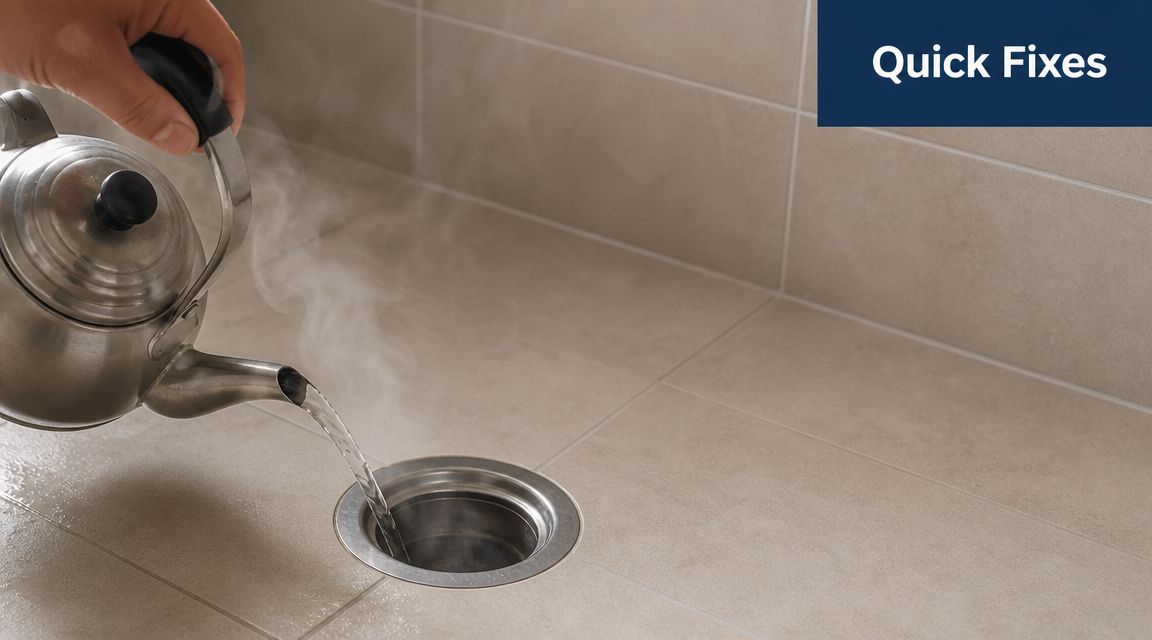
2. Flush with hot water, but match it to the pipe
Hot water helps with soap scum and greasy residue near the top of the line. It does very little against a dense hair knot, so treat it as a follow-up step, not the main fix.
If the drain line is metal, carefully poured hot or boiling water can help loosen buildup. If the line is PVC or another plastic pipe, stick with very hot tap water. Home Depot's shower drain guide notes that boiling water can damage some non-metal piping or weaken joints.
Not sure what the pipe is made of? Use hot tap water and avoid the risk.
Give it one controlled flush, then test the drain. If the water level still rises and sits there, move to suction.
3. Plunge only if you can seal the drain
Plunging works, but only when the setup is right. A loose plunger wastes time and convinces homeowners the clog is worse than it is.
Use a standard cup plunger and follow this order:
- Remove the drain cover if it is still in place.
- Add enough water to cover the lip of the plunger.
- Seal the overflow opening with a wet rag or tape if the shower or tub has one.
- Center the plunger over the drain.
- Pump firmly several times without breaking the seal.
- Lift, then test with hot water.
A weak result usually means poor suction, not a tougher blockage.
If you want to stay with low-risk methods, EZ Plumbing put together a guide on how to unclog a drain without chemicals that follows the same approach.
Know when to stop at this stage
Here's the practical cutoff. If you cleared visible debris, flushed with hot water safely, and gave plunging an honest try, but the shower still drains slowly or backs up right away, stop repeating the same steps. That is the point where the clog is often sitting deeper in the trap or branch line.
If more than one fixture is draining slowly, if water comes up in another drain, or if the shower holds standing water that barely moves, skip the trial-and-error. Those are good reasons to call a plumber like EZ Plumbing instead of forcing the problem deeper.
Using Natural and Enzyme-Based Cleaners
When manual removal and plunging don't finish the job, people often want to pour something down the drain. That's reasonable, but not all liquid treatments behave the same way. Some are harsh and risky. Others are gentler but slower.
Baking soda and vinegar
The classic baking soda and vinegar method is simple and safe for light organic buildup. It works best when the drain is slow, not fully blocked with standing water that won't move at all.
A practical home recipe is:
- First: Remove as much standing water as you can.
- Next: Pour baking soda into the drain.
- Then: Add vinegar and let the fizzing reaction work in the pipe.
- After waiting: Flush with hot water.
This method can help loosen grime and light soap residue near the top section of the line. It won't do much against a dense mat of hair wrapped around itself deeper in the trap.
Here's the trade-off in plain terms:
| Method | Best for | Limitation |
|---|---|---|
| Baking soda and vinegar | Light grime, mild odor, routine upkeep | Weak against compacted hair clogs |
| Harsh chemical drain cleaner | Fast chemical reaction | Can be rough on pipes, messy, and unsafe to handle |
| Enzyme cleaner | Organic residue and maintenance | Usually needs time to work |
Where enzyme cleaners fit
If you want a gentler liquid option, enzyme-based drain cleaners are the better choice for routine maintenance and soft organic buildup. These products are designed to break down organic material over time rather than burn through it.
That makes them useful when the drain is sluggish but still moving. They're not magic, and they're not a substitute for pulling out a wad of hair you can physically remove. But they can help after you've done the hands-on work.
A few practical notes matter here:
- Read the label closely: Different products have different wait times.
- Use them when the drain can still move water: They struggle against a total blockage.
- Think of them as cleanup and maintenance: They help reduce residue after the main obstruction is gone.
If a drain is fully backed up, liquid solutions usually sit on top of the problem instead of solving it.
That's why I treat baking soda, vinegar, and enzyme products as a middle step. Good for residue. Good for maintenance. Not the first choice for a thick hair clog and not the final answer when the line is backing up hard.
Advancing to a Drain Snake for Stubborn Blockages
You've cleared what you can see, tried the lighter fixes, and the shower still pools around your feet. That usually means the clog is sitting farther down the drain line, packed tightly enough that liquid treatments will not do much. At that point, a hand snake is the next reasonable step.
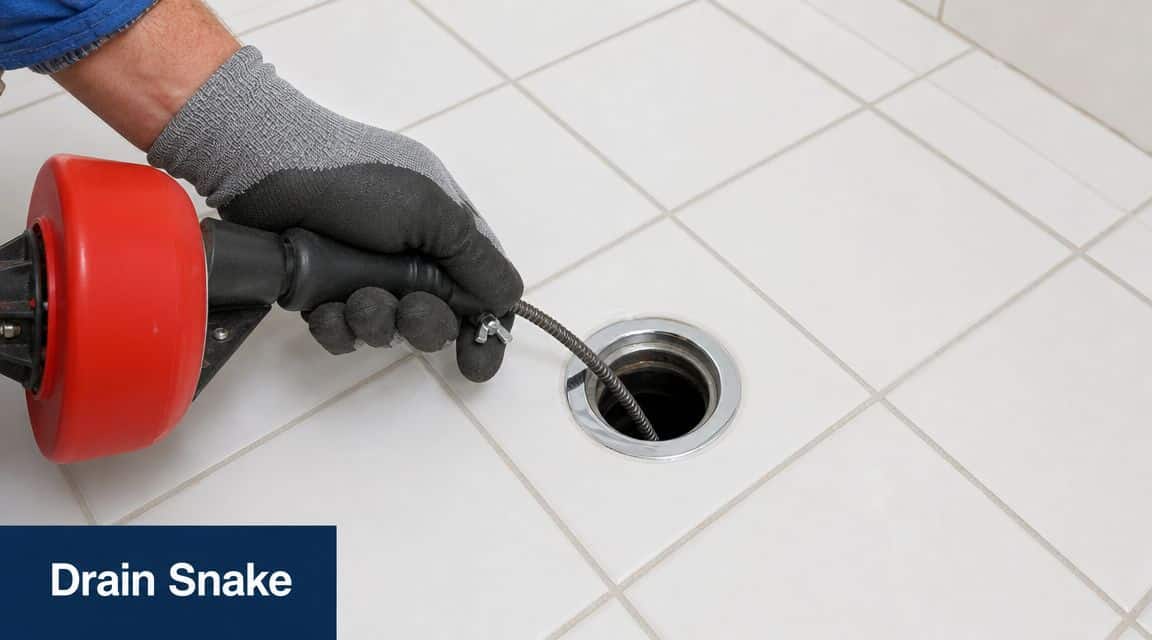
Start with a basic manual snake. For a typical shower clog, that is usually the right tool. Powered machines can clear tougher stoppages, but they also raise the chance of scratching the drain, kinking the cable, or pushing the blockage into a worse spot if you do not know how the line is laid out.
How to snake a shower drain
Take the drain cover off first. If hair is wrapped around the cover or just below it, pull that out before you feed the cable. Then guide the snake into the opening slowly.
When you hit resistance, stop and read what the cable is telling you. Sometimes you've reached the clog. Sometimes you've reached a bend. The difference matters. A hair clog often feels soft and springy. A bend feels firm and fixed.
Use this sequence:
- Remove the cover and clear debris at the opening.
- Feed the snake in slowly, without forcing it.
- Stop when you feel resistance.
- Turn the handle clockwise to catch the material.
- Pull the cable back with steady pressure.
- Wipe the cable as it comes out.
- Run hot water and check whether the drain is improving.
The goal is usually to pull the clog out, not ram it deeper. In shower drains, that clog is often a rope of hair mixed with soap residue, and it tends to come back in nasty clumps. Gloves help.
A few mistakes cause trouble fast:
- Jamming the cable forward: This can compact the clog and make the line harder to clear.
- Cranking too hard: That can twist hair tighter around the cable.
- Ignoring repeated resistance at the same depth: That can mean you are hitting a bend or a blockage that needs a different tool.
- Testing once and calling it done: Run enough water to see whether the drain is recovering.
If you want a clearer breakdown of tool options, cable types, and what a snake can and cannot do, EZ Plumbing explains it well in this guide on what drain snaking is and when homeowners should use it.
Here's a useful visual reference before you continue:
Know your DIY stopping points
I tell homeowners to give a shower drain two or three careful passes with a hand snake, not ten. If you keep bringing up nothing, the water is not improving, or the cable will not advance without force, stop there. That is usually the point where the problem is deeper in the branch line, packed beyond the reach of a small hand tool, or tied into a trap area that is awkward to access from above.
What to do if the trap is the problem
Some shower clogs sit near the trap or first bend. In a tub-shower setup, that section often collects the thickest mix of hair and soap. In a stand-up shower, access is often worse, which is why these jobs can turn from simple to frustrating pretty quickly.
If you can reach the trap from below through an access panel or unfinished ceiling, prep the area before loosening anything:
- Wear gloves: The trap contents will be dirty.
- Set a bucket underneath: Water and sludge will spill out.
- Loosen fittings carefully: Older connections can crack or seize up.
Pulling apart a trap is a reasonable DIY step only if you can reach it cleanly and put it back together without creating a leak.
If access is hidden behind finished walls or ceilings, stop before you start opening the house up. That is a good give-up point. A pro from EZ Plumbing can confirm whether the clog is local to the shower, sitting farther down the line, or pointing to a larger drainage issue.
Preventing Future Clogs and Spotting Trouble
Once the water is flowing again, the goal changes. Now you want to keep the drain clear and catch the signs that this wasn't just a one-time hair clog.
Simple habits that actually help
Most prevention is basic, but basic works. A drain cover or hair catcher is the easiest upgrade because it stops the material that causes the problem from entering the line in the first place.
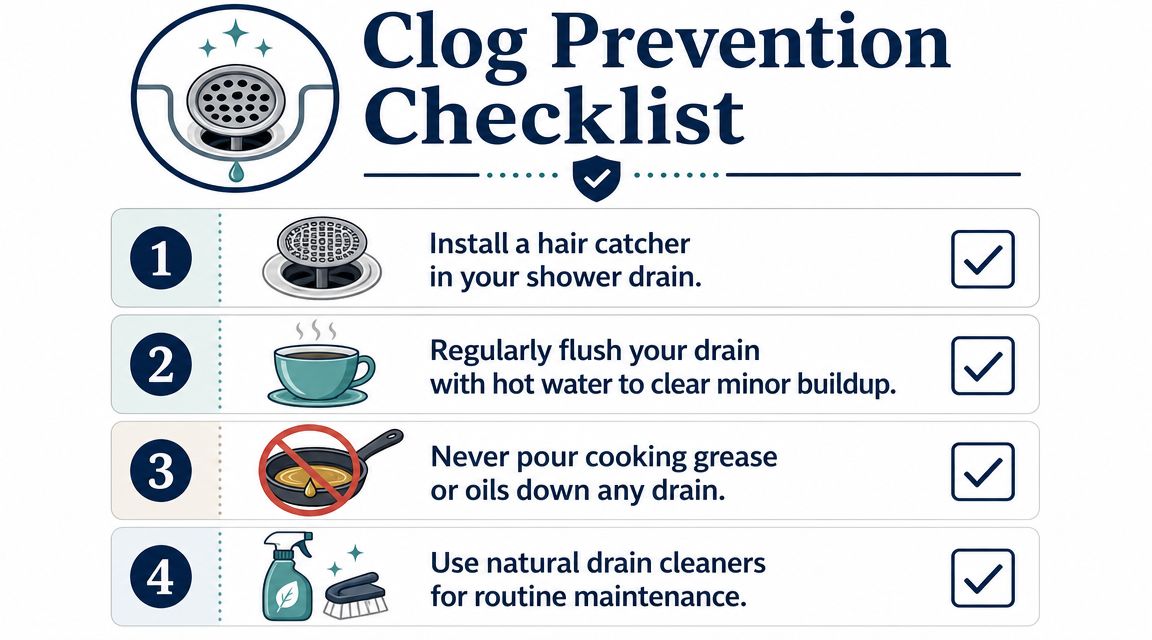
A few habits make a real difference:
- Use a hair catcher: Clean it regularly instead of waiting for it to mat over.
- Flush with hot water: This helps move light soap residue before it sticks.
- Clean buildup at the cover: Don't let sludge harden around the opening.
- Use gentle maintenance products: Enzyme cleaners can help keep organic residue from accumulating.
For a broader home care routine, EZ Plumbing's drain maintenance guide is useful if you're trying to prevent repeat blockages across more than one fixture.
Signs the problem may be deeper
Not every shower clog is just a shower clog. If the drain improves for a day and then slows right back down, pay attention to that pattern. It can mean the obstruction sits farther down the branch line, or that the line is only partially open.
Watch for these clues:
- The shower gurgles after draining
- Another nearby drain also starts acting slow
- Bad smells linger even after cleaning
- Water backs up unexpectedly
- The clog returns quickly after snaking
Those signs don't prove a main line issue by themselves, but they should make you more cautious. A repeated clog usually means the first fix treated the symptom, not the whole blockage.
When to Stop DIY and Call a Los Angeles Plumber
Many homeowners find themselves wasting a full afternoon. They've tried hot water, a plunger, maybe baking soda and vinegar, maybe a snake. The drain improves a little, then slows down again. That's the point where DIY stops being efficient.
This Roto-Rooter article on shower drain clogs points to a gap many homeowners run into. Consumer advice often explains how to plunge or snake a drain, but it doesn't give clear failure patterns that tell you when to stop. In practice, recurring or slow-return clogs can point to a deeper blockage, branch line buildup, or a venting issue rather than a simple surface obstruction.
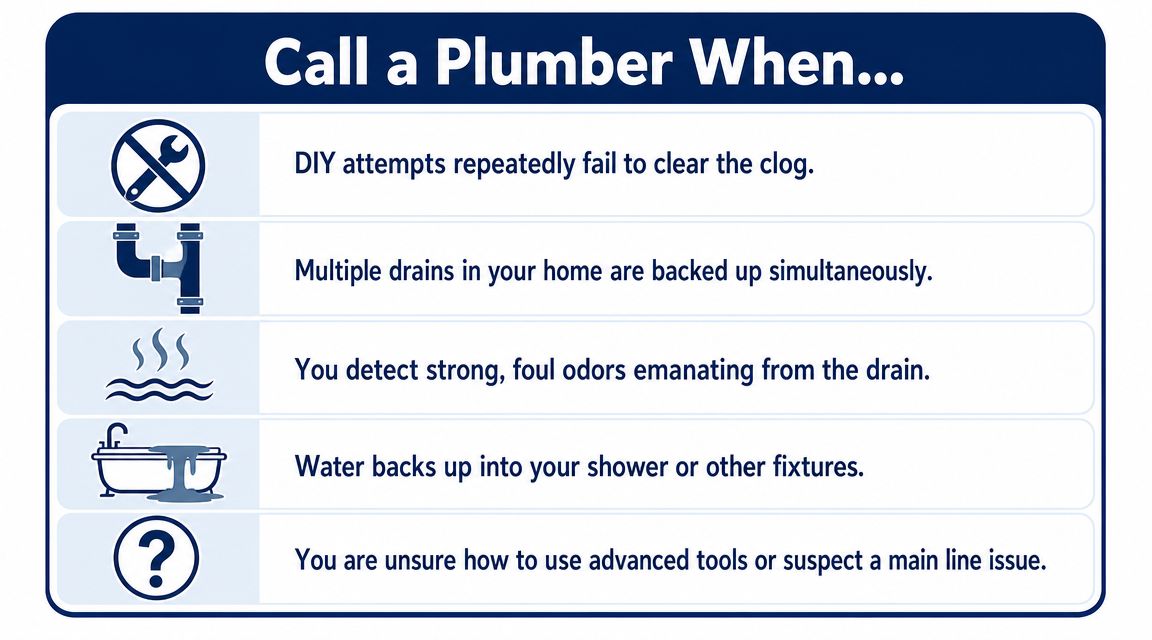
Clear stop points
Call a plumber if any of these are true:
- You cleared the drain and it clogged again quickly
- More than one drain is backing up
- You smell strong sewer-like odors
- Water backs up into the shower from another fixture
- You're no longer sure where the clog is
A good outside resource on drainage warning signs to watch for can help you separate a normal nuisance clog from a plumbing problem that needs a real inspection.
What a plumber checks next
When a shower drain keeps failing, the next step usually isn't more guesswork. It's diagnosis. A plumber may check the branch line, evaluate whether buildup extends beyond the trap, and determine whether the issue is isolated or tied to a larger drainage problem.
For Los Angeles properties, that matters because a recurring drain issue can affect more than one unit, especially in older homes and multi-unit buildings. Licensed drain cleaning service can include cable work, camera inspection for repeat clogs, and hydro jetting when grease or heavy debris is involved. That's where a company like EZ Plumbing becomes relevant. They provide drain cleaning, sewer diagnostics, hydro jetting, and 24/7 emergency response across Los Angeles, including Santa Monica, Pasadena, Glendale, Burbank, and the San Fernando Valley.
If you've hit the point where the clog is deep, recurring, or causing backup into other fixtures, put the tools down. That's the safest move for your plumbing and your property.
If your shower drain still won't clear, or it keeps clogging after you've done the sensible DIY steps, contact EZ Plumbing. Los Angeles homeowners, HOAs, and property managers can call (818) 908-2710 for help or schedule online for professional drain cleaning, diagnostics, and emergency plumbing service.