
What Is Drain Snaking? a Homeowner’s Clear Guide
You try the plunger. Nothing. You pour in a bottle of chemical drain cleaner and wait. Still nothing. If this sounds familiar, what is drain snaking is probably your next search, and it’s the right one. Drain snaking is a mechanical method that reaches and breaks up clogs far beyond what a plunger or chemical can touch. This guide explains exactly how a plumbing snake works, how to use one safely at home, when it beats every other drain unclogging method available, and when the smart move is to call a licensed plumber instead.
Table of Contents
- Key takeaways
- What is drain snaking and how a plumbing snake works
- How to safely snake a drain yourself
- Comparing drain snaking with other unclogging methods
- When to call a professional instead of DIY snaking
- My take on drain snaking after years in LA plumbing
- Get professional drain cleaning from Ez-plumbing
- FAQ
Key takeaways
| Point | Details |
|---|---|
| Drain snaking defined | A rotating metal cable feeds into the pipe to physically break or pull out clogs that plungers cannot reach. |
| DIY is viable for minor clogs | Hand drum augers costing $25 to $40 handle most sink and shower clogs caused by hair, grease, or small debris. |
| Safety gear is non-negotiable | Puncture-resistant gloves and eye protection prevent cuts and flying debris injuries during snaking. |
| Forcing the snake causes damage | Rotating gently against resistance prevents cable kinks and costly cracks in PVC pipes. |
| Multiple clogs signal bigger issues | Recurring backups or simultaneous slow drains in different fixtures point to a main-line problem requiring professional help. |
What is drain snaking and how a plumbing snake works
A plumbing snake, also called a drain auger, is a long, flexible metal cable coiled inside a drum or handle. One end has a corkscrew or auger tip. The other end attaches to a hand crank or a power drill. You feed the cable into the drain, rotate it, and the tip either punches through a clog or hooks into it so you can pull the blockage back out.
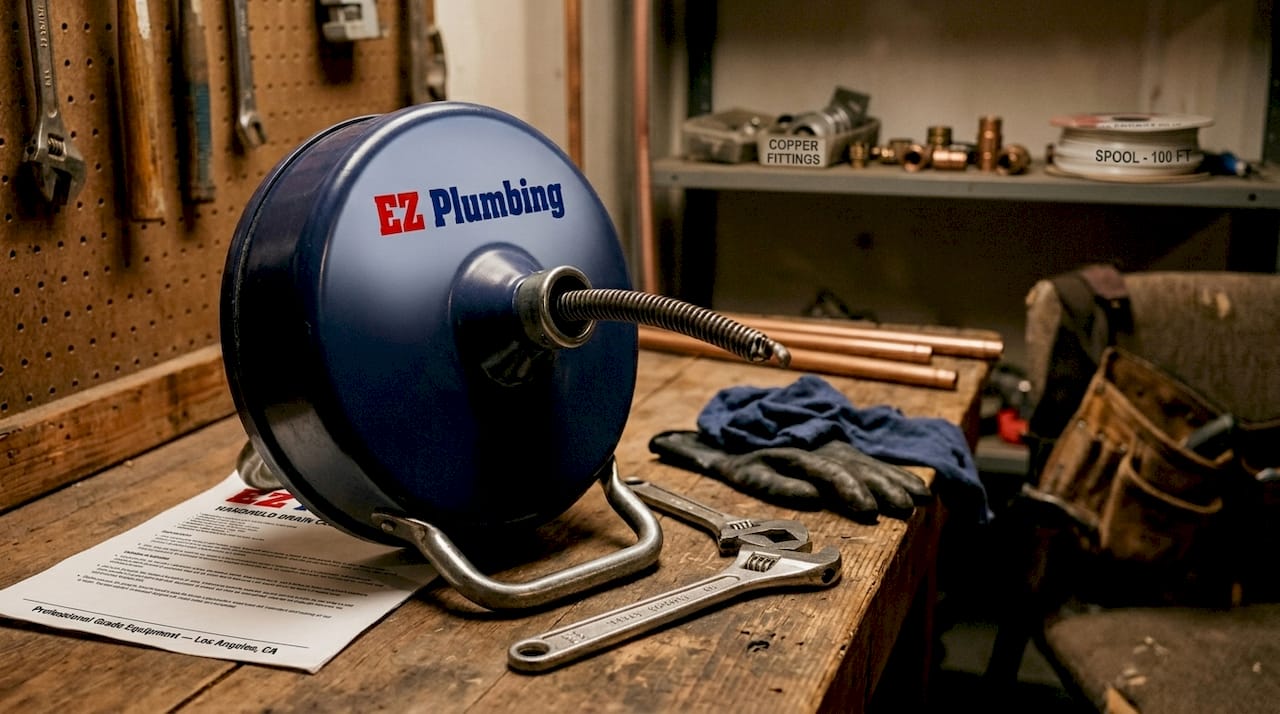
The mechanics are straightforward. As you turn the handle, the cable rotates inside the pipe, following curves and bends that a rigid rod never could. The auger tip catches on hair, grease buildup, or small objects lodged in the drain. When it hooks the clog, you reverse direction and pull the cable back, bringing the blockage with it.
Drain snaking reaches clogs within 15 to 25 feet from the drain opening, which covers the vast majority of residential sink, tub, and shower clogs. That reach goes well beyond the two or three inches a plunger can influence. And unlike chemical drain cleaners, mechanical removal avoids pipe damage and does not introduce corrosive agents into your plumbing system or the environment.
The most common tool for homeowners is the hand drum auger. Hand drum augers cost $25 to $40 at most hardware stores, making them one of the most cost-effective purchases you can make before calling a plumber. Power augers are larger, motor-driven units that plumbers use for main-line blockages. For most bathroom sinks, kitchen sinks, and shower drains, the hand version is more than sufficient.
Pro Tip: Match the snake size to your pipe diameter. For standard sinks with 1¼ to 2-inch pipes, use a smaller cable. Larger cables designed for main lines can scratch or score narrow pipes.
How to safely snake a drain yourself
DIY drain snaking is well within reach for most homeowners on localized, moderate clogs. The key is preparation, patience, and knowing when to stop. Here is how to do it correctly from start to finish.
-
Gather your tools and safety gear. You need a hand drum auger, a bucket, old towels, rubber gloves, and eye protection. Drain snake cables have sharp ends that can cut skin, and debris from the drain can ricochet toward your face during extraction. Do not skip the goggles.
-
Check and remove the P-trap first. Before feeding a snake anywhere, place a bucket under the curved pipe beneath your sink and unscrew the slip-joint nuts on both sides. Many clogs originate directly in the P-trap, and removing it often resolves the issue without any snaking at all. Clean it out, replace it, and test the drain. You may be done already.
-
Insert the snake cable into the drain or pipe opening. If the P-trap is clean and the clog is deeper, feed the cable slowly into the drain opening or into the pipe stub in the wall. Do not jam it in. Let the weight and flexibility of the cable guide it forward.
-
Rotate gently and advance steadily. Turn the handle clockwise while pushing the cable forward. When you feel resistance, that is likely the clog. Keep rotating slowly to work the auger tip into the blockage. Do not rush this step.
-
Hook the clog or break it up. Once the tip engages, you will feel the resistance change. Either the clog softens and breaks apart, or the auger hooks into it. At this point, try pulling back slowly while continuing to rotate. If it pulls, bring the cable out steadily.
-
Withdraw the cable carefully and clean up. Pull the cable back a few inches at a time, wiping it with an old rag as it comes out. The material on the cable is the clog. Dispose of it in the trash, not back down the drain.
-
Flush the drain with hot water. Run hot water for two to three minutes to clear any residual debris and confirm the drain is flowing freely.
Pro Tip: Proper tool selection by pipe diameter is critical. Using a cable that is too thick for a bathroom sink drain can scratch pipe walls or get stuck at joints. When in doubt, go smaller.
One rule that protects both you and your pipes: never force a snake against firm resistance. Forcing can cause cable kinks or crack PVC pipes, turning a $40 DIY job into a costly repair. If the cable will not advance with gentle rotation, stop, withdraw, and reassess. There may be a larger obstruction or a pipe configuration issue that requires a professional eye.
Comparing drain snaking with other unclogging methods
Understanding where drain snaking fits against your other options helps you choose the right tool from the start, rather than working through every method and losing time.
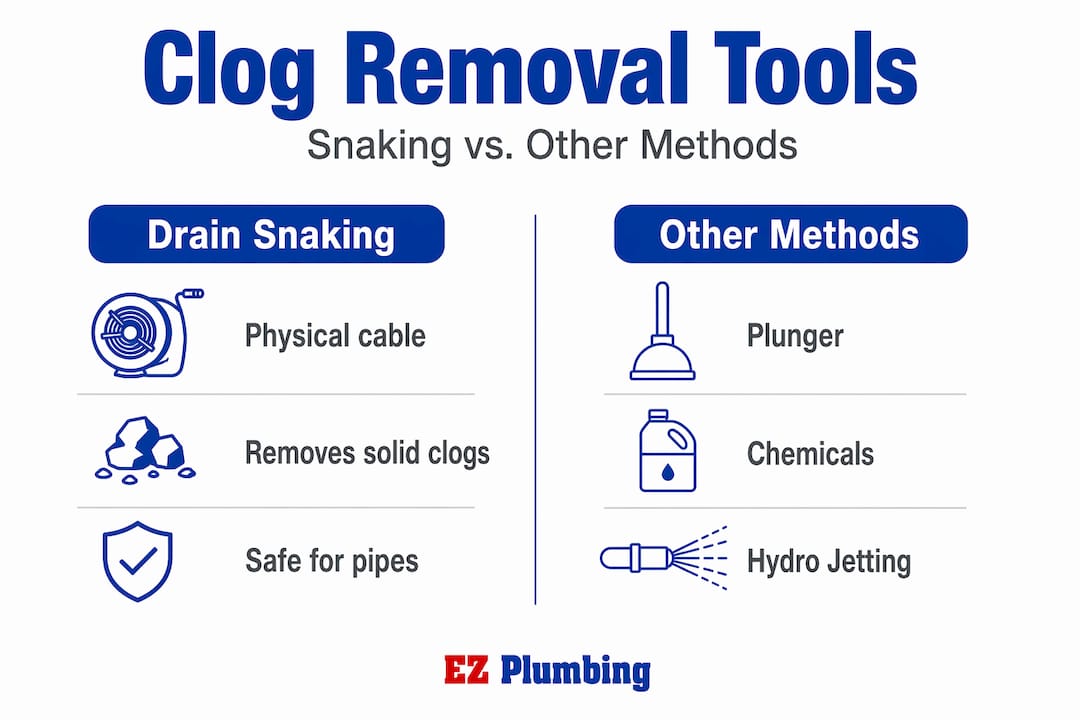
Plungers vs. snakes
Plungers work by creating suction and pressure to dislodge clogs close to the drain opening. They are effective on soft, fresh blockages, particularly in toilets and sinks. However, a plunger has no reach. If the clog is more than a foot into the pipe, or if it is a dense buildup of hair and soap scum, a plunger will not move it. A drain snake picks up where the plunger gives up.
Chemical drain cleaners
Chemical cleaners dissolve organic matter using corrosive agents like sodium hydroxide or sulfuric acid. They work sometimes on fresh clogs, but they come with real downsides. Repeated use degrades older pipes, particularly galvanized steel and PVC. They also do nothing for physical obstructions like toys, buildup of mineral scale, or grease solidified deep in the line. Chemicals treat symptoms occasionally. A snake removes the source.
Hydro jetting
Hydro jetting uses high-pressure water to scour the full interior surface of the pipe, clearing grease, mineral scale, and root intrusions that snaking cannot fully address. It is a professional technique requiring specialized equipment. Hydro jetting is the right call when snaking fails to clear a clog completely, when the same clog returns within days, or when a camera inspection reveals significant buildup throughout the line. You can read more about when high-pressure cleaning is appropriate on Ez-plumbing’s hydro jetting service page.
| Method | Best for | Limitation | Approximate cost |
|---|---|---|---|
| Plunger | Fresh, soft clogs near drain | No reach beyond a few inches | Under $15 |
| Chemical cleaner | Light organic clogs | Damages pipes over time; misses solids | $5 to $15 |
| Drain snake | Hair, grease, small object clogs | Limited to 15 to 25 feet reach | $25 to $250 |
| Hydro jetting | Grease, scale, root intrusion, main line | Requires professional equipment | $300 to $600+ |
Professional snaking costs $100 to $250 for a service call, which is still far less than the repair bill for a pipe cracked by incorrect DIY technique or a clog left unaddressed until it backs up into multiple fixtures.
When to call a professional instead of DIY snaking
There is a clear point where continuing to snake on your own stops being useful and starts creating risk. Knowing that line saves you money and prevents real pipe damage.
These are the situations where a professional plumber should handle the job rather than a rental auger:
-
Recurring clogs within 48 hours. If the drain slows again within two days of snaking, the root cause was not removed. This usually means a partial blockage, grease buildup coating the full pipe interior, or an obstruction that the snake tip worked around without clearing.
-
Multiple fixtures backing up simultaneously. Slow drains in the bathroom sink, shower, and toilet at the same time point to a main-line blockage, not individual clogs. No hand auger reaches a main sewer line effectively.
-
Strong, immovable resistance. If the snake stops cold and will not advance past a certain point with gentle rotation, there may be a broken pipe section, a collapsed section of line, or a tree root intrusion. Forcing through this causes more damage.
-
Foul odors from multiple drains. Sewer gas odors throughout the home or from several fixtures suggest a venting issue or a main-line problem, not a single localized clog.
-
Older homes with clay or galvanized pipes. Homes built before the 1970s across much of the Los Angeles area often have clay sewer laterals or galvanized steel drain lines. These pipes are brittle and corroded in ways that make aggressive snaking especially risky. Camera inspection before snaking protects you from unexpected breakage.
Camera inspections give licensed plumbers a direct view inside the pipe, showing exactly what is causing the backup and how severe it is. That information eliminates guesswork and prevents unnecessary damage. Addressing blocked drains early before they escalate into main-line backups or pipe failures is always the lower-cost path.
My take on drain snaking after years in LA plumbing
I have seen homeowners make the same two mistakes consistently. The first is giving up on snaking too early, after one or two minutes of trying, when the cable just needs another few inches and a steadier rotation. The second mistake is the opposite: forcing the snake when it will not move, grinding away at resistance that turns out to be a root intrusion or a collapsed joint.
In my experience, the single most overlooked step in the DIY snaking process is removing the P-trap first. I cannot count how many drain calls we have gone to where the clog was sitting right there in the P-trap curve, plain as day. Five minutes with a bucket and an adjustable wrench would have resolved it without any snaking at all.
What I have also learned working across Los Angeles neighborhoods is that the age and material of your pipes matters more than most homeowners realize. Snaking aggressively in a 1950s home with original galvanized pipes is a different situation than snaking a 2015 construction with PVC throughout. Technique that works fine in a newer home can crack corroded joints in an older one.
My honest advice: buy a quality hand drum auger, keep it under the sink, and use it confidently on your first response to a slow drain. But set a personal rule. If you have snaked the drain twice and the problem returns, call a professional. The drain cleaning guide for LA homeowners we put together covers long-term maintenance steps that can dramatically reduce how often you deal with clogs in the first place.
— EZ
Get professional drain cleaning from Ez-plumbing
When drain snaking has not resolved the problem, or you would rather have it done right the first time, Ez-plumbing’s licensed technicians serve homeowners and tenants across the greater Los Angeles area with complete drain cleaning services.
Our team uses professional-grade augers, hydro jetting equipment, and camera inspection tools to diagnose and clear clogs at every level of your plumbing system. Whether it is a stubborn kitchen sink clog in Reseda or a main-line backup in Burbank, we bring the right equipment and the experience to match. As a C-36 licensed contractor (License #583868), Ez-plumbing is fully insured and code-compliant with all LA municipal requirements. Visit our drain cleaning services page to learn about available options or to schedule a service appointment. For broader information on keeping your home drains clear, our drain cleaning resource covers the full range of professional and preventive solutions.
FAQ
What is a plumbing snake used for?
A plumbing snake, or drain auger, is used to break up or pull out clogs inside drain pipes that plungers and chemical cleaners cannot reach. It is most effective on hair, grease, and small object blockages located within 15 to 25 feet of the drain opening.
How do I know if I should snake my drain or call a plumber?
Try snaking once or twice for a single slow drain. If the clog returns within 48 hours, or if multiple fixtures are backing up at the same time, those are signs of a main-line issue that requires professional equipment and a camera inspection.
Is drain snaking safe for all pipes?
Drain snaking is safe for most pipes when done correctly with the right cable size and gentle rotation. Older homes with clay sewer laterals or heavily corroded galvanized pipes carry more risk, and aggressive snaking in those systems can cause cracks or joint failures.
How much does it cost to snake a drain?
A hand drum auger for DIY use typically costs $25 to $40. Professional drain snaking service runs $100 to $250 depending on the location and severity of the clog.
Can drain snaking damage pipes?
Yes, it can, if you force the cable against firm resistance or use a cable that is too large for the pipe diameter. Rotating gently and choosing the correct tool size prevents pipe damage in the vast majority of cases.