
What Is a Plumbing Snake? a Homeowner’s Guide
A plumbing snake, known in the trade as a drain auger, is a flexible metal cable with a specialized corkscrew tip used to mechanically clear blockages in household drains and sewer lines. Unlike chemical drain cleaners that dissolve material over time, a plumbing snake physically breaks apart or retrieves the clog, restoring flow immediately. You will find this tool used on bathroom sinks, bathtubs, showers, and kitchen drains throughout Los Angeles homes every day. Hand-crank augers are the most common consumer version, and they are available at hardware stores like Home Depot and Lowe’s for under $30.
What is a plumbing snake and how does it work?
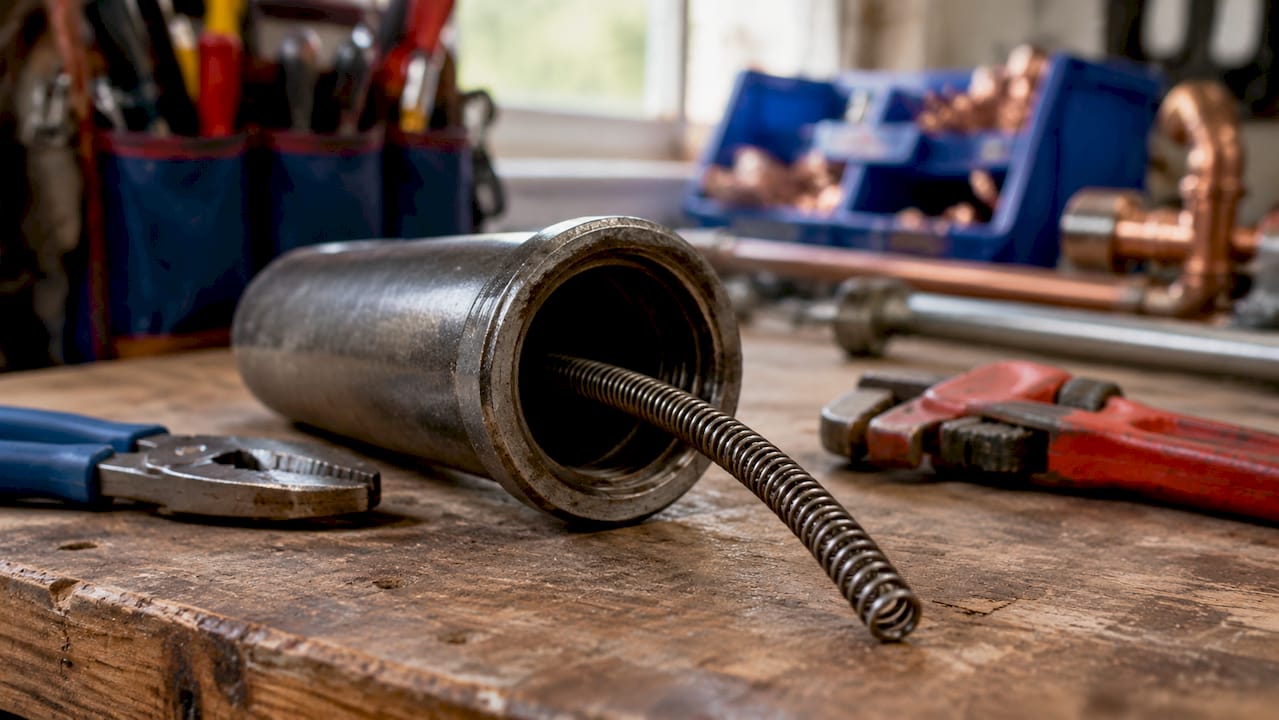
The mechanical operation of a drain auger is straightforward but precise. A rotating helix tip bores through clogs and scrapes pipe buildup as you feed the cable forward. That dual action, boring and scraping, is what separates a snake from a plunger, which only creates pressure without contacting the blockage directly.
The cable feeds through the bends and curves of your drain pipe because it is coiled spring steel, flexible enough to navigate 90-degree elbows but stiff enough to transmit rotational force. When the tip reaches the clog, you have three options depending on what you encounter: break the material apart so it flushes away, hook into it and pull it back out, or push it through to a wider section of pipe where it disperses. Hair and soap scum typically pull out cleanly. Grease and paper tend to break apart and flush.
Common clog materials each respond differently to a snake. Hair tangles around the corkscrew tip and comes out in one satisfying pull. Soap scum and mineral deposits require more rotation to break up. Tree roots, which are a real concern in older Los Angeles neighborhoods with clay sewer laterals, need a professional-grade cutting head rather than a consumer cable.
Pro Tip: Feed the cable slowly and rotate steadily. Rushing the feed causes the cable to kink inside the pipe, which can scratch pipe walls or jam the tool entirely.
One critical limitation to understand early: a plumbing snake restores flow but does not clean pipe walls. Grease and soap buildup coat the interior of your pipes and will reaccumulate after snaking unless you follow up with a thorough cleaning method. This is why recurring clogs often return within weeks of a DIY snake job.
Types of plumbing snakes and their best uses
Not every drain snake is built for the same job. Choosing the wrong type risks damaging your pipes or losing the cable inside the line.
Manual hand-crank snakes are the standard consumer tool. Drain snake cables are typically 1/4 inch thick and up to 25 feet long, with a corkscrew tip designed to snag and pull out blockages. These are suited for bathroom sinks, tubs, and shower drains with 1.5 to 2-inch pipe diameters. The hand-crank drum holds the coiled cable and lets you feed it in controlled increments.
Drum augers are a step up from basic hand-crank models. They use the same cable gauge but enclose it in a protective drum that reduces mess and gives you better torque control. Ridgid and General Wire are two well-known brands that manufacture drum augers popular with both serious DIYers and plumbers.
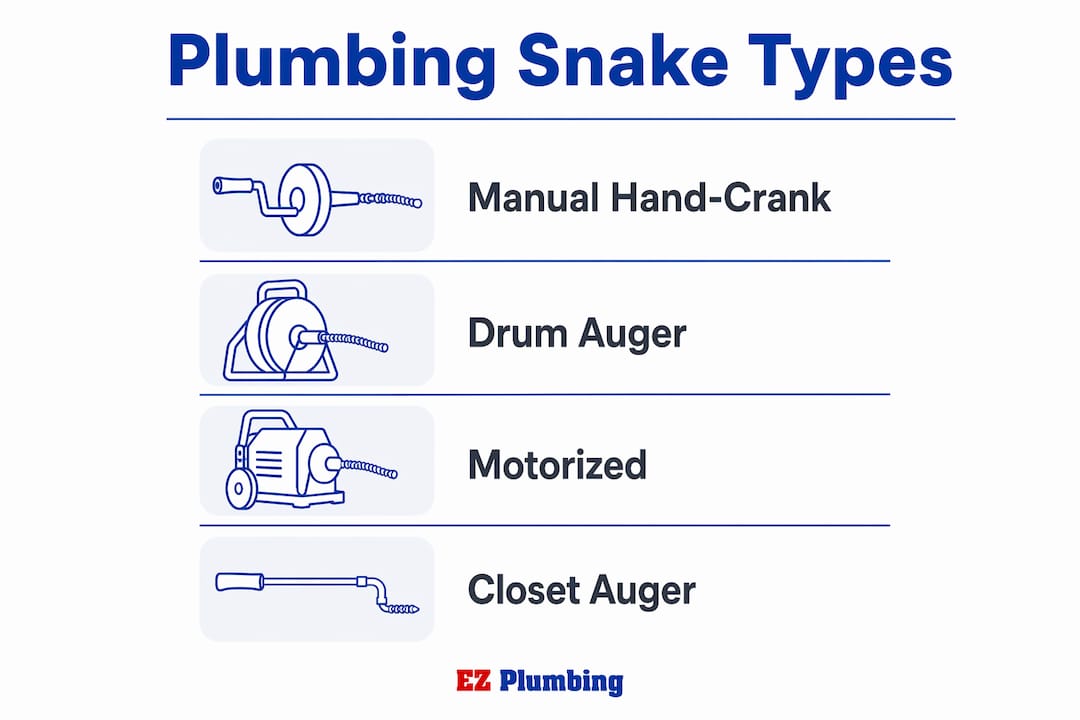
Motorized drain snakes use an electric motor to rotate the cable, which makes them effective on tougher clogs and longer runs. These are the tools you see professional plumbers carry into a home for main line work.
Closet augers, also called toilet augers, are a specialized type designed specifically for toilets. They have a protective rubber sleeve that prevents porcelain scratching and a shorter, angled cable that navigates the toilet trap.
| Snake type | Best use | Pipe size | Cable length |
|---|---|---|---|
| Manual hand-crank | Bathroom sinks, tubs, showers | 1.5 to 2 inches | Up to 25 feet |
| Drum auger | Kitchen sinks, floor drains | 2 to 3 inches | 25 to 50 feet |
| Motorized snake | Main sewer lines, stubborn clogs | 3 to 4 inches | 50 to 100 feet |
| Closet auger | Toilets only | N/A | 3 to 6 feet |
Household drain snakes are intended for smaller pipes. Forcing a consumer-grade 1/4-inch cable into a 4-inch main sewer line risks cable loss inside the pipe and zero clearing power, since the thin cable simply coils up rather than contacting the walls. Professional machines use thicker cables with more torque, and they are the correct tool for mainline work.
When and how homeowners should use a plumbing snake
A plumbing snake is the right tool when a plunger has failed and the clog is within reach of the cable. DIY drain snakes are effective for household clogs located within 15 to 25 feet of the drain opening in pipes 1.5 to 2 inches in diameter. That covers most bathroom sink, tub, and shower clogs caused by hair, soap, and light debris.
Here is a step-by-step method that works reliably:
- Remove the drain cover or stopper and set it aside. Wear rubber gloves and safety glasses before you begin.
- Feed the cable into the drain opening by hand until you feel resistance. Do not force it past the first bend.
- Tighten the drum lock and begin rotating the handle clockwise while applying gentle forward pressure. Steady rotation is more effective than speed.
- When you feel the tip engage the clog, continue rotating without pushing harder. Let the tip work into the material.
- Once you feel the resistance ease, pull the cable back slowly while still rotating. This retrieves hair and debris rather than pushing it deeper.
- Run hot water for 60 seconds to flush loosened material and confirm the drain is clear.
- Clean the cable with a rag as you retract it into the drum. Wipe down the drum and store it in a dry location.
Pro Tip: If you rent a snake from Home Depot or Lowe’s rather than buying one, inspect the cable for kinks or corrosion before you use it. A damaged cable can break inside your pipe and create a much bigger problem than the original clog.
Renting makes sense for a one-time clog. Buying a basic drum auger is worth it if you deal with recurring hair clogs in a household with multiple people. Stop and call a professional if the cable will not advance past a certain point, if you hear grinding or cracking sounds from the pipe, or if the clog returns within a week of snaking.
Plumbing snake vs. other drain cleaning methods
Understanding where a snake fits among your options helps you choose the right approach the first time.
Chemical drain cleaners like Drano or Liquid-Plumr use caustic chemicals to dissolve organic material. They work on soft clogs like hair and grease in accessible sections of pipe, but they do not work on solid obstructions and can damage older galvanized or PVC pipes with repeated use. They also leave residue in the pipe that can react dangerously if you later use a snake and splash the liquid back.
Plungers are the correct first response for most clogs. A cup plunger works on sinks and tubs; a flange plunger works on toilets. If three to five firm plunges do not clear the drain, move to a snake.
Hydro jetting uses pressurized water at 3,000 to 4,000 PSI to scour the interior walls of your pipes. Unlike snaking, hydro jetting cleans pipe walls rather than just punching through the blockage. This matters because a snake restores flow but leaves grease and soap film on the pipe walls, which collects new debris quickly.
“Recurring clogs, defined as three or more occurrences within 12 months, suggest that snaking alone is insufficient. Hydro jetting is the recommended solution for these situations.”
| Method | Clears clog | Cleans pipe walls | Safe for old pipes | DIY-friendly |
|---|---|---|---|---|
| Plunger | Partial | No | Yes | Yes |
| Chemical cleaner | Partial | No | No | Yes |
| Drain snake | Yes | No | Yes (with care) | Yes |
| Hydro jetting | Yes | Yes | Requires inspection | No |
Professional drain snaking costs between $150 and $350 for standard sink or tub clogs and $250 to $500 for main sewer line clearances. That pricing context matters when you are deciding whether to rent a snake for $30 or call a plumber. For a straightforward hair clog in a bathroom sink, DIY snaking is a reasonable first step. For a main line backup or a clog that keeps returning, professional service is the more cost-effective choice over time.
Safe use and maintenance of your plumbing snake
A drain snake that is stored and used correctly lasts for years. One that is abused or neglected fails at the worst possible moment.
Cranking too fast or pushing too hard is the most common mistake homeowners make, and it causes cable failure or pipe damage. The cable is spring steel, not a rigid rod. It needs rotation to advance, not brute force.
After each use, follow these practices to keep your snake in working condition:
- Wipe the cable clean with a dry rag as you retract it. Debris left on the cable corrodes the steel over time.
- Apply a light coat of machine oil or WD-40 to the cable before storing it. This prevents rust, especially in humid environments.
- Inspect the corkscrew tip for bending or deformation. A damaged tip will not engage clogs properly and can snag inside the pipe.
- Store the snake in its drum with the cable fully retracted. Leaving cable extended causes kinks that weaken the steel.
- Check your pipe material before snaking. Cast iron and copper pipes tolerate snaking well. Older clay pipes and corroded galvanized lines can crack under aggressive cable rotation.
Pro Tip: Before snaking any drain, run hot water for 30 seconds to soften grease and soap buildup. This reduces resistance and lets the cable advance more smoothly through the pipe.
Preventative habits reduce how often you need to snake at all. A drain maintenance routine that includes monthly hot water flushes and a hair catcher on every tub and shower drain cuts clog frequency significantly for most households.
Key takeaways
A plumbing snake clears clogs mechanically but does not clean pipe walls, making it a reliable first response for most household blockages and an insufficient solution for recurring or severe drain problems.
| Point | Details |
|---|---|
| Core function | A drain auger breaks apart or retrieves clogs within 25 feet of the drain opening. |
| Right tool for the job | Use a 1/4-inch hand-crank snake for sinks and tubs; leave main sewer lines to professional equipment. |
| Snaking vs. hydro jetting | Snaking restores flow; hydro jetting cleans pipe walls and prevents reaccumulation. |
| When to call a pro | Three or more clogs in 12 months, or a clog that will not clear after two snake attempts, warrants professional service. |
| Safe operation | Rotate steadily and feed slowly. Forcing the cable causes kinks, pipe scratches, or cable loss inside the line. |
What I have learned from years of drain calls in Los Angeles
After years of responding to drain calls across Los Angeles, from Silver Lake bungalows to Reseda apartment complexes, the pattern is consistent. Homeowners who damage their pipes with a snake almost always made the same mistake: they treated the cable like a drill bit and pushed hard instead of letting the rotation do the work. The patience required for effective snaking is not intuitive, especially when you are standing over a backed-up sink.
My honest recommendation is to start with the smallest snake that fits the drain. A 1/4-inch hand-crank auger handles 90% of bathroom clogs without any risk to the pipe. Reaching for a larger, more aggressive tool first is how you end up with a cracked clay lateral or a cable stuck 15 feet down the line.
The other thing I see regularly is homeowners who snake the same drain three or four times over a year and call it solved each time. That is not a solved problem. That is a pipe with a grease or mineral buildup issue that snaking will never fix. If your drain clogs repeatedly, the pipe walls need cleaning, not just the blockage removed. That is a job for hydro jetting services, not a hand-crank auger from the hardware store.
DIY snaking is genuinely empowering, and I encourage homeowners to try it for straightforward clogs. Know your limits, respect the pipe, and do not hesitate to call when the situation is beyond a consumer tool.
— EZ
Professional drain cleaning from Ez-plumbing
When a plumbing snake is not enough, or when you want the job done right the first time, Ez-plumbing provides licensed drain cleaning services across the greater Los Angeles area. Our team handles everything from standard sink and tub clogs to full sewer line clearances using professional-grade snaking and hydro jetting equipment.
Whether you are dealing with a stubborn kitchen drain, a recurring bathroom backup, or a main line issue, our drain cleaning services cover the full range of residential and commercial needs. Ez-plumbing holds a C-36 License (#583868) and is fully insured and code-compliant with LA municipal requirements. Call us for same-day service or to get a straight answer on whether your clog needs a snake, hydro jetting, or a camera inspection.
FAQ
What is a plumbing snake used for?
A plumbing snake, or drain auger, is used to clear blockages in household drains including sinks, tubs, showers, and toilets. It physically breaks apart or retrieves clogs that a plunger cannot dislodge.
How far can a drain snake reach?
DIY drain snakes are effective for clogs within 15 to 25 feet of the drain opening in pipes 1.5 to 2 inches in diameter. Deeper or wider line blockages require professional equipment.
Is a plumbing snake the same as an auger?
Yes. A plumbing snake and a drain auger refer to the same tool. “Auger” is the standard industry term; “snake” is the common household name for the same flexible cable device.
When should I use hydro jetting instead of snaking?
Hydro jetting is the recommended solution when a drain clogs three or more times within 12 months, since repeated snaking indicates pipe wall buildup that a cable cannot address. A licensed plumber can confirm which method your situation requires.
Can I damage my pipes with a drain snake?
Yes, if used incorrectly. Forcing the cable or cranking too fast can scratch pipe walls, crack older clay or corroded galvanized pipes, or cause the cable to kink and jam inside the line. Steady rotation and gentle forward pressure prevent most damage.