
Why Is My Toilet Gurgling? Causes, Fixes, and Pro Tips
You're standing there after a flush, and the toilet answers with a weird glug-glug from the bowl. Then the shower starts making the same noise, or the washing machine kicks in and the toilet gurgles again. That's the moment most homeowners start asking why is my toilet gurgling, and the short answer is that the plumbing is usually having trouble moving air as much as water.
In practical terms, a gurgling toilet is usually a drainage or venting problem, not a defect in the porcelain. When the drain-waste-vent system can't “breathe” normally, pressure changes pull air through the trap, and the sound you hear is the system trying to equalize itself. That's why the noise often repeats after flushing, or shows up when another fixture runs.
Table of Contents
- What That Gurgling Sound Means
- The Most Common Causes of Toilet Gurgling
- DIY Troubleshooting Steps You Can Try First
- When the Gurgling Is Not Really a Toilet Problem
- Warning Signs That Mean You Need Professional Help
- What Professional Diagnostics and Repairs Involve
- Prevention Tips and Getting Help in Los Angeles
What That Gurgling Sound Means
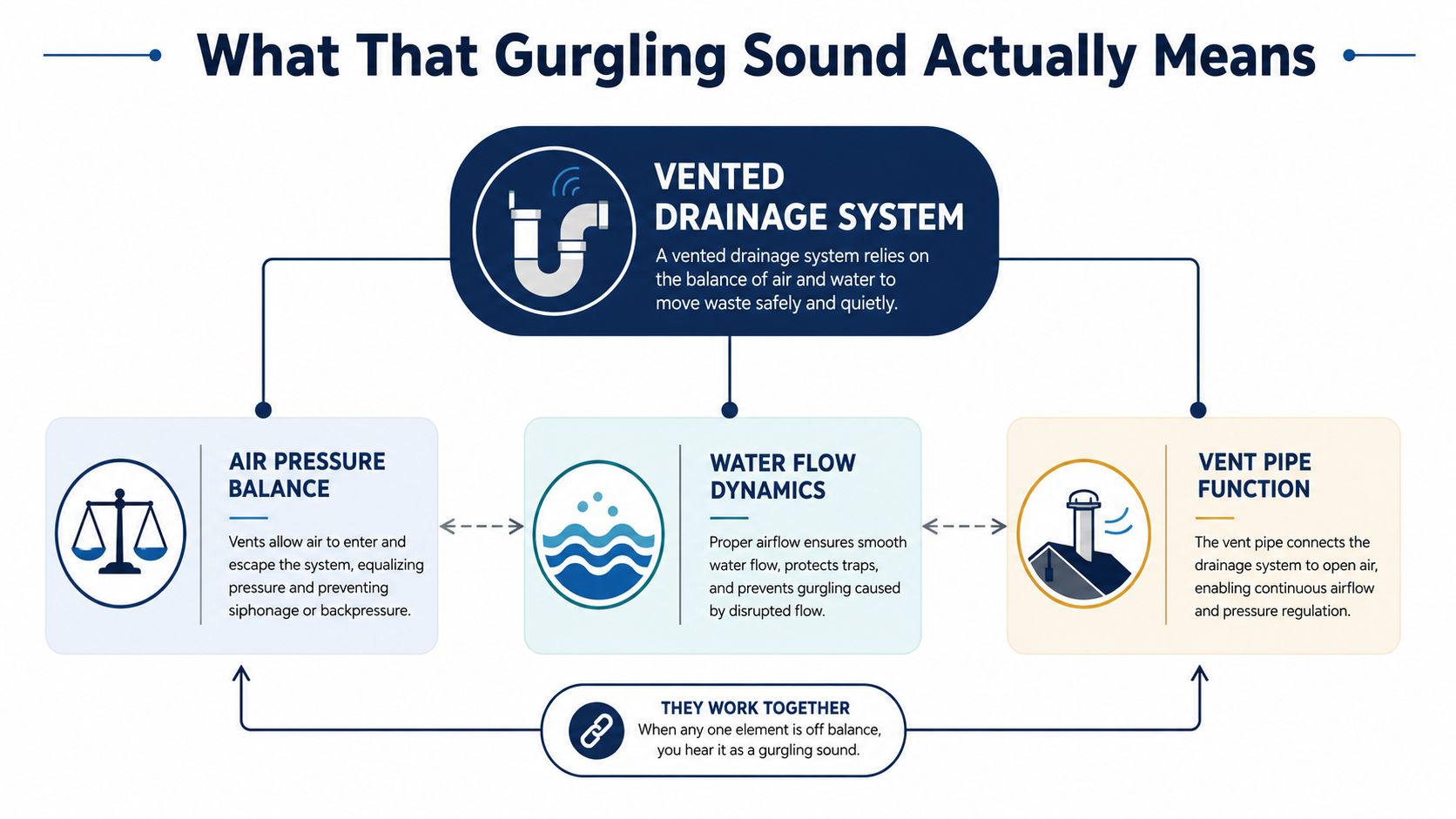
A gurgling toilet feels random until you listen to the pattern. One homeowner may hear it right after a flush, another only when the tub drains, and someone else notices it when the kitchen sink is running. The sound is not the bowl making noise on its own, it is the plumbing system showing that air movement is being restricted somewhere in the drain path.
A simple way to understand it is to picture a vented drainage system as a balance between water moving out and air moving in. If air cannot enter the pipes where it should, water does not drain cleanly, and the trapped pressure shows up as bubbles, glugging, or a slow gulp from the toilet trap. This diagram of a vented drainage system shows why that pressure change makes plumbing sound the way it does.
What's normal and what isn't
A brief gurgle during a flush can be normal. Homeowner guidance says a toilet can gurgle for about five seconds during flushing and still be considered normal, but persistent or repeated gurgling points to a blockage in the drainage system or vent stack. That timing matters because it separates a short pressure release from a problem that keeps returning. ThisOldHouse's toilet gurgling guidance makes that distinction useful for homeowners who do not want to overreact to a one-off noise.
Practical rule: if the sound stops with the flush and does not come back, you may just be hearing normal pressure movement. If it keeps happening, the system is not venting or draining cleanly.
The bigger mistake is treating the toilet as the only suspect. In many homes, the toilet is the messenger, not the cause. If the toilet gurgles when the shower runs or when the washing machine drains, that points to a shared branch line or main line restriction, not just a bowl-level clog. A good diagnostic starts by checking whether the noise stays local to one fixture or shows up when other fixtures pull on the same drain system. For a plain-language look at how that venting path works, see EZ Plumbing's guide to drain venting.
That pattern is what matters. A toilet that only gurgles during its own flush usually sends you in one direction. A toilet that gurgles when another fixture drains tells you the system is fighting for air, and the problem may already be affecting more than one line.
The Most Common Causes of Toilet Gurgling
The fastest way to narrow this down is to match the sound to the moment it happens. A toilet that gurgles during flushing is pointing in a different direction than one that hisses between flushes or only reacts when the washer drains. Each pattern has its own likely cause, and the job is to separate bowl-level noise from system-level pressure trouble.
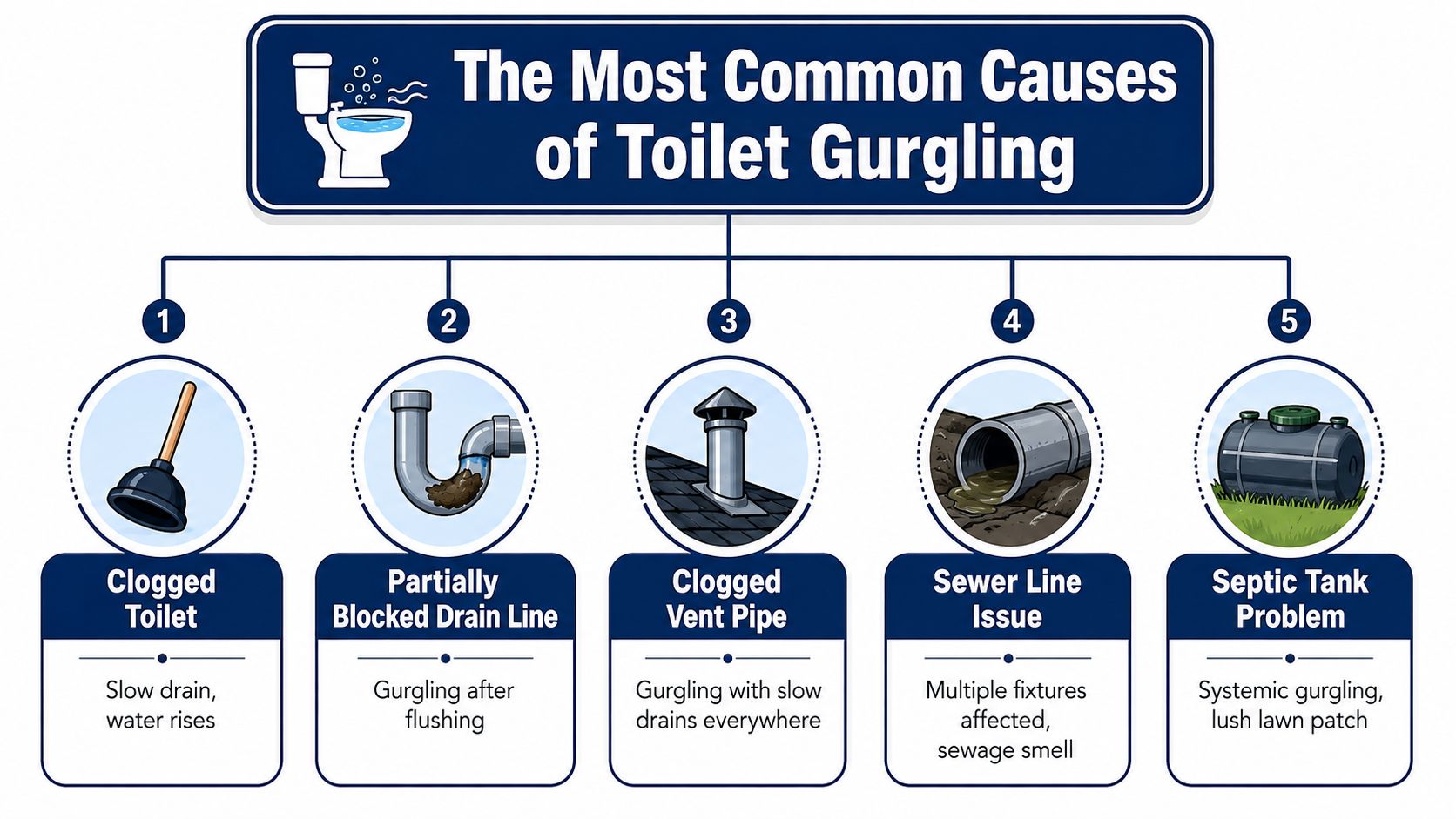
Five patterns that tell you a lot
- Partial drain-line clog. This is one of the most common reasons a toilet gurgles after flushing. Water still moves, but the line can't vent cleanly, so air gets pulled back through the trap.
- Blocked vent stack. When the roof vent is clogged, negative air pressure builds in the system and can pull air through the toilet trap, which creates the bubbling or glug-glug sound. Horow's diagnosis guide ties most gurgling cases to this kind of drainage or venting restriction.
- Main sewer line obstruction. When more than one fixture acts up, think bigger than the toilet. Slow drains in multiple rooms often point toward a shared restriction rather than a bowl issue.
- Internal tank component failure. If the toilet refills, hisses, or whistles between flushes, the issue may be a worn flapper, fill-valve debris, or a float set too high, which can let water leak from the tank into the bowl.
- Fixture-to-fixture pressure interaction. If the toilet gurgles when the shower, sink, or washing machine runs, the shared drain or vent path is probably the problem.
A useful diagnostic question is simple: does the noise happen only at the toilet, or does it show up when other fixtures are in use? That one detail often separates a local clog from a whole-home pressure issue.
The plumbing industry has also been clear for years that vented drainage systems exist to balance pressure as wastewater flows away. If that balance is disturbed, the toilet can still flush, but the air displacement becomes audible at the bowl. A clear explanation of that venting function is outlined in EZ Plumbing's homeowner guide to drain venting, which is a useful reference if you want the piping logic behind the sound.
DIY Troubleshooting Steps You Can Try First
Start with the toilet itself before you climb onto a ladder or assume you've got a sewer problem. I use this order because it keeps homeowners from overlooking a simple bowl issue, while also saving time when the sound is really coming from a branch line or vent problem somewhere else in the house.
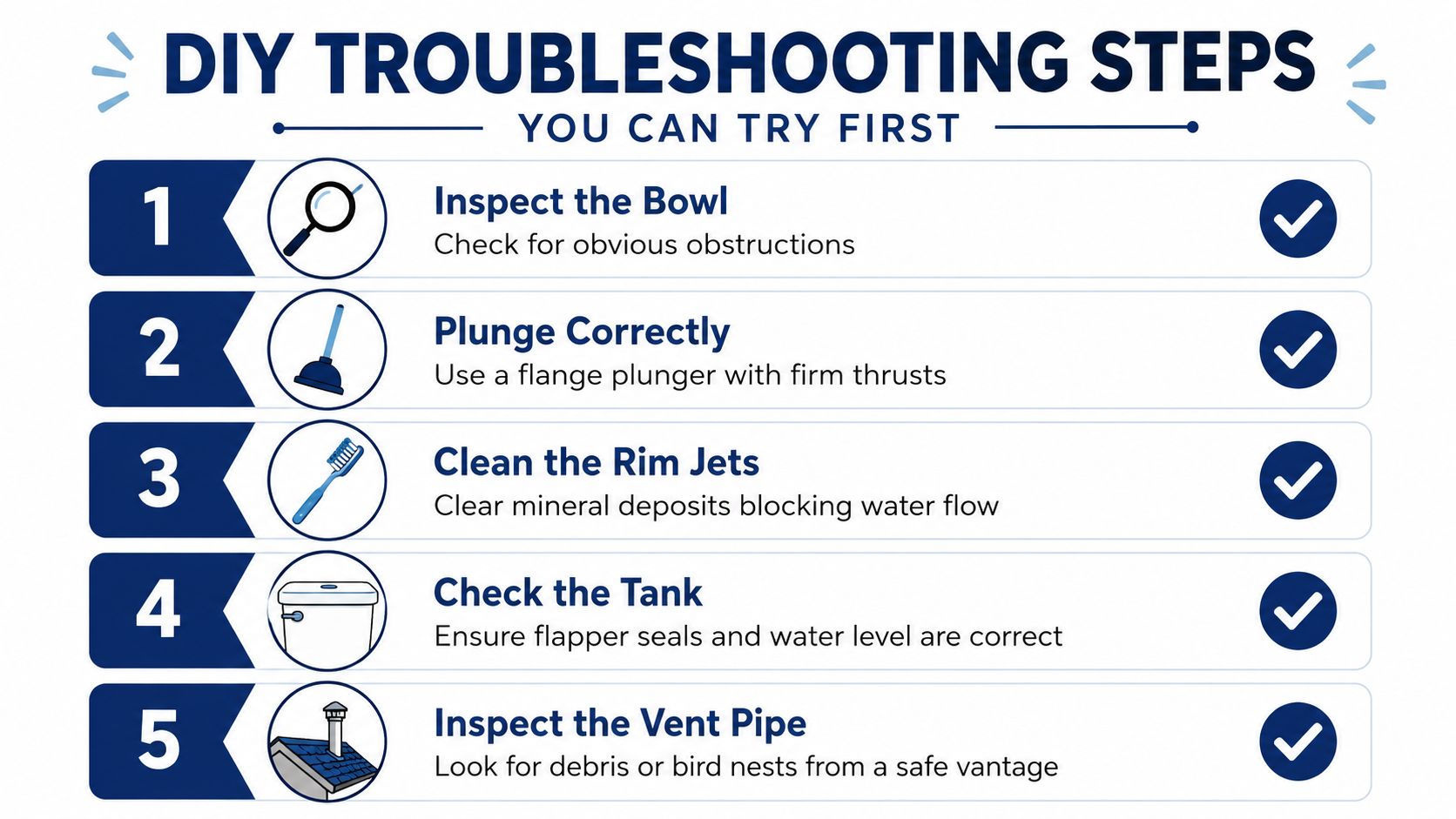
Start with the bowl and tank
First, look into the bowl for anything obvious. A child's toy, a wad of wipes, or too much paper can leave a partial blockage that makes the toilet sound off without causing a full backup. If the bowl looks clear, lift the tank lid and check the flapper, fill valve, and float. If the toilet is refilling when it should not, or if the hiss stops when you lift the float, the sound may be coming from the tank hardware rather than the drain line.
Second, plunge it correctly. Use a flange plunger, make sure the cup seals around the drain opening, and give it firm, controlled thrusts. Homeowner guidance from ThisOldHouse notes that 10–15 plunge attempts is a reasonable limit before moving to a toilet auger or snake, which is a better tool for a stubborn partial clog.
If the toilet still gurgles after a real plunge attempt, stop guessing and move to diagnosis. Repeating the same plunge with the same result usually means the blockage is not in the bowl.
Check the roof vent safely
A blocked vent stack can create the exact bubbling you're hearing. From a safe vantage point, look for leaves, bird nests, or other debris around the vent opening on the roof. Do not climb onto a slick roof in bad weather, and do not shove tools into the opening blindly. The point is to confirm whether the vent looks obstructed, not to risk a fall trying to clear it without the right access.
If you want a cleaner first pass at drain clearing before escalating, this homeowner guide to unclogging a drain without chemicals is a practical reference. If the toilet gurgles when the shower, sink, or washing machine runs, the issue may already be beyond a single fixture fix.
When the Gurgling Is Not Really a Toilet Problem
The most important pattern to notice is this. The toilet gurgles when the shower runs, the bathroom sink drains, or the washing machine discharges. That is not a random toilet quirk. It usually means the shared drain or vent path is under pressure, and the toilet is reacting to what another fixture is doing.
That's the part many guides miss. Homeowners often search for a toilet-only answer because the noise comes from the bowl, but the bowl is often just the first place the pressure imbalance becomes audible. A shared branch line can be partially restricted and still move water, but it won't balance air well, so another fixture's discharge can trigger bubbling in the toilet. ARS's bubbling toilet guidance highlights this fixture-to-fixture pattern, and it's one of the clearest clues that the issue is bigger than a single toilet.
Lowest fixtures often speak first
In homes with basements, low-lying bathrooms, or septic systems, the lowest toilet or tub often shows symptoms before the others. That makes sense because pressure changes travel to the lowest point in the system, where they're easiest to see and hear. If the lowest fixture gurgles while the upper floors seem fine, don't assume the lower toilet is the problem by itself.
A sewer-main or septic issue can create that kind of pressure behavior. Grit and Home's plumbing guidance notes that gurgling can reflect a downstream restriction or surcharged system, which is a different repair path from a simple bowl clog.
A toilet that reacts to another fixture is sending a message about the whole house, not just that bathroom.
That distinction matters in multifamily buildings and older Los Angeles homes with shared branch lines. You want to think in terms of system behavior, not just fixture behavior, because that changes what gets inspected first and what gets repaired before a backup happens.
Warning Signs That Mean You Need Professional Help
A single gurgle is annoying. Gurgling plus other symptoms is a different category. Once multiple drains slow down, sewage odors show up, or water starts backing up into tubs and showers, the issue usually belongs in the sewer or vent system, not under the toilet lid.
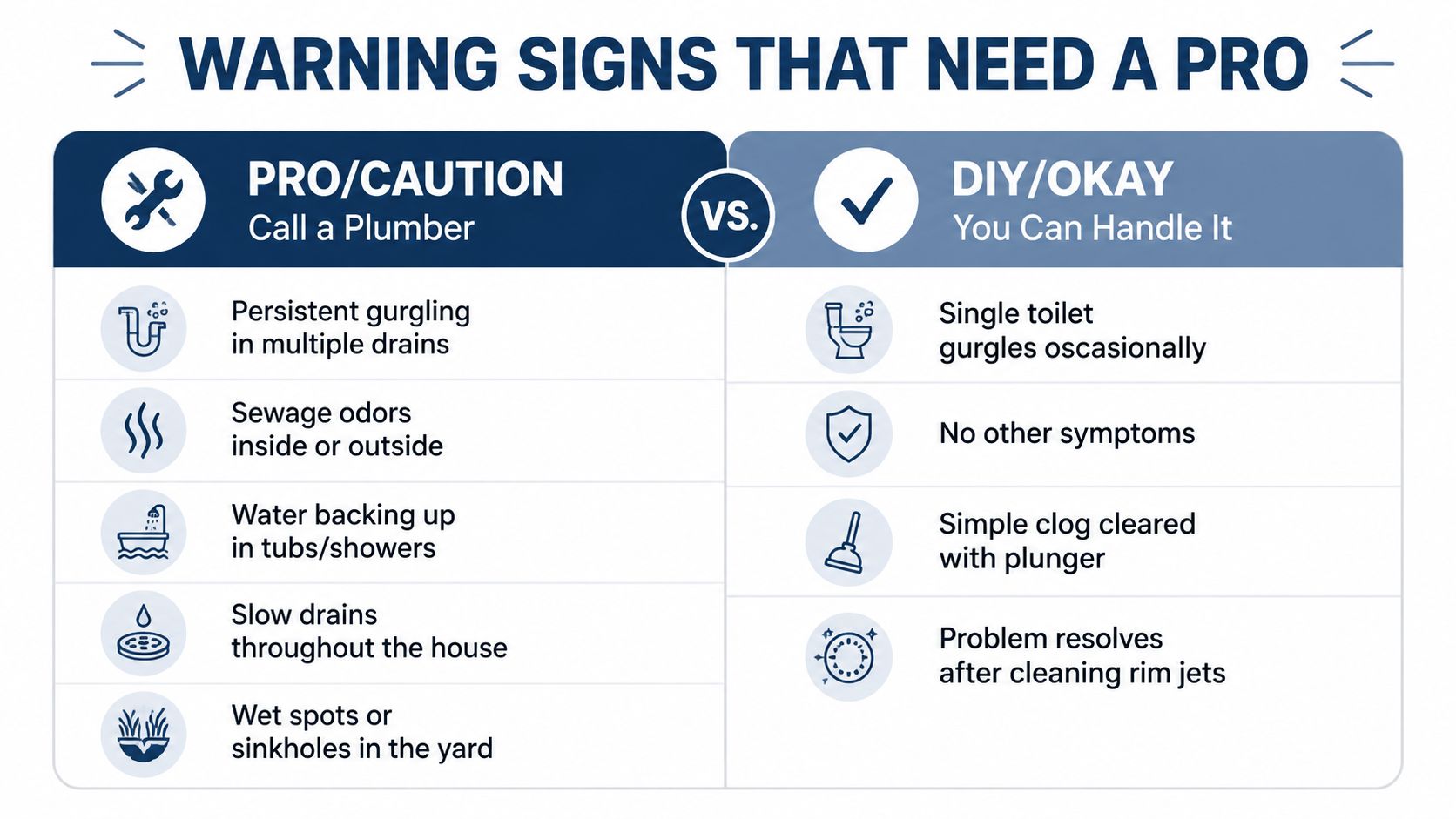
The red flags that matter most
- Persistent gurgling in multiple drains. That points to a shared obstruction or venting issue.
- Sewage odors inside or outside. Odor is a serious clue that wastewater isn't moving correctly.
- Water backing up in tubs or showers. The blockage may be forcing water to the lowest available exit.
- Slow drains throughout the house. When more than one room is affected, the problem is likely in the branch line or main line.
- Wet spots or sinkholes in the yard. That can signal a buried sewer issue or a failing downstream line.
These signs deserve a plumber, not a longer round of guesswork. Facility Management Insights' pipe inspection tips is a useful companion read if you're trying to understand why professional inspection catches hidden line problems before they get worse.
If your toilet only gurgles once in a while and clears after a basic plunge, that's one thing. If the symptoms keep spreading, you're looking at a restriction that can become a backup or a property damage problem. Ignoring it doesn't make it simpler, it just gives the obstruction time to worsen.
What Professional Diagnostics and Repairs Involve
When a plumber shows up for this kind of job, the first goal is to find out whether the issue is local or systemic. A good diagnostic starts with the symptom pattern, then moves into the piping that serves the toilet, the branch line, and the sewer connection. The point isn't just to make the sound stop, it's to find out why the system can't breathe correctly.
The most useful tool in that process is often a sewer camera. A camera inspection lets a plumber see blockages, root intrusion, pipe bellies, damaged joints, and debris that a homeowner can't spot from the fixture. If the line is packed with grease or sludge, hydro-jetting may be used to scour the pipe walls and restore flow. If the camera shows a collapsed section or a bad offset, the repair may need pipe replacement rather than another cleaning.
A homeowner-facing overview of that process is available in EZ Plumbing's sewer camera inspection guide, and it reflects how the field usually handles unclear drain symptoms. Camera work is especially valuable when gurgling has moved beyond one bathroom, because it turns a noisy guess into a visible diagnosis.
What to expect from the visit
- A fixture check first. The plumber confirms whether the toilet itself is the source.
- Drain or vent testing. This shows whether the problem is airflow, a clog, or both.
- Camera inspection if needed. That identifies the exact location and condition of the line.
- Targeted cleaning or repair. Hydro-jetting, augering, or pipe work depends on what the camera reveals.
If the plumber recommends a larger repair, ask what they saw on camera and how it connects to your symptoms. Reasonable recommendations usually follow a visible problem, not a vague assumption. That's the standard I'd want in my own home, and it's the standard you should expect in yours.
Prevention Tips and Getting Help in Los Angeles
The easiest way to avoid a gurgling toilet is to keep the drainage system from getting overloaded in the first place. Don't flush wipes, cotton swabs, paper towels, or anything else that doesn't break down quickly. Keep an eye on slow drains before they turn into pressure problems, and have vent stacks checked if you live in an older house with recurring bubbling or odor issues.
If you want a wider look at how service quality and responsiveness are evaluated in another market, Growth 4 Trades' London plumbing reviews for 2026 is a useful comparison point. Different market, same lesson, reliable plumbing work depends on clear diagnostics and consistent follow-through.
For Los Angeles homeowners, landlords, and property managers, EZ Plumbing handles emergency plumbing, drain cleaning, hydro jetting, sewer line diagnostics, and repair across neighborhoods including Beverly Hills, Santa Monica, Pasadena, Glendale, Burbank, and the San Fernando Valley. They've served Los Angeles since 1989, and they provide 24/7 emergency response with licensed, insured technicians who can respond when a bubbling toilet turns into a bigger drainage problem.
If your toilet only gurgles occasionally, keep monitoring it. If it starts reacting to the shower, sink, or washer, don't wait for the backup to prove the point.
If your toilet is gurgling with other fixtures, backing up, or making the same sound over and over, EZ Plumbing can diagnose the drain or vent issue before it turns into a larger mess. Visit EZ Plumbing to schedule service in Los Angeles, or get help fast if the noise is already pointing to a blockage or sewer problem.