
What Is Trenchless Sewer Repair? A 2026 Homeowner’s Guide
A sewer line problem usually starts in an ordinary way. One toilet gurgles. A shower drains slower than usual. You notice an odor near a cleanout, or a damp patch in the yard that wasn't there before. Then the primary worry hits. If the main line is failing, are you about to lose your driveway, patio, landscaping, or a stretch of hardscape that took years to put in?
That fear is real in Los Angeles, especially with older homes, aging clay or cast-iron lines, mature trees, tight lots, and pipes running under slabs, garages, and shared HOA areas. Traditional sewer replacement can solve the problem, but it often means heavy excavation and a lot of restoration after the plumbing work is done. Trenchless sewer repair was developed to avoid that level of disruption in many situations.
If you're trying to understand what is trenchless sewer repair, the short answer is simple. It's a way to repair or replace a damaged sewer line without digging a trench across the entire pipe path. In many cases, that means less mess, less downtime, and a smarter long-term fix for the property itself.
Table of Contents
- The Sewer Problem Nobody Wants and the Solution You Need
- Trenchless vs Traditional A Head-to-Head Comparison
- The Core Trenchless Technologies Unpacked
- The Long-Term Value of Going Trenchless
- Important Limitations When Trenchless Is Not an Option
- Your Trenchless Sewer Repair Project What to Expect
- Navigating Costs and Contractors in Los Angeles
- Frequently Asked Questions About Trenchless Repair
The Sewer Problem Nobody Wants and the Solution You Need
A common Los Angeles call goes like this. The owner has already had a drain cleared once or twice. The problem keeps coming back. The lawn is fine, the driveway is fine, the tenants are asking questions, and everyone is hoping the plumber doesn't say the words “we need to dig.”
That reaction makes sense. Traditional excavation can turn a plumbing problem into a property restoration project. If you manage rentals, the pressure is even higher because sewer trouble can quickly become a habitability issue, a scheduling problem, and a communication problem all at once. For landlords trying to sort out the legal and practical side of managing landlord repair duties, it helps to understand where sewer line work fits into broader repair obligations.
Trenchless sewer repair changes the conversation. Instead of opening the ground from one end of the line to the other, the crew works through small access points and specialized equipment. The goal is still the same. Restore proper sewer function and protect the property. The difference is how much of the surface has to be disturbed to get there.
Practical rule: If the pipe can be repaired or replaced from limited access points, you should at least evaluate trenchless before approving full excavation.
In Los Angeles, that matters more than people realize. Sewer lines often run under driveways, decorative concrete, mature root systems, detached garages, pool decking, or tight side yards with limited machine access. On HOA properties, the disruption can spread beyond one unit and affect shared walkways, garden designs, and resident access.
When trenchless is a fit, it gives owners and property managers a way to solve an underground problem without treating the whole yard like a demolition zone.
Trenchless vs Traditional A Head-to-Head Comparison
A sewer repair method matters most when the line runs under something expensive.
In Los Angeles, that often means a driveway in Mid-City, a narrow side yard in Highland Park, pool decking in the Valley, or shared HOA hardscape that is harder to close off than the pipe itself. The plumbing problem may be underground, but the actual cost often shows up above it.
Traditional sewer repair uses open trench excavation. The crew pinpoints the line, digs along the damaged section, removes the failed pipe, installs new material, then backfills and restores the surface. That approach still solves a lot of sewer problems well. It also creates a second project around the plumbing work, especially if concrete, pavers, roots, irrigation, or access gates are in the way.
Trenchless repair changes the work area, not the seriousness of the job. The line is still inspected, cleaned, and repaired or replaced with specialized equipment, but the crew usually works from limited access points instead of opening a trench across the property. In many cases, proper hydro jetting before trenchless sewer repair is part of what makes that possible.
What changes on the property
The clearest difference is surface impact.
For homeowners, that can mean keeping a front walk, planter bed, or detached-garage access intact. For property managers and HOA boards, it often means fewer disruptions to parking, resident entry, and post-repair restoration schedules.
If you've seen utility crews expose buried lines with vacuum excavation instead of cutting a wide trench, the principle is similar. Booms Up Civil's NDD services give a useful example of why controlled access is valuable anywhere underground infrastructure is involved.
Trenchless vs. Traditional Sewer Repair
| Factor | Trenchless Repair | Traditional Repair |
|---|---|---|
| How the pipe is accessed | Small entry points or existing access locations | Excavation along the pipe route |
| What happens to the yard and hardscape | Usually far less disruption if the line qualifies | Greater disturbance to concrete, landscaping, fencing, and surface features above the line |
| Project timeline | Often faster because there is less digging and less restoration | Usually longer once excavation, spoil removal, and surface restoration are added |
| Best fit | Good option for lines under driveways, walkways, mature landscaping, and tight-access LA lots | Better choice when the pipe has collapsed badly, has major offsets, or trenchless access is not practical |
| Equipment and site impact | More specialized sewer equipment, less broad excavation | More digging equipment and a larger work zone |
| Total job planning | Focus stays on pipe condition, access points, and whether the host pipe can support the method | Planning also has to account for demolition, removal, patching, and reconstruction above the line |
The trade-off is straightforward. Trenchless work can carry a higher direct plumbing price in some cases, but it often lowers the total project cost by avoiding demolition and reconstruction. In Los Angeles, that difference gets real fast once a line runs under decorative concrete, masonry, slope landscaping, irrigation, or a narrow passage that is hard to excavate cleanly.
Traditional excavation is still the right call on some jobs. At EZ Plumbing, we recommend it when the pipe condition, depth, alignment, or site constraints make trenchless a poor bet. But if the line qualifies, trenchless often protects more than the sewer. It protects the parts of the property that are expensive, disruptive, and time-consuming to rebuild.
The Core Trenchless Technologies Unpacked
There are two main trenchless methods used in residential and light commercial sewer work. Cured-In-Place Pipe lining, usually called CIPP, and pipe bursting. They solve different problems, and choosing the right one depends on what the existing line looks like on camera, how much of its shape is still usable, and what sits above it.
In Los Angeles, that distinction matters. A line under a hillside walkway in Silver Lake, a tight side yard in Koreatown, or a shared HOA drive aisle in the Valley does not give you the same margin for error. The method has to fit both the pipe and the property.
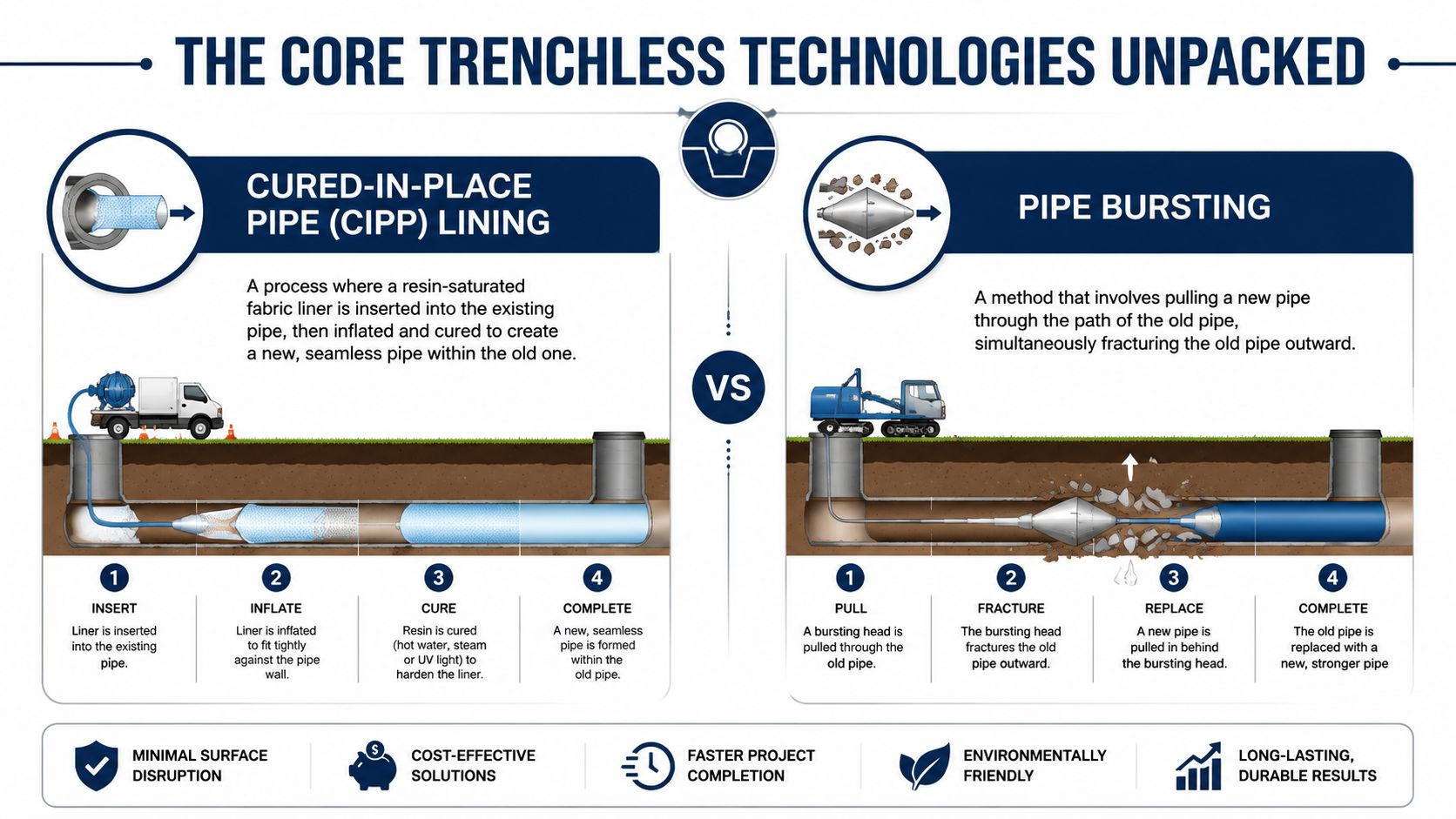
CIPP lining creates a new pipe inside the old one
CIPP works like installing a structural sleeve inside the damaged sewer line. The old pipe stays in place, and the new liner cures inside it to form a continuous interior wall.
As explained in 128 Plumbing's guide to trenchless pipe lining, the process uses a resin-saturated liner that is inserted into the existing pipe and cured in place to create a new pipe within the old one. The same guide also notes that proper prep matters. The line is first inspected by camera and cleaned with high-pressure jetting so the liner can bond to a properly prepared surface.
If you want a closer look at that prep stage, hydro jetting for sewer line preparation is often used to clear roots, grease, and scale before a liner goes in.
Here is what that job usually looks like on site:
- Camera inspection identifies cracks, root intrusion, scale, corrosion, or separated joints.
- Cleaning removes buildup so the liner can sit correctly against the host pipe.
- Liner insertion places the resin-saturated material into the existing line through an access point.
- Curing hardens the liner into a continuous new interior pipe.
- Reinstatement and final inspection reopen branch connections as needed and confirm the line is flowing properly.
CIPP is often a strong fit when the pipe still has a continuous path and the damage is more about cracks, root entry, or surface deterioration than complete collapse. That comes up often in older Los Angeles neighborhoods with clay sewer laterals. If the original line is misshapen beyond use, heavily offset, or crushed flat, lining stops being the smart answer.
A short field demonstration is useful here:
The success of lining usually comes down to pipe condition, cleaning quality, and layout. If the existing line cannot support a liner, a different method is the better call.
Pipe bursting replaces the line outright
Pipe bursting is a replacement method, not a rehabilitation method. The old pipe is broken outward underground while a new pipe is pulled into the same route behind the bursting head.
That makes pipe bursting useful when the existing sewer is too far gone for lining but the route itself still works for a trenchless pull. In practical terms, this is often the better option for badly deteriorated clay, Orangeburg, or fractured cast-iron lines where the owner wants a full new pipe rather than an interior liner.
Pipe bursting is often selected when:
- The existing pipe has severe structural failure: The line may not have enough integrity left to support a liner.
- A full replacement is the goal: Some owners want the old material functionally removed from service, not reinforced from the inside.
- Excavation would cause major surface damage: This is common under driveways, hardscape, access lanes, and common areas with planting.
- Maintaining pipe diameter matters: In some layouts, owners want the flow capacity of a replacement pipe rather than accepting the slight interior reduction that comes with lining.
This method is not automatic either. Pipe bursting needs enough access for the equipment, a workable pull path, and surrounding conditions that can tolerate the old pipe being fractured outward. In Los Angeles, that means checking nearby utilities, mature tree roots, lot-line clearances, and any city or local permit requirements before the crew commits to it.
Between the two, CIPP is usually the less invasive rehabilitation option when the host pipe is still usable. Pipe bursting is the better fit when the line needs to be replaced underground without opening a full trench across the property.
Both methods are legitimate construction repairs. The right choice comes from the camera inspection, the site conditions, and what will hold up on that specific LA property.
The Long-Term Value of Going Trenchless
A lot of people focus on the immediate benefit first. They want to avoid digging up a front yard, courtyard, driveway, or common area. That's understandable, but the long-term value is what usually makes trenchless worth serious consideration.

Why modern materials matter in Los Angeles
According to Angi's overview of trenchless sewer replacement, trenchless sewer repairs utilize materials like high-density polyethylene (HDPE) and epoxy resins engineered to last 50 to 100 years. That same source states that this lifespan matches or exceeds traditional pipe replacement and provides strong resistance to corrosion and tree root intrusion, which are major failure points in older Los Angeles clay and cast-iron systems.
That matters locally. Los Angeles properties deal with root pressure from mature trees, shifting soil conditions in many neighborhoods, and aging pipe materials that were never meant to perform forever. A repair method that uses continuous or joint-resistant materials changes the maintenance picture.
Why owners and managers see it as infrastructure work
When trenchless work is done correctly, the result isn't just “the backup stopped.” The property gets an upgraded section of underground infrastructure. That's a different category of value.
For homeowners, the payoff is less worry about repeat failures in the same line. For HOAs and property managers, the benefit is broader:
- Fewer recurring service calls: A durable repair can break the cycle of clearing the same problem again and again.
- Lower risk to surrounding property: Better pipe integrity means less chance of sewage-related damage spreading into landscaping or structures.
- A stronger maintenance plan: Modern materials make more sense for long-term asset management than repeated short-term fixes.
Owner mindset: A trenchless repair is often less about convenience than it is about replacing a weak point in the property with something built for the long haul.
That's why many owners stop thinking of trenchless as a specialty option and start treating it like capital work on a critical system.
Important Limitations When Trenchless Is Not an Option
An honest trenchless conversation has to include the jobs that shouldn't be done trenchless.
Some lines don't qualify. That doesn't mean the technology failed. It means the pipe conditions on site don't match the method. A responsible contractor should tell you that before any repair starts, not after an access pit is open and the budget is moving.
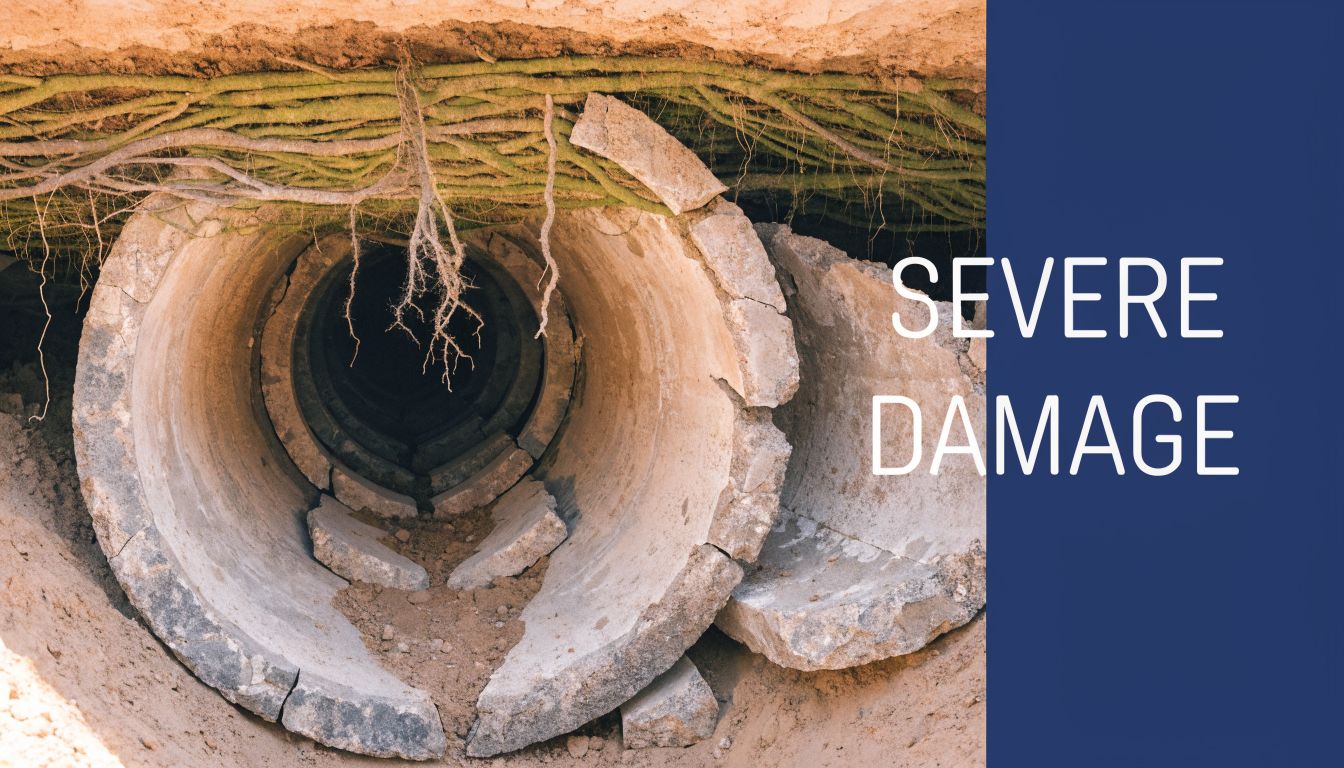
Where trenchless can fail
According to Ontario Pipe Lining's trenchless repair analysis, trenchless methods are not a universal solution and can be ineffective for pipes with severe bends over 45 degrees, significant sagging, or complete collapse. That same source says up to 35 to 40% of sewer jobs in dense urban areas like Los Angeles may be ineligible because of those conditions.
Those limitations show up often in older neighborhoods. A pipe may have shifted over time, collected heavy root intrusion, or developed a belly that prevents proper drainage. If the line has fully collapsed, there may not be a viable path to line or burst through safely.
Why the camera inspection comes first
This is why a sewer repair decision should never start with guesswork. It starts with seeing the inside of the line.
A proper inspection helps answer the questions that matter:
- Is there a continuous path through the pipe?
- Are the bends too sharp for the chosen method?
- Has the line sagged enough to make lining a poor choice?
- Is there a collapse that requires excavation?
If a contractor recommends trenchless without first confirming pipe condition, they're asking you to approve a method before proving the pipe can accept it.
For concerned owners, that transparency is good news. You don't want trenchless at any cost. You want the right repair for the actual condition of the line.
Your Trenchless Sewer Repair Project What to Expect
Homeowners are often less concerned with the actual concept of trenchless repair than they are with the unknowns. How disruptive is the process? What is the size of the on-site crew? What are the initial steps? When will the building return to its normal state?
The process is usually more orderly than people expect.
Step one is diagnosis, not guessing
A trenchless project begins with a camera inspection. The line has to be located, its condition confirmed, and the repair path understood before anyone decides on CIPP, pipe bursting, or excavation. If you want to understand that first step in more detail, sewer line inspection services show how the camera is used to identify breaks, roots, offsets, and other defects.
After the inspection, the contractor should explain the problem in plain language. Not “your sewer is bad.” More like: the line has root intrusion at one section, the pipe has cracks, the route is still passable, and trenchless is or isn't appropriate.
A typical pre-job conversation should cover:
- Access points: Where the crew will enter the system
- Method selection: Why lining or bursting fits the observed pipe condition
- Site protection: How nearby surfaces, landscaping, and shared areas will be protected
- Operational planning: Whether occupants need to limit water use during any part of the work
What repair day usually looks like
One reason trenchless appeals to Los Angeles owners is that the work stays concentrated. The crew isn't opening the entire yard. They're working from planned access points with specific equipment and a defined repair sequence.
On a lining job, the pipe is cleaned, prepared, lined, cured, and then reinspected. On a bursting job, the access points are prepared, the old route is used to guide the bursting head, and the replacement pipe is pulled into place. The site usually looks more like a controlled utility repair than a full excavation project.
What owners tend to notice most is what doesn't happen:
- No long open trench across the property
- No broad demolition path through landscaping
- No multi-stage restoration project just to get the surface back
Once the repair is complete, the contractor should verify the line and restore the work area as required. For homeowners, that usually means getting normal use of the plumbing system back quickly. For managers and HOAs, it means less disruption to residents and fewer moving parts to coordinate.
Navigating Costs and Contractors in Los Angeles
In Los Angeles, the price of a trenchless project isn't just about pipe length. Access, depth, existing pipe material, route difficulty, and local permitting can all affect the final scope. A line under a clean side yard is one thing. A line under mature landscaping, a driveway, or shared HOA hardscape is another.
This is also where estimates can get confusing. A low number on a sewer repair isn't automatically the better number if it leaves out restoration, permit handling, or realistic site conditions. For owners comparing proposals, how plumbing estimates help LA homeowners make smart choices is a useful way to think through what should be spelled out before work begins.
What affects price in the field
The biggest practical variables are usually:
- Pipe access: Tight urban lots and shared property areas can complicate setup.
- Pipe diameter and condition: The chosen trenchless method depends on what the inspection shows.
- Surface conditions above the line: Concrete, pavers, planting, and structures all change the job planning.
- City and local requirements: Permits and inspections can affect timing and process.
How to vet a Los Angeles contractor
Choose a contractor the same way you'd choose someone to work on a foundation issue or electrical service. Sewer line work affects the property for years after the truck leaves.
Use a short checklist:
- License and insurance: Verify CSLB status and active coverage.
- Actual trenchless experience: Ask which method they recommend and why.
- Video-based diagnosis: Don't accept a sewer replacement recommendation without inspection evidence.
- Clear scope: The proposal should define access, repair method, and what restoration is or isn't included.
For Los Angeles owners who want a local option, EZ Plumbing is a licensed and insured contractor serving homes, HOAs, property managers, and commercial properties across the area, including sewer diagnostics and minimally disruptive repair work.
Frequently Asked Questions About Trenchless Repair
Can trenchless repair work under a house or pool
Often, yes. That's one of the main reasons owners look at trenchless in the first place. If the pipe qualifies, trenchless methods can reduce the need to cut through slab areas, pool decking, or major hardscape. The key issue is not the structure above the pipe. It's whether the existing line condition and route make the method viable.
How do I know if it is a clog or a broken sewer line
Repeated backups, gurgling at multiple fixtures, sewage odors, or the same drain problem returning after clearing are warning signs that something deeper may be going on. A simple clog can sometimes be removed and stay gone. A broken, root-invaded, or deteriorated main line usually keeps creating symptoms until the pipe itself is addressed. The camera inspection is what separates those two situations.
Does pipe lining make the pipe too small
Pipe lining creates a new interior surface inside the old pipe, so this is a fair question. In practice, the concern isn't just inside diameter. It's overall flow performance. A smooth, properly installed liner can restore function very effectively because it removes irregularities, cracks, and root intrusion points that interrupt flow in the damaged pipe.
Do I still need permits in Los Angeles
Many sewer projects do involve permit or inspection requirements, and local rules can vary depending on the property and scope. That's one reason you want a contractor who works regularly in Los Angeles and understands local process, access issues, and documentation. Permit questions should be addressed before the work is scheduled, not after excavation or setup has started.
If you're dealing with recurring backups, suspect a damaged main line, or want a straight answer on whether trenchless is a fit for your property, contact EZ Plumbing. A proper inspection can tell you whether lining, pipe bursting, or traditional excavation makes the most sense for your Los Angeles home, rental, HOA, or commercial property.