
Sewer Line Inspection: A Los Angeles Homeowner’s Guide
A lot of people start looking into a sewer line inspection after the same kind of frustrating week. The kitchen sink is draining slowly. One toilet gurgles when another fixture runs. There's an odor outside that comes and goes. Or maybe you're about to close on a Los Angeles property and want to know what's happening under the slab before the paperwork becomes your problem.
That concern is reasonable. The main sewer line is buried, out of sight, and expensive to ignore. By the time it announces itself with a backup, the cleanup, disruption, and repair decisions get much harder.
A proper sewer line inspection gives you a direct look inside the line instead of guessing from symptoms. The process is similar to using a medical scope for a hidden problem. The camera doesn't fix anything by itself, but it tells you whether you're dealing with roots, corrosion, a break, heavy buildup, or a line that's in decent shape and just needs maintenance. If you're not even sure where your access point is, this quick guide to sewer cleanouts in LA homes helps explain the starting point.
Table of Contents
- Your Guide to Sewer Line Inspections in Los Angeles
- Signs You Need a Sewer Line Inspection
- Professional Sewer Inspection Methods Explained
- The Professional Inspection Process Step-by-Step
- Common Findings and Recommended Next Steps
- Sewer Line Inspection Costs and Timelines in Los Angeles
- Questions to Ask Your Los Angeles Plumber
Your Guide to Sewer Line Inspections in Los Angeles
You flush a toilet, then hear the shower drain gurgle. A day later, the kitchen sink starts draining slow. In a lot of Los Angeles properties, that pattern points below the slab or out toward the yard, where the main sewer lateral is aging out, catching roots, or holding waste where it should be flowing.
LA homes span very different plumbing eras. Older houses in neighborhoods like Hancock Park, Pasadena-adjacent areas, and parts of the Valley often still have clay or cast-iron in the ground. Many properties have partial upgrades, so a newer bathroom remodel may still connect to an older sewer run outside. Add mature trees, long laterals, tight side yards, and heavy hardscape, and sewer problems become expensive to guess at.
A sewer line inspection gives a direct look inside that buried pipe. The job is diagnostic. A plumber runs camera equipment through the line to identify the pipe material, locate trouble spots, and record the condition well enough to guide the next decision, whether that means cleaning, spot repair, lining, or full replacement.
Why LA owners ask for this service
In our experience, many homeowners call after the same drain issue has been cleared once or twice and still comes back. Property managers usually request inspections after repeat tenant complaints, a backup in a lower unit, or a maintenance history that suggests the building has more than a simple branch-line clog. Buyers ask for them when they want to know the condition of a buried line before escrow closes.
Los Angeles adds another layer. Access affects cost. A problem under a planted front yard is one thing. A problem running under decorative concrete, a narrow walkway, a slab foundation, or an HOA common area is another. On many properties, the inspection saves money by narrowing the scope before anyone starts cutting concrete or opening a trench.
It also helps to know where the line can be accessed. If you're not sure what a cleanout does or where it should be, this guide to sewer cleanouts in LA homes will make the inspection process easier to follow.
Practical rule: A sewer inspection earns its keep when the symptoms are recurring, the property is older, or the repair path could get expensive fast.
What the inspection is really for
The inspection's purpose is diagnostic: identify the problem, pinpoint its location, and judge its severity.
That matters because different findings lead to very different repair plans. Grease buildup may call for cleaning and better maintenance. Root intrusion at a single joint may be manageable with cutting and follow-up monitoring. Heavy corrosion, a belly in the line, or a section that has shifted can push the conversation toward repair or replacement.
For LA owners, that distinction is not academic. It affects budget, tenant disruption, permit planning, and whether the work stays small or turns into a larger excavation job. A good inspection replaces guesswork with a clear map of what is happening underground.
Signs You Need a Sewer Line Inspection
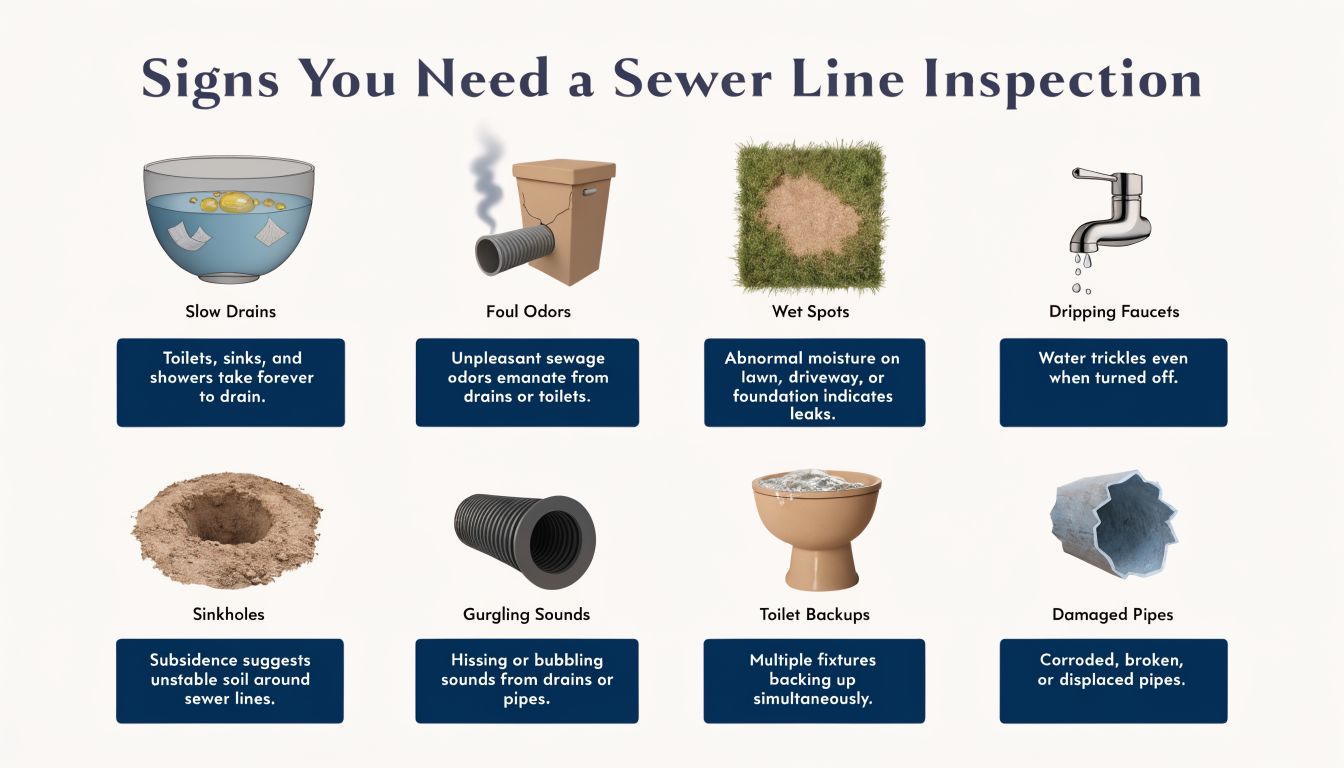
A common LA call goes like this: the downstairs shower backs up after someone runs the washing machine, a toilet starts gurgling, and the kitchen sink seems slow for no clear reason. That combination usually points to the main sewer line, not three separate fixture problems. Once the main exit path starts narrowing or catching debris, symptoms show up across the property.
Drain patterns that keep repeating
The pattern matters more than any single clog.
One slow bathroom sink can be a local stoppage. Multiple fixtures acting up around the same time usually puts the main line on the suspect list. In houses and small multifamily buildings around Los Angeles, I pay close attention when the tub, toilet, and kitchen line all start misbehaving within the same week.
Watch for signs like these:
- Recurring clogs: A fixture gets snaked, improves for a short time, then slows again.
- Multiple slow drains: Different areas of the property drain poorly at once.
- Toilet gurgling: Air movement in the line causes bubbling or gurgling sounds.
- Backups at the lowest fixture: Wastewater often shows up first in a shower, tub, floor drain, or ground-floor toilet.
If you want to see how plumbers confirm what is happening inside the pipe, a sewer camera inspection for main line diagnostics shows the process clearly.
Odors and outdoor clues
Outdoor warning signs count too. Sewer odors near the front yard, side yard, driveway edge, or cleanout area can point to a damaged line, a partial blockage, or a bad connection. Some properties also develop a patch of lawn or planting bed that stays wetter and greener than the surrounding area.
In Los Angeles, older homes add a few wrinkles. Clay sewer laterals, aging cast iron, hillside grading, and mild ground movement can all affect how a sewer problem presents. Moisture near plumbing routes, cracks in hardscape, or persistent damp soil deserve a closer look, especially in neighborhoods with older infrastructure and mature trees.
If symptoms keep coming back after basic drain clearing, stop treating each event as a separate clog. Check the main line.
Properties that deserve extra attention
Some properties benefit from a proactive inspection before a major backup happens.
Older LA housing stock is a big reason. Many homes still have original clay or cast-iron sewer lines, and both materials develop predictable problems with age. Root intrusion is common near ficus, pepper trees, palms, and other mature landscaping. A camera inspection can identify pipe material, show whether the issue is roots, grease, corrosion, a shift in grade, or a damaged section, and help narrow the repair plan before costs climb.
This matters during a home purchase, before a remodel, and any time a property has an unclear sewer history.
When property managers should move fast
For property managers and HOAs, the trigger is often repetition rather than one dramatic event. A single backup is bad enough. A pattern of complaints from the same stack, the same ground-floor unit, or the same building area usually means the line needs to be inspected and documented.
Pay attention to these situations:
- Repeat tenant complaints: Slow drains, gurgling, or backups in the same unit line or building section.
- Odors in common areas: Especially near ground-floor hallways, utility rooms, garages, or exterior walkways.
- Unknown line history: No clear record of prior cleaning, repair, or replacement.
- Pre-lease or pre-purchase documentation: Useful for reducing disputes and planning maintenance.
A sewer line inspection gives owners and managers something practical. It shows where the problem is, how serious it looks, and whether the next step is cleaning, repair, monitoring, or replacement.
Professional Sewer Inspection Methods Explained
A proper sewer inspection is not one gadget and one answer. In Los Angeles, the method changes with the building, the complaint, and the line itself. A 1920s bungalow in Highland Park, a soft-story apartment in Koreatown, and a hillside property in Sherman Oaks do not present the same access, pipe material, or repair stakes.
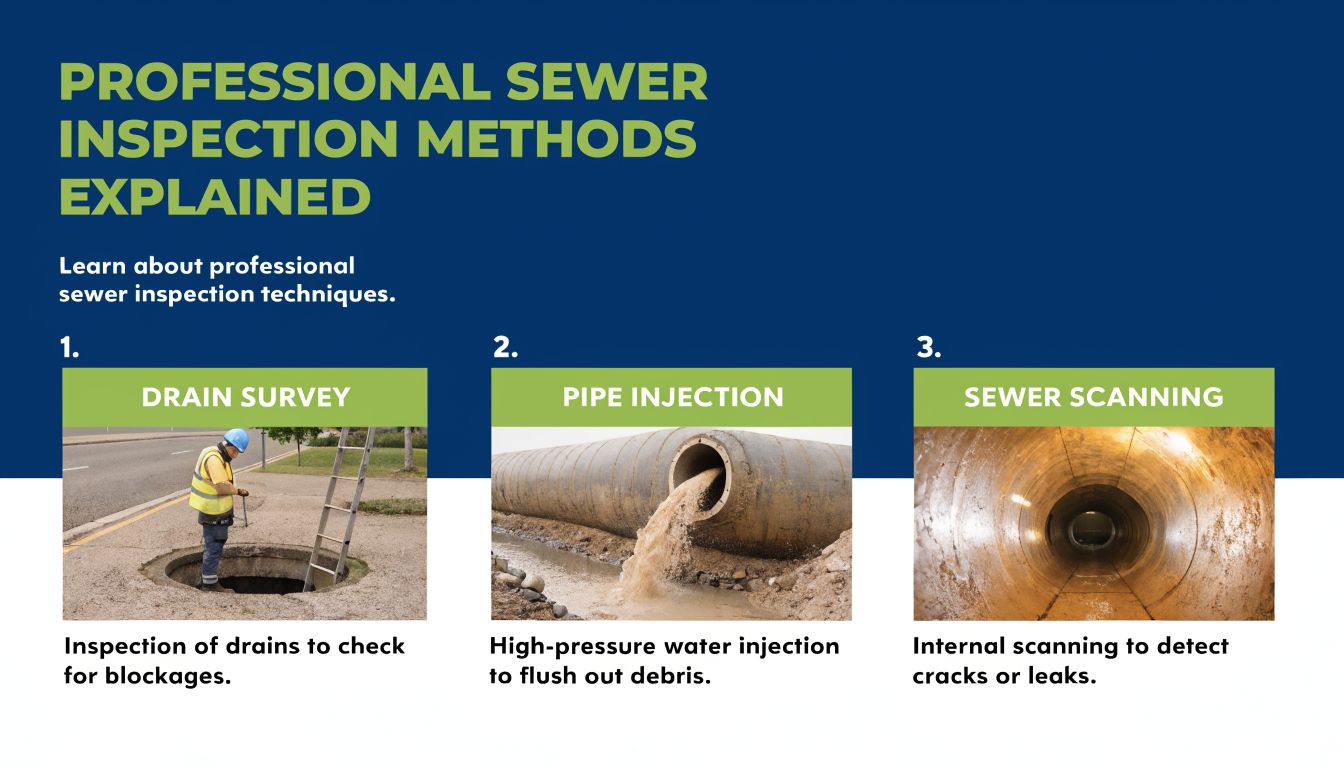
For a visual overview of how plumbers inspect buried drain lines, this page on sewer camera inspection shows the core approach.
CCTV video camera inspection
This is usually the starting point. The plumber feeds a high-definition video camera on a flexible cable through a cleanout or another serviceable opening and watches the line live on a monitor.
That live view helps identify the problem with far more precision than guesswork. The camera can show root intrusion, cracked clay, offsets at joints, cast-iron scaling, grease buildup, bellies, foreign objects, and sections that have started to deform. In older LA homes, the value is simple. You stop treating a symptom and start identifying the exact defect.
Good footage also helps with decision-making. If the line has one isolated bad section, a targeted repair may make sense. If the entire run shows age and deterioration, patching one spot can turn into spending twice.
Electronic locators
A camera shows the defect. A locator marks its position from above ground.
That matters more in Los Angeles than many homeowners expect. A break under dirt is one job. A break under a decorative paver courtyard, garage slab, retaining wall, or tight side yard is a different job with different labor and restoration costs. For property managers, accurate locating also helps with vendor coordination, tenant communication, and HOA approval because the repair area can be marked before anyone starts cutting.
Smoke testing
Smoke testing is useful when the complaint is odor, sewer gas, or a hidden connection problem. The plumber introduces safe test smoke into the system and checks where it escapes.
If smoke appears around a cleanout, wall cavity, planter area, roof vent, or another unintended opening, that points to a leak, failed fitting, dry trap, or improper connection. In multi-unit buildings and older remodels, this method can save a lot of time because the visible plumbing layout does not always match what is behind the walls or below grade.
A camera inspects the pipe interior. Smoke testing helps trace where the system is leaking or venting into places it should not.
Hydro-jetting as a prep step
Sometimes the first inspection is limited because the pipe walls are buried behind grease, sludge, roots, or heavy scale. In that case, hydro-jetting may be done before a second camera pass so the footage shows the actual condition of the pipe.
Hydro-jetting uses pressurized water to clear buildup from the line. It improves visibility and helps separate a maintenance problem from a structural one. That distinction matters in LA's older housing stock, where a heavily obstructed line can look worse than it is until the debris is removed.
Sonar for larger sewer systems
Large sewer systems sometimes need more than CCTV. If the pipe is carrying enough flow that part of the interior stays underwater, the camera cannot clearly show the submerged section. Sonar profiling can help measure debris and pipe conditions below the waterline in those situations.
For pipes 24 inches and larger with ongoing flow, sonar is used to quantify submerged debris where CCTV footage is obscured and to verify cleaning results during post-cleaning review, according to the technical sewer inspection specifications.
Most homeowners will never need sonar. This comes up more often in large commercial properties, campuses, and municipal-scale systems.
The Professional Inspection Process Step-by-Step
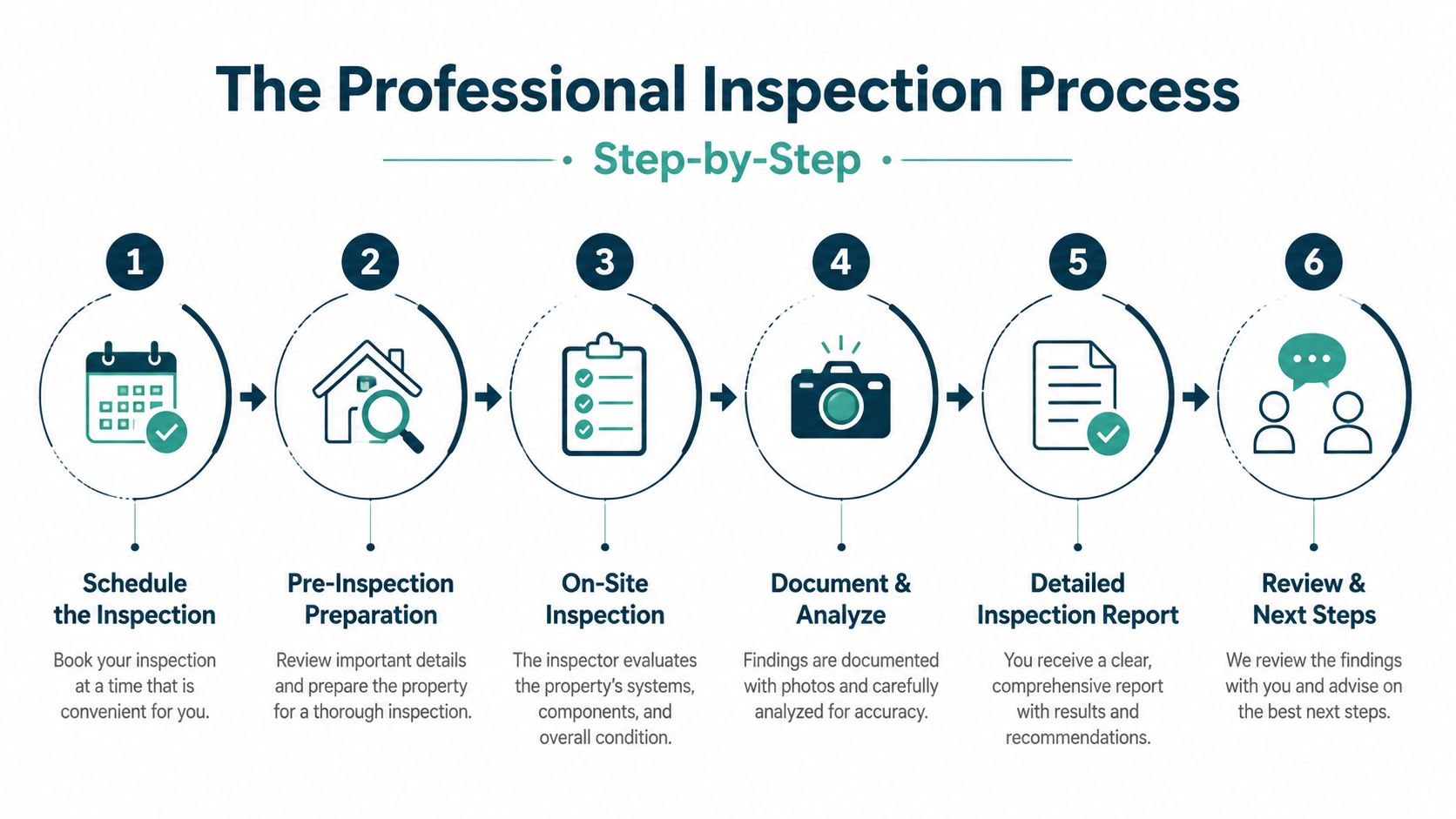
Homeowners often feel more confident about sewer work once they understand the specific details of the appointment. A professional sewer line inspection is usually orderly, not chaotic. There's no need to tear up floors or dig a trench just to get eyes on the line.
Before the technician arrives
Preparation is simple. The most helpful thing you can do is make the cleanout accessible if you know where it is. Move outdoor furniture, storage bins, or anything blocking the area. In a garage, side yard, basement, or utility area, clear enough room for the technician to work safely.
If you manage a property, it also helps to have a quick history ready:
- Recent symptoms: Slow drains, odors, backups, or repeat calls
- Past work: Any snaking, jetting, spot repairs, or replacements
- Site details: Whether the line runs under slab, yard areas, driveway, or common area
What happens during the inspection
The technician first confirms the best access point, usually a cleanout near the foundation or another serviceable opening. Then the camera is inserted into the line on a flexible rod. The monitor shows the interior as the camera travels through the sewer lateral.
This part is usually calm and very visual. A good technician narrates what they're seeing as they go. If the line changes material, shows root entry, narrows from buildup, or reveals a damaged section, you'll hear that in plain language while the inspection is happening.
The process itself is recognized in industry practice as a non-invasive video inspection using HD cameras and real-time observation, followed by reporting with findings and recommendations. That's why it's become the standard first step instead of blind excavation or repeated guesswork.
What to expect: The inspection should answer where the issue is, what kind of issue it is, and whether cleaning, monitoring, or repair makes sense next.
What you should receive at the end
The visit shouldn't end with only a verbal summary. A proper inspection usually includes documentation. Depending on the provider and property type, that may include video footage, photos, and a written description of the line condition.
For owners and managers, this documentation matters because it creates a baseline. It can support maintenance planning, help compare repair options, and give buyers or sellers something concrete during a transaction.
A good final explanation usually covers three things:
- Immediate concerns that need action now
- Manageable issues that should be watched or scheduled
- What doesn't need repair so you don't spend money where you don't have to
That last part matters just as much as the first two.
Common Findings and Recommended Next Steps
Once the inspection footage is on screen, the next question is always the same. What now?
Some findings call for cleaning. Some call for repair. Some just need monitoring and recordkeeping. The right next step depends on whether the problem is caused by buildup, intrusion, deterioration, or loss of proper grade.
What common problems usually mean
Here's a practical breakdown of what plumbers commonly find and how those problems are usually addressed.
| Problem Found | Description | Common Repair Solution(s) |
|---|---|---|
| Tree root intrusion | Roots enter at joints, cracks, or weak sections and catch paper and debris | Hydro-jetting, root cutting, trenchless lining if the pipe wall is still suitable, or replacement if damage is severe |
| Pipe corrosion | Common in older metal lines where the interior wall has scaled, roughened, or deteriorated | Cleaning, spot repair, trenchless rehabilitation, or full replacement depending on structural condition |
| Cracks or breaks | The line has split, fractured, or opened enough to leak or catch waste | Spot repair, trenchless lining, pipe bursting, or excavation and replacement |
| Bellied pipe | A sagging section holds water and solids instead of carrying them through cleanly | Targeted replacement or regrading. Cleaning alone rarely solves this for long |
| Major blockage | Grease, wipes, debris, scale, or foreign objects narrow or block the flow path | Mechanical clearing, hydro-jetting, then camera confirmation to check for underlying structural damage |
| Offset or separated joints | Pipe sections have shifted and no longer line up properly | Spot repair, trenchless options in some cases, or excavation where alignment loss is significant |
| Collapsed section | The pipe has lost its shape enough that flow and camera travel are severely limited | Excavation, pipe bursting, or replacement depending on access and extent |
How owners should decide what to do next
Experience matters in this situation. The same symptom can produce very different recommendations depending on what the camera shows.
If the line is structurally sound and the issue is heavy grease or root mass, cleaning may be the sensible first move. If the camera shows corrosion, cracks, or joint failure, cleaning alone usually buys time but doesn't solve the core issue. If a section is sagging, recurring backups often return because the shape of the line is working against you.
For homeowners, the biggest mistake is treating every finding like a crisis. For property managers, the biggest mistake is treating every finding like it can wait.
Some sewer lines need repair. Some only need maintenance. The camera helps separate those two before you commit to the wrong job.
There's also a financial side to delay. If sewage has already entered living space, cleanup becomes part of the problem, not just plumbing. Property owners trying to understand that broader risk can review these 2026 sewage backup financial details as a projection-focused look at what backup events can involve once contamination and restoration are part of the picture.
When repairs are needed, it helps to compare methods carefully. A page on sewer line repair can give you a sense of how plumbers match trenchless repair, spot fixes, or full replacement to the condition of the pipe.
A good recommendation should explain not just what to do, but why that method fits your line. If that explanation is vague, keep asking.
Sewer Line Inspection Costs and Timelines in Los Angeles
Most owners want two answers right away. What will the inspection cost, and how long will this take?
That's fair. Sewer work feels expensive because the line is hidden and the consequences of delay are ugly. The good news is that the inspection itself is usually the least painful part of the process, especially compared with emergency repair.

What a sewer line inspection usually costs
A sewer camera inspection in the United States typically costs $250 to $500, while the average sewer line repair is over $2,500, according to Rocket Mortgage's sewer scope inspection guide. That gap is the whole reason experienced plumbers push diagnosis first.
For Los Angeles owners, the value of that inspection is often even clearer because labor costs and property access challenges are rarely on the low end. Spending hundreds to avoid guessing wrong on a buried line is usually smart money.
What affects price in Los Angeles
In the field, price changes more because of conditions than because of the camera itself.
Common factors include:
- Cleanout access: If access is buried, obstructed, or unusable, setup gets harder.
- Line condition: A heavily blocked line may need cleaning before the camera can see enough to diagnose properly.
- Property layout: Hillside homes, long laterals, commercial sites, and multi-unit buildings are different from a simple front-yard cleanout.
- Documentation needs: Real estate, insurance, HOA, or management records may require a more formal reporting package.
Los Angeles also brings practical friction. Parking, traffic, gated access, tenant coordination, and dense construction can all add time to what looks simple on paper.
How long it takes
The inspection itself is usually relatively quick. Many standard residential sewer line inspections are completed in a short service window, especially when the cleanout is accessible and the line isn't fully blocked. If the line needs pre-cleaning, locating, or extra documentation, the appointment runs longer.
Repairs are a separate timeline entirely. A cleaning or targeted fix may move quickly. A trenchless rehabilitation, spot excavation, permit issue, or access complication can extend the schedule.
The timeline that matters most is not how fast the camera goes in. It's how quickly you get a clear diagnosis and a realistic plan.
For property managers, that planning value is huge. It lets you schedule disruption instead of reacting to it.
Questions to Ask Your Los Angeles Plumber
A sewer line inspection is technical, but hiring the right company doesn't have to be complicated. Ask direct questions and listen for direct answers. If someone gets slippery on scope, documentation, or pricing, that's usually a warning sign.
Questions that reveal whether the process is solid
Start with the basics:
- Are you licensed and insured in California? You want a contractor who can legally perform the work and stand behind it.
- Will you provide video footage or photos from the inspection? If the recommendation is based on camera findings, you should be able to review those findings.
- What access point will you use? A clean explanation here shows they're thinking about the job, not just selling it.
- Will you locate the problem area from the surface if you find a defect? This matters before repair estimates are written.
Questions that protect your budget
Don't dance around cost. Ask plainly.
- Is the sewer line inspection priced as a flat diagnostic, or can the total change?
- What situations commonly increase the cost?
- If the line is too dirty to inspect clearly, do you recommend cleaning first or trying the camera anyway?
- If you find a problem, will I get an itemized repair quote?
These questions matter in Los Angeles because access and logistics can shift the job quickly. You want to know whether the company explains those trade-offs before starting.
Questions that protect your property
Homeowners and managers can save themselves a lot of trouble later by taking action now.
Ask whether the plumber:
- Specializes in trenchless options when appropriate
- Handles older pipe materials common in LA homes
- Works with HOAs, tenants, or occupied properties
- Can distinguish between maintenance issues and structural failures
The best plumber doesn't rush you into excavation. They explain what the camera proved, what it didn't prove, and what options actually fit the condition of the line.
A good sewer line inspection should leave you calmer than you were before the visit. You may not love the answer, but you should understand it.
If you need a clear diagnosis from a licensed local team, EZ Plumbing serves Los Angeles homeowners, HOAs, property managers, and commercial properties with sewer inspections, drain diagnostics, hydro jetting, and repair support. Call (818) 908-2710 or schedule online for straightforward recommendations, documented findings, and service that respects your time and property.