
What Is Gas Line Plumbing? A Homeowner’s Guide
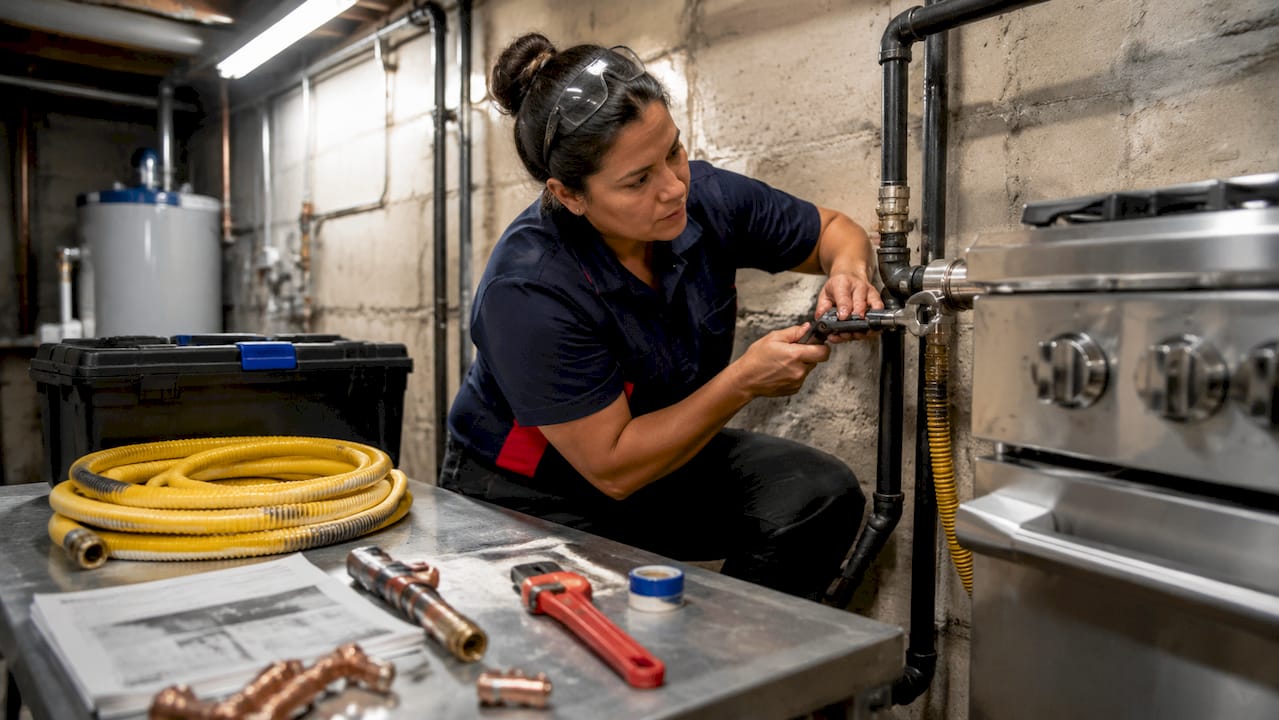
Gas line plumbing is the system of pipes, valves, and fittings that transports natural gas or propane from a utility meter or storage tank to the appliances inside your home. It powers your furnace, water heater, gas range, fireplace, and clothes dryer. Because gas lines carry combustible fuel under pressure, they require professional installation, permits, and regular inspections. Understanding how this system works helps you make safer decisions and recognize when something is wrong.
What is gas line plumbing and how does it work?
Gas line plumbing is a specialized delivery network that begins at the utility meter on the exterior of your home and branches out through the walls, floors, and ceilings to reach each gas appliance. The system operates under controlled pressure, typically measured in inches of water column for residential lines. A regulator at the meter reduces the high street pressure to a safe level before gas enters your home. Shutoff valves are installed near each appliance so you can isolate a single connection without cutting gas to the entire house.
The system is not just a collection of pipes. Load calculations must account for the total BTU demand of every appliance running simultaneously. A furnace, water heater, and range all drawing gas at once must receive adequate flow without pressure drops. When a system is undersized or improperly modified, you get weak flames, pilot outages, or appliance lockouts.
What materials are used in gas line plumbing?
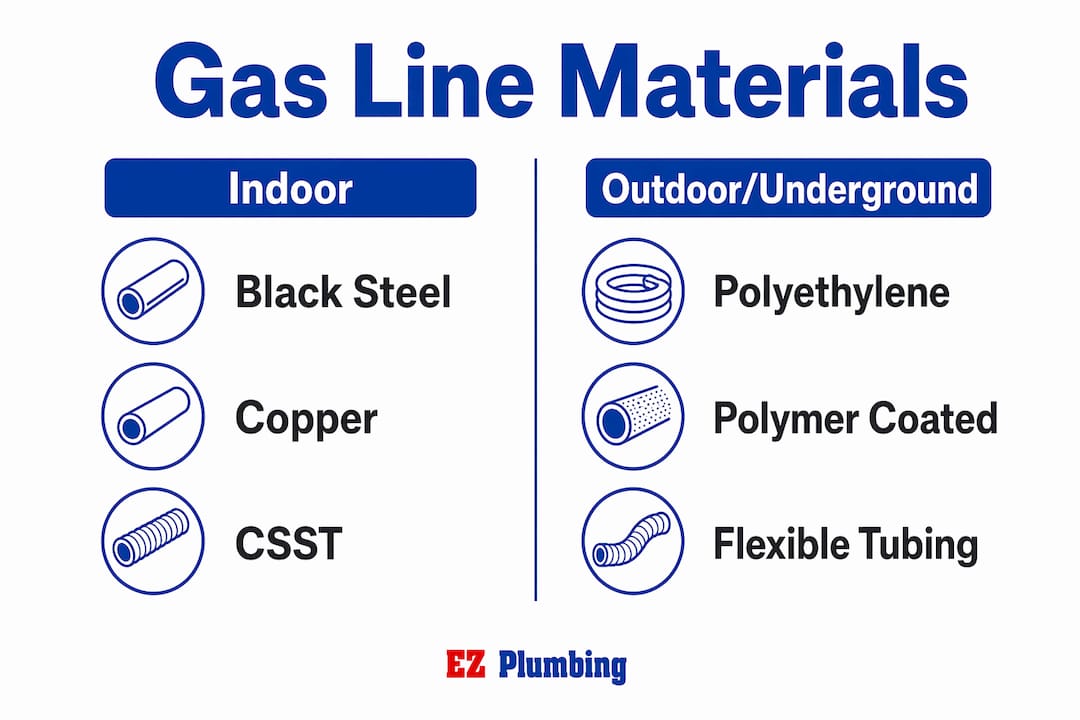
Material selection depends on the gas type, installation environment, and local building codes. Each material has specific strengths and limitations that affect where and how it can be used.
Black steel pipe is the traditional standard for indoor residential gas lines. It is durable, widely available, and code-approved for natural gas and propane. The downside is that it requires threaded fittings and takes more labor to install than flexible alternatives.
Corrugated stainless steel tubing (CSST) is a flexible yellow-jacketed pipe that routes around obstacles without as many fittings. It installs faster than black steel, but it requires proper bonding and grounding to protect against lightning-induced electrical arcing. Some jurisdictions have additional requirements for CSST, so always verify local code.
Copper pipe is generally prohibited for natural gas in most American jurisdictions because natural gas can contain trace hydrogen sulfide that corrodes copper over time. Copper is sometimes permitted for propane, but you should confirm with your local building department before specifying it.
Polyethylene (PE) pipe is used exclusively underground. It resists corrosion and is flexible enough to handle minor ground movement. Because PE is non-metallic, tracer wire is required above the pipe so metal detectors can locate it during future excavation or landscaping work.
| Material | Best use | Key limitation |
|---|---|---|
| Black steel pipe | Indoor branch lines | Labor-intensive threaded fittings |
| CSST | Flexible indoor routing | Requires bonding and grounding |
| Copper | Limited propane applications | Prohibited for natural gas in most codes |
| Polyethylene (PE) | Underground runs | Requires tracer wire; no indoor use |
Pro Tip: Always ask your contractor which material they plan to use and why. The answer tells you whether they understand your local code requirements.
How does the gas line installation process work?
The gas line installation process follows five defined phases that protect both the homeowner and the technician. Skipping any phase creates liability and safety risk.
Phase 1: Load calculation and site assessment. The licensed plumber calculates the total BTU demand of all appliances the new line will serve. This determines the correct pipe diameter and regulator sizing. An undersized line causes pressure drops; an oversized line wastes material and may not meet code.
Phase 2: Permit acquisition. Gas lines fall under plumbing codes in most jurisdictions, which means a permit is required before any work begins. The permit triggers a mandatory inspection at the end of the project. Working without a permit can void your homeowner’s insurance and create problems when you sell the property.
Phase 3: Pipe routing and connection. The plumber routes pipe through walls, floors, or underground trenches using approved materials for each segment. Fittings are threaded or mechanically connected according to the pipe type. Shutoff valves are installed near each appliance connection point.
Phase 4: Pressure testing. The completed system is pressurized with air at a level higher than normal operating pressure, typically 15 PSI or more, and held for at least 24 hours. Any drop in pressure indicates a leak that must be found and corrected before the gas supply is restored.
Phase 5: Final inspection and gas restoration. A municipal inspector verifies the installation against local code. Once approved, the gas supply is restored and each appliance is tested for proper operation. The homeowner receives documentation of the passed inspection.
For underground lines, the trench depth must meet local code minimums, which is typically 18 inches for residential service. PE pipe is laid in the trench with tracer wire placed directly above it before backfilling.
What safety regulations and risks should homeowners know?
Gas line safety is not optional. Gas lines are classified as plumbing under building codes because they transport a pressurized fluid, which means the same permit and inspection requirements that apply to water lines also apply here. Licensed plumbers or certified gas fitters are the only people legally permitted to install or modify gas piping beyond connecting a pre-approved flexible appliance connector.
The most important safety feature built into the gas supply system is mercaptan. Mercaptan is added to natural gas as an odorant because natural gas is colorless and odorless on its own. The rotten-egg smell you associate with a gas leak is mercaptan doing its job.
If you smell gas in your home, follow these steps immediately:
Do not operate any electrical switch, light, or appliance. Do not use your phone inside the building. Leave the building immediately and leave the door open behind you. Call your gas utility’s emergency line or 911 from outside or a neighbor’s home. Do not re-enter until emergency responders clear the building.
Pro Tip: Install a UL-listed natural gas detector near floor level in your kitchen and utility room. Gas detectors catch leaks before the concentration reaches a level you can smell.
“Gas line modifications by homeowners beyond connecting approved flexible connectors are hazardous and generally prohibited. Licensed professionals with proper tools and certifications are required for all other gas line work.” — Benner Plumbing
Routine maintenance matters too. Schedule a professional inspection every few years, or any time you add a new gas appliance, complete a home renovation, or notice a drop in appliance performance. You can also learn to detect a gas leak yourself between professional visits by checking for dead vegetation above underground lines or listening for hissing near connections.
How do you maintain and repair a gas line system?
Gas line maintenance starts with knowing the warning signs. Pressure drops, persistent sulfur odors, corroded fittings, and appliances that fail to ignite consistently all point to a system that needs professional evaluation. Catching these signs early prevents a minor issue from becoming a dangerous failure.
Leaking gas lines are often symptoms of deeper systemic problems like internal pipe corrosion, pressure imbalances, or ground movement affecting buried sections. Sealing a single leak without addressing the root cause leads to recurring failures. A qualified plumber will evaluate the full system, not just the visible problem.
Common repair scenarios include:
Replacing corroded fittings or sections of black steel pipe that have developed pinhole leaks. Re-bonding CSST that has lost its grounding connection. Relaying underground PE pipe that has shifted due to soil movement, with new tracer wire installed above it. Replacing a faulty pressure regulator that is causing inconsistent appliance performance.
Repair costs vary significantly by scope. A new branch line for a single appliance typically runs $300–$800. A whole-house gas line replacement ranges from $1,500 to $5,000 or more, depending on home size, material choice, and routing complexity. Those figures do not include permit fees or inspection costs, which vary by municipality.
Pro Tip: Before any repair, ask your plumber to perform a full system pressure test, not just a spot check on the damaged section. A full test reveals hidden weaknesses you would otherwise miss.
Environmental stress factors like poor drainage near buried lines, heat exposure in attic runs, or seismic ground movement in Los Angeles can all accelerate pipe deterioration. A successful repair accounts for these stressors. Replacing pipe like-for-like without addressing what caused the failure is a short-term fix.
For professional gas leak detection services, a licensed technician uses electronic gas detectors and pressure monitoring equipment to locate leaks that are not visible or accessible. This is the only reliable method for buried lines or lines inside finished walls.
Key takeaways
Gas line plumbing is a pressure-regulated, code-governed system that requires licensed installation, approved materials, and periodic professional inspection to remain safe and functional.
| Point | Details |
|---|---|
| Definition and function | Gas line plumbing delivers natural gas or propane from the meter to every gas appliance in your home. |
| Material matters | Black steel, CSST, and PE pipe each serve specific locations; copper is prohibited for natural gas in most codes. |
| Installation requires permits | Every gas line project needs a permit, pressure test, and municipal inspection before gas is restored. |
| Safety signs to know | A rotten-egg smell means mercaptan is alerting you to a leak; evacuate and call emergency services immediately. |
| Repair beyond the symptom | Leaks often signal corrosion or pressure problems; address root causes, not just the visible damage. |
What I’ve learned from years of gas line calls in Los Angeles
Most homeowners I speak with think of their gas line as a single pipe running to one appliance. The reality is that it is a load-synchronized network, and every appliance you add or modify changes the demand on the entire system. I have seen brand-new water heaters installed on undersized branch lines that caused the furnace to lock out repeatedly. The homeowner blamed the furnace. The real problem was a gas supply that could not handle simultaneous demand.
The other misconception I encounter constantly is that a gas line repair is a quick fix. A plumber who patches one fitting and walks away is not doing you a service. Systemic evaluation before replacement is the professional standard, and it is what separates a reliable repair from a callback six months later.
My practical advice for any Los Angeles homeowner: know where your main gas shutoff valve is located before you ever need it. Have your gas lines inspected any time you remodel, add an appliance, or notice a performance change. And never let a contractor skip the pressure test. That 24-hour hold is the only way to confirm the system is airtight before gas flows through it again.
— EZ
Ez-plumbing handles your gas line needs in Los Angeles
Ez-plumbing holds a C-36 License (#583868) and serves residential and commercial customers throughout the greater Los Angeles area. Our licensed technicians handle new gas line installations, branch line additions, leak detection, pressure testing, and full system inspections. Every project is permitted, code-compliant, and inspected before we restore your gas supply.
If you are adding a new appliance, remodeling a kitchen, or concerned about an aging gas system, schedule a professional evaluation before the problem becomes an emergency. Ez-plumbing also specializes in water heater installation and tankless water heater upgrades that require proper gas line sizing and connection. Call Ez-plumbing to get a licensed technician on-site and your system running safely.
FAQ
What is gas line plumbing in simple terms?
Gas line plumbing is the network of pipes, fittings, and valves that carries natural gas or propane from the utility meter to your home’s appliances. It includes everything from the main shutoff valve to the flexible connector behind your stove.
Is gas line work considered plumbing?
Yes. Gas lines are classified as plumbing under most building codes because they transport pressurized fluid. Licensed plumbers or certified gas fitters are required for installation and repair.
How long does a gas line installation take?
A single branch line addition typically takes one day, including pressure testing. A whole-house installation or replacement can take two to three days depending on routing complexity and permit processing time.
What does a gas leak smell like?
A gas leak smells like rotten eggs. That odor comes from mercaptan, an odorant added to natural gas specifically so leaks are detectable. If you smell it, evacuate immediately and call your gas utility’s emergency line.
How much does gas line installation cost?
A new branch line for one appliance typically costs $300–$800. A full house gas line replacement ranges from $1,500 to $5,000 or more, depending on home size, materials, and routing complexity.