
Vent Stack Repair Guide for Los Angeles Homeowners
Most vent stack issues in older Los Angeles homes aren't simple leaks but airflow restrictions caused by failed flashings, corrosion, or improper repairs. A vent stack must never be smaller than half the diameter of the drain it serves, and it can't be smaller than 1.25 inches, while recurring drain trouble often points to the vent system rather than a drain clog.
You run the kitchen faucet, and the toilet answers with a hollow gurgle. The bathroom sink drains slowly, the toilet flush feels weak, and a sewer odor appears near the floor after the house has been closed up. A drain snake may quiet the symptoms for a while, but if several fixtures react together, the problem may be above the ceiling or through the roof, not inside one blocked branch line.
That distinction matters in Los Angeles homes, especially older properties with aging cast iron, patched roof penetrations, and remodels that changed fixture loads without fully reworking the drainage and vent layout. Vent stack repair is a code-driven plumbing job. A durable fix has to restore airflow, protect trap seals, use compatible materials, and preserve the capacity of the original system.
Table of Contents
- The Silent Problem Behind Your Gurgling Drains
- How Vent Stacks Keep Your Plumbing System Breathing
- Common Vent Stack Failure Signs Every Homeowner Should Know
- Safe Diagnostic Steps You Can Perform Yourself
- Professional Repair Methods and When Replacement Makes Sense
- Working with EZ Plumbing for Expert Vent Stack Solutions
- Prevention Strategies That Extend Vent Stack Life
The Silent Problem Behind Your Gurgling Drains
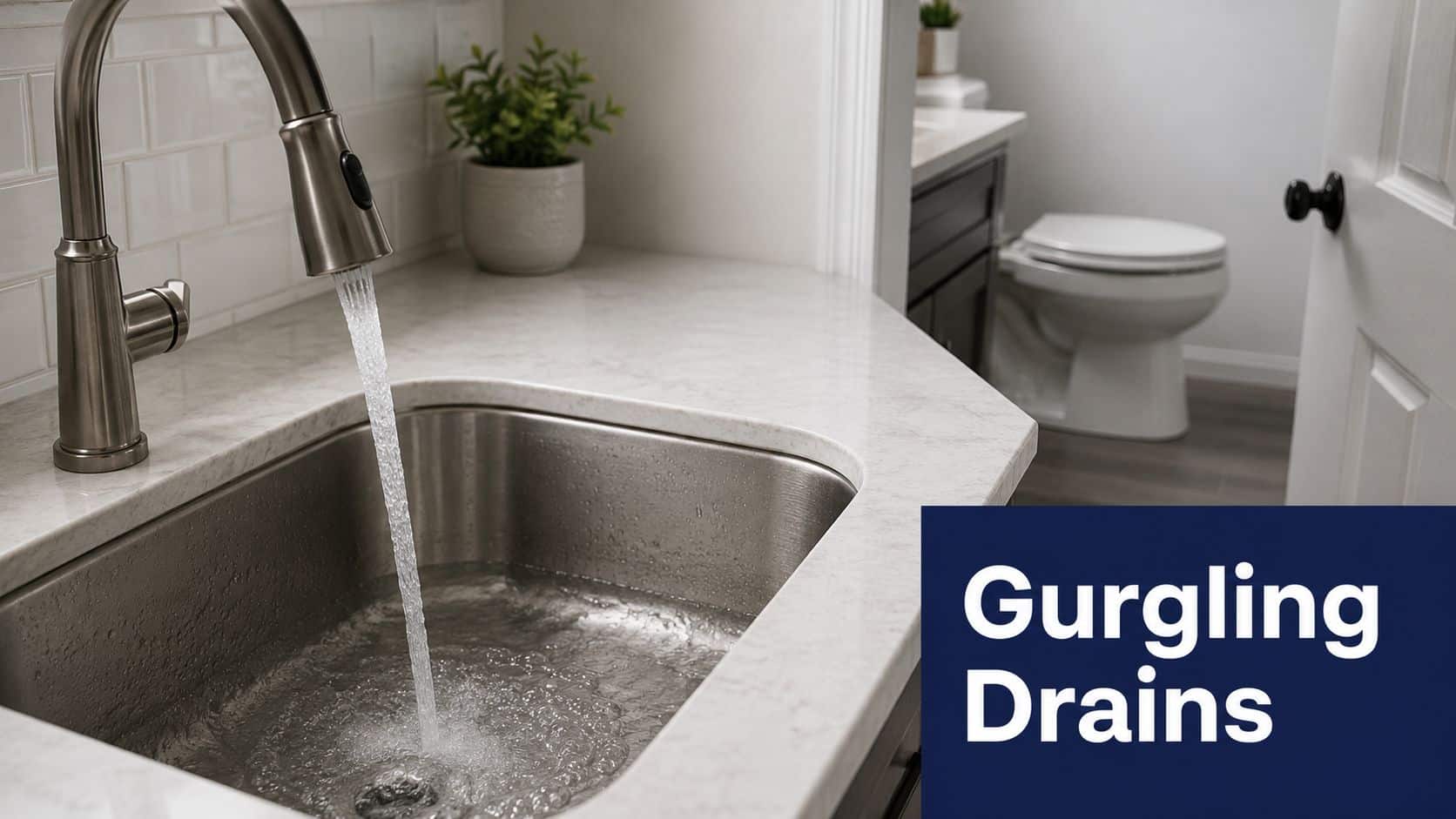
A homeowner usually notices the problem at the sink. Water swirls down the drain, then the toilet in the next room bubbles. Someone flushes upstairs, and the shower drain makes a wet sucking sound. The first call often goes to a drain cleaner because the symptoms resemble a clog, but drain cleaning alone won't correct a vent that can't admit or release air.
A vent stack gives the drainage system a path for air movement. When that path narrows because of corrosion, debris, frost closure, a damaged termination, or an undersized repair, wastewater changes the pressure inside the piping. The system may still drain, but it does so noisily and slowly. In worse cases, pressure changes disturb trap seals and allow sewer odors into living spaces.
Why repeated snaking doesn't solve the cause
A snake can clear hair, grease, or a localized obstruction. It can't restore a broken roof flashing, correct a reduced vent diameter, or reconnect a separated section hidden inside a wall. If the same collection of fixtures slows down again after cleaning, the service call should shift from “clear the drain” to “test the drainage and vent system.”
The explanation of why a toilet may gurgle helps homeowners recognize the pattern. One isolated slow drain usually deserves a branch-line diagnosis. Several fixtures reacting at once deserve attention to the shared stack, vent route, or building drain.
Practical rule: A drain that improves briefly after cleaning but repeatedly returns to gurgling needs a system diagnosis, not another quick opening.
Roof terminations create many of these failures. Sun exposure breaks down boots and sealants, movement opens gaps around the penetration, and corrosion weakens metal components. Rain can then create ceiling stains while the restricted vent causes drainage symptoms inside the home. Fixing only the visible water entry leaves the airflow problem untouched, and fixing only the airflow may leave the building vulnerable to continued water damage.
How Vent Stacks Keep Your Plumbing System Breathing
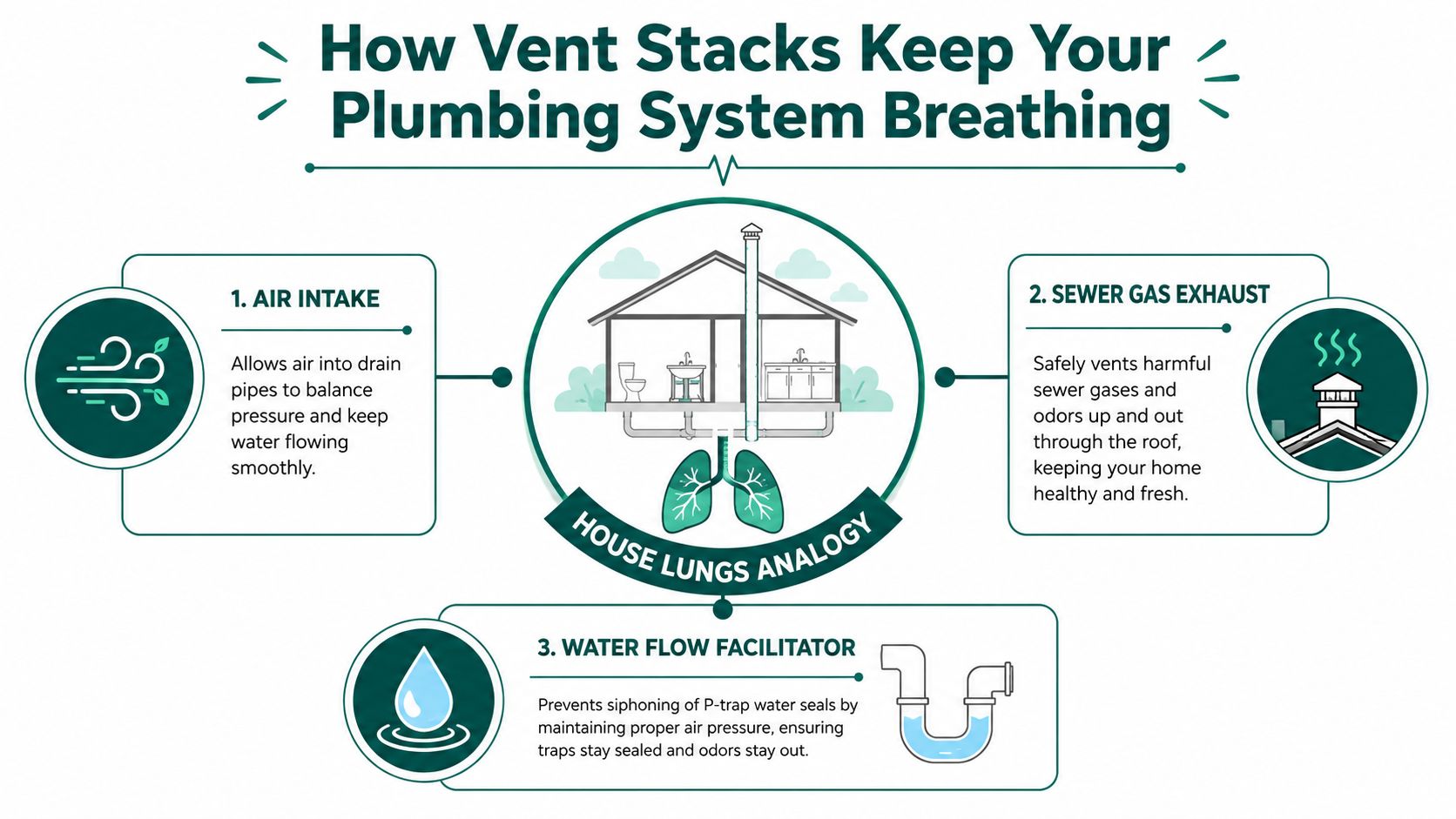
A vent stack can look like a simple vertical pipe, but its job is more involved than carrying sewer gas above the roof. Drainpipes move wastewater out, while the vent network supplies replacement air and relieves pressure changes. Without that airflow, water can be pulled from fixture traps, and sewer gas can find a path into the home. For a broader guide to how drain venting works, start with the relationship between drains, traps, and vents.
A P-trap holds water in the curved section beneath a sink, shower, or similar fixture. That water blocks sewer gas. A poorly vented discharge can create enough suction to weaken or remove the trap seal, allowing odors into the room. Proper venting also limits the gurgling and bubbling caused when air tries to enter through a drain opening.
The size follows the system load
Vent sizing follows the system, not the pipe that is easiest to buy. The required diameter depends on the vent's developed length and the total drainage fixture units, or DFUs, connected to it. The code sizing rules for stack vents and vent stacks require the vent to remain at least half the diameter of the drain it serves and not fall below 1.25 inches.
Under that half-diameter rule, a 3-inch drain requires at least a 1.5-inch vent. That minimum does not settle every repair. A longer reroute, greater fixture load, branch arrangement, or restrictive fitting can change the compliant design. Replacing only the exposed section with a smaller or incompatible pipe may look tidy while reducing the capacity of the full stack.
The route matters as much as nominal size. A direct, full-size run gives air and condensate a predictable path. Unnecessary offsets, a narrowed coupling, or rust scale left inside an older section can recreate the pressure problem. Partial repair saves demolition only when the remaining system still meets code and works with the replacement material.
The following video gives a visual introduction to venting concepts:
Applicable code may also require a full-size vent stack through the roof. The answer depends on system type, building configuration, branch intervals, and local jurisdiction. Florida's 2023 plumbing code requires a vent stack for drainage stacks with five branch intervals or more, while New York City's code uses a three-branch-interval threshold, as shown in the Florida vent provisions. A licensed plumber should identify the governing rule before treating a visible leak as a simple patch.
Common Vent Stack Failure Signs Every Homeowner Should Know
The clearest warning is a pattern across fixtures. A kitchen sink that drains slowly may have a local obstruction. A kitchen sink, toilet, and shower that respond to one another point toward a shared drainage or venting issue. Listen for gurgling, bubbling, or a sucking sound when another fixture discharges.
Persistent odors deserve the same attention. Sewer smell near a bathroom floor can indicate a dry or disturbed trap, but it can also signal a vent restriction or cracked stack. Odors that appear after flushing, showering, or heavy water use suggest pressure is moving through the system in a way it shouldn't.
Roof and ceiling clues
Many vent stack repairs begin at the roof termination rather than in the vertical pipe. The common failure points include:
- Flashing and boots: UV exposure, movement, corrosion, and deteriorated sealants can break the weather seal around the penetration.
- Vent openings: Leaves, bird nests, rust scale, and other debris can reduce the air path.
- Pipe sections: Cracks, separated joints, and corrosion can leak air, water, or sewer gas.
- Nearby ceilings: Brown staining, damp drywall, or attic moisture near the stack can indicate that rain is entering at the termination.
The code provisions for vent stack sizing show why a roof repair can't be separated from the system below it. The code ties connected load to vent stack size and requires the vent stack to be at least half the size of the soil or waste stack it serves. Some assemblies use a 1.5-inch minimum, while fixtures installed behind the line of vent can require larger minimums, including 2 inches for toilets and other fixtures.
Frost closure is less common in Los Angeles than in colder regions, but the mechanical lesson still applies. Any condition that restricts the termination can force the system into slow drainage and gurgling. A new boot won't correct an interior restriction, and clearing an opening won't correct a corroded stack hidden between floors.
Safe Diagnostic Steps You Can Perform Yourself
Start indoors. Run water at one fixture while someone listens at another, or flush a toilet while you stand near the kitchen and bathroom drains. A shared gurgle, bubbling trap, or noticeable change in drainage at more than one fixture is useful information for a plumber.
Next, inspect what you can reach without climbing. Look beneath sinks for a disturbed trap, check for dampness around accessible pipe joints, and examine ceilings below bathrooms or roof penetrations. Don't open drywall, remove roof materials, or pull apart a stack to see what lies behind it.
A cautious homeowner checklist
Record the pattern: Note which fixtures react, when the sound occurs, and whether rain or heavy use changes the symptoms. This helps separate a local clog from a shared vent concern.
Check accessible openings: If an interior vent termination or cleanout is designed to be opened safely, look for obvious debris. Don't force a sealed fitting, and don't pour chemical drain cleaner into a system you suspect has a vent or structural problem.
Inspect from ground level: Use binoculars to look at the roof vent, boot, flashing, visible cracks, rust, or a displaced section. A roof that looks dry from the ground can still conceal a failed seal.
Observe toilet behavior: After shutting off the toilet's water supply and flushing, watch for incomplete drainage, bubbling, or water movement in the bowl. Treat this as a clue, not proof. A licensed professional still has to distinguish vent restriction from a drain obstruction.
If you see active water intrusion, stop using the affected fixtures as much as practical and protect belongings from secondary damage. Guidance on expert water damage restoration tips can help with immediate protection while a plumbing or roofing professional evaluates the source.
Use safe ways to unclog a drain without chemicals only when the symptoms point to a simple, accessible fixture clog. Don't climb a steep or wet roof, run a hose into an unknown vent, or push a snake into a pipe that may be cracked. Sewer gas, roof falls, hidden water damage, and unstable old piping aren't appropriate DIY risks.
Professional Repair Methods and When Replacement Makes Sense
Professional vent stack repair starts with identifying the failure boundary. A small crack in an accessible section may justify a targeted replacement. A failed roof boot may need flashing work. A stack showing widespread corrosion, repeated patching, or poor prior alterations may need a larger replacement plan.
A patch works when the remaining pipe is sound, the repair preserves the required diameter, and the joining method is approved for the materials involved. It fails as a long-term strategy when a new fitting is attached to brittle cast iron, when the damaged section is only one visible symptom, or when the repair leaves a reduced or indirect vent route.
Repair versus replacement decisions
Material transitions deserve careful attention. Moving from older cast iron to PVC isn't a matter of sliding one pipe into the other. The connection requires an approved transition fitting and joining method, with support that keeps the stack stable. Existing-stack repairs may also require same-material transitions under local rules, so a plumber has to verify the applicable code before cutting into the system.
| Issue Type | Repair Option | Replacement Need | Long-Term Cost |
|---|---|---|---|
| Failed roof flashing or boot | Replace the damaged weather seal and inspect the termination | Replace more of the stack if the pipe or penetration is compromised | Lower when the pipe remains sound, higher if water damage continues |
| Local crack in accessible piping | Remove the damaged section and install a compatible, supported section | Consider broader replacement when nearby pipe is brittle or corroded | Controlled for isolated damage, uncertain when deterioration is widespread |
| Blocked vent opening | Remove debris and verify open airflow | Replace a damaged cap or termination that repeatedly restricts the route | Modest for a clear blockage, ongoing if the design or termination remains defective |
| Undersized or poorly routed repair | Rework the affected section to restore the required route and diameter | Redesign or replace connected sections when the original layout can't meet code | Often false economy if a partial fix preserves the defect |
| Aging multi-unit stack | Repair a confirmed isolated failure with documented materials and supports | Replace the stack when repeated failures, corrosion, or compliance gaps affect the shared system | More disruptive initially, but may reduce repeat access and service calls |
In Massachusetts, proposed code changes illustrate the broader point that existing-stack work can involve material transitions, approved joining methods, and specific maintenance permissions, including rodding vent piping below the flood-level rim. The Massachusetts plumbing code proposal is a useful reminder that repair options vary by jurisdiction.
For an HOA or property manager, the decision includes access, resident disruption, documentation, and liability. A cheap patch that fails above another unit's ceiling can create a second emergency and a harder explanation. Replacement isn't automatically correct, but partial repair shouldn't be chosen without evaluating the full vertical system.
Working with EZ Plumbing for Expert Vent Stack Solutions
A qualified plumber approaches vent stack repair as a system problem. The inspection should connect indoor symptoms with roof conditions, visible piping, fixture load, pipe diameter, material compatibility, and the building's applicable code. That process is different from replacing a visible boot or clearing one drain because it tests whether the repair will preserve airflow after the crew leaves.
EZ Plumbing serves Los Angeles homes, HOAs, property managers, and commercial properties, with 35+ years of local experience stated by the company. Its service information describes camera inspections and pressure testing for identifying vent blockages and damaged stacks, along with code-compliance verification. Those tools help locate the failure without assuming that the first symptom is the actual source.
What to expect during a serious evaluation
A professional assessment may include:
- Fixture and symptom review: The plumber maps which fixtures share the affected stack and when the problem appears.
- Camera inspection: A camera can reveal internal obstruction, corrosion, separated joints, or a damaged section where access allows.
- Pressure testing: Testing helps identify whether the vent or connected drainage system holds the expected pressure.
- Material review: The technician checks cast iron, PVC, or other materials and selects an approved transition rather than improvising a connection.
- Code verification: The proposed route, diameter, termination, and fixture load are reviewed against the applicable local requirements.

A handyman may be able to replace an exposed non-pressurized fitting, but vent stack work becomes professional territory when it involves a roof, concealed piping, multiple units, sewer gas, structural corrosion, or a change in diameter. EZ Plumbing states that it offers 24/7 emergency response, same-day scheduling for planned repairs, transparent recommendations, and a satisfaction guarantee. Homeowners should still request a written scope that separates diagnostic work, repair, replacement, roof work, access restoration, and any permit requirements.
Prevention Strategies That Extend Vent Stack Life
Vent stack maintenance is mostly about catching small changes before airflow or weather protection fails. Watch the fixtures, inspect accessible areas, and treat the roof penetration as part of the plumbing system rather than as a separate cosmetic detail.
Use the seasons as reminders
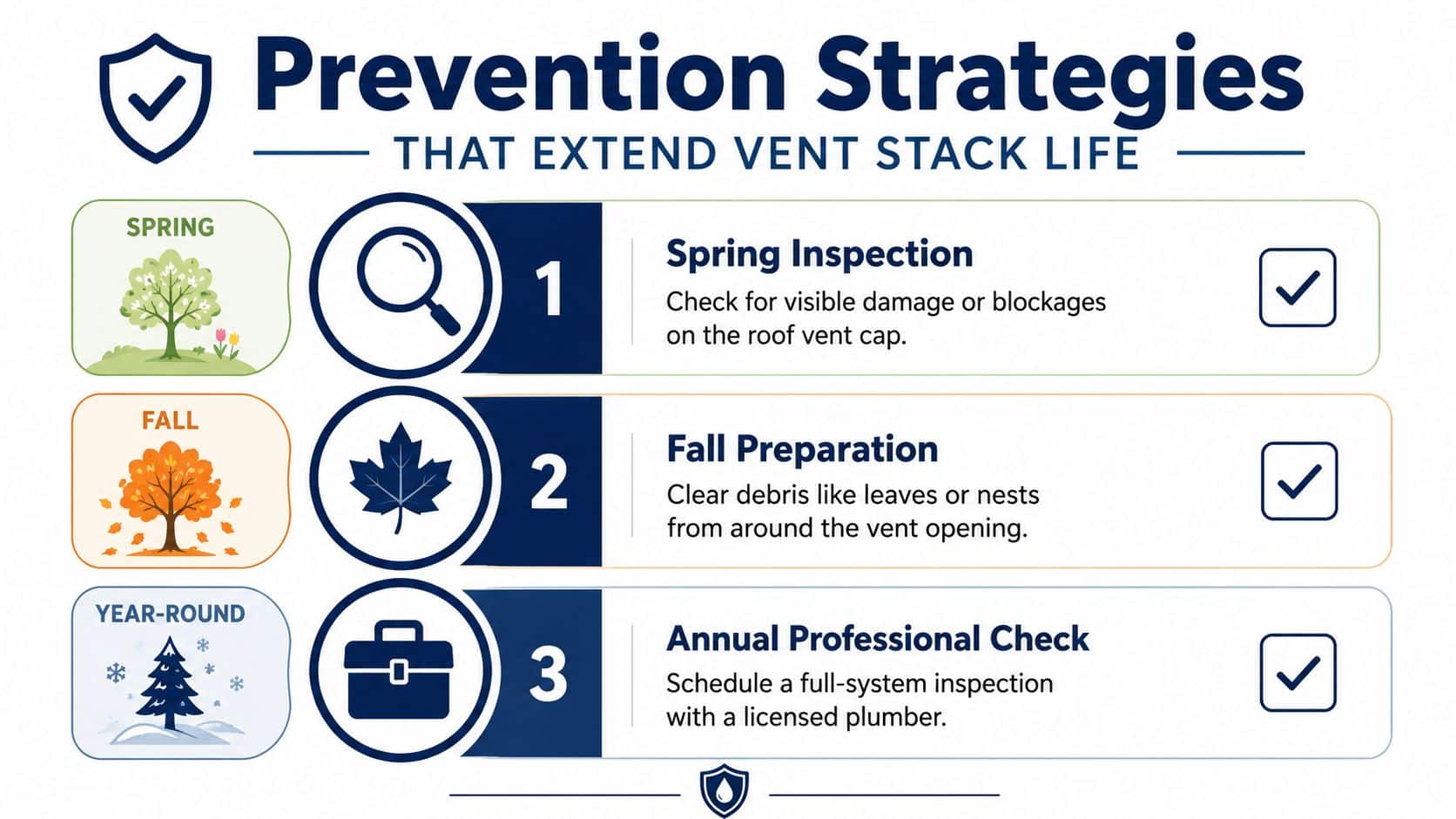
Spring is a good time to inspect. From a safe location, check the visible vent termination for damage, a displaced cap, rust, cracked flashing, or debris. Look inside the attic and at ceilings below the penetration for staining that may have appeared during wet weather.
Before fall weather, clear the area around the opening. Leaves, twigs, and nests can restrict airflow. Don't install a screen or cap that narrows the opening or conflicts with local requirements. Any protective component has to preserve the vent's intended capacity.
Know what belongs on your maintenance list
- Observe drainage behavior: Report recurring gurgling, odors, or system-wide slow drainage instead of repeatedly treating each fixture as an isolated clog.
- Keep roof work coordinated: If a roofer replaces shingles or repairs the roof, ask for the vent flashing and boot to be inspected at the same time.
- Protect older stacks: Cast iron showing rust scale, flaking, or repeated leaks deserves a professional condition assessment before a small defect becomes a concealed failure.
- Schedule a professional review: Older homes, multi-unit buildings, and systems with previous alterations benefit from a licensed inspection that checks route, capacity, materials, and termination.
Homeowners can observe, document, remove loose debris from ground-level areas, and protect interiors from active leaks. They shouldn't cut into a stack, alter its diameter, work on an unsafe roof, or approve a partial repair without understanding the condition of the connected piping. Good prevention protects drainage performance, indoor air quality, ceilings, walls, and the residents below shared stacks.
If your Los Angeles home has recurring gurgling, sewer odors, slow drainage across multiple fixtures, or staining near a roof penetration, contact EZ Plumbing for camera inspection, pressure testing, code-focused repair planning, and replacement guidance when needed. Visit EZ Plumbing to schedule service or request help with an urgent vent stack problem.