
Best Toilet Paper for Septic: 2026 Guide
You're standing at the toilet on a quiet Sunday morning in Los Angeles, watching the bowl drain slower than it should and wondering if you've got a real septic problem or just bad luck. In the field, that's usually the moment people start blaming the tank, the weather, or the last person who flushed something questionable. More often, the first question should be simpler, what kind of toilet paper is going into the system, and how much of it is going in every day.
Table of Contents
- Why Toilet Paper Matters More Than You Think
- What Makes Toilet Paper Septic-Safe
- How Much Paper Your Septic Tank Can Handle
- Common Mistakes That Wreck Septic Systems
- The Two-Minute Jar Test and What to Buy
- Warning Signs Your System Is Telling You Something
- Maintenance Habits That Extend Septic System Life
- Your Next Step and When to Call a Pro
Why Toilet Paper Matters More Than You Think
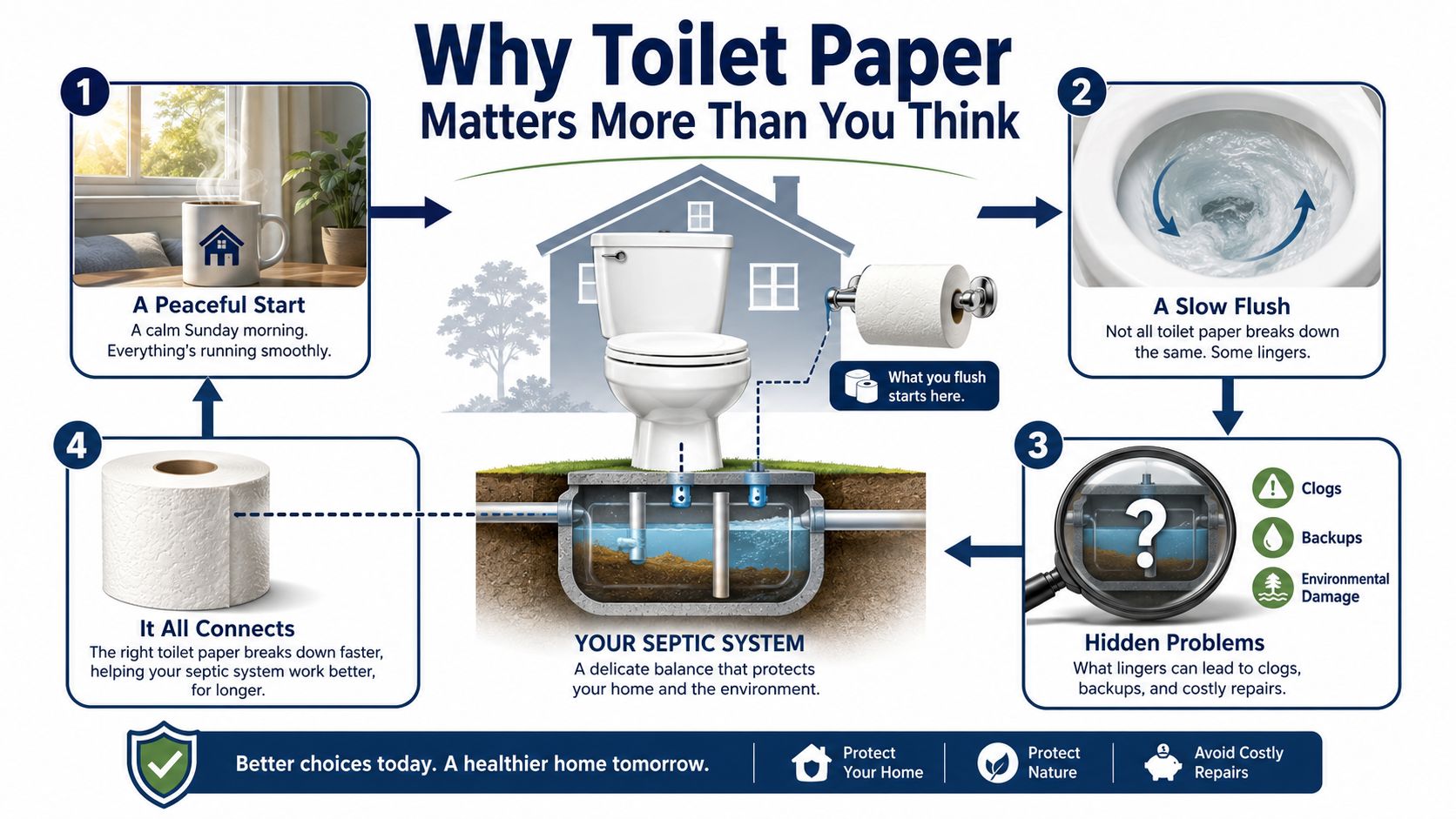
A homeowner calls after a slow flush turns into a backed-up cleanout, and the first instinct is to blame the septic tank itself. Sometimes the tank is tired. Sometimes the drainfield is stressed. Sometimes the problem started with paper that never broke apart fast enough and kept adding to the solids load.
Toilet paper is one of the few solids intentionally introduced into a septic tank, so it's not a minor detail. A 2026 industry handout says the average user consumes 57 sheets per day, about 100 rolls per year, or more than 20,000 sheets annually, and it also says 75% of the world's population does not use toilet paper. That same source estimates a lifetime of toilet paper use requires about 384 trees and that one roll takes roughly 37 gallons of water to produce. OASIS 2026 toilet paper handout
Field rule: the tank doesn't care what the package says first. It cares how fast the paper falls apart and how much of it you send through every day.
That's why the wrong paper can age a system faster than you might expect. A household using heavier paper creates more solids to manage, and the tank has to separate, hold, and slowly digest all of it. A bidet can reduce toilet paper use by 80% according to the same handout, which matters because less fiber entering the tank usually means less material hanging around in scum and sludge layers. OASIS 2026 toilet paper handout
The mistake I see most often is treating septic performance like a brand decision. It isn't. It's a behavior decision first, then a product decision.
What Makes Toilet Paper Septic-Safe
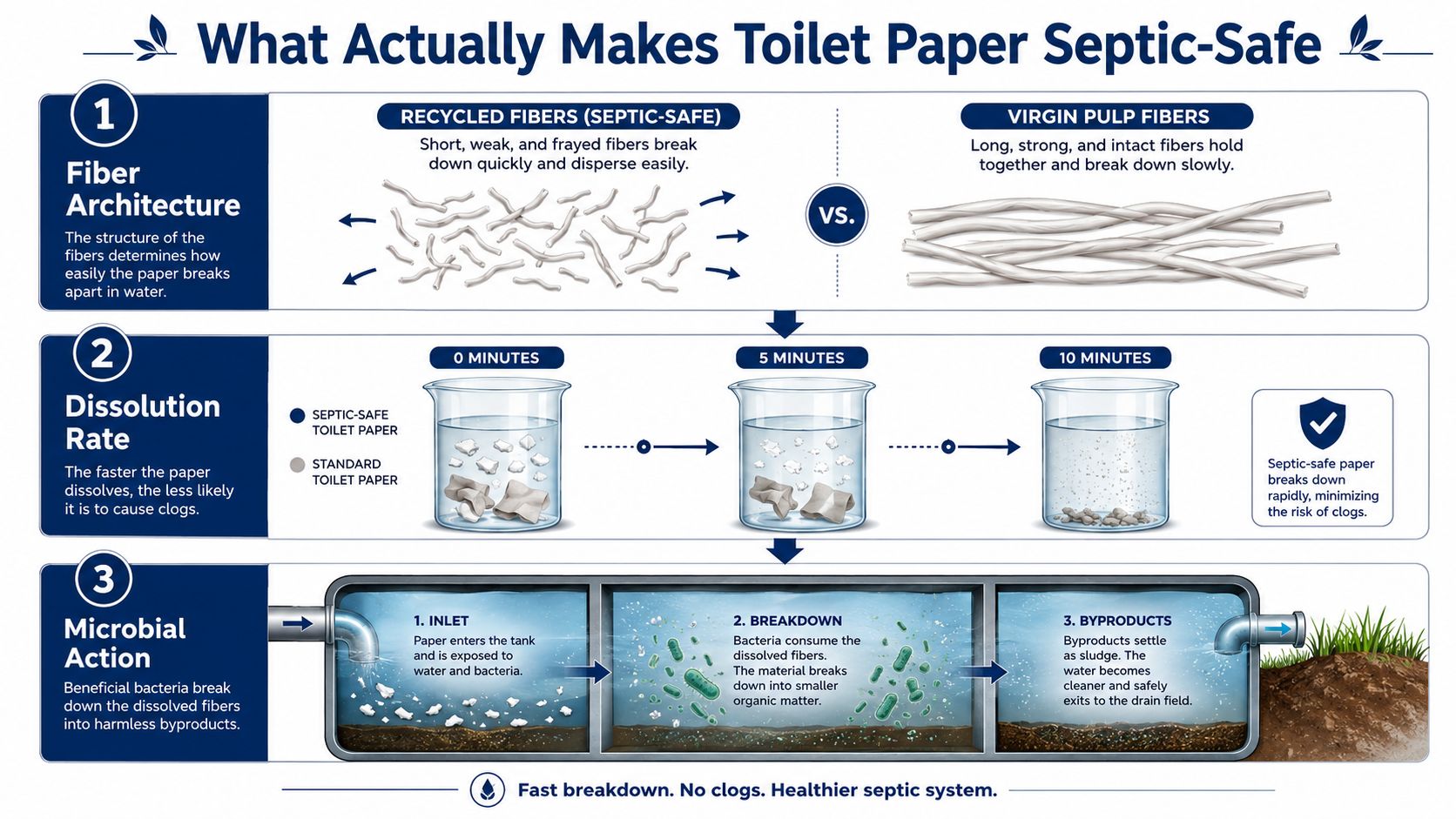
Septic-safe paper works because it falls apart quickly in water. The sheet is built from a loose fiber network that water can break apart fast. A thick, dense, heavily bonded sheet holds together longer and is more likely to travel farther through the system before it starts to break down.
Fiber architecture matters more than the marketing
The papers that tend to perform best usually use 1-ply or thinner 2-ply construction and 100% recycled fiber, because those fibers separate faster once they're wet. A commercial septic-safe tissue specification shows that 500 sheets per roll, 2-ply, and 100% recycled fiber can still be labeled septic safe when the sheet structure is controlled correctly. That tells you the label alone doesn't tell the whole story, the fiber build is what matters. Fuelbox Industrial septic-safe tissue specification
Practical rule: thinner paper with weaker bonding usually breaks down sooner, and sooner is what you want in a septic tank.
Premium multi-ply products often feel better in hand, but comfort does not help the tank. Thicker paper relies on stronger bonding and more bulk, which gives it more wet strength and slows breakup. Once that paper stays intact long enough, it is more likely to sit in the tank instead of becoming easy food for bacteria.
The water test tells you more than the package
A 2026 septic article says septic-friendly paper can break apart in 8 to 15 seconds, while thicker premium paper can take 45+ seconds. That gap is the difference between paper that behaves like a temporary visitor and paper that starts acting like a long-term resident. In a septic tank, long-term residents raise maintenance risk. Septic Tank Hub on toilet paper and septic systems
The point is simple. Shorter, weaker, less-densely-bonded fibers are easier on a septic system. If you can feel the difference in hand, the tank usually can too.
How Much Paper Your Septic Tank Can Handle
A lot of homeowners ask for the “best” paper when the core question is how much paper the system can take before it starts to matter. That is the part most product guides skip. In the field, I look at the combined load, the household size, and how often the tank gets pumped, not just the branding on the pack.
Load beats label
A family that uses septic-safe paper heavily can overload a tank faster than a smaller household using the same product sparingly. Solids buildup is cumulative. Every flush adds to the tank's burden, and every extra sheet increases the amount of material that has to separate, settle, and break down later.
For Los Angeles homeowners, the practical point is simple. If you are already close to a pumping interval, paper habits matter more. If you use a bidet or cut back sheet count, you reduce load at the source. The OASIS 2026 toilet paper handout notes that a bidet can reduce toilet paper use by 80%, which gives households a real way to stretch service life. OASIS 2026 toilet paper handout
Paper Load by Household Size
| Household Size | Sheets Per Day | Annual Sheets | Septic Load Impact |
|---|---|---|---|
| One person | Lower daily load | Lower annual load | Easier on the tank if paper breaks down quickly |
| Two people | Moderate daily load | Moderate annual load | Usually manageable with septic-safe paper and normal habits |
| Family of four | Higher daily load | Higher annual load | Paper choice and usage volume start to matter a lot more |
| Larger household | Highest daily load | Highest annual load | Faster solids buildup, shorter time between pump-outs |
Reality check: a small tank can still fail early if a big household uses a heavy paper habit every day.
Tank size changes the margin, but it does not erase the math. A 1,000-gallon tank has less room for error than a 1,500-gallon system, so the same paper habit can become a problem sooner in a smaller tank. The honest answer is that load, occupancy, and pumping interval all have to line up.
Common Mistakes That Wreck Septic Systems
The biggest septic problems usually start with ordinary habits. One person keeps rinsing things away, another flushes extra paper, and the tank takes the hit over time. Paper matters, but it is only one part of the load.
The worst offender is the “flushable” label
“Flushable” wipes still cause trouble because they do not break down the way toilet tissue does. They stay intact long enough to collect in the tank and lines, where they can add to clogs and solids buildup. I tell homeowners to treat that label as a marketing claim, not a plumbing guarantee.
Grease and harsh chemicals create their own problems. Grease cools and hardens inside the system, and aggressive cleaners can throw off the bacterial balance a septic tank depends on. A tank works through biology first, so pouring in strong chemicals every time someone cleans the kitchen or bathroom can work against it. If you are also dealing with blocked lines, this guide on whether Drano is safe for pipes is worth reading before you pour anything down a drain.
The whole house affects the tank
A septic system reacts to more than toilet paper. Laundry detergents, antibacterial soaps, kitchen scraps, and drain habits all shape what happens after the flush. If the bacteria inside the tank cannot keep up, waste and paper stay in the system longer and the tank loses efficiency.
- Avoid flushable wipes: they can survive long enough to collect in the tank and lines.
- Keep toilet paper use reasonable: even septic-safe paper can become a problem in high volume.
- Don't pour grease down the drain: it solidifies and blocks normal breakdown.
- Use only approved cleaners: harsh products can damage the bacterial environment the tank depends on.
A clogged tank is rarely the result of one bad day. More often, it comes from a steady pattern of small choices that keep adding load. Homeowners who want a broader look at warning signs can compare their own system against a 2026 plumbing inspection checklist and watch for the early patterns before they turn into backups.
The Two-Minute Jar Test and What to Buy
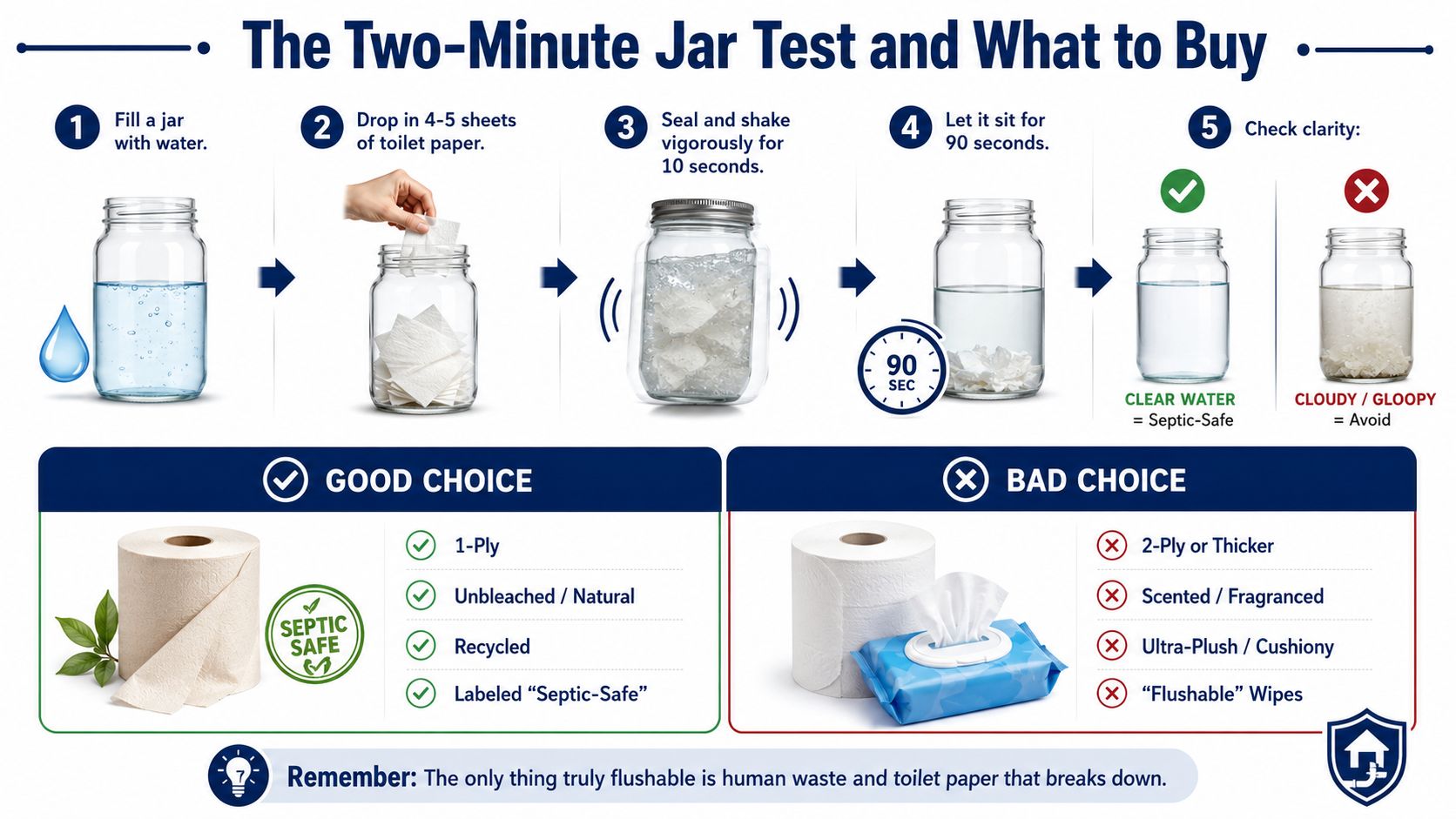
A quick jar test tells you more than a package label does. Fill a clear jar with water, drop in a few sheets, shake it hard, and watch the paper in real time. If it starts breaking apart fast, that is a good sign for septic use. If it stays together and clumps, it will spend more time in the tank and add to the solids load.
What the test is really showing you
Fast breakup means the fibers separate before the paper settles into the tank's solids layer. Slow breakup means the paper can linger, tangle, and make the system work harder. The septic article cited earlier says septic-friendly paper can break apart in 8 to 15 seconds, while thicker paper can take 45+ seconds, so your test should be looking for that same general behavior. Septic Tank Hub on toilet paper and septic systems
If the paper is still hanging together after a vigorous shake and a short soak, I would not treat it as a good septic choice.
What to look for on the shelf
The package matters, but only as a rough guide. Recycled fiber, lower ply, and the absence of lotions, dyes, or heavy softening coatings are the details that usually matter most. A short ingredient list is often a better sign than a premium-sounding label.
The same thinking applies to commercial tissue specs. A product that is septic safe and built on a lightweight, recycled structure shows that the paper can be made to break down without becoming flimsy in normal use. Fuelbox Industrial septic-safe tissue specification
A useful benchmark is whether the paper leaves the bowl clean without forcing you to use a lot of it. That is where paper load starts to matter. A homeowner can buy a softer roll and still create trouble if every flush uses more sheets than the system wants to process. If you are sorting out whether paper is part of a larger clog problem, this clogged septic tank resource helps explain what a plumber checks during a visit.
The YouTube walkthrough below is useful if you want to see the jar test in motion before buying your next pack.
Warning Signs Your System Is Telling You Something
The first sign is often subtle. A toilet gurgles. A shower drain slows down. Then two fixtures start acting up at once, and the smell changes. That's when most homeowners realize they're not dealing with a one-off paper issue anymore.
Early signs are warning, not proof
Slow draining across multiple fixtures usually means the problem is beyond the bowl. Gurgling can point to air displacement in the plumbing or resistance deeper in the system. A sulfurous odor around the yard or near fixtures is another sign that the system isn't moving waste the way it should.
Soggy spots over the drainfield are more serious. That usually means the field is struggling to absorb what the tank is sending out. If sewage shows up at the lowest fixture in the home, the system is beyond nuisance territory and into backup territory.
Call sooner, not later: a small symptom in the bathroom can become a much bigger job if the tank or drainfield is already under strain.
Know when paper isn't the real culprit
Sometimes a homeowner assumes paper is the whole issue because the problem started in the bathroom. Often, it's a load problem layered on top of poor drainage or a tank that needs service. If you're sorting out symptoms and want a broader repair context, this clogged septic tank resource helps frame what technicians look for during a visit.
The line between “adjust your habits” and “call a plumber” is simple. If only one toilet acts weird after a heavy paper day, change behavior and monitor it. If multiple fixtures slow down, odors spread, or the yard shows wet areas, treat it as a system problem.
Maintenance Habits That Extend Septic System Life
A septic system lasts longer when the household stops overloading it. That means smarter paper choices, steadier water use, and less chemical abuse. The basics aren't complicated, but they have to be consistent.
Keep the routine boring
Pump on a sensible schedule, and don't wait for a smell to remind you. A typical household often lands somewhere in the 3 to 5 year range for pumping, adjusted for load and occupancy, and that timing lines up with the practical guidance in this how often to pump a septic tank guide. If your household uses a lot of paper, laundry, or water overall, the interval can shorten.
Spread laundry across the week instead of dumping multiple loads into one day. That keeps water from rushing the system all at once. If you're using additives, be skeptical. Most of the time, the bacteria already present in a healthy tank do the work, unless household chemicals keep interfering.
Keep a simple paper and pump log
Write down the paper type you buy and the date the tank was last pumped. That tiny habit helps you connect symptoms to real household behavior. It also makes it easier to spot whether a paper change or a usage change improved things.
For a practical estimating tool that helps organize service planning and pricing on the trade side, some contractors use Exayard plumbing estimating software to keep records cleaner. Homeowners don't need that software, but the same discipline helps when you're trying to prevent repeat septic problems.
Your Next Step and When to Call a Pro
The right paper is the one that breaks down quickly, doesn't add unnecessary load, and fits the way your household uses the toilet. The decision is less about branding and more about fiber structure, daily volume, and whether your habits are making the tank work too hard. If you haven't tested your current paper, run the jar test today and see what the tank has probably been dealing with all along.
When the warning signs move past slow flushes and into multi-fixture drain issues, odors, or wet ground, the problem is bigger than toilet paper. That's the point where you want a licensed plumber who can diagnose the tank, the drainfield, and the connected lines without guesswork. In Los Angeles, that usually means you need someone who can move fast, explain clearly, and handle the repair without turning the property upside down.
If your toilets are slowing down, your yard is staying wet, or you're tired of guessing whether the paper is part of the problem, EZ Plumbing can inspect the system, clear the blockage, and help you get ahead of the next backup. Visit EZ Plumbing to schedule service and get the kind of practical septic and drain help Los Angeles homeowners need.