
Clogged Septic Tank? Signs, Fixes & LA Emergency Help
The call usually comes after a bad hour in the house. The shower won't drain. A toilet burps when the washing machine runs. There's a smell outside that wasn't there last week, and now somebody is asking whether this means the whole yard has to be dug up.
If you're dealing with a clogged septic tank, take a breath. Not every septic backup means total system failure, and not every “full tank” is a tank problem. In the field, one of the biggest mistakes I see is treating every septic symptom like it has the same cause. It doesn't. A blockage in the house-to-tank line, a plugged effluent filter, a damaged outlet baffle, and a failing drain field can all look similar at first. The fix depends on finding the location of the problem.
That's the part most homeowners never get explained clearly. They get a list of warning signs, maybe a recommendation to pump the tank, and then they're left hoping the issue goes away. Sometimes it does. Sometimes the backup returns right after service because the tank was never the underlying issue.
If you're in a multi-unit setting or managing a property where wastewater problems affect more than one household, broader infrastructure oversight matters too. The same pattern shows up in discussions around addressing apartment water issues in Albany, where sewage-related problems become bigger when warning signs are missed and response is delayed.
This guide walks through the problem the way a plumber does in an emergency. First, identify the signs that point to a septic-wide issue. Then narrow down whether the trouble is in the tank, the line, or the drain field. After that, act fast enough to prevent more damage and know when it's time to stop guessing and get the system properly diagnosed.
Table of Contents
- Recognizing the Telltale Signs of a Clogged Septic Tank
- Understanding the Common Causes of Septic Clogs
- What to Do Immediately and When to Call for Help
- How Professionals Diagnose and Fix a Clogged Septic System
- Your Septic System Prevention Plan and LA Service Guide
Recognizing the Telltale Signs of a Clogged Septic Tank
You run a load of laundry, then hear the downstairs toilet gurgle. An hour later, the shower drains slowly and the yard near the septic area smells off. That pattern matters because the fix depends on where the restriction is.
Whole-house symptoms matter more than one fixture
The first question I ask is simple. Is this happening at one fixture, or across the house?
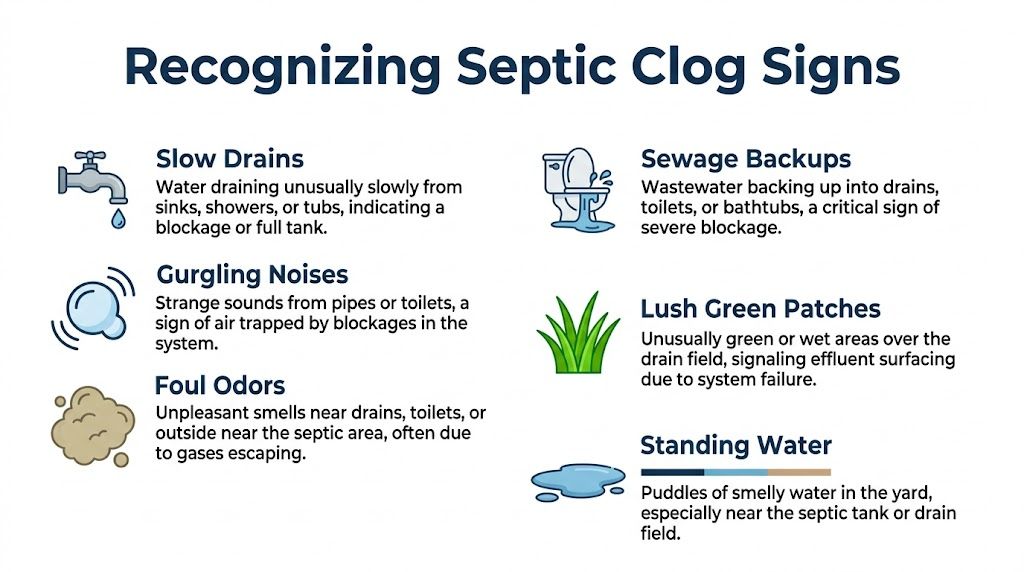
A single slow sink usually points to a local drain clog in that branch line. A septic problem usually shows up as a system pattern. Multiple fixtures start acting up, often on the lowest level first, and the symptoms get worse after showers, laundry, or several toilets flushing close together.
Watch for these clues:
- Several fixtures slow down at the same time: tubs, toilets, and sinks all drain poorly, especially downstairs
- Toilets or drains gurgle: trapped air is being displaced because wastewater is not moving freely
- Backups show up after heavy water use: the house may seem manageable until a washing machine drains or two people shower back to back
- The problem keeps returning after snaking one drain: that points away from a simple fixture clog and toward a deeper restriction
That does not automatically mean the tank itself is clogged.
It means a pro has to sort out three likely locations. A building drain or sewer line between the house and tank. The tank inlet, outlet baffle, or effluent filter. The drain field, where wastewater is supposed to leave the tank and soak into the soil. Those failures can look similar from inside the house, but they are not repaired the same way.
A bathroom odor can muddy the picture because smell alone does not identify the failed part. If you are trying to separate a fixture-level issue from a larger drainage problem, this guide on what causes sewage smell in a bathroom can help narrow it down.
Yard and odor clues tell their own story
Outdoor symptoms help narrow the location faster than many homeowners realize.
If indoor drains are slow but the yard over the septic area looks dry and normal, I start by suspecting the line to the tank, the tank opening, or the outlet components. If indoor drains are slow and you also have wet soil, standing water, or persistent sewage odor near the tank or drain field, the problem may be downstream of the tank.
Look for this combination:
- Sewage odor near the tank or field: a persistent smell outside usually means wastewater is not staying where it should
- One area of grass looks greener or softer than the rest: excess moisture is feeding that patch
- Puddling or soggy soil near the septic area: effluent may be surfacing instead of soaking into the soil
- Backups inside the house plus wet ground outside: that combination often points beyond a basic indoor clog
Here is the practical decision tree homeowners can use before anyone opens a lid. One fixture only usually means local plumbing. Multiple fixtures with no yard symptoms often means a blockage in the house line, tank inlet, baffle, or filter. Multiple fixtures plus wet or smelly ground often means the drain field is struggling to accept flow.
That distinction matters because pumping the tank may relieve symptoms for a short time, but it will not repair a blocked house sewer or a failing drain field.
Understanding the Common Causes of Septic Clogs
The hard part is not naming possible causes. It is figuring out where the restriction is. A tank that needs pumping, a blocked inlet line, a clogged effluent filter, and a failing drain field can all start with the same homeowner complaint: “Everything is draining slow.”
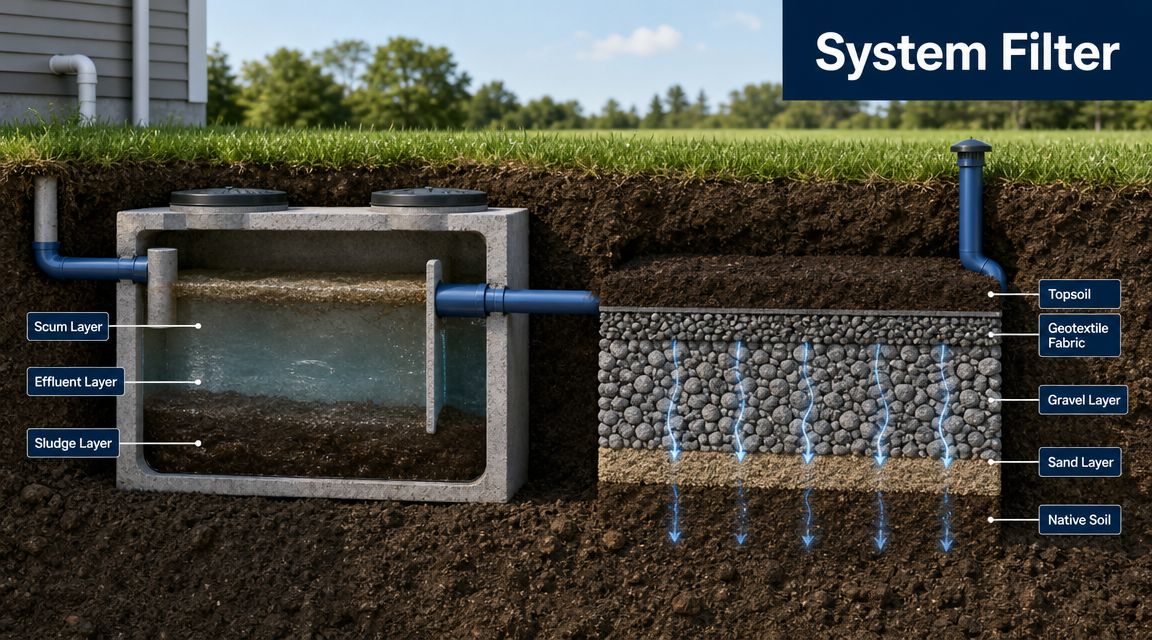
A septic system works like a treatment chain. Wastewater leaves the house through the building sewer, enters the tank, separates into layers, then exits to the drain field. A clog can form at any point in that path. The cause matters, but the location matters just as much because it determines whether the fix is cabling a line, cleaning a filter, pumping the tank, repairing a broken pipe, or addressing drain field failure.
The common causes, and where they usually create trouble
The failure patterns I see most often are solids buildup, grease and oils, foreign objects, root intrusion, and hydraulic overload. NuvoH2O's overview of common septic issues covers several of these general patterns, but in the field the main question is where each one is interrupting flow.
| Cause | Where it usually creates problems | What a plumber suspects first |
|---|---|---|
| Solids accumulation | Inside the tank, at the outlet baffle, or at the effluent filter | A tank overdue for service, restricted outlet flow, or solids carried downstream |
| Grease, fats, and oils | House drain line, tank inlet, or inlet baffle | Sludge and scum buildup reducing flow before wastewater even settles properly |
| Foreign objects | Building sewer, inlet opening, or tank components | A physical blockage from wipes, hygiene products, floss, paper towels, or similar debris |
| Root intrusion | Sewer line to the tank or outlet piping | A pipe restriction or break outside the home, often recurring after basic clearing |
| Hydraulic overload | Entire system, especially the tank outlet and drain field | Too much water entering too fast for the system to separate and absorb properly |
Solids buildup does more than “fill the tank”
A full tank is only part of the story. As sludge and scum layers get too thick, the tank loses the settling space it needs to separate solids from liquid. Then solids start moving where they should not. That can clog the outlet baffle, plug the effluent filter, or reach the drain field and shorten its life.
This is why pumping sometimes fixes the problem immediately, and sometimes only partly. If the true restriction is the outlet filter or the line beyond the tank, an overdue pump-out may be part of the issue without being the whole issue.
Grease and foreign objects often mimic a tank problem
Kitchen grease causes trouble early in the flow path. It cools, sticks to pipe walls, and collects around the inlet side of the system. Homeowners often assume the septic tank itself is clogged, but a plumber may find the actual restriction in the sewer line leaving the house or at the tank inlet.
Foreign objects create the same confusion. “Flushable” wipes are a repeat offender. They snag, mat together, and hold other debris. From inside the house, that can look exactly like a full septic tank because several fixtures may start draining poorly at the same time.
Root intrusion points to a pipe problem, not always a tank problem
Roots usually do not start inside the tank. They find joints, cracks, and weak spots in buried piping where moisture attracts them. Once inside, they thicken and catch paper and waste.
That distinction matters. If roots are blocking the sewer line before wastewater reaches the tank, pumping the tank will not solve the backup. If roots are affecting the outlet side, the tank may be working but the system still cannot discharge properly.
Overloading changes the diagnosis
Some septic “clogs” are really flow problems. A running toilet, leaking fixture, heavy laundry use, or a house full of guests can push too much water through the system in a short window. When that happens, solids do not settle as well, the outlet side stays under stress, and a marginal drain field can start acting like a blockage.
I pay close attention to timing here. If the problem shows up after showers, laundry, or a weekend of extra occupancy, overload moves higher on the list. If the issue is constant regardless of water use, a fixed restriction in a line, baffle, or filter becomes more likely.
The practical takeaway for homeowners
A “clogged septic tank” is often shorthand for several different failures. The tank may be overdue for pumping. The inlet line may be obstructed. The outlet filter may be packed with solids. The drain field may be rejecting effluent.
Those are different repairs, with different costs and urgency. That is why a good diagnosis starts by locating where flow stops, not by assuming the tank is the only problem.
What to Do Immediately and When to Call for Help
You flush, the bowl rises, and the shower starts gurgling. Then you notice damp ground near the septic area. At that point, the first job is damage control. The second is figuring out where the stoppage is.
That distinction matters in the first hour. A true tank blockage, a house-to-tank line clog, and a failing drain field can all look similar from inside the house, but they do not call for the same fix.
What to do in the first hour
Stop all water use right away. No flushing, no laundry, no dishwasher, and no long showers. Extra flow can force sewage back into tubs and floor drains, or push wastewater to the surface outside.
Then protect the area:
- Keep people and pets away from wet spots or sewage spills: Wastewater carries bacteria and should be treated as a contamination issue.
- Avoid septic additives, acids, and drain chemicals: They do not clear a blocked baffle, filter, or buried line, and they can make inspection harder.
- Stay off the drain field and tank area: Foot traffic will not usually cause failure by itself, but vehicles and repeated traffic can worsen a saturated system.
- If you have a pump system, check for an alarm or tripped breaker: A loss of power can mimic a clog on some setups.
One mistake I see often is homeowners treating every backup like a simple full tank. Sometimes the tank is overdue for pumping. Sometimes the tank is fine and the line from the house is blocked. Sometimes the tank accepts flow, but the effluent cannot leave the system. The safe move is the same at the start. Stop adding water until the failure point is confirmed.
If sewage is backing up indoors, shut down water use first. Diagnosis comes before any repair decision.
What you can check safely
A few observations can help narrow the problem without opening anything or exposing yourself to wastewater.
- Check whether the issue affects one fixture or the whole house: One sink or one toilet points more toward an indoor drain problem. Multiple fixtures backing up together points farther downstream.
- Notice when the backup happens: If it shows up after laundry or several showers, that suggests a flow or discharge problem, not just a small branch clog.
- Look outside from a distance: Wet, unusually green, or foul-smelling ground near the septic area suggests wastewater is not leaving the system properly.
- Pay attention to what drains slowly first: If lower fixtures back up before upper ones, that usually means the restriction is beyond the house plumbing.
These clues do not give a final diagnosis, but they help a technician decide where to start. That can save a wasted pump-out or an unnecessary attempt to snake the wrong line.
What to leave to a professional
Do not open buried lids, enter a tank area, or probe lines blindly. Septic tanks can contain dangerous gases, unstable covers, and hidden voids in saturated soil.
Leave these jobs to a licensed septic or plumbing professional:
- Opening the tank or distribution components
- Cleaning an effluent filter or clearing a blocked baffle
- Snaking or jetting the building sewer toward the tank
- Testing whether the tank is accepting flow and discharging properly
- Assessing whether the drain field is saturated or failing
The trade-off is simple. A quick guess can feel cheaper today, but a wrong guess often means paying for two service calls instead of one.
When to call for help immediately
Call the same day if sewage is entering the house, if more than one fixture is backing up, or if wastewater is surfacing in the yard. Call promptly if the problem returned soon after a basic drain clearing, because that often means the blockage is not in the indoor plumbing.
Call without delay if:
- There is sewage in tubs, showers, or floor drains
- You see standing wastewater or black, foul-smelling wet areas near the septic system
- Your pump alarm is on and resetting the breaker does not restore operation
- Anyone in the home has been exposed to wastewater
- You suspect the tank was pumped recently, but the symptoms came back quickly
A good service call should answer one question before anyone recommends a repair: where is the flow stopping? Once that is clear, the fix usually becomes clear too.
How Professionals Diagnose and Fix a Clogged Septic System
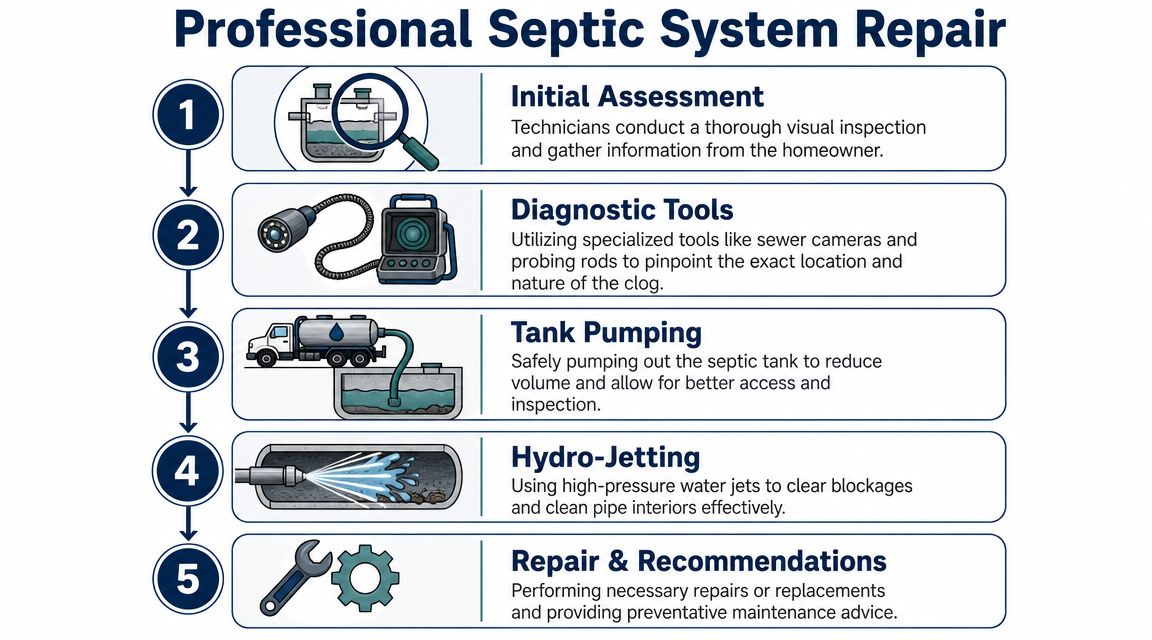
A proper septic service call should feel methodical, not mysterious. Good diagnosis follows a sequence. The technician isn't just trying to “clear something.” The technician is trying to locate the exact failure point.
The decision tree that saves time and repeat calls
One of the most useful field distinctions is this: Is the tank overloaded with solids, or is the obstruction somewhere before or after it?
Industry guidance from A Septic Medic's diagnostic article on locating a septic clog notes that if you open the inlet side and find the tank mostly water with only a thin scum layer, the likely issue is between the house and the tank. That same guidance also points out that if backups recur soon after pumping, the problem is more likely in the line, baffle, or filter than a tank that is “full.”
That's the heart of the decision tree:
Gather the symptom history
A pro asks when the backup happens, which fixtures are affected, and whether the problem worsens after high water use.Determine whether the issue is localized or systemic
One branch line in the house behaves differently from a septic-wide restriction.Inspect likely choke points
The line from house to tank, the inlet area, outlet baffle, and effluent filter all matter.Use targeted diagnostics when needed
A camera inspection is often the fastest way to confirm whether the line has roots, buildup, offsets, or collapse. If you want to understand what that process involves, sewer camera inspection is a useful example of how plumbers pinpoint underground trouble without guessing.
To see the process in action, this walkthrough gives a helpful visual:
The best septic diagnosis often sounds almost boring. That's a good sign. It means the technician is ruling things out in order instead of selling the first dramatic explanation.
The repair method has to match the location
Once the location is confirmed, the repair becomes much more straightforward.
| Solution | Best For | Description |
|---|---|---|
| Tank pumping | True tank accumulation | Removes built-up contents so the tank can function properly again and allows better inspection |
| Hydro-jetting | Grease, sludge, and stubborn line buildup | Uses high-pressure water to clean pipe walls and restore flow without relying on harsh drain chemicals |
| Filter or baffle service | Outlet-side restrictions | Clears or repairs components that can mimic a full-tank backup |
| Line repair or replacement | Root intrusion, breaks, or collapsed sections | Corrects structural pipe problems that clearing tools won't solve |
| Drain field evaluation | Suspected downstream failure | Determines whether the system is failing after the tank rather than inside it |
Pumping helps when the tank is the problem. It does very little for a crushed pipe or a blocked outlet assembly. Hydro-jetting is excellent for certain line obstructions, but it isn't the answer for every septic issue either. Root-damaged pipe may need repair, not just cleaning.
In Los Angeles, a licensed plumbing contractor such as EZ Plumbing can handle the plumbing-side diagnostics, line clearing, hydro jetting, and sewer troubleshooting that often intersect with septic backup complaints. That matters when the symptom looks like “the septic tank is clogged,” but the actual fault sits in the connecting sewer line.
The important part is matching the tool to the location. That's what prevents the repeat emergency call.
Your Septic System Prevention Plan and LA Service Guide
A septic emergency usually feels sudden. In practice, the warning signs often started earlier, and the prevention plan starts with knowing what you are trying to prevent.

Simple habits that prevent expensive emergencies
The goal is not just to avoid "a clog." The goal is to avoid solids building up in the tank, avoid blockages in the line leaving the house, and avoid overloading the drain field. Those are different failures, and they do not get fixed the same way.
A practical prevention plan looks like this:
- Pump on a regular schedule: Follow a maintenance interval that fits your household size, water use, and tank capacity. If you need a starting point, this guide on how often should I pump my septic tank helps homeowners build a realistic schedule.
- Flush only wastewater and toilet paper: Wipes, paper towels, floss, hygiene products, and so-called flushable items create line restrictions and add unnecessary solids to the tank.
- Keep fats, oils, and grease out of sinks: Grease cools, sticks to pipe walls, and turns a tank complaint into a drain line problem.
- Spread out heavy water use: Back-to-back laundry loads, long showers, and a running toilet can flood a system that was already near its limit.
- Protect the septic area: Do not drive or park over it. Watch root growth near lines and the field. Compaction and root intrusion create failures that pumping will not solve.
- Pay attention to changes in symptom pattern: One slow fixture points to a local drain issue. Whole-house backup after high water use points somewhere farther downstream.
That last habit matters more than homeowners realize. The pattern tells you where to look first.
What Los Angeles owners should expect during service
In Los Angeles, the right service call starts with diagnosis, not a guess over the phone. A true tank problem, a blocked building sewer, and a failing drain field can all show up as slow drains, odors, or sewage backing up into the house. The fix changes completely depending on where the restriction sits.
Here is the decision tree I want homeowners to keep in mind. If one sink or one bathroom is acting up, the issue is often inside the house plumbing. If every fixture slows down and the lowest drain backs up first, the restriction may be in the main line or at the tank outlet. If the system struggles most after showers, laundry, or heavy use, and the yard near the field is wet or smells foul, the problem may be beyond the tank.
That distinction saves time and money. Pumping a tank will not repair a crushed pipe. Clearing an indoor drain will not fix a saturated field.
Property managers and HOA boards should document the pattern across units or buildings. Odors in one area, backups in another, and complaints that get worse after peak water use can help narrow the failure to a branch line, a shared building sewer, the tank, or the field. Good notes shorten the diagnostic process.
For homeowners, the best expectation is simple:
- Describe what happens, where, and when
- Report whether the problem affects one fixture or the whole house
- Mention recent heavy water use, rain, odors, or wet spots outdoors
- Ask what part of the system appears to be failing
- Ask whether the proposed work fixes the cause or only restores temporary flow
In LA, a licensed plumbing contractor may be called in first because many "clogged septic tank" complaints turn out to be sewer line blockages, root intrusion, or outlet restrictions rather than a tank packed full of solids. That is why calm, methodical troubleshooting matters.
If you are dealing with a backup, recurring slow drains, or a yard that suddenly smells wrong, contact EZ Plumbing at (818) 908-2710 or schedule service online. Ask for a technician to identify the location of the problem first, then recommend the repair that matches that location.