
Homeowners Can Clear Hair Before Calling About Shower Drain Smells
Most shower drain smells come from biofilm or a clump of trapped hair and soap scum, and less often from a dry P-trap, a blocked vent, or a leaking drain line. Start by running hot water for a few minutes and pulling any visible debris from the grate. If the odor is strong, open a window or run the exhaust fan while you work.
TL;DR:
- If odor appears mainly with hot water, test a cup away from the drain; sulfur smelling water points toward the supply or heater.
- Use gloves, remove hair, scrub reachable pipe, then apply enzymatic cleaner overnight; avoid boiling water on PVC and never mix cleaning products.
- Persistent odor after cleaning, dampness, soft flooring, or multiple gurgling fixtures suggests a leak, vent, or main line issue needing licensed inspection.
- Intense sewer or rotten egg odors, especially with nausea, dizziness, or breathing trouble, require leaving the room, ventilating safely, and seeking emergency help.
- Use a hair catcher, flush with hot water for about 60 seconds after hair washing, and run rarely used showers periodically to keep traps filled.
Table of Contents
- How can you tell what is causing the smell?
- What actually causes a shower drain to smell?
- What does your smell tell you?
- How do you clean a smelly shower drain yourself?
- Which tools and products are worth using?
- When should you call a licensed plumber?
- How do you keep the odor from coming back?
- What we have learned about smelly drains
- Where can we help you stop the smell for good?
- FAQ
- Sources
How can you tell what is causing the smell?
A few minutes of observation will save you from guessing. The goal is to narrow the cause fast so you pick the right fix, whether that is a DIY cleaning or a call to a licensed plumber.
Start with what you can see and when the smell shows up:
- Visible signs: Look for hair clumps under the grate, pink or orange slime on the drain walls, slow drainage, or standing water after a shower.
- Timing with hot water: If the odor appears mainly when hot water runs, the source may be the water heater or the water supply rather than the drain.
- Timing after hair-washing: A smell that spikes after shampooing usually points to residue and hair buildup near the drain.
- Constant odor: A smell that never goes away, even when the shower sits unused, may come from a dry trap, a vent problem, or a leak.
- Water-source test: Fill a cup with tap water from the shower, carry it away from the drain, and smell it. If the water itself smells like sulfur, the drain is not your main problem.
- Outside the bathroom: Run hot water for a minute and sniff in the hallway. A smell that travels suggests something more than surface buildup.
Pro Tip: Check the other drains in the house before you start cleaning. If the sink and tub smell too, the cause is more likely a vent or a main line issue than a single dirty shower drain.
One safety flag matters here. A strong sewer or rotten-egg smell, or any dizziness, nausea, or trouble breathing, warrants immediate emergency help. Ventilate the room if you can do so safely.
What actually causes a shower drain to smell?
Several different problems produce a similar odor, and they call for different remedies. This Old House lists organic buildup or biofilm, hair-and-soap clogs, an empty or defective P-trap, a blocked vent, and a cracked or leaking drain line as the most likely culprits.
- Biofilm: This is a slimy layer of bacteria that grows on hair, skin oils, soap scum, and shampoo residue. When oxygen runs low inside the layer, bacteria can produce hydrogen sulfide, which is why the smell is often rotten-egg or musty. Pink or orange slime near the drain opening is a common visual cue.
- Hair and soap scum: Trapped hair holds oils and soap film, and that organic matter feeds bacteria while slowing drainage. The slower the water moves, the longer the residue sits and the stronger the smell gets.
- P-trap problems: The curved pipe under your shower holds a water seal that blocks sewer gas. In a bathroom that is rarely used, that water can evaporate and let gas up. Even a full trap can still smell, because hair, oils, and soap residue can cling to it and feed bacteria. If you want to understand the part itself, our plumbing trap homeowner’s guide explains how it works.
- Blocked vents: A clogged roof vent can pull water out of traps as other fixtures drain, which leaves the seal empty and the smell recurring. A gurgling toilet when the shower drains is a common companion symptom, and our checklist on toilet gurgling when the shower drains covers it.
- Cracked or leaking drain lines: Damp spots, staining, or a persistent odor even after a thorough cleaning point toward a line problem rather than surface buildup.
- Water-source hydrogen sulfide: Sometimes hot water or well water carries the sulfur smell, and the drain only gets blamed.
What does your smell tell you?
The type of odor is a useful clue before you pick up a single tool. It will not replace an inspection, but it helps you form a confident first hypothesis.
- Rotten egg or sulfur: This can be hydrogen sulfide from bacteria working inside biofilm, or from hot or well water. Do not assume the odor is harmless or use it alone to judge whether the air is safe.
- Musty or mildew: A damp, earthy smell may come from mold or surface biofilm near the drain, grout, or tile; cleaning may help.
- Sewage: A smell like raw sewage may come from a trap or vent problem, or from a leaking sewer line. Treat it cautiously and consider a professional inspection.
Do not rely on your nose alone. According to the CDC’s ATSDR, people can usually smell hydrogen sulfide at very low concentrations, between 0.0005 and 0.3 ppm, but higher concentrations can dull the sense of smell. A smell that seems to fade is not proof the air is safe.
How do you clean a smelly shower drain yourself?
For biofilm and hair-and-soap odors, a thorough manual cleaning solves most cases. Work through these steps in order, and wear gloves throughout.
- Remove the grate. Unscrew it or pry it up gently, then set it aside for washing.
- Pull out the hair and gunk. Use a drain hook or pliers to extract everything you can reach. Expect it to be unpleasant.
- Flush with hot water. Run very hot tap water for a couple of minutes to loosen oils and residue. Skip boiling water if your shower base or pipes are PVC, since it can soften joints and damage the base.
- Scrub with a pipe brush. A flexible pipe brush reaches the visible pipe and trap area. Scrub, rinse, and repeat until the debris stops coming out.
- Apply an enzymatic drain cleaner. Follow the label, then let it sit overnight when no one is using the shower. Enzymes break down the proteins and oils that bacteria feed on, while bleach often only sanitizes the surface and leaves the film underneath.
- Rinse in the morning. Run hot water for a minute and smell the drain again.
Pro Tip: If you use medicated shampoo, residue may build up in the drain. Family Handyman reports that enzymatic cleaners and mechanical brushing may help when ordinary cleaners fail.
Baking soda and vinegar can scour the surface and freshen things briefly, but they rarely reach deep biofilm, so treat them as a light touch and not the main fix. Never mix cleaning products, and keep the bathroom ventilated while you work. If you are on a septic system, or have been using harsh chemical cleaners repeatedly, consider enzymatic products and check the product label for septic-system compatibility. The Spruce notes that many of these problems are fixable by cleaning, while vent and leaking-line problems need professional attention.
Which tools and products are worth using?
You do not need a full toolkit. A few items cover much of the DIY work, and knowing where they stop tells you when to hand the job over.
- Pipe brush and drain hook: Best for biofilm and hair near the drain opening, where most odor problems start.
- Manual drain snake: Useful for deeper clogs past the trap. Feed it slowly and avoid forcing it, since aggressive snaking can scratch or damage fixtures.
- Enzymatic cleaners: May help with organic buildup; check the product label for septic-system compatibility.
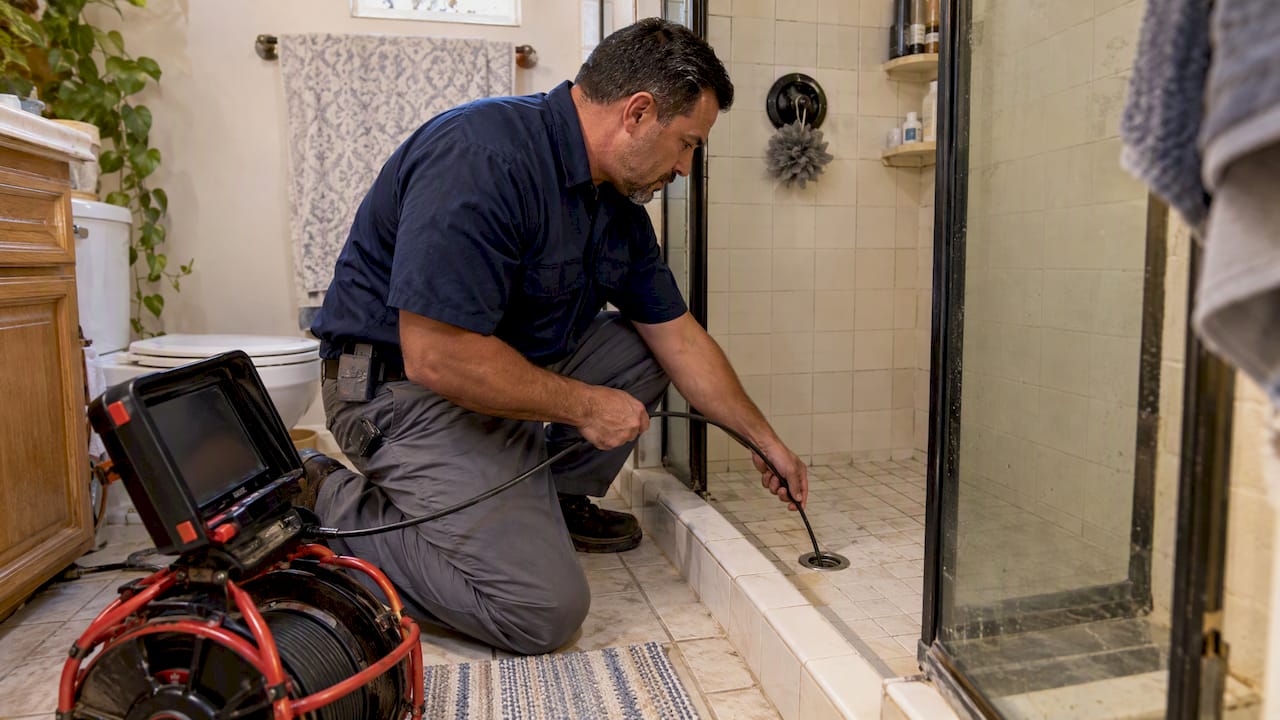
- Camera inspection: A professional tool that shows cracks, leaks, and blockages inside the line that no household product can reach.
- Hydrojetting: High-pressure water that strips deep biofilm and stubborn clogs from the pipe walls when brushing and snaking fall short.
If you have worked through the brush, the enzymes, and the snake and the odor still returns, the problem likely sits beyond what hand tools can reach. Our drain cleaning service covers hydrojetting and camera work for exactly those cases.
When should you call a licensed plumber?
DIY has a ceiling, and recognizing it protects both your health and your home. Call us or another licensed plumber when you see any of these:
- The odor persists after a thorough cleaning, or it comes back almost immediately.
- Dampness, staining, soft flooring, or mold appears near the shower, which may signal a leaking drain line.
- Intense rotten-egg or sewer gas smells, or physical symptoms such as nausea, dizziness, or breathing trouble. Ventilate the space, leave the room, and call for emergency help.
- Several fixtures smell or gurgle at once, which suggests a vent or main line issue.
Pro Tip: Ask the plumber whether a camera inspection, hydrojetting, or sewer-line repair is needed, and request the scope and pricing in writing before work begins.
A good plumber should diagnose before recommending a repair, explain what the camera shows, and give you a clear written estimate. If it is after hours and the smell is strong, our 24/7 emergency plumbing team is available, and our emergency drain cleaning guidance covers what to do before help arrives.
How do you keep the odor from coming back?
Prevention takes less effort than repeated cleaning. A short routine keeps biofilm from rebuilding.
- Hair catcher: Install one and clean it after each use. This can help reduce hair-and-soap clogs.
- Hot water flush: Run hot water for about 60 seconds after washing your hair. In rarely used bathrooms, run the shower periodically so the trap stays full.
- Enzymatic cleaner schedule: Weekly or biweekly for high-use drains, monthly for low-use drains.
- Brushing: Scrub the visible pipe with a brush as needed, and snake the drain if buildup persists.
For the same logic applied to another fixture, our guide to fixing sink drain smells for good follows a similar routine.
What we have learned about smelly drains
In our experience, a thorough cleaning and an enzyme treatment can help with some smelly drains. If you are unsure how to clean the drain safely, consult a licensed plumber. A smell that survives a proper cleaning is a different story. Persistent odors may point to a vent problem, a leak, or buildup deeper in the line, which may require a licensed plumber and specialized equipment. We hold a C-36 license (#583868), carry insurance, and do our camera inspections, hydrojetting, and sewer-line repairs to code. Handling gas and sewage safely comes first, every time.
— EZ
Where can we help you stop the smell for good?
When cleaning at home does not end the odor, we match the fix to the cause:
- Drain cleaning and hydrojetting for deep biofilm and stubborn clogs.
- Camera inspection to find hidden cracks and damage.
- Leak detection and sewer-line repair when the problem is structural.
On a service call, we inspect, diagnose, give you a written estimate, and recommend a repair or a maintenance plan. We offer 24/7 emergency options, plus maintenance plans for recurring prevention. Book a drain cleaning visit with EZ Plumbing or call us to get on the schedule.

FAQ
How do I get rid of the sewer smell in my shower drain?
Remove the grate, clear out hair and debris, flush with hot water, and scrub the pipe with a brush. If the sewage smell remains, the cause is often a dry trap, a blocked vent, or a leaking line, and a plumber should inspect it.
What do plumbers recommend for smelly drains?
Plumbers typically recommend mechanical cleaning first, followed by an enzymatic cleaner for organic buildup. For persistent odors, The Spruce points to camera inspection and hydrojetting as common next steps.
Does pouring vinegar down the drain make it smell better?
Vinegar can freshen the surface for a short time, but it rarely removes the biofilm and hair that cause the odor. Physical cleaning with a brush and an enzymatic cleaner gets to the source.
Is the rotten-egg smell from my shower drain dangerous?
A rotten-egg smell can come from biofilm, but odor alone cannot establish whether the air is safe. If the smell is intense or you feel unwell, leave the area and seek emergency help. Still, the CDC’s ATSDR notes that high hydrogen sulfide levels can dull your sense of smell, so ventilate well and call a plumber.
Sources
- Why Does My Shower Drain Smell Like Rotten Eggs? – This Old House
- Hydrogen Sulfide – ToxFAQs™.
- Why Your Shower Drain Smells Like Sewage (and What to Do)
- Domestic Disasters: That Awful Shower Drain Smell Has a Surprising Culprit