
Emergency Drain Cleaning: What to Do Before Help Arrives
It's 2 a.m. in a Los Angeles apartment, and the tenant on the phone is trying not to panic because the shower drain is gurgling like it's breathing sewage while the kitchen sink starts backing up onto hardwood. The water is creeping toward the hallway baseboard, someone's already asking whether to unplug the microwave, and the question isn't really “how do we clear this.” It's what has to happen right now before the damage spreads.
That's the right way to think about emergency drain cleaning. It's a triage call first, a cleaning job second, because the first decision is always whether the line is merely blocked or actively threatening flooding, contamination, habitability, or business interruption. In Los Angeles, that distinction matters because backed-up drains don't stay small for long, especially in multi-unit buildings where one failure can turn into a stack or main-line issue fast.
Table of Contents
- What Counts as an Emergency Drain Cleaning Call
- Warning Signs and Common Causes of a Drain Emergency
- What to Do in the First 15 Minutes of a Backup
- How Professionals Clear and Verify the Drain
- Response Times and What Emergency Service Costs
- Managing Drain Emergencies in Multi-Unit Properties
- Choosing a 24/7 Emergency Drain Cleaning Team in Los Angeles
- Frequent Questions After a Drain Emergency
What Counts as an Emergency Drain Cleaning Call
A real emergency starts when water keeps rising, not when a sink is just annoyingly slow. If the backup is confined to one fixture and it's draining sluggishly, that's usually a service call that can be scheduled during normal hours. If water is surfacing in tubs, floor drains, or multiple fixtures at once, the line has moved into emergency territory.
The dispatch question is simple. Is the problem localized, or is it spreading through the system? A single kitchen sink with a partial clog points one way. A toilet that bubbles when the shower runs, or a shower that burps when the washer drains, points another.
How dispatchers sort the call
Four things decide urgency fast. Severity tells you whether water is still rising. Spread tells you whether it's one fixture or several. Hazard tells you whether sewage, electrical risk, or gas odors are present. Occupancy tells you whether the people in the building can safely wait.
Practical rule: If sewage is visible, multiple fixtures are involved, or the backup is threatening living space, treat it like an after-hours emergency, not a routine clog.
That's also why the same problem is handled differently in different buildings. A family with kids, a restaurant with service underway, and a senior living alone all face different risk levels from the same blocked line. Emergency drain cleaning is the right call when waiting means more contamination, more cleanup, or a longer shutdown.
Warning Signs and Common Causes of a Drain Emergency
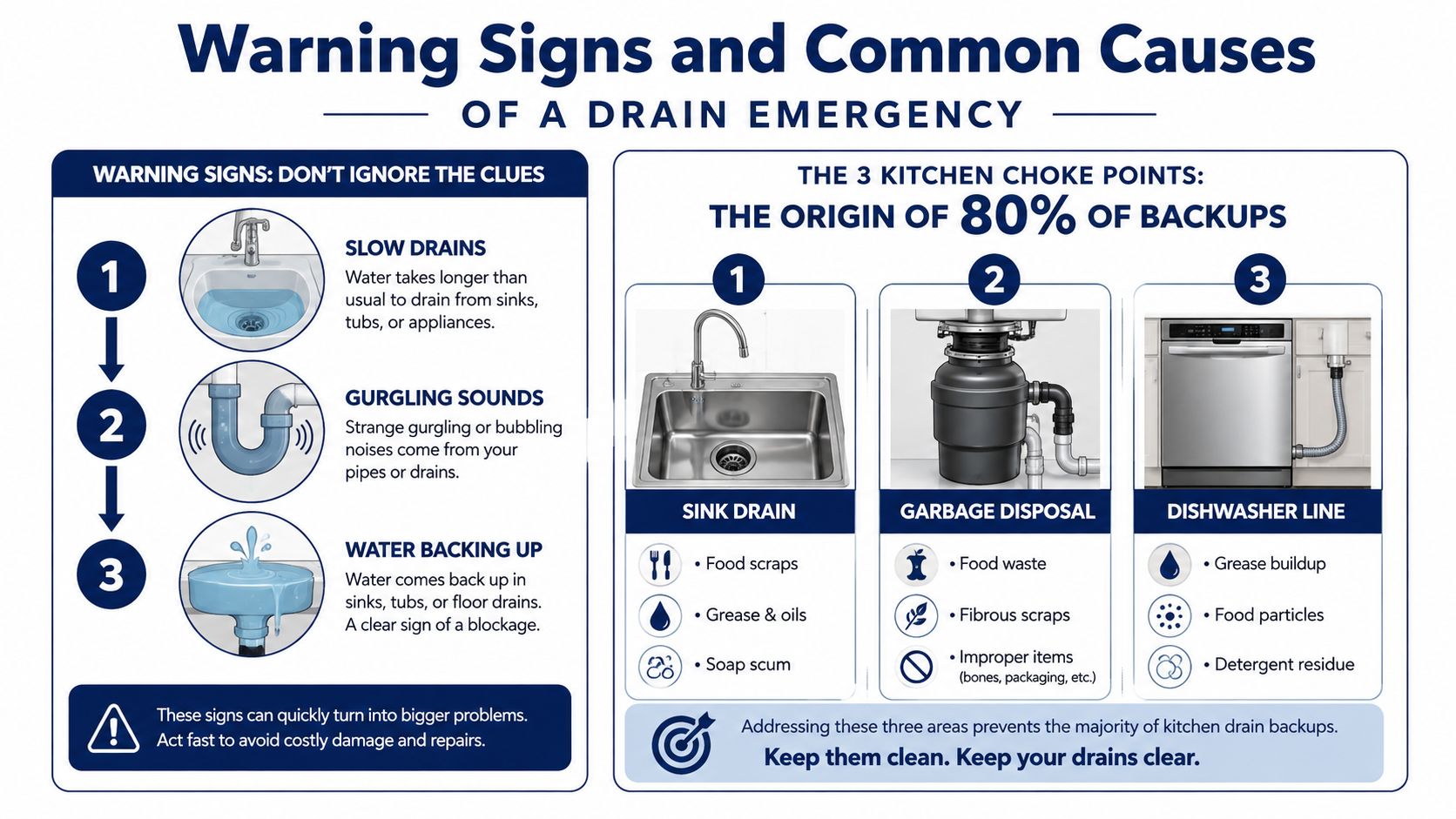
The early signs usually show up before water hits the floor. A drain that starts gurgling after every flush, a sink that empties slower each day, or a toilet that changes water level for no clear reason all point to pressure getting trapped somewhere in the system. Foul odors are another clue, especially when they show up in more than one room.
Read the symptom before the flood
A single slow sink often means local buildup. When adjacent fixtures react, the problem is farther down the line. That's the part homeowners miss, and it's why “just plunge it again” can waste time while the backup keeps loading the pipe.
The larger pattern in the data is clear. Public records show roughly 45% of sewer flooding incidents were caused by blockages in England and Wales, and the scale has stayed stubbornly high for years, with more than 6,000 homes flooded internally in 2020–21 and 4,808 homes in 2024–25 (parliamentary and regulator data). That's not a one-off nuisance. It's a recurring property-damage problem.
The usual choke points
Kitchen lines are the first place I look when the story includes grease, cooking debris, or a disposal that sounds like it's working harder than it should. Bathroom laterals usually show hair and soap scum problems. Main sewer connections are where root intrusion, scale, and older pipe defects tend to show up, especially in aging clay laterals.
The bigger workload supports that triage. Industry reporting for England and Wales estimates around 300,000 sewer blockages every year, at a cost of about £100 million annually, and one review logged 278,098 blockage events with £103.4 million in repair costs across major water companies in a year (blockages review). The point isn't that every clog is severe, it's that drain emergencies are common enough to deserve a fast, accurate read.
What to Do in the First 15 Minutes of a Backup
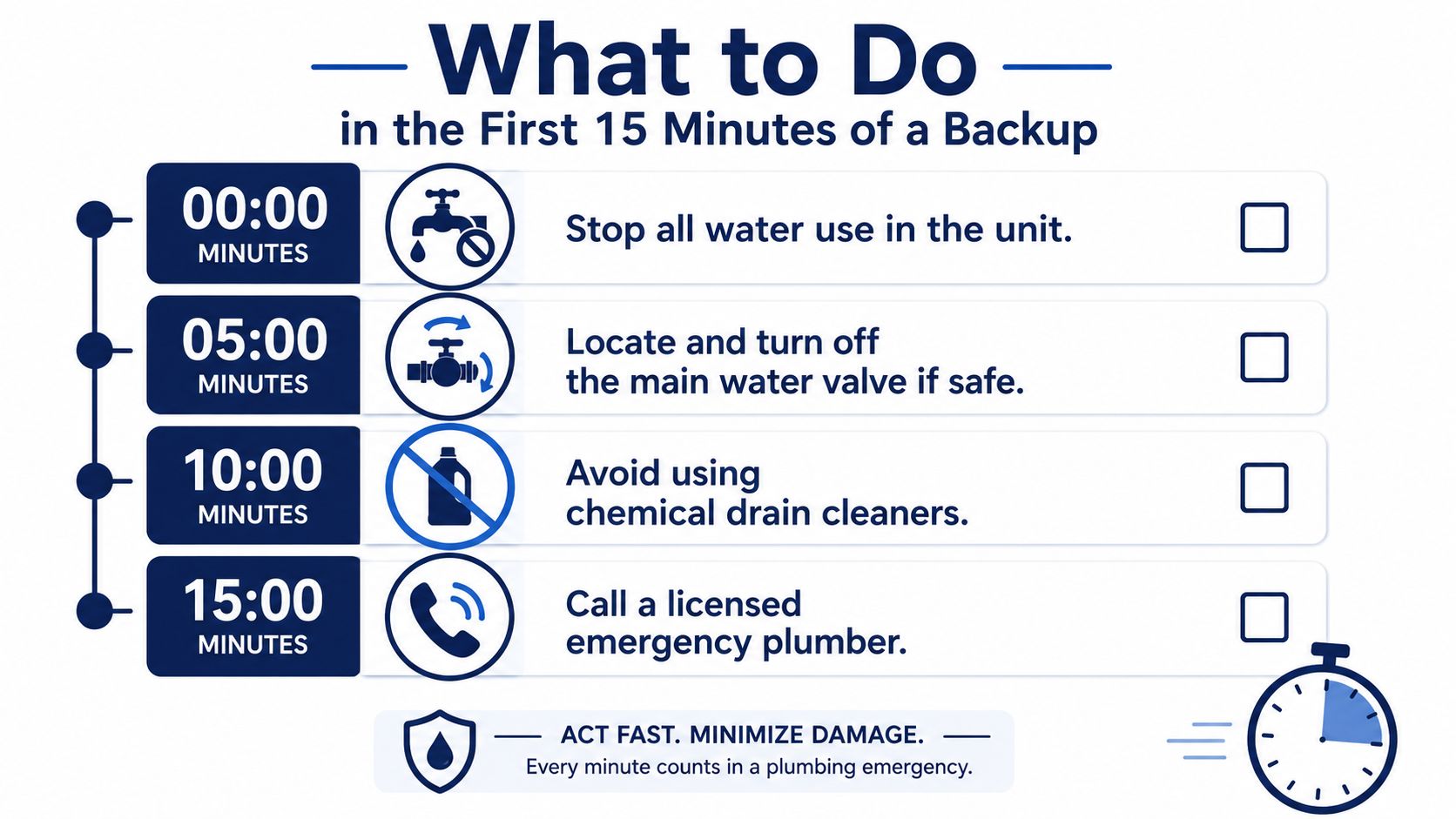
The first fifteen minutes are about containing the mess, not winning the plumbing battle yourself. Shut down water use immediately in the affected unit, because every extra gallon adds hydraulic load to a line that's already failing. If it's safe, find the main shutoff and the local fixture shutoff so you can stop the supply before the backup spreads.
Do the basics in order
Move anything valuable off the floor, especially rugs, boxes, and anything near outlets. Take photos before cleanup starts, because insurance and HOA conversations go better when the timeline is documented. Open windows or run ventilation if sewage odor is present, but don't stay in a contaminated room longer than you need to.
Stop adding water to the system. That's the mistake that turns a blocked line into a floor damage call.
Use the main shutoff guide if you're not sure where to find it, how to shut off your main water supply. After that, call a licensed plumber who handles emergencies around the clock. The longer the water sits, the more likely it is to seep under baseboards, into cabinets, and through any vulnerable seam in the floor.
What not to do
Don't pour chemical drain cleaner into a sewage backup. It can splash back, corrode pipes, and make the line more dangerous for the technician who arrives next. Don't keep flushing to “push it through,” and don't take apart a P-trap without gloves and a bucket if sewage is involved.
If sewage exposure happens, decontamination matters. Children, pets, and anyone with respiratory issues should stay out of the area until the scene is controlled and cleaned properly. Calling fast is what protects the property, but protecting the people in it comes first.
How Professionals Clear and Verify the Drain
A real emergency truck usually brings four things, and each one has a different job. The drain snake breaks the immediate blockage. Hydro-jetting scours the pipe wall. The sewer camera shows what's inside the line. Spot repair tools handle the defect if the problem is structural rather than just buildup.
The sequence matters. Snaking can restore flow quickly, but it can also leave grease or sludge stuck to the pipe wall. That's why a line can seem fixed and then clog again soon after. Hydro-jetting uses high-pressure water in the 3,000 to 4,000 PSI range to clean the circumference of the pipe instead of punching a narrow hole through the obstruction (hydro-jetting overview).
Comparing professional drain cleaning methods
| Method | Best For | Verification Step |
|---|---|---|
| Mechanical snake | Immediate blockage break-through | Run water and confirm short-term flow |
| Hydro jetting | Grease, scale, roots, sludge | Camera inspection after cleaning |
| Sewer camera inspection | Finding defects, offsets, roots, and repeat-failure points | Live video and locator confirmation |
| Spot repair | Cracks, offsets, or root-damaged sections | Post-repair camera pass |
Camera verification is the part many calls skip when they're rushed. It confirms that the line is open and helps identify root intrusion, scale, or a broken joint that will keep causing callbacks. If you're hiring a crew, ask whether they're cleaning, verifying, and documenting, or just clearing enough to get the water moving.
For planning around this kind of work, build your emergency plan and keep the contact list where tenants or staff can reach it fast. If the crew has the right gear, the job should end with proof, not guesswork. The internal inspection details matter enough that a dedicated sewer camera inspection is often the difference between a temporary fix and a durable one.
Response Times and What Emergency Service Costs
True emergencies are usually handled on a short clock. In a city like Los Angeles, a same-day or after-hours crew may arrive within a window of about 30 to 90 minutes when traffic and location cooperate, then start by isolating the affected fixture and running a diagnostic before any clearing begins. Good techs quote the work before they start, not after they've already opened the line.
Pricing is usually built from a few pieces. There's the trip or dispatch charge, the diagnostic, the clearing method, and any repair add-ons if the camera finds a damaged section. The invoice should also show what was done and include before-and-after camera footage whenever the line was inspected that way.
What changes the bill
Late-night dispatch costs more than daytime service. So does a line that's buried, difficult to access, or damaged enough to require excavation or replacement. A simple clear and verify job is one thing. A backup that turns into pipe repair is another.
For property owners comparing providers, the details on the service page matter. EZ Plumbing lists drain cleaning and emergency response for Los Angeles customers on its drain cleaning Los Angeles page, which is the kind of public-facing service description that helps set expectations before anyone drives out. The key is not the marketing language. It's whether the company can diagnose, clear, and document the line in one visit when the situation is still active.
Managing Drain Emergencies in Multi-Unit Properties
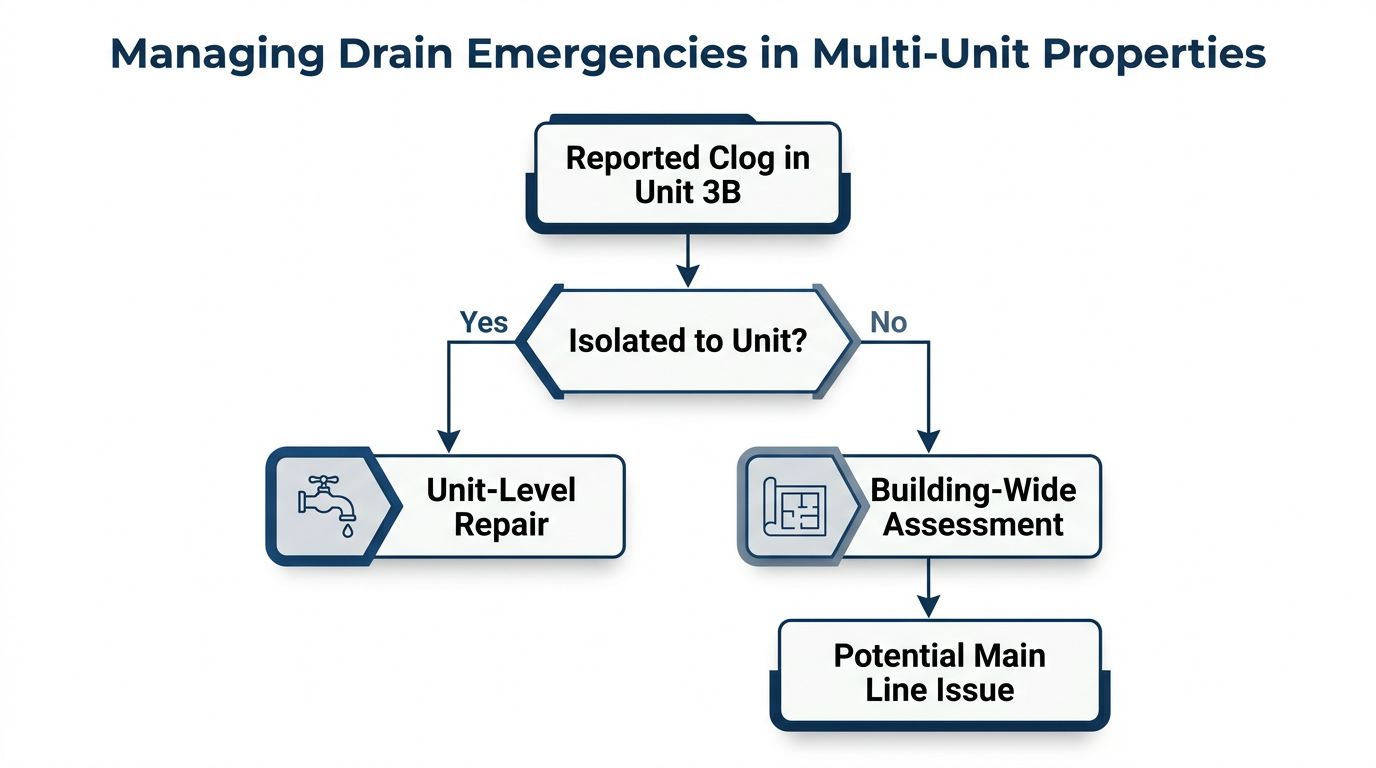
A clogged line in a multi-unit building should never be treated like a single-unit inconvenience. The first job is to decide whether the problem is localized, shared-line, or system-overload. That classification determines whether you're dealing with one tenant, one branch line, or the building's stack or main.
A simple triage frame for HOAs and managers
If only one unit is affected and neighboring fixtures behave normally, start at the unit level. If two or more units on the same branch show symptoms, treat it as a shared-line issue. If multiple vertical fixtures react, or sewage shows up in lower units when upper units drain, assume a stack or main problem until proven otherwise.
That matters because the wrong response wastes time. Tenant messages should go out immediately so residents stop water use, and maintenance staff should document which units are active, when the symptoms started, and whether any floor drains or common areas are involved. Photos, timestamps, and a list of affected units help with insurance and with responsibility questions later.
What to shut down and what to record
If the building has access to branch shutoffs or stack isolation points, use them only when the team knows the layout and the risk. Otherwise, the safest move is to stop water use in the affected area and get the line assessed by a crew that works emergencies in occupied buildings. The incident file should stay clean and factual.
That kind of documentation becomes important fast in HOA and rental settings, especially when a backup may involve a common-area line, an owner-paid lateral, or a shared maintenance responsibility. One neglected blockage can become a repeat flooding issue, cleanup cost, and tenant disruption, and the public records on sewer flooding show how persistent that risk can be (public authority data). The manager's job is to stop escalation before the building starts arguing about it.
Choosing a 24/7 Emergency Drain Cleaning Team in Los Angeles
A good emergency plumber reduces risk before the wrench ever comes out. That starts with a California C-36 plumbing license, current liability and workers' comp insurance, real 24/7 live dispatch, and documented hydro-jetting and sewer camera capability. If a company can't verify those basics, it's not a serious emergency partner.
Local coverage matters too. Crews who know the 405, 101, and 110 corridors can reach neighborhoods faster when traffic is ugly, and technicians familiar with older laterals in places like Echo Park, West Hollywood, and South LA know where root intrusion and aging pipe issues tend to start. That local pattern recognition saves time on diagnostics.
Red flags worth listening for
Door-knocking offers during an active backup are a bad sign. So are vague flat-rate quotes that don't explain diagnostic steps, and technicians who arrive without camera gear or jetting equipment. If the person on the phone can't tell you how the line will be verified after cleaning, keep looking.
Ask what they bring, how they verify, and whether the estimate is written before work begins.
For contractors that need an outside call-handling setup, top contractor answering service options can help separate genuine live dispatch from a voicemail loop that loses the first critical minutes. Among local options, EZ Plumbing is one example of a Los Angeles contractor that states round-the-clock dispatch, licensed technicians, upfront written estimates, and a one-year workmanship warranty on emergency drain cleaning repairs across its service area. That combination is what property managers should ask for, regardless of the company name on the truck.
Frequent Questions After a Drain Emergency
Homeowners ask about coverage first. Whether insurance or an HOA master policy helps depends on the policy language, the cause of loss, and whether a sewer-backup endorsement exists. After a backup, keep photos, dates, invoices, and any camera footage, because claims usually move better when the damage trail is clean.
A cleared line is not always the end of the problem. If the drain starts acting up again soon after service, that usually means the line needs a deeper look for roots, offsets, corrosion, or a failing lateral. A one-time clear can restore flow, but recurring symptoms are what push the job from cleaning into diagnostics.
Slow drains are different from emergencies. Slow drains usually fit scheduled cleaning, while a true emergency involves rising water, sewage surfacing, or more than one fixture failing at once. In older Los Angeles laterals, annual hydro-jetting can make sense as a maintenance habit, and tenant education about grease disposal helps prevent repeat kitchen backups.
After sewage exposure, sanitize hard surfaces that came into contact with the water and treat porous materials with caution. If drywall, insulation, or flooring soaked up contaminated water, a professional cleanup may be needed because the issue is no longer just plumbing. The fastest way to keep the next backup from becoming a bigger one is simple, keep grease out of the line, keep roots away from vulnerable laterals, and call before the problem starts moving through the building.
If you're dealing with a backup now, EZ Plumbing can handle the triage, clearing, and verification on the same emergency call. For Los Angeles homes, HOAs, and commercial properties, visit EZ Plumbing to request help and get the line checked before the damage spreads.