
Fix Sink Drain Smells for Good
That funky smell coming from your sink isn't just an annoyance; it's a sign that something's wrong. Most of the time, the culprit is either decomposing organic matter like old food and grease, or a simple plumbing hiccup called a dry P-trap that lets sewer gas sneak into your home. The good news? You can often fix it yourself with a little know-how.
Table of Contents
- Pinpointing the Cause of Sink Drain Smells
- Simple DIY Fixes You Can Try in Minutes
- Clearing Stubborn Clogs and Biofilm Buildup
- A Proactive Plan to Prevent Future Drain Odors
- Knowing When It's Time to Call a Plumber
- Your Questions on Sink Drain Smells Answered
Pinpointing the Cause of Sink Drain Smells
Before you can get rid of the odor, you have to figure out what you're dealing with. The first clue is the smell itself. Is it a rotten food funk coming from the kitchen sink, or does it smell more like an open sewer in the guest bathroom?
To help you play detective, we've put together this quick-reference table. Use it to match the odor you're noticing with its most likely source.
Common Sink Smells and Their Likely Causes
| Odor Description | Likely Cause | Common Location | Quick Tip |
|---|---|---|---|
| Rotten food, sour garbage | Decaying food particles & grease | Kitchen | Run ice cubes & citrus peels through the disposal. |
| Musty, swampy, or moldy | Biofilm (hair, soap scum, toothpaste) | Bathroom | Clean the pop-up stopper and inside the drain. |
| Sewer gas or rotten eggs | Dry P-trap | Guest bathroom, basement sink | Run water for 30 seconds every couple of weeks. |
This table is a great starting point, but let's dig a little deeper into what's happening in your pipes.
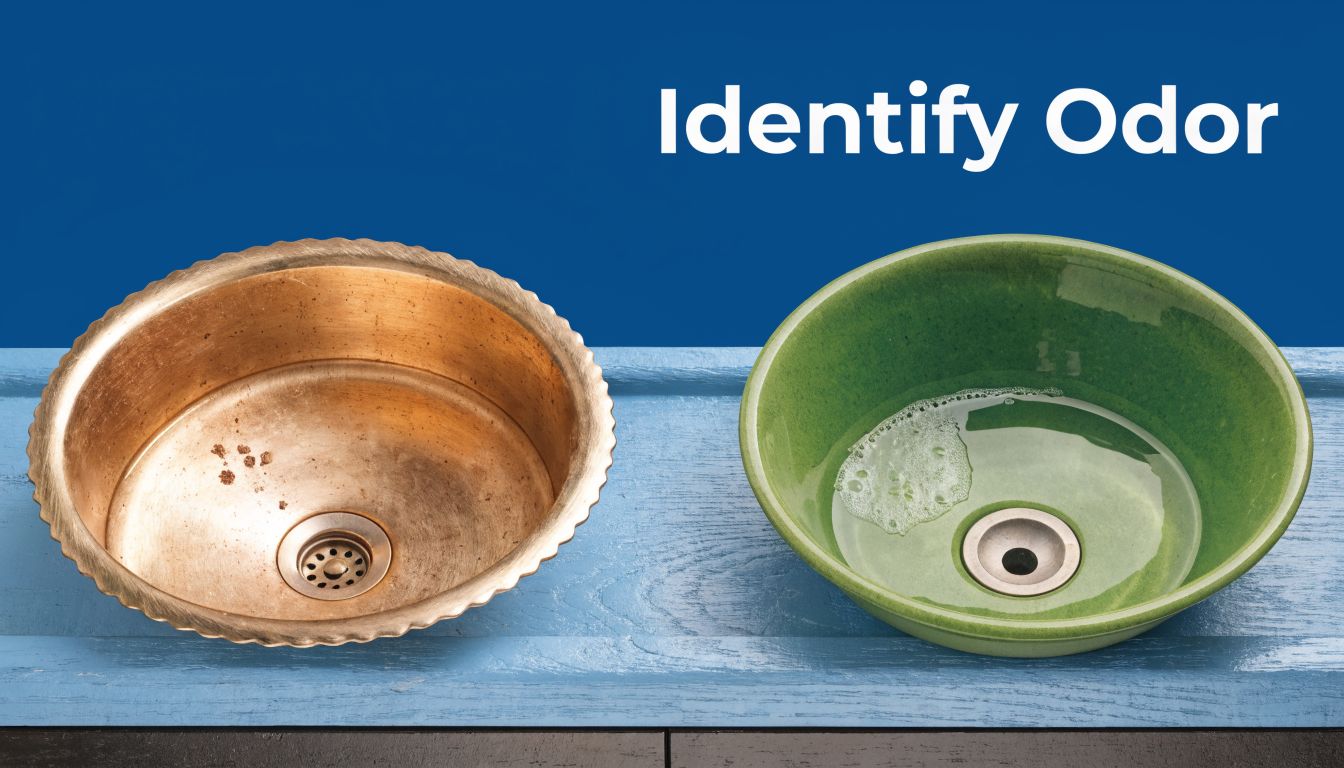
Kitchen vs. Bathroom Odors
In the kitchen, the main offender is almost always a slow accumulation of food scraps, fats, and grease. As this gunk coats the inside of your pipes and garbage disposal, it becomes a breeding ground for smelly bacteria. It's a surprisingly complex little ecosystem, which you can learn more about from this guide by BacteriaFAQ on kitchen safety.
Bathroom sinks, on the other hand, have a different problem: biofilm. This is the slimy, black or gray gunk you find clinging to the drain and the pop-up stopper. It's a gross mix of soap scum, old toothpaste, sloughed-off skin cells, and hair, and it produces a distinctly musty, swamp-like smell.
The Dry P-Trap Problem
But what if the smell is coming from a sink you hardly ever use, like in a guest bathroom? If it smells like raw sewage, the problem is almost certainly a dry P-trap.
That U-shaped pipe under every sink is designed to hold a small amount of water. This water acts as a barrier, physically blocking sewer gases from rising up the drain and into your home.
When a sink isn't used, that water plug evaporates, breaking the seal. It doesn't take long, either—a P-trap can dry out in as little as 2-4 weeks. This allows unpleasant and potentially unhealthy gases to waft right out of the drain.
This is an incredibly common issue. In fact, drain odors and clogs account for a huge number of service calls, with a significant portion traced back to simple P-trap or buildup problems.
Luckily, the fix is as easy as it gets. Just run water in those rarely used sinks for about 30 seconds every few weeks to keep the trap filled. If the smell is strong, persistent, and coming from multiple drains, you might have a bigger issue with your home's main vent stack. For more on that, take a look at our guide on what causes a sewage smell in the bathroom.
Simple DIY Fixes You Can Try in Minutes
Alright, you've played detective and have a good idea where that funky smell is coming from. The good news is you can often tackle the most common drain odors yourself, using simple items you probably already have under your sink. No need for a plumbing degree to try these tried-and-true methods.
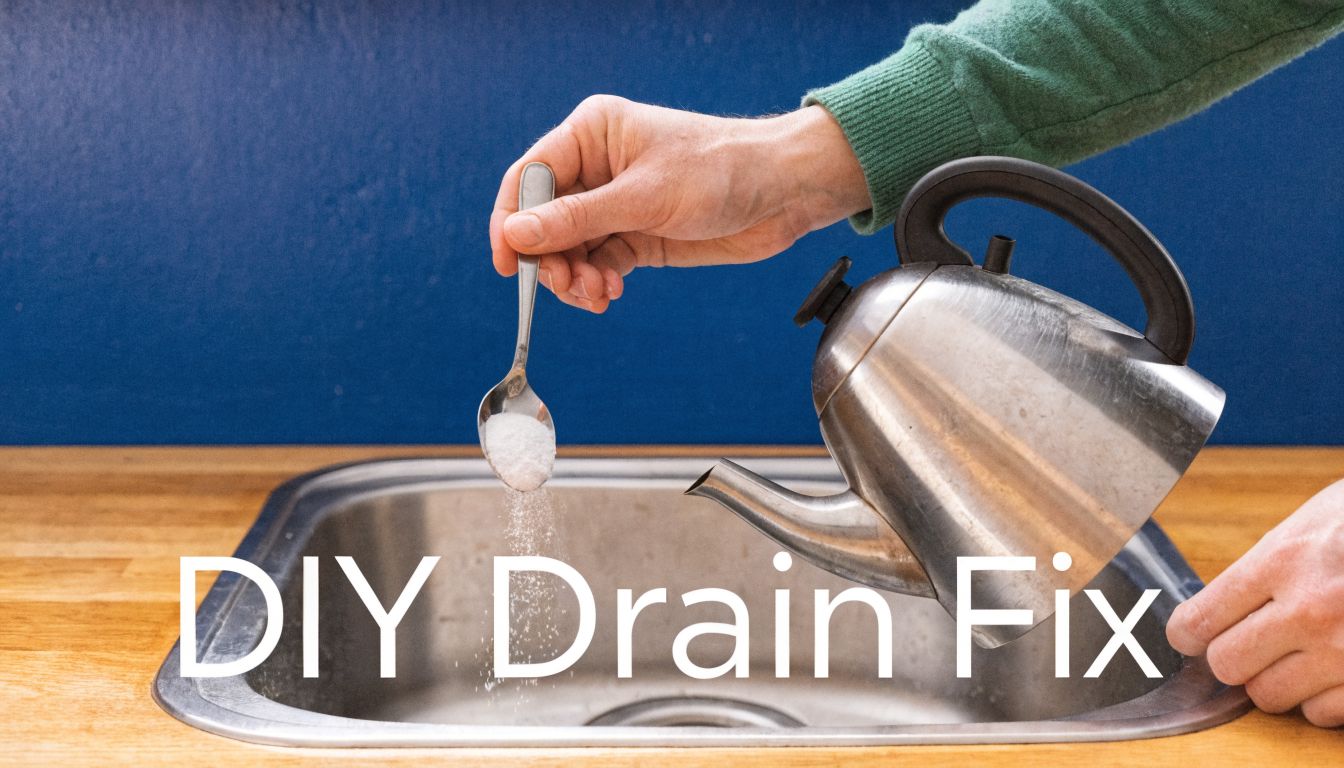
The simplest first step is a boiling water flush. Just get a kettle of water boiling and pour it carefully down the drain. This works wonders in kitchen sinks, as the hot water is fantastic for melting away the greasy, congealed food gunk that’s causing the stink.
A quick word of caution: if you know you have PVC pipes, don't make a habit of this every single day. Repeated exposure to boiling water can soften them over time. Pouring the water in stages instead of all at once can help minimize any risk.
The Classic Baking Soda and Vinegar Trick
Need a little more muscle? The old-school combination of baking soda and vinegar is your go-to. This isn't just a science fair volcano; the fizzy reaction actually scrubs the inside of your pipes, breaking up gunk and neutralizing those nasty smells without the need for harsh chemicals.
Here’s the right way to do it:
- Start by pouring about a half-cup of baking soda straight down the drain.
- Next, chase it with one cup of white vinegar.
- Quickly pop a drain stopper or a wet cloth over the opening. This traps the fizzing action inside the pipe where it can do the most good. Let it all work for 15-20 minutes.
- To finish, remove the stopper and flush everything out with very hot tap water for at least a full minute.
Pro Tip: This is one of the best preventative habits you can adopt. I tell my clients to do a baking soda and vinegar flush once a month. It stops the buildup before it has a chance to turn into a smelly problem in both kitchen and bathroom sinks.
Of course, some odors are more concerning. If what you're smelling is more like sewage than old food, you might have a different issue on your hands. For that specific problem, take a look at Phoenix's guide to eliminating sewage smell.
For that slimy, stubborn biofilm, an enzymatic drain cleaner is your best bet. Unlike those harsh chemical drain openers that can eat away at your pipes, enzyme cleaners use good bacteria to literally digest the grease, soap scum, and other organic matter. They’re a much safer, non-toxic solution that works with your plumbing, not against it. Just follow the directions—it usually involves pouring the cleaner in at night and letting it work its magic while you sleep.
Clearing Stubborn Clogs and Biofilm Buildup
Alright, so the hot water flush and the classic baking soda and vinegar trick didn't cut it. If that sink still smells, we’re likely dealing with a more stubborn problem. Often, it's a thick layer of biofilm—that slimy, smelly coating inside your pipes—or a partial clog that’s become a magnet for all sorts of gunk.
It’s time to get a little more hands-on, but don’t worry, this is something most people can handle themselves. The real culprit is often hiding in plain sight: the P-trap.
Inspecting and Cleaning the P-Trap
That U-shaped pipe under your sink? That’s the P-trap. Its job is to hold a plug of water to block sewer gas from creeping into your home. But because of its shape, it’s also the perfect spot for hair, grease, and food scraps to settle and create a foul-smelling sludge. Tackling the P-trap is usually the most direct way to knock out a persistent odor.
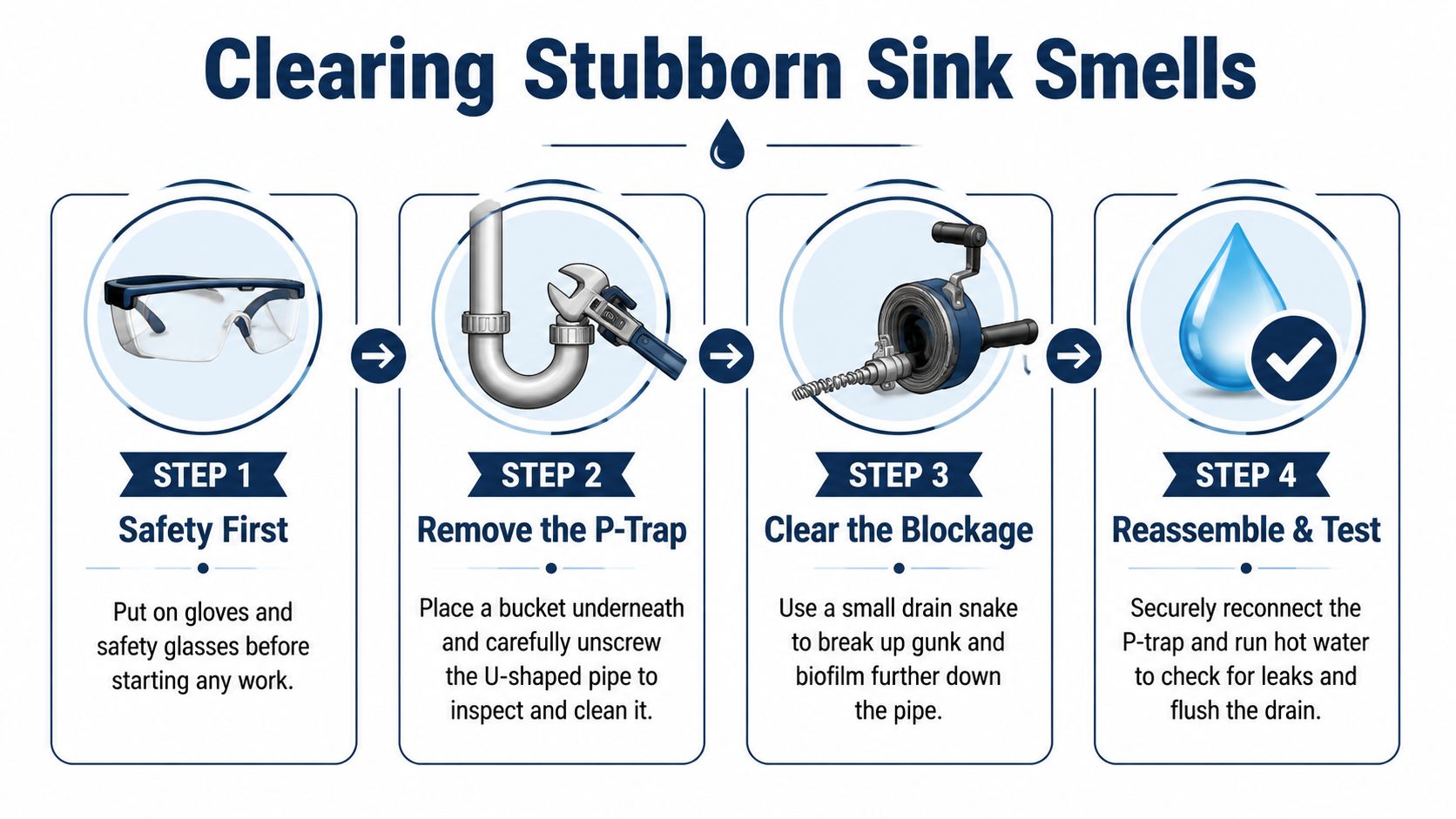
First things first: place a bucket directly under the P-trap to catch water and whatever else comes out. Trust me, you’ll be glad you did. Pull on some gloves, too. Most modern PVC traps have large nuts you can loosen by hand. If they're stuck, a pair of channel-lock pliers will give you the leverage you need.
Once you unscrew the nuts at both ends of the "U" bend, gently pull the trap down and empty it into the bucket. Be prepared—what comes out is usually pretty gross and the source of that smell. Grab an old bottle brush or a similar stiff brush and give the inside of the pipe a thorough scrub with hot, soapy water until it’s spotless. This is also a great opportunity to peek into the open pipe leading into the wall for any obvious blockages.
Using a Drain Snake for Deeper Blockages
If a sparkling clean P-trap doesn't solve the odor, the blockage is probably deeper in the drain line. This is where you bring out the secret weapon: a small drain snake, sometimes called a drain auger.
With the P-trap still removed, you’ll have clear access to the drainpipe going into the wall. Feed the end of the snake into the pipe, pushing it along until you feel it stop. That’s your clog.
Once you’ve hit resistance, tighten the setscrew on the auger’s handle and start cranking it clockwise. The corkscrew tip will drill into the blockage, either breaking it up or snagging it so you can pull it back out. The key here is to use steady pressure, not brute force. Being too aggressive can damage older pipes. For a more detailed walkthrough, you can read our guide on how to snake a kitchen sink.
A Proactive Plan to Prevent Future Drain Odors
You've finally banished that awful smell from your sink. Great! Now, let's make sure it doesn't come back. The real trick isn't just cleaning the drain; it's adopting a few simple habits that stop the gunk from building up in the first place. Trust me, a little prevention now is far less of a headache than dealing with a stubborn clog—or a plumbing bill—later on.
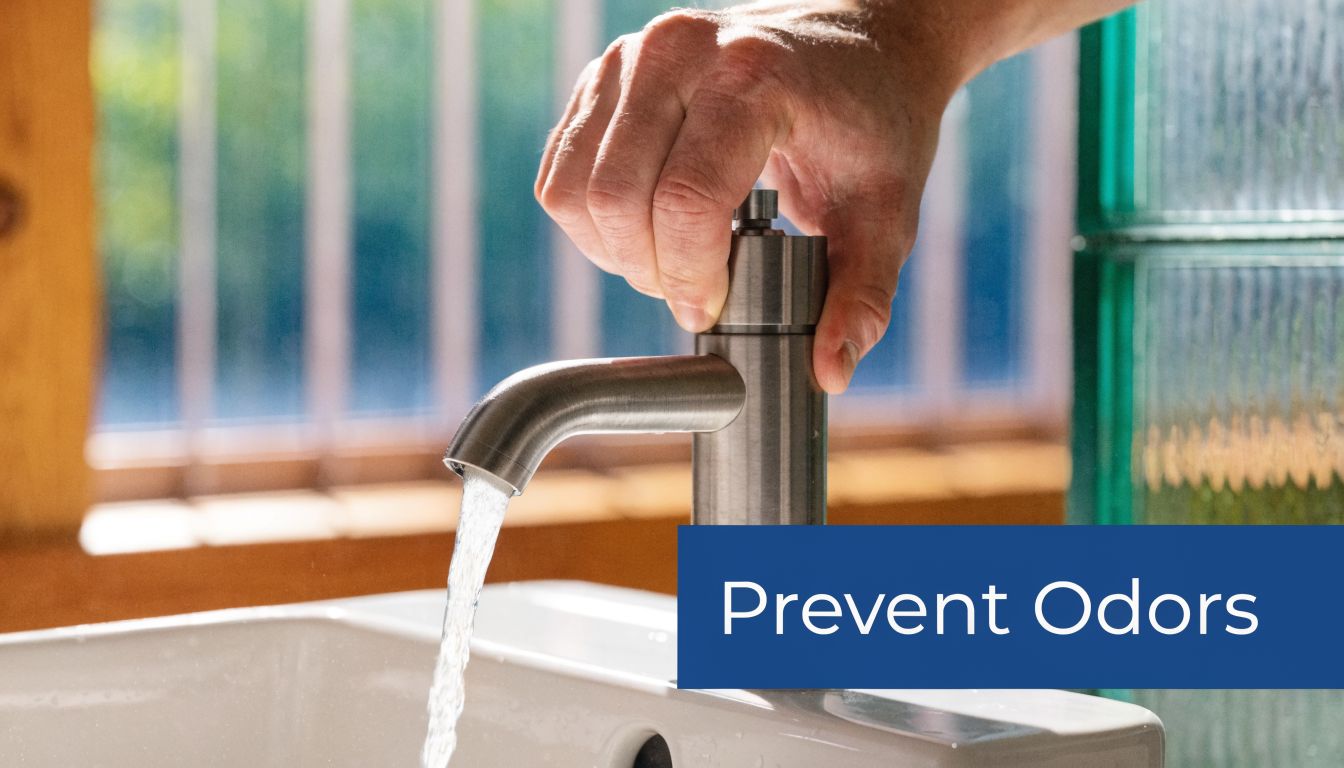
One of the simplest things you can do is a hot water flush. After you're done with greasy dishes, just let the hot tap run for about a minute. This small step helps keep any fresh grease in a liquid state, pushing it further down the main line before it gets a chance to cool and stick to the inside of your pipes.
And speaking of grease, the golden rule is to never pour cooking oils down the drain. Ever. Keep an old jar or can under the sink, pour the grease in there, and once it's full or solid, you can just toss it in the trash.
Mind the P-Trap and Use Enzymes
Now, what about those sinks you barely use, like in a guest bathroom or the basement? The P-trap is the usual suspect there. That little U-shaped pipe holds water to block sewer gases, but if the sink isn't used, the water evaporates. It can happen in just a few weeks.
The fix is incredibly easy. Just make it a point to run water in those sinks for 30 seconds every two weeks. That’s all it takes to refill the trap and keep that sewer gas barrier firmly in place.
For ongoing maintenance in all your sinks, I highly recommend a monthly dose of an enzymatic cleaner. These products are fantastic because they use natural bacteria to literally eat away at the organic sludge and biofilm that cause odors. They do the job without the harsh, pipe-damaging chemicals. For a deeper dive into keeping your pipes healthy, our drain cleaning guide for LA homeowners is a great resource.
Think of these small routines as part of a bigger picture of home maintenance. In fact, this approach is common even in large-scale building management; a good guide for facility managers on effective maintenance shows that regular, simple checks are the key to preventing major problems down the line.
Knowing When It's Time to Call a Plumber
Look, a little DIY spirit can conquer most smelly sink drains. But every plumber has stories about homeowners who tried to push it a little too far, turning a simple fix into a major headache. Knowing when to put down the wrench and pick up the phone is key to protecting your home from serious water damage or a nasty sewer backup.
So, you’ve done it all. You've poured boiling water, tried the classic baking soda and vinegar trick, and even wrestled with the P-trap under the sink. If that foul smell is still hanging around after all that, it's a huge red flag. A stubborn odor that just won't quit is your plumbing’s way of telling you the problem is deeper than you can reach.
When One Smell Becomes Many
Now, pay close attention to where the smell is coming from. Is it just the kitchen sink? Or have you started noticing that same lovely sewer scent in the bathroom shower or near the laundry drain, too? When an odor starts popping up in multiple locations, you're almost certainly not dealing with a simple clog in one drain.
This is a classic sign of a more system-wide problem. It often points directly to a blockage in your main sewer line or an issue with your home’s main vent stack, which is designed to regulate pressure and vent sewer gases.
Another dead giveaway? Your drains are talking back to you. If you flush a toilet and hear a strange gurgling sound from the shower drain, that’s a problem. That noise is caused by air getting trapped behind a deep blockage and fighting its way to the surface. Don't ignore it.
Sewer gas from smelly drains is more than just an annoyance; it's a real health concern. It impacts over 10 million U.S. households each year and is tied to 22% of all indoor air quality complaints. You can see more of the data on drainboss.co.uk to understand the scope of the issue.
If any of these scenarios sound familiar, it’s time to call in a professional. Here at EZ Plumbing, our technicians use specialized diagnostic tools to find the exact source of the problem, so we can get it fixed safely and for good.
Your Questions on Sink Drain Smells Answered
Even after trying a few things, you might still have some lingering questions about what’s causing that funk in your sink. Let's go over a few of the most common ones I hear from homeowners.
Are Chemical Drain Cleaners a Good Idea for Bad Smells?
I get this question all the time, and my answer is always the same: please steer clear of harsh chemical drain cleaners. They might seem like a quick fix, but I’ve seen firsthand the damage they can do to plumbing, especially older metal or PVC pipes. Plus, the fumes they kick up are no joke, and they're terrible for the environment.
An enzymatic cleaner is a much smarter and safer long-term solution. These products use natural bacteria and enzymes to digest the organic gunk causing the odor, protecting your pipes while effectively cleaning them.
Why Does My Sink Smell Worse During Hot Weather?
You're not imagining it. That smell definitely gets worse when the temperature spikes, a common complaint here in Los Angeles. Heat basically puts the decomposition process on fast-forward for any food, soap scum, or hair trapped in your P-trap. This rapid decay fuels bacterial growth and releases more of that foul "rotten egg" hydrogen sulfide gas, making the smell much more noticeable.
How Do I Clean a Stinky Garbage Disposal?
Ah, the garbage disposal—often the number one culprit behind kitchen sink odors. I have a simple, go-to trick for this. Grab a good amount of ice cubes and a handful of citrus peels (lemon and orange work great) and toss them into the disposal.
Turn on the cold water and run the unit. Here’s what happens:
- The ice cubes are surprisingly effective, acting like a scrubber to physically knock gunk off the grinding chamber and blades.
- The citrus oils are a powerful, natural deodorizer that cuts right through the funk and leaves things smelling fresh.
If you want an even deeper clean, a dedicated garbage disposal brush can get into all the nooks and crannies the ice might miss.
If you've tried these DIY solutions and the smell just won't quit, it might be time to call in the pros. A stubborn odor can point to a deeper issue. The team at EZ Plumbing has the right tools and expertise to find the real source of the problem and fix it correctly the first time. You can schedule your service today at ez-plumbing.com.