
Sewer Lateral Replacement Cost in Los Angeles
For a typical 50 to 100 ft residential sewer lateral in Los Angeles, homeowners commonly see $3,000 to $30,000+ all-in, and the spread is driven almost entirely by method, depth, and surface restoration, not pipe length alone. A pipe-only quote can look manageable at first, then the bill jumps once excavation, shoring, permits, and rebuilding concrete or landscaping enter the job.
A lot of LA homeowners learn that lesson the hard way. The first number sounds tolerable, then the contractor opens the scope and the project starts behaving like a small civil job, especially when the line runs under a driveway, sidewalk, mature tree, or a busy street. That's why the core question isn't just what the pipe costs, it's what sits above it and who has to put everything back.
Table of Contents
- What a Sewer Lateral Replacement Actually Costs in Los Angeles
- What a Sewer Lateral Is and Why Los Angeles Homes Are Different
- The Six Cost Drivers That Decide Your Final Bill
- Trenchless vs Open Cut and When Each Method Wins
- Permits, Inspections, and the LA Timeline You Should Expect
- Replacement vs Rehabilitation and When Lining Is the Smarter Bet
- Questions to Ask Contractors and Ballpark Case Studies
- Planning Your Project and Getting a Real LA Quote
What a Sewer Lateral Replacement Actually Costs in Los Angeles
A homeowner calls about a backup, gets a camera report, and hears one number for the pipe work. Then the second quote lands, and the project suddenly includes trench plates, concrete work, sidewalk cuts, and site cleanup. That's the moment the job stops being a simple plumbing repair and starts looking like a full exterior restoration project.
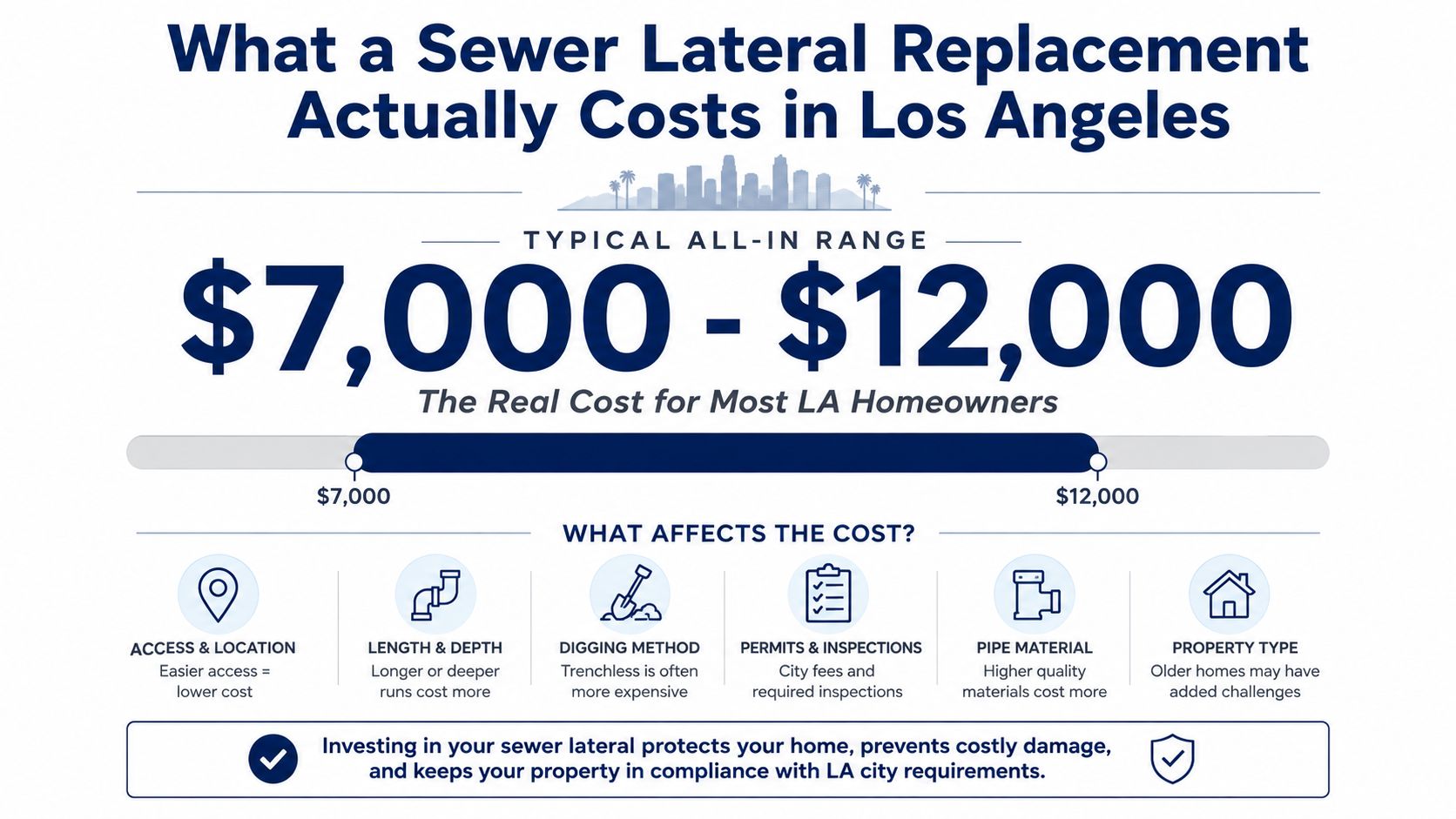
For a typical 50 to 100 ft residential sewer lateral, the practical all-in frame is $3,000 to $30,000 total. That range comes from the method itself and the site conditions around it, with open-trench replacement often quoted around $50 to $125 per linear foot, trenchless pipe bursting around $60 to $200 per linear foot, and CIPP lining around $80 to $250 per linear foot National Sewer Authority cost guide. The pipe is only part of the bill, and in LA, the line items outside the pipe are often what change the outcome.
What the quote usually hides
The biggest surprise is restoration. A public example from St. Helena shows a property owner hearing estimates of $28,000 to $68,000 before later receiving a $14,300 trenchless bid, while Pinellas County says replacing a private sewer lateral can cost $5,000 to $10,000+ depending on depth, length, and surface restoration St. Helena public FAQ. The lesson translates cleanly to Los Angeles, because the pipe work might be straightforward while the hardscape, curb, sidewalk, and streetwork are not.
Practical rule: if the line crosses concrete or public right-of-way, don't judge the job by the pipe footage alone.
| All-In Cost Range by Method (50–100 ft residential lateral) | |||
|---|---|---|---|
| Method | Per linear foot | Approx. all-in range (50–100 ft) | Best fit |
| Open-trench replacement | $50 to $125 | Lower end when access is open and restoration is light | Open yards, straightforward access |
| Pipe bursting | $60 to $200 | Mid to higher range when driveway or street restoration is avoided | Hardscape, landscaping, tighter access |
| CIPP lining | $80 to $250 | Often the lowest disruption, not always the lowest total | Structurally sound pipe with defects |
What a Sewer Lateral Is and Why Los Angeles Homes Are Different
A sewer lateral is the private pipe that carries wastewater from the house to the city main. In Los Angeles, the owner is usually responsible for the lateral on the private side, which is why the bill lands on the homeowner, not the utility.
The physical layout matters more here than in a lot of newer suburbs. Older LA homes can have clay, cast iron, or other aging pipe types, and the run may slip under a long side yard, a mature tree root zone, a driveway, or a sidewalk before it reaches the main. That's where access starts driving price, because a pipe buried in open soil is a different job from one tucked under hardscape or running through a narrow easement.
A plumbing run on the side of the house is one way to look at it. A short, shallow path with clear access is one kind of repair. A deeper route that passes under concrete and landscaping is another, because every obstacle adds labor, protection, and restoration work that the pipe itself doesn't account for.
The variables that matter before any pricing makes sense
The basic variables are simple, even if the quote isn't.
- Depth: deeper lines need more digging and more shoring.
- Length: longer runs mean more pipe, but also more restoration and inspection exposure.
- Material: older pipe tends to be harder to work with, and sometimes it can't be salvaged.
- Access: tight side yards, fences, trees, and neighboring improvements slow everything down.
- Right-of-way: once the job reaches sidewalk or street space, coordination gets heavier.
A homeowner comparing the lateral under a lawn to the one under a driveway is really comparing two different restoration burdens. That's also why a contractor who only talks about the pipe footage is leaving out the part that usually hurts the budget most.
If you're trying to understand how exterior damage can reshape a repair budget in a different context, the insurance guidance in this article on tree damage claim limits Atlanta is a useful reminder that location and surface disruption often matter as much as the damaged asset itself.
The Six Cost Drivers That Decide Your Final Bill
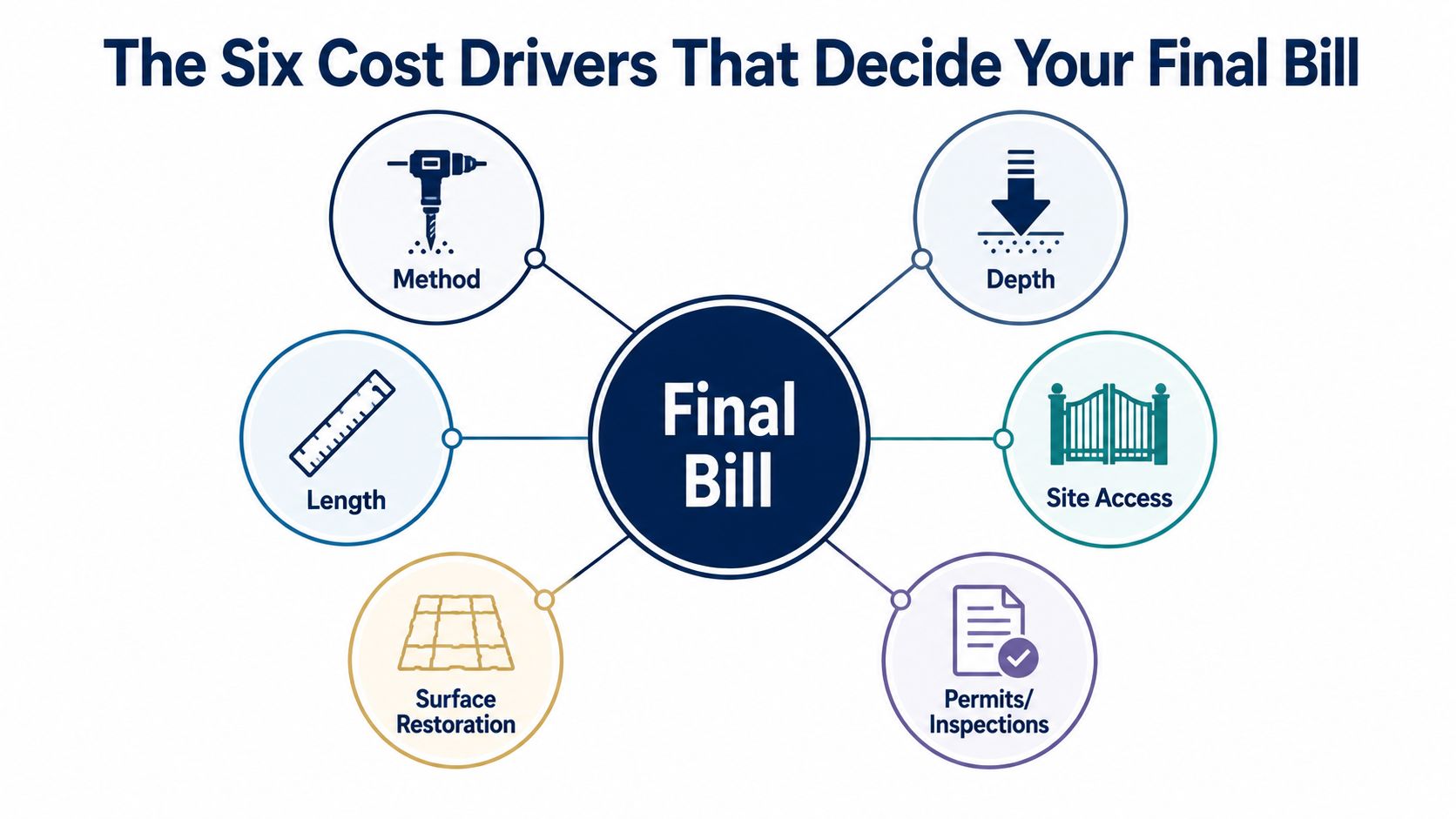
A sewer lateral bid makes sense only after you break it into the parts that move money. In Los Angeles, the six biggest drivers are method, depth, length, site access, surface restoration, and permits/inspections. Leave one of those out, and the quote is usually incomplete.
Method sets the floor
The method is the first cost decision because it determines how much digging happens. Open-trench replacement is often quoted around $50 to $125 per linear foot, pipe bursting around $60 to $200 per linear foot, and CIPP lining around $80 to $250 per linear foot National Sewer Authority cost guide. Those are not just pricing styles, they're different field operations with different disruption levels.
Restoration can become the real bill
The hidden load is restoration. Once the work crosses into sidewalk, driveway, curb, or street area, the price can rise fast because concrete, asphalt, landscaping, and finishing work have to be rebuilt. Public-program FAQs in Pinellas County say private sewer lateral replacement can run $5,000 to $10,000+ depending on depth, length, and surface restoration, which shows how much the surface matters once you move beyond the pipe itself St. Helena public FAQ.
A representative 70 ft lateral can land in very different places depending on what sits above it. A shallow run through open soil may stay near the lower end of the range, while a deeper line under hardscape and public frontage can climb quickly because shoring, traffic control, and rebuilding costs stack on top of pipe work.
The job you're paying for is not just the replacement pipe. It's the access, the safety setup, the municipal process, and the rebuild after the trench closes.
Permits and inspections aren't optional
Permits and inspections add time and coordination, which adds risk. The longer the project stays open, the more likely you are to see change orders tied to deeper-than-expected conditions, utility conflicts, or a restoration detail the original quote glossed over.
For homeowners dealing with a pipe failure after flooding or sewage exposure, this guide to urgent water damage response is worth reading alongside your plumber's estimate, because the cleanup clock and the repair clock don't always move at the same pace.
Trenchless vs Open Cut and When Each Method Wins
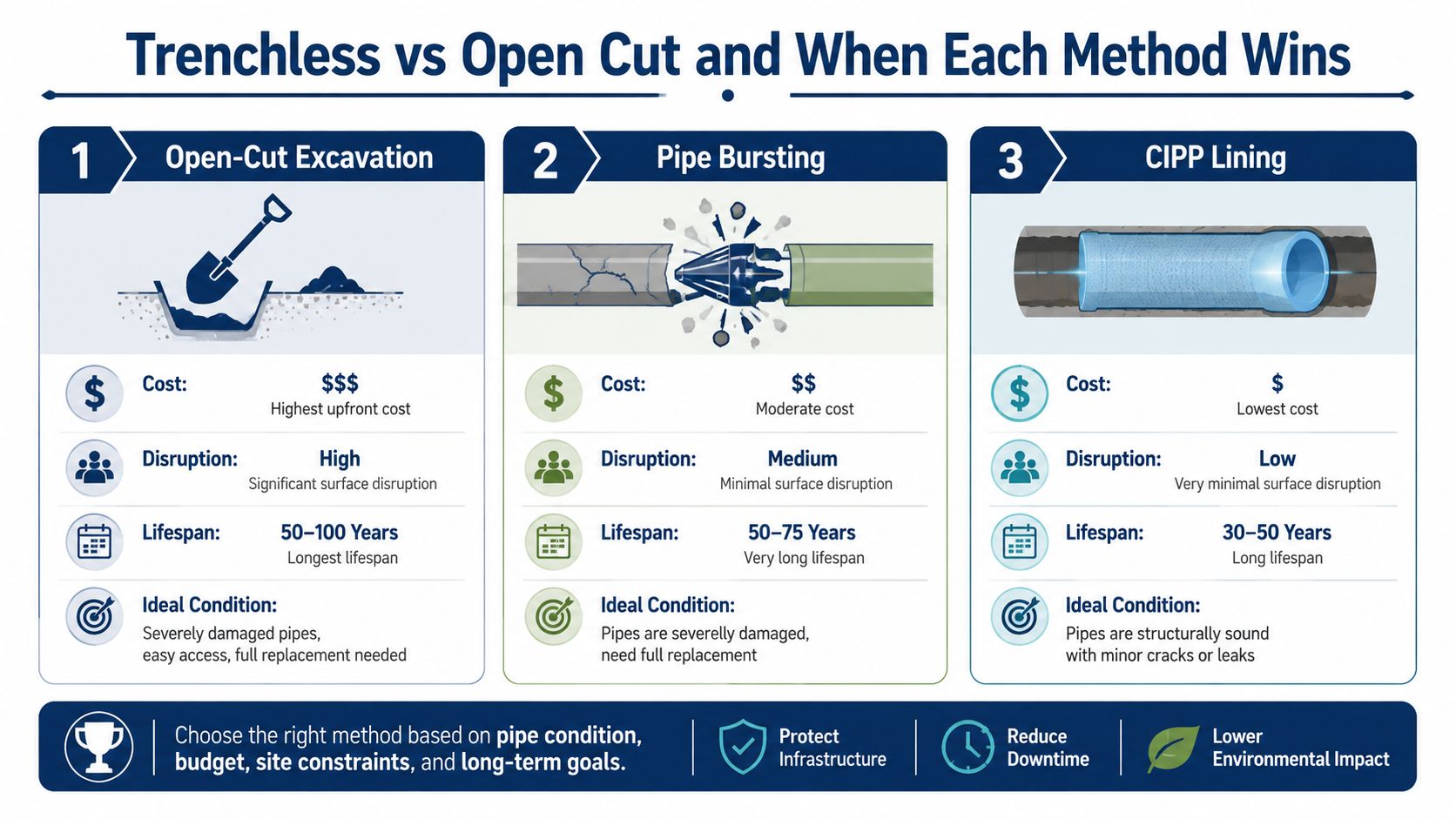
The method choice changes the bill in ways homeowners do not see in a pipe-only quote. In Los Angeles, the biggest swing often comes from access, equipment setup, shoring, and what has to be put back after the line is fixed.
Open cut is usually the simpler excavation path. It can also be the cheapest way to reach a shallow lateral when the trench stays inside easy soil and the surface rebuild is light. Once the work moves under concrete, landscaping, or tight access, the price gap closes fast because the contractor has to work harder to expose the line and restore the surface correctly.
Trenchless work changes the cost structure instead of removing it. Pipe bursting avoids a long open trench, but it still needs launch and reception points, specialized gear, and enough room to stage the job. That can make trenchless look expensive on paper for a short run, even though it saves money where a full dig would require driveway removal, sidewalk replacement, or heavier restoration. For homeowners comparing options, this trenchless sewer line replacement overview helps explain why the method matters before the estimate is even finalized.
Open cut
Open trench still makes sense when the lateral is easy to access and the surface above it is cheap to rebuild. A clean excavation through soil is straightforward for a crew, and it gives direct visibility on the line, the bedding, and any nearby conflicts.
The downside is not subtle. Dirt, concrete, asphalt, landscaping, hauling, and final patching all become part of the job, and each piece can widen the gap between a pipe quote and the final invoice. When the trench runs across visible hardscape or a finished yard, the restoration can overtake the plumbing work in both cost and time.
Pipe bursting
Pipe bursting fits a job where you want to replace the lateral without tearing up the whole route. It is useful under driveways, mature landscaping, and other surfaces that would cost a lot to remove and rebuild. The method also reduces the amount of exposed excavation, which matters when access is tight or the property layout makes a long trench impractical.
There is still a setup premium. The crew needs specialized bursting equipment, room to work, and a clean plan for pulling the new pipe through while breaking apart the old one. On a small or simple job, that mobilization can make the quote feel heavy even if the surface savings are real.
CIPP lining
CIPP lining is a rehabilitation method, not a full excavation replacement. It works best when the host pipe still has enough structure to accept a liner and the problem is more about cracks, roots, or deterioration than collapse. In those cases, the contractor can often solve the issue with far less surface disturbance than a dig-up repair.
The trade-off is that lining depends on the condition of the existing pipe. If the line has major deformation, offsets, or failure points that prevent a proper liner installation, the method stops making sense. It also carries its own setup cost, so the savings show up most clearly when the project is long enough to spread that work across the run and avoid major demolition.
Permits, Inspections, and the LA Timeline You Should Expect
Los Angeles jobs slow down when the work touches public space. Once a lateral crosses the sidewalk, parkway, or street, the contractor has to deal with the city side of the project, not just the plumbing side. That means permits, inspections, scheduling, and a lot more coordination than a backyard repair.
What usually happens in order
The contractor typically starts with a camera inspection, then prepares the permit path, then schedules excavation and inspection windows, and finally restores the surface. If the job includes a sidewalk or street cut, the restoration piece often has to meet public standards before the final sign-off makes sense. That's one reason LA homeowners should ask who is pulling the permit and who is responsible for calling for inspections.
The practical question is not whether permits exist, it's who carries the burden of getting them approved and closed out. A contractor who handles that cleanly is protecting the homeowner from delays and missed steps. A contractor who leaves the paperwork vague can turn a straightforward pipe job into a project that sits idle between phases.
What to ask before work starts
- Who pulls the permit: Make sure the contractor names the responsible party.
- Who schedules inspections: Ask how the city inspection gets on the calendar.
- What restoration includes: Concrete, asphalt, landscaping, and cleanup should be spelled out.
- What happens if the line is deeper: Depth changes can alter shoring and labor.
- What happens if the city requests changes: You want to know who absorbs the coordination effort.
For a deeper look at what inspectors look for during a camera-based evaluation, the guide to sewer line inspection is a useful reference before you approve any major repair.
Longer projects usually carry more exposure to change orders because the contractor has more chances to discover extra depth, utility conflicts, or surface issues after opening the ground. That's why an all-in quote matters more than a low opening number.
Replacement vs Rehabilitation and When Lining Is the Smarter Bet
Full replacement is not always the smartest economic move. If the host pipe is still structurally sound, rehabilitation can be a better balance of cost and disruption than a full dig, especially when the issue is root intrusion, minor cracking, or isolated defects.
Public-sector and technical sources show that cured-in-place lining can run $3,500 to $7,000+, while replacement is usually $5,000 to $10,000+ in many jurisdictions, and a Metropolitan Water Reclamation District report says private-lateral rehab costs have typically fallen into a relatively narrow $3,500 to $4,500 range in some applications MWRD rehabilitation report. That doesn't mean lining is always cheaper in Los Angeles, but it does mean a homeowner should ask whether the pipe needs to be replaced or can be rehabilitated.
When lining makes sense
Lining is a defensible choice when the pipe is mostly intact and the problem is local. Root intrusion, minor offsets, and similar defects can be good candidates if the existing structure still supports the liner. In those cases, you're buying function without tearing out as much surface.
When lining is the wrong move
Lining is a poor answer when the pipe has collapsed, lost grade, or deteriorated beyond structural use. It can also be the wrong choice if the diameter is already undersized or the line has too many shape problems for the liner to perform correctly. A cheap rehab quote that can't solve the structural issue is just a delay, not a savings.
Practical rule: ask the camera tech to describe the host pipe, not just the blockage.
| Replacement vs Rehabilitation | Full Replacement | Pipe Lining (CIPP) |
|---|---|---|
| Higher initial cost | Yes | No |
| Excavation required | Yes, often | No or minimal |
| Longer lifespan | Yes, with new pipe | Yes, when the host pipe is suitable |
| Less disruptive | No | Yes |
| Lower cost | Not usually | Often, but only when conditions fit |
| Preserves landscaping | No | Yes |
Questions to Ask Contractors and Ballpark Case Studies
Before you sign anything, ask the contractor what the number includes. A real quote should separate pipe work, permits, inspection scheduling, restoration, and any extra charge if the line is deeper than expected.
See how a sewer line repair company structures service work so you can compare what's in the estimate against what's missing.
Questions that expose weak bids
- Are you licensed and insured: You want the answer in writing.
- Who pulls the permit: If the contractor dodges this, that's a problem.
- What restoration is included: Concrete, asphalt, landscaping, and cleanup should be clear.
- What happens if the line is deeper: Depth changes should have a defined pricing path.
- What's covered by warranty: Ask about both pipe work and restoration work.
- Will you provide before-and-after camera footage: That gives you a record of what changed.
A few red flags show up over and over. Cash-only demands, vague restoration language, and permits pulled in someone else's name all deserve scrutiny. If the quote feels clean on paper but fuzzy in the field, it usually gets more expensive later.
| Three Ballpark Case Studies on a 70 ft Lateral | Depth | Method | Surface | Approx. all-in |
|---|---|---|---|---|
| Open yard with easy access | Shallow | Open cut | Soil and light landscape | Lower range |
| Driveway crossing with moderate restoration | Moderate | Pipe bursting | Hardscape | Mid range |
| Deep line under street frontage | Deeper | Trenchless or open cut, depending on conditions | Sidewalk and public right-of-way | Higher range |
The same 70 ft lateral can land near $9,000, $16,000, or $28,000 depending on access and restoration. The homeowner who only compares the pipe footage misses the part that changes the total.
Planning Your Project and Getting a Real LA Quote
The cleanest decision path is simple. Confirm ownership, get a camera inspection, decide whether the pipe is a repair or a replacement candidate, choose the method based on site conditions, then ask for a written quote that breaks out restoration and permits. That sequence keeps the conversation grounded in the actual property instead of the cheapest headline number.
For Los Angeles homeowners facing repeated backups or a failed inspection, the right quote should explain the access plan, the rebuild plan, and the inspection closeout. For property managers and HOAs, it should also spell out coordination details, because shared drives, sidewalks, and multiple stakeholders can stretch the job if nobody owns the schedule.
EZ Plumbing handles sewer repair work and camera inspections for LA properties, and that combination matters because diagnosis comes before any honest pricing. If you want a quote that reflects the job, not just the pipe, start with EZ Plumbing, ask for a camera-based assessment, and get the restoration line items in writing before the first shovel hits the ground.
If you're comparing bids on a sewer lateral in Los Angeles, EZ Plumbing can walk the line, explain the method options, and itemize the parts of the job that usually surprise homeowners. Visit EZ Plumbing to schedule an inspection and get a written quote that separates pipe work, permits, and restoration so you can make a clear decision.