
Fixing Roots in Sewer Line: Expert Solutions 2026
You flush the toilet, and the bowl rises a little higher than it should before it finally clears. Later that day, the shower drains slowly. A kitchen sink starts making that hollow gurgling sound you were hoping to ignore. In a lot of Los Angeles homes, that sequence isn't random bad luck. It's often the first sign that roots in a sewer line are starting to win.
That's what makes this issue so frustrating. It begins with small annoyances that feel manageable, then turns into a main-line problem under the yard, driveway, slab, or foundation. In older LA neighborhoods with mature trees and aging sewer infrastructure, that pattern is common enough that homeowners should take it seriously early, not after sewage comes back into the house.
If you're dealing with repeat drain problems, this guide will help you understand what's likely happening, what fixes it, what only buys time, and how to choose a Los Angeles contractor who can diagnose the line properly before recommending expensive work.
Table of Contents
- The First Sign of Trouble
- How Roots Invade Your Sewer Lines
- Warning Signs and Professional Diagnosis
- Your Options for Root Removal and Pipe Repair
- Understanding Sewer Repair Costs in Los Angeles
- Proactive Prevention and Long Term Maintenance
- When to Call a Pro and How to Hire Smartly in LA
The First Sign of Trouble
It usually starts on a normal morning in an older Los Angeles home. The toilet needs a second flush. The shower is slow to empty. Later that day, the hall bathroom sink starts gurgling. Homeowners often call these separate annoyances. In practice, when several fixtures begin acting up around the same time, the main sewer line moves high on the suspect list.
That pattern shows up all over LA, especially in neighborhoods with older clay or cast iron laterals and mature trees that have been in place for decades. In these houses, a “small plumbing issue” can be the first visible sign of a larger line problem under the yard, driveway, or foundation area.
Why early symptoms get missed
A root intrusion rarely begins as a full stoppage. Water still gets through for a while. The line drains slowly, then seems fine for a few days, then acts up again after a heavy laundry day, a shower, or a house full of guests.
That stop-and-start pattern is what fools people.
A homeowner plunges a toilet, runs a basic drain cleaner through one fixture, and the problem appears to clear. What happened is simpler. There is still a restriction in the sewer line, and waste is squeezing past it until paper, grease, and debris catch again. By the time multiple fixtures are involved, the issue is usually beyond a sink trap or one branch drain.
Practical rule: If one fixture is slow, the problem may be local. If a toilet, tub, and another drain start backing each other up, treat it like a sewer line issue until a proper inspection proves otherwise.
Why this stage matters for your home
Early action can keep a manageable repair from turning into a messy backup inside the house. It also gives you more options. In Los Angeles, that matters because sewer work often involves old pipes, tight lots, hardscaping, and mature landscaping that homeowners want to protect.
I tell clients the same thing every week. Do not judge a sewer line by whether it “kind of still works.” A compromised line can limp along for months while the opening inside the pipe keeps narrowing. Then one busy weekend or one extra load of laundry pushes it over the edge.
If you have trees near the sewer route, it also helps to understand how root systems spread before you replant or renovate. These tree root planting tips for homeowners are useful for thinking about future risk around laterals, patios, and foundations.
Why homeowners wait
Waiting is common for understandable reasons. Nobody wants to pay for sewer diagnostics if the line is still draining part of the time. In LA, homeowners also worry about what the camera might find in an older house.
Still, guessing usually costs more than confirming. A camera inspection can separate a routine blockage from roots, pipe damage, or a sag in the line. That is the point where you can compare real options, ask better questions, and hire a contractor based on evidence instead of sales pressure.
How Roots Invade Your Sewer Lines
Root intrusion starts with a defect in the pipe. In Los Angeles, I see this most often in older clay and cast-iron sewer lines, where age, shifting soil, and old joints leave tiny openings that let moisture and air escape into the surrounding soil.
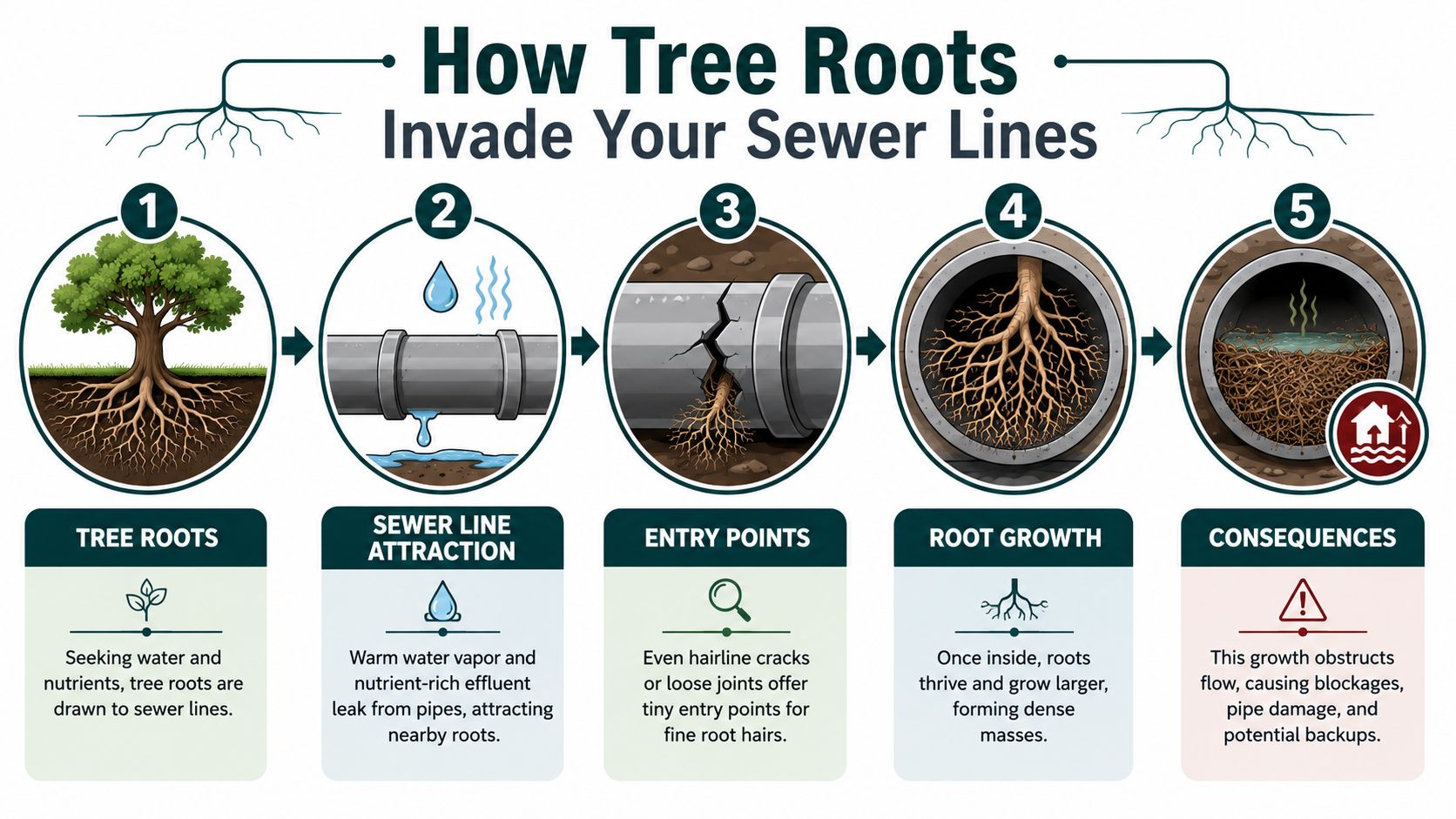
Fine feeder roots find those weak points first. They do not need a major break. A small crack, a separated joint, or a worn connection can be enough. Once inside, the roots keep feeding on steady moisture and begin to thicken.
That changes the problem fast. What started as a minor pipe defect becomes a catch point for paper, grease, and waste. Flow gets restricted, and the line usually keeps getting worse until someone confirms the cause with a professional sewer line inspection.
Why older Los Angeles homes are vulnerable
A large share of LA homes were built before modern sewer materials became common. That matters because older pipes often have joints and surfaces that are easier for roots to penetrate once wear sets in.
Several local conditions increase the odds:
- Older pipe materials like clay and cast iron can crack, corrode, or separate at the joints over time.
- Large established trees in older neighborhoods have had decades to grow toward buried utilities under yards, driveways, and parkways.
- Soil movement and past repairs can leave a line slightly misaligned, which creates stress points and openings.
This is one reason two homes on the same block can have very different sewer risk. A house with a mature ficus, an old clay lateral, and a few past spot repairs has a very different outlook than a newer property with plastic pipe and clear root zones.
If you are planning new planting near the sewer route, these tree root planting tips for homeowners can help you choose better distances before roots become an expensive problem.
What roots are actually following
Roots are following water, oxygen, and nutrients leaking from the line. Sewer pipes give them a reliable source, especially when a defect stays damp year-round.
Homeowners are often surprised by how little space roots need. A hairline opening can admit fine roots, and once they enter, they expand and branch inside the pipe. At that point, clearing the blockage alone is only part of the job.
I explain it this way to clients in LA. Roots in the pipe confirm two conditions at once. There is growth inside the line, and there is a pipe opening that allowed it.
That distinction matters when you compare repair options. Cutting roots can restore flow for now. It does not seal the joint, rebuild the cracked section, or stop regrowth on its own. In older Los Angeles homes, that is the trade-off homeowners need to understand before hiring a contractor and deciding between cleaning, lining, or replacement.
Warning Signs and Professional Diagnosis
A root problem in a main sewer line rarely starts with a dramatic backup. In Los Angeles, it often begins with a house that acts a little off for a few weeks. The hall toilet bubbles when the washer drains. The shower takes longer to empty. Then the issue clears for a day and comes back.
That pattern matters.
What homeowners usually notice first
A single slow sink usually points to a local drain clog. A sewer line problem tends to show up across the house, especially at the lowest fixtures. In older LA homes with one bathroom added onto another over time, the symptoms can look random at first. They are not random if they keep returning in the same general pattern.
Watch for signs like these:
- Multiple fixtures draining slowly around the same time
- Toilets or drains gurgling when another fixture is used
- Recurring stoppages that improve after snaking, then return
- Sewer odor near drains, in the yard, or around a cleanout
- Backups at tubs, showers, or floor drains before higher fixtures show trouble
The repeat cycle is the giveaway. If a line clogs, gets cleared, and clogs again, there is usually a reason beyond ordinary buildup.
Why a camera inspection matters
The next step is to verify what is happening inside the pipe. A proper camera inspection shows whether roots are present, how far they extend, and whether the pipe still has enough structural integrity for a repair short of full replacement.
It also answers the questions that drive cost. That is a big deal in Los Angeles, where a sewer lateral may run under a driveway, patio, garage slab, or mature landscaping. Homeowners should know exactly what they are paying to fix before anyone starts talking about excavation.
A contractor should be able to show you:
- The location of the intrusion
- The pipe material and general condition
- Whether the line is cracked, separated, offset, or partially collapsed
- How much of the run is affected
- Whether cleaning, lining, spot repair, or replacement makes the most sense
If you want to see what that process includes before scheduling service, this overview of a professional sewer line inspection is a useful starting point.
I am cautious when a contractor recommends major sewer work without camera footage or clear notes. On older properties in LA, the right repair depends on the actual defect. Heavy roots in a basically round clay pipe are one situation. A broken section with soil intrusion and standing water is another. Those are not priced or repaired the same way.
Here's a quick visual on what that process looks like in the field.
What a good diagnosis should leave you with
A useful inspection should leave you with more than “you have roots.” It should give you footage, distance marks, a clear explanation of the defect, and practical options based on the condition of the line.
That documentation matters if you are comparing bids from LA contractors. It helps you separate a company that is diagnosing the problem from one that is selling the biggest repair. It also protects property value, because sewer work done without a clear diagnosis can turn a manageable repair into a much larger project later.
If a contractor cannot show you what is in the line, do not approve repair work yet. Ask for the evidence first.
Your Options for Root Removal and Pipe Repair
The right repair starts with one question. Are roots the main problem, or are roots exposing a pipe that is already failing?
In Los Angeles, that distinction matters. A lot of older homes still have clay or cast iron sewer lines, and both can invite root intrusion in different ways. Clay usually fails at the joints. Cast iron often corrodes, scales up inside, and eventually opens weak spots. The camera footage should tell you which condition you have, because the repair strategy is different.
Mechanical clearing
If the line is blocked or badly narrowed, the first job is to reopen it. That usually means either a root cutter or hydro jetting.
- Rotating root cutting uses a mechanical blade to cut through the root mass and restore flow.
- Hydro jetting uses high-pressure water to clear loose roots, sludge, grease, and scale from the pipe walls.
Both methods can solve the immediate backup. They also let the plumber see the pipe more clearly afterward. On many LA properties, that matters because old lines often have more than one issue at once. A line may have roots at one joint and heavy buildup farther downstream. Some contractors, including EZ Plumbing's sewer line cleaning service, use hydro jetting where the pipe condition supports it.
Clearing does not fix the opening that let the roots in.
Chemical root control
After the line is opened, chemical root treatment can slow regrowth. This works best as follow-up maintenance, not as a stand-alone fix for a damaged sewer line.
Foaming root control products are usually the better choice because they coat more of the pipe interior than a liquid that just runs along the bottom. They can be useful when the pipe is still serviceable and the entry points are limited. On an older LA clay line that is mostly intact, cutting plus chemical treatment can buy time and reduce how often the line needs service.
That said, this is still maintenance. If the camera shows separated joints, offsets, recurring standing water, or broken sections, chemicals will not solve the structural problem.
Permanent repair options
Once roots are removed, the decision is usually between rehabilitating the pipe and replacing it.
Pipe lining creates a new interior wall inside the existing pipe. It is a good option when the pipe still has enough shape to support the liner and the damage is limited enough for trenchless repair to make sense. Homeowners in Los Angeles often like lining because it can reduce disruption to hardscape, landscaping, and tight side yards.
Pipe bursting or full replacement installs a new sewer line in place of the failed one, or along a new route if needed. This is often the better answer when the line has collapsed, lost grade, has multiple bad sections, or is too deteriorated for lining to hold up well.
I tell homeowners to look at the pattern, not just the latest clog. If the same line has needed repeated root clearing, the pipe is usually asking for more than maintenance.
Sewer Root Repair Methods Compared
| Method | Best For | Longevity | Typical Cost |
|---|---|---|---|
| Mechanical root cutting | Immediate flow restoration in a blocked line | Temporary | Varies by access, severity, and contractor |
| Hydro jetting | Clearing roots and interior buildup where pipe condition supports it | Temporary to maintenance-based | Varies by line condition and access |
| Chemical root treatment | Follow-up control after mechanical clearing | Maintenance-based, with regrowth slowed for a period depending on product and pipe condition | Varies |
| Trenchless pipe lining | Structurally restorable lines needing a longer-term solution | Long-term | Higher upfront cost |
| Pipe bursting or replacement | Severely damaged or unsuitable lines | Long-term to permanent | Highest disruption risk and often highest cost |
For many homeowners, the primary trade-off is disruption versus repeat service. Cleaning costs less upfront and may be reasonable if the pipe is still basically sound. Repair or replacement costs more at the start, but it addresses the entry point and can protect the property from repeat backups, slab leaks from misdirected wastewater, and avoidable yard damage. If exterior restoration becomes part of the conversation, this guide to understanding yard drainage expenses helps put the site-work side of the project in context.
Understanding Sewer Repair Costs in Los Angeles
A common Los Angeles call goes like this. The bathroom backed up again, the kitchen line is slow, and the homeowner wants to know whether this is a few hundred dollars or a five-figure project. Until the camera goes in, no honest plumber can give a precise number.
That is especially true in LA, where many homes still have older clay or cast iron sewer lines, added hardscape, tight side yards, and decades of patchwork remodeling over the original route. A root clearing in open soil is one price. A repair under concrete, pavers, landscaping, or a finished patio is a different job with different labor and restoration costs.
What drives the bill up or down
The camera inspection is what sets the scope. It shows whether the problem is a heavy root mass in an otherwise serviceable pipe, a cracked section that keeps letting roots back in, or a line that has shifted, collapsed, or bellied.
From there, cost usually turns on a handful of practical factors:
- How damaged the pipe is. A line that only needs clearing is less expensive than one that needs lining or replacement.
- How much pipe is involved. A short problem area near an accessible cleanout is simpler than a long run under the house or yard.
- Access to the line. Existing cleanouts, gate access, and working room matter a lot on many LA properties.
- What sits above the sewer route. Concrete, decorative landscaping, retaining walls, garages, and hillside conditions can push costs up fast.
- Whether the work is urgent. Weekend backups and after-hours emergency calls usually cost more than planned daytime work.
Homeowners should also budget beyond the plumbing invoice. If excavation affects drainage, grading, or yard restoration, this guide to understanding yard drainage expenses helps put those site-work costs in perspective.
What cost range can you cite
The safest answer is a relative one. Basic root clearing costs far less than structural repair. Trenchless rehabilitation often costs more upfront than cleaning, but it can make better financial sense if the same line keeps backing up and the pipe is a good candidate for restoration. Full replacement is usually the most expensive path once demolition, excavation, and restoration are added.
In Los Angeles, broad flat-rate promises are a red flag. The same house can produce very different pricing depending on whether the line runs under a front lawn in the Valley, a narrow passageway in Mid-City, or a hillside lot with limited access on the Eastside.
That is why I tell homeowners to compare scope, not just price. Ask what the contractor saw on camera, how many feet are affected, whether the quote includes locating, permits if needed, cleanup, and surface restoration, and what problem the proposed work is meant to solve. A lower bid for repeated root cutting may cost more over three years than one well-chosen repair.
If the inspection points toward rehabilitation instead of another cleaning, this overview of trenchless sewer repair options will help you read the proposal with a clearer eye.
The goal is not to buy the cheapest visit. The goal is to protect the house, avoid repeat backups, and choose a repair that makes sense for the age of the line and the value of the property.
Proactive Prevention and Long Term Maintenance
Once roots have shown up in a sewer line, your property has told you something important. The line is vulnerable. From that point forward, maintenance should be deliberate.
A realistic maintenance plan
The best prevention plan isn't complicated. It's consistent.
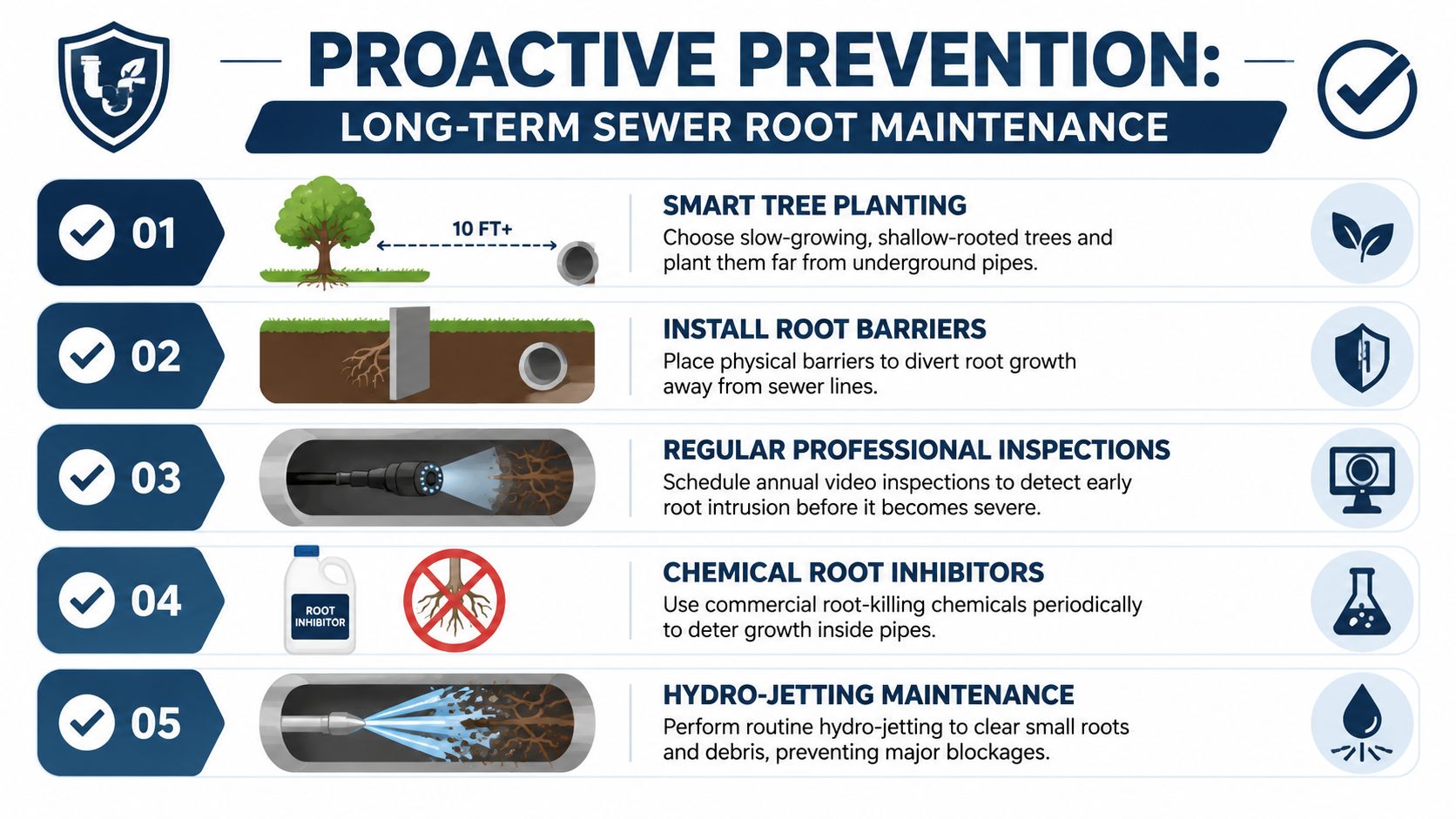
Homeowners should plant large trees at least 10 feet away from sewer lines, and homes with a history of root problems should be inspected every 6 to 12 months, according to this guidance on preventing sewer root intrusion.
That recommendation fits what I see in older LA homes. If the line has had roots before, don't wait for symptoms to come back. Monitor it before it becomes a weekend emergency.
A workable plan often includes:
- Regular camera checks on a schedule that matches the property's history.
- Mechanical maintenance cleaning when early intrusion appears again.
- Follow-up root inhibitor treatment where the line remains structurally serviceable.
- Long-term repair planning if the same defect keeps producing the same problem.
Small planned maintenance is easier to schedule, easier to budget, and easier on the property than a backup that forces immediate work.
Landscaping choices that help
Prevention starts above ground too. Planting distance matters. Tree selection matters. So does restraint.
If you're removing a problem tree or dealing with remnants from prior outdoor projects, homeowners sometimes ask whether they can tackle the yard side themselves before plumbing repair. For general outdoor prep, these DIY tree stump removal methods are useful background, though stump or root removal in the yard does not repair a damaged sewer line by itself.
A few practical rules make a difference:
- Don't plant large trees close to known sewer routes.
- Don't assume a removed tree eliminates the risk. Existing roots can still affect a compromised line.
- Don't skip follow-up after a clearing. A better-draining house can hide a still-damaged pipe.
For Los Angeles owners of older homes, duplexes, and small multi-unit properties, sewer maintenance protects more than convenience. It protects flooring, cabinets, tenant habitability, and resale value. A recorded history of inspection and repair decisions also makes future property conversations easier.
When to Call a Pro and How to Hire Smartly in LA
Some sewer problems can wait a day or two for a planned appointment. Others shouldn't.
When it's urgent
Call a professional promptly if you notice any of these:
- Sewage backing up into a tub, shower, floor drain, or toilet
- Multiple fixtures failing at once
- Strong sewer odor that persists after normal cleaning
- A clog that returns quickly after snaking or plunging
- Water use in one area affecting another fixture in the home
Those are warning signs of a main-line problem, not a minor branch drain clog. In that situation, running more water usually makes the mess worse.
How to vet a Los Angeles sewer contractor
Los Angeles has plenty of plumbers. That doesn't mean every company handles sewer diagnostics and repair with the same care.
Use this checklist before approving major work:
- Verify licensing through the California State License Board. Don't rely on a truck logo or a verbal claim.
- Confirm insurance coverage for liability and workers' compensation.
- Ask whether they perform camera inspection first and whether they'll show you the footage.
- Request a written scope that separates cleaning, diagnosis, repair options, and restoration.
- Ask what makes the repair temporary versus long-term based on your actual pipe condition.
- Check whether they handle emergency response if the line worsens after hours.
- Look for experience with older LA properties where access, aging materials, and hardscape often complicate the job.
A trustworthy contractor doesn't pressure you into the biggest repair on the first conversation. They explain the condition of the line, document it, and give you options that fit the pipe's actual state and your property priorities.
For homeowners who want a local company with long Los Angeles experience, licensed and insured service, and both emergency and scheduled sewer work, EZ Plumbing is one practical option to consider.
If you're seeing the early signs of roots in a sewer line, don't wait for a backup to make the decision for you. EZ Plumbing serves Los Angeles with licensed, insured sewer diagnostics, cleaning, repair, and 24/7 emergency response. You can contact their team to schedule service, review your options clearly, and address the problem before it causes avoidable damage.