
Why Most LA Repipes Stall and How to Get Same Day Permits
Repiping a home in Los Angeles requires a plumbing permit in almost every case, and the practical next step is to hire a licensed contractor who can pull that permit and schedule the required inspections on your behalf. Minor repairs like fixing a single faucet are exempt, but whole-home repiping is not. Depending on pipe size, the job qualifies for an express permit or a formal plan check, and either way, a licensed contractor typically manages the paperwork so the project stays on schedule.
TL;DR:
- Most repiping projects in Los Angeles require a plumbing permit, with larger or engineered systems typically needing formal plan checks that can take several weeks.
- Sewer lateral work or public right-of-way repairs demand a separate S-Permit and are often performed by a bonded sewer contractor, adding complexity and potential delays.
- Inspection phases include rough, pressure test, and final inspections, which must be scheduled properly to avoid rework and unnecessary wall openings.
- Permit fees are based on factors like fixture count and pipe size, with investigation fees for unpermitted work potentially costing as much as the permit itself.
- Hiring a licensed contractor to manage permits ensures smoother approval, proper inspection scheduling, and comprehensive documentation for future home transactions.
Table of Contents
- Which plumbing permits cover repiping: plumbing permit, plan check, and express permits
- Inspections: required phases, scheduling, and why you must not close walls early
- When a BOE sewer (S) permit is required and the bonded sewer contractor rule
- Permit fees and timeline expectations for repiping projects
- Who can pull plumbing permits and how to verify contractor credentials
- Step-by-step checklist: documents, portals, and actions to submit permits and track inspections
- Common mistakes and red flags that delay permits or cause extra costs
- How a licensed local contractor handles permits and inspections for repipes
- What the permit process actually rewards, and where homeowners get it wrong
- EZ Plumbing manages your repipe permits from start to finish
- Official city resources for permits, inspections, and contractor checks
- Sources
- FAQ
Which plumbing permits cover repiping: plumbing permit, plan check, and express permits
Under the Los Angeles Municipal Code, replacing water or drainage piping counts as an alteration to a plumbing system, and LADBS requires a plumbing permit for that kind of work. Routine maintenance, like swapping a washer in a leaky faucet, does not need one. A full repipe does, because it changes the piping system itself rather than repairing a fixture.
Not every repipe permit looks the same. LADBS splits plumbing permits into two tracks depending on the scope and size of the system:
-
Express permits cover many common domestic plumbing tasks and skip the full plan check process, including replacement of non-engineered domestic water piping that keeps the same size and material.
-
Formal plan checks apply when the water line is 2 inches or larger, or when the system is engineered rather than a standard residential setup.
-
Non-engineered systems at 1½ inches or smaller generally qualify for the express track, which means faster processing at an LADBS counter or online.
For most single-family homes, this means a straightforward copper or PEX repipe using standard residential line sizes moves through the express permit process without a lengthy review. A property with a larger commercial-style water main, or a multi-unit building with engineered plumbing, is a different story: those plans typically require submission to a plan checker who verifies pipe sizing, material specifications, and system layout before anything is approved.
The distinction matters for planning purposes. An express permit can often be issued the same day you apply, while a plan-checked project can take weeks to clear review, especially if the submitted plans are incomplete. Knowing which bucket your project falls into before you start shopping for contractors saves time and prevents the surprise of a stalled timeline.
Inspections: required phases, scheduling, and why you must not close walls early
Every permitted plumbing job in Los Angeles requires inspection, and LADBS records each one on the Building Card, known as the B-8. That card is the official log of what has been checked and approved, and it stays with the permit file for the life of the project.
For a typical repipe, inspectors look at the work in phases:
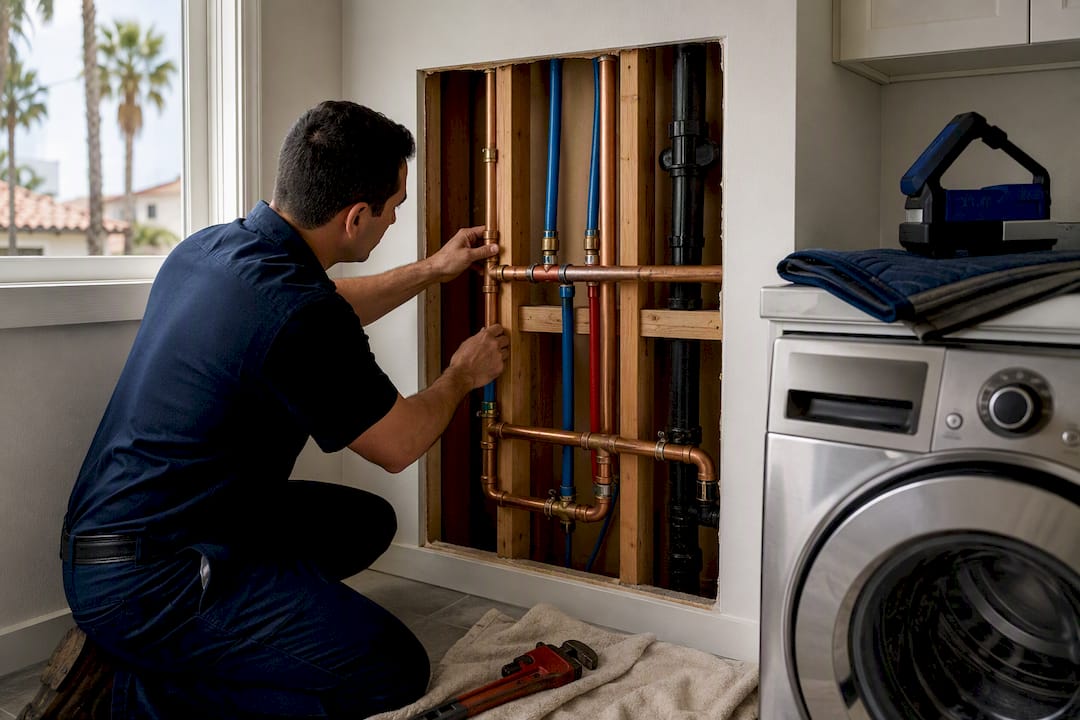
- Rough inspection, which happens after new pipe is run but before walls or ceilings are closed, so the inspector can see the actual pipe routing and connections.
- Pressure test, which confirms the new system holds pressure without leaking under the conditions the inspector specifies.
- Final inspection, which happens once fixtures are reconnected and the system is fully operational.
Contractors typically manage the scheduling of these inspections as part of the job, coordinating with LADBS during weekday inspection windows. Homeowners rarely need to call LADBS themselves when a licensed contractor is running the project, though it helps to know the schedule so you are not caught off guard by an inspector’s visit.
Closing walls before the rough inspection is verified can lead to needing to reopen them. That means cutting back into finished drywall, which adds labor cost and time that a properly sequenced job would have avoided entirely. It is one of the most common and most avoidable causes of repipe delays in Los Angeles.
When a BOE sewer (S) permit is required and the bonded sewer contractor rule
Not every repipe project stays inside the walls of the house. If your project touches the sewer lateral, or requires any work in the public right of way, that portion falls under a separate process. The Bureau of Engineering requires an S-Permit for sewer house connections, reconnections to the public main, and repairs performed in the street or parkway.
This is a distinct system from the LADBS plumbing permit, with its own rules:
- Bonded Sewer Contractor requirement: many S-Permit actions in the public right of way must be performed by a contractor bonded specifically for sewer work, not just any licensed plumber.
- CCTV and documentation: BOE often requires camera inspection footage of the existing lateral as part of the application, along with a review of prior sewer records for the property.
- SFC or bonded sewer fees: these are separate line items from your LADBS plumbing permit fees, and they apply specifically to the sewer scope.
Homeowners are often surprised to learn that a single “repipe permit” does not cover the sewer lateral. If your project includes trenching to replace a lateral, or if the existing connection needs work where it meets the city main, plan on a second permit track running in parallel with your LADBS plumbing permit. Coordinating the two early, ideally before either contractor breaks ground, keeps one process from stalling the other.
Permit fees and timeline expectations for repiping projects
Budgeting for a repipe means budgeting for more than material and labor. Permit costs come from published fee schedules, and Los Angeles County’s plumbing code fee schedule itemizes the typical charges homeowners and contractors should expect.
Common fee categories include:
- Permit issuance fees, charged when the permit is opened.
- Per-fixture or per-branch fees, which scale with the number of fixtures or piping branches involved in the repipe.
- Investigation fees for unpermitted work, which can equal the standard permit fee on top of it when work was started without one.
- SFC or S-Permit fees, which apply separately if sewer lateral work is part of the project.
An investigation fee for unpermitted plumbing work can match the cost of the permit itself, according to Los Angeles County’s fee schedule. That means skipping the permit process to save money upfront can end up costing twice as much once an inspector or a future buyer’s inspection uncovers the work.
Timelines vary by permit type. Express permits move fastest, often issued within days since they skip the formal plan check queue. Plan-checked projects, triggered by larger pipe sizes or engineered systems, commonly take several weeks because a plan checker has to review submitted drawings before approval. S-Permits run on their own review clock, particularly when CCTV footage or additional documentation is requested. Incomplete plans or a failed inspection add time to any of these tracks, since the project has to cycle back through review or rework before it can proceed.
Who can pull plumbing permits and how to verify contractor credentials
In California, plumbing work of this scope is generally performed under a C-36 plumbing contractor license issued by the Contractors State License Board. Licensed contractors typically pull the permit themselves as part of managing the job, which keeps the paperwork, inspections, and code compliance under one point of accountability.
Owners can apply for their own permits in some cases, but that path comes with limits: an owner-builder permit means you are personally responsible for code compliance and inspection scheduling, and most homeowners find that a licensed contractor handling the permit alongside the work is more practical.
Before hiring anyone for a repipe, verify their credentials directly:
- Confirm the contractor’s C-36 license number through the CSLB’s public license lookup.
- Check that the license is active and in good standing, not expired or under disciplinary action.
- Ask for proof of current insurance and bonding before work begins, not after.
Pro Tip: Keep copies of your permit, inspection sign-offs, and contractor paperwork after the job closes. They matter later for home resale disclosures and insurance claims tied to plumbing.
Step-by-step checklist: documents, portals, and actions to submit permits and track inspections
Gathering the right information before you apply saves back-and-forth later. Here is the practical sequence for a residential repipe in Los Angeles:
- Collect property details, including your Assessor’s Parcel Number (APN), a basic site plan, and the current service size of your water line.
- Document the scope, including fixture counts and whether the project changes pipe size or material.
- Confirm your contractor’s license number and have it ready for the application, since LADBS requires it on the permit record.
- Apply through the correct portal: LADBS’s ePermit system handles the plumbing permit itself, while sewer lateral or right-of-way work goes through the BOE Customer Portal as a separate S-Permit application.
- Upload required documents, which for plan-checked projects usually means engineered drawings or system layouts, and for express permits is often limited to basic project details.
- Pay the applicable fees, which can typically be handled online or at an LADBS public counter, depending on the permit type.
- Schedule inspections once work begins, coordinating rough, pressure test, and final inspections as the project reaches each phase.
Most homeowners let their contractor manage steps four through seven directly, since a contractor familiar with both portals moves through them faster. If you have questions along the way, LADBS’s homeowner step-by-step resource walks through the general permitting process in more detail.
Common mistakes and red flags that delay permits or cause extra costs
The most expensive mistake is starting work before the permit is issued, since it exposes you to investigation fees and possible rework if inspectors later find a problem. Closing walls before the rough inspection is a close second. Hiring an unlicensed contractor, or one who refuses to pull a permit at all, is a red flag worth walking away from.
Watch for vague scope language in bids, missing license numbers, and any contractor who assumes their plumbing permit also covers sewer lateral work in the public right of way. If work has already started without a permit, the remedy is straightforward: stop, contact LADBS, and bring in a licensed contractor to apply for a retroactive permit, understanding that an investigation fee will likely apply.
How a licensed local contractor handles permits and inspections for repipes
A licensed contractor typically pulls the plumbing permit, submits plan-check documents when required, and schedules every inspection phase directly with LADBS. EZ Plumbing operates under C-36 License #583868 and manages this process as a standard part of residential repiping work, including coordination with BOE when a project touches sewer laterals. Homeowners are still responsible for providing accurate property details and choosing materials, while the contractor handles the code compliance and paperwork that follow.
What the permit process actually rewards, and where homeowners get it wrong
The permit system for repiping is not designed to slow homeowners down. It exists because a pressure test catches a bad joint before it floods a finished wall, and because a rough inspection catches a pipe run that would otherwise be invisible once drywall goes back up. The homeowners who treat permitting as a formality to skip are usually the ones who end up paying for it twice, once in investigation fees and again in the cost of opening up walls that should never have been closed.
Where conventional advice falls short is treating “get a permit” as a single step rather than two separate systems. LADBS covers what happens inside your property line. BOE covers the sewer lateral and anything in the public right of way. Homeowners who assume one permit handles both are the ones most likely to see a project stall midway through.
If you take one thing from this playbook, prioritize sequencing: confirm which permit track your pipe size puts you on, and confirm early whether sewer work is part of the scope. Everything else, fees, timelines, inspections, follows from getting that sequencing right at the start.
— EZ
EZ Plumbing manages your repipe permits from start to finish
Repiping a Los Angeles home means dealing with two agencies, multiple inspection phases, and fee schedules that vary by pipe size and scope. A licensed plumbing contractor can handle the plumbing permit, plan check submissions when required, and BOE coordination for sewer lateral work, so the paperwork moves alongside the plumbing instead of holding it up.
That means fewer surprises mid-project and a documented compliance record when the job is done. If you are planning a whole-house repipe, start with EZ Plumbing’s repipe services page to see how the process works, or reach out directly to schedule a consult and get your permit timeline mapped out before work begins.
Official city resources for permits, inspections, and contractor checks
Use LADBS’s plumbing permits page to apply for your repipe permit, and its inspections page to understand scheduling. For sewer lateral or right-of-way work, go through the BOE S-Permit portal. Check the express permits bulletin for eligible work, and verify any contractor’s license through the CSLB before hiring.
Sources
- Plumbing Permits | LADBS
- S-Permit purpose & requirements | Bureau of Engineering
- 2026-27 County plumbing code fees (DPW)
FAQ
Do you need a permit to repipe your house in California?
Yes, replacing the water or drainage piping in a home requires a plumbing permit in Los Angeles, and the same principle applies broadly across California municipalities. Routine repairs like fixing a single fixture are typically exempt, but a full repipe is treated as a system alteration under the LADBS plumbing permit rules.
What is the difference between an express permit and a plan check?
An express permit covers standard, non-engineered domestic water piping at 1½ inches or smaller and can often be issued the same day. A formal plan check is required for water lines 2 inches or larger or for engineered systems, and it typically takes weeks because a plan checker has to review the submitted drawings before approval.
When do I need a separate sewer permit for repiping?
If your repipe project includes work on the sewer lateral or anything in the public right of way, you need a separate BOE S-Permit in addition to your LADBS plumbing permit. Much of that work must be performed by a Bonded Sewer Contractor, not just any licensed plumber.
What happens if I repipe without a permit?
Unpermitted plumbing work can trigger an investigation fee that matches the standard permit fee, according to Los Angeles County’s plumbing fee schedule, plus the cost of any rework an inspector requires. It can also create problems during a future home sale or insurance claim if the work surfaces during inspection.
Can EZ Plumbing handle my repipe permits for me?
Yes, EZ Plumbing is licensed under C-36 #583868 and manages permit pulling, plan check submissions, and inspection scheduling as part of its residential repiping services in the Los Angeles area.
Recommended
- Avoid Permit Rework in Los Angeles: Which Agency Issues Yours
- Manage plumbing repairs in Los Angeles: step-by-step guide
Recent EZ Plumbing Jobs in Los Angeles
Real, recent work from our crews — updated automatically as jobs complete.