
Avoid REAP: LA Landlord Plumbing Rules, Permits, and Statutes
California landlords must repair and maintain plumbing necessary for a rental to remain livable, and the cost falls on the landlord unless the tenant substantially caused the damage. This duty comes from California Civil Code §1941.1, §1941.2, and §1942, with the Los Angeles Housing Department (LAHD) and the Los Angeles Department of Building and Safety (LADBS) enforcing additional local rules for permits, inspections, and tenant protection during major repairs.
TL;DR:
- Landlords must respond immediately to urgent plumbing issues like water loss or sewage backups, prioritizing same-day repair and licensed plumber involvement.
- Damage caused by normal wear or aging remains the landlord’s responsibility, while tenant-caused damage requires documented proof of substantial causation.
- Major plumbing work such as repiping or drain line replacement typically requires permits from LADBS and compliance with Los Angeles’ Tenant Habitability Program.
- Repairs should be documented thoroughly, including notices, diagnoses, permits, invoices, and tenant communication, and records must be kept for at least four years.
- California law prohibits lease clauses waiving core plumbing responsibilities and restricts rent withholding or eviction based solely on habitability issues, emphasizing proactive, documented responses.
Table of Contents
- Quick checklist: landlord plumbing responsibilities at a glance
- Legal foundation: California statutes and the implied warranty of habitability
- Urgent vs non-urgent plumbing problems: timing and tenant remedies
- Tenant-caused damage, lease clauses, and when landlords can charge tenants
- Los Angeles–specific rules: permits, Tenant Habitability Program, and inspections
- Step-by-step landlord response when a tenant reports a plumbing problem
- Costs, funding options, and long-term risk management for plumbing work
- Compliance checklist and tenant communication templates
- Tenant notification requirements before landlord-initiated plumbing repairs or inspections
- Impact of plumbing issues on rent withholding and eviction protections
- Specific landlord plumbing responsibilities in multi-unit versus single-family rentals
- Practical experience from a licensed LA plumbing provider
- How EZ Plumbing can help Los Angeles landlords
- Primary sources and official guidance for landlords
- Sources
- FAQ
Quick checklist: landlord plumbing responsibilities at a glance
Before getting into the legal detail, it helps to see the obligations in one place. Los Angeles landlords are expected to keep a rental’s plumbing system functional enough that the unit remains fit to live in, not just technically connected to water.
At a baseline, that means:
- Maintaining supply and waste lines so water flows in and drains out without leaks, backups, or cross-contamination.
- Providing working hot and cold running water through a system connected to an approved public or private supply.
- Keeping fixtures, toilets, sinks, and showers in functioning, sanitary condition, along with a proper sewage disposal connection.
- Responding to urgent plumbing failures quickly and arranging a licensed contractor rather than ignoring repeated tenant reports.
- Pulling permits through LADBS for substantial plumbing work and keeping essential services running, or restoring them daily, if tenants remain in the unit during repairs.
- Documenting every step: tenant notices, inspection results, permit numbers, contractor invoices, and completion confirmations.
None of this requires a landlord to chase perfection. A slow drain that clears with a plunger is not a habitability violation. A toilet that will not flush, a water heater that will not produce hot water, or a drain line backing sewage into a tub is a different matter entirely, and the response time expected of a landlord changes accordingly. The sections below walk through the statutes behind this checklist, how Los Angeles layers its own permit and tenant-protection rules on top of state law, and the workflow that keeps a landlord out of trouble when a plumbing complaint comes in.
Legal foundation: California statutes and the implied warranty of habitability
California’s implied warranty of habitability is not a vague courtesy landlords extend to tenants. It is a statutory floor, and plumbing sits near its core.
Civil Code §1941.1 lists the physical conditions a rental must meet to be considered habitable, and plumbing shows up directly: a working toilet, bath or shower, and sink connected to hot and cold running water through an approved sewage disposal system. The statute does not ask landlords to maintain cosmetic perfection. It targets substantial deficiencies, the kind that make a unit genuinely unfit rather than merely imperfect. A dripping faucet is an inconvenience. A failed water heater in a unit with no other source of hot water is a habitability problem under the statute.
One detail trips up a lot of landlords who try to write their way around this duty: a lease cannot waive it. Clauses that attempt to shift core habitability repairs onto the tenant, for example telling a tenant they are responsible for fixing a failed water heater or clearing a main line backup, are strongly limited under California law and risky to rely on if a dispute reaches a housing inspector or small claims court. You can ask tenants to report problems promptly and to avoid misuse, but you cannot contract away the underlying repair obligation.
Civil Code §1941.2 is the statute that actually limits landlord liability, and it does so based on causation rather than lease language. Ordinary plumbing failures caused by age, wear, a defective installation, or a system simply reaching the end of its service life remain the landlord’s financial responsibility. The tenant becomes responsible, or at least shares responsibility, only when the tenant substantially caused the damage, for example by flushing something that should never go down a toilet or ignoring an obvious leak until it caused secondary damage. Normal use of a plumbing system, even heavy use, does not transfer liability to the tenant.
Civil Code §1942 governs what happens when a landlord does not act. It gives tenants a repair-and-deduct remedy, but with real limits: the repair must cost no more than one month’s rent, and a tenant may not use this remedy more than twice in any twelve-month period, subject to exceptions. The statute creates a rebuttable presumption that thirty days after notice counts as reasonable time to repair, which is often misread as a blanket thirty-day grace period. It is not. Reasonableness depends on the severity of the condition, and a sewage backup or complete loss of water does not get the same thirty-day cushion as a slow-draining tub.
Urgent vs non-urgent plumbing problems: timing and tenant remedies
Not every plumbing complaint carries the same urgency, and treating them identically is where a lot of landlords get into trouble.
Conditions that qualify as urgent typically include:
- Complete loss of running water to the unit.
- Sewage backing up into a tub, sink, or floor drain.
- A major leak that is active and causing ongoing property damage.
- A failed water heater when no alternative hot water source exists, particularly for households with medical needs.
One detail landlords often miss: the 30-day presumption in Civil Code §1942 is a presumption for repair-and-deduct purposes, not a universal deadline. A landlord who waits the full thirty days to address a sewage backup is not protected simply because the clock has not run out. Reasonableness is evaluated against the actual hazard, and a court or housing inspector weighing a habitability complaint will look at how dangerous the condition was, not just how many days passed.
In practice, this means a landlord should triage every report. A hazard that affects health or safety, loss of water, sewage exposure, a leak threatening structural damage, needs a same-day or next-day response and a licensed plumber on-site as soon as one can be arranged. If repairs stretch across multiple days and the unit remains occupied, essential services like water and basic sanitation need to be restored daily rather than left off indefinitely while parts are ordered or a contractor’s schedule catches up.
Tenants who feel a landlord is not responding quickly enough have a few statutory paths available. They can use the repair-and-deduct process described above, subject to its dollar and frequency limits. They can withhold rent in proportion to the loss of habitability, though this carries legal risk for tenants if the condition is later judged not serious enough to justify withholding. They can also file a complaint directly with LAHD, which can trigger a city inspection independent of anything happening between landlord and tenant. None of these remedies require a lawsuit to get moving, which is exactly why a fast, documented landlord response matters more than most owners assume.
Tenant-caused damage, lease clauses, and when landlords can charge tenants
Figuring out who pays starts with one question: did the tenant substantially cause the problem, or did the plumbing simply fail on its own? See our guide to smart home fee pricing for landlords on lawful disclosure and fee considerations.
- Substantial causation, not ordinary wear, is the legal standard. Under Civil Code §1941.2, a landlord can shift repair cost to a tenant only when the tenant’s actions substantially contributed to the damage, such as flushing foreign objects down a toilet or ignoring a known leak until it caused secondary damage. Normal, even frequent, use of fixtures does not count.
- Lease clauses cannot override habitability law. A clause stating that tenants are responsible for all plumbing repairs regardless of cause is unlikely to hold up, since habitability duties under §1941.1 cannot be waived by agreement. What does hold up is a clause requiring prompt tenant reporting of problems and reasonable care in using fixtures, which supports a tenant-liability claim later if damage does occur from misuse.
- Document before you charge anyone. If a landlord believes tenant-caused damage justifies a deduction from the security deposit or a direct charge, that claim needs photos of the damage, the plumber’s diagnosis in writing, and a clear timeline connecting the tenant’s action to the failure. Disputes over this kind of charge often end up in small claims court, where the landlord bears the burden of showing causation, not just that damage occurred while the tenant was in possession.
This is also where lease language earns its keep. Rather than trying to shift core repair duties, a well-drafted lease should spell out what counts as misuse (foreign objects, ignoring reported leaks, unauthorized plumbing modifications) and require tenants to report issues within a defined window. That approach respects the statute while still giving a landlord a documented basis to recover costs when a tenant genuinely caused the damage.
Los Angeles–specific rules: permits, Tenant Habitability Program, and inspections
State law sets the floor, but Los Angeles adds its own layer of requirements once plumbing work goes beyond a simple fixture swap.
LADBS requires permits for most plumbing installation, alteration, replacement, or repair that goes beyond minor maintenance, and LADBS plumbing permit guidance makes clear that whether a specific job needs a permit depends on the scope of work, not just its cost. Replacing a water heater, repiping a unit, or altering a drain line typically triggers a permit requirement, and permitted work must be inspected and approved before it is considered complete. Skipping this step to save time is a common shortcut that backfires: unpermitted plumbing work can itself become a code violation, even if the repair was done competently, and it complicates things further if the unit is later inspected for an unrelated complaint.
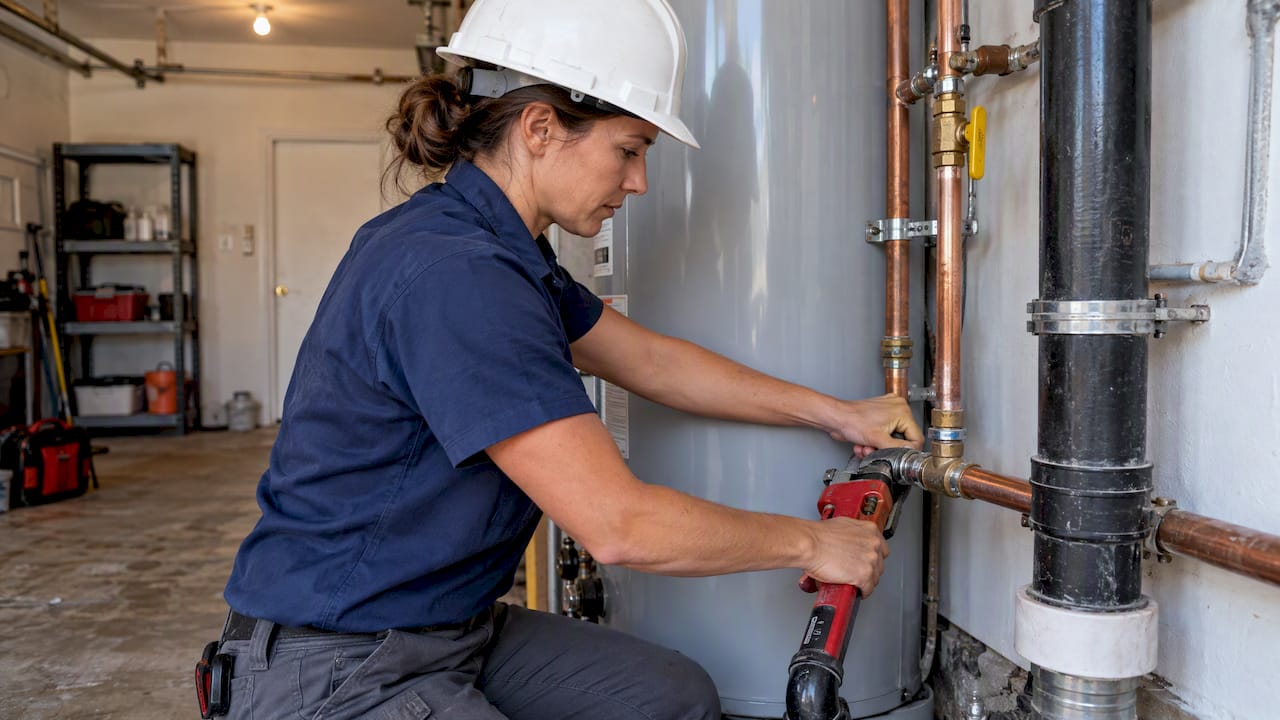
Larger projects bring in a second layer of city oversight. Los Angeles’ Tenant Habitability Program applies to substantial plumbing work, including replacing supply or drain lines, and it requires landlords to mitigate the impact on tenants rather than simply scheduling a contractor and hoping for the best. That typically means restoring essential services, water, working toilets, and basic sanitation, on a daily basis if work extends beyond a single day, and it can require temporary relocation assistance if a unit cannot reasonably be occupied during the work. For properties under the Rent Stabilization Ordinance, this kind of major repiping work often falls within the Rent Adjustment Commission’s primary renovation rules, which trigger their own notice and mitigation procedures on top of the Tenant Habitability Program itself.
When landlords skip permits or ignore habitability complaints, LAHD has enforcement tools beyond issuing a warning. Routine and complaint-driven inspections can escalate to a Rent Escrow Account Program (REAP) referral, which allows the city to redirect a portion of collected rent into an escrow account until violations are corrected, a real financial consequence that goes well beyond the cost of the original repair. Keeping plumbing work permitted and documented is less about satisfying a bureaucratic checklist and more about avoiding a chain of enforcement that starts with one unresolved complaint.
Step-by-step landlord response when a tenant reports a plumbing problem
A consistent workflow protects a landlord legally and tends to get problems fixed faster, which matters more than any single step in isolation.
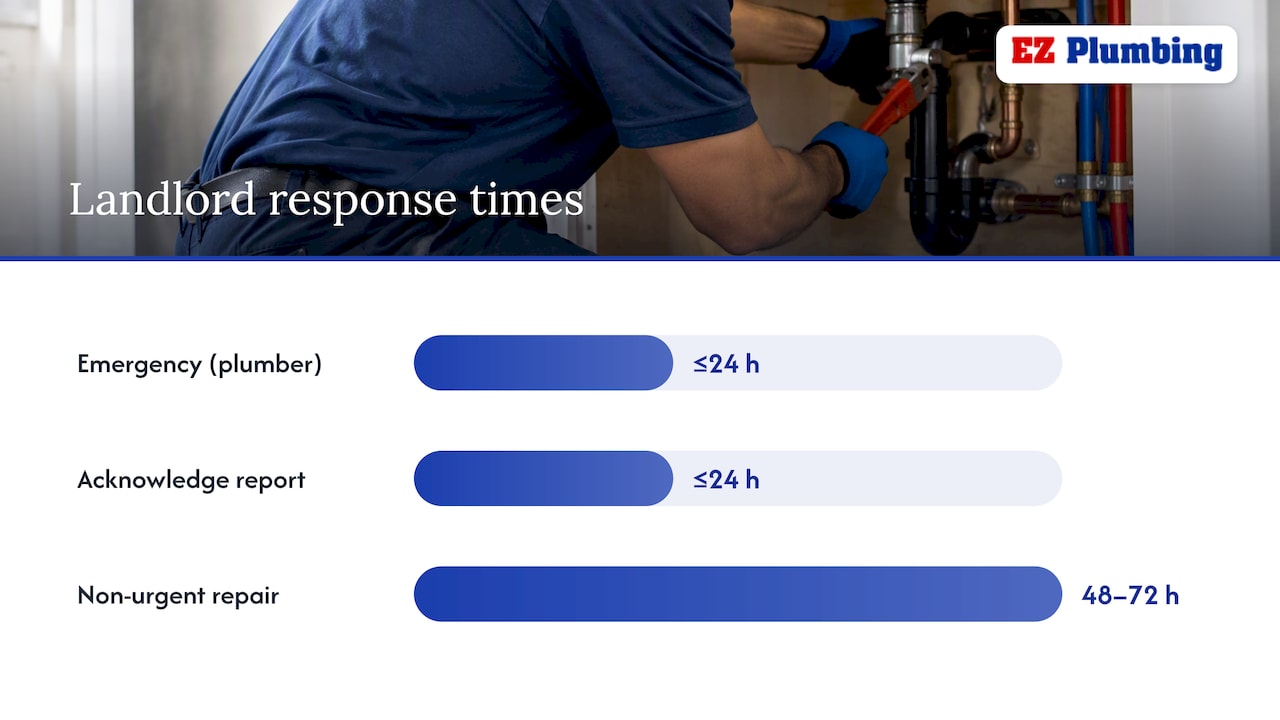
- Acknowledge the report in writing within 24 hours, even if it is just a text or email confirming receipt and giving a rough timeline for next steps.
- Triage the urgency immediately. Loss of water, sewage backup, or an active major leak needs a same-day licensed plumber response; non-urgent issues can typically be scheduled within 48 to 72 hours.
- Check whether the work requires a permit before starting anything substantial. A quick call or online check with LADBS avoids the common mistake of completing repiping or major line replacement work and only then discovering a permit was required.
- Arrange a licensed plumber for both inspection and repair, rather than attempting a patch job that may not hold or may create a secondary habitability issue.
- Document everything as you go: photos of the original problem, the plumber’s written diagnosis, permit numbers if applicable, invoices, and a final record confirming the repair was completed and inspected.
- Keep the tenant informed throughout, particularly if the repair requires temporary water shutoff, multi-day work, or relocation under the Tenant Habitability Program.
Pro Tip: Keep a simple log for every plumbing complaint, date received, date acknowledged, date resolved, so you can show a consistent pattern of prompt response if a dispute ever reaches LAHD or small claims court.
This workflow does double duty. It resolves the immediate plumbing failure, and it builds a paper trail that matters if a tenant later disputes how quickly you responded. For emergency situations specifically, having a plan in place before the call comes in, rather than scrambling to find a licensed plumber at 11 p.m. on a Friday, makes the difference between a contained problem and a unit that sits without water for a weekend.
Costs, funding options, and long-term risk management for plumbing work
Budgeting for plumbing responsibly means separating routine repairs from the bigger structural work that comes up less often but costs far more when it does.
- Standard plumber labor rates in the Los Angeles area generally run $150 to $280 per hour for residential work and $120 to $240 per hour for commercial jobs, though the final cost of any job depends on parts, access, and permit requirements.
- Repiping an older unit is one of the costlier repairs a landlord will face, since it often involves opening walls, coordinating permits, and in Los Angeles, mitigation obligations under the Tenant Habitability Program if tenants remain in place.
- A policy brief from UCLA’s Luskin School notes that ignoring tenant complaints about water quality, which often trace back to aging premise plumbing, can create liability and erode tenant trust well beyond the cost of the repair itself.
- Reviewing your landlord insurance policy for plumbing failure and water damage coverage before a crisis hits, rather than after, avoids surprises about what is and is not covered.
- Preventive maintenance contracts, including scheduled drain cleaning and inspection, tend to catch small problems before they become the kind of emergency that triggers a REAP referral or a habitability complaint.
- Small landlords facing a major repiping bill should check whether any public funding or subsidy programs apply to their situation, since some local initiatives aimed at aging plumbing infrastructure exist specifically to ease that burden.
None of this replaces a licensed plumber’s assessment of a specific property, but it gives a landlord a realistic sense of where the money typically goes: routine repairs are predictable, while structural plumbing work, especially repiping, is the category most likely to blow past a rough budget if it is not planned for in advance.
Compliance checklist and tenant communication templates
A short, repeatable process after every reported issue keeps a landlord consistent, which matters as much as any individual repair decision.
After each report, work through:
- Written notice logged with date and description of the problem.
- Urgency assessment and inspection scheduled with a licensed plumber.
- Permit confirmation with LADBS if the scope of work requires one.
- Repair completed and, where applicable, inspection passed.
- Invoice and completion record filed.
- Follow-up message to the tenant confirming resolution.
Short, consistent messages work better than long explanations. A few examples:
Acknowledgement: “We received your report about the kitchen sink and have a licensed plumber scheduled to assess it within the next two days.”
Scheduling: “Our plumber will be at the property Thursday between 10 a.m. and 1 p.m. to repair the water heater; please let us know if that window doesn’t work.”
Completion: “The leak under the bathroom sink has been repaired and inspected. Let us know if you notice any further issues.”
On retention, keep permits, invoices, and tenant communications related to plumbing repairs for at least four years, matching the general statute of limitations for written contract and property disputes in California. For any unit that has gone through Tenant Habitability Program mitigation, keeping those records longer is worth the minor hassle given how often prior work history comes up in later disputes.
Tenant notification requirements before landlord-initiated plumbing repairs or inspections
Landlords in California generally need to give at least 24 hours’ written notice before entering a unit for a non-emergency repair or inspection, and that notice should specify a reasonable date and time window. This applies even when the landlord is the one initiating the work, for example a scheduled inspection of aging pipes or a planned fixture replacement rather than a tenant-reported problem.
Emergency situations are the exception. If there is an active leak, a burst pipe, or another condition threatening immediate property damage or safety, a landlord or plumber can enter without the standard notice period to address the hazard. Outside of true emergencies, skipping notice, even with good intentions, can create a separate dispute layered on top of whatever plumbing issue prompted the visit in the first place. Building notice into your standard workflow, rather than treating it as optional for routine work, keeps access disputes from becoming a distraction from the actual repair.
Impact of plumbing issues on rent withholding and eviction protections
A serious, unresolved plumbing problem can support a tenant’s rent withholding claim, but the amount withheld needs to reasonably reflect the loss of habitability rather than the full rent amount. Courts and housing inspectors evaluating these disputes look at how severe the condition was, how long it went unaddressed, and whether the landlord was given proper notice and a reasonable opportunity to fix it.
This matters directly for eviction risk. California law restricts retaliatory eviction, meaning a landlord cannot move to evict a tenant specifically because that tenant reported a habitability issue like a plumbing failure or withheld rent over one in good faith. A landlord who receives a legitimate plumbing complaint and responds with an eviction notice rather than a repair is exposing themselves to a retaliation claim that tends to carry far more legal and financial risk than the original plumbing bill ever would. The safer path, both legally and practically, is treating every habitability complaint as a repair priority rather than a tenant problem to manage around.
Specific landlord plumbing responsibilities in multi-unit versus single-family rentals
The core habitability duties under Civil Code §1941.1 apply the same way whether you own a single-family rental or a forty-unit building, but the practical obligations scale with the property type. Multi-unit buildings typically share main supply and drain lines across several units, which means a single plumbing failure, a main line backup, for example, can affect multiple tenants simultaneously and requires faster, more coordinated communication than a single-family home would.
Multi-unit owners also face more frequent interaction with LAHD’s inspection programs, since complaint-driven and systematic inspections tend to focus on larger rental buildings first. Single-family landlords have fewer moving parts but often less margin for error: a water heater failure in a single-family rental with no secondary hot water source is a complete loss of service for one household, not a partial inconvenience spread across a building. Whatever the property type, LAMC maintenance obligations and the state statutes discussed above apply without exception, and owners of either property type remain equally liable for the underlying repair.
Practical experience from a licensed LA plumbing provider
A licensed plumbing provider experienced with residential and commercial systems across the greater Los Angeles area reports that plumbing calls tied to rental properties follow a familiar pattern. The most common pitfall is not neglect, it is delay driven by uncertainty: landlords unsure whether a problem counts as urgent, or whether a permit is actually required, often wait longer than the condition allows.
A typical case that illustrates the stakes involves a multi-unit property where a slow drain complaint sat unaddressed for weeks before escalating into a full main line backup affecting several units at once. What should have been a routine drain cleaning turned into an emergency call, a Tenant Habitability Program mitigation issue, and a far larger bill than the original complaint would have cost to resolve. Treating early warning signs, slow drains, minor leaks, inconsistent water pressure, as worth a prompt licensed inspection rather than a wait-and-see approach consistently avoids that outcome.
— EZ
How EZ Plumbing can help Los Angeles landlords
Handling plumbing responsibilities correctly often comes down to having a licensed, code-compliant plumber available before a small problem becomes a habitability complaint. EZ Plumbing provides emergency plumbing, sewer line repair, repiping, and water heater repair for residential and commercial properties across Los Angeles, with 24/7 dispatch and real local staff rather than a remote call center.
For property managers, HOAs, and landlords who would rather prevent emergencies than react to them, EZ Plumbing also offers maintenance plans built around scheduled drain cleaning and system checks, along with commercial maintenance contracts for larger properties. Jobs are documented for code compliance from the first inspection through final invoice, which matters if a repair history ever comes up in a tenant dispute or a city inspection.
If you need a rate estimate before committing to a repair, the plumbing rate calculator gives a starting point for residential and commercial work. Reach out through Ez-plumbing to schedule an inspection or get a maintenance plan started for your property.
Primary sources and official guidance for landlords
The claims in this guide are drawn directly from the statutes and city agencies that govern landlord plumbing duties in Los Angeles, each worth bookmarking for your own reference:
- California Civil Code §1941.1: defines the habitability standards, including plumbing, that every California rental must meet.
- California Civil Code §1941.2: sets the standard for when tenant-caused damage shifts repair cost away from the landlord.
- California Civil Code §1942: governs repair-and-deduct remedies and the reasonable-time presumption for repairs.
- LAHD’s Tenant Habitability Program: explains mitigation and relocation rules for major plumbing work in Los Angeles.
- LADBS plumbing permit guidance: details when plumbing work requires a city permit and inspection.
This article is general information, not a substitute for advice from a qualified lawyer. Consult a qualified legal professional about your own circumstances before acting on anything here.
Sources
- California Civil Code §1941.1
- Los Angeles Housing Department — Tenant Habitability Program
- Los Angeles Department of Building and Safety — Plumbing permits
FAQ
Do landlords have to fix plumbing in California?
Yes. Under Civil Code §1941.1, California landlords must maintain plumbing necessary for a rental to remain habitable, including hot and cold running water, working fixtures, and a proper sewage connection. This duty applies regardless of lease language attempting to shift it to the tenant.
Who is responsible for plumbing issues in a rental?
The landlord is responsible for ordinary plumbing failures caused by age, wear, or system breakdown. Under Civil Code §1941.2, a tenant becomes responsible only when their actions substantially caused the damage, not simply because the damage occurred during their tenancy.
How long does a landlord have to fix a plumbing problem?
There is no single fixed deadline; reasonableness governs the timeline under Civil Code §1942, which creates a presumption that 30 days is reasonable for repair-and-deduct purposes. Urgent conditions like loss of water or sewage backup require much faster action than that presumption suggests.
Are landlords supposed to pay for plumbing?
Yes, in almost all ordinary cases. Landlords pay for plumbing repairs and replacements tied to habitability under California law, and they can only shift cost to a tenant when the tenant substantially caused the damage under Civil Code §1941.2.
Does repiping a Los Angeles rental require a permit?
Generally yes. LADBS guidance treats repiping and major supply or drain line replacement as work that typically requires a permit and inspection, and skipping that step can create its own code violation even if the repair itself was done well.
Recommended
- Avoid Permit Rework in Los Angeles: Which Agency Issues Yours
- Rental Property Plumbing Tips for Landlords: 2026 Guide
- Manage plumbing repairs in Los Angeles: step-by-step guide
Recent EZ Plumbing Jobs in Los Angeles
Real, recent work from our crews — updated automatically as jobs complete.