
How to Unclog a Drain: DIY Methods That Work
Standing at a sink full of murky water is one of those frustrations that stops your morning cold. Knowing how to unclog a drain yourself can save you time, money, and the stress of waiting for a service call. Most household clogs form from the same culprits: hair, soap scum, grease, and food debris that build up gradually until water stops moving. The good news is that most of these blockages respond well to tools and ingredients you already have at home, and this guide walks you through every step from the simplest fix to knowing when it is time to call in a professional.
Table of Contents
- Key takeaways
- What you need to unclog a drain
- Step-by-step guide to unclog a drain at home
- Using a drain snake for tougher clogs
- When DIY is not enough
- Preventing clogs before they form
- My honest take on DIY drain unclogging
- Ez-plumbing can handle what DIY cannot
- FAQ
Key takeaways
| Point | Details |
|---|---|
| Start simple and physical | Remove visible debris and standing water before reaching for any tool or product. |
| Natural remedies work well | A baking soda, salt, and vinegar mixture with a 15-minute soak clears many soft clogs without chemicals. |
| Seal the overflow first | Plugging overflow holes before plunging is the single most overlooked step that makes plunging effective. |
| Know when to escalate | Multiple slow drains or gurgling sounds after DIY attempts signal a deeper problem that needs a professional. |
| Prevention costs almost nothing | Monthly hot-water flushes and a drain strainer eliminate most clogs before they start. |
What you need to unclog a drain
Before you touch the drain, gather the right equipment. Trying to improvise mid-job with the wrong tools is how minor clogs become bigger problems.
The core toolkit is short. A cup plunger or a flange plunger, a pair of rubber gloves, an old towel or two, a bucket, and a flashlight cover about 80 percent of clogs you will ever encounter at home. For tougher jobs, a plastic hair-removal tool (sometimes called a Zip-It) or a manual drain auger handles what a plunger cannot.
On the household supplies side, baking soda, table salt, white vinegar, and boiling or near-boiling water are your go-to ingredients for chemical-free unclogging. These work because the fizzing reaction between baking soda and vinegar loosens soft buildup, while hot water flushes the debris through.
| Tool or material | Best use case | Risk if misused |
|---|---|---|
| Cup plunger | Sinks and floor drains | Low, but ineffective without seal |
| Flange plunger | Toilets | Minor splashing |
| Plastic hair tool (Zip-It) | Shower and tub drains | Can push debris deeper if used carelessly |
| Manual drain snake or auger | Deep or stubborn clogs | Can scratch pipes if forced |
| Baking soda and vinegar | Soft grease or soap buildup | None when used correctly |
| Boiling water | Grease clogs in metal pipes | Can warp PVC pipes if overheated |
Pro Tip: Always lay an old towel around the base of the drain before starting. Water and debris come out fast once a clog clears, and protecting the floor takes two seconds.
Step-by-step guide to unclog a drain at home
These steps are ordered from least invasive to more hands-on. Work through them in sequence rather than jumping straight to the strongest method.
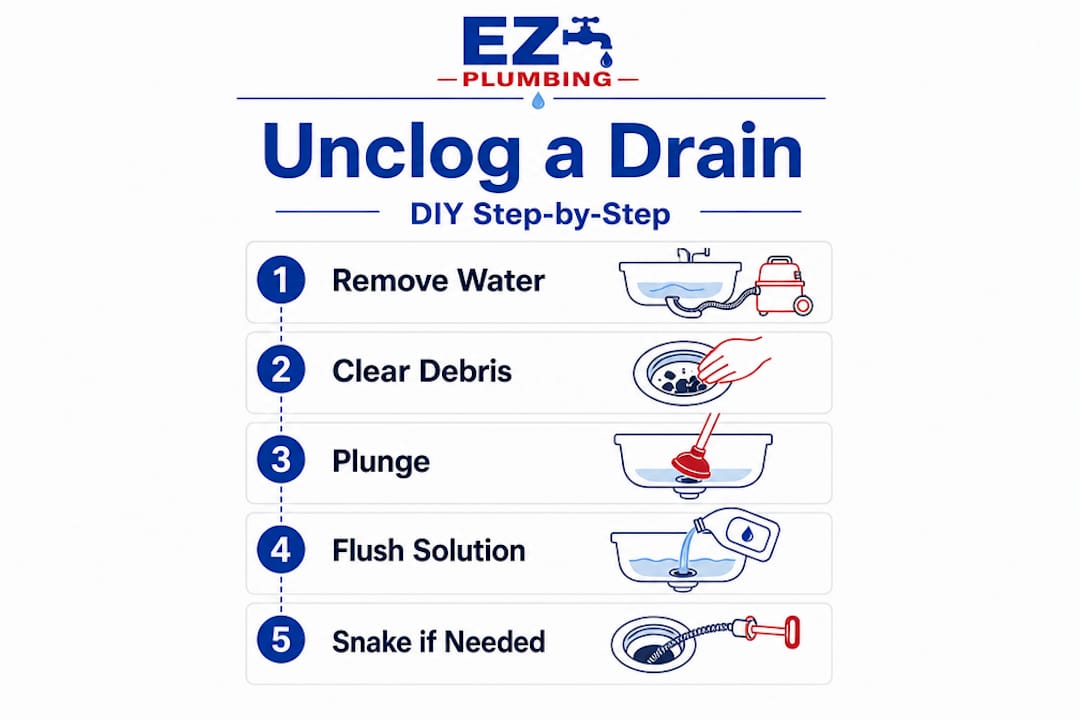
Step 1: Remove standing water. The first DIY step for a slow or stopped drain is to bail out standing water with a cup or small container into your bucket. Trying to plunge or pour anything into a drain that is already full of water just dilutes your effort.
Step 2: Clear visible debris. Put on your gloves and remove the drain stopper or cover. Most bathroom stoppers unscrew or lift straight out. Once the drain is exposed, use your fingers or the plastic hair tool to pull out any hair, soap, or buildup sitting near the opening. Removing debris early reduces the need for harsher methods further down the line, and it often solves the problem entirely.
Step 3: Plunge with proper technique. Place the plunger cup directly over the drain opening and press down to create a firm seal. Here is the step most people skip: if you are working on a bathroom sink, stuff a wet rag into the overflow hole (that small opening near the top of the basin). Sealing the overflow before plunging maintains pressure in the pipe and dramatically improves results. Push down and pull up sharply, repeating 15 to 20 times. Check if water drains after each round.
Step 4: Try the baking soda and vinegar method. If plunging moves things but does not fully clear the drain, this natural approach works well on soap scum and grease. Mix half a cup of baking soda with a quarter cup of salt, pour it directly into the drain, then immediately follow with one cup of heated white vinegar. The foaming reaction gets into the soft buildup. Let it sit for 15 minutes, then flush with the hottest tap water you can run. Repeat once if needed.
Safety note: Never mix bleach with vinegar or any acid-based cleaner. The combination releases chlorine gas and is genuinely dangerous. If you have used a bleach-based product recently, flush the drain thoroughly with water before trying any vinegar-based remedy.
Pro Tip: For a grease clog in a kitchen sink, use near-boiling water (not full boil if you have PVC pipes) poured in three stages with a 30-second pause between each. This gives the water time to melt and push grease rather than just pushing it farther down the pipe.
Using a drain snake for tougher clogs
When the basic methods have not worked after two or three attempts, a drain snake or auger is your next move. These are inexpensive, widely available at hardware stores, and straightforward to use without prior plumbing experience.
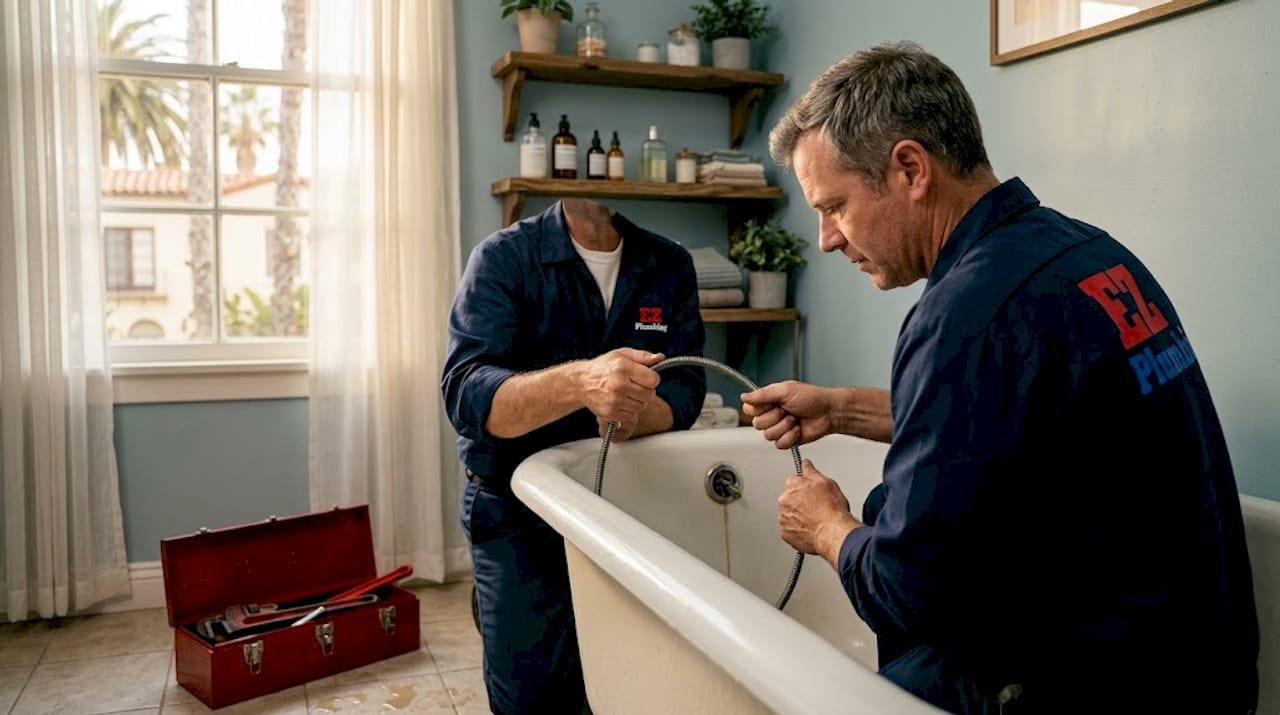
A plastic Zip-It tool handles most hair clogs in shower and tub drains. It has small barbs along the sides that grab hair as you pull back out. For deeper blockages, a manual cable auger with three to six feet of cable reaches most residential drain clogs.
Here is how to use a manual drain snake:
- Remove the drain stopper or cover so you have direct access to the pipe.
- Feed the cable into the drain opening slowly, keeping steady forward pressure.
- When you feel resistance, you have reached the clog. Rotate the handle clockwise to work the tip into the blockage.
- Twist to catch debris, then pull back with consistent tension. You may need to go in and out several times.
- Pull the snake out completely and clean the debris from the cable before reinserting.
- Flush with hot water to clear any remaining loose material.
One technique most homeowners do not know: for a bathtub, snaking through the overflow opening rather than the bottom drain gives the cable a straighter path to the clog. Remove the overflow cover plate with a screwdriver, insert the snake through that opening, and you will reach most tub clogs more easily than fighting around the drain basket at the bottom.
Pro Tip: Never force a drain snake. If the cable meets firm resistance and will not turn freely, stop. Forcing the tool can compact hair clogs deeper into the pipe or, in older plumbing, crack corroded pipe walls.
| Tool | Reach | Best for | Potential risk |
|---|---|---|---|
| Plastic Zip-It | 18 to 24 inches | Hair near drain opening | Pushing debris deeper |
| Manual cable auger | 3 to 6 feet | Mid-pipe hair and soap clogs | Scratching soft plastic pipe |
| Motorized auger | 25 feet or more | Kitchen grease or deep blockages | Pipe damage if mishandled |
When DIY is not enough
Most kitchen and bathroom clogs are straightforward. But some situations signal that the clog is beyond what you can handle safely at home.
Watch for these warning signs:
- Water backs up in multiple drains at the same time, such as the toilet gurgling when you run the sink. This suggests a blockage in the main sewer line rather than an individual drain branch.
- Drains that slow down again within days of being cleared point to a recurring buildup or a partial obstruction deeper in the pipe that your tools cannot reach.
- You notice a foul smell coming from drains even after cleaning them. This can indicate organic buildup far down the line or, in older Los Angeles homes, deteriorating clay sewer laterals.
- Water pools near floor drains or in the lowest areas of the home.
Repeated use of strong chemical drain cleaners is not a substitute for proper clearing. Chemical solvents can require careful safety precautions and, when used repeatedly on the same clog, can accelerate corrosion in older metal pipes and even soften joints in PVC systems.
When you call a plumber, tell them exactly what you tried: the order of methods, how long materials were left in the drain, and whether any chemical products were used. That information helps a technician assess the situation before arriving, which saves time and reduces the risk of a chemical reaction during professional cleaning.
Professional drain cleaning services typically involve hydro-jetting or a motorized auger to clear blockages thoroughly, sometimes paired with a camera inspection to locate and assess damage in the pipe.
Preventing clogs before they form
The most cost-effective drain maintenance you can do takes less than five minutes a month.
- Install mesh drain strainers in every shower, tub, and sink. Hair is the leading cause of bathroom drain clogs, and a strainer stops it at the surface before it ever enters the pipe.
- Prevent clogs with regular cleaning using the same baking soda and vinegar flush described above, done once a month as maintenance rather than as a cure.
- Never pour cooking grease, oil, or fat down the kitchen sink. Grease solidifies as it cools inside the pipe and traps food particles. Pour it into a container and discard it with solid waste instead.
- Run hot tap water for 30 seconds after every time you wash dishes or use the kitchen sink. It keeps grease in suspension long enough to pass through the drain branch.
- Use an enzyme-based drain cleaner monthly if you have older pipes or a household that generates a lot of hair and soap buildup. Enzyme products break down organic material gradually without the corrosive effects of chemical solvents.
Pro Tip: Stagger your enzyme cleaner application to nighttime. Letting it sit in the drain for six to eight hours with no water flow gives the enzymes maximum contact time with buildup. Pour it in right before bed and rinse in the morning.
For a deeper look at keeping your pipes in good shape year-round, the drain maintenance guide from Ez-plumbing covers both DIY habits and the maintenance intervals worth scheduling with a professional.
My honest take on DIY drain unclogging
I have seen what happens on both ends of this problem. Homeowners who tackle clogs early, patiently, and with the right tools resolve them 90 percent of the time. Those who wait, apply chemical after chemical, or force tools without understanding the pipe layout often end up with a worse situation than the original clog.
What I want to be direct about: overconfidence is the biggest risk in DIY drain work, not the clog itself. I have walked into homes where well-meaning residents used a cable auger aggressively in a cast iron drain and cracked the fitting, or poured three different brand-name chemical products down the same drain and created a corrosive mix that sat on the trap for hours. Both repairs cost far more than a single professional drain cleaning would have.
My honest position is this: try the physical methods first, every time. Remove the debris, plunge with good technique, and try the natural flush. If those do not work after two rounds, use a snake carefully. If the snake does not solve it or if you see any of the warning signs mentioned above, stop and call a professional. Knowing your limit is not admitting defeat. It is the decision that protects your pipes and your wallet.
— EZ
Ez-plumbing can handle what DIY cannot
When a clog is beyond the reach of a plunger or household snake, Ez-plumbing is ready to help. Our team of licensed technicians serves the greater Los Angeles area with professional drain cleaning services designed to clear blockages thoroughly and diagnose the underlying cause, not just treat the symptom. Whether the issue is a stubborn kitchen grease buildup, a hair clog deep in a tub drain, or a slow-moving main line, we bring the right equipment including hydro-jetting and camera inspection to get it resolved cleanly and correctly. Beyond drain clearing, Ez-plumbing provides water heater repair, leak detection, repiping, sewer line repair, and emergency plumbing throughout Los Angeles. Our work is fully licensed under C-36 License #583868 and code-compliant with LA municipal requirements. Reach out to Ez-plumbing today and get the peace of mind that comes with a proper fix.
FAQ
What is the best way to unclog a sink at home?
Start by removing visible debris from the drain opening, then plunge with the overflow hole sealed for maximum pressure. If that does not clear it, pour in a baking soda, salt, and vinegar mixture, let it foam for 15 minutes, then flush with hot water.
Can I unclog a drain without a snake or chemicals?
Yes. A plunger combined with a thorough debris removal and a baking soda and vinegar flush resolves most soft clogs involving soap scum, grease, and hair buildup without any mechanical tools or chemical solvents.
How do I unclog a bathtub drain?
Remove the drain cover and pull out hair manually, then plunge using a cup plunger with the overflow hole plugged. For a deeper clog, feed a drain snake through the overflow opening rather than the bottom drain for a more direct path to the blockage.
How do I know when to call a plumber for a clogged drain?
Call a plumber if multiple drains are slow at the same time, if the clog returns within a few days of clearing, or if you hear gurgling from other fixtures when water drains. These signs point to a blockage in the main sewer line that requires professional equipment to clear safely.
Is it safe to unclog drains without Drano or chemical cleaners?
Yes, and it is generally the preferred approach. Physical methods and natural remedies like baking soda and vinegar are safer for your pipes, especially in older homes with metal or PVC plumbing, and they avoid the corrosion risks that come with repeated chemical drain cleaner use.