
How to Prevent Drain Flies and Keep Them Gone
You step into the bathroom at night, and there they are again, tiny dark flies hovering over the sink drain like they own the place. You pour bleach down the pipe, wipe the counter, and by the next day or two they're back. That's the part most guides skip, the drain isn't just dirty, it's carrying a biofilm that keeps feeding the next generation until you physically remove it.
Table of Contents
- Why Drain Flies Keep Coming Back
- Confirming the Source Before You Clean
- The Scrubbing Protocol That Breaks the Cycle
- Choosing the Right Drain Treatment
- A Realistic Maintenance Schedule
- When DIY Stops Working and a Plumber Steps In
Why Drain Flies Keep Coming Back
A homeowner can scrub the sink in the morning, see fewer flies that night, and still wake up to them again. Drain flies breed inside moist organic buildup lining drains, traps, sink overflow channels, and garbage disposals. A quick rinse changes the opening, not the breeding site. Oregon State Extension explains where these biofilms form, while the University of Arkansas recommends thorough cleaning and maintenance for at least 3 weeks or longer to interrupt the life cycle (Oregon State Extension guidance, University of Arkansas drain fly guidance).
Why bleach falls short
Bleach may kill or dislodge some flies and organisms at the drain opening, but it does not reliably remove the slimy film attached to the pipe wall. The remaining film continues to support new adults, so the visible activity returns from the same fixture. For a field-tested take on the same breeding-cycle problem, see The Green Advantage fly control.
EPA guidance on drain sanitation points in the same direction: keep drains clean, prevent standing water, and remove organic buildup before it becomes a breeding surface (EPA drain sanitation guidance).
Practical rule: if the slime stays, the flies stay.
Prevention therefore has to be mechanical first, chemical second. Scrub the drain opening, pipe lip, trap, overflow channel, and nearby damp areas. An enzymatic cleaner can help break down residue after the surface has been physically cleaned, but no liquid replaces brushing when the film is established. Stop only after activity stays down through the breeding window, not after one quiet evening.
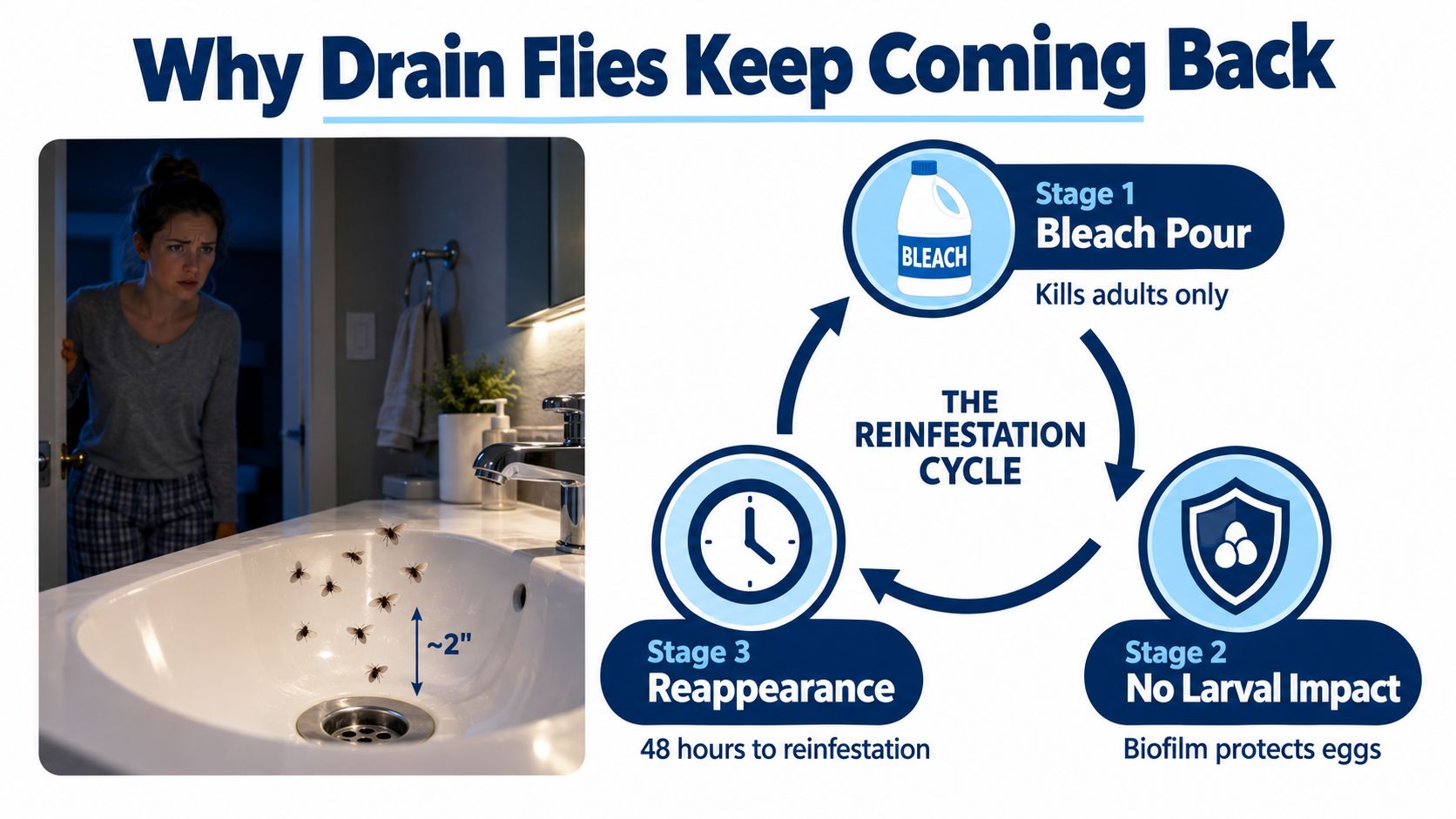
On Los Angeles service calls, homeowners often arrive at the same point: they have already poured bleach into the drain, yet movement returns at night. If odor is part of the complaint, this guide to sink drain smells provides useful related context.
The practical takeaway is simple. How to prevent drain flies requires a sustained reset that outlasts the egg-to-adult window. Treat the drain as a maintenance problem, keep scrubbing on schedule, and reserve stronger plumbing work for buildup that routine cleaning cannot reach.
Confirming the Source Before You Clean
A lot of people treat the wrong insect. Drain flies get mixed up with fungus gnats, fruit flies, and small moths, and that mistake sends you down the wrong treatment path for days. Drain flies are dark, fuzzy, moth-like, and they rest with their wings roof-shaped over the body, while fruit flies gather around food and fungus gnats usually show up near plants or damp potting soil.
The visual clue matters, but the source test matters more. If you only see a few flies in a bathroom or laundry room, don't assume the sink is guilty just because it's nearby. Older Los Angeles homes, especially those with shared vent stacks or fixtures that don't get used often, can spread the problem across more than one drain.
The overnight jar test
Tape a clear cup or jar over the suspect drain before bed, cover it with plastic wrap secured by a rubber band, poke a few small holes, and check it in the morning. If flies are trapped inside, you've confirmed that the drain is part of the breeding source. If the jar stays empty, repeat the test on the shower, tub, floor drain, laundry standpipe, and any overflow drain close by.
That test saves time because it keeps you from over-treating a drain that isn't the actual source. It also tells you whether you're dealing with one fixture or a broader plumbing issue, which changes how aggressive the cleanup needs to be. If the same flies keep showing up around multiple openings, you're probably dealing with more than surface grime.
For a second point of reference, the odor and drainage-angle explanation on what causes sewage smell in bathroom helps separate a fly problem from a deeper line issue when the symptoms overlap.
If a drain test catches the flies, clean that drain like it matters. If it doesn't, keep testing until you find the one they're actually coming from.
Confirmation sounds small, but it's what keeps you from wasting a week on the wrong sink. Once you know the source, the cleaning has to go after the film itself, not just the visible opening.
The Scrubbing Protocol That Breaks the Cycle
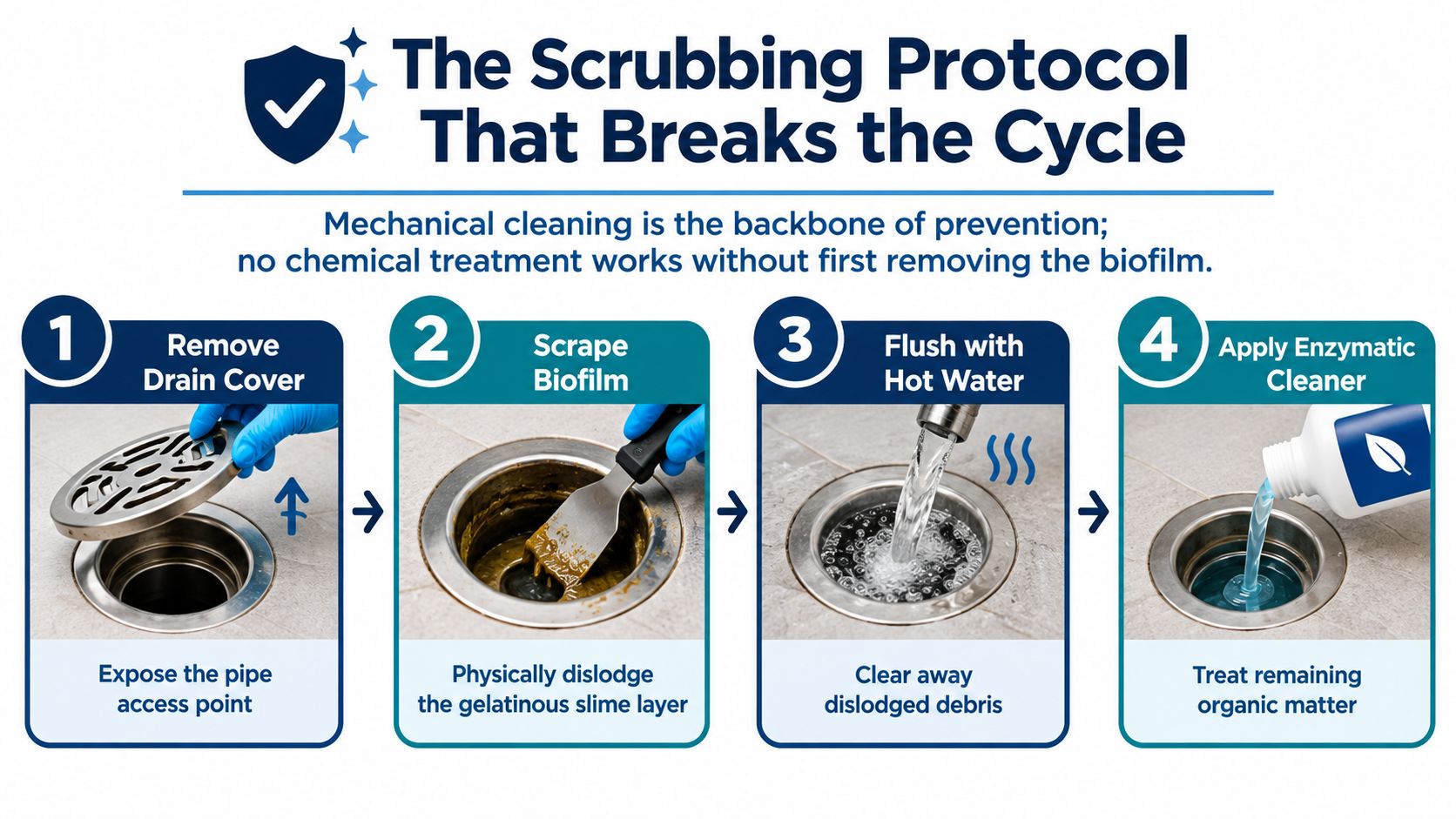
A drain can look clean at the opening and still support another generation below it. The reliable fix is mechanical cleaning, followed by treatment that keeps working after the brush is gone. Ohio State Extension recommends scrubbing the drain opening, pipes, and trap with a stiff brush, then maintaining the cleanup for at least 3 weeks or longer so larvae and pupae already in the system do not mature after you stop (Ohio State drain fly fact sheet).
What to scrub and why it matters
Remove the stopper, hair catcher, or pop-up assembly first. Throw away the material caught around it. Breeding residue usually collects near the opening and in the first section of pipe, so skipping that area leaves the habitat in place. Use a stiff drain brush. A quick splash of cleaner cannot provide the same friction.
Work around the underside of the drain lip, then scrub the trap and as far down the line as the brush can reach. The underside often stays slick even after the visible opening looks clean. In a bathroom sink, clean the overflow opening as well. That hidden passage can hold the same organic film.
A thick baking soda paste followed by a slow pour of white vinegar and a hot-water flush can help loosen residue. This guide to unclogging drains with vinegar fits that supporting role. Do not treat the mixture as the cure. Friction from the brush removes more of the film than chemistry alone.
How often to repeat it
One scrub rarely closes the problem. Maine pest guidance recommends cleaning drains, traps, and strainers at least twice per week in problem areas. Cornell's StopPests program says focused cleaning may need to happen daily for a week, with persistent cases requiring weekly attention because drain flies can develop from egg to adult in a week under favorable conditions (Maine pest management guidance).
The seven-day breeding window determines whether the routine works. Clean on Monday, stop on Tuesday, and the remaining film can support flies that mature in the same pipe. Continue the three-week reset instead, combining repeated scrubbing with an appropriate enzymatic or bacterial treatment.
Keep the schedule even after adult flies disappear. Their absence only shows that fewer are emerging at the moment, not that the film is gone.
Field note: if the brush comes out clean but the underside of the drain lip still feels slick, you're not done.
This protocol works because it removes the food source and interrupts development long enough to prevent a fresh start. Bleach or fragrance may change what the drain smells like, but sustained scrubbing addresses the surface where drain flies breed.
Choosing the Right Drain Treatment
A drain can smell clean and still carry the film that feeds drain flies. Product choice matters, but it cannot replace the brushing routine described earlier. Use chemistry to handle residue left behind, not as a shortcut around mechanical cleaning.
The practical split is between treatments that work on organic buildup and products that mainly change the smell at the opening. Ohio State guidance cited above recommends a bacterial or enzymatic drain cleaner followed by hot water, while cautioning that caustic lye-based cleaners are less effective for this use. Illinois public health guidance also calls for cleaning drains and traps with a wire brush or drain cleaner to remove breeding material (Illinois public health guidance).
What works and what doesn't
Enzymatic cleaners fit the reset period. They work gradually by breaking down remaining organic matter, so apply them after scrubbing and continue the treatment through the three-week cleanup period. They will not remove a thick layer of slime that a brush has never disturbed.
Bacterial treatments make more sense for ongoing prevention. They can help in low-use drains, such as a guest bathroom or floor drain, where standing residue has time to collect. They are maintenance products, not a replacement for the initial cleanup.
Caustic products, including strong lye-based gels, bleach-heavy pours, and social-media miracle mixes, can create a quick impression of action without removing the breeding layer. They may affect residue near the opening while leaving buildup farther down the trap or branch line. Older plumbing and aging fittings also give you less margin for aggressive chemicals.
The working rule is simple. Choose an enzymatic cleaner during the three-week reset, then use a bacterial treatment for regular maintenance where buildup returns. Skip toilet-bowl tablets in sink overflows and essential-oil drain products that add fragrance without changing the habitat. If a caustic product is used at all, it should not replace mechanical scrubbing.
| Drain Treatment Comparison: Enzymatic vs Bacterial vs Caustic | |||||
|---|---|---|---|---|---|
| Treatment Type | Active Ingredient | Speed | Effect on Biofilm | Pipe Safety | Best Use |
| Enzymatic | Enzymes | Slower | Breaks down remaining organic matter | Generally safer for common residential piping | Three-week reset and routine prevention |
| Bacterial | Living cultures | Slower | Helps consume residue over time | Generally safe for ongoing use | Low-use drains and maintenance |
| Caustic | Strong alkaline or acidic agents | Fast at the surface | Limited on established biofilm | Can be harder on older pipes and fittings | Last resort before mechanical scrubbing |
Use gloves, keep ventilation moving, and never mix ammonia-based products with bleach-based products. If flies return quickly after the reset, stop switching chemicals. A line that still has organic film may need another sustained scrub, or a plumber may need to inspect and mechanically clean the branch line.
A Realistic Maintenance Schedule
Prevention holds when the schedule matches the biology. If the flies can cycle fast, your maintenance can't be casual. The point is to keep the drain from ever getting thick enough with residue to support another round of breeding.
Homeowner routine
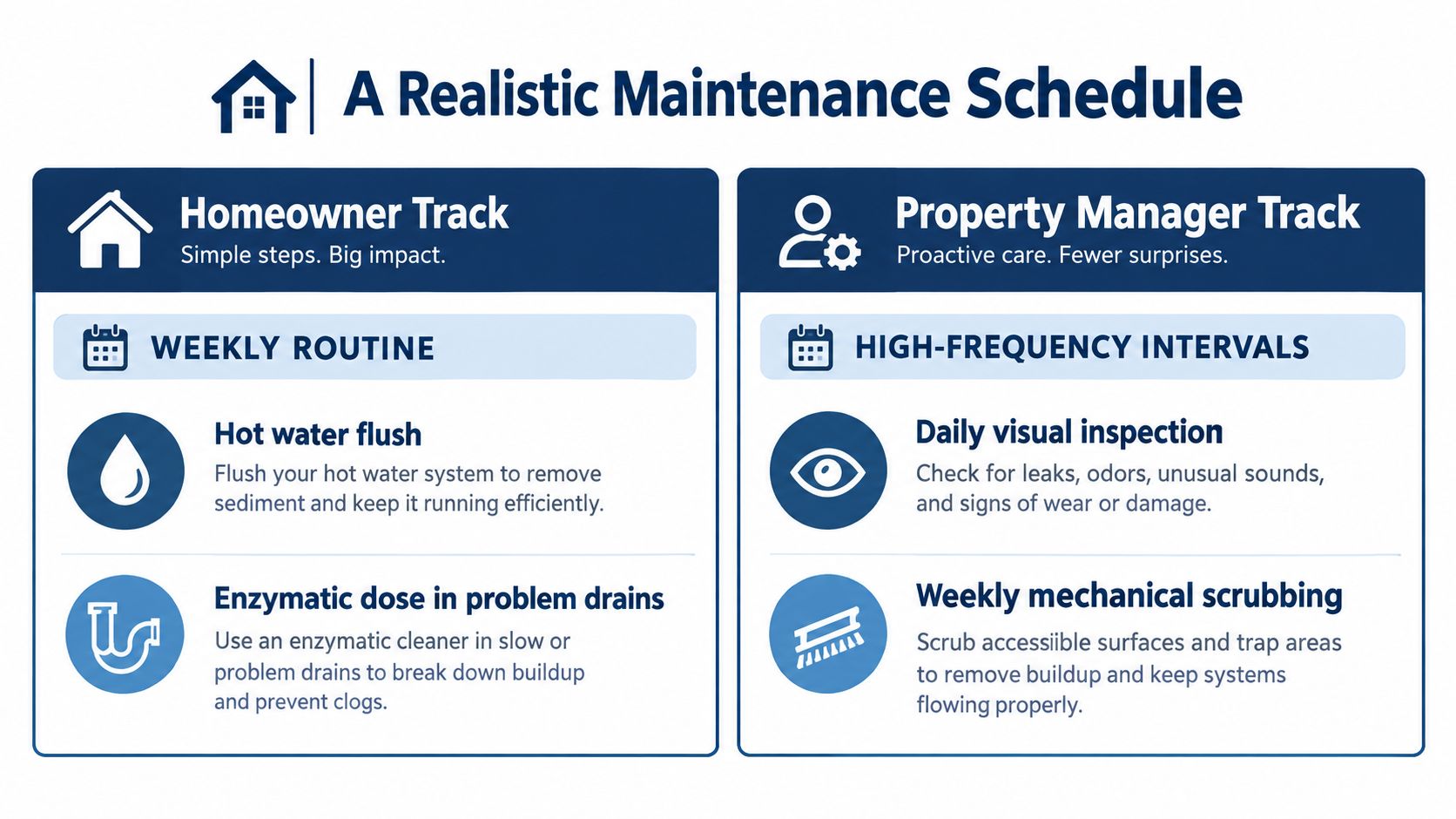
For most homes, a weekly habit is enough to keep the problem from taking off again once you've cleaned it properly. Run a hot-water flush, dose the problem drains with an enzymatic cleaner, and check hair catchers before residue builds up. That small routine costs less time than a full re-clean every time the flies show up again.
Monthly, take a real look at the bathroom sink, tub, and shower floor drain with a brush. Kitchen lines get a bacterial maintenance treatment if they're low-use or prone to buildup from grease. Seasonal deep scrubs make sense in quarters, especially before hot weather when odors and residue tend to become more noticeable.
Property manager routine
For property managers, the cadence needs to be tighter. Shared plumbing, vacant units, and laundry or kitchen floor drains all hold residue longer than a busy household sink. That's where scheduled inspections and documented cleanings stop being optional and start being basic risk control.
A good reference point for recurring maintenance is Bulls Eye Repair's drain maintenance page, because the logic is the same whether you're dealing with one apartment or a stack of units.
Operational rule: if a drain goes quiet for a while, it needs more attention, not less.
For managers, the maintenance pattern should include frequent visual checks, regular mechanical scrubbing of floor drains, and written notes for due diligence. A vacant unit can become the source of complaints in the occupied unit below it, and that's exactly the kind of issue that gets expensive when no one documents the cleanup.
The cadence matters more than the product label. If you skip a week, you're giving the life cycle room to restart, and then you're back where you started.
When DIY Stops Working and a Plumber Steps In
If you've scrubbed hard for weeks and the flies still come back, the problem is probably beyond the trap. The warning signs are pretty plain, multiple drains affected at once, sewage odor indoors, gurgling sounds, slow drains across fixtures, or visible biofilm in a cleanout. At that point, you're not just dealing with a dirty sink, you're dealing with a line that may be holding water, residue, or a defect that keeps feeding the problem.
A plumber brings tools that homeowners usually don't. Camera inspection shows whether the source sits below the trap arm, hydro jetting scours the line wall more aggressively than hand cleaning, and sewer diagnostics can expose recurring trouble in properties with backups or hidden defects. For multi-unit buildings, stack-vent inspection and shared-line scoping matter because one bad branch can keep re-seeding every fixture on the line.
A focused plumbing service earns its keep right here. EZ Plumbing handles drain cleaning, hydro jetting, and sewer line diagnostics in Los Angeles, which is the right kind of work when the flies keep winning because the pipe itself hasn't been reset. In the same way, Vanish Pest Control Inc. results-driven care reflects the broader truth, adult pests can be reduced, but the source has to be addressed.

Older bungalows on the Eastside and hillside homes often have aging clay laterals or damaged sections that trap organic buildup no amount of drain gel can fix. If the line is compromised, you need a camera report and a cleaning method that reaches beyond the visible opening. Hydro jetting plus diagnostics is the clean reset when DIY maintenance stops changing the result.
If you're dealing with drain flies in Los Angeles and you want the source handled instead of just the symptoms, visit EZ Plumbing to request drain cleaning, hydro jetting, or a sewer camera inspection. They work with homeowners, property managers, HOAs, and commercial properties that need the line checked, cleaned, and documented the right way.