
How to Fix Slow Drains: Fast DIY Methods That Work
Fixing slow drains is defined as removing localized blockages from your pipes using physical tools and simple household materials, without relying on chemical cleaners. About 90% of household drain clogs can be resolved with manual methods in under 10 minutes at minimal cost. That means most slow drains you encounter at home are completely fixable without calling a plumber. The key is knowing which tool to reach for first and understanding where clogs actually form. This guide covers every reliable DIY method, the right tools to use, and the clear signs that tell you when to stop and call a professional.
What tools and materials do you need to fix slow drains?
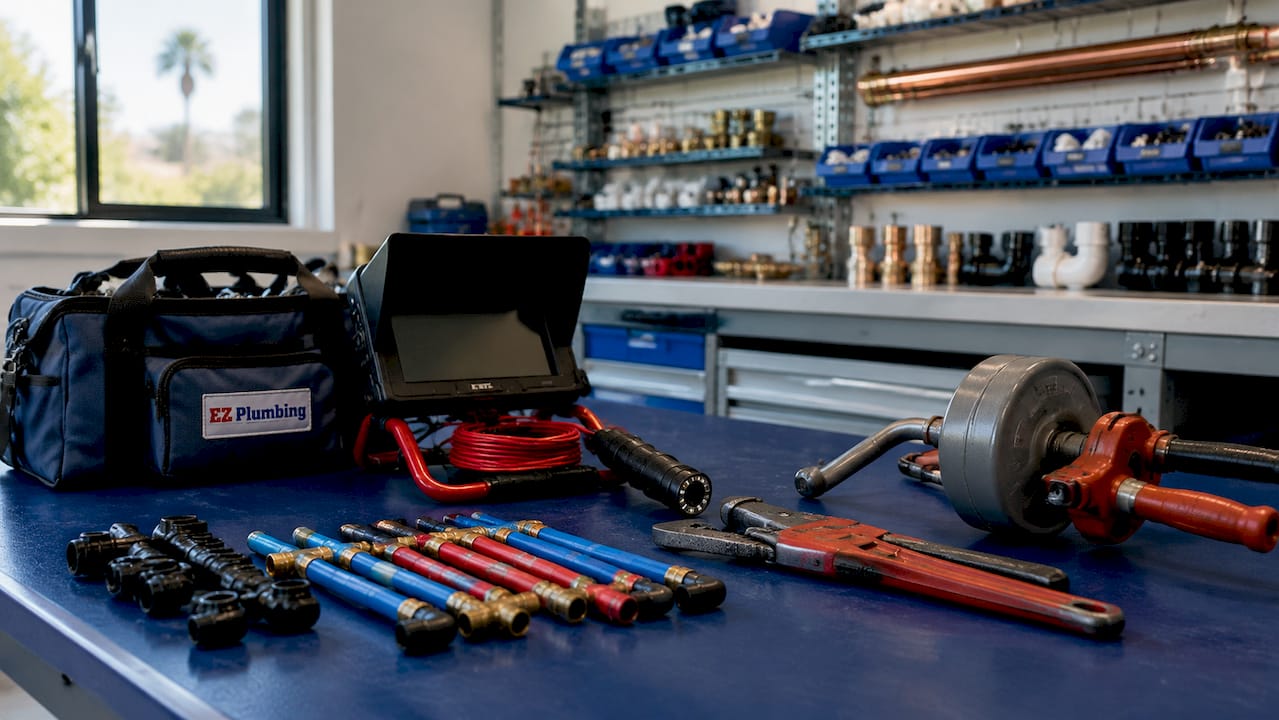
The right tools make the difference between a five-minute fix and a frustrating hour of wasted effort. You do not need a full plumber’s kit. A small set of targeted tools handles the vast majority of residential drain problems.
Essential tools:
- Cup plunger: Best for flat-surfaced drains like kitchen sinks and shower floors.
- Flange plunger: Designed for toilets, with an extended rubber flap that seals the drain opening.
- Hand auger (drain snake): A flexible cable tool that reaches past the P-trap to break up or hook deeper blockages.
- Hair removal tool: A thin, barbed plastic strip that pulls hair clogs from shower and bathroom sink drains.
- Adjustable pliers: Needed to loosen P-trap slip nuts by hand or with light force.
- Bucket: Place it under the P-trap before removing it to catch standing water.
Household materials:
- Dish soap: Grease-cutting formulas like Dawn work well for kitchen drain buildup.
- Baking soda and white vinegar: Useful for monthly maintenance and deodorizing, not for clearing solid clogs.
- Hot water: Effective for flushing grease and soap residue when used at the right temperature.
| Tool or Material | Primary Use | Approximate Cost |
|---|---|---|
| Cup plunger | Kitchen and shower drain clogs | $5–$15 |
| Flange plunger | Toilet clogs | $10–$20 |
| Hand auger | Deep clogs past the P-trap | $20–$50 |
| Hair removal tool | Bathroom sink and shower hair clogs | $3–$8 |
| Baking soda and vinegar | Monthly maintenance flush | Under $5 |
Chemical drain cleaners can damage pipes and seals and produce hazardous fumes. Their residue also complicates professional repairs if you later need a plumber. Skip them entirely and use the physical methods below.
Pro Tip: Before you plunge any sink or tub, stuff a wet rag into the overflow hole. Sealing the overflow directs all hydraulic pressure straight to the clog instead of escaping through the overflow opening.
How do you fix slow drains step by step?
Physical methods work because they address the actual blockage directly. Work through these methods in order, starting with the simplest.
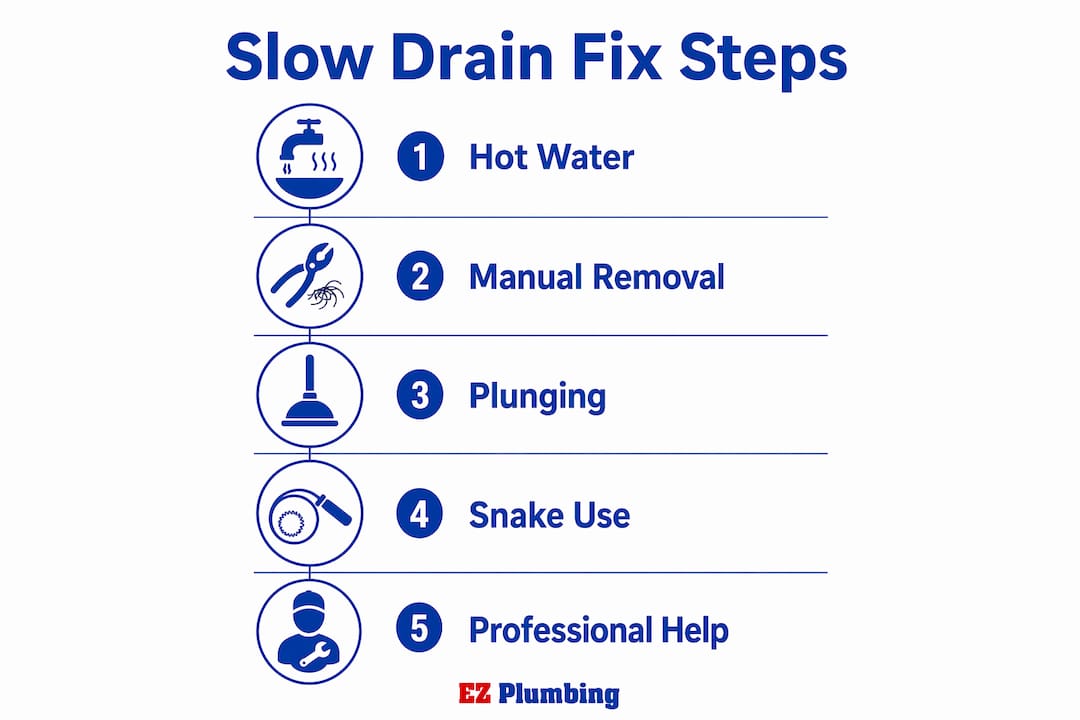
Method 1: Hot water and dish soap
This is the correct first step for a fixing slow kitchen drain caused by grease or soap buildup.
- Boil water, then let it cool for two minutes. You want hot water, not boiling. Temperatures above 160°F can warp or crack PVC pipes, which are standard in most modern homes.
- Squirt two tablespoons of grease-cutting dish soap directly into the drain.
- Pour the hot water slowly in two or three stages, pausing 30 seconds between each pour.
- Run cold water for 30 seconds to test flow.
- Repeat once if the drain is still slow.
This method works best on kitchen sinks where grease and cooking oil accumulate over time. It does not work on hair clogs or solid debris.
Method 2: Manual hair removal
Hair clogs are the leading cause of slow bathroom sink and shower drains. A barbed plastic hair removal tool costs under $5 and solves most of these in under two minutes.
- Remove the drain cover or stopper. On bathroom sinks, the stopper usually lifts out or unscrews.
- Insert the hair removal tool straight down into the drain.
- Rotate it slightly and pull upward slowly. Hair wraps around the barbs and comes out with the tool.
- Dispose of the debris in the trash, not back down the drain.
- Run hot water to flush any remaining residue.
Pro Tip: Install a mesh drain strainer in your shower after clearing the clog. It catches hair before it reaches the pipe and reduces how often you need to clear the drain manually.
Method 3: Plunging correctly
Plunging works by creating hydraulic pressure that dislodges the clog. Most homeowners plunge incorrectly and get poor results because they skip one critical step.
- Fill the sink or tub with two to three inches of water. You need water, not air, to transmit pressure.
- Block the overflow hole completely with a wet rag or tape. Without this seal, pressure escapes and the plunger accomplishes nothing.
- Place the cup plunger directly over the drain opening and press down to form a tight seal.
- Push down firmly and pull up sharply, repeating 10 to 15 times without breaking the seal.
- Remove the plunger quickly on the final pull to release the clog.
- Run water to test flow. Repeat if needed.
Method 4: Cleaning the P-trap
Most slow drain clogs accumulate inside the P-trap or in the first 6–12 inches of pipe. Cleaning the P-trap takes about five minutes and resolves many blockages without any chemicals. The P-trap is the curved pipe section under your sink, shaped like the letter P. It holds a small amount of water at all times to block sewer gases from entering your home.
- Place a bucket directly under the P-trap.
- Unscrew the two slip nuts on either end of the curved section by hand or with adjustable pliers. Turn counterclockwise.
- Pull the P-trap down and let the water drain into the bucket.
- Clear any debris from inside the trap with a small brush or your fingers.
- Rinse the trap thoroughly with water.
- Reattach it and hand-tighten the slip nuts. Do not overtighten.
- Run water for 30 seconds to check for leaks at the connections.
Method 5: Using a drain snake
A hand auger reaches clogs that sit past the P-trap, deeper in the pipe. Use it when plunging and P-trap cleaning both fail.
- Feed the cable end of the auger into the drain opening.
- Rotate the handle clockwise as you push the cable forward.
- When you feel resistance, you have reached the clog. Continue rotating to break it up or hook it.
- Pull the cable back slowly, rotating as you go, to extract debris.
- Flush with hot water to clear remaining residue.
Do not force the cable through pipe joints. Forcing it can crack older pipes or dislodge connections.
Pro Tip: If the snake meets resistance immediately after the P-trap, the clog is likely in the branch drain line. Try pulling back slightly and re-angling the cable before pushing forward again.
How to troubleshoot common mistakes when unclogging slow drains
Knowing what not to do saves you from making a slow drain worse or creating a new problem.
Common mistakes to avoid:
- Using chemical cleaners first. Most homeowners reach for a bottle of drain cleaner before trying any physical method. Chemical cleaners often fail on solid clogs and leave corrosive residue that damages pipes over time.
- Plunging without sealing the overflow. This wastes effort and does not move the clog at all.
- Forcing the drain snake at joints. Older galvanized steel pipes and clay drain lines are brittle. Forcing the cable causes cracks.
- Ignoring multiple slow drains. One slow drain is a localized clog. Two or more slow drains in different parts of the house signal a deeper problem.
| Issue | Appropriate Response |
|---|---|
| Single slow drain, no odor | DIY: plunger, P-trap cleaning, drain snake |
| Hair or soap buildup in bathroom | DIY: hair removal tool, hot water flush |
| Grease buildup in kitchen drain | DIY: hot water, dish soap, plunger |
| Multiple slow drains at once | Call a plumber. Main line issue likely. |
| Gurgling sounds from other fixtures | Call a plumber. Venting problem possible. |
| Sewage smell from drains | Call a plumber immediately. |
Multiple slow drains or gurgling in unrelated fixtures indicate a main sewer line blockage or venting issue. These problems require professional diagnostics with camera inspection equipment. Continuing DIY attempts at that point risks sewage backup and property damage.
If you notice recurring basement water problems alongside slow drains, the issue may extend beyond the drain line itself and involve foundation drainage or main line failure.
Tips for ongoing drain maintenance to prevent future clogs
Prevention is far cheaper than repair. A consistent monthly routine keeps drains clear and extends the life of your pipes.
Monthly maintenance routine:
- Pour half a cup of baking soda into each drain, followed by half a cup of white vinegar. Let the mixture fizz for 30 to 60 minutes, then flush with hot water. This clears light buildup and eliminates odors.
- Run hot water down kitchen drains for 60 seconds after washing dishes. This flushes grease before it solidifies on pipe walls.
- Clean drain strainers weekly. Hair and debris caught in the strainer cannot reach the pipe.
What to keep out of your drains:
- Cooking grease and oils. Pour them into a container and dispose of them in the trash.
- Coffee grounds. They clump together in pipes and create dense blockages.
- Food scraps, even with a garbage disposal running.
- Wet wipes, cotton balls, and paper towels. These do not dissolve and catch on pipe walls.
Periodic P-trap cleaning every three to six months prevents the gradual buildup that causes slow drains in the first place. It takes five minutes and requires no special tools. For homes with older galvanized pipes, professional drain cleaning services once a year help remove scale and corrosion buildup that home tools cannot reach.
Keep water temperature in mind when flushing PVC pipes. Hot tap water is safe. Boiling water is not. PVC softens and can deform at sustained high temperatures, so always let boiling water cool for a couple of minutes before pouring it down the drain.
Key Takeaways
Fixing slow drains requires physical removal of localized blockages using a plunger, P-trap cleaning, or a drain snake, not chemical cleaners.
| Point | Details |
|---|---|
| Start physical, not chemical | Manual methods resolve most clogs faster and without pipe damage. |
| P-trap is the first place to check | Most clogs sit in the P-trap or the first 6–12 inches of pipe. |
| Seal the overflow before plunging | Without sealing the overflow hole, plunging pressure escapes and the method fails. |
| Multiple slow drains mean call a pro | Two or more slow drains signal a main line or venting issue beyond DIY reach. |
| Monthly maintenance prevents most clogs | A baking soda, vinegar, and hot water flush each month stops buildup before it starts. |
What I’ve learned from years of drain calls in Los Angeles
The most common thing I see when we get called out for a slow drain is a P-trap packed with hair, grease, and soap scum that the homeowner never thought to check. They tried a bottle of chemical cleaner first, which did nothing except leave a caustic residue we then had to work around. The fix took us about four minutes once we got there.
Chemical cleaners are the most oversold product in the plumbing aisle. Most homeowners reach for them first when a simple mechanical solution would have worked in half the time. I understand the appeal. Pour something in, walk away, problem solved. But the chemistry does not work that way on solid clogs, and the damage to older pipes adds up over years of repeated use.
The other thing I want homeowners to understand is that knowing how the P-trap works changes everything. Once you realize that curved pipe under your sink is both the most common clog location and the easiest part of your plumbing to access, slow drains stop feeling like a mystery. You open it, clean it, close it. Done.
Where I do urge caution is when multiple drains slow down at the same time. That is not a clog you can snake from a sink. That is a main line or vent stack issue, and pushing a hand auger into it without knowing what you are dealing with can make things significantly worse. Call a licensed plumber at that point. The diagnostic equipment we use, including camera inspection, tells us exactly what is happening inside the pipe before we touch anything.
— EZ
When Ez-plumbing can help with your drain problems

Most slow drains respond well to the methods above. When they do not, or when you are dealing with recurring clogs, multiple affected drains, or older Los Angeles plumbing with galvanized pipes and clay sewer laterals, professional service is the right call. Ez-plumbing provides licensed drain cleaning services for residential customers across the greater Los Angeles area, including hydro-jetting and camera inspection for stubborn or recurring blockages. Our team is fully licensed under C-36 License #583868 and code-compliant with LA municipal requirements. If your drains keep slowing down no matter what you try, contact Ez-plumbing for a professional assessment.
FAQ
Why are my drains slow even after cleaning them?
Recurring slow drains after cleaning usually indicate buildup deeper in the pipe, a partial main line blockage, or a venting issue. A professional camera inspection identifies the exact cause.
How do you fix a slow kitchen drain specifically?
Start with hot water and grease-cutting dish soap poured in stages. If that does not work, plunge the drain with the overflow sealed, then check and clean the P-trap under the sink.
Is baking soda and vinegar effective for unclogging slow drains?
Baking soda and vinegar are effective for cleaning and deodorizing drains but do not clear solid clogs. Use them as a monthly maintenance flush, not as a primary clearing method.
When should I stop DIY and call a plumber?
Call a plumber when multiple drains are slow at the same time, when you hear gurgling from fixtures you are not using, or when you detect a sewage smell. These signs point to main line or venting problems that require professional equipment.
Can I use a drain snake on any type of drain?
A hand auger works on most sink, tub, and shower drains. Feed the cable carefully and do not force it through pipe joints, especially in homes with older galvanized or clay pipes, which are more brittle than modern PVC.