
How to Clear a Grease Clogged Drain: Expert Solutions
Dinner is over, the pans are stacked, and the kitchen sink starts doing that slow, miserable swirl. Water sits in the basin. The drain gurgles. You run the faucet again hoping it will suddenly clear, but it only rises higher and smells worse.
That's the usual grease clog. It doesn't happen all at once. Fat, oil, and grease, often shortened to FOG, wash down warm, then cool inside the pipe, stick to the walls, and catch food particles along the way. What looks like a simple slow sink can be anything from a fresh kitchen branch clog to a heavier blockage deeper in the line.
If you're trying to figure out how to clear a grease clogged drain, the key is using the right method for the kind of clog you have. Some internet favorites sound clever but don't do much. Others work well when the buildup is recent. And sometimes the smartest move is to stop before you damage the pipe or make the blockage worse.
Table of Contents
- That Slow Drain A Familiar Kitchen Problem
- First Response Methods That Actually Work
- Using Mechanical Tools for Stubborn Clogs
- Safety Precautions You Cannot Ignore
- When to Stop and Call a Professional Plumber
- How to Prevent Future Grease Clogged Drains
- Frequently Asked Questions About Grease Clogs
That Slow Drain A Familiar Kitchen Problem
A grease clog usually starts with a sink that still drains, just badly. You rinse a frying pan, run the disposal, maybe wash a plate with oily sauce on it, and the basin takes longer every day to empty. Then one night it crosses the line from annoying to unusable.
In the field, this is one of the most common kitchen patterns. The trap might hold some buildup, but a lot of grease trouble forms along the pipe walls where warm grease cools, hardens, and starts collecting crumbs, starches, and soap residue. That's why the sink can seem better for a day and then slow right back down.
Grease clogs are sticky by nature. If you only open a small hole through the middle, water may drain for now, but the pipe wall is still coated.
What matters most at the start is not making it worse. Running lots of cold water won't help. Reaching for harsh chemicals right away can create safety problems. Shoving random objects into the drain often just packs the blockage tighter or scratches the pipe.
A useful way to think about it is simple. Fresh grease responds differently than old, compacted grease. A light film in a sink branch can sometimes be loosened with heat, soap, and patience. A clog that keeps coming back often means the buildup extends farther than you can reach from the sink opening.
First Response Methods That Actually Work
The first thing many homeowners try is baking soda and vinegar because the fizz looks active. For grease, that's usually the wrong takeaway.
Why the fizz doesn't solve grease
Plumbing industry guidance says the baking soda and vinegar reaction is ineffective against grease, and that the part that helps is hot water, not the fizz. For a fresh clog, the practical DIY method is dish soap plus a full kettle of hot water, and it may take more than one treatment to improve flow, as explained by Benjamin Franklin Plumbing's discussion of why baking soda and vinegar don't fight grease effectively.
That makes sense in real plumbing terms. Grease is a physics problem first. Heat softens the fat. Soap acts as a surfactant, helping break up the slick coating so water can carry it along. Vinegar fizz may look busy, but it doesn't have much to do with removing hardened grease from pipe walls.
If you want a non-chemical approach for common household clogs, this guide on unclogging a drain without chemicals lines up with the same basic idea. Start simple, and use methods that won't create a bigger mess.
The right order for soap and hot water
For a kitchen sink with standing water, start by removing as much water from the basin as you can with a cup or small container. You want the soap and heat to hit the clog, not get diluted in a full sink.
Then use this sequence:
- Add dish soap first. A good squeeze of grease-cutting dish soap gives the hot water something to work with.
- Pour in very hot water. Use a full kettle and pour steadily, not in a timid trickle.
- Wait a moment. Let the heat and soap work through the line.
- Test the drain. Run hot tap water and see whether the sink starts moving faster.
- Repeat if it improves but doesn't clear. Partial improvement means you may be softening the blockage.
Here's a quick visual walkthrough before you try it yourself.
Practical rule: If the sink responds to soap and hot water even a little, keep working patiently. If there's no change at all, stop guessing and move to mechanical cleaning.
This first-response method is best for fresh grease deposits. If the clog has been building for a long time, or if food waste is mixed into it, you'll usually need a tool that physically breaks through or pulls material back out.
Using Mechanical Tools for Stubborn Clogs
When hot water and soap stop helping, the job changes. At that point you're no longer trying to melt a light coating. You're trying to break open or extract a compacted blockage.
A plumbing education guide recommends moving from flushes to mechanical removal for stubborn grease, and notes that a plumbing snake, or auger, is often necessary because household methods may not fully break apart grease mixed with other debris. The same guidance also warns against repeated boiling water in PVC because high heat can loosen joints over time, as described in this grease-clog guide from Fuse Service.
How to use a kitchen plunger correctly
A sink plunger works best when the clog is near the trap or just beyond it. It doesn't need brute force. It needs a seal.
Try it this way:
- Block the second bowl if you have a double sink. Use a stopper or wet rag so pressure doesn't escape.
- Add enough water for the cup to seal. A dry plunger on a dry sink won't do much.
- Cover the drain fully. Keep the cup flat against the basin around the opening.
- Pump with short, controlled strokes. You want pressure and suction, not wild splashing.
- Check for movement. If the water suddenly drops, flush with hot tap water to see if the line has reopened.
A plunger is often overlooked because people think it's only for toilets. In a kitchen sink, though, it can be useful for soft clogs or grease mixed with food scraps close to the fixture.
When a hand auger makes more sense
A hand-crank drain auger is the better tool when the plunger fails or the clog feels dense. Feed the cable slowly into the drain or trap arm access point. When you meet resistance, tighten the set screw and turn the crank. The goal is to work the cable into the blockage, not ram through the pipe like you're drilling concrete.
Then back it out carefully. Sometimes the auger hooks debris and brings material back. Other times it opens a path so you can flush the loosened grease out with hot water. If you feel the cable binding hard, stop and reassess. Forcing it can kink the cable or damage older piping.
If you want a more detailed walkthrough, this step-by-step guide on how to snake a kitchen sink is a good reference before you start taking parts apart.
DIY Grease Clog Removal Methods Compared
| Method | Best For | Pros | Cons |
|---|---|---|---|
| Dish soap and hot water | Fresh grease buildup | Simple, inexpensive, low risk when used reasonably | Often won't clear compacted clogs |
| Plunger | Soft blockage near sink opening or trap | Fast, no disassembly required | Limited reach |
| Hand auger | Stubborn clogs with grease and debris combined | Physically breaks through or retrieves material | Can damage pipes if forced |
| Trap cleaning by hand | Visible blockage in trap | Direct access to nearby clog | Messy, limited to a short section |
If the auger opens the line but the sink clogs again soon after, treat that as a clue, not a victory. The blockage may be farther down the run.
Mechanical tools work because they do what liquid shortcuts can't. They physically disturb the clog. That's why they're usually the turning point between a temporary drain improvement and an actual clearing.
Safety Precautions You Cannot Ignore
A grease clog is annoying. An injured hand, burned face, or damaged drain line is worse. Before you start taking apart pipes or feeding in a snake, slow down and protect yourself.
Chemical cleaners can turn a clog into a hazard
If someone has already poured a chemical drain cleaner into the sink, assume the drain and standing water may be hazardous. Don't plunge aggressively and don't open the trap barehanded. Chemical splash to the eyes or skin is a real risk.
Wear gloves and eye protection. Keep the area ventilated. If you don't know what went down the drain, treat the job with extra caution. Mixing products is never a smart experiment, and it can leave you dealing with fumes or caustic liquid while you're bent over the cabinet.
If there's chemical cleaner in the line, the safest move may be to stop and let a plumber handle the next step.
Protect the pipe while you work
Not every pipe can take the same abuse. Older metal drains can be thin inside from age and corrosion. Plastic piping can shift at joints if you apply too much force or too much heat. That's one reason repeated boiling water is a bad habit for PVC systems.
Keep these limits in mind:
- Use controlled force. If the auger won't turn, don't muscle it.
- Check for leaks after any attempt. Look under the sink around slip joints and the trap.
- Work with the setup you have. A disposer, dishwasher branch, or double bowl sink changes how pressure and access behave.
- Don't improvise with wire hangers or sharp tools. They can puncture, scratch, or snag.
A safe DIY job is one where you know what you're doing and where you're stopping. That's not hesitation. That's judgment.
When to Stop and Call a Professional Plumber
Some grease clogs act like simple sink problems but aren't. You clear the basin, the water drains, and then two days later the same sink is slow again. Or the dishwasher runs and dirty water backs up into the bowl. That's when you need to think past the fixture.
Signs the clog is deeper than the sink
A recurring clog can mean the blockage isn't in the sink arm at all. It may be farther down a branch line or in a larger drain that serves more than one fixture.
Look for patterns like these:
- The clog comes back quickly. That usually means you only reopened a narrow channel.
- More than one drain is acting up. A bathroom or laundry drain slowing at the same time points beyond the kitchen trap.
- The dishwasher sends water into the sink. That often suggests restricted drainage downstream.
- Odors linger even after the sink empties. Grease and trapped debris deeper in the line can keep producing smell.

Why deeper grease blockages need different equipment
A drain-jetting guide notes that recurring clogs may indicate buildup farther down in a shared branch or main line, and that professional drain jetting can scrub grease from pipe walls. It also points out that cleaning is often most effective from a downhill cleanout so debris is flushed out of the system rather than shifted around, as explained in Clog Hog's guide to unclogging cooking grease.
That point matters. A sink opening gives you limited reach and poor direction. A proper cleanout gives better access for diagnosing where the grease sits and which way it needs to be cleared. In Los Angeles homes, condos, and multi-unit properties, that difference can decide whether the fix lasts.
For deeper grease buildup, one option is a service such as EZ Plumbing for drain cleaning or hydro jetting. Hydro jetting doesn't just poke a hole through the center. It scrubs the interior pipe wall, which is why it's useful when grease coats a longer stretch of line.
A clog that returns after a decent DIY clearing attempt is giving you information. Listen to it.
If you're seeing repeat backups, shared-line symptoms, or water movement between fixtures, don't keep cycling through home remedies. That usually wastes time and can push the mess into a more inconvenient part of the system.
How to Prevent Future Grease Clogged Drains
The easiest grease clog to clear is the one that never forms. Kitchen drains stay healthier when grease control happens before anything hits the water.
Public guidance on FOG says grease traps and interceptors are more likely to stop working properly if more than 25% by volume is filled with food and grease, according to Sussex County's FOG guidance. Home kitchens don't usually have those devices, but the lesson still applies. Small grease deposits add up faster than people think.
Daily habits that keep grease out of the line
Use habits that stop buildup at the source:
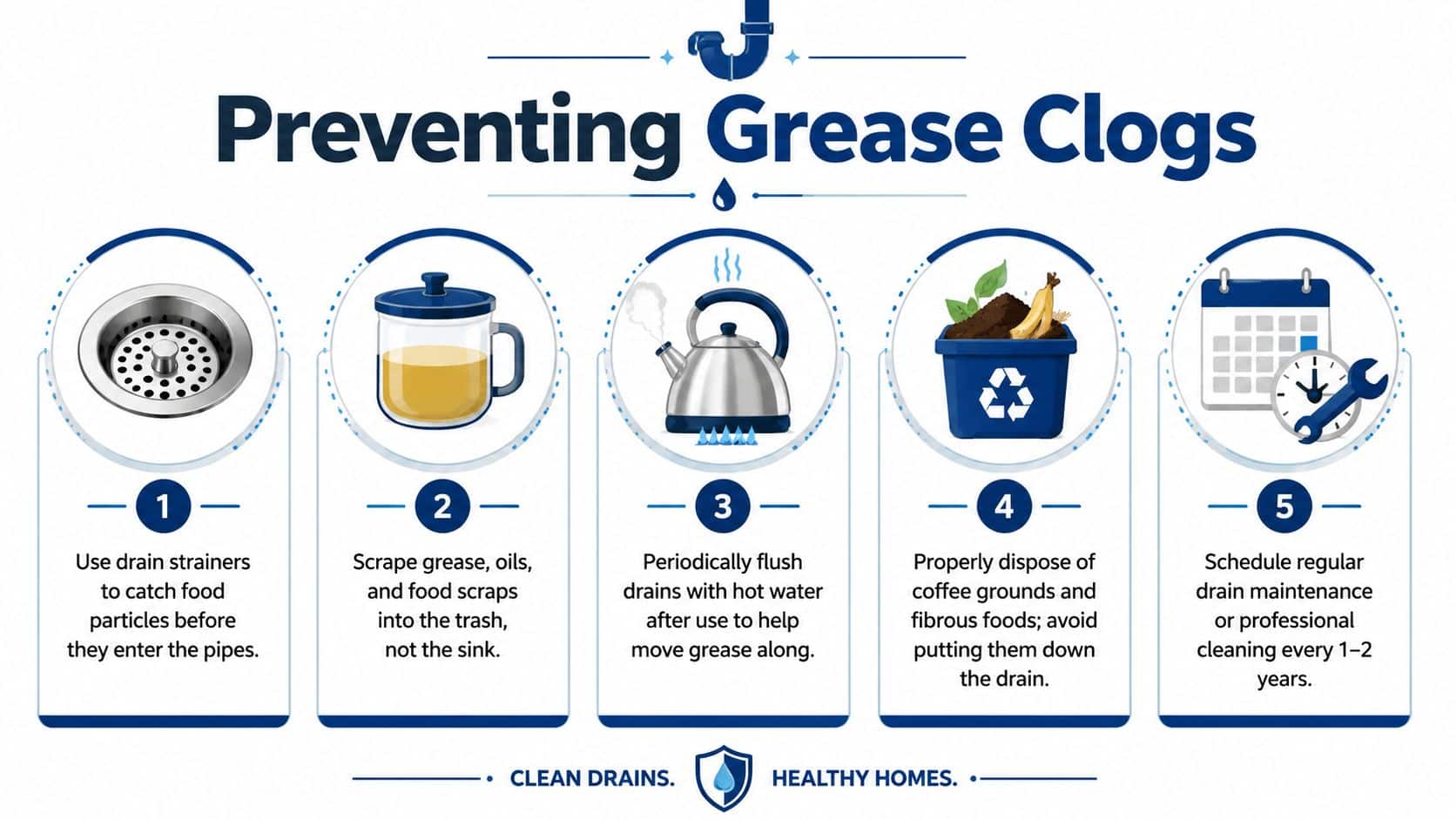
- Scrape first. Let grease cool, pour or scrape it into a container, and throw it in the trash instead of rinsing it down the sink.
- Catch solids. A mesh strainer helps keep food particles out of the drain, which matters because grease loves something to cling to.
- Keep problem scraps out. Coffee grounds, fibrous vegetable waste, and greasy leftovers all make a bad combination in a kitchen line.
- Wipe pans before washing. A paper towel does more for your drain than another round of hot water after the fact.
If you're setting up an outdoor prep area or secondary wash station, especially for hosting, a covered sink setup can help control where food and grease cleanup happens. This guide on an outdoor sink that's essential for backyard entertaining setup is worth a look if you want a cleaner workflow outside the main kitchen.
A simple maintenance routine that helps
You don't need an elaborate ritual. You need consistency.
- After greasy dishwashing, run hot water with a little dish soap. This helps move light residue before it settles.
- Check the strainer and clean it. A strainer full of scraps defeats the point.
- Pay attention to early warning signs. A little gurgle or a slower drain is easier to deal with than a full blockage.
- Follow a maintenance plan if your property has recurring issues. This drain maintenance guide for preventing costly plumbing issues can help you build a routine.
Prevention isn't glamorous, but it's what works. Most grease problems start with repeated small habits, and that's exactly how they're avoided too.
Frequently Asked Questions About Grease Clogs
Is chemical drain cleaner a good idea for grease
Usually, no. Chemical cleaners may sit on top of standing water, create safety risks, and still fail to remove the greasy coating on the pipe wall. If someone already used one, handle the sink carefully and consider professional help before opening the drain.
What's the difference between a drain snake and hydro jetting
A drain snake opens a path through the blockage or pulls some material back. It's targeted and useful for many local clogs. Hydro jetting uses water to clean the inside of the pipe more thoroughly, which is why it's often the better fit when grease coats a longer section and the clog keeps returning.
How do I know if the problem is in my line or farther out
Pay attention to the pattern. A single slow sink can be local. A clog that returns fast, affects multiple fixtures, or causes backup when another appliance drains usually points to a deeper branch or main-line issue.
Can I use boiling water every time
Be careful with that habit. Very hot water can help with fresh grease, but repeated boiling water use isn't a good idea for PVC piping. Moderate your approach and use heat as one tool, not as a constant cure-all.
Should I take apart the P-trap myself
If you're comfortable with a bucket, gloves, and basic hand tools, you can check the trap for a nearby blockage. If the fittings are old, stuck, or already leaking, it's smarter to stop before you turn a clog into a cabinet leak.
If your kitchen sink keeps backing up, the clog may be deeper than a quick DIY fix can reach. EZ Plumbing handles drain cleaning, hydro jetting, and sewer diagnosis for Los Angeles homes, landlords, HOAs, and commercial properties. If you need a plumber who can clear the line safely and figure out why it keeps happening, that's the time to get professional help.