
Emergency: How to Fix an Overflowing Toilet
When a toilet starts rising toward the rim, the immediate impulse is to do the one thing that makes it worse. They flush again. If you're standing in a bathroom with water climbing and towels already on the floor, slow down for a second. The right fix depends on what failed.
Sometimes the bowl is blocked and the toilet needs to be cleared. Other times the drain is fine, but the tank mechanism keeps feeding water and turns a small problem into a flood. If you know which one you're dealing with, you can stop the mess faster and avoid damaging the toilet.
Table of Contents
- Emergency Stop Your First Actions to Prevent a Flood
- Diagnose the Cause Clog or Tank Failure
- How to Clear a Common Toilet Clog Yourself
- How to Repair a Leaking Toilet Tank
- Safe Cleanup and Future Prevention Tips
- When to Stop and Call a Licensed Plumber
Emergency Stop Your First Actions to Prevent a Flood
If the bowl is still filling, stop incoming water before you do anything else. That's the fastest reliable first step. Current repair guidance says to shut the toilet's supply valve clockwise, or if that fails, lift the tank lid and press the flapper closed. The same guidance also warns that splashback is common during plunging if the seal breaks or the bowl water is too high, which is why control comes before clearing the clog, as explained by Saffer Plumbing's overflowing toilet guidance.
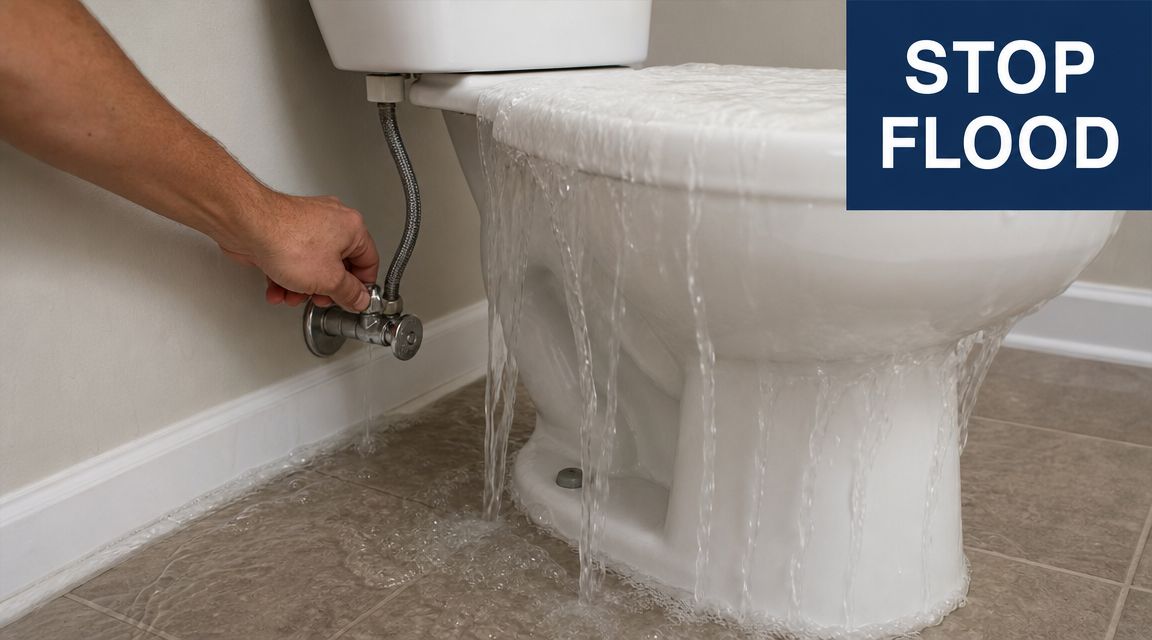
Shut off the water first
Look behind the toilet near the wall or floor. You should see a small shutoff valve on the supply line. Turn it clockwise until it stops.
If that valve is missing, frozen, or leaking when touched, skip the wrestling match and go to the tank. If you need to isolate water to the whole bathroom or house, this guide to shutting off the main water supply can help.
Use this order:
- Go to the shutoff valve first. It's the cleanest way to stop the refill.
- Watch the bowl for a few seconds. Water may still rise briefly from what was already moving through the tank.
- Don't flush again. A second flush adds more water to a toilet that already isn't controlling flow or drainage correctly.
Practical rule: If water is rising, your first job isn't unclogging. It's stopping the refill.
Use the tank as your backup shutoff
Take the tank lid off carefully and set it on a towel or bath mat. Porcelain lids chip easily.
Inside the tank, you have two fast options:
- Lift the float. On some toilets it's a ball on an arm. On others it's a cup that rides up and down the fill valve. Raising it tells the fill valve to stop sending water into the tank.
- Press the flapper closed. The flapper is the rubber piece at the bottom of the tank. If it stays open after a flush, water keeps moving from tank to bowl. Push it down gently to seal the opening.
If the bowl is very high, wait. Give it a minute before trying anything else.
What not to do in the first minute
People often make the overflow worse by guessing. Avoid these mistakes:
- Don't use chemical drain products. They can damage porcelain or make a blockage worse. Mechanical tools are the right first response.
- Don't stab into the bowl with random wire or hangers. You can scratch the trapway and still leave the obstruction in place.
- Don't keep testing with repeated flushes. A toilet has to earn a test flush after the problem is controlled.
Once the water stops rising, the next question is simple. Is this a clog, or is the tank causing the overflow?
Diagnose the Cause Clog or Tank Failure
A lot of bad toilet advice skips this step. It jumps straight to plunging. That's fine if the problem is a clog. It's wasted effort if the tank parts are malfunctioning.
The quickest way to figure out how to fix an overflowing toilet is to look at where the failure starts. Is the bowl unable to drain, or is the tank continuing to send water where it shouldn't?
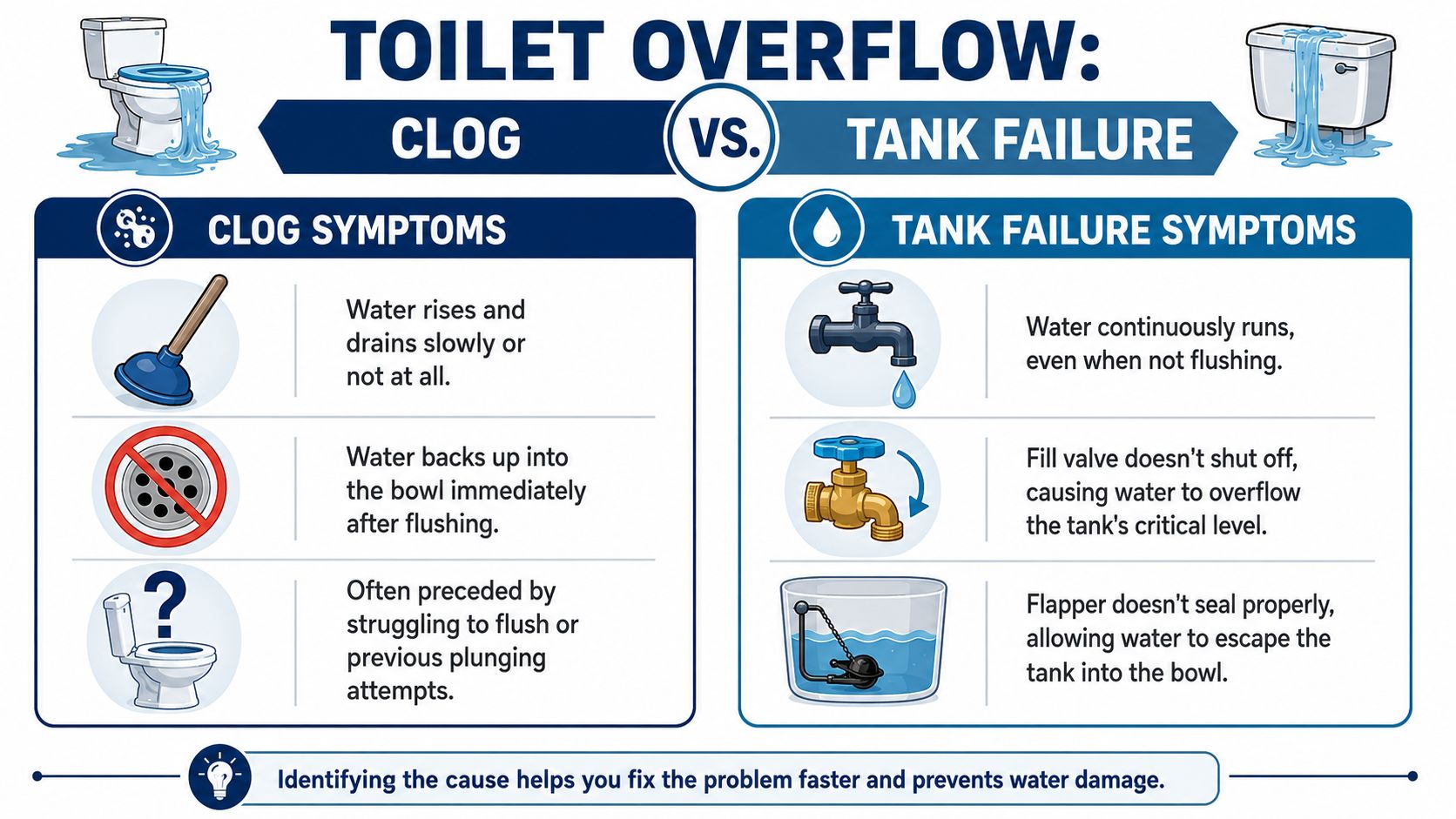
Signs you have a clog
A clog usually announces itself in the bowl.
| Symptom | What it usually means |
|---|---|
| Water rises after a flush and drains slowly or not at all | The trap or drain path is restricted |
| The bowl was sluggish before the overflow | Material was already building up |
| Plunging helped before but the problem keeps returning | The obstruction may be deeper than the bowl |
If the toilet backs up and you suspect a branch line or main line issue, a camera inspection often answers the question faster than repeated guessing. A sewer camera inspection proves particularly useful, especially when backups repeat.
Signs the tank parts are the problem
Tank failures look and sound different. The bowl may not be heavily blocked at all.
Watch for these clues:
- The toilet keeps running long after the flush.
- You hear hissing in the tank.
- Water keeps moving from tank to bowl even when nobody is flushing.
- The fill valve doesn't shut off cleanly.
- The flapper hangs open or doesn't seal well.
If water is continuously feeding the bowl, plunging won't solve the real problem.
That distinction matters. A clog needs force applied at the bowl or trapway. A tank failure needs a part adjusted or replaced. If you choose the wrong path, you lose time and usually end up with more water on the floor.
How to Clear a Common Toilet Clog Yourself
If the bowl is the problem, start with the simplest tool that works well. Use a flange plunger, not a flat sink plunger. The flange is the soft extension that fits into the toilet drain opening and creates a seal.
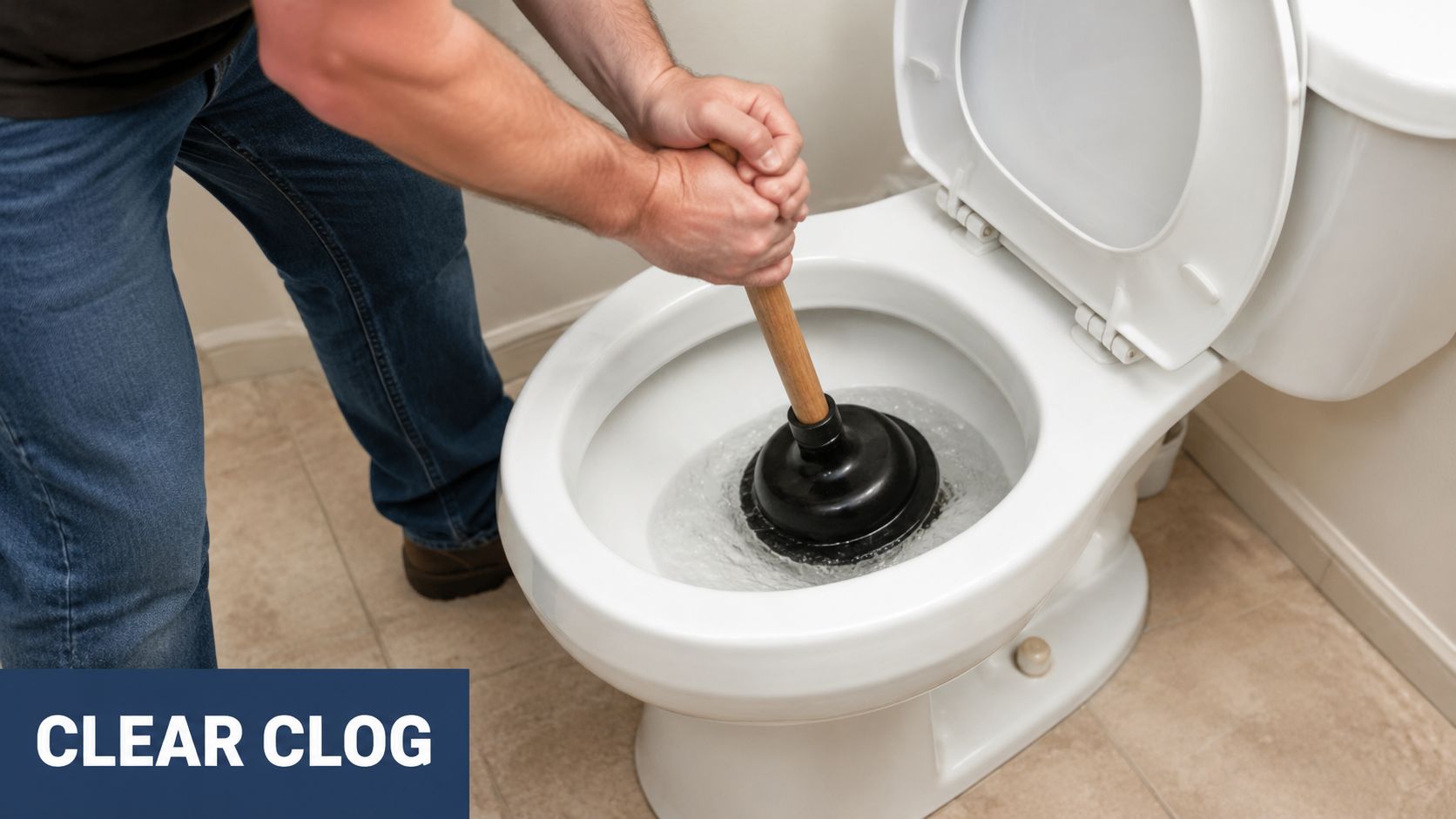
Use the right plunger the right way
A good plunging technique is controlled, not wild. Guidance from plumbing experts says the first stroke should be gentle to expel trapped air, then you switch to vigorous plunge cycles with the bell fully submerged to avoid splashback and keep the seal intact.
Use this sequence:
- Make sure the water is no longer rising.
- Place the flange fully into the drain opening.
- Start with one gentle push. That pushes air out so you don't blast dirty water upward.
- Plunge with short, forceful strokes while keeping the rubber cup sealed.
- Finish with a strong pull upward. Sometimes that breaks the clog loose better than another push.
Give it several solid cycles, then pause and see whether the bowl level drops normally.
A plunger works by moving water, not air. The seal is the whole job.
If you don't already keep one in the bathroom, it's worth having a dedicated toilet plunger ready. So is learning how to unclog a drain without chemicals, because chemical products aren't the right answer for toilet overflows.
After you've tried proper plunging more than once and the toilet still won't clear, don't keep hammering at it. One plumbing source says plungers solve about 90% of clog-related overflows when used correctly, but persistent cases often point to a deeper blockage and may require professional help, according to A-1 Choice Plumbing's toilet overflow advice.
Move to a toilet auger for stubborn blockages
A toilet auger, also called a closet auger, is the next step when you suspect a lodged object or a clog beyond the reach of a plunger. It has a protective sleeve and curved shape designed for the toilet trapway.
Use it carefully:
- Insert the curved end slowly. Let the bend follow the toilet's internal shape.
- Turn the handle while feeding the cable. Don't force it.
- If you feel resistance, keep light pressure and rotate. You may be breaking up the clog or hooking onto an object.
- Retract slowly. If the clog is a toy, wipe, or other foreign object, you may pull it back out.
- Protect the porcelain. If the auger doesn't have a sleeve or you're forcing metal against the bowl, stop.
Here's a visual walkthrough of the process before you try it:
If the auger reaches full depth without restoring normal drainage, you're probably past a simple fixture clog. At that point the blockage may be in the branch drain, venting may be involved, or the line may be backing up beyond the toilet itself.
How to Repair a Leaking Toilet Tank
If your diagnosis pointed to the tank, the repair is usually more straightforward than people expect. Most overfill and constant-running problems come from two parts: the flapper and the float/fill valve setup.
Test and replace a worn flapper
The flapper is the rubber seal at the bottom of the tank. When it warps, hardens, or doesn't seat properly, water leaks from the tank into the bowl. That can keep the fill valve cycling and create the impression that the toilet is overflowing for no clear reason.
A simple food-coloring test works well. Put a few drops of food coloring in the tank water, wait without flushing, and check the bowl. If color appears in the bowl, the flapper isn't sealing.
To replace it:
- Shut off the water at the toilet valve.
- Flush and hold the handle so most tank water drains out.
- Unhook the old flapper from the overflow tube ears.
- Match the replacement to the old part at the hardware store if possible.
- Attach the new flapper and reconnect the chain with a little slack, not so tight that it holds the flapper open.
A chain that's too short can cause the same symptom as a bad flapper.
Adjust the float and fill valve
The float tells the fill valve when to stop. If it's set too high or the fill valve isn't responding correctly, water rises too far in the tank and may continue into the overflow tube.
Common setups:
- Ball-and-arm float: Bend the arm slightly downward if the water level is too high.
- Cup-style float on a vertical fill valve: Use the adjustment screw or clip on the assembly to lower the shutoff point.
- Fill valve that never shuts off cleanly: Replacement is often better than repeated tweaking.
The correct water level should stop below the top of the overflow tube, not at it.
Open the supply valve slowly after adjustment and watch one full refill cycle. You want a clean shutoff, a stable water line, and no trickling into the bowl afterward.
Safe Cleanup and Future Prevention Tips
Fixing the toilet is only half the job. The floor, grout lines, baseboards, and anything absorbent nearby need attention right away. Overflow water from a toilet should be treated as contaminated.
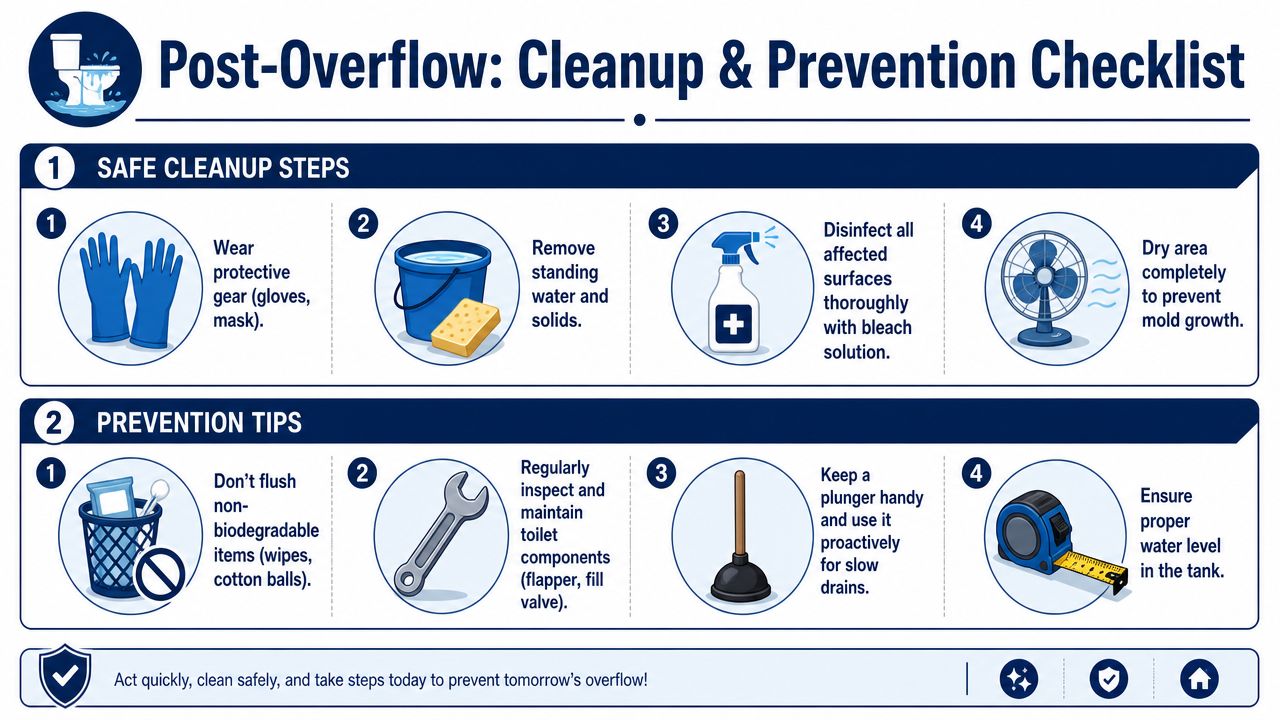
Clean the area like contaminated water reached it
Start with protective gear. Wear gloves, and if the splash spread beyond the immediate area, use a mask as well.
Then work in this order:
- Remove standing water first. Use paper towels, disposable rags, or a wet/dry vacuum if you have one.
- Pick up solids separately. Bag them immediately.
- Disinfect all affected surfaces. That includes the floor, toilet base, nearby trim, and anything the water touched.
- Dry the room completely. Run the exhaust fan, open a window if possible, and use additional airflow so moisture doesn't linger.
If water sat long enough to affect drywall, trim, cabinets, or flooring beyond the bathroom surface, a restoration process may be the smarter next step. This overview of Wheeler Painting restoration services is useful for understanding what proper water-damage cleanup involves after an indoor overflow.
Small habits prevent most repeat emergencies
Toilet overflows don't usually come out of nowhere. They tend to follow warning signs or bad habits.
Keep these rules in the house:
- Flush only toilet paper and human waste. Wipes, paper towels, cotton products, and hygiene items belong in the trash.
- Pay attention to slow drains. A toilet that struggles today often overflows later.
- Check tank parts occasionally. If the flapper looks warped or the fill valve keeps cycling, fix it before it becomes an emergency.
- Skip harsh in-tank chemicals. They can shorten the life of rubber and plastic parts.
- Keep a flange plunger nearby. Not in the garage. In the bathroom where you can reach it fast.
A toilet doesn't need much maintenance, but it does need basic respect. Most preventable overflows start with ignored symptoms, not sudden disaster.
When to Stop and Call a Licensed Plumber
Some toilet problems are still homeowner-friendly. Others aren't. The trick is knowing when you've crossed from a simple fixture issue into a drainage, venting, or system problem.
The underlying design hasn't changed much. The overflow problem in a modern gravity-flush toilet is controlled by the shutoff valve, the float or fill valve, and the overflow tube, and repair guidance still treats those mechanical controls as the first line of defense. That same guidance warns against chemical drain products in toilets because they can damage porcelain or worsen a blockage, and it emphasizes maintenance of flappers, floats, and fill valves, especially in older fixtures, as noted by Roto-Rooter's toilet overflow repair guide.
Clear signs DIY has reached its limit
Call a licensed plumber if any of these are happening:
- The toilet auger didn't clear the blockage.
- Water rises again as soon as you test flush.
- Another fixture backs up when the toilet is used. A shower or tub is the classic clue.
- The shutoff valve is stuck, broken, or leaking.
- You repaired the flapper or adjusted the float and the toilet still runs.
- Water is leaking around the toilet base or showing up below the floor.
What a plumber should check next
At that point, the problem may be beyond the bowl. A plumber may need to inspect the branch drain, venting, flange, wax seal, or the sewer line itself. For Los Angeles properties, one available option is EZ Plumbing, which provides emergency plumbing, drain cleaning, sewer diagnostics, and service for homes, HOAs, property managers, and commercial buildings.
You want a real diagnosis, not another round of guesswork. Once a toilet overflow starts involving multiple fixtures, recurring backups, or hidden leakage, the cheapest move is usually the one that ends the problem completely.
If the overflow won't stop, keeps coming back, or looks bigger than a simple clog, call EZ Plumbing at (818) 908-2710 for 24/7 emergency service in Los Angeles. They serve homeowners, property managers, HOAs, and commercial properties, and you can also schedule service online through their website.