
How to Shut Off Main Water Supply: A Step-by-Step Guide
Water is running where it shouldn't, the floor is getting slick, and every second feels expensive. In that moment, you don't need theory. You need to stop the flow, avoid making the problem worse, and figure out whether you're dealing with a simple shutoff or a situation that needs a plumber right away.
Knowing how to shut off main water supply lines is one of the most useful emergency skills a homeowner, landlord, or property manager can have. It's basic damage control. The faster you isolate the water, the more options you keep. If the leak started because of weather or roof intrusion instead of a plumbing failure, it also helps to understand the insurance side. This guide on roof leak insurance for California homeowners is a practical companion for that part of the problem.
Table of Contents
- Your First Move in a Water Emergency
- Find Your Main Water Shutoff Valve
- Operating the Shutoff Valve Safely
- Confirm the Water Is Off and Drain the Pipes
- Troubleshooting Common Shutoff Valve Problems
- When You Must Call an Emergency Plumber
Your First Move in a Water Emergency
First, keep people clear of the leak area if the floor is slippery or water is moving toward outlets, cords, or appliances. Don't wade into standing water to save a rug or reach under a cabinet. Your first job is control, not cleanup.
Then do one thing at a time. Go to the main water shutoff. If the leak is clearly coming from a toilet, faucet, sink stop, dishwasher line, or washing machine hose, you may be able to isolate just that fixture. If you're not sure, shut the house down first and sort out the details after the flow stops.
Practical rule: If water is actively escaping and you don't know the source within a minute, go straight to the main shutoff.
A lot of homeowners lose time because they assume the valve will be easy to find and easy to turn. Sometimes it is. Sometimes it's in a garage corner behind storage, in a basement on the entry wall, or in a meter box that hasn't been opened in years. Sometimes the handle is stiff enough that one bad move turns a leak into a broken valve.
Focus on three actions:
- Find the right shutoff: Look for the point where water enters the property.
- Operate it correctly: Turn the valve the right way and stop if it feels unsafe.
- Verify the shutdown: Open a low faucet after closing the valve so you know the line is depressurized.
That calm sequence works better than rushing from fixture to fixture. It gives you a controlled house instead of a guessing game.
Find Your Main Water Shutoff Valve
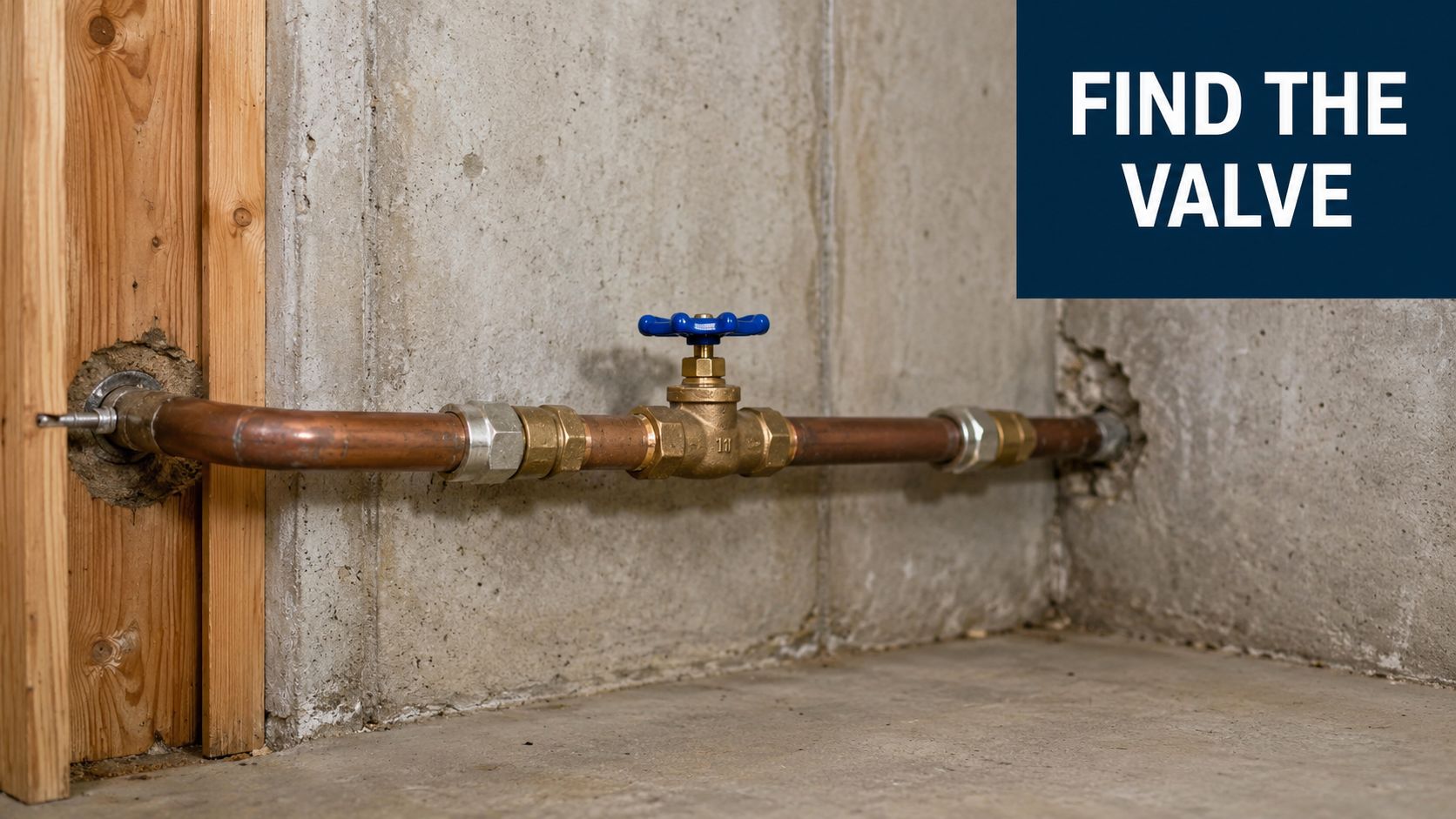
Start at the point where water enters the home. In the field, that is the fastest way to cut through the guesswork.
On many houses, the main water shutoff sits just inside the perimeter wall facing the street, near the garage, basement entry wall, crawlspace access, or exterior foundation. If the home does not have an accessible interior shutoff, the working valve may be in the meter box near the street, as noted by Western Municipal Water District's shutoff guide.
Use a short search pattern and stay focused on the main supply line, not the smaller fixture valves under sinks or behind toilets.
Garage or utility room
Check the wall closest to the street or meter. Many homeowners lose time at the water heater. The shutoff on the cold inlet to the heater is not the same as the house main.Basement or crawlspace entry wall
Look where the pipe comes through the foundation. In older homes, the valve is often on the first exposed horizontal run.Exterior wall or valve box
Some homes have the shutoff outside where the service line enters the structure. Dirt, paint, landscaping, and storage often hide it.Meter box near the curb or sidewalk
If you still have not found a house valve, check whether the property relies on the meter shutoff. That is common, but it creates a trade-off. It may be your only way to stop the water, and it may also be harder to reach quickly if the box is buried, full of mud, or requires a special tool.
What the shutoff usually looks like
Most main shutoffs are one of these two styles:
| Valve type | What it looks like | Typical closing motion |
|---|---|---|
| Gate valve | Round wheel handle | Turn clockwise until closed |
| Ball valve | Straight lever handle | Turn clockwise a quarter-turn to closed |
The pipe tells you more than the handle does. Follow the larger incoming water line. If you see smaller branches splitting off nearby, you are usually looking at the right section of piping.
Identify the incoming main pipe first. Then confirm the shutoff mounted on that line.
Real emergencies do not always follow the clean diagram. I often find valves hidden behind shelving, painted over, frozen in place, or buried in a meter box that has not been opened for years. If you find the valve but cannot access it safely within a minute or two, shift from searching to decision-making. Clear access if that is easy. If access means moving heavy storage, digging around the meter, or reaching into a flooded area, call a plumber or the water utility and protect the area from further damage while you wait.
Apartments condos and HOA buildings
In a condo or apartment, there may be more than one shutoff between your fixtures and the street. Your unit may have its own valve, and the building will usually have another for shared lines.
Check these locations first:
- Inside the unit: Utility closet, laundry area, water heater closet, or an access panel
- Shared service areas: Garage utility rooms, riser rooms, or maintenance corridors
- Building records: Emergency instructions from the HOA, landlord, or property manager
Use the unit shutoff if you can reach it. Do not close a building valve unless you know it serves only your space or building staff directs you to do it. In a managed property, the right call is often simple. If water is active inside your unit and your own shutoff is missing, blocked, or unclear, contact maintenance and an emergency plumber at the same time.
Operating the Shutoff Valve Safely
Before you put a hand on the valve, slow down enough to identify what you're turning. The wrong motion, or too much muscle on an old valve, is where people get into trouble.
Know which valve you have
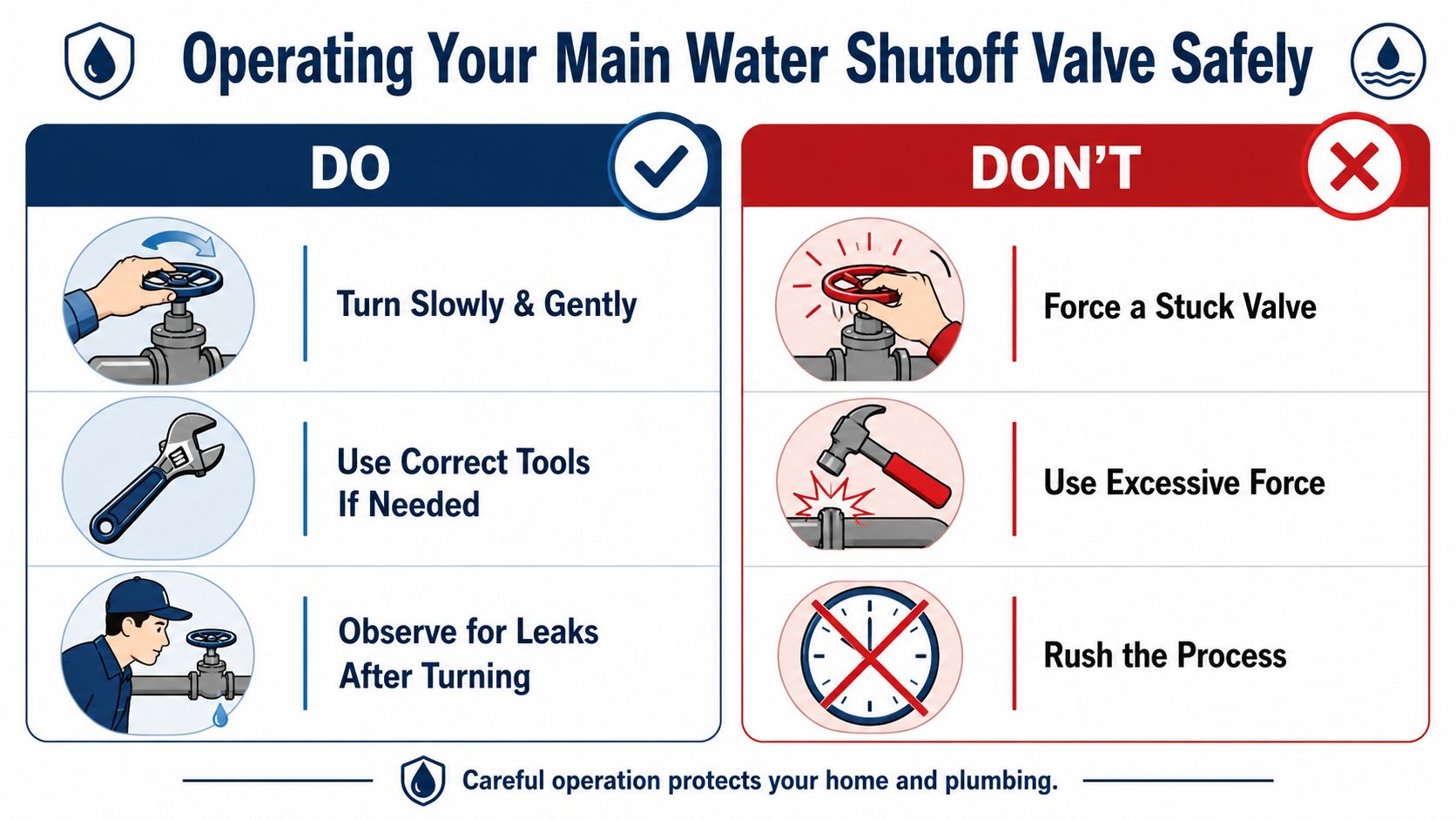
A gate valve has a wheel-style handle. You close it by turning it clockwise. A ball valve has a lever-style handle. You close it with a quarter-turn clockwise. Home Depot also notes that meter-box valves may need a curb key instead of a hand turn in its house water shutoff instructions.
Use the right tool for the job:
- Bare hand first: Try a slow, steady turn if the valve moves normally.
- Adjustable wrench carefully: Useful for additional force on a stubborn handle, but only with controlled pressure.
- Curb key: Often needed for underground meter-box shutoffs.
This video shows the general motion and pacing to aim for:
Use force carefully not emotionally
Old valves don't fail because someone meant to break them. They fail because someone was in a hurry and kept pushing after the valve told them it was at its limit.
A good operating approach looks like this:
- Plant your stance: Don't twist from an awkward angle.
- Apply gradual pressure: Smooth pressure tells you whether the valve is moving or binding.
- Stop if metal flexes or grinds: That's a warning, not a challenge.
- Watch the body of the valve: If the pipe or packing nut starts weeping, stop.
A shutoff valve should resist a little. It should not feel like it's about to snap.
If you're dealing with a meter-box shutoff, clear dirt and debris enough to see the valve head before you try to turn anything. Blindly forcing a buried connection is how handles get rounded off and valve parts get damaged.
Confirm the Water Is Off and Drain the Pipes
Closing a valve isn't the end of the job. You still need to confirm you stopped the supply and relieve the pressure that remains in the line.
Check flow at a low fixture
Go to the lowest faucet or hose bib you can access and open it. That's the recommended follow-up because opening a low outlet helps drain trapped water and confirms the line is depressurized, reducing the chance of surprise re-pressurization when a valve is reopened, as explained in this step-by-step shutoff and draining guide.
What you want to see is simple. Water may flow briefly, then slow, sputter, and stop. That means you shut off the incoming supply and you're bleeding off what was left in the system.
What this step tells you
If water keeps running steadily, one of three things is usually happening:
- You closed the wrong valve: Common when a homeowner shuts an appliance valve or water heater valve instead of the house main.
- There's another shutoff point involved: Some properties also have a customer shutoff in the meter box.
- The leak is isolated to a fixture: In that case, a local stop valve may solve the immediate problem faster.
A quick cross-check is to look at your fixtures and then review how to read a water meter for leaks if you need to confirm whether water is still moving through the system.
If the faucet never loses pressure, don't assume the main failed silently. Re-check which valve you actually closed.
Leave the faucet open while you assess the next step. It keeps pressure from building back in unexpectedly if someone partially reopens a valve.
Troubleshooting Common Shutoff Valve Problems
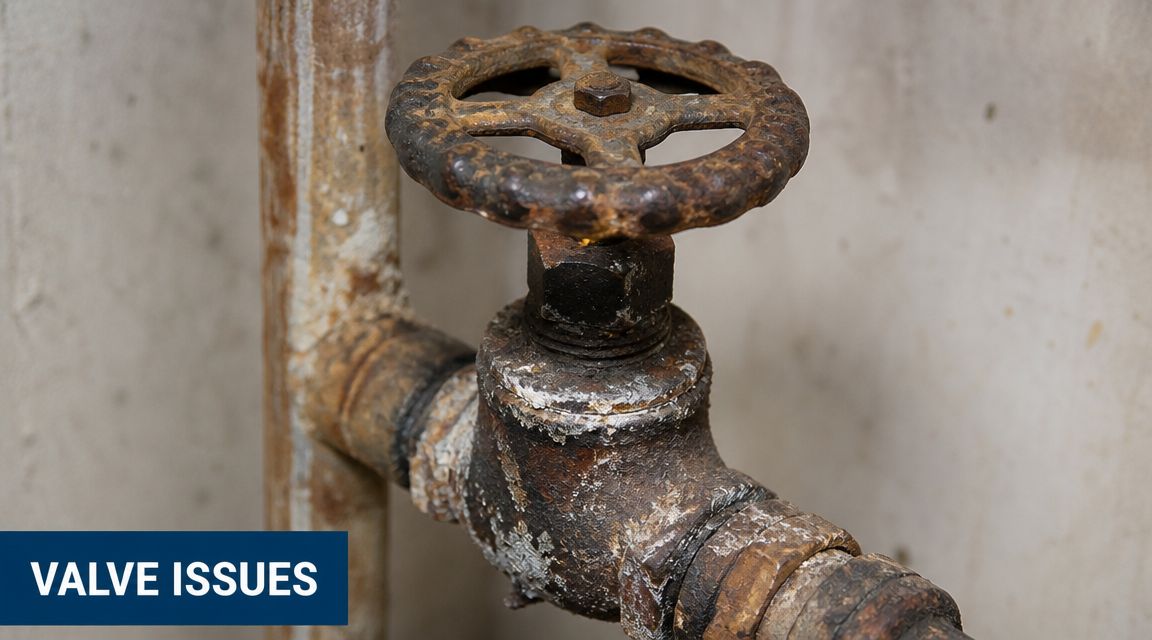
The hard part often starts after you find the valve. In a real emergency, the main may be rusted in place, the meter box may be packed with soil, or the property may be on a well system with a different shutoff path. The safest move is to make one controlled attempt, then decide fast whether the situation is still manageable or needs a plumber.
Home Depot's main water shutoff article covers the same real-world problems homeowners run into, including old valves that can break under force, buried meter boxes, and homes where shutting off pump power matters more than turning a street-side valve.
If the valve is stuck, seized, or starting to fail
Use steady hand pressure once. If the handle resists hard, binds partway, or feels like it is twisting instead of turning, stop there.
What causes damage is usually not the first careful try. It is the second and third attempt with more force.
Stop immediately if you notice any of these signs:
- The handle starts bending
- Water appears around the stem
- You hear a crack or feel a pop
- The valve body moves with the pipe
At that point, the trade-off changes. Getting the valve closed is no longer the only goal. Preventing a full valve failure matters more. If the shutoff begins dripping or spraying from the valve itself, treat it as a separate repair issue and arrange service for a main shut off valve leaking problem instead of trying to muscle it the rest of the way.
If the meter box is buried or hard to access
Buried meter boxes are common on older properties and after landscaping work. Clear dirt, mulch, or debris only until you can identify the shutoff and see what tool access looks like. If the lid is jammed, the box is full of muddy water, or you cannot tell which fitting is the shutoff, stop before you damage the meter assembly.
This is one of the most common points where homeowners lose time. Digging blindly or turning the wrong part can create a bigger problem than the original leak.
If the home uses a well
A well system changes the decision tree. The house valve may not stop incoming water if the pump is still feeding the system. In some homes, shutting off electrical power to the well pump is the faster control point.
Only do that if you know which breaker or disconnect controls the pump. If you are guessing, skip the experiment and call for help. Water damage is bad enough. Electrical mistakes around wet equipment are worse.
A seized valve or buried box is a mechanical problem. Force usually makes it more expensive.
A quick stop or proceed check
Use this sequence under pressure:
Can you clearly identify the main shutoff?
If yes, make one careful attempt. If no, check the meter box or the property's known service shutoff point.Does the valve turn with normal, controlled pressure?
If yes, continue. If no, stop before the handle, stem, or pipe gives way.Did the valve show any failure signs while turning?
If yes, stop and call. A partial shutoff with a damaged valve can become a full break.Is the meter box blocked, flooded, or buried?
If yes, do not force access during an active leak unless you can do it safely and see the shutoff clearly.Is the property on a well system?
If yes, confirm whether pump power is the correct control point before touching anything.Still unsure or still taking on water?
Call a plumber. For Los Angeles properties, EZ Plumbing handles emergency plumbing calls, including situations where the water supply has already been shut down and the next issue is repair rather than discovery.
When You Must Call an Emergency Plumber
There's a point where trying harder becomes the risky choice. If the valve won't move with gentle pressure, if the handle breaks, if the meter box is inaccessible, or if you can't locate the shutoff during active leakage, the safest decision is to stop improvising and bring in a pro.
Non negotiable call now situations
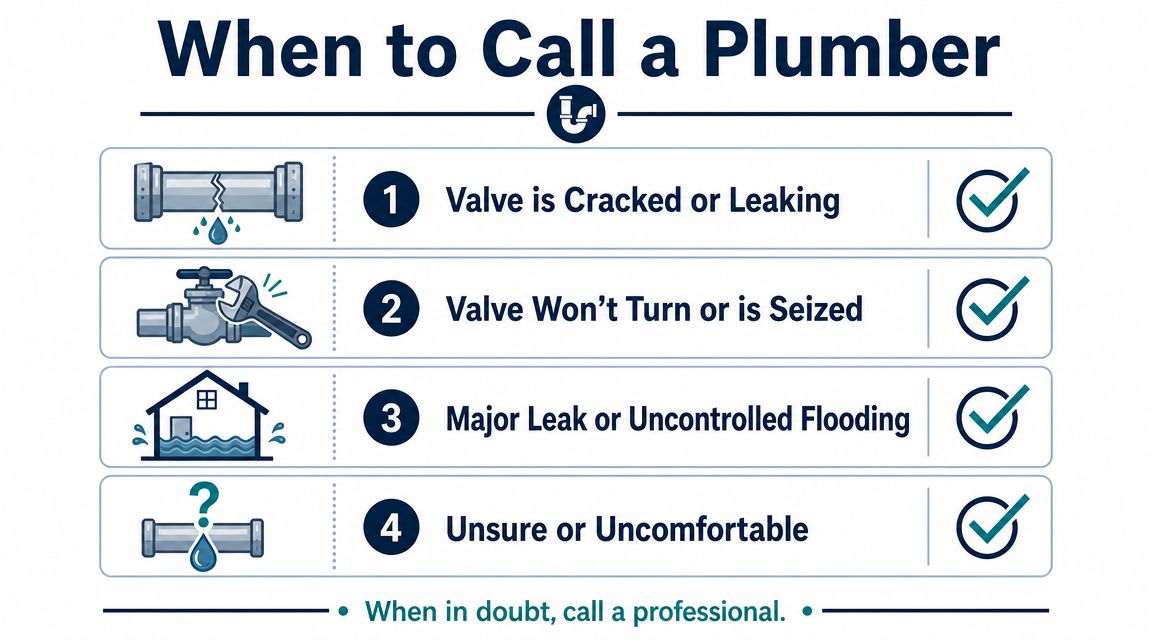
Call immediately if any of these are true:
- The valve is cracked or leaking: A shutoff that leaks at the stem or body can fail completely.
- The valve is seized solid: Applying more force can turn a controlled leak into a major one.
- Water is spreading and you still haven't isolated it: Time matters more than experimentation.
- The shutoff is in a risky location: Tight utility spaces, shared building systems, or areas near other hazards need experienced hands.
If you're in Los Angeles and need active emergency help, contact an emergency plumber in Los Angeles rather than continuing trial-and-error on a compromised valve.
Why waiting gets expensive fast
The trade-off is simple. Acting too aggressively can break aging hardware. Waiting too long gives water more time to damage flooring, cabinets, drywall, and adjacent units in multifamily buildings.
A plumber brings two things homeowners usually don't have in an emergency. The right shutoff tools, and the judgment to know when a valve can be worked safely versus when it needs replacement before anyone touches it again.
If you're unsure, that uncertainty is already a reason to call. Plumbing emergencies punish hesitation and overconfidence about equally.
If you're dealing with an active leak, a seized shutoff, or a valve that won't close cleanly, EZ Plumbing can help with emergency response, valve repairs, and system isolation for homes, HOAs, property managers, and commercial properties across Los Angeles. Call (818) 908-2710 if the water won't stop, the shutoff is unsafe to operate, or you need a licensed technician to take control before the damage spreads.