
How Do Pipes Burst? Causes, Signs, and LA Prevention Tips
You hear water where there shouldn't be water. It might be a rushing sound behind a wall, a dark stain spreading across the ceiling, or a puddle under a sink that wasn't there an hour ago. In Los Angeles, that kind of call often catches people off guard because they're not thinking about burst pipes the way homeowners in colder states do.
But pipes don't need a blizzard to fail.
Older galvanized lines, aging copper, pressure that runs too high, clogged sections that build back-pressure, root intrusion near buried lines, and even movement from settling or seismic activity can all push a plumbing system past its limit. If you're asking how do pipes burst, the short answer is this: most failures come back to stress and pressure. Sometimes that stress builds slowly for years. Sometimes it shows up all at once.
Table of Contents
- That Dreaded Sound A Homeowners Worst Nightmare
- The Science Behind Why Pipes Actually Burst
- Warning Signs Your Pipes Are Under Stress
- A Burst Pipe Emergency Your First 5 Steps
- How to Prevent Burst Pipes in a Los Angeles Property
- Pipe Repair Options and When to Call a Licensed Plumber
That Dreaded Sound A Homeowners Worst Nightmare
It usually starts with confusion, not certainty. A homeowner wakes up to a hiss in the wall near the kitchen. A property manager gets a call about water dripping through a downstairs light fixture. Someone opens a cabinet and finds the back panel wet, the shelf warped, and a slow stream running down the shutoff line.
That's why burst-pipe emergencies feel so overwhelming. The leak may be hidden. The damage may be spreading where you can't see it. And in a Los Angeles house with crawl spaces, slab plumbing, older branch lines, or additions built decades apart, the source isn't always where the water shows up.
The first thing to know is that panic wastes time. A burst pipe is urgent, but it's also manageable if you move in the right order. Shut off the water. Protect people from electrical hazards. Contain the damage you can. Then get the line repaired and the cause diagnosed.
Practical rule: The visible water is only part of the problem. The plumbing failure that caused it may be somewhere else entirely.
Homeowners often assume a pipe only bursts because of extreme cold. In LA, that's too narrow. Winter cold snaps can affect exposed runs in garages, crawl spaces, exterior walls, and cabinets. But plenty of local failures happen in warm weather because the system was already under strain.
A good response starts with understanding what made the pipe give way.
The Science Behind Why Pipes Actually Burst
A burst pipe is a strength problem under load. The pipe wall, joint, valve connection, or fitting reaches its limit, then gives way. In Los Angeles homes, that load often comes from a mix of high incoming pressure, age-related corrosion, sudden pressure shock, slab or framing movement, poor support, and, in a smaller number of cases, freezing in exposed lines.
Pressure is the primary culprit. The weak point just decides where the failure shows up.
What causes the pipe to fail
Freeze damage is a good example of how this works. Water expands as it turns to ice, and the danger comes from pressure building in the liquid water trapped nearby. The break often appears in an unfrozen section, not at the visible ice, as shown in the Ask This Old House demonstration on frozen pipe mechanics.
Engineers at Utica National's burst-pipe prevention overview explain that pressure inside a confined freezing pipe can rise high enough to rupture the line. That helps explain why a homeowner may find the split several feet away from the coldest spot.
If you are also trying to sort out coverage after winter damage, this guide on home insurance for frozen pipes is a useful starting point.
Freezing gets the attention, but LA properties usually fail for other reasons first. I see more local damage tied to systems that have been stressed for years, then finally lose at one solder joint, angle stop, flex line, or section of aging pipe.
The causes that show up most often in Los Angeles
| Cause | What it does to the system | LA Risk Level |
|---|---|---|
| Freezing in exposed runs | Traps water and spikes pressure near the blockage | Moderate in garages, crawl spaces, exterior walls, and hill properties |
| High water pressure | Keeps constant force on every pipe, valve, hose, and appliance connection | High |
| Corrosion and aging pipe walls | Thins the material until normal operating pressure becomes too much | High in older homes |
| Water hammer | Sends a shock wave through the line when flow stops suddenly | Moderate to high |
| Blockages and restrictions | Create localized back-pressure at weak points | Moderate |
| Seismic movement, settling, or poor support | Stresses joints and rigid connections over time | Moderate to high |
Corrosion is slow and quiet. Older galvanized lines close down from the inside. Older copper can develop pinholes, especially where water chemistry, friction, or past repairs have left vulnerable sections. Once the wall gets thin enough, the system no longer needs an extreme event to fail.
High pressure is different. It is constant. A house can seem fine for years while high pressure wears out supply lines, faucet cartridges, washing machine hoses, ice-maker lines, and shutoff valves. Then one part fails first. If you have noticed repeated fixture leaks or noisy supply lines, it helps to review warning signs of plumbing problems in your home before the next small failure turns into a wall or cabinet repair.
Water hammer is more abrupt. Fast-closing valves in dishwashers, washing machines, and newer single-handle fixtures can send a shock wave through the piping. The effect is similar to traffic stopping suddenly on a packed freeway. The cars in back have to absorb that force somewhere. In plumbing, the force lands at straps, fittings, elbows, and already-weakened joints.
Movement matters more in Southern California than many homeowners realize. Houses settle. Slabs shift. Small seismic events can stress rigid pipes at penetrations, threaded fittings, and hard connections to water heaters or regulators. A line that was installed with no room to flex may survive for years, then crack after enough tiny movements add up.
One more point matters here. A burst pipe is often the final failure, not the first problem. The system usually gives warning through noise, pressure changes, recurring leaks, discolored water, or visible corrosion before the line opens up.
Warning Signs Your Pipes Are Under Stress
Most burst pipes don't arrive without warning. The signs are often small, easy to dismiss, and spread out over time. Homeowners notice one symptom, then another, then a leak forces the issue.
What the system is trying to tell you
Start with water pressure changes. Plumbing systems are typically designed for a working pressure of about 40 to 80 psi, and sustained pressure above that range increases burst risk, especially when corrosion has already thinned the pipe wall, according to SERVPRO's guide on why water pipes burst. If the shower suddenly feels aggressive, supply lines bang, or fixtures wear out faster than they should, the system may be running too hard.
Then look at water quality and noise.
- Rust-colored or dirty water: This can point to corrosion inside aging lines.
- Banging or knocking: Often tied to water hammer or loose pipe support.
- Whistling or hissing: Sometimes means restriction, a failing valve, or pressure moving through a narrowed opening.
- Wet drywall or cabinet backs: A small leak may already be active inside the wall.
- Musty smell that won't go away: Hidden moisture often shows up in the air before you see visible damage.
If you've seen a mix of these issues, it's worth reviewing other warning signs of plumbing problems in your home, especially in older Los Angeles properties where one aging component often points to another.
When a warning sign means stop waiting
Some symptoms deserve a same-day response.
A ceiling stain that grows after fixtures run upstairs. A recurring leak at the same shutoff or supply connection. A sudden drop in flow at one area of the house. A bill that rises without a clear reason. Those aren't cosmetic issues. They suggest the system is already under strain, and the weakest section may be close to failing.
If the plumbing starts acting differently, believe it. Pipes usually whisper before they break.
What doesn't work is fixing only the surface symptom. Replacing one angle stop, one flex line, or one faucet won't solve a house-wide pressure problem. Patching drywall without tracing the moisture path won't stop a hidden pinhole leak. Good diagnosis means asking what changed in the system, not just what got wet.
A Burst Pipe Emergency Your First 5 Steps
A burst pipe is a control problem first. In Los Angeles homes, that can mean a failed copper line in the wall, a split supply near an older shutoff, a cracked irrigation feed, or a pipe joint that shifted after ground movement. The first few minutes decide whether this stays a repair job or turns into flooring, cabinet, and drywall replacement.
What to do right away
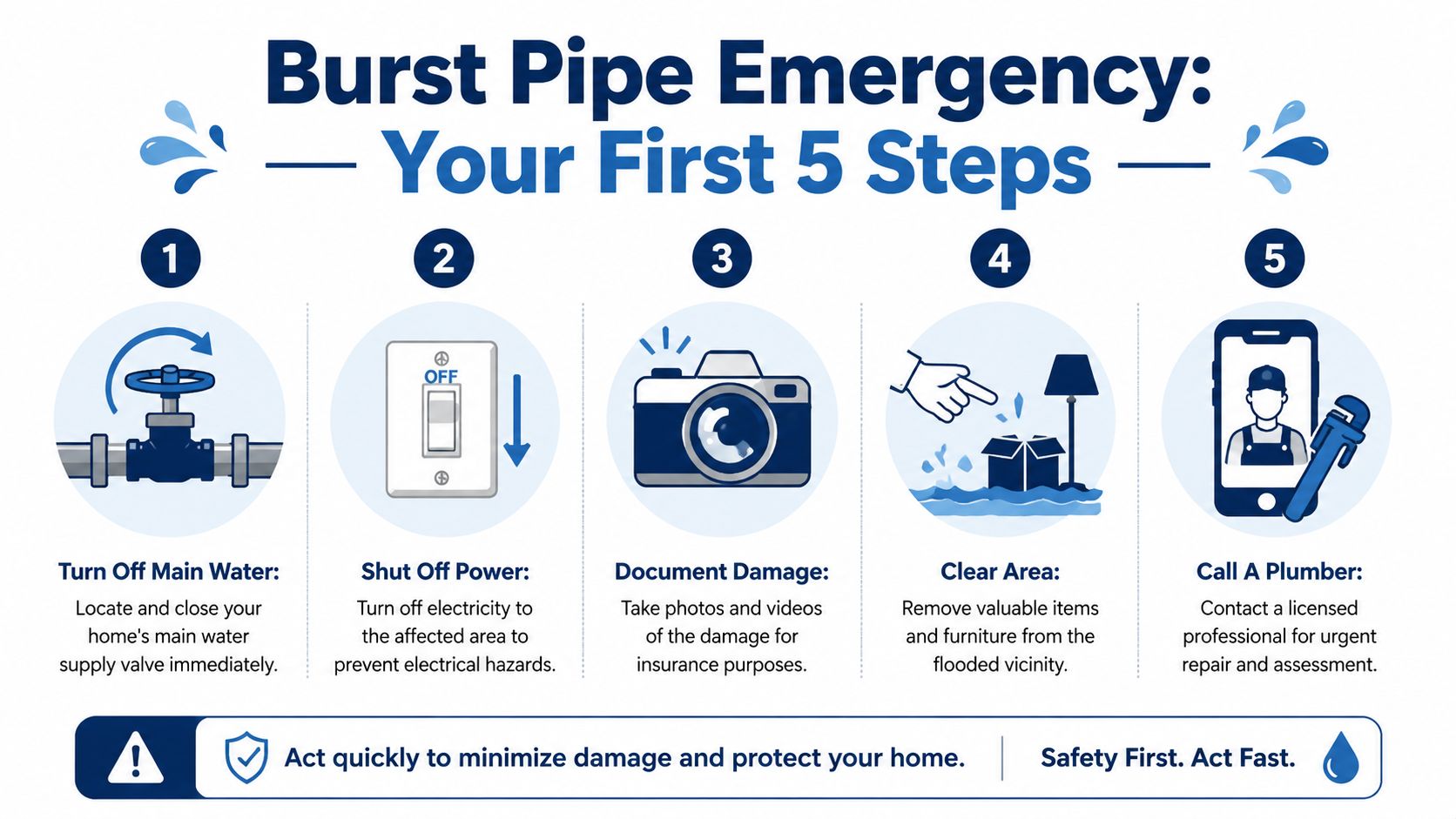
Shut off the main water supply first.
Start there, every time. If you need help finding it before or during an emergency, review how to shut off the main water supply.Cut power if water is near anything electrical.
Outlets, lights, garage equipment, appliances, and subpanels all raise the risk. Do not step into standing water to reach a breaker. If the panel area is wet, stay out and wait for the right help.Open a cold faucet after the water is off.
This bleeds off leftover pressure in the line and lets some trapped water drain out. In a house with high incoming pressure, that step can slow the continued drip or spray from the damaged section.Protect the areas that are easiest to save.
Move rugs, electronics, boxes, and anything sitting on the floor or inside lower cabinets. In LA homes, engineered wood floors and built-in cabinetry can swell fast, so focus on materials that are expensive to dry or replace.Document the damage before cleanup changes the scene.
Take photos and video of the wet areas, the path the water traveled, and any visible pipe failure if you can reach it safely. That record helps with insurance and helps the plumber trace the exact point of failure.
What helps, and what usually wastes time
Buckets and towels help contain water. They do not solve the pressure problem.
Temporary repair tape or a clamp can sometimes slow a pinhole or a very small split on an exposed pipe. They are not dependable for a corroded line, a bad fitting, or a break hidden in a wall or ceiling. If the pipe failed because the system is old, unsupported, or running at high pressure, the weak spot you see may not be the only one.
Do not start opening walls until the water is off and the area is safe. Water often shows up far from the actual break, especially in multi-story homes, slab-on-grade construction, and houses with remodels layered over older plumbing routes.
Shut the water off, make the area safe, and keep the damage from spreading. Repair decisions come after that.
How to Prevent Burst Pipes in a Los Angeles Property
Los Angeles homes need a different prevention plan than a cabin in the mountains. Freezing can happen in certain exposed spots, but local burst-pipe prevention is usually more about pressure control, aging materials, proper support, and catching hidden weaknesses before they open up.
What works in LA homes
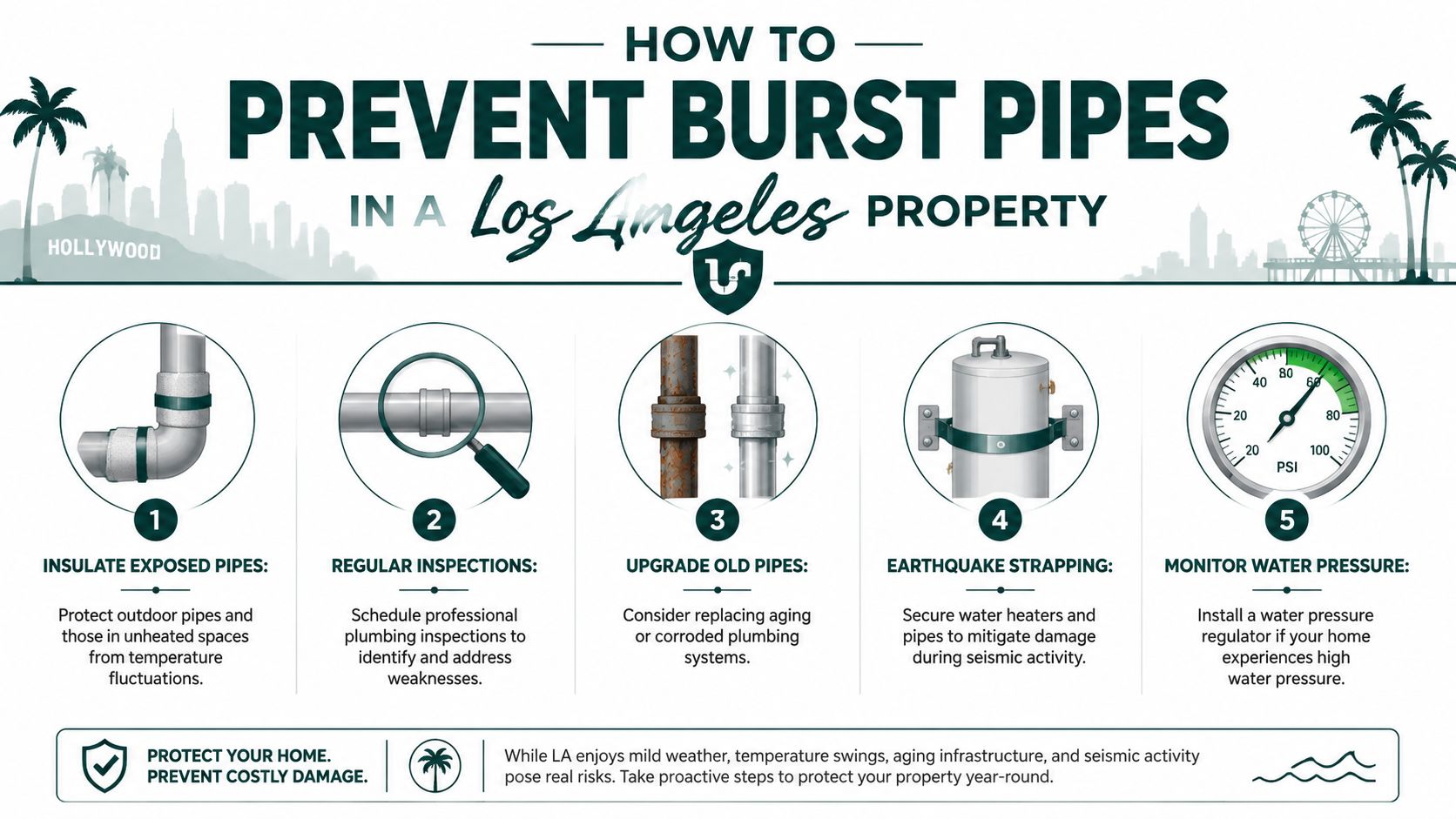
A pressure regulator is one of the most practical upgrades for homes dealing with strong incoming municipal pressure. If pressure runs high all day, every component downstream wears faster. Regulators don't solve corrosion or bad installation, but they do reduce constant stress on the system.
Routine inspections matter more in older neighborhoods. Many LA properties still have sections of galvanized piping, mixed-material repairs, or old copper with localized deterioration. A plumber who checks exposed lines, shutoffs, supply connectors, pressure behavior, and signs of hidden leaks can spot problems before the failure becomes dramatic.
Drain and sewer maintenance also plays a role. A blocked branch line or a neglected drain issue can increase stress in the wrong places. In homes with mature landscaping, root intrusion near buried piping is another local risk that owners overlook until backups or leaks start appearing.
What homeowners often miss
Freezing advice still matters here, just in a narrower way. Forensic analysis shows a common mistake is assuming a frozen pipe bursts at the visible ice. The rupture often occurs in an unfrozen segment between the ice plug and a closed valve due to trapped pressure, as explained in Robson Forensic's article on frozen burst-pipe investigations. That's why an inspection has to follow the whole line, not just the coldest-looking spot.
For Los Angeles properties, these prevention steps pay off:
- Insulate exposed runs: Focus on pipes in garages, crawl spaces, exterior walls, and cabinets on colder sides of the house.
- Secure piping and water heaters: Movement during settling or seismic activity can stress rigid connections and fittings.
- Replace brittle or heavily corroded sections early: Waiting for a clean break usually means paying for restoration work too.
- Address recurring drain issues: Don't let a chronic clog keep loading the system.
- Test pressure when fixtures act strangely: Fast wear at supply lines and valves often points upstream to a pressure problem.
What doesn't work is assuming one repair solves the whole system. A new faucet won't protect an old branch line. Foam wrap on one exposed section won't help if another section in the wall remains vulnerable. Prevention works when it follows the actual weak points of the property.
Pipe Repair Options and When to Call a Licensed Plumber
A burst line can sometimes be slowed with a clamp, rubber patch, or temporary shutoff at a local fixture. Those are containment tools, not durable repairs. They're useful only if the damaged section is small, accessible, and stable enough to hold until proper service begins.
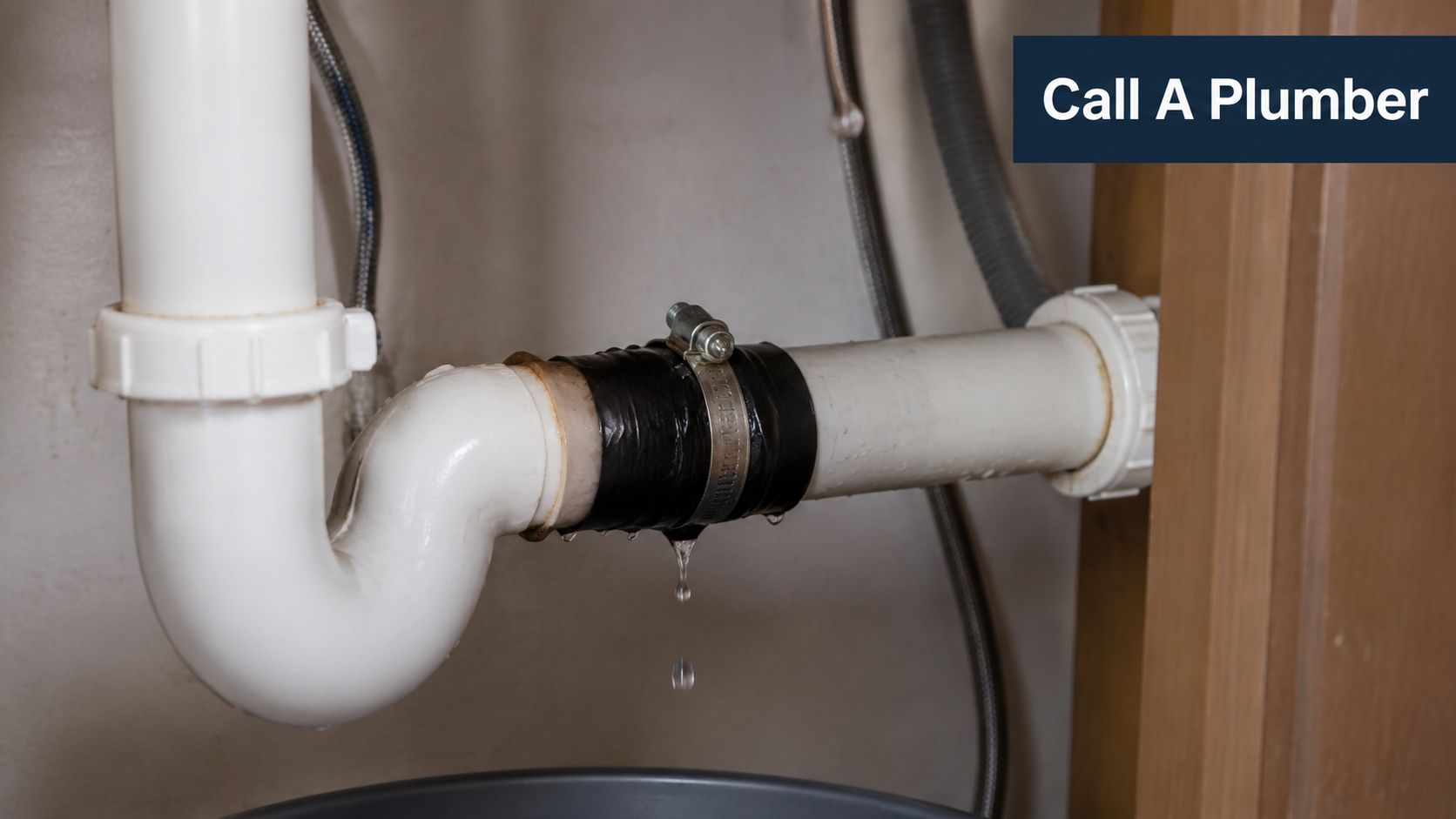
Temporary fixes versus real repairs
A real repair depends on the cause.
If the line split from corrosion, the damaged section usually needs to be cut out and replaced, and nearby piping should be evaluated for the same condition. If high pressure contributed, replacing one broken fitting without correcting pressure settings invites the next failure. If movement stressed the piping, support, strapping, or alignment may need correction along with the pipe repair itself.
That's also why patch products can be misleading. They make the leak smaller, which feels like progress, but they don't tell you whether the rest of the line is thin, whether a fitting is cracked, or whether pressure remains unsafe.
For homeowners deciding whether DIY is enough, this breakdown of why hire a licensed plumber for your home covers the practical difference between a temporary stopgap and a repair that addresses the system.
When a licensed plumber is the safer call
Call a licensed plumber when the break is inside a wall, overhead, under the house, in a slab-fed system, near electrical hazards, or tied to signs of broader system trouble like recurring leaks, pressure problems, corrosion, or drain backups. In Los Angeles properties, that's a common combination.
A licensed contractor can isolate the damaged section, test the system, evaluate whether pressure regulation is needed, inspect nearby pipe condition, and determine if the failure came from freezing, wear, blockage, movement, or poor prior work. Services like emergency burst pipe repair, leak detection, and water shutoff assistance are part of that response. EZ Plumbing provides those services in Los Angeles and handles both urgent isolation and follow-up repair planning.
A quick visual overview can also help if you're comparing stopgap measures with proper corrective work:
Don't risk a temporary patch on a system that may already be compromised. For a reliable, guaranteed repair in Los Angeles, call the experts at EZ Plumbing at (818) 908-2710 or schedule online.