
Why Hire a Licensed Plumber for Your Home
Choosing who handles your plumbing is one of the most consequential decisions you make as a homeowner or property manager. The temptation to save money by hiring an unlicensed worker is real, and it’s understandable. But the apparent savings rarely hold up when you account for the full picture: safety risks, code violations, denied insurance claims, and costly rework. Understanding why hire a licensed plumber goes well beyond paperwork. It’s about protecting your property, your family, and your financial investment.
Table of Contents
- Key Takeaways
- Why hire a licensed plumber: what licensing actually means
- Safety and code compliance: why it matters more than you think
- Financial and legal risks of hiring unlicensed plumbers
- Long-term value and quality of licensed plumbing work
- How to find a licensed plumber you can trust
- My perspective on why this choice matters
- Trusted licensed plumbing services in Los Angeles
- FAQ
Key Takeaways
| Point | Details |
|---|---|
| Licensing signals real accountability | A license means training, tested knowledge, and legal responsibility for every job performed. |
| Code compliance protects your home | Licensed plumbers pull permits and pass inspections, keeping your property safe and insurable. |
| Unlicensed work creates financial exposure | Fines, denied insurance claims, and costly rework make cheap unlicensed repairs far more expensive over time. |
| Quality work preserves property value | Licensed workmanship passes home inspections and supports long-term system reliability. |
| Verification is straightforward | You can confirm a plumber’s license through your state licensing board before any work begins. |
Why hire a licensed plumber: what licensing actually means
A plumbing license is not simply a certificate on a wall. It represents hundreds of hours of apprenticeship training, written and practical exams, and in most states, ongoing continuing education requirements to maintain active status. In California, for example, a C-36 Plumbing Contractor license requires passing the Contractors State License Board exam, proof of industry experience, and carrying both general liability and workers’ compensation insurance.
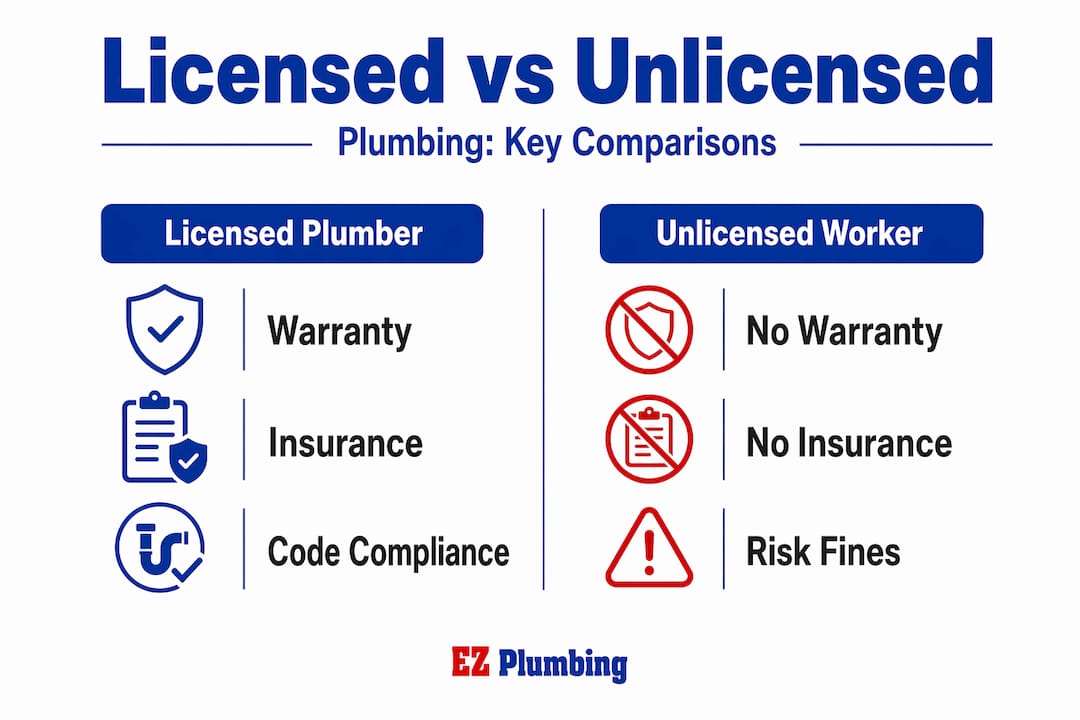
That insurance component deserves specific attention. Licensed contractors carry general liability and workers’ compensation coverage, which means that if a worker is injured on your property or your home sustains accidental damage during a repair, you are not financially responsible. Unlicensed workers rarely carry any coverage at all, which places that liability directly on you as the property owner.
Licensing also creates legal accountability that simply does not exist with unlicensed labor. A licensed plumber can have their license suspended or revoked for substandard work, code violations, or fraudulent practices. That enforcement mechanism gives you real recourse if something goes wrong. With an unlicensed contractor, your legal options are limited and expensive to pursue.
Here is what a legitimate license typically signals about a plumber’s qualifications:
- Completion of a formal apprenticeship program, often four to five years in length
- Passing scores on technical exams covering codes, safety, and installation methods
- Active insurance coverage protecting both worker and homeowner
- Familiarity with local building codes, permit requirements, and inspection processes
- Ongoing education to stay current with code updates and new materials
Pro Tip: Ask any plumber you’re considering for their license number and verify it directly through your state licensing board’s online database before scheduling any work. In California, the CSLB lookup tool takes less than two minutes.
Safety and code compliance: why it matters more than you think
Plumbing codes exist because plumbing failures kill people. Improperly vented drain lines allow sewer gas, including hydrogen sulfide and methane, to accumulate inside living spaces. Cross-connections between supply and drain lines can introduce sewage directly into your drinking water. These are not theoretical risks. Improper venting and cross-connections from unlicensed plumbing create serious hidden hazards that may not surface until a home inspection or a full system failure.
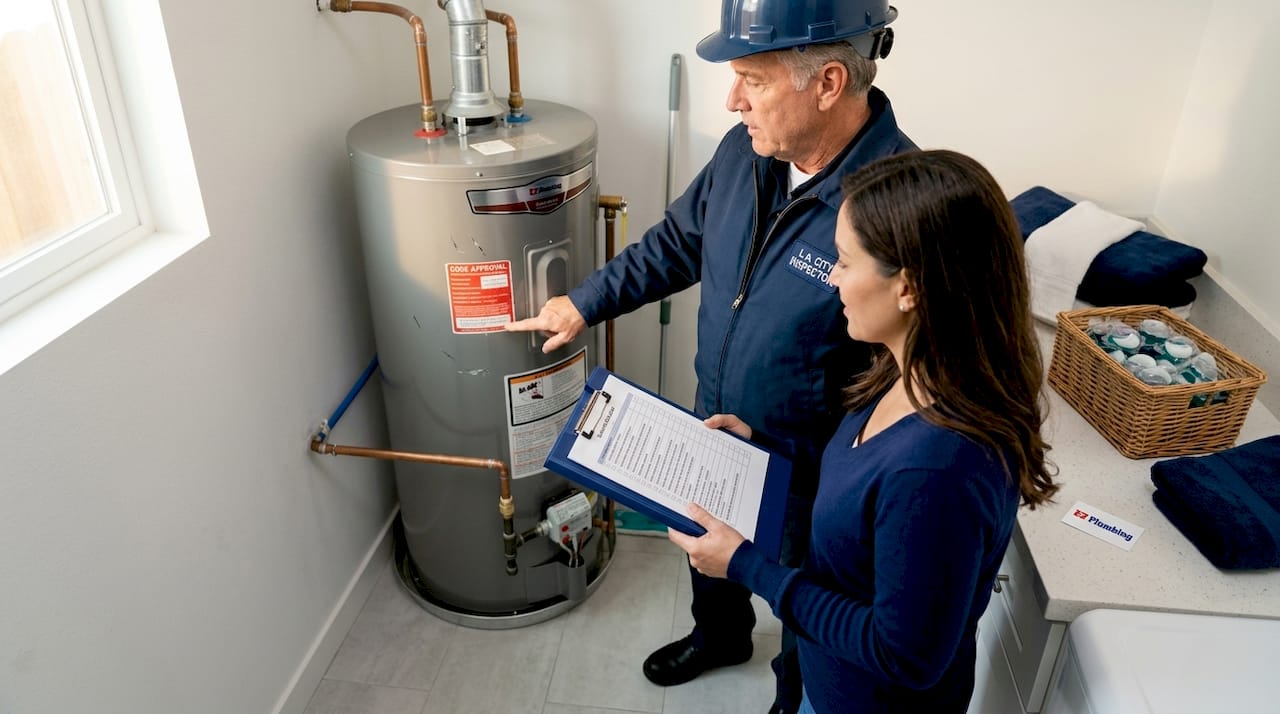
Licensed plumbers are required to pull permits and pass inspections that verify the work meets code before it is covered by walls or buried underground. That verification process is not bureaucratic inconvenience. It is the mechanism that confirms your water supply is uncontaminated, your gas lines are properly sealed, and your drain system will not back up into your home. Understanding LA plumbing code requirements gives you a clearer picture of exactly what licensed professionals are accountable for in this region.
The advantages of licensed plumbers become especially clear when you consider the range of safety issues that unlicensed work routinely produces:
- Improper pipe sizing that leads to chronic low pressure or water hammer damage
- Incorrect slope on drain lines that causes persistent backups and standing water
- Gas line connections that fail to meet pressure test requirements, creating leak risks
- Unvented or incorrectly vented fixtures that introduce sewer gas into bathrooms and kitchens
- Water heater installations that bypass required seismic strapping and temperature-pressure relief valve specifications
Each of those failures has a defined fix under code. Each one also has the potential to cause property damage or a health emergency if left unaddressed. Licensed plumbing services give you the assurance that none of those corners are being cut.
Financial and legal risks of hiring unlicensed plumbers
The price difference between a licensed and unlicensed plumber may look significant on paper. In practice, that gap almost always closes, and often reverses, once you factor in the downstream costs of non-compliant work.
Fines for unlicensed plumbing work reach up to $5,000 per violation per day, with the possibility of criminal misdemeanor charges in many jurisdictions. Those penalties can fall on the homeowner when the unlicensed worker has no legal standing to be cited directly. You hired them, and in the eyes of the municipality, you authorized the work.
The insurance exposure is equally serious. Insurance companies deny claims for flood or fire damage linked to unlicensed or unpermitted plumbing repairs. If an unlicensed water heater installation causes a gas leak that results in a fire, your homeowner’s policy may refuse to pay. The same applies to a failed pipe joint that floods your kitchen. That is not a technicality. It is standard policy language that most homeowners never read until they need to file a claim.
| Scenario | Cost with licensed plumber | Cost with unlicensed plumber |
|---|---|---|
| Standard water heater installation | $800–$1,500 including permits | $500–$900 upfront, plus potential fines and rework |
| Sewer line repair | $1,500–$4,000 with permits and inspection | Possible re-excavation and full remediation if unpermitted |
| Leak repair and rerouting | $300–$800 with warranty | No warranty, plus insurance claim risk if damage occurs |
| Home sale with unpermitted work | No delay or added cost | Required tear-out, remediation, and potential sale delay |
“The apparent cost savings from unlicensed plumbers are illusions. Factoring in insurance denials, rework, and property damage shows licensed plumbing is more cost-effective long-term.” — Industry analysis
Unpermitted work uncovered during real estate transactions can require extensive repairs and cause significant delays, with remediation costs frequently exceeding the original repair price several times over. If you are planning to sell your home in the next five to ten years, any unpermitted plumbing work is a liability you will eventually be forced to address under far less favorable conditions.
Long-term value and quality of licensed plumbing work
Licensed plumbers bring tools and diagnostic capabilities that unlicensed workers simply do not have. Advanced tools like video sewer inspection and ultrasonic leak detection allow licensed professionals to locate problems accurately before opening walls or excavating yards, which saves you money on unnecessary work. When a camera inspection reveals root intrusion in a clay sewer lateral, for example, the plumber can recommend targeted hydro-jetting or spot repair rather than a full replacement. That diagnostic precision directly reduces your costs.
Licensed work typically carries warranties ranging from one to ten years depending on the service. That warranty coverage gives you enforceable recourse if the repair fails within the covered period. An unlicensed worker offers no such guarantee, and you have little legal standing to demand one.
Pro Tip: Ask your plumber specifically about workmanship warranties versus manufacturer warranties. A licensed contractor should be able to offer both: a manufacturer warranty on parts and their own labor guarantee on the installation itself.
Consider two comparison points that matter when evaluating quality:
| Factor | Licensed plumber | Unlicensed worker |
|---|---|---|
| Diagnostic accuracy | Video inspection, pressure testing, ultrasonic detection | Visual inspection only |
| Code compliance | Verified by permit and third-party inspection | No verification process |
| Warranty coverage | 1–10 years on labor and parts | None or unenforceable |
| Insurance protection | Covered by contractor’s liability policy | Homeowner assumes all risk |
| Resale impact | Positive: passes inspection, supports property value | Negative: creates disclosure obligations and potential repair requirements |
Code compliance prevents costly rework and maintains your property’s resale value. Homes with unpermitted work face required tear-outs and high remediation costs that no homeowner wants to absorb right before a sale.
How to find a licensed plumber you can trust
Knowing why to hire a licensed plumber is one thing. Knowing how to verify and choose one is where most homeowners get stuck. Here is a reliable process for evaluating any plumbing contractor before you commit:
-
Verify the license number directly. Ask for the contractor’s state license number and look it up on your state licensing board’s website. In California, the CSLB database shows license status, classification, and any disciplinary history in real time.
-
Confirm insurance coverage. Request a certificate of insurance showing both general liability and workers’ compensation. Do not accept verbal assurances. An actual certificate takes minutes to provide.
-
Ask whether they pull permits. Any licensed plumber handling work that requires a permit should pull it without hesitation. If a contractor suggests skipping the permit to save time or money, that is a clear disqualifying signal.
-
Request a written estimate with scope detail. A professional contractor should provide a written estimate that specifies the work to be done, materials to be used, and what the warranty covers. Vague verbal quotes leave you unprotected.
-
Check for local experience. Local licensed plumbers carry knowledge of regional building codes, common infrastructure issues, and water quality conditions that directly improves diagnosis and response time. In Los Angeles, for instance, familiarity with older galvanized supply lines and clay sewer laterals found in mid-century homes is a practical asset, not just a talking point.
Understanding how plumbing estimates work before you call a contractor also puts you in a stronger position to recognize whether a quote reflects the full scope of the job.
My perspective on why this choice matters
I’ve seen what unlicensed plumbing work actually looks like once you open the walls. Galvanized corrosion patched with the wrong fittings. PVC drain lines run without proper slope, held up with zip ties. Water heater venting connected backward, pulling combustion gases into the living space rather than exhausting them outside. None of these were visible at the time of the original repair. All of them required significant remediation.
What I’ve learned from years of working in licensed plumbing services is that the accountability enforced by licensing is as valuable as the technical skills themselves. Licensing ties plumbers to strict codes protecting public health, which means a licensed professional has real skin in the game every time they pick up a wrench. Their reputation, their license, and their business are all on the line.
The homeowners I speak with who regret hiring unlicensed workers are not naive people. They were trying to manage costs responsibly. The gap between what they thought they were saving and what they ultimately paid is almost always larger than the original licensed estimate would have been. Prioritizing a verified license is not overcautious. It is the most rational financial decision you can make for your home.
— EZ
Trusted licensed plumbing services in Los Angeles
Ez-plumbing holds C-36 License #583868 and serves homeowners and property managers across the greater Los Angeles area with the full range of residential plumbing services. Every job is backed by proper permitting, code-compliant installation, and genuine workmanship guarantees.
Whether you need water heater repair that meets LA safety codes, professional drain cleaning services to clear persistent clogs, or a complete sewer line repair handled with camera inspection and proper permits, Ez-plumbing brings licensed expertise to every call. We are fully insured, transparent about pricing, and committed to work that passes inspection the first time. Contact Ez-plumbing to schedule a service visit or request a written estimate for your project.
FAQ
What are the main reasons to hire a licensed plumber?
Licensed plumbers carry verified training, required insurance, and legal accountability for their work. They pull permits, pass inspections, and provide warranties that protect your home and your investment.
Can I get fined for hiring an unlicensed plumber?
Yes. Fines for unlicensed plumbing work can reach $5,000 per violation per day, and in some jurisdictions, criminal misdemeanor charges apply. As the property owner who authorized the work, you may be held responsible.
Will my homeowner’s insurance cover damage from unlicensed plumbing?
Most homeowner’s insurance policies exclude damage caused by unlicensed or unpermitted work. Flood or fire damage linked to non-compliant repairs is frequently denied, leaving you financially responsible for the full cost.
How do I verify a plumber is licensed before hiring?
Ask for their state license number and verify it through your state licensing board’s website. In California, the CSLB online database shows current license status, classification, and any complaints or disciplinary actions on record.
Does licensed plumbing work actually increase home value?
Yes. Permitted, code-compliant plumbing passes home inspections cleanly and supports accurate property valuation. Unpermitted work creates disclosure obligations and can require costly remediation before a sale can close.