
Difference Between Tank and Tankless Water Heater: 2026
You usually don't start researching water heaters because you're curious. You start because the shower went cold, the pilot won't stay lit, the tank is leaking into the garage, or a tenant called before sunrise saying there's no hot water in the building.
At that point, most Los Angeles owners run into the same fork in the road. Replace the old unit with another tank water heater, or upgrade to a tankless water heater. On paper, it sounds simple. In the field, it isn't. Ultimately, the difference between tank and tankless water heater systems comes down to how your property is built, how your household uses hot water, what kind of retrofitting the structure can support, and how long you expect to own the place.
That's especially true in LA. A newer single-family home in the Valley, a tight condo in West Hollywood, a duplex in Glendale, and an older multi-unit property in Koreatown can all need very different answers. Marketing tends to flatten that reality. Plumbing doesn't.
Table of Contents
- Your Water Heater Is Failing, Now What?
- How Each Water Heater Delivers Hot Water
- Detailed Comparison of Tank and Tankless Heaters
- The True Cost of Hot Water From Purchase to Replacement
- Installation Realities and Maintenance Requirements
- Sizing Your Heater and Navigating LA Permits
- Which Water Heater Is Right for Your Property?
- Frequently Asked Questions
Your Water Heater Is Failing, Now What?
Most replacement calls start with a basic question that has some stress behind it. “Can I just put in what I had before, or should I switch to tankless?”
If the unit failed overnight, you may not even know whether the problem is the heater itself, a gas issue, a thermostat problem, sediment buildup, or a fixture-side issue. Before making a replacement decision, it can help to troubleshoot no hot water so you don't replace a system that may still be repairable.
What owners usually see first
A homeowner usually notices one of three things:
- No hot water at all after a normal morning routine
- Hot water that runs out too fast, especially with back-to-back showers
- Visible leakage around the base of the tank or the drain pan
Property managers often see it differently. They hear repeated tenant complaints, deal with inconsistent hot water between units, or find that one old heater is now becoming a building-wide reliability problem.
Practical rule: If the tank is leaking from the body of the unit, the conversation usually shifts from repair to replacement very quickly.
The choice is bigger than the appliance
A water heater isn't just a box that makes hot water. It's tied to gas supply, venting, drainage, clearances, electrical requirements, and in many LA properties, limited access.
That's why the difference between tank and tankless water heater systems isn't just “old versus new.” It's a long-term property decision. One option may be simpler to install this week. The other may fit the building better over time. The right answer depends on urgency, budget, layout, and how much disruption the property can handle.
How Each Water Heater Delivers Hot Water
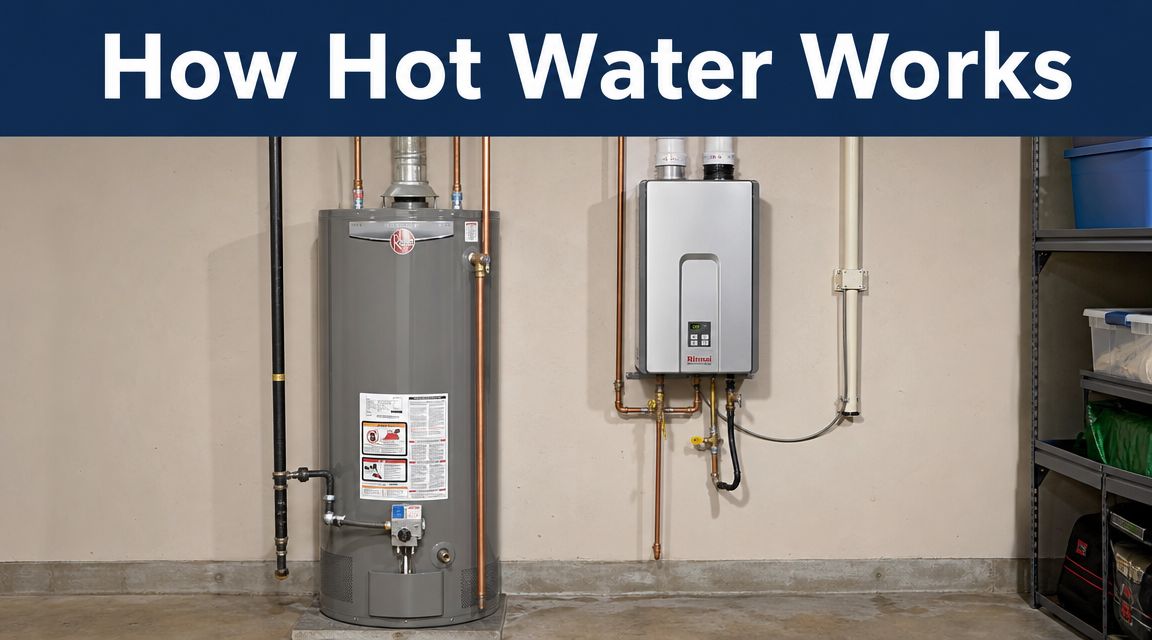
At the fixture, the difference shows up fast. A tank heater gives you hot water from stored supply. A tankless unit starts heating the moment water begins flowing through the heat exchanger.
How a tank heater works
A tank water heater stores a set volume of water and keeps it at temperature until someone calls for hot water. Open a shower valve or kitchen faucet, and that stored water is already available. The recovery cycle starts as cold water enters the tank and the burner or elements reheat the new volume.
That operating style is why tank systems feel predictable in many houses. They work well for short bursts and normal family routines. The limitation is reserve capacity. Once the tank is drawn down, the next user waits for recovery. The California Energy Commission's overview of storage water heaters gives a solid basic explanation of that stored-water approach.
How a tankless heater works
A tankless unit has no hot water sitting in reserve. It senses flow, fires the burner or energizes the heating elements, and heats water as it passes through the unit. The hot water keeps coming as long as the appliance can keep up with the demand.
That is why these systems are often called continuous flow units. If you want a plain-language outside reference, this overview of continuous flow hot water installation explains the concept clearly.
In the field, performance depends on sizing and installation details more than the sales brochure. Manufacturers such as Rinnai explain that output is tied to flow rate and temperature rise. In Los Angeles, incoming water temperature is usually less punishing than in colder climates, which helps, but two or three simultaneous showers in a larger household can still expose an undersized unit fast.
What this means in real use
Tank systems deliver from storage first, then recover. Tankless systems deliver by production rate. That difference matters a lot in older LA homes and small multi-unit properties, where owners often assume a wall-mounted swap is simple.
It usually is not that simple. A tankless conversion may call for gas line upsizing, new venting, condensate handling on high-efficiency models, electrical work, and permit coordination. In a straightforward single-family replacement, those steps may be manageable. In a duplex, hillside property, or older building with tight access, they can change the cost and timeline more than the heater itself.
That is the practical reason this choice affects total ownership cost, not just utility use. If you are weighing a conversion, our tankless water heater installation and repair services page outlines the type of work these systems often require in real properties.
Detailed Comparison of Tank and Tankless Heaters
A side-by-side comparison helps once the basic mechanics are clear. In Los Angeles, the better choice often comes down to how the building is used, how long you plan to keep it, and how difficult the property is to modify.
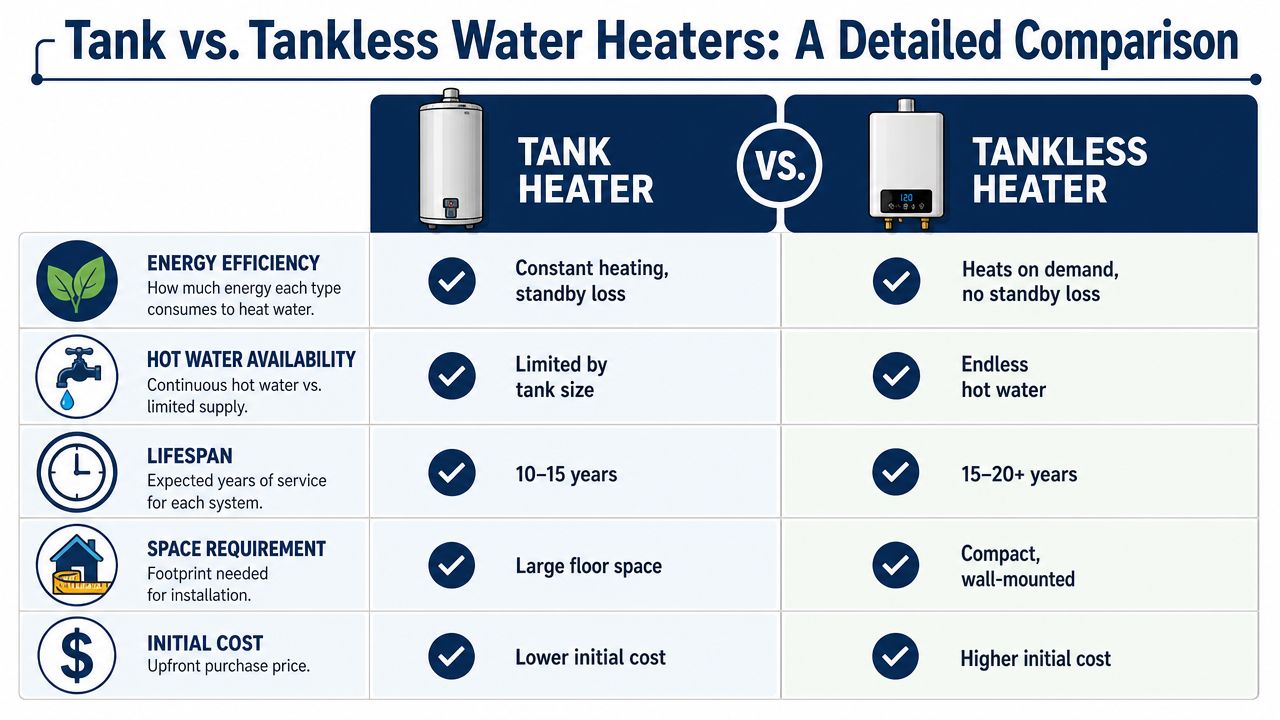
Tank vs. Tankless Water Heater At-a-Glance
| Feature | Tank Water Heater | Tankless Water Heater |
|---|---|---|
| How it works | Stores and reheats a fixed volume of water | Heats water on demand as it flows |
| Hot water delivery | Immediate reserve, but limited by tank size | Continuous supply if properly sized |
| Efficiency pattern | Loses energy to standby heating | Avoids standby heat loss |
| Typical use fit | Straightforward replacement, predictable operation | Better fit when sizing and infrastructure are right |
| Lifespan | Shorter service life in typical ownership | Longer service life in typical ownership |
| Upfront cost | Lower purchase and install cost in many cases | Higher purchase and install cost in many cases |
| Space | Takes floor space | Compact, often wall-mounted |
| Retrofit complexity | Usually simpler | Often more involved |
Energy Efficiency and Monthly Bills
Tankless units usually use less energy because they are not keeping a large volume of water hot all day. That part is real. The part that gets oversold is the monthly savings.
Actual savings depend on how the property uses hot water. A one-bedroom condo with modest demand can benefit more from tankless than a busy household with several back-to-back showers, laundry, and kitchen use. In larger homes and small apartment buildings, usage patterns can narrow the efficiency gap enough that the installation cost matters more than the utility bill difference.
For many LA owners, the better question is not “Which one is more efficient on paper?” It is “Will the savings justify the higher installed cost in this building?”
A useful visual can help if you want a general overview before comparing your own property details.
Hot Water Supply and Performance
Tank heaters are simple to live with. They keep a stored volume ready, so the first demand is covered immediately until the tank is depleted.
Tankless heaters change that equation. They can run much longer without the cold-water surprise that happens when a tank runs out, but only if the unit is sized for the actual fixture load, not the best-case load.
That distinction matters in Los Angeles properties with added bathrooms, converted garages, ADUs, and duplexes that have changed over time. On paper, a tankless unit may look adequate. In real use, two showers, a dishwasher, and a washing machine can expose a sizing mistake fast.
Field reality: “Endless hot water” depends on flow rate, gas supply, venting design, and how many fixtures people use at once.
Lifespan and Durability
Service life affects the math more than many homeowners expect. Tankless units often stay in service longer, while tank heaters usually reach replacement sooner because the tank itself is a wear item. If you want a practical benchmark, this guide on how long a water heater typically lasts is a useful starting point.
From a plumber's standpoint, the failure pattern is different. Tank models often age imperceptibly, then leak when the tank body gives out. Tankless models avoid that specific failure point, but they are more dependent on regular flushing, clean combustion, and proper venting.
Longer life does not automatically mean lower ownership cost. It helps most when the installation was done correctly at the start and the unit gets maintained on schedule.
Physical Footprint and Space Savings
Space is a real advantage for tankless in LA. I see that matter most in condos, ADUs, narrow side yards, and garages where owners want storage, laundry clearance, or cleaner access to the mechanical area.
A tank takes up floor space and usually locks you into one location. A tankless unit frees up room, but the visible appliance is only part of the story. Some properties still need rerouted venting, a drain for condensate, or upgraded gas piping, so the space savings on the wall do not always mean a simple conversion.
That is the trade-off in plain terms. Tank systems usually win on replacement simplicity. Tankless systems can win on space, service life, and long-term use, but only when the property can support them without expensive corrections.
The True Cost of Hot Water From Purchase to Replacement
A failed water heater in Los Angeles rarely stays a simple equipment decision for long. A landlord in Koreatown may need hot water back the same day. A homeowner in an older bungalow may discover the cheaper unit on paper is only cheaper until permit work, vent corrections, or another replacement shows up sooner than expected.
The Price You Pay Today
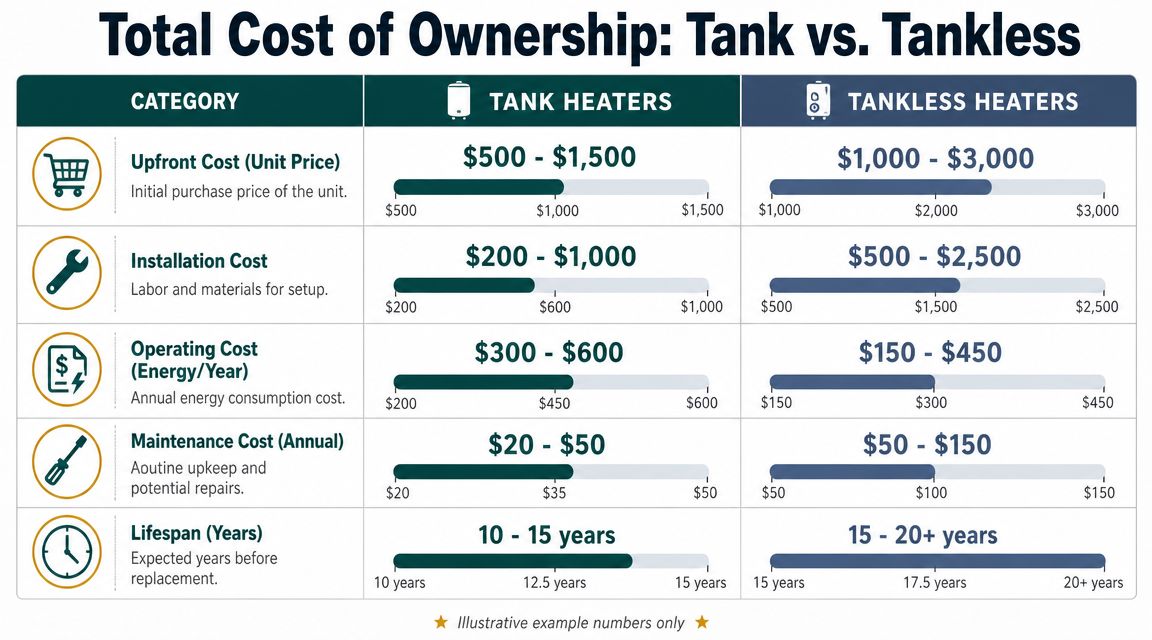
Upfront cost still matters, especially during an emergency replacement. In many LA homes, a standard tank replacement usually lands lower because the labor is more predictable and the supporting connections are often already in place. A tankless install starts with a higher equipment cost, and the final bill can climb further if the property needs larger gas piping, new venting, condensate handling, or electrical changes.
That is why many owners replace a failed tank with another tank. The goal is not just to save money. The goal is to restore hot water fast without turning one plumbing problem into a larger building project.
If you want a homeowner-oriented overview of the work involved, this homeowner's guide to water heater installation gives useful background on the installation side.
The Price You Pay Over the Service Life
Purchase price is only one line item. Total cost of ownership includes equipment, installation scope, utility use, maintenance, repair exposure, and how often you will need to replace the unit over the time you own the property.
The U.S. Department of Energy notes that homes using 41 gallons or less of hot water daily can see higher efficiency from tankless systems than from storage tank models, but that advantage depends on actual usage and the setup of the home (U.S. Department of Energy). In the field, that means a tankless system tends to make more financial sense when the property will keep the unit long enough to offset the higher install cost and when the conversion does not trigger expensive infrastructure work.
Service life matters here too. Owners comparing bids should look past this year's invoice and consider how long a water heater typically lasts before the next replacement cycle comes around.
Why Owners in LA Misjudge Cost
The biggest pricing mistake I see is treating a tankless conversion like a direct appliance swap. In Los Angeles, older houses often have undersized gas lines, nonstandard vent paths, or tight installation areas that push labor and correction costs up. In condos and multi-unit properties, approvals, access, shutdown coordination, and occupied-unit scheduling can add cost even before the new heater is on the wall.
A lower bid does not always mean a lower long-term cost. A tank can be the better financial choice when speed, simpler replacement, and lower upfront spending matter most. A tankless unit can pay off in the right property, but only after the building can support it without costly retrofits or recurring service issues.
Installation Realities and Maintenance Requirements
The installation side is where online comparisons usually fall apart. They make the equipment decision sound universal. In practice, the building decides a lot.
What a Straight Swap Looks Like
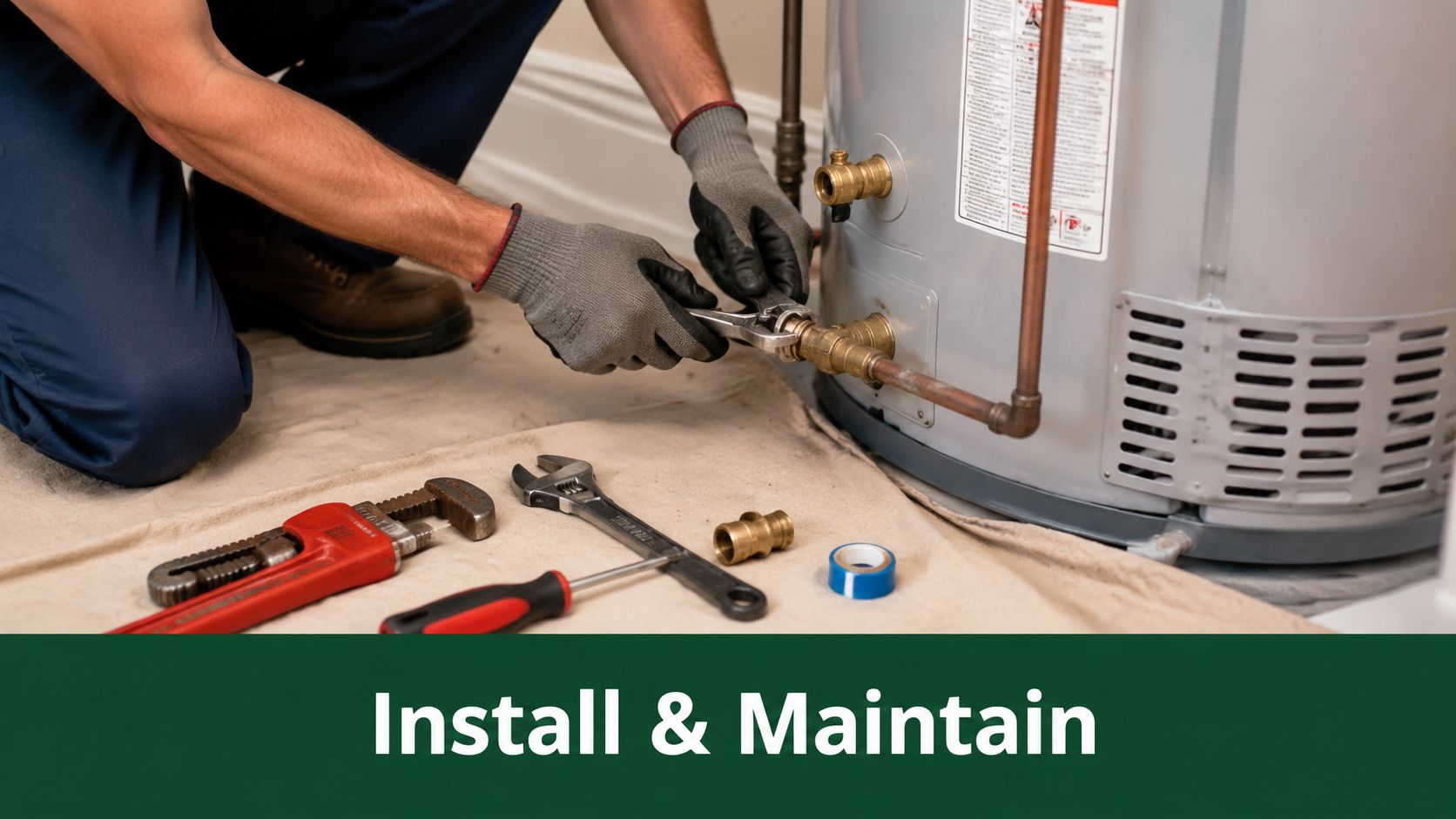
Replacing one tank heater with another is often the cleaner job. The footprint is already there. The water connections are familiar. The venting path may already suit the replacement plan. In many homes and rental properties, that keeps downtime and installation surprises lower.
That's one reason tank systems remain common in emergency replacements. Owners don't just want hot water. They want hot water restored without opening up a much larger project.
What Changes During a Tankless Conversion
A key issue often glossed over in sales language is retrofit complexity. Tankless units may require gas-line, venting, drainage, or electrical upgrades, especially in older homes, while tank systems are typically simpler replacements. That makes the better choice highly dependent on the property's existing infrastructure (Charles Stone Mechanical).
In Los Angeles, that can mean a straightforward conversion in one house and a much more involved job in the next block over.
A practical pre-install read from outside the plumbing trade is this homeowner's guide to water heater installation, which helps owners understand why utility and code details affect scope before work starts.
If you're evaluating options for an occupied property, it also helps to review a localized water heater installation guide for homeowners so you can think through access, shutdown windows, and code-related planning before you schedule the work.
Maintenance in Southern California Water Conditions
Maintenance isn't identical between the two systems.
- Tank heaters need periodic attention for sediment management. If sediment builds up, recovery and efficiency can suffer.
- Tankless heaters need descaling to address mineral buildup in the heat exchanger, which matters in hard water conditions.
- Both systems last longer when owners don't ignore routine service until performance drops.
For LA owners, hard water is part of the discussion. Not because it makes one category unusable, but because it changes how disciplined you need to be about maintenance. A well-installed unit that never gets serviced won't perform like it should, no matter which type you buy.
Sizing Your Heater and Navigating LA Permits
A lot of disappointment with water heaters is really a sizing problem. The unit wasn't matched to the way the property uses hot water.
Sizing for Daily Use and Peak Use
Tank and tankless systems are sized differently, but the same principle applies. You don't size for average comfort. You size for the busiest routine the household expects.
For a tank heater, think about stored volume. A household with staggered showers may do well with one size, while a family that stacks showers, laundry, and dishwashing close together may need a larger reserve.
For tankless, think in terms of simultaneous use. If the property regularly runs a shower while the dishwasher is on and someone opens another hot tap, the unit has to support that combined demand without a noticeable temperature drop.
The operating benefit also depends on matching the heater to real usage. EPA-based guidance summarized by Major Energy notes that a tankless heater can use up to 34% less energy when daily hot-water use is 41 gallons or less, but under higher demand around 86 gallons per day, the efficiency advantage can shrink to 14% (Major Energy).
That's why two homeowners can install tankless units and have very different opinions of them. One matched the equipment to the house. The other bought the idea but not the right capacity.
Why Permits Matter in Los Angeles
In LA, heater replacement isn't just a plumbing decision. It can become a permitting decision, especially when the project changes venting, gas piping, or electrical conditions.
For straightforward tank replacement, the process is usually simpler. For a tankless conversion, the permit side can become more important because the system may alter combustion air, vent routing, clearances, or utility loads.
A few practical points help:
- Check building requirements early if you're in a condo, HOA, or mixed-use property
- Expect more review when converting from tank to tankless than when doing a same-type replacement
- Plan access and scheduling if the property is occupied or in a tight utility area
Owners who skip this step often don't save time. They just move the problem later into inspection, resale, or insurance questions.
Which Water Heater Is Right for Your Property?
The right answer depends less on trends and more on property type, usage pattern, and ownership horizon.
Best Fit for a Single-Family Home
A tankless system often makes sense when the owner plans to stay in the house, wants to free up space, and is willing to invest more upfront for a longer service life and lower operating cost potential.
A tank heater often makes more sense when the existing setup already works well, the replacement needs to happen quickly, or the owner wants to control upfront cost and avoid larger retrofit work.
Best Fit for Rentals and Multi-Unit Buildings
For rental properties, the decision changes. Reliability, standardization, and turnover-speed matter. If a building has multiple conventional tank setups and each replacement can be done with minimal disruption, sticking with tank heaters can be the more practical management strategy.
In some properties, tankless still wins. Small condos, units with tight mechanical space, and buildings where reclaiming floor area has real value are common examples. But in older LA stock, the retrofit cost and permitting complexity have to make sense across the portfolio, not just on one unit.
When Tankless Makes Sense and When It Does Not
Tankless is usually a strong fit when:
- Space is tight and a wall-mounted unit solves a layout problem
- The owner plans long-term and wants fewer replacement cycles
- The house has moderate hot-water use and the unit can be properly sized
- The infrastructure supports it without expensive utility modifications
A tank is usually the better fit when:
- Budget control is the top priority
- The old unit failed and hot water needs to be restored fast
- The property is older and upgrades would make tankless hard to justify
- The building already performs well with a properly sized storage system
If you're unsure, get the property evaluated before you commit to a category. The heater that looks better in a brochure can be the wrong answer once someone checks the gas line, vent path, utility closet, and fixture demand.
Frequently Asked Questions
Does hard water affect tank and tankless heaters differently
Yes. Hard water creates maintenance issues for both, but the maintenance shows up differently. Tank systems deal with sediment in the tank. Tankless systems deal with scale in the heat exchanger. In Southern California conditions, regular service matters either way.
Will a tankless water heater work during a power outage
Some tankless systems rely on electrical components for operation, so owners should confirm power requirements before assuming hot water will still be available during an outage. This is one of those details that needs to be checked on the specific equipment being installed.
Is a hybrid heat pump water heater part of this decision
It can be, but it's a separate category. For some properties, especially where space, airflow, and installation conditions support it, a hybrid system may be worth discussing. It shouldn't be treated as the same decision as tank versus tankless.
What's the biggest mistake owners make
They choose based on a slogan. “Unlimited hot water” or “cheaper replacement” isn't enough. The right decision comes from matching the system to the building, the occupants, and the expected ownership timeline.
If you're weighing the difference between tank and tankless water heater options for a Los Angeles home, condo, rental, or multi-unit property, EZ Plumbing can inspect the existing setup, identify retrofit issues, and give you a practical recommendation based on the building you have.