
How Long Does a Water Heater Last? an LA Homeowner’s Guide
Traditional tank water heaters usually last 8 to 12 years, while tankless models commonly last 15 to 20 years or more. If you're in Los Angeles and your hot water has started turning inconsistent, making noise, or your unit is getting older, those numbers matter a lot more than most homeowners realize.
A lot of people start asking how long does a water heater last only after a bad shower, a puddle in the garage, or a tenant complaint. That's normal. Water heaters stay out of sight until they stop doing their job. In Los Angeles, the bigger issue is that local hard water can push a unit toward trouble faster if nobody stays on top of flushing, descaling, and basic service. Age matters, but age by itself never tells the whole story.
Table of Contents
- Your Water Heater's Lifespan Explained
- Expected Lifespans for Different Water Heater Types
- Key Factors That Shorten or Extend Your Water Heater's Life
- Warning Signs It's Time to Replace Your Water Heater
- How Proactive Maintenance Can Extend Your Water Heater's Life
- When to Call EZ Plumbing for Repair or Replacement
Your Water Heater's Lifespan Explained
The question usually starts with a cold shower. You turn the handle all the way over, wait for the water to heat up, and it never quite gets there. Or the hot water runs out faster than it used to, and now you're wondering whether the heater is failing or just having a bad day.
The baseline most plumbers use is straightforward. A traditional tank water heater lasts about 8 to 12 years, while a tankless unit typically lasts 15 to 20 years or more, according to A. O. Smith's water heater lifespan guidance. The same guidance also treats the 10-year mark as a serious checkpoint for tank units, especially when performance gets erratic or leaks start showing up.
Why the timeline matters
Those numbers aren't random. Tank heaters store hot water all day, which means the tank deals with repeated heating cycles, sediment buildup, and corrosion over time. Tankless systems avoid a lot of that constant tank stress, which is one reason they often stay in service longer.
Practical rule: If a tank heater is getting close to the end of its normal age range, don't wait for a total failure before paying attention.
For Los Angeles homeowners, landlords, and property managers, this is mostly a planning issue. If you know the install date, you can stop treating replacement like a surprise expense. If you don't know the age, checking the model information before a failure is worth the effort.
What the age range really tells you
Think of lifespan as a working window, not an expiration date. Some heaters fail earlier because they were neglected. Others keep going because someone serviced them properly and caught wear before it became damage.
That's the actual answer behind how long does a water heater last. The type of heater gives you the starting point. Maintenance, water quality, and repair decisions decide what happens after that.
Expected Lifespans for Different Water Heater Types
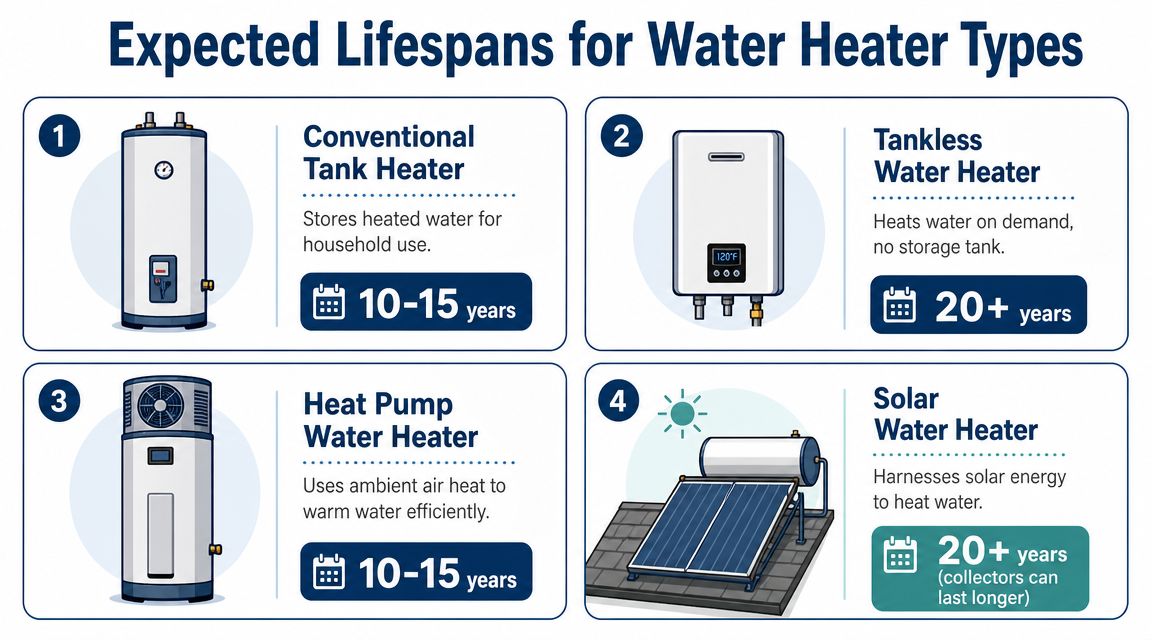
Not every heater ages the same way. The internal design decides how much corrosion, sediment stress, and daily wear the system has to absorb.
Why design changes lifespan
For the two main residential categories, the split is clear. Storage-tank water heaters usually last about 8 to 12 years, while tankless units commonly last 15 to 20+ years because they don't keep a full tank of water under constant thermal and corrosion stress, as explained in A. O. Smith's repair versus replacement overview.
That difference matters in real homes. A tank heater is always fighting the inside of the tank. A tankless heater is still working hard, but it isn't storing heated water around the clock in a steel vessel.
If you're comparing replacement options, it helps to understand how larger-capacity systems fit into the picture too. For multifamily buildings or properties with unusually high demand, this overview of 100-gallon gas hot water heaters gives useful context on where bigger tank systems make sense.
A practical comparison
| Heater Type | Average Lifespan | Key Feature |
|---|---|---|
| Storage-tank heater | 8 to 12 years | Stores heated water in a tank |
| Tankless heater | 15 to 20+ years | Heats water on demand |
| High-efficiency tank model | Varies with maintenance and water quality | Improved tank performance, but still a tank design |
A high-efficiency tank model can be a good fit when you want a familiar setup and simpler replacement path, but it still lives with the same basic tank reality. Sooner or later, sediment and corrosion catch up.
A tankless unit usually makes more sense when the owner plans to stay in the property, wants a longer service window, and is willing to keep up with maintenance. That last part gets ignored too often. Tankless does not mean zero service. If you want a closer look at how these systems work in Los Angeles homes, this guide to tankless water heater options is a useful next read.
Tankless units often last longer because the design removes one of the biggest weak points in a standard heater: a full tank sitting under constant heat and mineral exposure.
The right choice depends on the building, the demand, and whether you're solving for lower upfront cost or a longer ownership cycle.
Key Factors That Shorten or Extend Your Water Heater's Life
A water heater doesn't fail on a schedule. It fails based on conditions. In Los Angeles, one factor shows up again and again.
Los Angeles hard water is the big one
Water quality is one of the most important things affecting lifespan, especially hard water, and in hard-water areas like Los Angeles, professional flushing may be needed annually or even every six months to control mineral buildup. The same guidance notes that tankless systems still need annual descaling to avoid failure in those conditions, as outlined by Westmore Fuel's water heater lifespan article.
That tracks with what plumbers see in the field. Scale builds on the bottom of tank units and inside heat exchangers on tankless units. The heater then works harder, runs less efficiently, and parts stay under more stress than they should.
In LA homes, this is why two similar heaters can die at very different ages. One got serviced. One didn't.
The other factors that matter
After water quality, the next big issues are installation quality, maintenance habits, and usage pattern.
- Installation quality: A properly installed water heater starts with correct venting, correct connections, and proper setup for the unit type. Poor installation doesn't always fail on day one. Sometimes it shows up later as chronic performance problems, premature wear, or recurring service calls.
- Maintenance history: A heater that never gets flushed usually tells on itself. You hear rumbling. Hot water recovery gets worse. The unit runs longer and harder.
- Household demand: A family with heavy hot water use puts more wear on a system than a lightly used guest unit. In rental buildings, high turnover and variable usage can make this harder to track.
- Response time: Small issues stay small only if someone addresses them early. A minor symptom that gets ignored usually turns into a larger repair or a replacement decision under pressure.
In Los Angeles, hard water doesn't care whether the unit is expensive, new, or marketed as premium. If scale builds up and nobody removes it, the heater pays for it.
A lot of homeowners want a single lifespan number. That would be convenient, but it isn't how these systems work. A tank unit in a hard-water neighborhood with no maintenance lives a very different life than one that gets regular service. The same goes for tankless. It may last longer by design, but scale will still shorten that advantage if the owner skips descaling.
Warning Signs It's Time to Replace Your Water Heater
Most failed water heaters give some warning before they turn into a flood risk or leave you without hot water. The mistake is waiting until the signs get impossible to ignore.
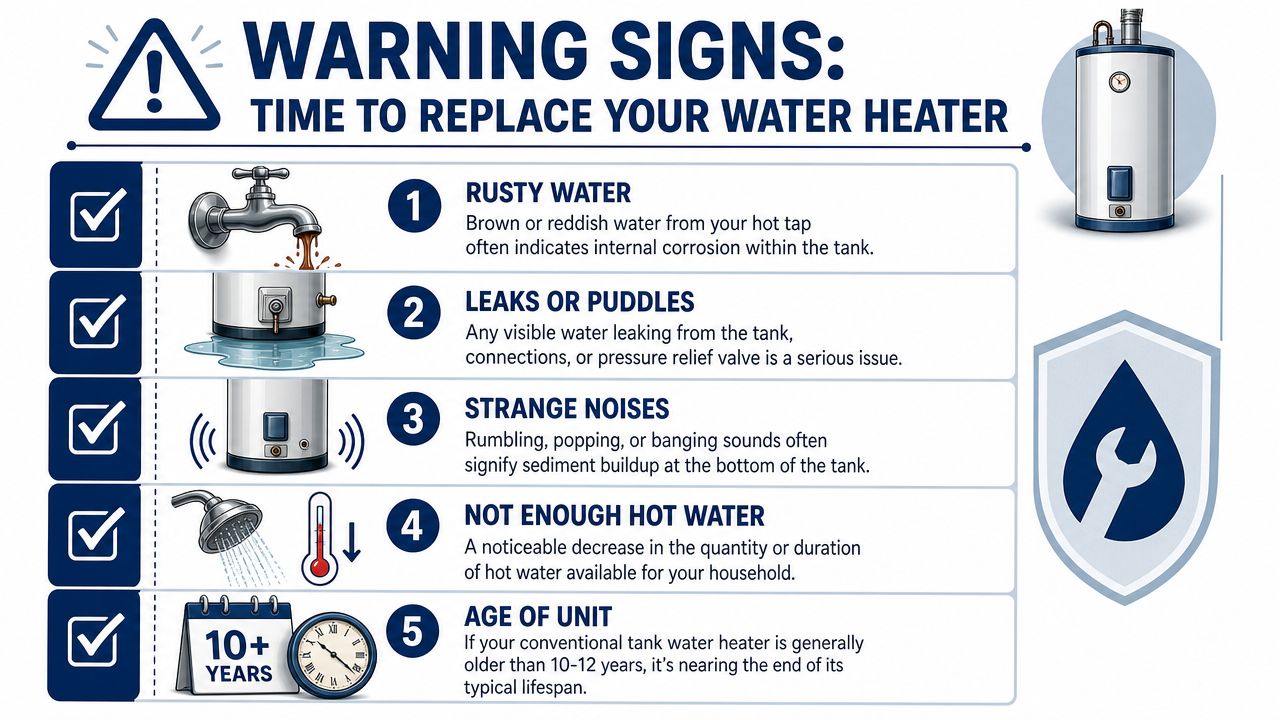
What failure looks like before the tank gives up
Some warning signs are obvious. Others are easy to excuse for too long.
- Leaks or moisture around the unit: Water at the base of the heater is never something to shrug off. It may be a fitting, a valve, or the tank itself. If the tank body is leaking, replacement is usually the direction the job is heading.
- Rust-colored hot water: Discolored hot water can point to internal corrosion.
- Rumbling or popping sounds: Those noises often mean hardened sediment is cooking at the bottom of the tank.
- Inconsistent hot water: If the water runs hot, then lukewarm, then hot again, the heater is telling you something has changed.
- Advanced age with recurring problems: An older heater with repeat issues rarely becomes a reliable long-term unit again.
This walkthrough is helpful if you want to see common symptoms in context:
When repair stops making sense
The smartest replacement decisions usually come from math, not emotion. Rheem's guidance says replacement is usually the better investment when repair costs exceed 50% of the price of a new unit, which is a useful threshold when you're deciding whether to keep spending on an aging system. That recommendation appears in Rheem's water heater repair versus replace article.
Here's how that plays out in practice:
- One bad component on a younger unit: Repair often makes sense.
- A leak from the tank body: Start planning for replacement.
- An older unit with repeated complaints: Stop treating each service call like a standalone problem.
- A major repair quote on a heater already showing wear: Replacement is often the better long-term move.
If the heater is old, acting up, and the repair quote is heavy, you're usually buying time, not solving the problem.
Homeowners get into trouble when they focus only on whether the unit still technically works. A heater can still produce hot water and still be a poor candidate for more repair money. If it leaks, runs erratically, or keeps coming back with a new problem, replacement is usually the cleaner decision.
How Proactive Maintenance Can Extend Your Water Heater's Life
Maintenance is the part most owners skip because the heater seems fine until it isn't. That's also why maintenance works. It deals with damage before the symptoms get loud.
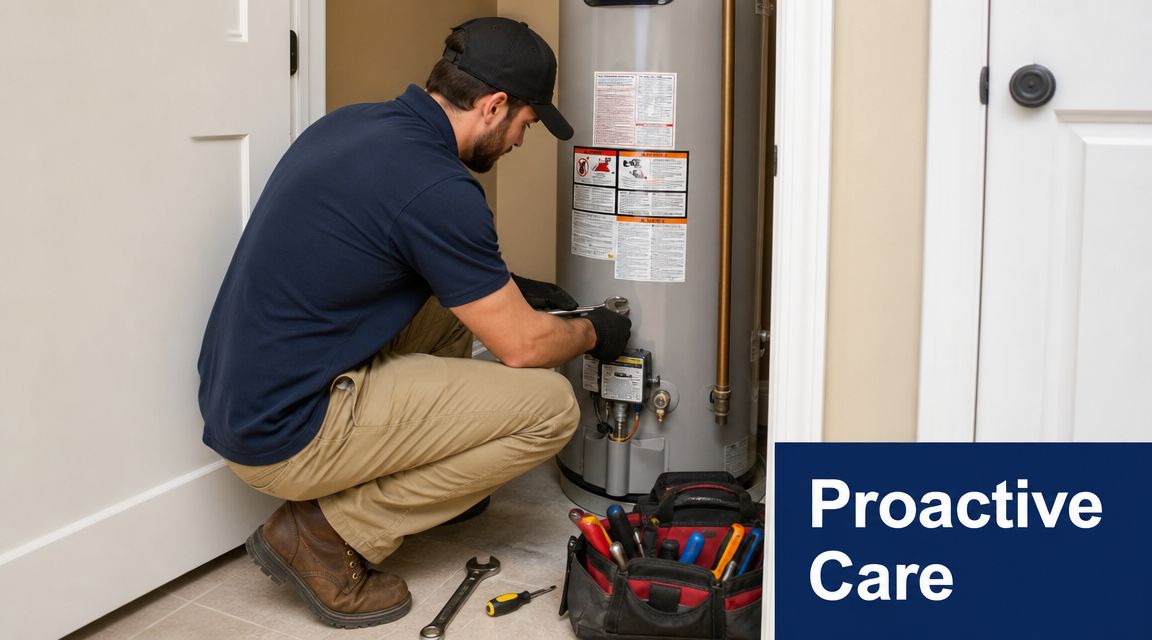
According to Fuse Service's guide to real water heater lifespans, routine maintenance can add 3 to 5 years to a water heater's life expectancy. The same guidance says the anode rod typically lasts 3 to 5 years, should be inspected every 2 to 3 years, and that annual flushing is the most commonly recommended step to prevent early failure.
The maintenance that actually matters
For tank heaters, these are the jobs that make the difference:
- Flush the tank annually: This removes sediment before it hardens into a bigger problem.
- Inspect the anode rod on schedule: The anode rod is there to corrode so the tank doesn't have to.
- Check for early warning signs: Moisture, rust, and unusual noise should get attention early.
- Schedule tankless descaling when needed: Especially in Los Angeles, this isn't optional maintenance.
What homeowners should watch between service visits
You don't need to be a plumber to catch changes early. Watch for shorter hot water duration, new sounds, or water showing up where it shouldn't. Those small changes are often the first clue that the heater needs service, not patience.
For anyone trying to reduce the risk of a leak turning into a bigger property problem, these water damage insights from 360 are worth reviewing alongside a regular service plan. If you want a broader local checklist, this Los Angeles guide to essential plumbing maintenance complements water heater upkeep well.
A maintained heater usually ages gradually. A neglected heater tends to fail at the worst possible time.
What doesn't work is waiting for total failure and calling that a strategy. In Los Angeles, regular flushing and descaling are basic survival habits for a water heater.
When to Call EZ Plumbing for Repair or Replacement
Call for professional help when the water heater is leaking, when hot water performance becomes erratic, or when the unit is old enough that every repair starts feeling temporary. The same goes for any situation where the repair estimate is getting uncomfortably close to the replacement decision threshold covered above.
This is especially important for Los Angeles properties with hard water, multi-unit demand, or heaters installed in places where a leak can damage flooring, drywall, or adjacent units. A professional inspection can tell you whether the problem is a serviceable part, heavy scale buildup, or a heater that's already on borrowed time.
If you're weighing replacement, it helps to look at the full installation picture instead of only the appliance. Venting, code compliance, placement, capacity, and future maintenance access all matter. This page on water heater installation in Los Angeles is a good starting point when you're comparing options or planning ahead.
When a heater is near the end, speed matters. So does getting a straight answer about whether you're fixing a component or prolonging an old system that should be retired.
If your water heater is getting unreliable, leaking, or reaching the point where repairs don't make financial sense anymore, EZ Plumbing can help you sort it out without guesswork. Their licensed Los Angeles team handles tank and tankless repair, descaling, replacement, and full installation work for homeowners, HOAs, landlords, and property managers who need fast answers and clean, dependable service.