
Homeowners: Bathtub Backing Up? 5 Immediate Actions to Read Symptoms
A bathtub backing up usually means either a local drain clog (hair, soap scum, a worn stopper) or a blockage further downstream in a shared branch, main sewer line, or septic system. If the water looks or smells like sewage, or other fixtures are affected, stop using water and call a licensed plumber right away; if it’s isolated to the tub and the water is clear, safe DIY steps are usually worth trying first.
TL;DR:
- If only the bathtub drains slowly and the water is clear, removing hair and debris and plunging are often sufficient DIY solutions.
- When multiple fixtures back up or the water looks or smells like sewage, the problem is downstream in the sewer line or septic system, requiring professional inspection.
- Backups during heavy rain or with multiple fixtures affected suggest a mainline or septic malfunction, not a simple clog.
- Sewage backup poses health risks; homeowners should stop water use, avoid contact, and disinfect affected surfaces immediately.
- Persistent or severe backups, especially with standing water, should prompt quick contact with a licensed plumber for advanced diagnostics and repairs.
Table of Contents
- Common Causes of a Bathtub Backup and What Your Symptoms Mean
- Priority Actions to Take Right Now
- Step-by-Step DIY Fixes for a Clogged, Non-Sewage Tub Drain
- Recognizing Sewage Backup and Protecting Your Health
- When to Call a Licensed Plumber
- Preventing Future Bathtub Backups
- Our Take on DIY Limits and When Experience Matters
- Get a Licensed Plumber on a Tub Backup Fast
- FAQ
- Sources
Common Causes of a Bathtub Backup and What Your Symptoms Mean
The pattern of what’s happening in your home tells you almost everything about where the problem sits and how urgent it is. A tub that drains slowly on its own, with no effect on other fixtures, points to something local: hair wound around the stopper, soap scum lining the trap, or a worn stopper and overflow assembly that isn’t sealing properly.
A different pattern points much farther downstream. If flushing a toilet makes the tub rise, or running the sink backs up bathwater, the restriction is probably in a shared branch line or the main sewer line serving the whole house. The EPA’s guidance on sanitary sewer overflows lists grease, tree roots, damaged pipe, blocked vents, and inadequate maintenance among the common causes of these larger blockages, and notes that septic-system malfunctions can produce the same visible symptom in a bathtub even though the failure is happening outside the house entirely.
Gurgling sounds when water drains, or drains that empty unevenly, often point to a venting problem rather than a clog. Plumbing vents let air into the drain system so water can flow smoothly; when a vent is blocked or improperly sized, water plugs and drains slowly even with no obstruction at all.
Here’s how to read the most common patterns:
- Only the tub is affected and drainage worsened gradually: likely a local clog from hair, soap residue, or bath product buildup.
- The tub rises when you flush the toilet or run another fixture: the blockage is probably in a shared branch or main sewer line.
- Multiple fixtures gurgle or drain slowly at once: a venting issue or a mainline blockage is more likely than a single clogged trap.
- Backups recur after you’ve cleared visible debris: roots, grease buildup, or a septic malfunction may be involved.
- You’re on a septic system and backups follow heavy rain: the drainfield or tank may be overwhelmed, not the tub drain itself.
Priority Actions to Take Right Now
Before troubleshooting anything, decide which situation you’re in, because the safe next step depends on it.
- Check the water. If it’s discolored, smells foul, or sewage is visibly present, stop using all water in the house immediately.
- Check how many fixtures are affected. If more than the tub is backing up or gurgling, the problem is downstream and DIY tub fixes won’t solve it.
- If it’s sewage or multi-fixture, isolate the area and keep children and pets away from standing water.
- If it’s isolated to the tub and the water is clear, go ahead and try removing the stopper, clearing visible hair, and plunging before reaching for chemical drain cleaners.
- Stop after two or three attempts. Repeated plunging or snaking that doesn’t improve drainage usually means the obstruction is beyond what a bathtub-level fix can reach.
A backup that reaches the floor is not just a tub problem anymore. Standing water on bathroom flooring can seep into subflooring and drywall within hours, and sewage-contaminated water carries bacteria, viruses, and parasites even when it doesn’t look especially dirty.
If water has reached outlets, light fixtures, or anything electrical, avoid the area and shut off power at the breaker if you can do so without stepping into water. Our guide on floor drain backups and the immediate safety steps to take walks through containment in more detail.
Step-by-Step DIY Fixes for a Clogged, Non-Sewage Tub Drain
If you’ve confirmed the backup is isolated to the tub and the water is clear, a few straightforward steps often solve it without calling anyone.
- Remove the stopper. Lift-and-turn stoppers unscrew counterclockwise, push/pull stoppers pull straight up, and trip-lever stoppers require removing the overflow plate screws first since the mechanism sits behind the faceplate.
- Pull out visible hair and debris with a flexible hair-removal tool or a straightened wire hanger with a small hook bent into the end.
- Plug the overflow opening with a wet rag, then form a tight seal over the drain with a cup plunger and pump vigorously for 15 to 20 seconds before breaking the seal.
- If plunging doesn’t clear it, try a short manual drum auger, feeding the cable gently and stopping if you feel strong resistance rather than forcing it.
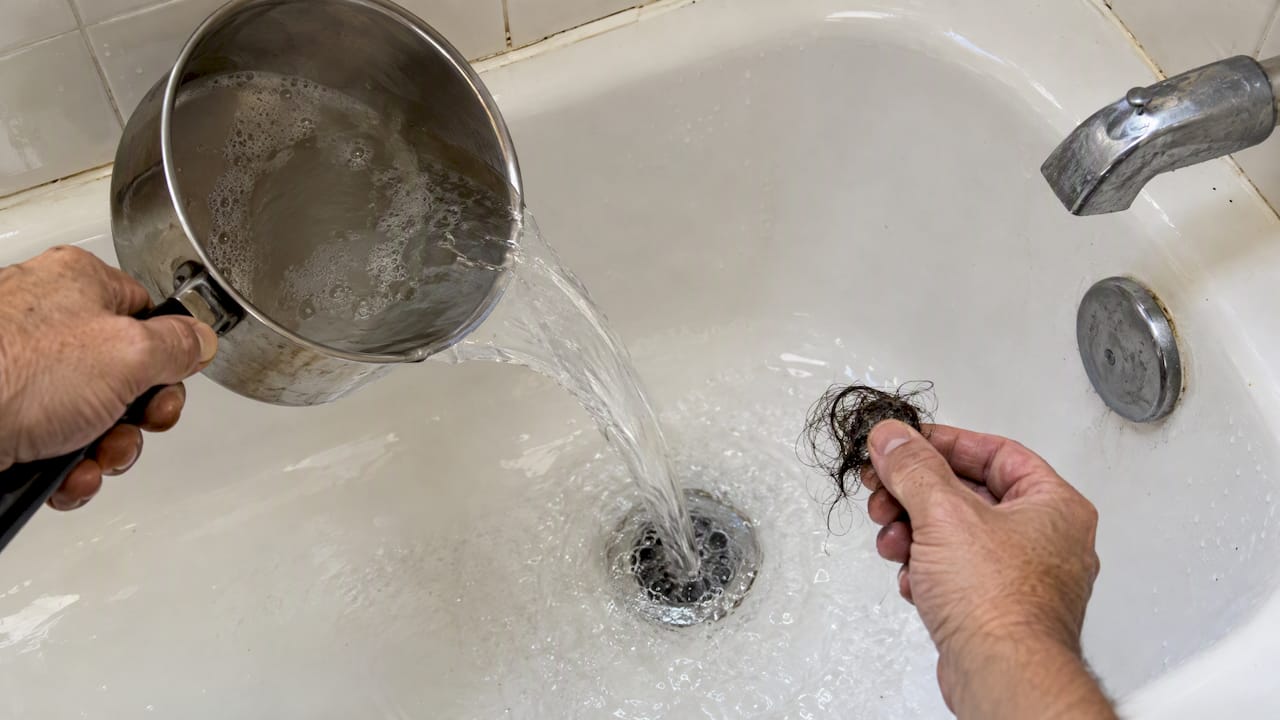
- Flush with hot tap water, not boiling water, especially if you have PVC or other plastic piping; boiling water can soften or warp plastic pipe joints, while metal pipes tolerate it better.
Pro Tip: If drainage improves after removing the stopper but slows again within a day or two, inspect the stopper and overflow assembly itself. A worn gasket or misaligned linkage can mimic a pipe clog and send you chasing the wrong problem.
Removing a hair clump and running hot, soapy water through the drain is often enough to restore normal flow, but if the clog returns after two attempts or the water backs up elsewhere in the house, stop troubleshooting the tub itself.
Recognizing Sewage Backup and Protecting Your Health
Not every discolored backup looks dramatically dirty, which is exactly why color and smell alone aren’t reliable enough on their own. Water that has traveled through sewer lines can carry pathogens even when it looks only slightly cloudy, so treat any of the following as a sanitation event rather than a plumbing inconvenience:
- Water with a sewage odor or gray, brown, or murky coloring
- Backups affecting the toilet, tub, and sink simultaneously
- Water pooling on bathroom flooring or seeping into adjoining rooms
- Repeated backups within the same week
The EPA notes that sanitary sewer overflows can carry bacteria, viruses, protozoa, worms, molds, and fungi, which is why direct contact matters even when the water doesn’t look especially contaminated.
If sewage is present, stop using water throughout the house, keep people and pets out of the affected room, and put on rubber boots, gloves, and goggles before touching anything. CDC cleanup guidance recommends disinfecting any surface the water touched and discarding porous materials like carpet padding that can’t be fully sanitized. Larger contamination, especially where water has soaked into flooring or walls, is usually a job for a remediation service rather than a mop and bucket. If you’re on a septic system, a backup after heavy rain may mean the tank or drainfield is overwhelmed, and the EPA recommends arranging septic pumping once water levels allow safe access. Our emergency plumbing response guide for sewage-colored or foul-smelling water covers containment in more depth.
When to Call a Licensed Plumber
Some situations call for a professional immediately rather than after a few failed DIY attempts.
- Sewage odor, discoloration, or contamination in the water
- More than one fixture backing up or gurgling at the same time
- Backups that return within days of clearing them
- Standing water on bathroom flooring
- A clog that won’t budge after a plunger and a short hand auger
Professionals diagnose beyond what a homeowner can see. A video camera inspection locates the exact point of a blockage, whether it’s roots, a collapsed section of pipe, or grease buildup, which avoids unnecessary digging and points toward the right repair. Mechanical snaking clears many obstructions, while hydro-jetting uses high-pressure water to strip roots and grease from the inside of a pipe, a method especially effective for recurring mainline clogs. Where a pipe itself has failed, trenchless sewer line repair can often replace it without tearing up a yard or driveway.
When you call, describe what you’ve seen: which fixtures are affected, the water’s color and smell, and anything you’ve already tried to help the construction software for plumbers team prepare for the best visit. That helps a dispatcher send the right equipment the first time. Our page on clearing a main sewer line clog safely explains what these diagnostics look like in practice.
Preventing Future Bathtub Backups
A handful of habits prevent most of the backups homeowners deal with repeatedly.
- Use a mesh hair catcher over the drain and clean it weekly.
- Never flush wipes, even ones labeled flushable, or pour grease and cooking oil down any drain.
- Avoid running the washing machine, dishwasher, and multiple showers at once during heavy rain if you’re on an older or shared sewer line.
- Schedule periodic mainline inspection and cleaning if your home has a history of slow drains or root intrusion.
- Have a septic tank pumped on a regular schedule rather than waiting for symptoms.
Pro Tip: If your home has older clay sewer laterals, a camera inspection every few years can catch root intrusion before it causes a backup, often for less than the cost of an emergency call.
A backflow prevention device is worth discussing with a plumber if your property has experienced sewer backups during storms before, since these devices stop municipal sewer surges from pushing back into your home’s fixtures.
Our Take on DIY Limits and When Experience Matters
Most bathtub backups genuinely are simple to fix, and we’d rather see a homeowner try a plunger and a hair tool before calling anyone. The real risk isn’t attempting DIY, it’s continuing to attempt it after the signs point downstream. A clog that returns, water that smells wrong, or a second fixture joining the backup are not reasons to try a bigger drain snake. They’re reasons to stop, because what looks like a tub problem is often a sewer lateral, a failed vent, or a septic system reaching capacity, and pushing harder from the tub end rarely reaches the actual obstruction.
Licensed work exists for a reason: diagnosing root intrusion, a collapsed clay lateral, or a venting defect takes equipment and experience most households don’t have on hand, and guessing wrong can turn a manageable repair into a flooded bathroom.
— EZ
Get a Licensed Plumber on a Tub Backup Fast
When a bathtub backup turns out to be more than a hair clog, professional diagnostics and tools beyond a DIY attempt may be needed, such as camera inspection, hydro-jetting for roots and grease, and sewer line repair when a pipe itself has failed.

Our technicians are available to provide plumbing services with written pricing before work begins. If your tub, drains, or sewer line need a professional look, start with our emergency plumbing services or check our drain cleaning page for a non-urgent appointment.
FAQ
How to fix water backing up into a bathtub?
Start by identifying whether only the tub is affected or other fixtures are backing up too, since that determines whether a DIY fix is realistic. For an isolated tub clog, remove the stopper, clear visible hair, and use a plunger; if multiple fixtures are involved or the water looks or smells like sewage, stop using water and call a licensed plumber.
My bathtub is clogged and won’t drain. How can I unclog it?
Remove the stopper, pull out hair and debris with a flexible hair-removal tool, then plug the overflow and use a plunger to form a seal and clear the blockage. If that doesn’t work, a short hand auger can reach slightly farther, but stop and call a professional if the clog returns or won’t clear after a couple of tries.
Do baking soda and vinegar actually work to unclog drains?
Baking soda and vinegar create a fizzing reaction that can loosen light residue, but they don’t have the mechanical force to clear a hair clog or a solid obstruction the way a plunger or drain tool does. For most real tub clogs, physically removing the hair or debris works better than a chemical reaction alone.
What can I pour down my bathtub to unclog it?
Hot tap water combined with dish soap can help lubricate and loosen soap scum and residue, but avoid boiling water if you have plastic piping, since it can damage plastic pipe joints over time. Skip harsh chemical drain cleaners, which can damage older pipes and create hazardous fumes if they mix with standing water.
Sources
- Sanitary sewer overflow (SSO) frequent questions — EPA
- Guidelines for cleaning safely after a disaster — CDC
- How to clear a clogged bathtub drain — This Old House
- How to unclog a bathtub drain in less than 30 minutes — Bob Vila