
How to Clear a Main Sewer Line Clog Safely and Effectively
You're standing in the house and it's not one sink acting up, it's the whole place. The tub starts to bubble, the toilet downstairs rises higher than it should, and there's that sewer smell that tells you this isn't a normal drain problem. In Los Angeles homes, that pattern usually means the main sewer line is involved, and the wrong next move can turn a manageable clog into a messy, expensive repair.
The good news is that a main line backup has a fairly clear decision tree. If you catch it early, a cleanout, an auger, or a professional clearing method may restore flow. If you keep running water, pour chemicals down the drain, or keep forcing the line after it's already stalled, you can make the problem worse and push the job into the four-figure range.
Table of Contents
- Recognizing a Main Sewer Line Backup
- Clearing the Line Through the Cleanout Access
- Understanding Sewer Line Repair Costs
- Professional Clearing Methods and When Each Applies
- Preventing Future Sewer Line Emergencies
- Getting Fast and Reliable Help from EZ Plumbing
Recognizing a Main Sewer Line Backup
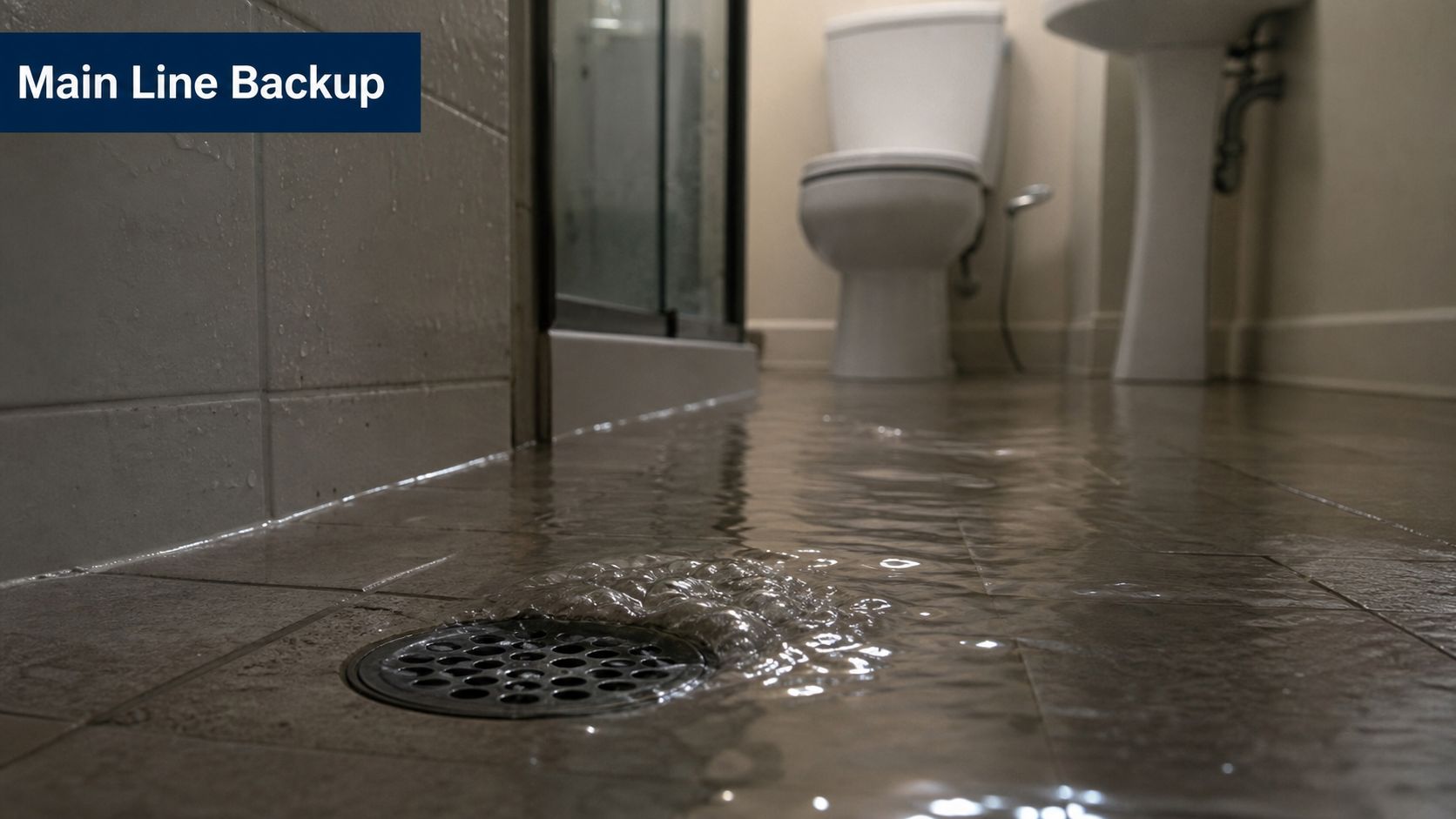
A family gets home in the evening, runs the dishwasher, flushes a toilet, and suddenly the shower on the lowest floor starts to collect dirty water. That's the kind of call that usually isn't about one clogged sink. When multiple fixtures back up at once, the shared sewer path is the first place to look, especially if the lowest drain in the house is the one that shows trouble first.
What the pattern usually looks like
The simplest sign is that the problem shows up in more than one place. Gurgling from different drains, sewage odors near fixtures, and water backing up in an unexpected spot all point toward the main line rather than a single branch drain. A toilet that bubbles when a tub drains is another clue, because the blockage is affecting how the whole system breathes and moves wastewater.
If that's happening, stop using every fixture right away. Continued discharge only adds more water to a line that can't carry it, and the overflow usually shows up at the lowest opening first. That's why main line backups feel so sudden, they often stay hidden until the system finally loses the ability to move waste.
Practical rule: if the same symptom shows up in the kitchen, bath, and laundry, treat it like a sewer problem until proven otherwise.
Before touching a cleanout or drain cap, put on gloves and make sure the area is ventilated. If you need a broader prevention mindset for backup-prone homes, the Firm Foundations sump pump guide is useful because it shows how water management and backup control work together when a property is already under strain.
Safety comes first
A sewer backup isn't the place for guesswork. Stand clear before opening any capped access point, because wastewater can discharge when the cap breaks loose. If you're already seeing sewage at a floor drain or tub, don't keep testing fixtures to “see what happens”, that just adds volume to the problem.
A clean, dry inspection is the goal. If the water is moving slowly but still moving, you may have a partial blockage. If it's rising back at you, the line is already failing as a path of least resistance, and the cleanout becomes the better entry point for diagnosis.
Clearing the Line Through the Cleanout Access
Many people try the wrong opening first. They start at a sink or toilet because that's what's visible, but the main line is usually best reached at the cleanout access, a capped pipe near the foundation, yard line, or property edge. In older LA homes, that access point is often the fastest way to test whether the clog is simple debris or something deeper.
Start at the cleanout, not the fixtures
Look for a white or black capped pipe. You'll want a pipe wrench and a plumbing auger or sewer rod rated for main lines, not a tiny hand snake made for a bathroom sink. The point is to reach the obstruction directly, because branch-level tools often can't get to the blockage.
Open the cap slowly and stand clear. If the line is under pressure, wastewater can push out as soon as the seal breaks. Once you've confirmed there isn't an immediate surge, feed the cable into the pipe until you feel resistance, then rotate clockwise while pushing and pulling with control. That motion helps the cable work through turns instead of jamming at them.
Don't force the cable through bends without rotation. That's one of the fastest ways to stall the auger before it ever reaches the clog.
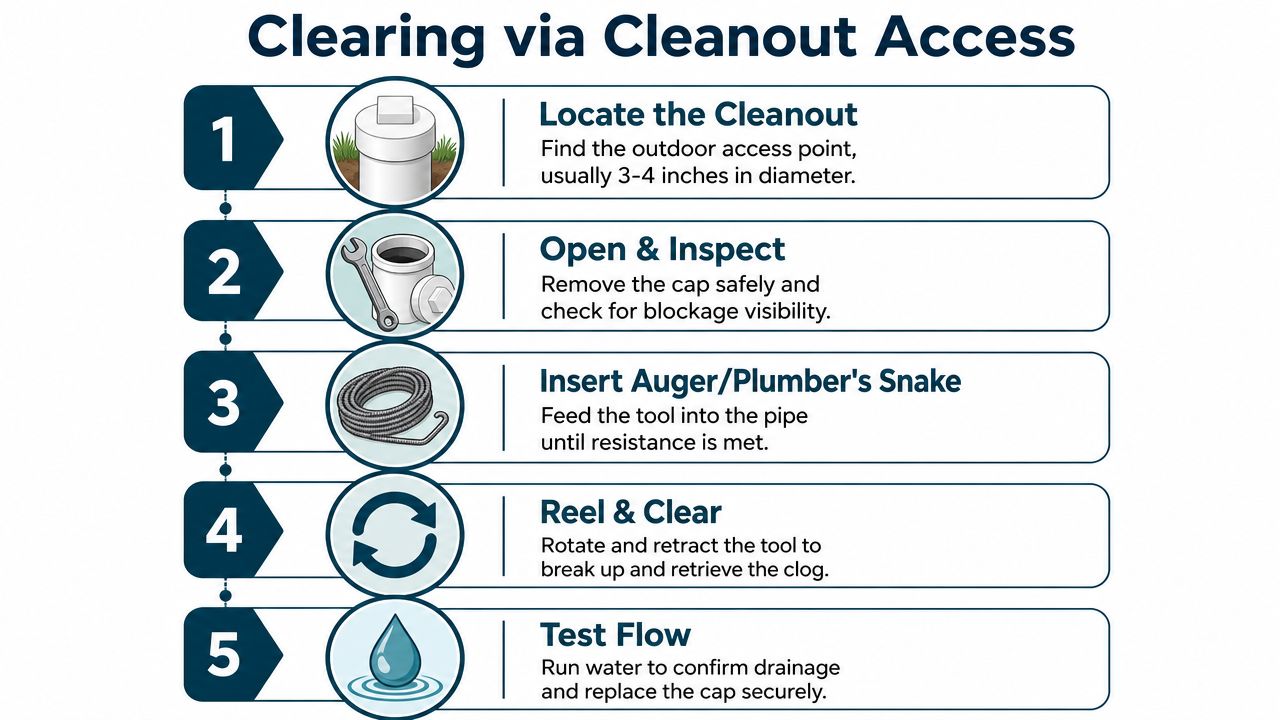
The workflow above lines up with the same basic field method many plumbers use on-site, and the internal breakdown at sewer cleanouts in LA homes is a useful reference if you're trying to identify the access point before you start.
Know where DIY ends
A lot of homeowners get one partial break in the blockage and assume the line is fixed. That's where the second mistake happens. If the auger doesn't restore flow after repeated passes, or if water backs up again right after, the cause is likely deeper blockage, tree roots, or pipe damage, and that's the point where repeated chemical treatment isn't helping.
This is also where a camera matters. The auger tells you whether the line can be opened. The camera tells you why it failed in the first place. If the line clears but only briefly, treat that as a warning, not a success.
Understanding Sewer Line Repair Costs
A main sewer line clog can stay cheap for a short window, then jump fast once the problem is beyond simple clearing. A basic drain snake may start around $99, while hydro jetting can reach $1,600 or more when the line needs heavier cleaning. The national average repair cost is about $380, and full sewer line replacement can average $3,319. That spread is why the first decision matters so much. A blocked line can start as a service call and turn into a four-figure repair if the pipe is damaged or the blockage keeps coming back. Early action can keep the job in the lower-cost range, while deeper damage can cost more than 8x the average clog repair SERVPRO's sewer line cost guidance.
What drives the price up
A simple obstruction is usually the least expensive outcome. Snaking works when the blockage is close enough to reach and mechanical removal is enough to restore flow. Hydro jetting comes in when grease, sludge, or debris has narrowed the pipe so much that a cable opens only a weak path, or when the line needs a full interior wash to stay open. For a homeowner, that is the first cost checkpoint, because a quick pass with a snake is a repair bill. A service call that needs pressurized cleaning is a different price tier.
If the clog is not the main problem, the bill rises because the job changes. A camera inspection can show whether the pipe is intact, cracked, shifted, or filled with roots. If the pipe segment itself is damaged, clearing stops being the whole job and the work moves into repair or replacement. That is the point where a blocked drain can become a pipe project, and the cost climbs accordingly.
| Service Type | Estimated Cost | When It Is Needed |
|---|---|---|
| Basic drain snake | $99 | A straightforward blockage that can be mechanically cleared |
| Typical clog repair | $380 | A common main line service call for a clog that still responds to clearing |
| Hydro jetting | $1,600 or more | Tough buildup, grease, or stubborn line cleaning |
| Full sewer line replacement | $3,319 | Pipe damage, collapse, or failure beyond clearing |
A homeowner's decision tree is simple. If the line clears and stays clear, the cost usually stays closer to the lower end. If water backs up again right away, if several fixtures are affected, or if the clog returns after repeated clearing attempts, the job is no longer just a clog. At that point, the right move is to check the pipe condition before spending more on another temporary fix. A clear explanation of what hydro jetting does and where it fits is available in this homeowner's guide to hydro jetting.
For homeowners, the takeaway is direct. A main line clog is cheaper to handle while it is still only a clog. Once the pipe is damaged, the work becomes a repair project, not a cleaning job.
Professional Clearing Methods and When Each Applies
A main sewer line backup can look simple from the house, but the right fix depends on what is happening inside the pipe. In older Los Angeles properties, especially homes with clay or cast-iron lines, the usual suspects are roots, settled debris, grease coating, or a pipe that has already started to fail. A plumber has to separate a line that needs cleaning from a line that needs repair, because the cost and the risk are very different.
Matching the tool to the blockage
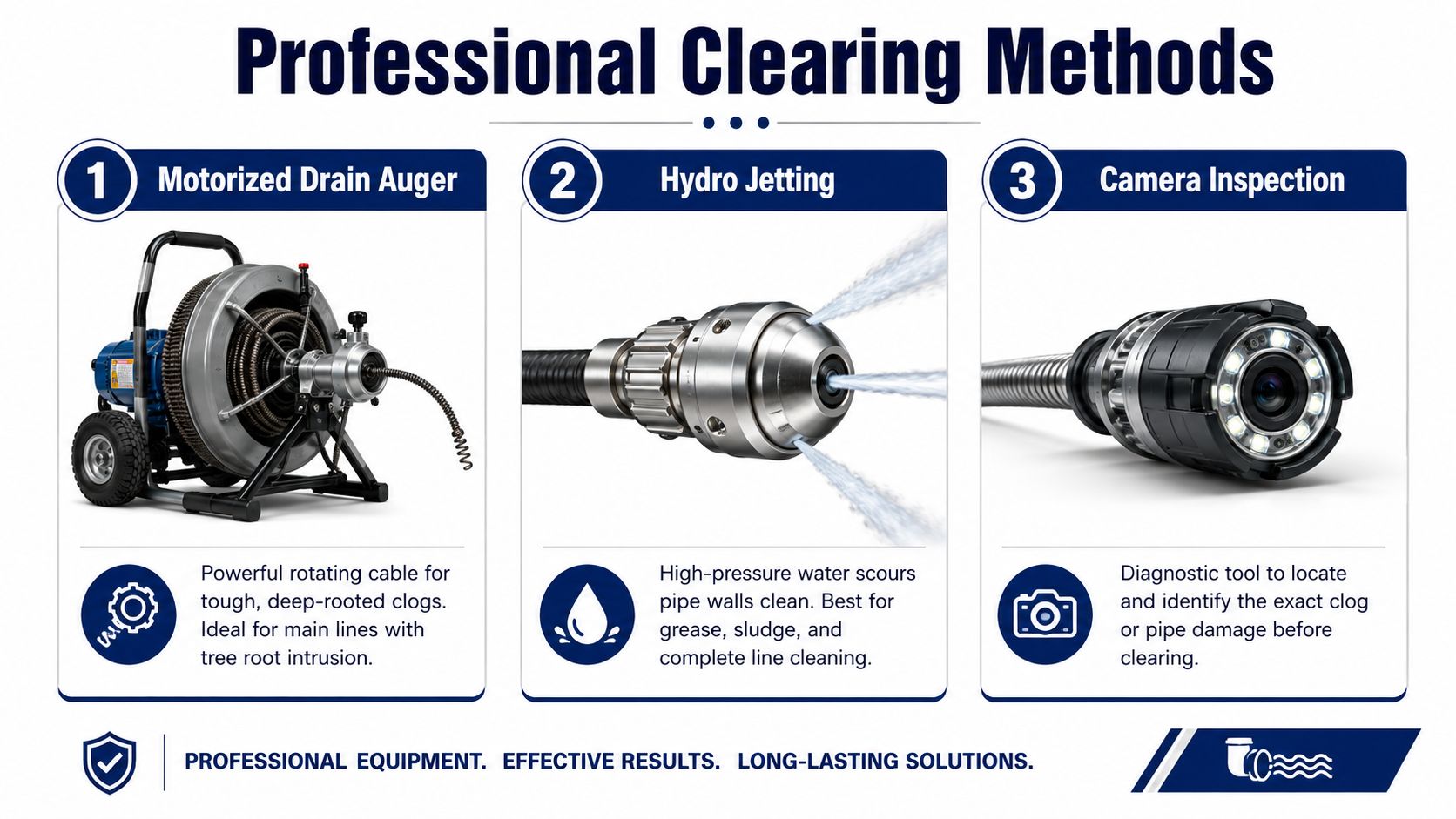
A motorized drain auger reaches farther and has more cutting force than a hand snake. On site, I use it when the blockage is beyond easy cable reach or when a main line obstruction keeps holding up after a basic pass. It is the next step when DIY attempts have already failed and the line still needs to be opened without jumping straight to more aggressive cleaning.
Hydro jetting uses high-pressure water to strip grease and wash loose debris off the pipe walls. That makes it the better choice when the line keeps backing up because the pipe is narrowed by buildup, not just blocked at one spot. For homeowners comparing hydrojetting vs snaking, the trade-off is simple. Snaking can punch a hole through a clog, while jetting does a better job of cleaning the pipe itself.
Camera inspection is the part that keeps the rest of the work honest. It shows where the clog sits, whether roots are in the line, and whether the pipe still has enough structure to justify cleaning at all. Without that view, a plumber can restore flow for the moment and still miss the reason the backup keeps coming back.
When the pipe itself is the issue
If the camera shows a cracked, shifted, or collapsed pipe, clearing tools stop being the main answer. At that point, the job turns into repair planning, and trenchless options may come into play if the pipe layout and damage level allow it. The key dividing line is whether the line can be cleaned or whether the pipe wall itself has failed.
Root intrusion is a common reason a line keeps clogging, especially in older clay or cast-iron systems. Field guidance in older homes points to that pattern often enough that a plumber will usually inspect the pipe before spending money on repeated cleaning. In practice, the workflow is straightforward. Open the line at the cleanout, use a mechanical tool to restore basic flow, then check the pipe with a camera before deciding whether hydro jetting, repair, or replacement is the better use of the money.
For homeowners trying to judge whether the cleaning method fits the problem, EZ Plumbing's hydro jetting guide lays out where that service makes sense and where it does not.
Preventing Future Sewer Line Emergencies
A sewer line that has been cleared once still needs a plan. The question after the backup is simple, do you spend a little on prevention now, or wait for the next overflow and risk a much larger repair later? Routine camera inspections can catch trouble while it is still limited to buildup, root growth, or a weak joint instead of a collapsed line that needs major work.
Habits that actually reduce risk
The biggest habits are also the plainest. Do not flush wipes, paper towels, or feminine products. Do not pour grease down the drain. Keep trees and large shrubs away from vulnerable sewer runs, because roots follow water and older lines give them a path.
Preventive service is cheaper when the pipe is still open enough to inspect.
For older LA homes with clay or cast-iron lines, camera checks matter because age alone does not show what is happening inside the pipe. Small cracks, loose joints, and debris can stay hidden until they turn into a backup. If the line is still passing water and the camera can get through cleanly, a maintenance visit may be enough. If it is already backing up, the job moves out of maintenance and into repair planning.
A practical household checklist is still worth using day to day. The article on how to prevent drain clogs gives a solid framework for what to stop doing before the line starts acting up again. If you want a quick look at how other property owners handle upkeep and service experiences, the Testimonial platform showcase is a useful reference point.
Pay attention to gurgling fixtures, slow drains across more than one room, and sewage smells around the cleanout or lowest drain. Those are early warning signs, and they matter because they help you decide whether you are looking at a simple blockage or a line that needs a plumber before the situation becomes expensive.
The goal is to keep wastewater moving and catch root growth or debris before it becomes a full blockage. That keeps the next call in the maintenance range instead of the emergency range.
Getting Fast and Reliable Help from EZ Plumbing
A sewer backup does not wait for business hours, and the response should not either. EZ Plumbing works with Los Angeles homeowners, HOAs, property managers, and commercial properties, with 24/7 emergency response and same-day scheduling for planned repairs. The company has been serving the area since 1989. Its technicians are licensed and insured, and the service area includes Beverly Hills, Santa Monica, Pasadena, Glendale, Burbank, and the San Fernando Valley.
What a service call looks like
A call usually starts with dispatch, then a technician arrives, assesses the backup, and checks the cleanout or another access point. From there, the work may involve drain cleaning, hydro jetting, or sewer line diagnostics, depending on what the line needs. Clear communication matters because homeowners need a straight answer on whether they are dealing with a clog, root intrusion, or a damaged pipe segment.
That distinction is what separates a quick service call from a larger repair. If the line can be opened and verified before the damage spreads, the job often stays in the clearing phase instead of turning into replacement planning. EZ Plumbing also stands behind its work with a satisfaction guarantee, which helps when the problem cannot wait until tomorrow.
The fastest way to move forward
If the line is already backing up, call (818) 908-2710 or schedule online at ez-plumbing.com. A fast diagnosis usually makes the difference between a manageable cleaning and a much larger repair, especially when the lowest drain in the house is already showing the first signs of overflow.
If you are dealing with a main sewer line clog in Los Angeles, EZ Plumbing can clear the line, inspect the cause, and tell you whether you are facing a simple blockage or a deeper repair. Visit EZ Plumbing to schedule service or request emergency help, and get the problem handled before it turns into a bigger failure.