
Emergency plumbing response steps: A complete guide for LA homes
A burst pipe or sudden major leak can escalate from an inconvenience to a structural nightmare within minutes. Even small leaks can cause thousands of dollars in structural damage when left unaddressed, and the steps you take in the first five to ten minutes will define the total cost of repairs. For Los Angeles homeowners and property managers, knowing exactly what to do before a plumber arrives is the difference between a manageable repair and a full-scale restoration project. This guide walks you through each critical response step, in order, so you can act with confidence.
Table of Contents
- Step 1: Shut off the water to stop further flooding
- Step 2: Address electrical hazards for safety
- Step 3: Drain remaining water from plumbing lines
- Step 4: Assess damage and contain affected areas
- Step 5: Contact professionals and vendors for urgent action
- What most emergency plumbing guides miss: The readiness gap
- Get expert help for your plumbing emergency in Los Angeles
- Frequently asked questions
Key Takeaways
| Point | Details |
|---|---|
| Shut off water fast | Stopping the flow at the main shutoff is the quickest way to reduce damage in any LA plumbing emergency. |
| Prioritize safety | Check for electrical dangers before entering flooded areas and never risk handling power in water. |
| Drain and dry quickly | Open drains and begin drying within 24–48 hours to curb mold risks from leaks or floods. |
| Assess and act | Evaluate the damage, isolate affected areas, and know when to call professionals for urgent repairs. |
| Readiness changes outcomes | LA property managers with established vendor networks and action plans mitigate emergencies more efficiently. |
Step 1: Shut off the water to stop further flooding
The single most important action in any plumbing emergency is stopping the water from flowing. Every second water continues running into a broken pipe or flooded space adds to the damage. The first mitigation step is to shut off the water immediately to stop further flooding and give yourself a controlled environment to work in.
In Los Angeles, the main water shutoff is typically located near the front of the property, either in a recessed box at the sidewalk curb or inside a garage utility closet. Older homes in neighborhoods like Silver Lake, Echo Park, and West Adams often have gate valves, which require multiple turns to close fully. Newer construction in areas like Playa Vista or parts of the San Fernando Valley more commonly uses ball valves, which shut off with a single quarter turn. Knowing which type you have before an emergency saves critical time.
To shut off the water effectively, follow these steps in order:
- Locate the main shutoff valve. It is usually near the water meter at the street, inside the garage, or in a utility room.
- Turn the valve clockwise if it is a gate valve, or rotate the lever 90 degrees if it is a ball valve.
- Verify that water pressure has stopped by checking a nearby faucet. If flow continues, the valve may be partially corroded and may not seal completely.
- For apartment buildings and multi-unit properties, locate the building’s master shutoff rather than the individual unit valve, especially if a pipe has burst in a shared wall or ceiling.
You can find a detailed breakdown of LA plumbing emergency actions to reference before or during an event. If the damage involves a burst pipe specifically, our burst pipe repair service covers what comes next once water is safely off.
Pro Tip: Walk your property now, before any emergency occurs, and physically locate your main shutoff valve. Label it clearly with a tag, and make sure all adult household members or on-site property staff know exactly where it is.
Step 2: Address electrical hazards for safety
Once water is off, your next concern is electricity. Water and energized circuits are a life-threatening combination, and this risk is often underestimated in the initial chaos of a plumbing emergency. Treating an electrical hazard correctly is not optional; it is a required part of any safe emergency response.
Electrical dangers during flooding demand that you avoid entering or handling any area where water may be in contact with energized equipment. If you cannot safely reach your breaker panel because it sits in a flooded room or area, call your electric utility immediately and ask them to shut off power at the meter.
Watch for these warning signs that electrical danger is present:
- Outlets or electrical panels located at or below floor level where water has pooled
- Visible sparking, flickering lights, or a burning smell near water-affected areas
- Circuit breakers that have tripped repeatedly without explanation
- Water infiltrating the electrical panel enclosure itself
Safety note: Never assume standing water is safe to walk through after a plumbing event. Even shallow water can carry a lethal current if an energized device or wiring is submerged nearby. If there is any doubt about electrical safety, stay out of the area and contact your utility company immediately.
Once you have confirmed that electricity is safely off or that no electrical equipment is in the water’s path, you can move through the space safely. For emergencies that combine flooding and electrical exposure, contact our emergency plumbing services team, who are trained to coordinate with other emergency responders when site conditions require it.
Step 3: Drain remaining water from plumbing lines
After shutting off the main supply and confirming electrical safety, water remains trapped inside your pipes and fixtures. That residual water will continue to drain or leak from damaged sections unless you actively clear it. Draining remaining water in the plumbing lines after shutting off the supply involves opening all fixtures and drains, including outdoor spigots and garden hose connections.
Follow these steps to clear the system effectively:
- Open every faucet in the building, both hot and cold handles, starting with the highest floor and working downward. Gravity helps move water toward the lowest drain points.
- Flush all toilets to clear water from tank supply lines and drain any water held in the bowl connections.
- Open outdoor hose bibs (the exterior faucet connections on the side of your home) to allow any pressurized water near the shutoff to escape completely.
- Turn off the water heater at the breaker or gas supply line. Running a water heater without water in the tank causes overheating and can permanently damage the unit or create additional safety risks.
- Disconnect and drain garden hoses connected to exterior bibs, especially if the emergency involves a freeze event or pressure surge.
One detail many homeowners miss: irrigation system supply lines connected directly to the main often hold several gallons of pressurized water. Open the manual drain or bleed valve on your irrigation controller’s backflow preventer to release that pressure as well.
For guidance on sequencing plumbing repairs after an emergency, our resource on managing plumbing repairs in Los Angeles provides a structured framework from initial response through final restoration.
Pro Tip: Don’t overlook outdoor fixtures. A connected garden hose with a closed spray nozzle traps pressurized water in the line, which can complicate draining and slow down cleanup. Always open and disconnect hoses as part of your drainage routine.
Step 4: Assess damage and contain affected areas
With water removed from the system, you can now look clearly at what the emergency has left behind. Assessing the extent of damage means looking for moisture, musty odors, warped flooring, and bubbling paint to determine what needs immediate cleanup and what requires professional follow-up.
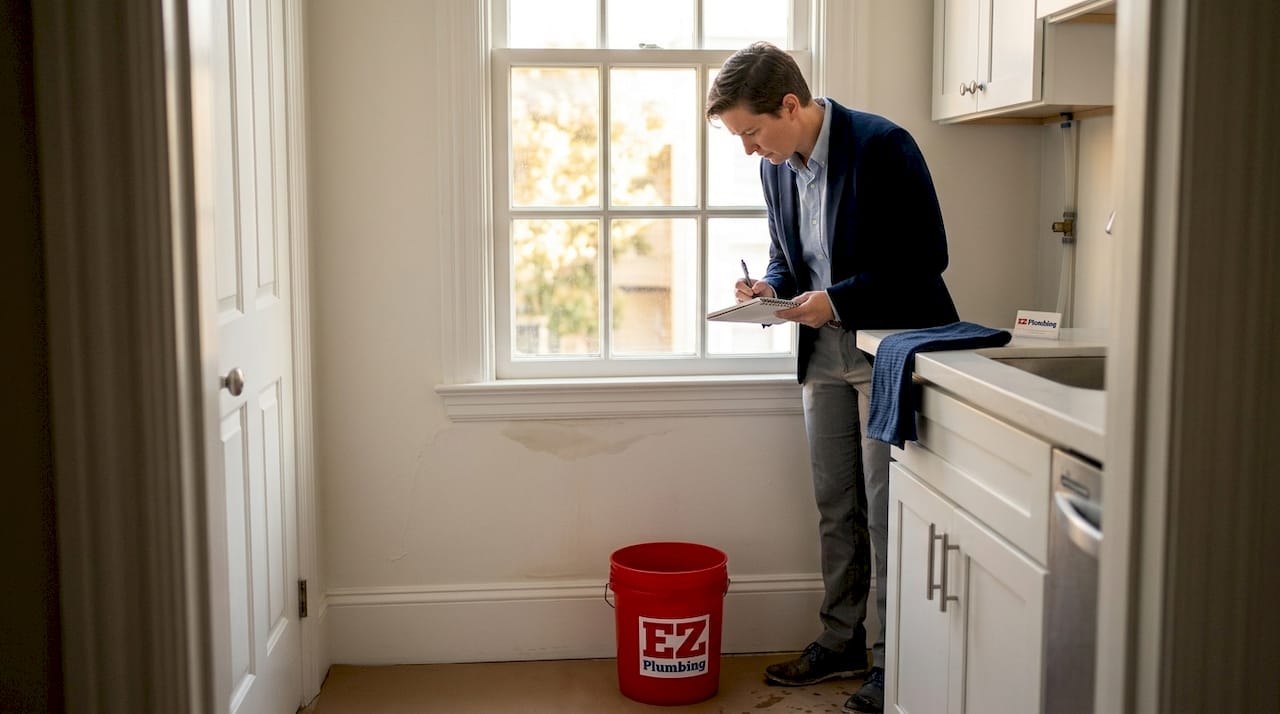
Start by walking the affected areas systematically. Press on drywall near the leak point to check for soft spots that indicate water saturation behind the surface. Lift area rugs or floor coverings to inspect subfloor materials. In Los Angeles homes with slab foundations, check for discoloration or temperature differences in flooring, which can signal water pooling beneath the concrete.
Look specifically for these signs that restoration must begin immediately:
- A visible or growing musty odor, which indicates biological growth has already started
- Warped, buckled, or soft flooring, particularly in laminate, hardwood, or particleboard subfloor
- Bubbling, peeling, or discolored paint or drywall compound
- Standing water in crawl spaces, under sink cabinets, or in wall cavities accessed through removed outlet plates
- Discoloration on ceilings below an upper-floor leak source
Mold can begin colonizing wet materials within 24 to 48 hours if moisture is not removed quickly. That window is tighter in warmer months and in areas with poor air circulation, both of which are common conditions in Southern California. Beginning the drying process immediately using fans, dehumidifiers, and open ventilation is not optional; it is a critical part of the emergency response.
| Time since water damage | Mold risk level | Recommended action |
|---|---|---|
| 0 to 12 hours | Low | Begin drying, remove standing water |
| 12 to 24 hours | Moderate | Deploy dehumidifiers, inspect all surfaces |
| 24 to 48 hours | High | Professional assessment strongly recommended |
| 48 hours or more | Severe | Remediation required before any repairs |
For properties with significant water infiltration, mold remediation after plumbing emergencies requires specialized equipment and protocols. Review FEMA’s flood cleanup safety guidance for additional information on protecting occupants during the cleanup process.
Step 5: Contact professionals and vendors for urgent action
Assessment tells you the scope. Now you need the right people on-site quickly. The key to minimizing damage as a property manager is having pre-vetted 24/7 emergency vendors and acting without delay. For single-family homeowners, that means calling a licensed plumber before attempting structural repairs. For property managers overseeing multi-unit buildings, it means activating your full vendor network, including plumbers, water restoration contractors, and potentially electricians.
Here is a clear breakdown of when to call a professional versus when you can handle it independently:
- Call a licensed plumber immediately: Burst pipes inside walls, sewer line backups, water heater failures causing flooding, any leak that you cannot reach the source of, or signs of contaminated water (gray or black water).
- DIY appropriate (temporary only): Tightening accessible compression fittings, replacing a toilet flapper to stop running water, turning off an individual supply stop valve under a sink or toilet.
- Call a water restoration contractor: Any situation involving more than a few gallons of water on wood, drywall, or carpeted surfaces, or any visible mold growth.
| Response scenario | Without pre-vetted vendors | With pre-vetted vendor network |
|---|---|---|
| Burst pipe in multi-unit building | 2 to 5+ hour response delay | Response within 1 hour or less |
| Sewer backup affecting multiple units | Multiple tenant complaints, uncoordinated response | Single point of contact, faster resolution |
| Water heater failure and flooding | Separate calls, no coordinated repair sequence | Bundled assessment and repair |
| Post-emergency mold risk | Higher due to delays in drying | Reduced through immediate drying protocols |
Property managers benefit significantly from keeping updated contact sheets that include your licensed plumber, a water damage restoration company, a licensed electrician, and your insurance carrier’s 24-hour claims line. Our team regularly works with property management companies throughout Los Angeles, and you can review relevant commercial plumbing insights to strengthen your property maintenance protocols.
What most emergency plumbing guides miss: The readiness gap
Here is something we see repeatedly in this industry: homeowners and property managers read every step correctly, understand the logic, and then freeze when an emergency actually hits because they have never actually practiced any of it. The steps above work. But they only work if you can execute them under stress, at 2 AM, with water flooding your hallway.
Most guides focus entirely on after-the-fact response, which is necessary but incomplete. The real advantage comes from what you do before any emergency occurs. Knowing where your shutoff valve is, having your plumber’s number saved, and having walked your property once with a flashlight to identify vulnerable pipes, these actions transform a five-step response into a five-minute response.
Having pre-vetted 24/7 emergency vendors and a mitigation playbook is specifically cited as a key strategy for property managers dealing with burst pipes and sewer backups. But this principle applies just as directly to single-family homeowners. A saved contact, a labeled shutoff valve, and a clear-headed first move will always outperform a perfect plan that exists only on paper.
For property managers with multiple units, we strongly recommend conducting a brief annual walkthrough with your maintenance team to locate all shutoff points, test that valves are functional (not corroded or frozen in place), and update your emergency contacts. Galvanized steel pipes common in pre-1960s Los Angeles homes corrode from the inside out, restricting flow over time and increasing burst risk. Annual inspection catches this before a failure happens.
Pro Tip: Update your emergency action plan every year, at the start of fire season or at the new year. Confirm that all vendor contacts are still active, all valves on the property are accessible and functional, and any new tenants or household members know where the main shutoff is located.
Proactive maintenance, including camera inspections of older clay sewer laterals and scheduled repipe assessments, is one of the most effective ways to prevent plumbing emergencies in Los Angeles properties before they escalate to crisis level.
Get expert help for your plumbing emergency in Los Angeles
When a plumbing emergency moves beyond what a shutoff valve and a mop can handle, you need a licensed team that knows Los Angeles infrastructure, responds immediately, and delivers code-compliant repairs from the first visit.
EZ Plumbing (C-36 License #583868) provides 24/7 emergency plumbing services throughout the greater Los Angeles area, from burst pipe containment to full leak diagnosis. Our leak detection services use non-invasive technology to locate the exact source of hidden leaks in walls and slabs, saving you the cost of guesswork demolition. For properties dealing with repeated pipe failures, our repipe services address the root cause rather than patching individual failures one at a time. When a pipe has already failed, our emergency burst pipe repair team responds fast to stop damage and restore water service. Call us now or visit ez-plumbing.com to connect with a licensed plumber.
Frequently asked questions
What should I do first when a pipe bursts?
Immediately shut off the main water supply to stop additional flooding and damage. The first mitigation step for a burst pipe is always to stop water flow before addressing anything else.
How do I safely handle plumbing emergencies with electrical hazards?
Avoid areas where water may contact electrical equipment and call your utility if you cannot safely reach the shutoff. If water could contact energized equipment, do not enter the area; call the electric cooperative to shut off power at the meter.
How soon does mold start after a plumbing leak?
Mold can begin growing on wet materials within 24 to 48 hours, so immediate drying is crucial. Mold colonizes water-damaged materials quickly when moisture is not removed, making fast action essential.
What is the best way to prevent emergency plumbing issues?
Establish a network of reliable vendors, conduct regular inspections, and make sure all property managers or tenants know how to shut off the water. Pre-vetted 24/7 emergency vendors and a mitigation playbook significantly reduce delays and limit risk when emergencies do occur.
How do I know if a plumbing emergency needs professional help?
If the damage is extensive, the water is contaminated, or electrical hazards are present, contact emergency services or a licensed plumber immediately. Major plumbing leaks, burst pipes, and sewer backups all require prompt professional response rather than a DIY approach.