
Sewer Smell in the Bathroom? Try Water First, Then Call a Plumber
The most likely culprits behind a sewer smell in your bathroom are a dry P-trap, a clogged drain, a failed toilet wax ring, a blocked roof vent, or a sewer-line problem. Open a window, run the fan, keep flames away, and pour water into every drain to refill the traps. If the odor is strong, spreads through the house, or anyone feels unwell, leave and call a licensed plumber.
TL;DR:
- If odor fades after pouring a quart of water into each unused drain, a dry trap was likely; recurring odor suggests water is escaping.
- Slow drainage with a localized smell points to buildup; gurgling across fixtures or multiple rooms points instead to a vent or main sewer line.
- A rocking toilet, base moisture, or odor after flushing can indicate a failed wax ring; tighten loose bolts gently, but leave replacement to a plumber.
- Call a plumber if odors return after trap refills, several fixtures gurgle, sewage backs up, or damp patches appear near plumbing.
- If you feel dizzy, nauseated, or have a headache during a sewer odor, get fresh air; hydrogen sulfide can dull your sense of smell.
Table of Contents
- What causes a sewer smell in your bathroom?
- How do you find the source of the smell?
- What can you fix yourself right now?
- When should you call a licensed plumber?
- How can you keep the smell from coming back?
- Why do traps and vents matter so much?
- Our perspective on sewer-odor calls
- How we can help with a sewer smell
- FAQ
- Sources
What causes a sewer smell in your bathroom?
Sewage odor usually means gases are slipping past one of the barriers built to keep them out: the trap water seal, the toilet seal, or the vent system. Common causes include a dry P-trap, a broken or loose toilet wax ring, a blocked vent pipe, or organic buildup such as hair and soap scum in the drainpipe. Each one leaves its own clues.
- Dry P-trap: This shows up in rarely used sinks, tubs, floor drains, and basement drains. The water seal in the curved pipe evaporates or gets siphoned out, and sewer gas rises through the open drain. A guest bathroom nobody has used in weeks is a classic example.
- Clogged drain and organic buildup: Hair, soap scum, and bacteria collect on pipe walls and give off a rotten-egg odor. You will often see slow drainage along with the smell, and the odor is strongest right at that drain or the sink overflow opening.
- Failed toilet wax ring or loose toilet: The wax ring seals the toilet to the drain flange. When it fails, you may notice a toilet that rocks, staining or moisture at the base, and a smell that gets worse after a flush.
- Blocked or damaged vent: Leaves, nests, or ice can plug a roof vent. Gurgling drains and odors across several fixtures at once point this way, because the plumbing cannot balance air pressure.
- Main sewer line trouble: Tree roots, cracked pipes, and sags can cause backups. Outdoor clues include wet spots in the yard or sewage surfacing near the cleanout. Our guide to signs of sewer line problems covers what to look for outside the house.
If you want a deeper look at one of the most common culprits, we explain what a plumbing trap is and why the water seal matters. Our article on what causes sewage smell in a bathroom also walks through the most common fixes.
Weather and house conditions play a part too. Dry spells and unused rooms let trap seals evaporate, and older homes with aging drain lines tend to see recurring odors. Hidden leaks near sewer lines, including slab leaks, can also let odors seep up through floors. A bathroom with a weak exhaust fan holds smells longer, so poor ventilation can make a small problem seem bigger than it is.
How do you find the source of the smell?
Start by identifying where the smell is strongest. Following your nose and then checking traps and fixtures sorts out most cases within minutes. Work through this sequence in order:
- Follow the odor. Stand in the bathroom with the door closed for a minute, then move toward the sink, shower, tub, toilet, and floor drain. Note whether the smell sticks to one spot or fills the whole room.
- Check every trap. Run water in each sink, the shower, and the tub. Pour a quart of water down any floor drain. If the smell fades within a few minutes, a dry trap was the cause.
- Clean the sink overflow. Check the overflow opening for an odor without putting your face close to it. Biofilm there often smells like a sewer even when the drain itself is fine.
- Listen for gurgling. Flush the toilet while someone else listens at the sink and shower. Gurgling in other fixtures suggests a vent or main-line issue, not a single dirty drain.
- Check the toilet base. Press on the bowl from side to side. A toilet that rocks, or that has moisture or staining around its base, points to a failed seal.
- Look for slow drains and wet spots. Slow drainage, damp patches on walls, floors, or ceilings, and sewage outside near the cleanout all call for a professional look.
- Compare other rooms. If the kitchen, basement, or a second bathroom smells too, you are probably dealing with the vent or main line, not one fixture.
Pro Tip: Do the water test with the exhaust fan off and the door closed, then repeat it with the fan on. If the odor only appears when the fan is off, air is likely getting pulled through an open trap or a loose seal.
If more than one fixture is affected, or the smell returns after you refill the traps, stop troubleshooting and schedule an inspection. Repeated odors in the same spot usually mean something is wrong inside the walls or under the slab.
What can you fix yourself right now?
Many sewer smells clear up with a few safe steps. Work through them in this order, and stop as soon as the odor is gone.
- Ventilate first. Open windows and run the exhaust fan. Keep matches, lighters, and candles away until you know the source.
- Refill dry traps. A dry trap in a rarely used drain is a frequent cause, and pouring a quart of water into those drains often restores the seal quickly. Check the shower, tub, guest sink, and any floor drain. For a seasonal drain that sits unused for months, a splash of RV or marine antifreeze on top of the water slows evaporation.
- Clean the drain and overflow. Lift out the stopper and pull out any hair. Scrub the sink overflow channel with a small bottle brush. State environmental guidance recommends cleaning drains with baking soda and vinegar, then flushing with hot water. Pour baking soda and vinegar down the drain, wait, then flush with hot water.
- Clear visible clogs. A plastic hair snake pulls out most shower clogs, and a plunger handles sink clogs. Go gently so you do not scratch or loosen pipe joints.
- Check the toilet base. Look for rocking, staining, or a smell that appears after flushing. You can gently tighten loose closet bolts, but replacing a wax ring is usually a job for a plumber, because the toilet must be lifted and reset correctly.
- Look at the roof vents from the ground only. If you can see leaves or nests at the vent opening, take a photo and let a professional handle it. Do not climb onto a steep, wet, or icy roof.
Avoid repeated doses of heavy chemical drain cleaners. They can damage older pipes, and they are hazardous if they splash or mix with other products. Never combine drain cleaners with each other.
Pro Tip: After refilling a trap, check whether the odor returns. If it does, the water may be leaving the trap, which can point to a vent problem or a leak rather than simple evaporation.
If these steps do not fix the odor, the problem is probably in the vent or the sewer line, and that is where DIY ends.
When should you call a licensed plumber?
Some conditions are beyond a home fix, and a few are health hazards. Call a professional when you see any of these:
- Sewage backing up in a tub, shower, or floor drain
- Slow drainage and gurgling in several fixtures at once
- Sewage surfacing in the yard or around the cleanout
- A persistent odor that returns after you refill traps and clean drains
- Wet spots in walls, floors, or ceilings near plumbing
- A toilet that rocks or leaks at the base
- Suspected tree-root intrusion or a cracked sewer line
Health symptoms change the picture. If you feel dizzy, nauseated, or get a headache while the smell is present, go outside and get fresh air. If you have a persistent sewer smell or suspect a sewer backup, it is unsafe to stay in the home, because sewer gas can be toxic, flammable, or explosive. Leave, then call a plumber.
Safety first: Leave the home and call a professional if you suspect a sewer backup or the smell will not go away. Sewer gas concentrations can be toxic, flammable, or explosive.
Rooftop vent clearing, camera inspection, and hydro-jetting require specialized equipment and training. A camera inspection shows the inside of the line, so we can tell you whether a cleaning is enough or a repair is needed. If you are ever unsure whether you smell sewer gas or natural gas, read our steps for what to do if you smell gas and treat any gas smell as an emergency.
How can you keep the smell from coming back?
Prevention is mostly small habits. A few minutes a month keeps traps full and drains clear.
- Run water in unused drains. Flush the guest bath, basement floor drain, and spare tub about once a month. Where a drain dries out repeatedly, ask a plumber about a trap primer that tops it off automatically.
- Use strainers and clean them. Put a strainer in every shower and tub drain, and pull out hair after each shower. Wash stoppers and overflow openings every month or two.
- Schedule periodic drain cleaning. If your home has older pipes or you notice slow drains, a professional cleaning clears buildup you cannot reach. Order a camera inspection if the smell keeps coming back.
- Secure the toilet. If the toilet moves, fix it early. A rocking toilet can damage the seal and the floor beneath it, and a soft floor around the base should be repaired before it spreads.
- Keep vents clear. Have roof vents checked after storms and in the fall. Before adding a vent cap or filter, check local code, because the wrong accessory can restrict airflow.
- Use the exhaust fan. Run it during and after showers. Good ventilation moves moisture and odor out and slows the biofilm growth that feeds smells.
Our guide to plumbing venting explains how vents protect your traps in more detail.
Why do traps and vents matter so much?
A P-trap is the designed barrier against sewer gas. The curved section of pipe holds a plug of water, and that water seal stops gas from rising into your room. The International Plumbing Code requires a fixture trap seal to stay intact, and when pressure differences exceed 1 inch of water column, the system can siphon water out of the seal and let gas in.
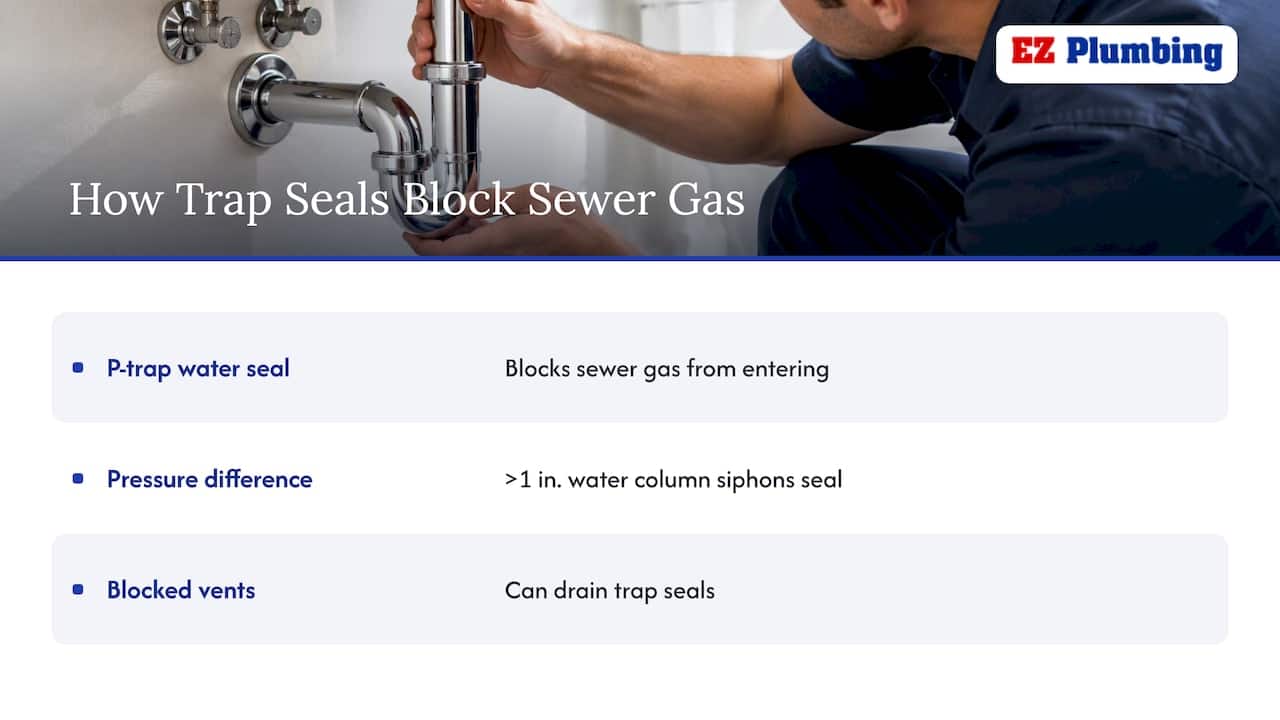
Vents keep that pressure in balance. Blocked or undersized vents create pressure differences that can drain trap seals, and Chapter 9 of the code covers vent sizing and the need for vent stacks or individual vents. The code also expects vents to extend outdoors and meet minimum sizing and developed-length rules, which is why some vent problems need a professional to diagnose.
Sewer gas also contains hydrogen sulfide, a toxic, flammable gas. It smells like rotten eggs at low levels, but at higher concentrations people can lose the ability to smell it, so odor alone is not a safe way to judge the danger. State health guidance says your sense of smell is an unreliable safety monitor and advises evacuating if the odor is strong or symptoms appear.
A fading smell is not proof that the air is safe. If symptoms appear, get outside first and investigate later.
Our perspective on sewer-odor calls
We start sewer-odor calls by inspecting before we recommend anything. A dry trap or a dirty drain may be the cause, and a refill or cleaning may solve the problem without repair. We would rather tell you that than sell you work you do not need.
We recommend a camera inspection when the smell comes back after the easy fixes, when several fixtures act up together, or when the signs point to the main line. If the camera shows cracks, roots, or a sag, we talk through repair options, and if it shows a clean line, we tell you so. Throughout, we put safety first: ventilate, avoid flames, and leave the house if the odor is strong or anyone feels sick.
— EZ
How we can help with a sewer smell
When the smell will not go away, we can take it from there. Our team handles drain cleaning, hydro-jetting, camera inspection, sewer line repair, and emergency plumbing. A visit starts with an inspection, then we explain what we found in plain terms and give you written pricing or repair options before work begins.

If the odor is persistent, house-wide, or comes with a backup or symptoms, call us or book a visit through our site so we can get a licensed plumber to your door.
FAQ
Why does my bathroom smell like sewer with no leak?
A bathroom can smell like sewer without any leak when a trap has dried out, a drain holds hair and soap scum, or a vent is blocked. Gases get past one of the barriers designed to keep them out, so no visible water is needed. Refill the traps and clean the drains first.
How do I tell where the sewer smell is coming from?
Follow the odor to its strongest point, then run water into every trap, including sink overflows and floor drains. If the smell is strongest near the toilet base, suspect the wax ring. If several fixtures gurgle or smell, the vent or main line is the likelier cause.
Is it safe to stay in a house that smells like sewer?
Not if the odor is strong, house-wide, or tied to a suspected backup. Health officials say your nose is unreliable for judging sewer gas, so leave the home and call a plumber. A faint odor from one dry drain is usually less urgent, but ventilate and fix it quickly.
What are the first signs of sewer gas poisoning?
Early symptoms commonly include dizziness, nausea, and headache. If you notice any of them while a sewer smell is present, go outside for fresh air and call for help. Because hydrogen sulfide can dull your sense of smell, do not wait for the odor to get worse before acting.