
Floor Drain Backup: 7 Immediate Safety Steps and When to Call a Plumber
If your floor drain is backing up, stop all water use in the house right now. Keep people and pets away from the water, and if you smell sewage, notice more than one drain acting up, or see the water rising fast, call a licensed plumber immediately instead of experimenting on your own.
TL;DR:
- Main sewer line clogs, caused by grease, wipes, or debris, account for approximately 45% of basement floor drain backups.
- Tree-root intrusion often narrows or damages pipes over time, leading to blockages that cause backups during heavy rain or municipal surcharge.
- Running a sink or flushing a toilet and observing gurgling or rising water levels can identify if the main line, not the floor drain, is blocked.
- DIY fixes are safe for localized issues, but chemical drain cleaners and motorized cable equipment risk damage or are ineffective for main-line obstructions.
- Installing a backwater valve and maintaining sump pumps with battery backup significantly reduces the chance of future sewage backups in basements.
Table of Contents
- What Causes a Floor Drain to Overflow in the First Place?
- Common Causes of a Floor Drain Backup
- Step-by-Step Actions to Take Right Now
- Is This a Local Clog or a Main Sewer Line Problem?
- Safe DIY Fixes (and What Never to Try)
- When to Call a Licensed Plumber
- Cleaning Up Safely After a Sewage Backup
- How to Prevent the Next Floor Drain Backup
- EZ Plumbing’s Approach to Drain and Sewer Emergencies
- A Straight Answer on Priorities
- Get a Licensed Plumber on the Problem, Not a Guess
- Sources
What Causes a Floor Drain to Overflow in the First Place?
A floor drain sits at the lowest point in your basement’s plumbing, and it holds a water-filled trap that blocks sewer gas from entering the house. That trap is a simple U-shaped bend, but it does one job well: as long as water sits in it, odors stay in the pipe.
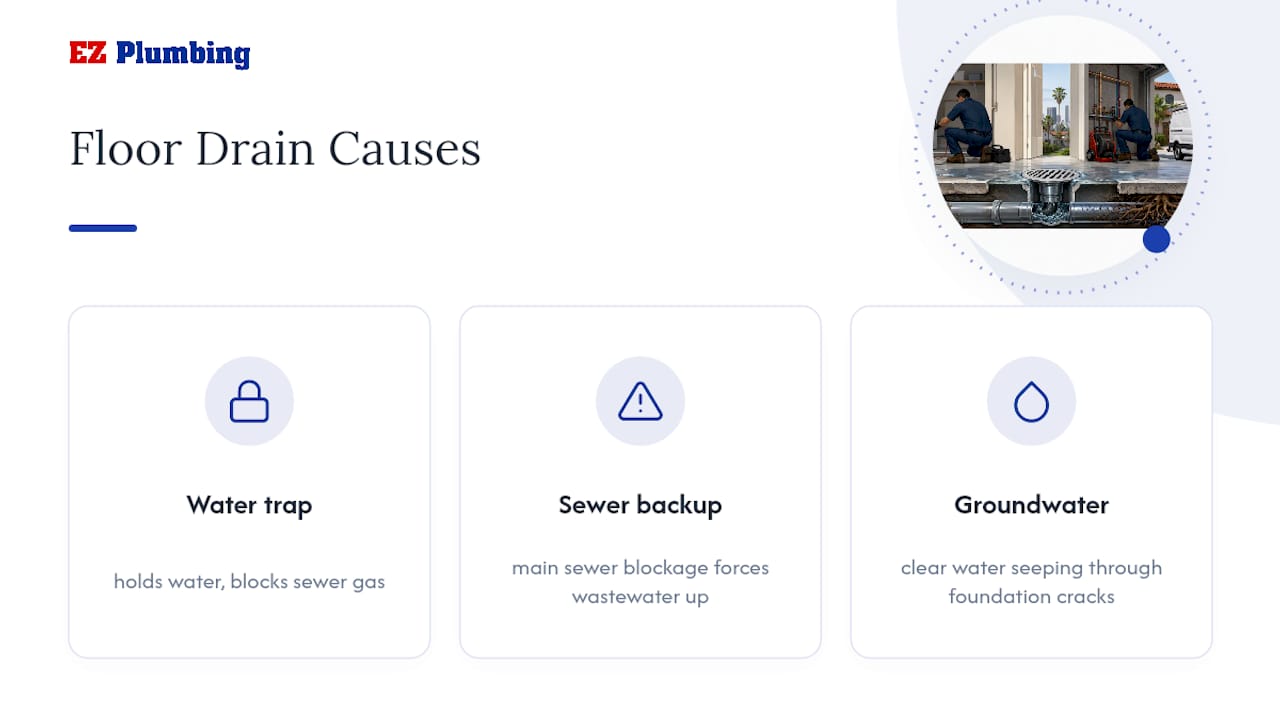
Every branch drain in the house, from your kitchen sink to your upstairs bathroom, eventually feeds into one main sewer line leaving the property. When that main line gets blocked or the municipal system beyond it gets overwhelmed, wastewater has nowhere else to go, so it rises back up through the lowest opening in the system, which is almost always your floor drain.
It helps to separate two different problems here. Groundwater intrusion, where clear water seeps in through foundation cracks or a failing sump system, is a moisture problem. Sewage backing up through the drain itself is a contamination problem, and it calls for a very different response.
Common Causes of a Floor Drain Backup
Not every backup has the same source, and the fix depends heavily on which one you’re dealing with.
- Main sewer line clogs: Grease, wipes, and general debris account for roughly 45% of basement floor drain backups in contractor field data, making it the single most common cause.
- Tree-root intrusion: Roots seek out moisture and find their way into aging clay or cast-iron pipe joints, gradually narrowing the channel until they trap solids and eventually collapse the line.
- Municipal surcharge or heavy rain: During storms, city sewer systems can fill faster than they drain, pushing wastewater backward into homes at the lowest connection point.
- Sump pump failure or high groundwater: A dead battery, a stuck float switch, or a pump that’s simply too small for the water table can let groundwater rise past the point your basement can handle.
- A dried trap or isolated blockage: Floor drains that rarely see water can dry out, letting sewer gas escape without any actual backup, which is often mistaken for a bigger problem than it is.
Step-by-Step Actions to Take Right Now
- Stop all water use. No toilets, no showers, no dishwasher, no laundry. Every gallon you send down a drain adds pressure to a system that’s already struggling.
- Rope off the area so kids and pets can’t wander through standing water.
- Put on rubber boots, gloves, and eye protection before you get anywhere near the water. If the water has reached electrical outlets or a panel, shut off power to that area at the breaker.
- Photograph and time-stamp everything before you touch anything. This matters more than most homeowners realize once an insurance claim is involved.
- Shut off the main water supply if the situation is worsening or you’re leaving the house unattended.
- Locate your sewer cleanout, but don’t open it if you suspect the line is pressurized. A pressurized cleanout can spray sewage several feet.
- Use a wet/dry vacuum rated for liquids to remove standing water once you’ve confirmed the source isn’t actively refilling. Stop the moment you hit resistance, smell sewage, or the water keeps returning. That’s your signal this is bigger than a mop-and-bucket job.
Pro Tip: Keep your phone charged and your camera roll organized by date during any water event. Adjusters move faster on claims with clear, timestamped documentation than on a verbal description after the fact.
Is This a Local Clog or a Main Sewer Line Problem?
The fastest way to save yourself an unnecessary DIY attempt is to read the pattern of symptoms, not just the drain itself.
- Multiple slow drains, gurgling when you run other fixtures, or a persistent sewage smell almost always point to a main-line issue rather than something isolated to the floor drain.
- Clear water with no odor, affecting only the floor drain, usually suggests a localized clog or a dried-out trap. Both are manageable without calling anyone.
- Backups that happen specifically during heavy rain are a strong signal of municipal surcharge or structural pipe damage like separated joints or root intrusion, not something a plunger will solve.
Here’s a diagnostic worth thirty seconds of your time: run an upstairs sink or flush a toilet and watch the floor drain. If it gurgles, bubbles, or the water level rises, the blockage sits downstream in the main line, not in the floor drain itself. That single test can save you from plunging a drain that was never the actual problem.
Safe DIY Fixes (and What Never to Try)
If your diagnostic pointed to a localized issue, a few homeowner-level steps are genuinely worth trying.
- Remove the drain grate carefully and inspect the trap with gloves and eye protection on, since standing water can carry bacteria even without an obvious odor.
- A standard plunger works on shallow clogs close to the drain opening; a short hand auger, sometimes called a “drain snake,” can reach a bit further for stubborn debris.
- Once the source is under control, a wet/dry vacuum clears standing water efficiently without spreading contamination the way a mop does.
Two things you should never do: pour chemical drain cleaner into standing sewage, and rent or borrow motorized cabling equipment you haven’t been trained to use. Industry guidance is consistent on this point: DIY chemicals and light snakes rarely clear main-line obstructions, and they can damage older pipe or create a chemical burn hazard when they contact sewage. The moment you hit real resistance or catch that unmistakable sewage smell, stop. That’s the line between a homeowner job and a professional one.
When to Call a Licensed Plumber
Certain signs mean you shouldn’t waste time troubleshooting: a sewage smell anywhere in the house, more than one drain backing up at once, or standing water anywhere near an electrical source. Any of those calls for an immediate professional response rather than a wait-and-see approach.
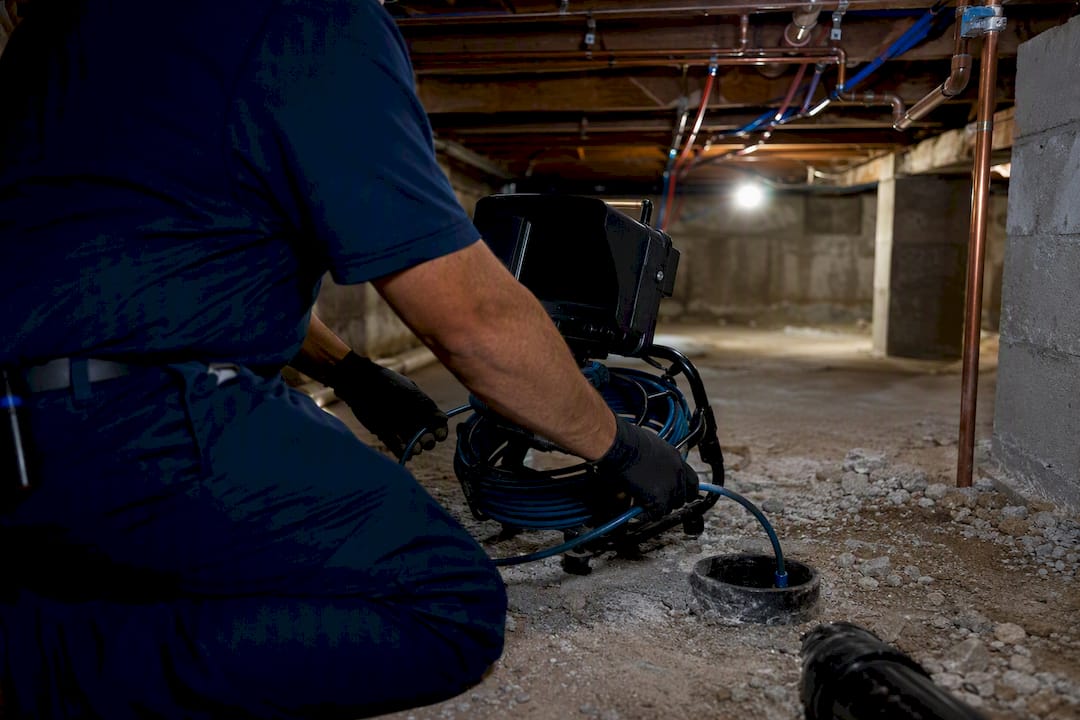
Licensed plumbers diagnose the problem with tools most households simply don’t own. A camera inspection sends a waterproof lens down the line to identify bellies, root mats, or a collapsed section, giving a precise answer instead of a guess. From there, they’ll choose between two clearing methods:
- Motorized cabling, which physically cuts through roots and breaks up solid blockages.
- Hydro-jetting, which uses high-pressure water to scour the full diameter of the pipe, removing grease and root fragments that cabling alone often leaves behind.
If the camera reveals a structural problem like a belly or a collapsed joint, cabling or jetting is only a temporary fix. Permanent solutions include trenchless pipe lining, targeted spot replacement, or installing a backwater valve to prevent recurrence. You can read more on how these clearing methods compare before your appointment if you want to understand your options.
Cleaning Up Safely After a Sewage Backup
Once the water’s gone, the real health risk begins. Porous materials that soaked up sewage, including carpet, drywall, and insulation, should be discarded rather than cleaned; no amount of scrubbing makes them safe again. Hard surfaces like tile and concrete respond well to bleach or an EPA-registered disinfectant, followed by fans and a dehumidifier running for at least a day or two to prevent mold growth.
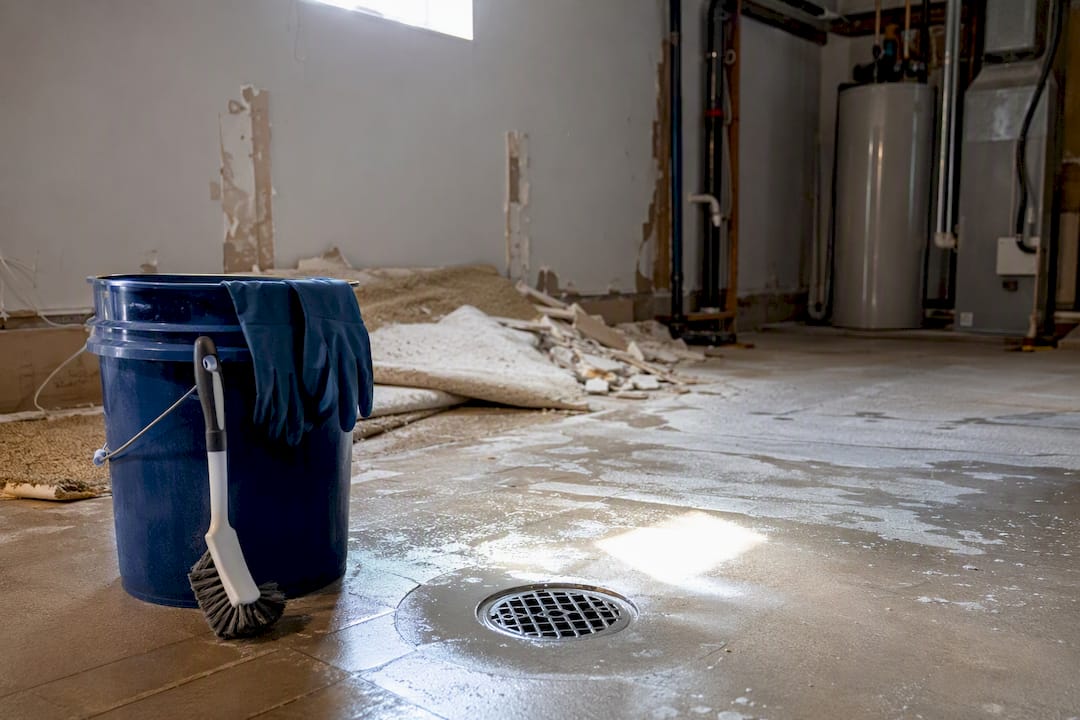
Wear gloves and a mask while cleaning, and if the contamination covers a large area or has been sitting for more than a day, hiring a remediation company is worth the cost. Before you throw anything away, photograph the damage and keep every receipt. Notifying your insurer early, with documentation in hand, tends to move claims along far faster than calling weeks later with a verbal account.
How to Prevent the Next Floor Drain Backup
A backwater valve is the single most effective physical defense against sewage pushing back into your basement. It allows wastewater to flow out but closes automatically if pressure reverses, and it materially reduces backup risk from both municipal surcharge and groundwater events. It does need periodic inspection, since debris can occasionally prevent the flap from sealing fully.
If groundwater is part of your risk profile, make sure your sump pump is sized correctly for your water table and has a battery backup that gets tested on a real schedule, not just when you remember. Beyond the hardware, a regular camera inspection every couple of years catches root intrusion or pipe deterioration long before it becomes an emergency, and a periodic hydro-jetting schedule keeps grease and root-prone sections clear.
- Never flush wipes, paper towels, or grease down any drain, even ones labeled “flushable.”
- Install lint traps on washing machine discharge hoses.
- Keep gutters and downspouts clear, and grade soil away from the foundation to reduce groundwater pressure near your footing drains.
Pro Tip: Recurring backups aren’t bad luck. Floor drains act as an early warning system for a main-line or structural issue, and a drain that backs up more than once deserves a camera inspection before it becomes a bigger repair.
EZ Plumbing’s Approach to Drain and Sewer Emergencies
EZ Plumbing is a licensed plumbing contractor (C-36 License #583868) serving the greater Los Angeles area, and floor drain backups are among the calls we handle most often. Our technicians run camera inspections to pinpoint the cause, then choose between hydro-jetting and motorized cabling depending on what the pipe actually needs. For homes with recurring issues, we also install sump systems and backwater valves. Most diagnostic visits are same-day, and property managers can set up recurring inspection and jetting schedules to catch problems before tenants notice them.
A Straight Answer on Priorities
Safety and evidence come first, always. A licensed plumber’s camera and hydro-jetting equipment finds and fixes what a plunger never will. Realistic timelines matter more than false reassurance, and that’s the standard worth holding any plumber to.
— EZ
Get a Licensed Plumber on the Problem, Not a Guess
You’ve got two real options when a floor drain backs up: keep experimenting with tools that rarely touch a main-line clog, or bring in a licensed team with a camera and the right clearing method for what’s actually down there. EZ Plumbing is built for the second option, offering drain cleaning, hydro-jetting, camera inspections, and full sewer line repair across the greater Los Angeles area.

A first call typically covers a straightforward diagnosis, a clear look at scope, and a transparent quote before any work starts, so you’re never guessing what a repair will cost. If your drain has backed up more than once, or you’re dealing with it right now, our drain cleaning services team can get a technician out to assess the line and stop the cycle for good.
Sources
Key references include the HUD NSPIRE floor-drain standard for building administrators, alongside contractor guidance on camera inspection and clog causes and emergency response steps.
- Basement Floor Drain Backing Up? 6 Causes & What to Do Now
- When Floor Drains Back Up and Why the Main Line Is Often the Culprit — Clog Squad