
How to Unclog a Bathroom Sink Without Calling a Plumber
You turn on the bathroom faucet and the basin starts filling instead of draining. Toothpaste foam circles the stopper, a few strands of hair cling to the drain, and the water takes long enough to disappear that you start considering a bottle of chemical cleaner. Don't start there. The fastest way to learn how to unclog a bathroom sink is to identify where the blockage sits, then use the least aggressive method that reaches it.
Bathroom sink clogs usually come from hair, soap scum, toothpaste residue, and other personal-care buildup. Those materials tend to form a fibrous, sticky obstruction, unlike the heavier food debris found in a kitchen drain. The practical workflow is mechanical and layered: inspect first, clear what you can see, plunge with a proper seal, remove the trap if necessary, and snake the branch line only when the diagnosis points farther into the pipe. Guidance on plumbing clog solutions Kennesaw follows the same sensible principle, start with the simplest effective intervention and escalate when the clog demands it.
Table of Contents
- Why Your Bathroom Sink Is Clogged and What to Do First
- Locating the Clog in the Drain System
- Essential Tools and Safety Prep Before You Start
- Clearing the Stopper, Plunging, and Removing the P-Trap
- Using a Drain Snake for Deeper Bathroom Sink Clogs
- When Chemical Cleaners Help and When They Backfire
- When to Call a Plumber and How to Prevent Future Clogs
Why Your Bathroom Sink Is Clogged and What to Do First
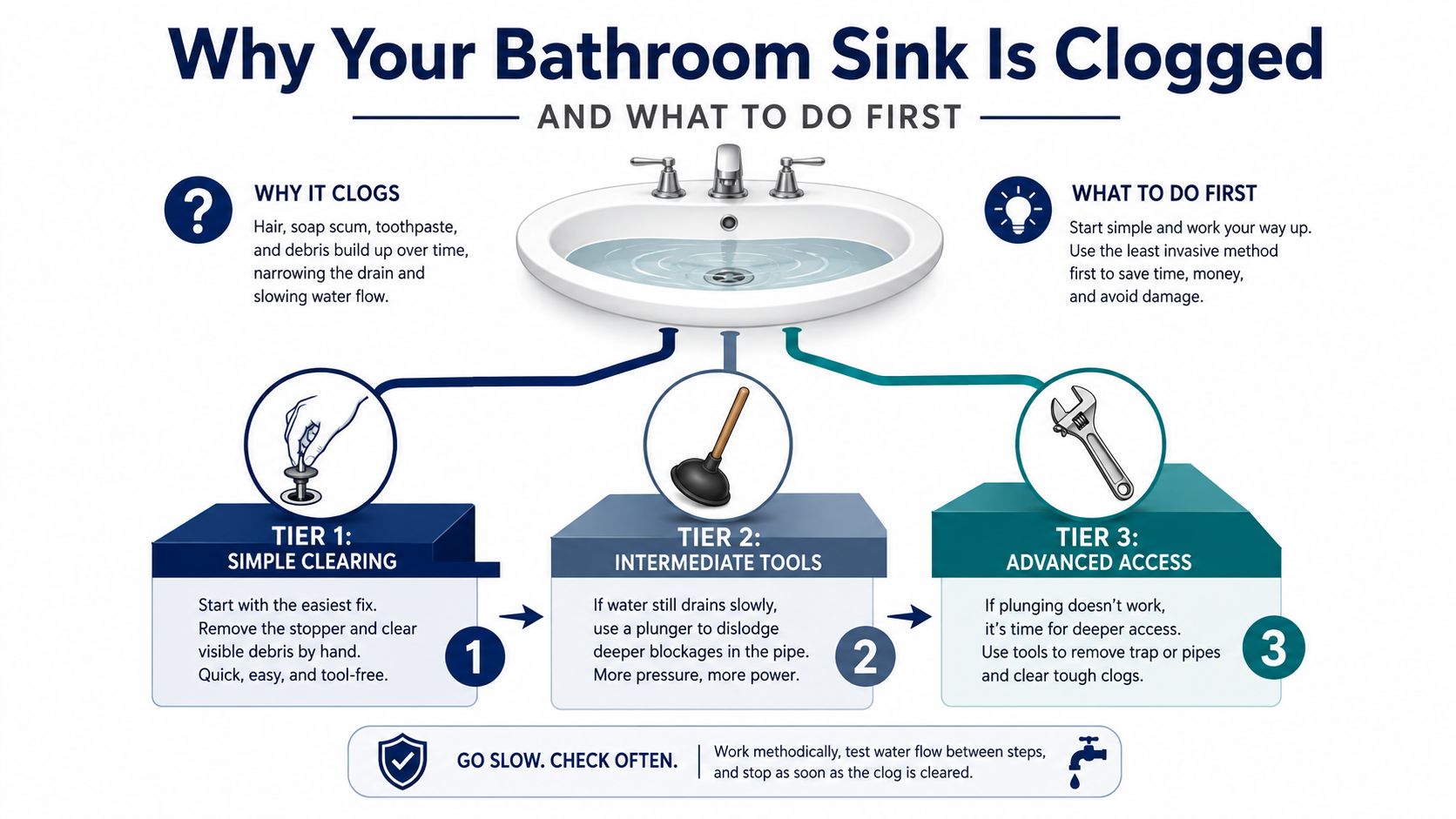
A slow sink gives you useful information. If the water drains, even reluctantly, the obstruction may be close to the stopper or inside the P-trap. If the basin stays full, the blockage is more substantial or sits farther downstream. A gurgle, backed-up overflow opening, or water appearing under the cabinet adds another clue.
Start with these immediate checks:
- Stop the faucet: Running more water can turn a partial blockage into an overflow.
- Remove standing water: Scoop it into a bucket or cup so you can see the stopper and work without splashing.
- Check below the vanity: Look for a damp P-trap, wet cabinet base, or drip at a slip nut. A clog and a leak can exist together.
- Test nearby fixtures: If the tub, toilet, or another sink also drains slowly, the problem may extend beyond this individual basin.
The usual bathroom sink obstruction is local. Hair can wrap around the stopper's crossbars or pivot rod. Soap and toothpaste residue can harden in the trap. A small object, such as a cap or piece of plastic, can lodge in the branch line and catch additional debris. Older or misaligned piping can also repeatedly catch buildup, which is why recurring clogs deserve diagnosis rather than another random treatment, as explained in coverage of why bathroom sinks keep clogging.
Use a tiered approach
Tier one is simple clearing. Lift the stopper, pull away visible hair, and inspect the overflow opening. A zip tie with small notches or needle-nose pliers often removes more material than expected.
Tier two uses pressure and access. A cup plunger can shift a compacted obstruction, provided the overflow is sealed and the cup sits under water.
Tier three reaches the pipe. Removing the P-trap exposes the most common collection point. If the trap is clear, a hand auger can travel into the branch line. This sequence saves time because each step answers a location question instead of merely adding force.
Locating the Clog in the Drain System
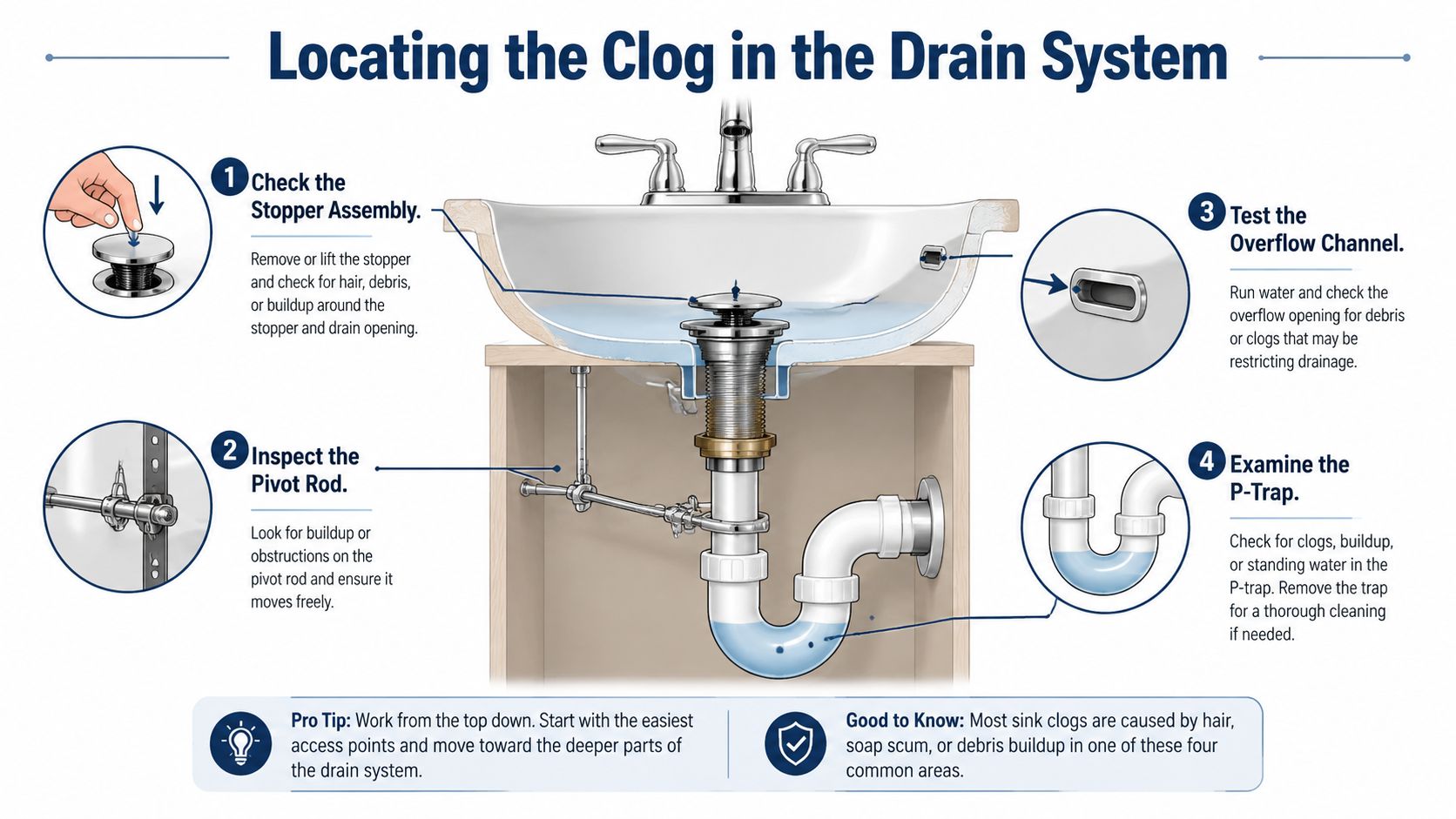
Treat the drain as a short chain of checkpoints. The pop-up stopper sits at the basin, the pivot rod operates it from below, the overflow channel gives excess water an escape route, and the P-trap holds water beneath the sink. Any one of these can collect debris.
Check the stopper and pivot rod
Fill the basin partway, then pull the stopper. A clean swirl and steady drawdown suggest that the opening is clear. If water hesitates immediately, lift the stopper completely and inspect its underside and crossbars. Hair often forms a tight mat there.
The pivot rod is the small horizontal rod that moves the stopper. Loosen the retaining nut behind the drain, slide the rod out carefully, and remove the stopper. Don't lose the small retaining clip. Clean the rod and stopper before reinstalling them, then test whether the stopper rises fully. A stopper that only opens partway can mimic a deeper clog.
Test the overflow channel
The overflow opening near the top of the basin can hold soap film and hair. Shine a flashlight into it, then use a flexible brush or a carefully shaped plastic zip tie to loosen material near the entrance. Avoid forcing rigid wire deep into the channel, since it can scratch the finish or catch on internal parts.
A basin that drains slowly while the overflow gurgles may have restricted flow through this passage or a larger obstruction below the drain opening. Seal the opening before plunging, otherwise pressure escapes there instead of traveling toward the clog.
Examine the P-trap
Place a bucket beneath the U-shaped pipe and look through it with a flashlight. If the trap contains sludge, hair, or a small object, removing and cleaning it is usually more direct than pushing the material farther into the wall.
A clear trap with a fully backed-up sink points toward the branch line. That's the point where a hand snake becomes more useful than a stopper cleaning. A clogged sink that repeatedly returns after local cleaning also deserves attention to pipe alignment and the section beyond the trap.
Essential Tools and Safety Prep Before You Start
Gather the tools before you loosen anything. A bathroom sink job rarely needs a large plumbing kit, but the wrong tool can turn a short repair into a frustrating one.
Tier one equipment
Keep a cup or small scoop, bucket, flashlight, needle-nose pliers, and a plastic zip tie or wire coat hanger nearby. The cup clears standing water. The bucket catches water from the trap. The flashlight helps you see under the stopper and inside the cabinet, while pliers remove hair that your fingers can't grip.
Use a coat hanger cautiously. Straighten it and form a small hook, but don't drive a sharp end deep into the drain. A zip tie is often safer for grabbing hair near the opening.
Tier two equipment
A cup-style sink plunger is the correct shape for a flat bathroom drain. A toilet flange plunger is designed for a different opening and won't seal properly on most sink basins. Add a wet rag to cover the overflow opening and keep the plunger cup submerged in enough water to seal around the drain.
Tier three equipment
For deeper access, use a small hand-crank drain snake, an adjustable wrench, old towels, gloves, and a disposal bag for wet debris. Consumer guidance describes standard hand snakes as reaching about 25 feet in typical household use, though the useful reach depends on the pipe path and the tool design. The hand-auger guidance from The Spruce also emphasizes mechanical removal before chemical products when hair and soap buildup are likely.
Wear gloves and eye protection. Put towels around the cabinet floor, and position the bucket before loosening either slip nut. If you have a wet/dry vacuum, keep it available for spills, but don't use it as a substitute for locating the obstruction.
Safety rule: Never combine drain chemicals with plunging, trap removal, or snaking. You can force caustic liquid back toward your hands or face.
The common time-wasters are predictable: using the wrong plunger, leaving the overflow open, skipping the bucket, or overtightening plastic slip nuts during reassembly. Hand-tighten them first, then add only a small adjustment if the joint seeps.
Clearing the Stopper, Plunging, and Removing the P-Trap
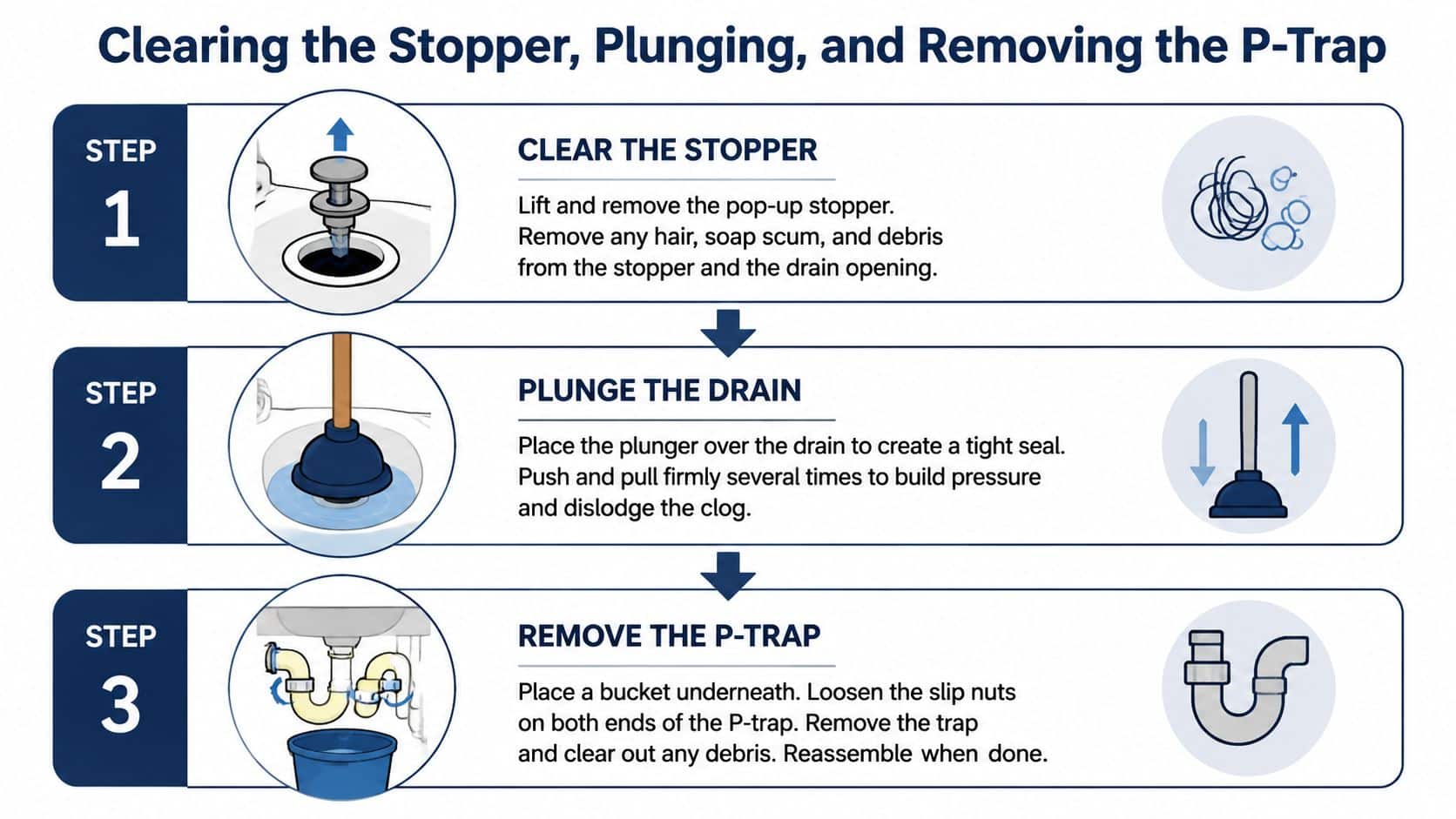
Start at the basin. Lift the pop-up stopper and inspect the lower section, especially the crossbars and the area around the pivot rod connection. Pull out hair and paste-like residue with pliers or a hooked zip tie. Wipe the parts clean, reinstall the stopper, and test the flow before moving to a stronger method.
If the sink still drains poorly, cover the overflow opening with a wet rag. Add enough water to cover the plunger cup, center a cup-style sink plunger over the drain, and press down firmly to create a seal. Work the handle with controlled strokes rather than wild force. The Architectural Digest bathroom sink guide reports that this basic sequence, used with a simple zip tie or similar tool, resolves a clog about 70% of the time without professional help.
Five to eight firm strokes is a practical starting point. A real obstruction often gives a dull, resistant feel followed by a sudden release or a change in water level. If the plunger moves easily and only pushes air, check the overflow seal and add water. If there's no change after several properly sealed attempts, stop repeating the same motion.
Remove and clean the P-trap
Place the bucket directly beneath the U-shaped section. Loosen the slip nuts by hand if possible, then use an adjustable wrench for a stubborn connection. Support the trap as the final nut comes loose, because it holds standing water and debris.
Empty the trap into the bucket and physically remove the blockage. Inspect the O-rings and beveled washers before reassembly. The beveled washer must face the correct direction, and plastic nuts should not be forced tight enough to deform the fitting. Run a small amount of water and watch every joint for seepage.
The P-trap exists to retain a water seal that helps block sewer gas, so correct reassembly matters. For a deeper explanation of that function, see this guide to the purpose of a P-trap.
A frequent homeowner mistake is trying to snake through a trap that should have been removed and cleaned first. The cable can pass through standing sludge without extracting it, or it can catch on the trap's curve and create the impression of a deeper blockage.
Using a Drain Snake for Deeper Bathroom Sink Clogs
Chemical cleaner is not a diagnosis. If the stopper and P-trap are clear but the sink still backs up, feed a hand-crank snake through the trap arm into the branch line. A consumer-grade snake commonly reaches about 25 feet, according to consumer drain-snake guidance, but distance alone doesn't tell you whether the obstruction is reachable.
Feed the cable slowly while turning the crank clockwise. When the head meets resistance, don't ram it. A tight elbow often feels like a brief stop that yields with careful rotation. A clog tends to feel springy or gritty, and the cable may advance when you alternate short push and pull movements.
Use this rhythm:
- Feed: Push a manageable length of cable into the open trap arm.
- Crank: Turn steadily as the head works against the obstruction.
- Work: Pull back slightly, then advance again to break or hook the material.
- Retrieve: Lock your grip on the cable and pull it out slowly into a bag or towel.
Wear gloves and keep a disposal bag close. A dry cable can splash contaminated water when it exits the pipe, so control the retrieval rather than letting the drum spring back. Reverse-spool debris off the head away from the sink, then clean and dry the cable.
A powered machine, such as the Ridgid auger available from Value Tools Co, is a different level of equipment. It can be useful for repeated or difficult service work, but a homeowner can damage fittings or lose control of a powered cable. For the underlying process, this homeowner guide to drain snaking provides useful context.
Test the result with a full basin. You want the water to hold without rising, then leave in a clean swirl and steady drawdown. If flow returns, flush the line with hot tap water. If the sink still backs up after the cable reaches the wall, stop escalating force. The obstruction may be beyond the accessible branch line, or the pipe may have a structural problem.
When Chemical Cleaners Help and When They Backfire
Drain cleaners containing sodium hydroxide or sulfuric acid generate heat and can break down some organic residue. That makes them more relevant to a slowly draining sink with fresh, loose buildup than to a basin that's completely blocked.
They won't dissolve a toothpaste cap, jewelry, plastic, or every compacted hair-and-soap mass. A fully blocked sink can leave the product sitting in the trap, where it creates a hazard for anyone who later loosens the pipe or runs a snake.
| Scenario | Recommended? |
|---|---|
| Slowly draining sink with organic residue and no prior chemical treatment | Possibly, only if the label permits bathroom sinks and you follow it exactly |
| Completely blocked basin | No, the product may remain concentrated in the line |
| Suspected object in the stopper, trap, or branch line | No, mechanical inspection is more appropriate |
| Repeated use on the same drain | No, diagnose the recurring obstruction |
| Older piping or a septic connection | Avoid without qualified plumbing advice |
Never mix products, and never plunge or disassemble a drain after chemical cleaner has entered it unless a licensed professional has assessed the situation. Chemical splash burns are avoidable, but they become much more likely when a homeowner works blind on a primed line. For mechanical alternatives, use this guide to unclogging a drain without chemicals.
When to Call a Plumber and How to Prevent Future Clogs
A bathroom sink is a reasonable DIY project when the obstruction is visible, the trap is accessible, and no water damage is present. The job crosses into professional territory when the symptoms point beyond the fixture or when your attempts change nothing.
Call a licensed plumber when:
- Several fixtures back up together: A sink, tub, or toilet draining poorly can indicate a branch-line or larger drain blockage.
- Water pools under the vanity: This may be a failed trap connection, damaged drain fitting, or supply-line leak rather than a simple clog.
- Sewage odors persist: A failed trap seal, venting problem, or contaminated connection needs inspection.
- The clog keeps returning: A recurring blockage can indicate misaligned piping, buildup beyond the trap, or a structural issue.
- The whole bathroom drains slowly: Slow fixtures across the room suggest a shared drain or vent problem.
- Walls or ceilings below show damage: Staining, bubbling paint, or soft drywall can mean the leak has already moved beyond the cabinet.
EZ Plumbing serves Los Angeles County with drain cleaning, snaking, hydro jetting, and sewer-line diagnostics. The company offers 24/7 emergency response, same-day scheduling for planned work, and service across areas including Beverly Hills, Santa Monica, West Hollywood, Pasadena, Glendale, Burbank, and the San Fernando Valley. For a prepared line or a recurring stoppage, a technician can determine whether the issue is a local obstruction or a problem farther into the system. The direct number is (818) 908-2710.
Prevention starts with keeping hair and personal-care residue out of the opening. Fit a mesh hair catcher over the drain, remove collected material regularly, and don't send oil-based products or “flushable” wipes into the plumbing. A weekly hot-water flush can help carry loose residue away, while a monthly baking soda and vinegar treatment may freshen a drain that still flows normally. These steps won't repair a physical obstruction, but they can reduce the material available to form one.
Keep a simple maintenance routine
Remember catch, clear, and check:
- Catch: Use a mesh screen and remove hair before it enters the drain.
- Clear: Wipe toothpaste and soap residue from the basin and stopper.
- Check: Run water periodically and investigate a slowing swirl before the sink fully backs up.
DIY methods are usually inexpensive when you already own a cup, bucket, pliers, and a sink plunger. Stopper cleaning takes a short hands-on session, trap removal takes longer because you must manage standing water and reseal the joints, and snaking requires more cleanup and careful handling. A professional visit costs more than a basic tool, but it buys diagnosis, controlled access, and a safer response when the blockage sits beyond the wall or returns after cleaning.
If you're in Los Angeles and the sink is backing up with other fixtures, leaking under the cabinet, or resisting a properly sealed plunge and hand snake, don't keep adding chemicals or force. Get the drain assessed before a small clog becomes water damage.
EZ Plumbing provides bathroom sink drain cleaning, snaking, leak diagnosis, and emergency plumbing service across Los Angeles County, with 24/7 response available when the backup can't wait. Visit EZ Plumbing or call (818) 908-2710 to schedule a clean, professional diagnosis.