
The Purpose of P Trap Explained: Home Plumbing Guide
A P-trap's main job is to hold a standing water seal of roughly 1.5 to 2 inches that blocks sewer gases from coming back into your home while still letting wastewater drain away. That small pocket of water acts like a physical barrier inside the pipe, and every time you use the fixture, the seal is refreshed.
If you've ever opened the cabinet under a sink and stared at that curved pipe, you're not alone. A lot of homeowners assume it's there because the pipe had to bend around something, or because it somehow slows water down. Its actual purpose is much more important: that bend protects the air inside your house.
And it does one more useful thing at the same time. The same curve that protects you from sewer odors also catches hair, food scraps, sediment, and the occasional dropped earring or ring. That's why the purpose of P trap design is both simple and a little frustrating. It's a safety feature and a maintenance point in one.
Table of Contents
- That U-Shaped Pipe Under Your Sink
- How a P-Trap Works as a Liquid Gatekeeper
- Why P-Trap Installation and Venting Are Crucial
- Common P-Trap Problems and How to Diagnose Them
- Easy P-Trap Maintenance and Cleaning
- When You Need to Call a Professional Plumber
That U-Shaped Pipe Under Your Sink
The P-trap is often noticed when something goes wrong. The sink smells bad. Water starts draining slowly. Maybe you dropped a ring and suddenly that goofy-looking bend under the sink becomes very interesting.
That curved section is one of the quiet workhorses of your plumbing system. According to Oatey's explanation of how a P-trap works, its core purpose is to hold water in the bend so sewer gases can't travel back into the building. It also catches some debris before it moves deeper into the drain line.
Practical rule: If a fixture handles wastewater, the trap under it isn't decorative. It's part of the home's sanitary protection.
I've had homeowners point at the trap and ask if they can straighten it out for better flow. Short answer, no. If you removed the bend, you'd remove the water barrier that keeps drain-system gases out of the room. That's why this little fitting shows up under sinks, tubs, and showers again and again.
There's also a style question that comes up during remodels. In some bathrooms, people compare standard tubular traps with more decorative options and shop bottle traps online when the plumbing will stay visible. The look can change, but the basic idea stays the same. The drain still needs a proper trapped seal.
A simple way to think about it
Think of the P-trap like a moat under the sink. Wastewater can pass through, but the standing water left behind stops unwanted gases from crossing back.
If you're already trying to get a handle on fixtures and drains in general, these kitchen plumbing tips every homeowner should know give useful context for how the trap fits into the bigger picture.
How a P-Trap Works as a Liquid Gatekeeper
You wash your hands, the water disappears, and a small pool stays behind in that curved pipe under the sink. That leftover water is doing a job every minute of the day.
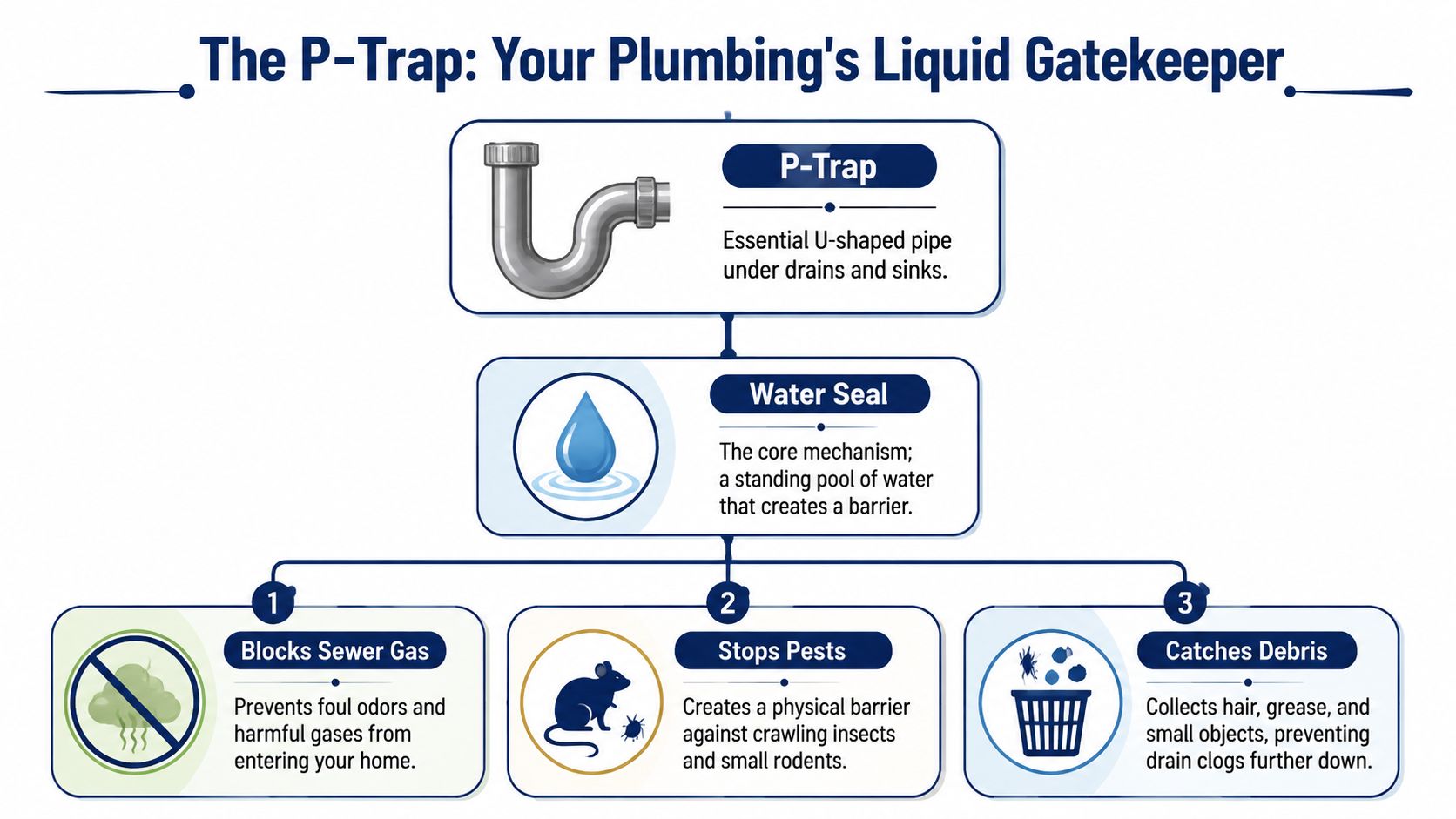
The water stays there for a reason
A P-trap works like a checkpoint with a shallow pool at the bottom. Wastewater can push through it on the way out, but sewer gas cannot easily push back through that water to get into the room.
That is the first half of the trap's job, and it is the one homeowners notice fastest when something goes wrong. If the trap dries out, gets siphoned, or leaks enough to lose its water seal, the bathroom or kitchen can start to smell like the drain system instead of the room itself. If you are sorting out that kind of odor, this guide on what causes sewage smell in bathroom can help you narrow down whether the trap is the likely problem.
Fresh water renews that seal each time the fixture is used. A sink used every day usually keeps its barrier in place. A guest shower or basement drain that sits unused can lose that protection as the trapped water slowly evaporates.
It blocks gas, but it also catches debris
Here is the trade-off that makes the P-trap so useful and so annoying. The same bend that holds water also slows down heavier debris.
Hair, soap scum, toothpaste sludge, food scraps, and small objects often collect in the trap first instead of traveling deeper into the drain line. That is good news during a clog. A blockage near the fixture is often easier to reach and clean than one buried farther inside the wall.
The basic path looks like this:
- The tailpiece brings wastewater down from the sink drain.
- The curved trap bend holds water and catches a share of debris.
- The trap arm carries the flow toward the drain line in the wall.
That dual role explains a lot of common symptoms. Slow drainage with no sewer smell often points to buildup in the trap itself. A bad odor with normal drainage can suggest the water seal is missing or being disturbed. Homeowners often assume every smell means a clog, but sometimes the underlying issue is air movement in the system rather than debris.
Why this matters for simple troubleshooting
A P-trap is one of the few parts of the drain system that regularly protects the house and collects the mess. It is a guard at the door, but it is also the first pocket where trouble tends to pile up.
That makes it a practical place to check before assuming the whole plumbing system is failing. If a sink drains slowly right after shaving, brushing, or washing greasy residue down the line, the trap is a reasonable first suspect. If the fixture smells foul after long periods of non-use, the answer may be as simple as running water to refill the seal.
In visible bathroom plumbing, homeowners sometimes pay attention to appearance as much as function, especially during remodels. If you are choosing finishes for an exposed sink setup, this expert guide to Moroccan bathroom tiles can help with the design side while you make sure the drain still keeps a proper water seal.
A good P-trap does two jobs at once. It keeps sewer gas out, and it gives debris a place to get caught where you still have a fair chance of removing it.
Why P-Trap Installation and Venting Are Crucial
A P-trap only works properly when it's part of a properly installed drain system. The shape under the sink matters, but so does what happens in the wall and beyond.
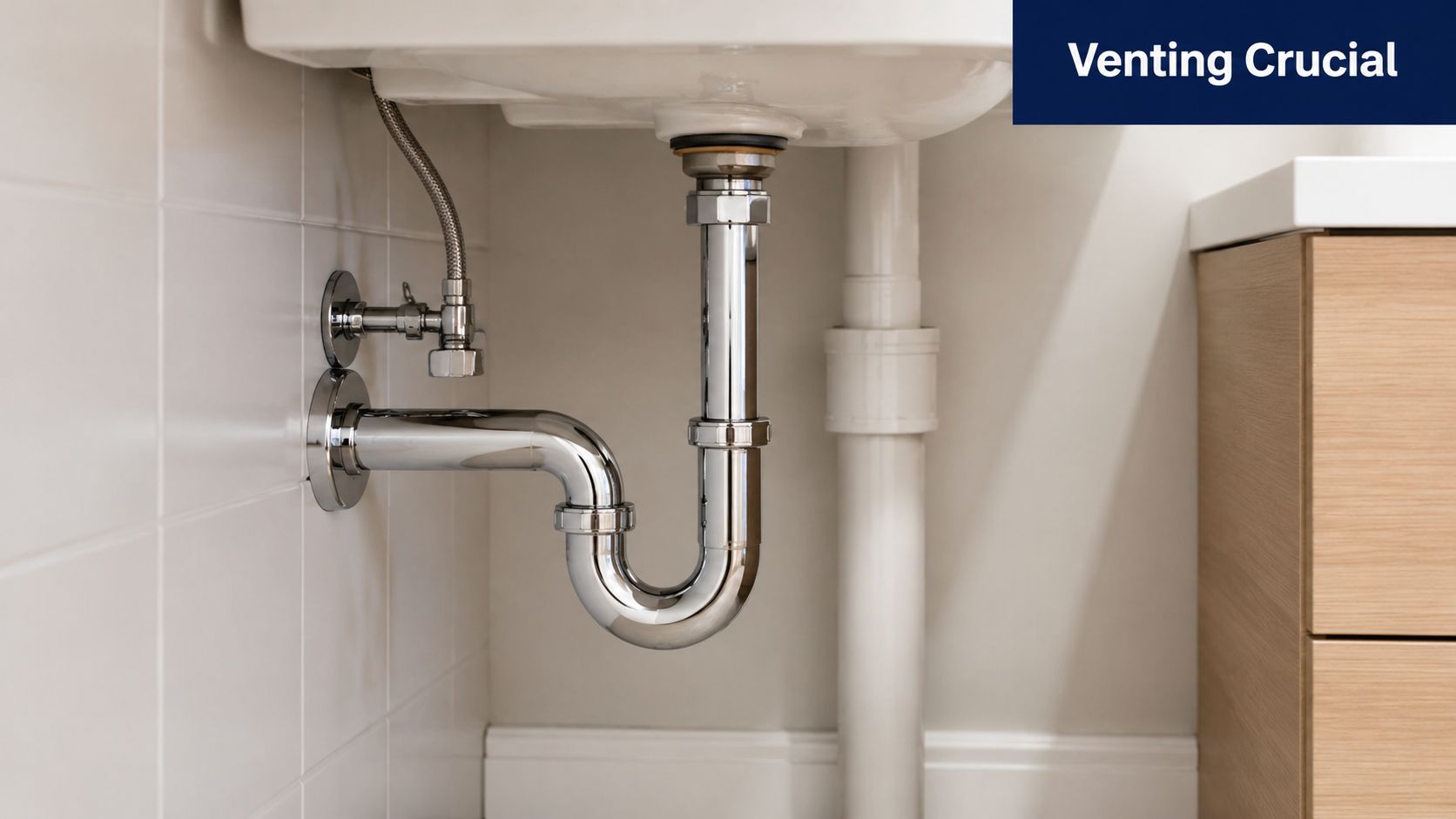
Why the shape matters
The “P” shape isn't random. It's designed to hold water without letting the trap empty itself too easily. Inspection guidance still treats trap geometry as a serious compliance issue. Contemporary inspections specifically look for proper P-traps and flag problems such as missing traps, prohibited S-traps, and improper double traps, as shown in this inspection-focused video on trap problems.
An S-trap is a common point of confusion. Homeowners sometimes see an older one and assume it's just another version of the same idea. It isn't. That shape can encourage siphoning, which means the water seal gets pulled out of the trap. Once that happens, the drain has lost its barrier.
Double traps cause their own trouble. More than one trap on the same fixture can slow drainage and create odd air-pressure behavior. It may seem like “extra protection,” but in practice it creates a bad draining setup.
What poor venting looks like
A trap also depends on venting. The vent gives the drain system a way to balance air pressure so wastewater can move without pulling the trap dry.
When venting isn't working right, homeowners often notice symptoms before they know the cause:
- Gurgling after draining can mean air is struggling through the system.
- Odor after the fixture runs can point to a trap seal problem.
- Repeated slow drainage can suggest the issue is bigger than a simple hair clog.
If you're remodeling a bath and paying attention to visible finishes as well as hidden plumbing, design choices matter too. People often spend time choosing fixtures, tile, and trim. For style inspiration, this expert guide to Moroccan bathroom tiles can help with the room's look, but the unseen parts still need correct plumbing geometry behind the wall and under the sink.
The trap under the sink is a small part with a big job. Install it wrong, and the whole fixture can start acting strangely.
Common P-Trap Problems and How to Diagnose Them
The P-trap is one of the best places to start when a sink smells bad, leaks, or drains slowly. That's because the trap sits at the meeting point between daily use and the larger drain system.
Bell Plumbing points out that the trap's purpose includes a built-in tradeoff. The same U-bend that blocks odors also collects food waste, hair, and debris, which makes it a common clog point. They also note that this catch-point behavior can reveal deeper drainage issues in some cases, as explained in their article about the purpose of a trap in kitchen plumbing.
What the trap tells you
A slow drain with no odor often points to buildup in the trap itself. Kitchen sinks are famous for this because grease, soap residue, and food particles like to settle in that bend. Bathroom sinks do the same thing with hair and toothpaste sludge.
A sewer smell doesn't always mean “the trap is clogged.” It can mean the trap is dry, leaking, or losing its seal. That's a different problem entirely.
Here's how I explain it to homeowners. A clogged trap is like a trash can under the sink getting too full. A dry or siphoned trap is like the front door being left open. Both are trap-related, but the fixes are not the same.
If the trap keeps clogging after you clean it, stop assuming the trap is the whole problem.
P-Trap Troubleshooting Guide
| Symptom | Possible Cause | What to Check |
|---|---|---|
| Slow drain | Debris buildup in the trap | Remove the trap and inspect for hair, grease, food sludge, or sediment |
| Bad odor from one fixture | Dry trap or failed water seal | Run water and see if the smell fades; inspect for leaks at slip joints |
| Gurgling sound | Venting problem or pressure issue | Note whether the sound happens during draining or after nearby fixtures are used |
| Water under sink | Loose connection or worn washer | Check slip nuts, washers, and alignment of the trap assembly |
| Frequent clogs | Misuse, partial downstream blockage, or vent issue | See whether cleaning the trap solves it only briefly |
| Lost small object | Item caught in trap | Place a bucket underneath and open the trap carefully |
A couple of patterns matter here.
- One fixture has a problem: Start at that trap first.
- Several fixtures act up: The issue may be farther down the drain system.
- The smell comes and goes: Think about trap seal loss, not just blockage.
- The sink glugs while draining: Air movement may be part of the problem.
For hands-on clog removal beyond the trap itself, this guide on how to snake a kitchen sink is useful when you've confirmed the problem isn't just sitting in the bend under the sink.
Easy P-Trap Maintenance and Cleaning
The good news is that a P-trap is one of the more serviceable parts of your plumbing. It was made to come apart more easily than piping buried in a wall.
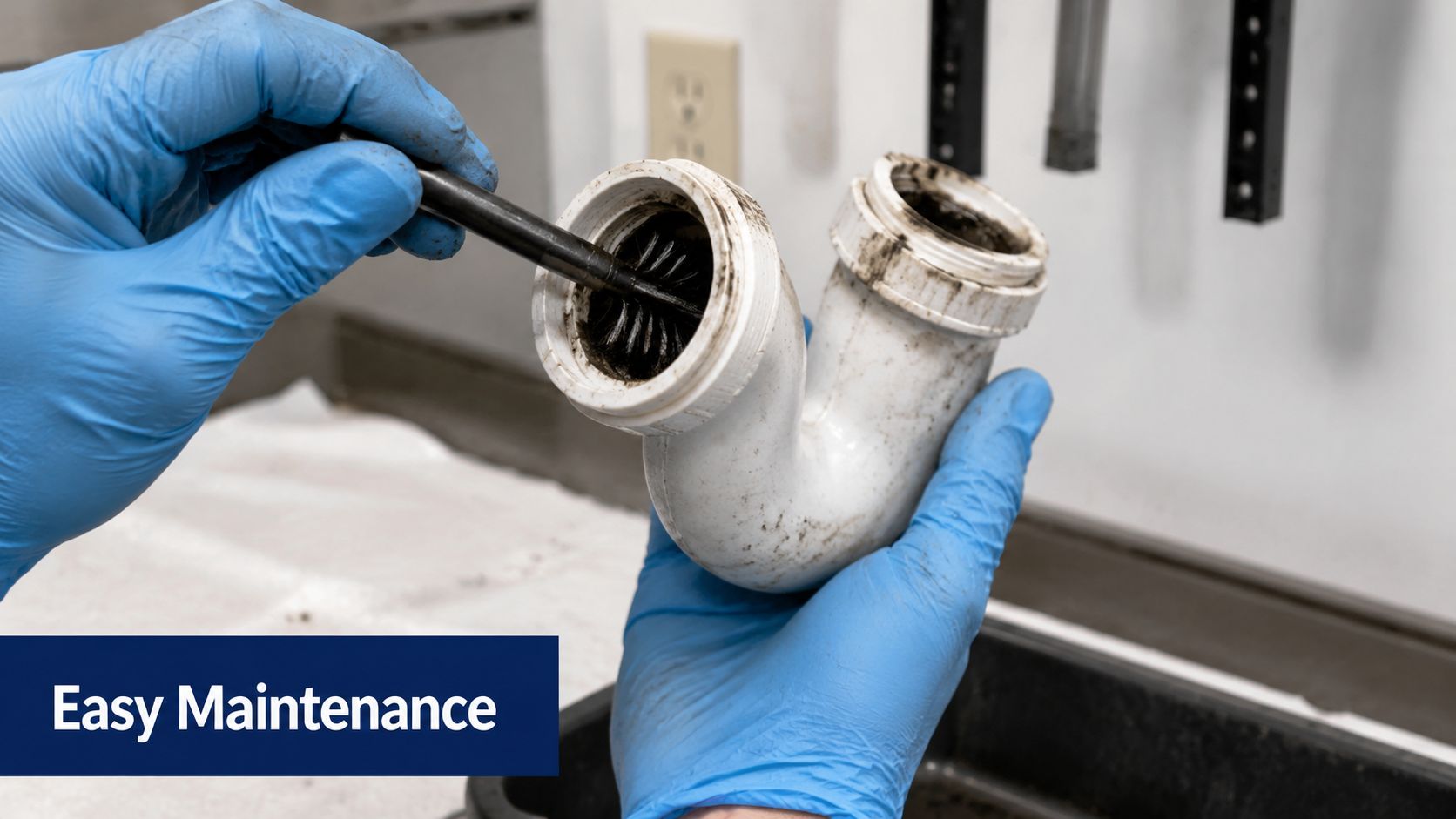
What to gather first
Before you loosen anything, get set up. That keeps a simple job from turning into a mess.
- Bucket or shallow pan: Water in the trap will spill when you open it.
- Gloves: The inside of a trap is usually slimy and unpleasant.
- Old towel or rag: Good for the cabinet floor and cleanup.
- Small brush: A bottle brush or old toothbrush works well.
- Pliers: Sometimes slip nuts are hand-tight, sometimes they aren't.
If you've never done it before, watch a visual example first. This walkthrough helps make the process less intimidating.
Basic cleaning steps
Put the bucket directly under the trap. Loosen the slip nuts slowly, first by hand if possible. Once the trap is free, tip the water into the bucket and inspect what came out.
Then clean the trap thoroughly. Pull out hair, sludge, food residue, or any small object trapped inside. Rinse the piece, scrub the inside of the bend, and wipe the washers before reinstalling.
A few habits prevent mistakes:
- Take a photo first. That helps you remember how everything lines up.
- Check the washers. If one is cracked, flattened, or crooked, the trap may leak after reassembly.
- Hand-tighten first. Then snug gently if needed. Overtightening can create new leaks.
- Test with water. Run the faucet and watch every joint closely.
Clean the trap because it's dirty. Don't crank on it like you're tightening a lug nut.
This kind of maintenance is also how people recover dropped jewelry. The trap often saves the day by catching an item before it disappears deeper into the piping.
When You Need to Call a Professional Plumber
Some trap issues are simple homeowner jobs. Some are warning signs that the problem isn't really the trap.
Call a professional if the trap keeps clogging shortly after cleaning, if sewer odor comes back even though the fixture is being used, or if you hear gurgling that suggests vent trouble. You should also get help if more than one fixture is draining badly, because that points to a larger system problem rather than one local blockage.
Leaks deserve judgment too. A loose slip nut is one thing. A misaligned assembly, damaged piping in the wall, or recurring leak under a cabinet is another. Water damage under sinks spreads undetected, especially in particleboard cabinets and multi-unit buildings.
The biggest mistake homeowners make is treating every sink issue like a simple clog. Sometimes the trap is doing its job by showing you that something deeper is wrong. When odors, repeat backups, or multi-fixture symptoms show up, it's time for trained diagnosis instead of trial and error.
If your sink smells, your trap keeps clogging, or you suspect a larger drain or vent problem, EZ Plumbing can help. They're a licensed and insured plumbing contractor serving Los Angeles since 1989, with 24/7 emergency response, same-day scheduling for many planned repairs, and experience handling everything from simple under-sink fixes to more complex drain, sewer, and vent issues. Homeowners, HOAs, property managers, and commercial properties across Los Angeles can call (818) 908-2710 or schedule online for clean, reliable service.