
Why Regular Leak Checks Matter for Your Home
Regular leak checks prevent costly structural damage, mold growth, and inflated water bills — and they protect your home’s resale value before small problems become serious ones. Household leaks can waste thousands of gallons of water per year, according to the EPA WaterSense program, and most of that waste goes unnoticed until the damage is already done. Ez-plumbing (C-36 License #583868) recommends treating leak detection the same way you treat any routine maintenance: scheduled, documented, and never skipped.
The core benefits of staying on a regular inspection schedule:
- Damage prevention: Catches hidden leaks before they cause wood rot, mold, or foundation problems.
- Lower utility bills: Stops water waste that silently inflates your monthly costs.
- Resale and insurance protection: Documented inspections reassure buyers and support insurance claims.
Table of Contents
- Why regular leak checks protect your home from serious damage
- How often should leak checks be done?
- A simple DIY leak-check checklist you can do today
- When should you call a professional leak-detection service?
- What does a leak inspection cost, and how fast does damage escalate?
- How documented inspections help at resale and with insurance
- What to ask a plumber before you hire them
- Key Takeaways
- Why scheduled inspections are the right call
- Ez-plumbing’s licensed leak-detection service for LA homeowners
- Sources and further reading
Why regular leak checks protect your home from serious damage
Plumbing runs behind walls, under slabs, and above ceilings — places you rarely look until something goes wrong. By then, a slow drip may have been saturating framing lumber or insulation for months. Wood rot sets in quickly in damp conditions, and once structural members are compromised, repair costs climb well past what any plumbing fix would have cost. Slab leaks are particularly expensive because they require breaking concrete to access the pipe.
Mold is the other major consequence. It can establish itself within 24–48 hours of sustained moisture exposure, and remediation in a finished room often runs into thousands of dollars. Beyond the financial hit, mold presents real health risks, especially for children, elderly residents, and anyone with respiratory conditions.
On the utility side, the EPA WaterSense program documents how a stuck toilet fill valve can waste up to 4,300 gallons per day in extreme cases. Even a modest drip from a worn faucet washer adds up to hundreds of gallons monthly. Catching these fixtures early keeps your water bill where it belongs.
Pro Tip: Schedule a seasonal check after winter and after any major storm. Temperature swings and ground movement are the two most common triggers for new leaks in Los Angeles-area homes, where clay soil shifts significantly with moisture changes.
Regular plumbing checks also extend the life of your fixtures and supply lines. Pipes under constant stress from a small, unrepaired leak tend to fail sooner than maintained systems.
How often should leak checks be done?
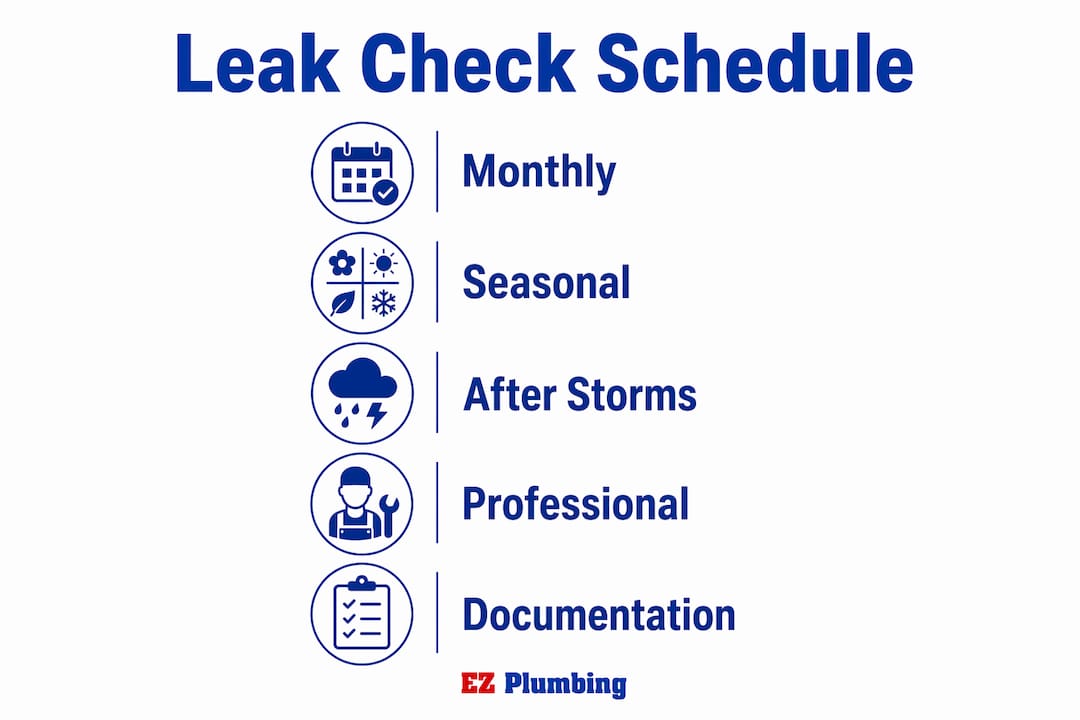
For most homes, the right cadence is: a quick visual check monthly, a more thorough seasonal check four times per year, and a professional inspection annually. That schedule covers the majority of failure scenarios without being burdensome.
Homes that need more frequent professional attention:
- Older than 20 years: Galvanized steel pipes corrode from the inside out; copper fittings develop pinhole leaks over time.
- Post-renovation: New work disturbs existing connections and can introduce stress fractures that show up weeks later.
- History of leaks: One leak often signals systemic pressure or material issues, not an isolated event.
- After major storms or seismic activity: Ground movement in the LA basin can shift supply lines and sewer laterals.
Call for an immediate check when you notice any of these:
- A water bill that spikes without a change in usage
- New stains on ceilings, walls, or under cabinets
- A noticeable drop in water pressure at fixtures
- Musty odors in enclosed spaces like closets or under sinks
- The sound of running water when all fixtures are off
Plumbing warning signs like these rarely resolve on their own. Acting within days rather than weeks limits secondary damage significantly.
A simple DIY leak-check checklist you can do today
Five checks cover the vast majority of household leak sources. Each takes only a few minutes, and together they give you a reliable picture of your system’s condition between professional visits.
- Water meter test (5 minutes): Turn off every fixture and appliance that uses water. Note the meter reading, wait 15 minutes without using any water, then check again. Any movement on the dial indicates an active leak somewhere in the system.
- Under-sink and appliance inspection (10 minutes): Open cabinet doors under every sink, the dishwasher, and the washing machine. Look for moisture, staining, or soft cabinet floors. Check supply line connections for mineral deposits, which signal a slow drip.
- Toilet dye test (5 minutes): Drop food coloring into the tank. Wait 10 minutes without flushing. If color appears in the bowl, the flapper is leaking. A faulty toilet flapper is one of the most common sources of silent water waste in any home.
- Water heater base check (5 minutes): Look for pooling water, rust staining, or corrosion around the base and at the pressure relief valve. Photograph anything unusual with a timestamp for your records.
- Irrigation and exterior lines (10 minutes): Walk the perimeter and check hose bibs, irrigation heads, and any visible supply lines. Soggy patches in dry weather are a reliable indicator of a subsurface leak.
Pro Tip: For slow drain leaks that don’t spike your bill, run a dry paper towel along supply line connections under sinks and behind appliances. Even a barely-damp towel signals a drip that a visual check might miss.
Photograph every area you inspect and log the date. That record becomes useful if you ever need to file an insurance claim or demonstrate maintenance history to a buyer.
When should you call a professional leak-detection service?
Call a licensed plumber when your DIY checks point to a problem you can’t locate, or when the signs are there but the source isn’t visible. Hidden leaks inside walls, under slabs, or in the main supply line require professional equipment to find without unnecessary demolition.
Situations that require professional detection:
- Persistent moisture or staining with no obvious fixture source
- Slab or foundation leaks (warm spots on floors, cracked tiles, or unexplained dampness)
- Noisy pipes or water hammer that appears suddenly
- Failed shutoff valves or corroded main line components
- Complex irrigation system failures
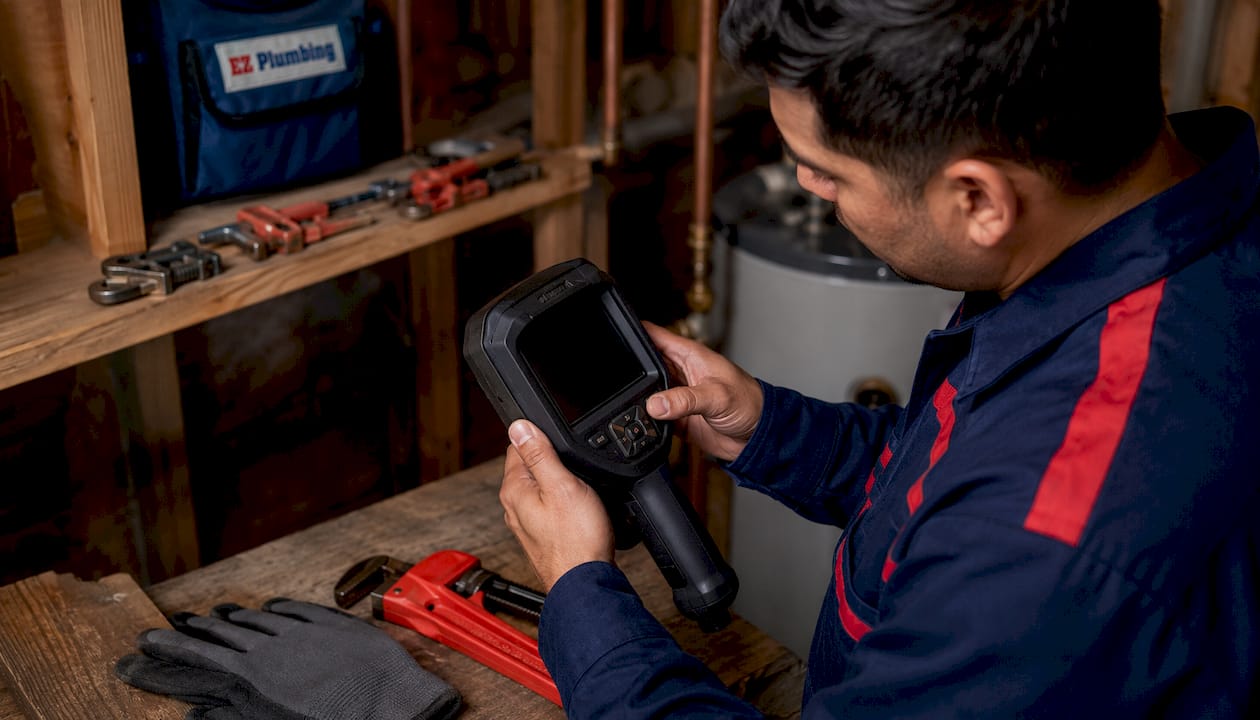
Professional leak detection uses thermal imaging cameras to identify temperature differentials caused by moisture, acoustic sensors to pinpoint the sound of water moving through a breach, moisture meters to map saturation levels in walls and floors, and pressure testing to isolate which section of the system is compromised. None of these methods require opening walls until the exact location is confirmed. For a detailed look at what a professional report includes, Ez-plumbing’s leak detection guide walks through the full process.
A professional inspection also produces written documentation: moisture readings, thermal images, and a report that identifies both confirmed leaks and areas of concern. That paperwork matters for insurance and resale purposes.
What does a leak inspection cost, and how fast does damage escalate?
Professional leak inspections are a low-cost investment relative to what they prevent. Industry data places a typical inspection in the $300–$500 range, while restoration projects for water damage commonly run from $10,000 to $50,000 or more depending on the extent of structural involvement.
| Scenario | Typical Cost Range |
|---|---|
| Professional leak inspection | $300–$500 |
| Toilet flapper replacement | Under $20 DIY |
| Water heater leak repair or replacement | $300–$500 |
| Mold remediation (single room) | Can run into thousands of dollars |
| Slab leak repair | Can reach significant amounts depending on location and extent |
| Major water damage restoration | $10,000–$50,000+ |
The escalation timeline is what makes delay costly. A pinhole pipe leak can saturate wall insulation within days. After two to three weeks, mold colonies are typically established. After several months, framing lumber may be structurally compromised. What starts as a $300 inspection catch can become a $15,000 remediation and repair project if left unaddressed.
Flow-monitoring devices with automatic shutoff capability can catch leaks between inspections, and some insurers offer premium discounts for homes equipped with them. Check your policy for specific terms.
Insurance coverage for water damage typically depends on whether the leak was sudden and accidental (usually covered) or the result of long-term neglect (often denied). Documented maintenance history is your strongest defense against a neglect determination.
How documented inspections help at resale and with insurance
Documented inspections reduce disputes with insurers and give buyers concrete evidence that the home has been maintained. A buyer’s inspector who finds a previous leak repair is far less concerned when you can show a timestamped report proving it was caught early and fixed properly.
What to keep in your inspection file:
- Date and technician name with license number
- Inspection report PDF with moisture readings and findings
- Before-and-after photographs with timestamps
- Receipts for any repairs made following the inspection
- Notes on areas flagged for monitoring
Store everything in a cloud-based folder (Google Drive, Dropbox, or iCloud) with a local backup. Insurers and buyers expect time-stamped, dated documentation, and a complete file going back several years carries real weight in both conversations.
- Create a dedicated folder labeled “Home Maintenance Records.”
- Scan or photograph every report immediately after the inspection.
- Add a calendar reminder to update the file after each check.
- Share the folder link with your real estate agent when listing.
What to ask a plumber before you hire them
Three things to verify before any plumber starts work: a valid state contractor’s license, proof of general liability insurance, and a clear description of the inspection methodology they use. A licensed contractor in California carries a C-36 plumbing license; ask for the number and verify it through the California Contractors State License Board.
Questions to ask on the phone or during a quote:
- What license number do you operate under, and is it current?
- Do you carry general liability and workers’ compensation insurance?
- What detection equipment do you use — thermal imaging, acoustic sensors, moisture meters?
- Will I receive a written report with photos and moisture readings?
- How do you price the inspection, and what triggers additional charges?
Red flags to watch for:
- No written report offered, only a verbal summary
- Vague or “it depends” pricing with no baseline range
- Pressure to approve repairs immediately during the inspection visit
- No license number provided when asked
- No mention of non-invasive detection methods
Real credentials look like this: a California C-36 license number you can verify online, a certificate of general liability insurance naming your address, and IICRC (Institute of Inspection, Cleaning and Restoration Certification) credentials for any technician handling moisture assessment.
Key Takeaways
Regular leak checks are the single most cost-effective step a homeowner or tenant can take to prevent structural damage, mold, and inflated utility costs.
| Point | Details |
|---|---|
| Run a meter test monthly | Turn off all fixtures, wait 15 minutes, and check for dial movement — it takes five minutes. |
| Annual professional inspection | Most homes need one pro inspection per year; older or post-renovation homes may need more. |
| Inspection cost vs. restoration | A $300–$500 inspection can prevent restoration costs of $10,000–$50,000 or more. |
| Document every check | Keep timestamped reports, photos, and moisture readings for insurance and resale purposes. |
| Ez-plumbing for LA homes | Ez-plumbing (C-36 License #583868) provides licensed leak-detection inspections with written reports for greater Los Angeles homeowners. |
Why scheduled inspections are the right call
From Ez-plumbing’s perspective, the case for scheduled leak inspections isn’t complicated. Plumbing systems age, materials fatigue, and the ground moves — especially in Los Angeles, where clay soil and seismic activity put constant stress on supply lines and sewer laterals. Waiting for visible damage to appear means the damage has already progressed further than it should. A licensed inspection, documented and repeated on a consistent schedule, keeps you ahead of that curve. That’s the prevention-first approach we recommend to every homeowner and tenant we work with across the greater Los Angeles area.
Ez-plumbing’s licensed leak-detection service for LA homeowners
Ez-plumbing offers licensed leak-detection inspections that include thermal imaging, acoustic sensing, and a written report with moisture readings and photographs — all performed under C-36 License #583868.
A standard inspection covers your main supply lines, fixtures, water heater, slab areas, and irrigation connections. Most residential inspections are completed within two to three hours. If a leak is confirmed, you receive a clear written summary of the location, severity, and recommended repair options before any work begins. There’s no pressure to approve repairs on the spot.
Ez-plumbing serves the greater Los Angeles area, including leak detection in Los Angeles, Santa Monica, Reseda, Van Nuys, and surrounding communities. To schedule an inspection or get a cost estimate, visit the Ez-plumbing leak detection page or call directly. Catching a leak early is always less expensive than repairing what it leaves behind.
Sources and further reading
- EPA WaterSense Leak Detection Guide — backs water-waste figures and fixture failure examples used throughout this guide.
- Ez-plumbing: What Is Leak Detection? — explains detection technologies and what a professional report includes.
- Ez-plumbing: Warning Signs of Plumbing Problems — a checklist of early indicators homeowners should watch for.
- Ez-plumbing: Essential Plumbing Maintenance Tips for Los Angeles Homeowners — seasonal timing and maintenance priorities specific to the LA area.
- Ez-plumbing: How to Detect Water Leaks Before They Cost You — step-by-step detection techniques for homeowners.