
Essential plumbing maintenance tips for Los Angeles homeowners
Hidden plumbing leaks are one of the costliest problems a homeowner can face, and many go unnoticed for months. The EPA notes undetected leaks can waste thousands of gallons of water each year, driving up utility bills and quietly damaging walls, floors, and foundations. For homeowners in Los Angeles, where water rates are among the highest in the country and conservation is a civic priority, staying ahead of plumbing problems is both a financial and environmental responsibility. This guide covers practical, actionable steps you can take right now to protect your home, reduce waste, and avoid expensive repairs.
Table of Contents
- Install and monitor leak detection devices
- Respond quickly to leaks and prevent mold
- Flush your water heater regularly
- Detect hidden toilet and fixture leaks
- Prioritize leak reduction for drought and water efficiency
- Why most homeowners misunderstand plumbing maintenance
- Get expert help for plumbing maintenance in Los Angeles
- Frequently asked questions
Key Takeaways
| Point | Details |
|---|---|
| Catch leaks early | Installing leak detection devices helps prevent costly water waste and damage. |
| Act fast after leaks | Quick repairs and drying within 1–2 days prevent mold and secondary damage. |
| Flush water heater yearly | Annual maintenance keeps your water heater efficient and reduces risk from sediment buildup. |
| Diagnostic tests save water | Simple household leak checks can help identify slow leaks that might otherwise go unnoticed. |
| Prioritize water efficiency | Leak reduction and water-saving measures are key for Los Angeles drought-prone homes. |
Install and monitor leak detection devices
After establishing just how damaging hidden leaks can be, the logical first step is to use technology that catches them early. Leak detection devices, ranging from simple moisture sensors to advanced whole-home flow monitors, are designed to alert you the moment something goes wrong. Basic sensors sit beneath sinks, near water heaters, or behind washing machines and trigger an alarm when they detect moisture. More advanced systems monitor water flow through your main supply line and can shut off the water automatically if they detect an abnormal pattern, such as a slow drip running for hours.
The EPA recommends that homeowners install and maintain flow monitoring devices to catch otherwise-undetected leaks and reduce water waste. For Los Angeles homeowners paying premium water rates, this is especially practical advice. A single undetected toilet leak can waste up to 200 gallons per day. Multiply that across a few months of missed maintenance and you’re looking at a significant water bill spike before you ever notice a wet floor.
Here is a comparison of the most common leak detection options to help you choose what fits your home:
| Device type | Best for | Cost range | Shut-off capability |
|---|---|---|---|
| Point-of-use moisture sensor | Under-sink, appliances | $15 to $50 | No |
| Smart leak sensor with app alerts | Kitchen, bathrooms | $50 to $150 | No |
| Whole-home flow monitor | Main supply line | $200 to $500 | Yes (some models) |
| Professional camera inspection | Slab leaks, hidden pipes | Service fee | N/A |
If you want a more thorough evaluation, our leak detection services can pinpoint problems inside walls and under slabs without invasive digging. Homeowners in areas like Pasadena, where older construction is common, often benefit from professional leak detection in Pasadena to catch galvanized pipe corrosion and slab moisture early.
Pro Tip: Pair your device alerts with a quick visual check of exposed pipes and supply lines every month. Technology catches what you miss, but your own eyes catch what the sensors can’t reach.
Once devices are in place, incorporate them into a routine rather than treating them as a set-it-and-forget-it solution. Check your app alerts weekly, test your sensors quarterly by simulating moisture contact, and review your water meter readings monthly. Our plumbing repairs guide walks through exactly how to interpret those meter readings and determine whether a professional inspection is warranted.
Respond quickly to leaks and prevent mold
Once a leak is detected, acting within the right timeframe is critical. Speed is not just about stopping water damage to your flooring or drywall. It is also about preventing mold, which can begin growing in as little as 24 to 48 hours in moist conditions. The EPA guidance on drying time is direct: fix plumbing leaks and related water problems quickly, and dry all affected materials and areas within 24 to 48 hours to prevent mold growth.
That window is shorter than most homeowners expect. If you discover a leak on a Friday night and assume you can deal with it Monday morning, you may already have mold forming behind your wall by the time a plumber arrives. Your immediate steps after detecting a leak should look something like this. First, shut off the water supply to the affected fixture or the main line if necessary. Second, remove standing water using towels, mops, or a wet-dry vacuum. Third, run fans and a dehumidifier to accelerate drying in the affected area. Fourth, document the damage with photos before cleaning up, as this is useful for insurance purposes.
Leak-prone areas in a typical Los Angeles home include the supply lines under kitchen and bathroom sinks, the connections behind washing machines and dishwashers, toilet fill valves and flappers, the pressure relief valve on your water heater, and bathtub and shower caulk seals around the drain and faucet base. Knowing how to read your water meter is one of the simplest ways to confirm whether a slow leak is occurring even when no visible signs are present. For a broader overview of what problems most frequently affect LA homes, our article on common plumbing problems covers the full list with practical solutions.
Flush your water heater regularly
Water heater maintenance is one of the most consistently overlooked tasks in home upkeep, yet it directly affects energy efficiency, water quality, and the lifespan of the unit. Sediment, primarily calcium and magnesium minerals that settle at the bottom of the tank over time, reduces the heater’s ability to transfer heat efficiently. The result is longer heating cycles, higher energy bills, and eventually, premature failure of the heating element.
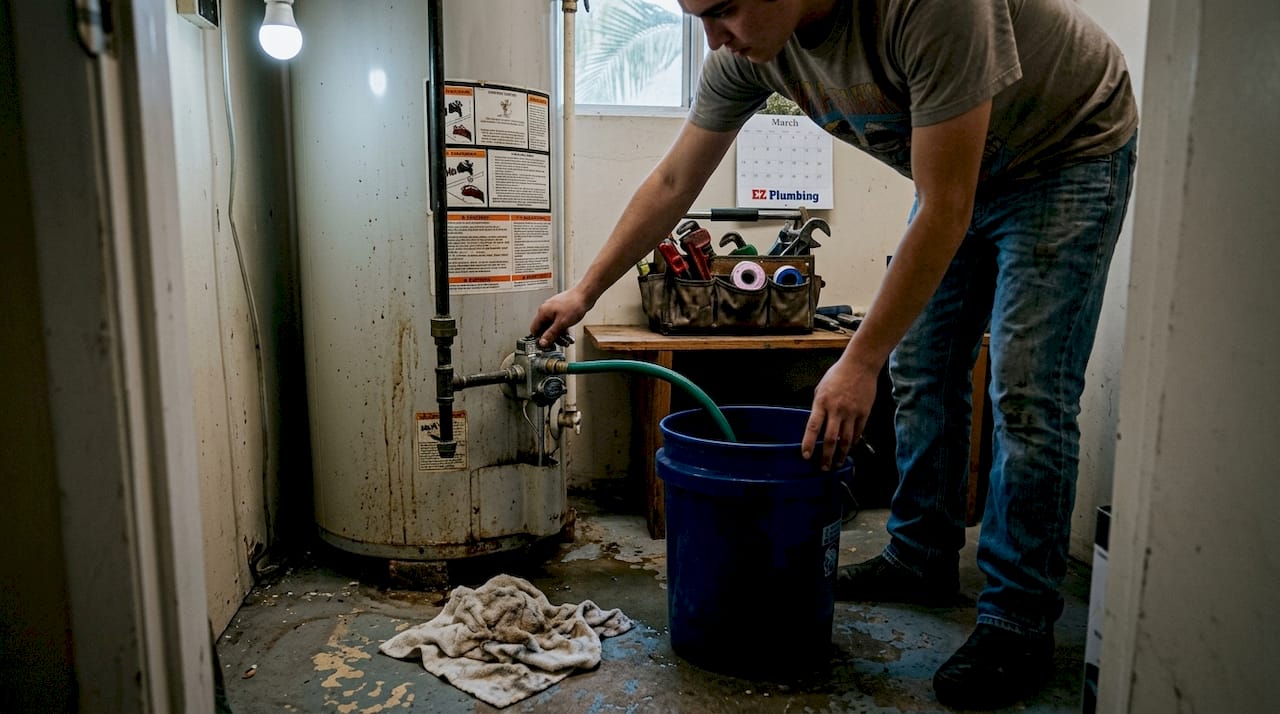
Flushing your water heater once per year is a widely accepted homeowner benchmark, but Los Angeles homes with harder water may need to flush more frequently, perhaps every six months. Hard water accelerates mineral buildup and can also cause a popping or rumbling sound from the tank, which is one of the clearest signs that sediment has accumulated.
Here is a straightforward process for annual flushing:
- Turn off the cold water supply valve at the top of the heater and set the thermostat to the “pilot” setting (for gas heaters) or switch off the circuit breaker (for electric heaters).
- Connect a garden hose to the drain valve at the bottom of the tank and run the other end to a floor drain or outside.
- Open a hot water faucet in your home to allow air into the tank as it drains.
- Open the drain valve and allow the tank to fully empty. Watch for sediment in the draining water.
- Briefly turn the cold water supply back on to flush remaining sediment through the drain, then close the valve and refill the tank fully before restoring power or relighting the pilot.
| Water heater condition | Recommended flush frequency |
|---|---|
| Standard city water, newer unit | Once per year |
| Hard water area or older unit | Every 6 months |
| Rusty or discolored hot water | Immediately, then assess unit |
| No flushing in 3+ years | Professional service recommended |
Safety is an important consideration here. The water draining from the tank is very hot, and the drain valve on older units may fail to fully reseat after being opened for the first time in years. If you are unsure about handling the process or your unit has not been serviced in a long time, professional service is the safer choice. You can also use the annual flush as a reminder to inspect nearby supply lines and connections for corrosion or drips, effectively turning one task into a broader inspection. Scheduling regular water heater maintenance is one of the most impactful ways to prevent plumbing emergencies before they disrupt your household.
Pro Tip: Set a calendar reminder each year on the same date to flush your water heater. Consistent scheduling is the simplest way to make sure it never gets skipped.
Detect hidden toilet and fixture leaks
Some leaks are obvious. Others hide in plain sight for months, slowly running up your water bill without leaving a puddle you can see. Toilets are the most common culprit. A faulty flapper valve, which is the rubber seal at the bottom of your toilet tank, can allow water to continuously trickle from the tank into the bowl. This type of leak is silent and invisible unless you know how to test for it.
The food coloring test is the fastest and most reliable way to check for a toilet leak at home. Add a few drops of food coloring to your toilet tank and wait 15 minutes without flushing. If color appears in the toilet bowl, water is silently leaking through the flapper. As the Cleveland Water Department explains, hidden toilet and fixture leaks are among the most common sources of household water loss, and these simple household diagnostic tests can reveal them quickly before they become expensive.
Beyond the food coloring test, there are other quick checks worth running regularly. Look for corrosion or discoloration around faucet bases and supply line connections. Check for soft flooring or discoloration around the base of toilets, which can indicate a wax ring failure. Feel around the stems of outdoor hose bibs for moisture after running water, and inspect any exposed shutoff valves under sinks for mineral buildup or dampness. For commercial property managers, our commercial plumbing insights resource covers how these same principles scale up to multi-unit buildings, where undetected fixture leaks can result in far greater water losses.
Prioritize leak reduction for drought and water efficiency
Los Angeles has faced sustained drought conditions for years, and the regional water infrastructure reflects that reality. Water costs more here than in most other major American cities, and local agencies actively encourage conservation through tiered billing, rebates, and restrictions during dry periods. This means that fixing leaks is not just a maintenance issue; it is a direct cost-reduction strategy.
LA County’s water conservation guidelines reinforce this clearly: for LA-style drought and high-cost water conditions, prioritizing leak reduction and water-saving maintenance is among the most impactful actions a homeowner can take. Fixing a single leaky toilet can save thousands of gallons per month. Addressing a dripping faucet that loses just 10 drips per minute saves more than 500 gallons per year.
Here is a practical overview of high-impact water-saving maintenance steps for Los Angeles homes:
| Maintenance action | Estimated water savings | Priority level |
|---|---|---|
| Fix leaking toilet flapper | Up to 200 gallons per day | High |
| Replace worn faucet washers | 500+ gallons per year | High |
| Insulate hot water pipes | Reduces wait time waste | Medium |
| Install low-flow showerheads | 2,700+ gallons per year | Medium |
| Check irrigation system for leaks | Varies, often significant | High |
Beyond the immediate savings, consistent maintenance protects your pipes long-term. Los Angeles has a large stock of older homes with original galvanized steel or even clay sewer laterals. These materials are more vulnerable to the kind of slow, progressive damage that deferred maintenance accelerates. Keeping your fixtures tight, your water heater flushed, and your detection systems active creates a protective baseline that extends the life of your plumbing system significantly. Homeowners who want to understand the regulatory and code standards governing their plumbing can find a solid overview in our guide to plumbing system codes.
Why most homeowners misunderstand plumbing maintenance
Here is something we see consistently in our work across Los Angeles: most homeowners treat plumbing maintenance as a reactive task. Something breaks, they call a plumber, they fix it. Then the system goes back to being invisible until the next problem. That mindset is understandable, but it leaves a large category of risks completely unaddressed.
The real danger is not the pipe that bursts suddenly. It is the slow toilet leak running for four months, the water heater sediment quietly degrading efficiency for years, or the minor drip behind a cabinet that eventually creates the mold colony you find during a bathroom remodel. Secondary water damage like mold is not a worst-case scenario; it is a common outcome of deferred maintenance, and it typically costs far more to remediate than the original plumbing issue would have cost to fix.
What actually works is a combination of passive monitoring, scheduled maintenance, and diagnostic habits. Combining passive protection with active monitoring reduces both acute failures and slow, hidden loss. Think of it this way: a leak detection device running in the background, an annual water heater flush on the calendar, and a five-minute food coloring test every season together create a maintenance posture that prevents the expensive surprises most homeowners experience eventually.
We have seen this work repeatedly for homeowners across neighborhoods like Silver Lake, Burbank, and the San Fernando Valley, where older housing stock and varying water pressure make proactive maintenance especially valuable. A schedule is not a burden. It is the simplest form of insurance you can give your home. Starting with our guide to preventing plumbing emergencies is a good place to build that schedule from the ground up.
Get expert help for plumbing maintenance in Los Angeles
Knowing what to do and feeling confident doing it are two different things. Whether you need a professional leak inspection, water heater service, or drain cleaning, EZ Plumbing is equipped to handle every part of your home’s plumbing system.
Our leak detection services use advanced equipment to find hidden leaks without damaging your walls or flooring, saving you both water and expensive repair costs. If your water heater is due for service or replacement, our water heater installation team handles everything from standard tank units to energy-efficient tankless systems. And if slow drains or recurring clogs are a recurring issue, our drain cleaning services use hydro-jetting technology to fully clear blockages rather than just temporarily relieving them. We are fully licensed (C-36 License #583868), insured, and code-compliant with all LA municipal requirements. Call us to schedule a maintenance visit and take the guesswork out of keeping your plumbing in top condition.
Frequently asked questions
How often should you flush a water heater in Los Angeles?
Flush your water heater once per year as a general benchmark, but homes with hard water or older units may benefit from flushing every six months to prevent heavy sediment accumulation.
What are the signs of a hidden plumbing leak?
Look for unexplained increases in your water bill, damp spots on walls or ceilings, and run the food coloring test on your toilet tank to check for silent flapper leaks.
What steps should you take immediately after discovering a leak?
Shut off the water supply, remove standing water, and dry all affected materials within 24 to 48 hours to stop mold from developing in the damaged area.
Which plumbing maintenance tip saves the most water in Los Angeles homes?
Fixing toilet leaks offers the largest single-fixture daily water savings, since a faulty flapper can waste up to 200 gallons per day without any visible sign of a problem.
Is it safe for homeowners to flush their own water heater?
Basic flushing is manageable for most homeowners, but if your unit has not been serviced in several years or the drain valve appears corroded, professional service is the safer option to avoid damaging the valve or handling extremely hot water incorrectly.
Recommended
- Drain maintenance guide: prevent costly plumbing issues at home
- Manage plumbing repairs in Los Angeles: step-by-step guide
- Solve common plumbing problems: practical tips for LA homes
- Handle your Los Angeles plumbing emergency with confidence
Recent EZ Plumbing Jobs in Los Angeles
Real, recent work from our crews — updated automatically as jobs complete.