
How to Detect Water Leaks Before They Cost You
Water leak detection is the process of identifying unintended water escapes in your plumbing system before they cause structural damage or spike your utility bill. Hidden leaks waste over 10,000 gallons per year and can generate an average of $14,000 in property damage. Knowing how to detect water leaks using your water meter, food coloring tests, and acoustic sensors puts you in control of your home before a minor drip becomes a major repair. This guide walks you through every method, from a simple meter check to professional-grade thermal imaging.
How to detect water leaks using your water meter
The water meter test is the most reliable first step for confirming a leak anywhere in your home’s plumbing. It requires no special tools and delivers a clear yes-or-no answer within a couple of hours.
Follow these steps precisely:
-
Turn off every water-using appliance and fixture in the home. This includes faucets, showers, dishwashers, washing machines, and any outdoor irrigation systems. Forgetting hidden water users like ice makers and automatic sprinkler timers is the most common reason this test produces a false negative.
-
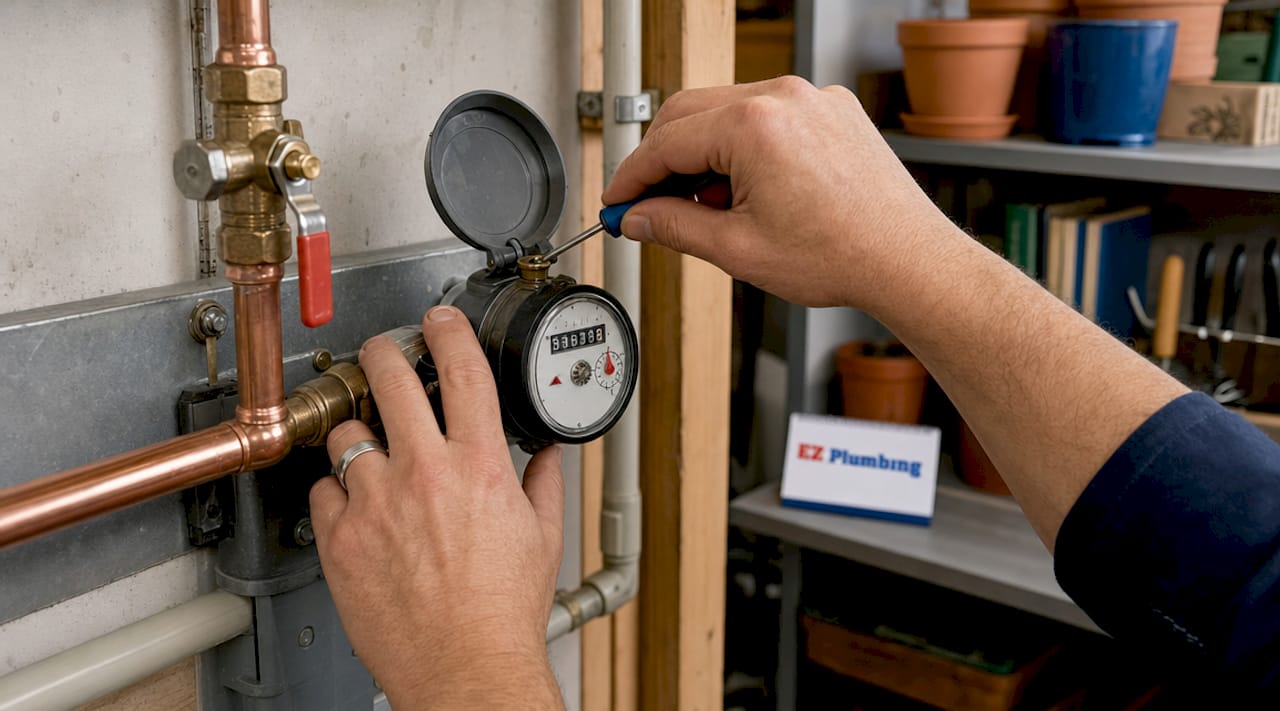
Locate your water meter. In most Los Angeles properties, it sits in a covered box near the curb or sidewalk. Lift the lid carefully.
-
Record the meter reading or photograph the display. Note the exact number shown on the dial. Many meters also have a small leak indicator, typically a triangle or star-shaped dial. Visible movement of this indicator with all water off confirms active flow somewhere in your system.
-
Wait 1 to 2 hours without using any water. Do not flush toilets, run a tap, or use any appliance during this window. A 1 to 2 hour test window is the standard recommended duration for detecting customer-side leaks accurately.
-
Return and recheck the meter. If the reading has changed or the leak indicator has moved, water is flowing somewhere it should not be.
-
Compare your before and after readings. Even a small change signals a leak worth investigating further.
Pro Tip: Never shut off water at the main meter valve to perform this test. The meter valve is intended for utility staff only, and forcing it risks damage to the valve mechanism. Use your home’s interior shutoff valve instead, as recommended by the City of San José.
If your meter confirms a leak, the next step is identifying where it originates. Start with the most common sources inside the home before moving to advanced detection methods.
What are the most common signs of water leaks inside your home?
Visible and audible clues account for a large share of leaks that homeowners catch early. Knowing where to look and what to listen for saves you from waiting until water damage becomes obvious on your ceiling or floor.
-
Toilets: Toilets are the most common source of household leaks, and most toilet leaks are completely silent. Add a few drops of food coloring to the toilet tank and wait. Color appearing in the bowl within 10 minutes without flushing confirms the flapper valve is failing and water is escaping continuously.
-
Faucets and showerheads: A faucet dripping at one drip per second wastes over 3,000 gallons per year. That volume is enough to fill a standard backyard pool. Check all faucets, including outdoor hose bibs, for visible drips when fully closed.
-
Water heaters: Look for pooling water, rust staining, or mineral deposits around the base of the unit. A water heater showing these signs may have a failing pressure relief valve or a corroding tank. If you suspect your unit is involved, reviewing a water heater installation guide can help you understand what normal versus abnormal looks like.
-
Washing machines and dishwashers: Pull these appliances away from the wall periodically and inspect the supply hoses and drain connections. Rubber hoses degrade over time and are a frequent source of slow leaks behind walls.
-
Visual indicators on walls and ceilings: Bubbling or peeling paint, yellow or brown staining, soft drywall, and visible mold growth all point to moisture accumulation behind surfaces. These signs often indicate a pipe leak that has been active for weeks or months.
-
Sound: Run your home completely silent and listen near walls, under sinks, and around the water heater. A faint hissing or dripping sound with no fixtures running is a reliable indicator of an active leak.
Pro Tip: Test every toilet in your home with food coloring twice a year. A single leaking flapper can waste thousands of gallons monthly without any visible sign, and the fix typically costs under $10 at any hardware store.
What advanced methods detect hidden or hard-to-find leaks?
When a meter test confirms a leak but visual inspection finds nothing, the problem is likely concealed inside a wall, under a concrete slab, or underground. These situations call for specialized leak detection methods used by licensed plumbers.
The table below compares the most common tools and what each one does:
| Detection method | How it works | Best used for | Limitation |
|---|---|---|---|
| Acoustic leak detector | Amplifies sound of water escaping pipes through walls or ground | Pressurized pipe leaks in walls or underground | Background noise can interfere |
| Thermal imaging camera | Detects temperature differences caused by moisture | Locating wet areas behind drywall or under flooring | Detects heat anomalies, not moisture directly — requires moisture meter to confirm |
| Moisture meter | Measures moisture content in building materials | Confirming wet spots identified by thermal imaging | Surface-level reading only |
| Tracer gas detection | Injects non-toxic gas into pipes; sensors detect escaping gas | Very small or complex underground leaks | Requires professional equipment |
Combining acoustic sensors with moisture meters provides the most accurate non-destructive result. Thermal imaging alone is not sufficient because it reads temperature differences, not water itself. A cold spot on a thermal scan could be a draft, not a leak. Always verify thermal findings with a moisture meter before opening walls.
Tracer gas detection is the most precise method for locating leaks that acoustic sensors cannot pinpoint. A non-toxic gas mixture is introduced into the pipe, and a surface sensor detects where it escapes. This technique is particularly effective for slab leaks and buried supply lines in Los Angeles properties built on concrete foundations.
Pro Tip: If you suspect a leak in a wall but cannot confirm it with a moisture meter, do not open drywall speculatively. A licensed plumber with acoustic detection equipment can pinpoint the location within inches, saving you significant repair costs.
How to isolate and verify a leak with valve testing
Isolation testing is a systematic method for narrowing down which section of your plumbing is leaking without opening walls or floors. It works by closing individual shutoff valves and monitoring the water meter after each closure.
Follow this sequence to isolate the leak zone:
-
Confirm the meter shows active flow with all fixtures off, as described in the meter test above.
-
Close the shutoff valve under one fixture, such as a toilet or bathroom sink, then recheck the meter. If the meter stops moving, that fixture or its supply line is the source.
-
If the meter continues moving, reopen that valve and move to the next fixture. Work through each bathroom, the kitchen, the laundry room, and any outdoor connections one at a time.
-
Isolate entire zones if individual fixtures test clean. Close the shutoff valve for an entire bathroom and recheck the meter. This narrows the leak to a specific area of the home rather than a single fixture.
-
Monitor smart meter alerts if your utility provides them. The Los Angeles Department of Water and Power offers usage alerts that can flag unusually low flow rates, which sometimes indicate a slow leak between meter checks.
-
Document every valve you test and the meter reading after each closure. This record is directly useful when communicating with a plumber. It tells them exactly which zone is affected and eliminates guesswork, which reduces diagnostic time and labor cost.
Isolation testing is particularly effective for identifying slab leaks, where the leak is under the foundation and cannot be seen or heard easily. If closing all interior valves stops the meter but closing the main house valve does not, the leak is likely in the service line between the meter and the house.
Ez-plumbing’s take on leak detection at home
From our experience working across Los Angeles, the biggest mistake homeowners make is skipping the meter test and going straight to visual inspection. Visual checks catch obvious drips, but they miss the leaks that cause the most damage: the ones inside walls, under slabs, and in supply lines that run under concrete. A meter test takes two hours and costs nothing. It tells you definitively whether a leak exists before you spend time looking in the wrong places.
The second most common mistake is performing the meter test incorrectly by leaving the ice maker or irrigation timer running. Those two appliances alone can consume enough water to mask a real leak or create a false positive. Patience and thoroughness during the preparation phase determine whether the test result is trustworthy.
Leak detection is not a one-time event. Testing your toilets with food coloring twice a year and checking your meter reading monthly takes less than 15 minutes total and catches the majority of household leaks before they cause structural damage. When the meter confirms a leak and isolation testing cannot locate it, that is the point to call a licensed plumber with acoustic detection equipment. Attempting to open walls without a confirmed location wastes money and time.
— EZ
Let Ez-plumbing handle what you cannot find

When your meter confirms a leak but you cannot locate it through visual inspection or isolation testing, Ez-plumbing’s licensed technicians bring acoustic sensors, thermal imaging, and tracer gas equipment directly to your Los Angeles property. Our leak detection services use non-destructive methods that pinpoint the exact location before any wall or floor is opened. We serve residential and commercial properties across the greater Los Angeles area, and we are fully licensed under C-36 License #583868. Whether the issue is a slab leak, a hidden pipe failure, or a corroded supply line, contact Ez-plumbing to get an accurate diagnosis and a clear repair plan.
Key takeaways
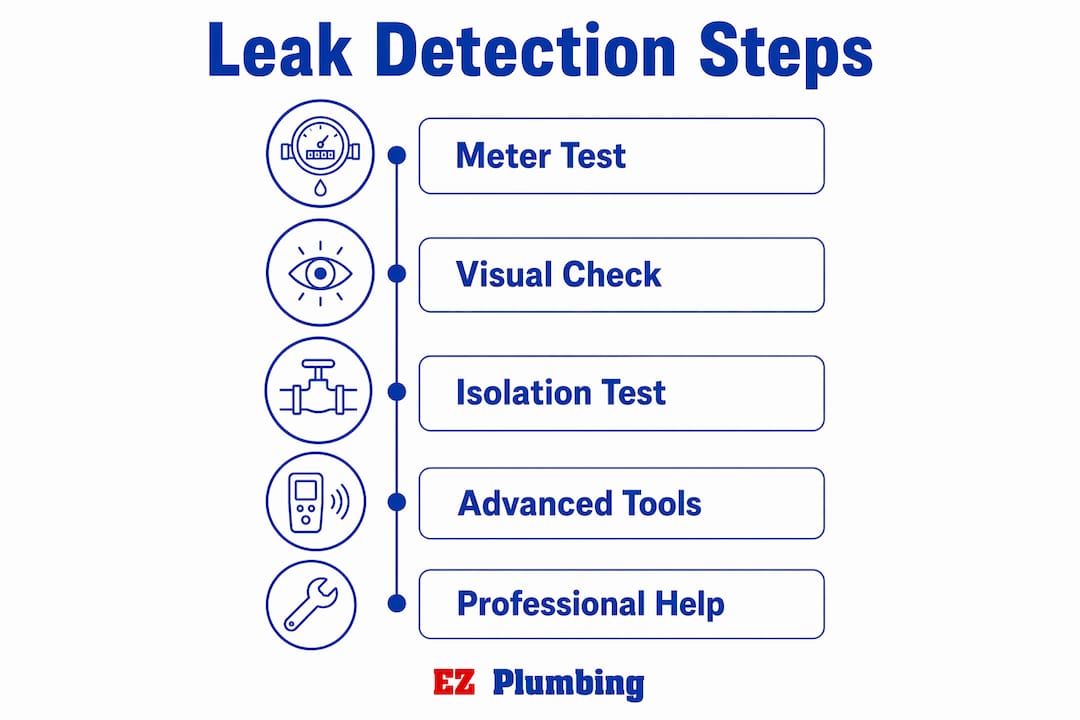
Detecting water leaks accurately requires a meter test first, followed by systematic visual inspection and, when needed, professional acoustic or thermal imaging tools.
| Point | Details |
|---|---|
| Start with the meter test | A 1 to 2 hour meter test with all fixtures off confirms whether a leak exists anywhere in your system. |
| Test toilets twice a year | Food coloring in the tank reveals silent flapper leaks that waste thousands of gallons monthly. |
| Use thermal imaging carefully | Thermal cameras detect temperature anomalies, not moisture directly. Always confirm findings with a moisture meter. |
| Isolation testing saves walls | Closing valves zone by zone locates the leak section without opening drywall speculatively. |
| Call a professional for hidden leaks | Acoustic sensors and tracer gas detection pinpoint concealed leaks non-destructively when DIY methods reach their limit. |
FAQ
How do I check for a water leak at home?
Start by turning off all fixtures and appliances, then check your water meter for movement or a changed reading after 1 to 2 hours. If the meter moves with everything off, a leak is present somewhere in your plumbing system.
What are the most common signs of water leaks?
The most visible signs include water stains on walls or ceilings, bubbling paint, mold growth, and unexpectedly high water bills. Silent toilet leaks and dripping faucets are the most frequent sources and are confirmed with a food coloring test or visual drip check.
Can I detect hidden water leaks without opening walls?
Yes. Acoustic leak detectors, thermal imaging cameras, and moisture meters allow licensed plumbers to locate leaks in pipes without destructive access. Isolation valve testing also narrows the leak zone before any wall is opened.
How much water does an undetected leak waste?
A single dripping faucet wastes over 3,000 gallons per year, and hidden leaks in supply lines or toilets can exceed 10,000 gallons annually. That volume translates directly into higher water bills and potential structural damage.
When should I call a plumber for leak detection?
Call a licensed plumber when your meter confirms a leak but visual inspection and isolation testing cannot locate it. Leaks inside walls, under concrete slabs, or in underground supply lines require professional acoustic or tracer gas equipment to find without causing unnecessary damage.